Signify And World Forum The Hague Announced The World First Li-Fi Installation In A Congress Centre

Signify And World Forum The Hague Announced The World First Li-Fi Installation In A Congress Centre

signify 1.PNG

Signify and World Forum The Hague, leader in hosting high-profile conferences, released an announcement of the world-first Li-Fi installation in a congress centre.  This was carried out to provide conference guests with the benefits of safe, secure, reliable, and high-speed connectivity via light waves instead of radio waves.

World Forum (Hague)

The World Forum (originally known as Nederlands Congresgebouw and formerly Nederlands Congres Centrum and World Forum Convention Centre) is a concert venue and convention centre in The Hague, Netherlands, near the buildings of the International Criminal Tribunal for the former Yugoslavia, the Organisation for the Prohibition of Chemical Weapons and one of the administrative offices of the International Baccalaureate.

World Forum is a compact venue but at the same time has 17.500 rentable square meters. A perfect location for large scale international events and ideal for networking moments, keynotes and break-out sessions. World Forum The Hague is a location with endless possibilities and fifty years of experience in organizing events.

The first Li-Fi installation was successfully done in one meeting room with the potential for more Li-Fi installation in the near future. World Forum The Hague wants to do whatever it takes to provide visitors and participants with the assurance that their data is routinely and rigorously secured, and the venue has become a front runner in Safety & Security. Their measures are reviewed ahead of every event and adjusted if needed.

Signify

Signify is the new brand name of Philips Lighting. The name change occurred in March 2018 to represent the transformation from an analogue lighting company into digital lighting and Internet of Things (IoT) company. Signify is the world leader in lighting for professionals, consumers and lighting for the Internet of Things. The company provides lighting solutions for professional segments such as automotive, healthcare, horticulture, office, outdoor, phototherapy, petrol stations, solar, purification, schools, fashion, cinema, and more. These lighting solutions include indoor and outdoor luminaires, lamps, electronics, lighting controls, lighting control software, IoT systems and platforms.

Signify has also other brands under its belt such as Philips, Interact, Modular Lighting Instruments, Luceplan, Color Kinetics, ILTI Luce and Philips Hue.

Trulifi system

In 2019, Signify launched a new Li-Fi system called “Trulifi”. Trulifi uses light waves to enable highly reliable, secure two-way wireless communications at speeds far above most conventional workplace wireless technologies.

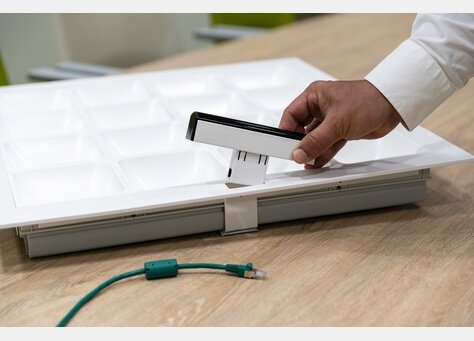
Trulifi uses optical wireless transceiver technology built, or retrofitted, into Philips luminaires. This means customers do not have to replace their existing lighting infrastructure to receive great quality light and wireless connectivity.

trulifi-2.jpg

Photo credit to Signify

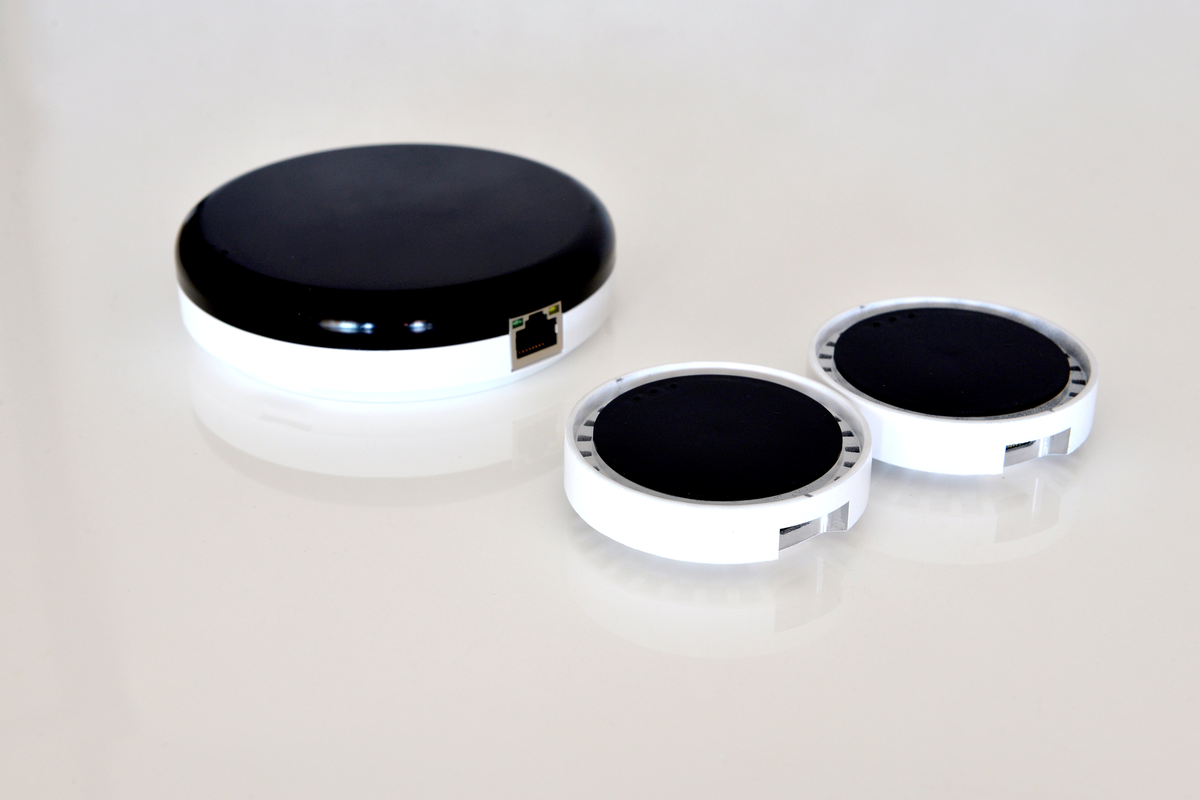
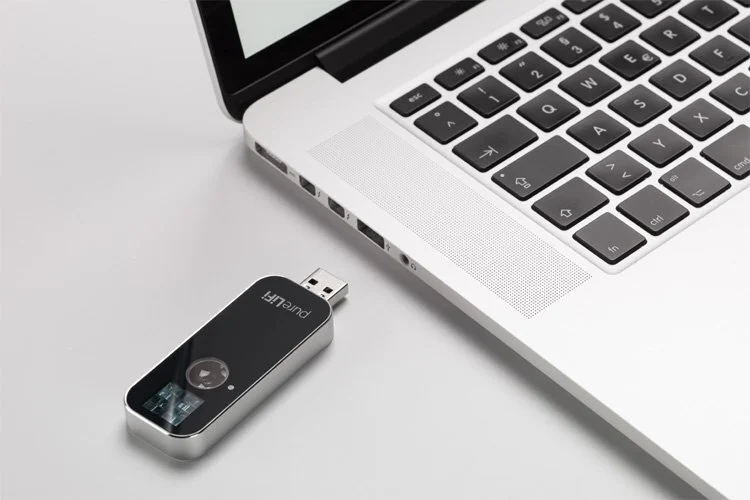
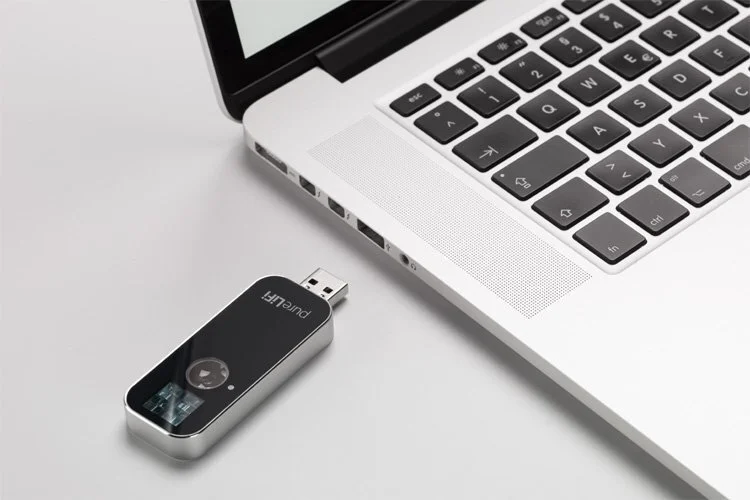
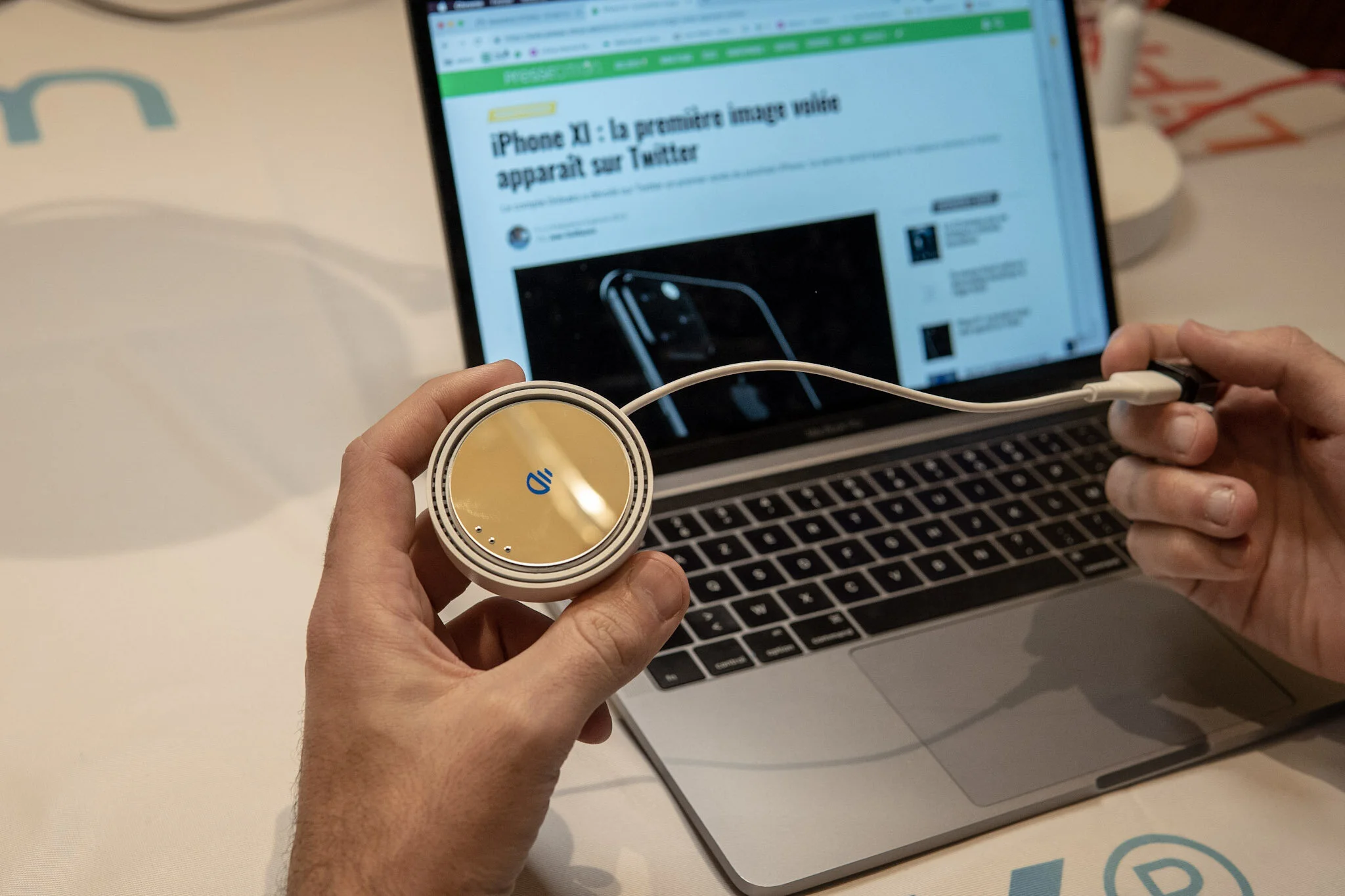
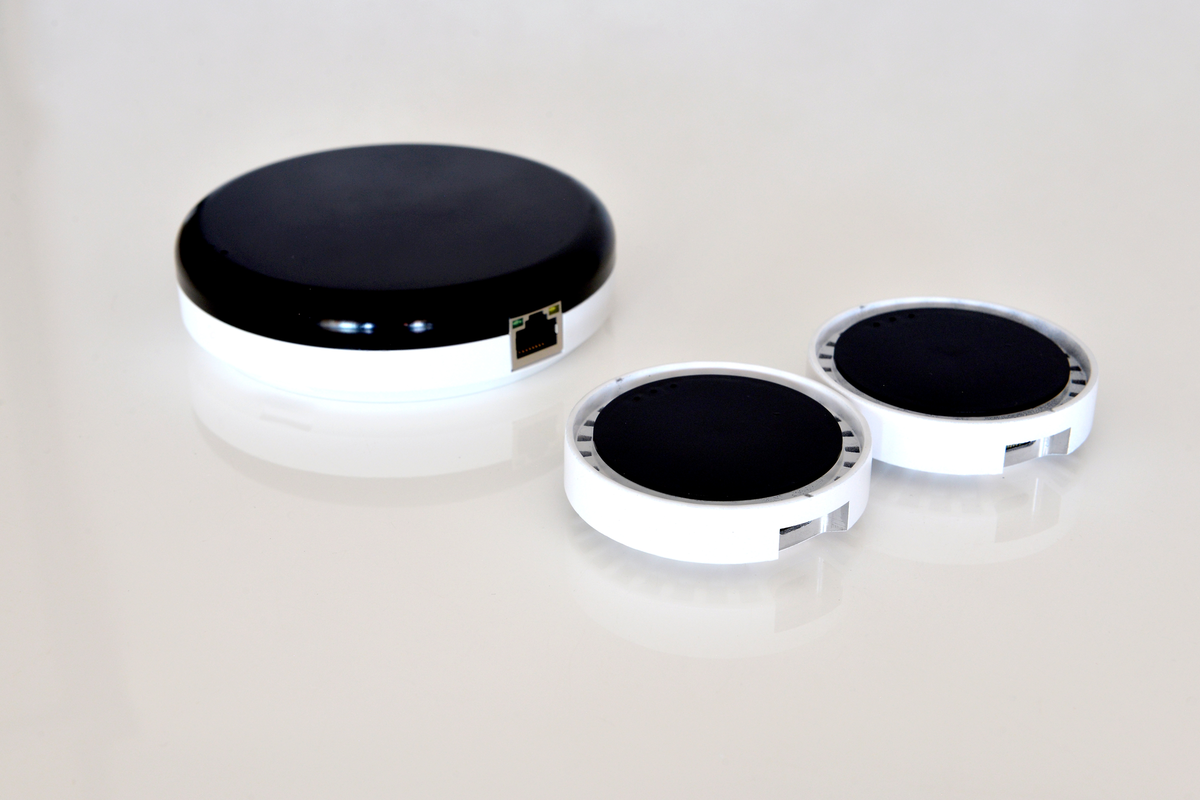
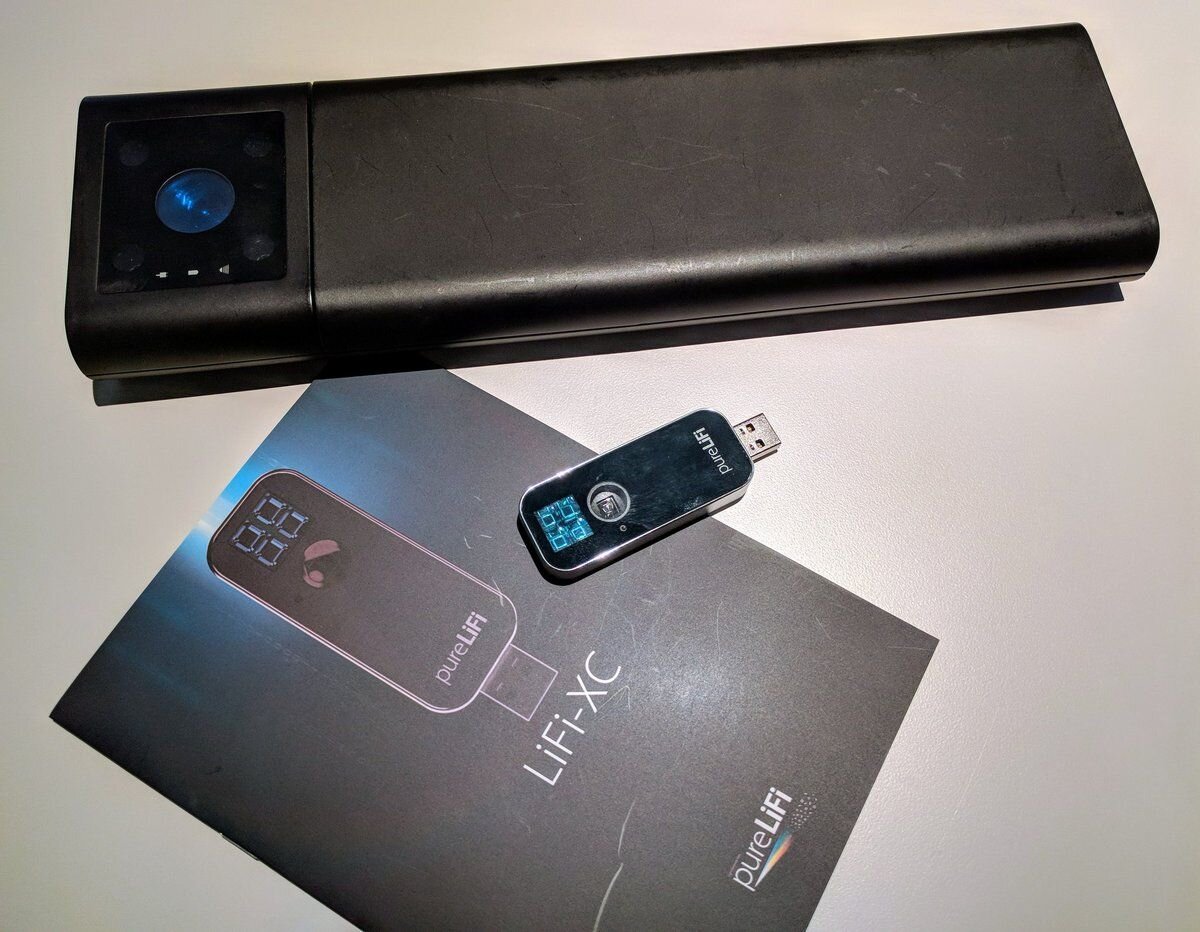
The new Li-Fi system comprises of a USB Network Access adapter, Li-Fi enabled LED lights and a Trulifi-6002 Plug-In Optical Transceiver. The Trulifi-enabled luminaires can provide wireless connectivity at speeds up to 150 Megabits per second (Mbps) over large spaces, such as meeting rooms and office floors. There is seamless handover between each Trulifi-enabled luminaire enabling users to roam around. The speed is fast enough to stream simultaneously 30 1080p HDTV movies. A USB-access key, plugged into a laptop, is needed to receive the LiFi signal and acts as an emitter to send data back to the luminaire.
trulifi-1.jpg

Photo credit to Signify

The Trulifi range also includes a fixed point-to-point system, up to 250 Mbps speed, which acts as a wireless cable. This is ideal for mobile devices connectivity. This Li-Fi system can also be useful to connect robots or machines in radio frequency (RF) harsh environments like industrial plants, or hospitals where RF communications may not be permitted, or where there’s a need to send and receive large data files securely and quickly. Currently, Trulifi is aimed at professional markets, including offices, hospitality, retail, industry, construction and healthcare.

According to Signify, their Li-Fi product “Trulifi” offers the perfect addition to ensure meeting rooms are equipped with highly secure, reliable and high-speed wireless connectivity as well as providing users with the same standards for ease of use and comfort as with other wireless technologies. LiFi is a wireless technology, but instead of radio waves, light waves are employed, ensuring the network is strictly limited inside each room. With additional custom encryption and specific access, keys security can be even more specifically controlled.

Marije Bouwman, Director of Operations, Safety & Security from World Forum The Hague stated the following: 

"Although World Forum The Hague has a highly secure WiFi network, an increasing amount of our clients is cautious to work with WiFi due to the growing number of security breaches we see in the news. With Trulifi we can now offer our high-level clients a broadband connection that is wireless, both reliable and secure,”.

Olivia Qiu, Chief Innovation Officer for Signify, stated that:

"We are delighted and proud that World Forum The Hague is using Trulifi by Signify. This illustrates the relevance of this relatively new technology for wireless connectivity can provide to congress centres around the globe. With this implementation, we’ll show how Trulifi is fast, secure and reliable and performs at the top of the market,".

What is Li-Fi?

Li-Fi, also known as "Light Fidelity" is a wireless optical networking technology, which uses light-emitting diodes (LEDs) to transmit data. In 2011, professor Harald Haas made a Li-Fi demonstration at the TED (Technology, Entertainment, Design) Global Talk on Visible Light Communication (VLC).

Credit to pureLiFi

VLC uses light as a medium to deliver high-speed communication like Wi-Fi and complies with the IEEE standard IEEE 802.15.7. The IEEE 802.15.7 is a high-speed, bidirectional, and fully networked wireless communication technology-based standard similar to Wi-Fi's IEEE 802.11.

How does Li-Fi work?

Li-Fi is a high speed, bidirectional, and fully networked wireless communication of data using light. Li-Fi constitutes of several light bulbs that form a wireless network.

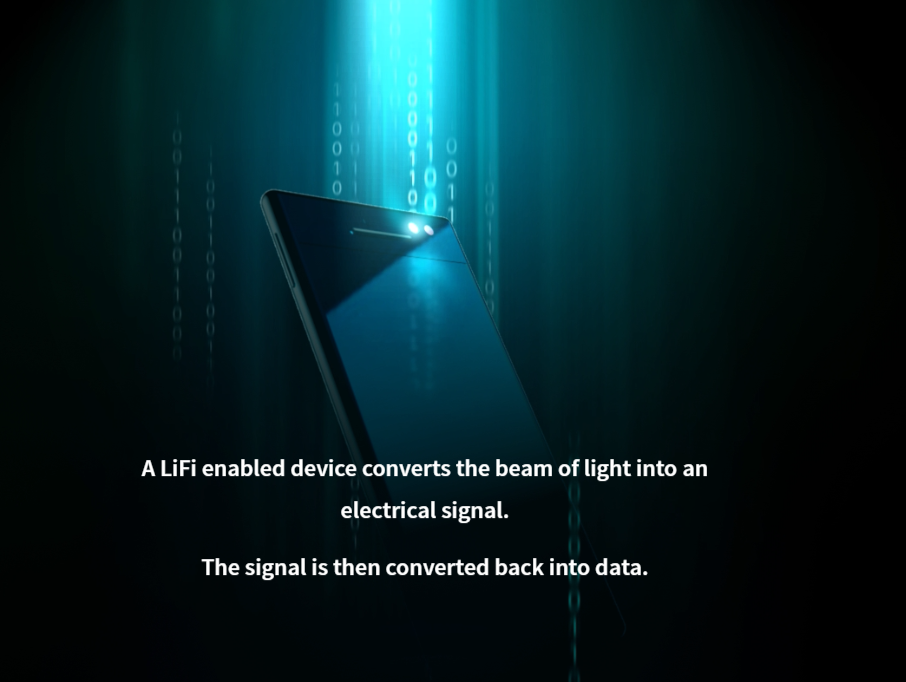
When an electrical current goes through to a LED light bulb, a stream of light (photons) emits from the lamp. LED bulbs are semiconductor devices, which means that the brightness of the light flowing through them can change at extremely high speeds. The signal is sent by modulating the light at different rates. The signal can then be received by a detector which interprets the changes in light intensity (the signal) as data. Also when the LED is ON, you transmit a digital 1, and when it is OFF, you transmit a 0.

Li-Fi Benefits

The primary benefits of Li-Fi are as follows:

Security: Provides entirely secure access. Where there is no light there is no data.

Safety: Does not produce electromagnetic radiation and does not interfere with existing electronic systems.

Localisation: Allows localisation due to small coverage area of Li-Fi access point - localisation can be used for very precise asset tracking.

Data density: Provides ubiquitous high-speed wireless access that offers substantially greater data density (data rate per unit area) than RF through high bandwidth reuse.

LiFiMAX-Oledcomm.jpg

Credit to Oledcomm

In conclusion, if you are also interested to hear more information about the OWNII Coin, investing in it, or to enquire about Li-Fi devices, you can contact us through our chatbot or by sending an email through our contact us form. If you enjoyed this post and would like to hear more updates about Li-Fi technology, subscribe to our newsletter. Don’t forget to subscribe to our social media accounts. You can also join on our Telegram group about Li-Fi technology on this link:

https://t.me/joinchat/FMzOmsEKyJFrU6Af


Light Rider Demonstrate Li-Fi To South Lakes Seahawk Cyber Club

Light Rider Demonstrate Li-Fi to South Lakes Seahawk Cyber Club

li fi.jpg

The CEO of Light Rider, Inc., Tony Lawrence recently attended a meeting with South Lakes High students of the Seahawk Cyber club for a demonstration of Li-Fi technology.  Club sponsor Selwyn Lawrence stated that Li-Fi has quite a few potential advantages to Wi-Fi because the communication cannot go through walls and hence a hacker who is not physically present in the room cannot capture the data. It also has roughly 10,000 times the bandwidth of Wi-Fi where it can support many users sending or receiving very high bandwidth transmissions in the same room simultaneously. Students asked questions regarding cybersecurity from one of U.S. first cyber warriors: Tony Lawrence, chief executive officer of Light Rider, who shared his entry into the cyber field via the U.S. Army and work with the National Security Agency.

Seahawk Cyber members had the opportunity to test a quantum chip and Li-Fi light bulbs from Light Rider and will now be able to run very fast and secure programs using this device. The award-winning, student-led Seahawk Cyber club has five teams that recently competed in the U.S. Air Force Association's CyberPatriot Defense competition. One of the teams, Team Zero Day, is ranked third in the state and 32nd out of 2,600 teams in the country and abroad.

Seahawk Cyber

Seahawk Cyber is a student-led cybersecurity club sponsored by Mr Lawrence. The students participate in various CTF’s, cybersecurity competitions, hackathons, etc. Every year, the club competes in the annual Cyberpatriot Competition where competitors secure a variety of systems in a simulated corporate environment. This competition is a great opportunity for anyone who may be interested in a career in cybersecurity and provides valuable hands-on experience, as well as promoting general technical and solution-oriented mindsets.

CyberPatriot is the National Youth Cyber Education Program created by the Air Force Association to inspire K-12 students toward careers in cybersecurity or other science, technology, engineering, and mathematics (STEM) disciplines critical to our nation’s future. ​At the core of the program is the National Youth Cyber Defense Competition, the nation’s largest cyber defense competition that puts high school and middle school students in charge of securing virtual networks. Other programs include AFA CyberCamps, an elementary school cyber education initiative, a children’s literature series, and CyberGenerations –a cyber safety initiative geared toward keeping senior citizens safe online.

You can check their website at the following link:

https://seahawkcyber.com/

Light Rider Inc

Light Rider Inc, a US-based quantum Li-Fi company, recently announced the unveiling of their quantum Li-Fi products coming up in 2021.  Light Rider states that they are a quantum Li-Fi company leveraging the supernatural behaviour of quantum physics for the creation of secure and unparalleled encryption products with their patented technology.

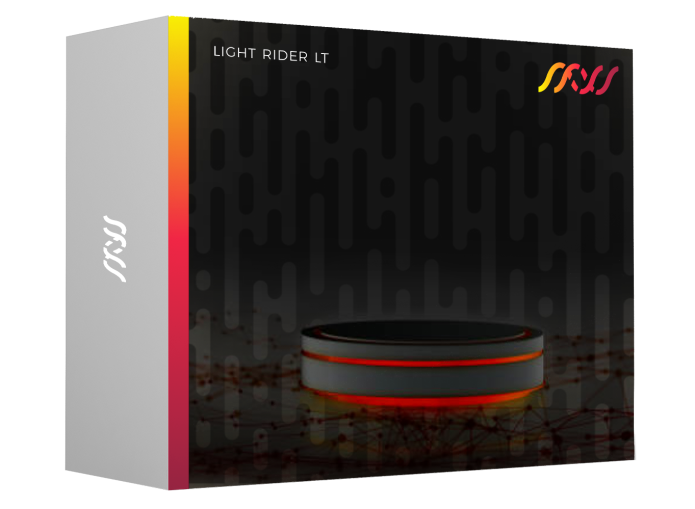
Light Rider will introduce four strategic product lines into the marketplace that will help individuals, businesses, cities, and governments prepare for the coming quantum revolution. Their four primary product lines cover everything from everyday encryption to connected cities, and it all starts with our first two encryption products, Light Rider LT and Light Rider Quantum coming up in 2021.

lifi+2.png

“Traditional methods and technologies are full of vulnerabilities, so we created Light Rider to design and develop products that would enable the most secure network encryption possible,” said Tony Lawrence, CEO, and founder of Light Rider. “There is a global race to operationalise quantum technology, meaning those inflicting cyber threats will have access to this superior technology. Our mission at Light Rider is to equip businesses, organisations, and individuals with powerful, quantum Li-Fi technology that will protect their data, as we strive to create products that are un-hackable.

What is Li-Fi?

Li-Fi, also known as "Light Fidelity" is a wireless optical networking technology, which uses light-emitting diodes (LEDs) to transmit data. In 2011, professor Harald Haas made a Li-Fi demonstration at the TED (Technology, Entertainment, Design) Global Talk on Visible Light Communication (VLC).

LiFi - 2.png

Credit to pureLiFi

VLC uses light as a medium to deliver high-speed communication like Wi-Fi and complies with the IEEE standard IEEE 802.15.7. The IEEE 802.15.7 is a high-speed, bidirectional, and fully networked wireless communication technology-based standard similar to Wi-Fi's IEEE 802.11.

How does Li-Fi work?

Li-Fi is a high speed, bidirectional, and fully networked wireless communication of data using light. Li-Fi constitutes of several light bulbs that form a wireless network.

When an electrical current goes through to a LED light bulb, a stream of light (photons) emits from the lamp. LED bulbs are semiconductor devices, which means that the brightness of the light flowing through them can change at extremely high speeds. The signal is sent by modulating the light at different rates. The signal can then be received by a detector which interprets the changes in light intensity (the signal) as data. Also when the LED is ON, you transmit a digital 1, and when it is OFF, you transmit a 0.

Li-Fi Benefits

The primary benefits of Li-Fi are as follows:

Security: Provides entirely secure access. Where there is no light there is no data.

Safety: Does not produce electromagnetic radiation and does not interfere with existing electronic systems.

Localisation: Allows localisation due to small coverage area of Li-Fi access point - localisation can be used for very precise asset tracking.

Data density: Provides ubiquitous high-speed wireless access that offers substantially greater data density (data rate per unit area) than RF through high bandwidth reuse.

LiFiMAX-Oledcomm.jpg

Credit to Oledcomm

In conclusion, if you are also interested to hear more information about the OWNII Coin, investing in it, or to enquire about Li-Fi devices, you can contact us through our chatbot or by sending an email through our contact us form. If you enjoyed this post and would like to hear more updates about Li-Fi technology, subscribe to our newsletter. Don’t forget to subscribe to our social media accounts. You can also join on our Telegram group about Li-Fi technology on this link:

https://t.me/joinchat/FMzOmsEKyJFrU6Af
Testing of Li Fi Technology at Malaga’s María Zambrano station by Adif

Testing of Li-Fi Technology at Malaga’s María Zambrano station by Adif

Purelifi 20.png

ADIF (an acronym of Administrador de Infraestructuras Ferroviarias) is a Spanish state-owned railway infrastructure manager under the responsibility of the Ministry of Development, charged with the management of most of Spain's railway infrastructure, that is the track, signalling and stations. It was established in 2005 in response to European Union requirements to separate the natural monopoly of infrastructure management from the competitive operations of running train services. It is the legal successor of RENFE, FEVE (Ferrocarriles de Vía Estrecha), and GIF (Gestor de Infraestructuras Ferroviarias).

Adif announced the trialling of Li-Fi technology at Malaga’s María Zambrano station. The Li-Fi trialling is done in cooperation with Malaga technology firm Datlight. One of the main purposes of the trialling is the evaluation of the capacity, practicality and user-friendliness of Li-Fi technology. Passengers will also be able to give their feedback of using Li-Fi at train stations.

For illustration purposes

For illustration purposes

Adif hopes that Li-Fi could offer a more cost-effective, lower maintenance alternative method to traditional Wi-Fi to improve digital accessibility across its network.  Adif also says that the technology could be used to complement 5G in areas where Wi-Fi typically suffers from signal loss.

The pilot is the first launched under Adif’s five-year Digital Transformation Plan for Passenger Stations, which aims to improve digital services across the Spanish rail network.

What is Li-Fi?

Li-Fi, also known as "Light Fidelity" is a wireless optical networking technology, which uses light-emitting diodes (LEDs) to transmit data. In 2011, professor Harald Haas made a Li-Fi demonstration at the TED (Technology, Entertainment, Design) Global Talk on Visible Light Communication (VLC).

Credit to pureLiFi

Credit to pureLiFi

VLC uses light as a medium to deliver high-speed communication like Wi-Fi and complies with the IEEE standard IEEE 802.15.7. The IEEE 802.15.7 is a high-speed, bidirectional, and fully networked wireless communication technology-based standard similar to Wi-Fi's IEEE 802.11.

How does Li-Fi work?

Li-Fi is a high speed, bidirectional, and fully networked wireless communication of data using light. Li-Fi constitutes of several light bulbs that form a wireless network.

When an electrical current goes through to a LED light bulb, a stream of light (photons) emits from the lamp. LED bulbs are semiconductor devices, which means that the brightness of the light flowing through them can change at extremely high speeds. The signal is sent by modulating the light at different rates. The signal can then be received by a detector which interprets the changes in light intensity (the signal) as data. Also when the LED is ON, you transmit a digital 1, and when it is OFF, you transmit a 0.

Li-Fi Benefits

The primary benefits of Li-Fi are as follows:

Security: Provides entirely secure access. Where there is no light there is no data.

Safety: Does not produce electromagnetic radiation and does not interfere with existing electronic systems.

Localisation: Allows localisation due to small coverage area of Li-Fi access point - localisation can be used for very precise asset tracking.

Data density: Provides ubiquitous high-speed wireless access that offers substantially greater data density (data rate per unit area) than RF through high bandwidth reuse.

Credit to Oledcomm

Credit to Oledcomm

In conclusion, if you are also interested to hear more information about the OWNII Coin, investing in it, or to enquire about Li-Fi devices, you can contact our chatbot or send an email through our contact us form. If you enjoyed this post and would like to hear more updates about Li-Fi technology, subscribe to our newsletter. Don’t forget to subscribe to our social media accounts. You can also join on our Telegram group about Li-Fi technology on this link:

https://t.me/joinchat/DcGyJRTMzpodEuCZa1OgHw

Li Fi Rewind 2020

Li Fi Rewind 2020

Oledcomm_Transmitter_and_Dongle.png

2020 was yet another year of great developments and advancements for Li-Fi industry. The technology is getting cheaper and better every year. The following timeline displays the main events that took place in regards to Li-Fi.

SLD Laser

JAN 2020

SLD Laser, the Santa Barbara, CA company co-founded by LED hero Shuji Nakamura, headed to CES consumer electronics show in Las Vegas to show off laser-based Li-Fi that it says can operate at a blistering 20 Gbit/s, which it noted is 20 times faster than 5G, assuming a 5G speed of 1 Gbit/s.

Oledcomm

JAN 2020

Oledcomm introduced a Li Fi system rated at close to 1 Gbit/s, or around 10 times as fast as LiFiMAX. It is positioning the LiFiMAX1G for machine-to-machine, robotic, and Internet-of-Things (IoT) communications in factory-type settings, where it can work at distances of up to 5m. It planned to make the product commercially available in the second half of this year and hoped to sign up pilot users before that.

Fraunhofer HHI

FEB 2020

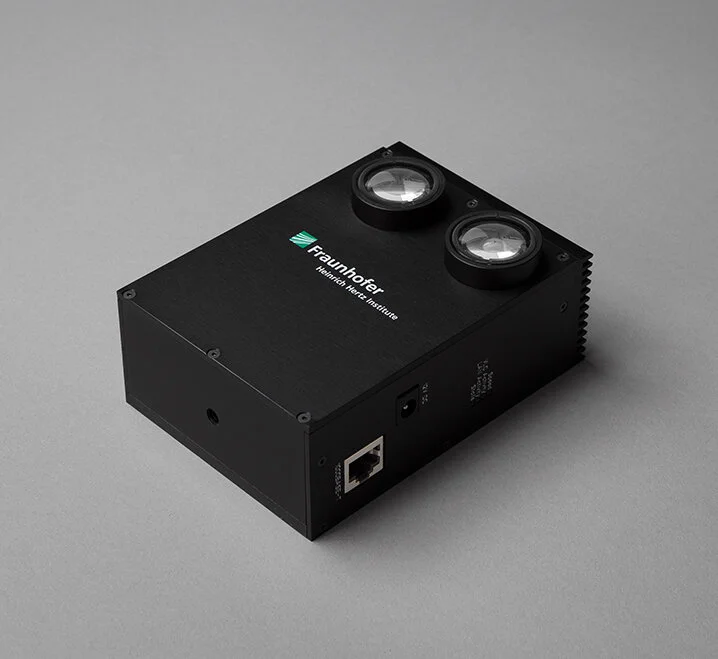
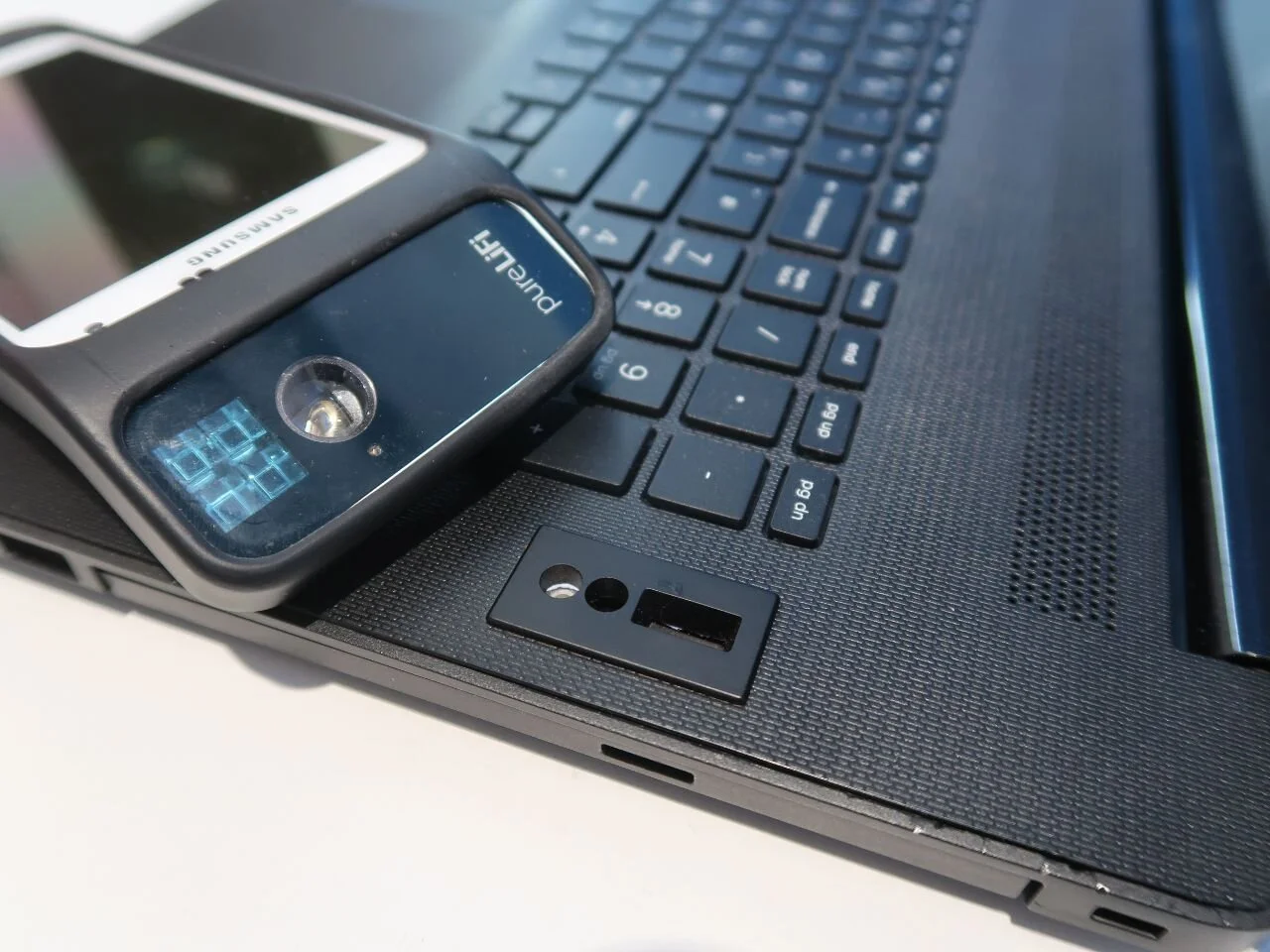
The Fraunhofer Heinrich Hertz Institute, Berlin, Germany, (HHI) was first to succeed in developing a USB-operated "Li-Fi" system with low power consumption, achieving the highest data rate transmission for a mobile LiFi end device of up to 1 Gbit/s.

Academics From UCL

FEB 2020

Academics from UCL, Northumbria University and Newcastle University are developing a new type of organic Li Fi LED (light-emitting diode) which will communicate with smart devices such as tablets and phones to download and upload huge amounts of data.

Signify

FEB 2020

The number of project orders for the installation of systems that communicate data via LiFi is skyrocketing, according to Head of Business Development Ed Huibers of Eindhoven-based tech company Signify (formerly Philips Lighting). With LiFi, communication is via light instead of radio frequencies. Signify started work on around one hundred LiFi installations in office buildings, hotels, trains, warehouses, and electronics companies. There, the robots communicate with each other via LiFi from a ceiling-mounted lamp like at Wieland Electronics in Germany.

EpiPix Ltd

FEB 2020

The company, named EpiPix Ltd, is developing and commercialising game-changing micro-LED technology for photonics applications, such as micro-displays for portable smart devices, augmented reality (AR), virtual reality (VR), 3D sensing and visible light communications (Li-Fi).

Fraunhofer HHI

MAR 2020

The researchers set up multiple Li-Fi transmitters and receivers in a neurosurgery operating room at Motol University Hospital in Prague. In a series of tests, the Li-Fi system managed to transfer data quickly and without complete signal loss. They achieved data rates of up to 600 megabits per second—better than most Wi-Fi connections and cellular networks.

pureLiFi

APR 2020

THE Scottish company behind a new ultrafast wireless technology that uses LED lightbulbs to connect to the internet says it is only a matter of time before its chip is integrated into every device.

Aura Light Italia

APR 2020

Aura Light Italia includes Oledcomm's innovative LiFi in its lighting projects to offer even more complete and performing projects, with the aim of improving the well-being of the individual. This type of technology guarantees fast, secure and safe data transmission.

PeroCUBE

MAY 2020

An ambitious European project is aiming to combine a photovoltaic solar cell with a low power LiFi light-based communications system for wearable designs and LED lighting panels all using the same low cost, flexible perovskite semiconductor materials. The €5.6m PeroCUBE project will use perokskite materials to produce both the flexible PV solar cell and flexible high-speed LEDs and sensors for the LiFi in a wearable gadget such as wristband. The project will also produce large LED lighting panels that incorporate the LiFi sensors to communicate with the wristband.

CEA-Leti

JUN 2020

Researchers at CEA-Leti, a technology research institute based in Grenoble, France, say they have broken the throughput world record of 5.1 Gbps in visible light communications (VLC – also known as Li-Fi) using a single GaN blue micro- light-emitting diode (LED).

OWNII Coin

JUNE 2020

Due to the current Corona virus pandemic, the public launch is being delayed. However, Global Greenology is currently planning the launch of OWNII Coin in 2 phases. The first phase being a private sell of the token in which you can pledge to purchase your amount but will not have to pay for it until the market stabilised. The second phase will be a public purchase just before going live on the exchange. A website specifically for the OWNII coin is also being developed by Global Greenology. Li Fi Tech News will keep you updated on the progress of the OWNII Coin.

SMIMER

JUNE 2020

Nav Wireless Technology, an R&D initiative in wireless technologies, is currently developing a Li-Fi (Light Fidelity) technology-based communication facility at SMIMER (Surat Municipal Institute of Medical Education & Research). The company has extended its expertise to provide faster and safer light-based communication for COVID-19 patients and all the medical professionals.

OPPO

AUG 2020

The patent, spotted by LetsGoDigital, shows images of the sensor placed on the Oppo smartphones. Unlike Wi-Fi, a Li-Fi module (a photodetector) is quite visible on the outside of the phone. This is required because the light photons need to be converted into currents. The images show the possible placements of the module. It is to be noted that this is just a patent at the time and, as with all patents, could never see the light of the day.

EDZCOM

AUG 2020

Signify announced Li-Fi Partnership with Edzcom for quickening the adoption of Li-Fi Technology. EDZCOM, a Finnish 4G and 5G networking company that will use Signify’s LED-based Trulifi system as part of wireless connectivity schemes in industrial settings.

Fraunhofer HHI

SEP 2020

The LiFi market is growing with the help of the ITU G.9991, the first standard for Gigabit indoor wireless connectivity using visible and infrared light. The long-term research of Fraunhofer HHI made a key contribution in helping the wireless community to reach the exciting point we see today in LiFi adoption and prospects for market growth.

Signify

SEP 2020

TU’s standard for indoor Visible Light Communication (VLC), also known as ‘LiFi’ – ITU G.9991 – is the world’s first standard for high-speed wireless communications with visible light and infrared. LiFi provides network connectivity within a premises, similar to Wi-Fi, but using light rather than radio signals. When Philips Lighting introduced Signify as its new company name in 2018, the choice was motivated by light’s value as ‘an intelligent language, which connects and conveys meaning’. Signify is part of “Enhance Lighting for the Internet of Things” (ELIOT), an EU Horizon 2020 project participating in the standardization of lighting and telecom infrastructures in IEC, IEEE, IETF and ITU.

Hydromea

SEP 2020

Hydromea, a spinoff of École polytechnique fédérale de Lausanne (EPFL), has developed a miniature optical modem that can operate down to 6,000 meters below the ocean’s surface. It is sensitive enough to collect data at very high speeds from sources more than 50 meters away. Hydromea is using light to transmit data below the ocean or lake surface. They have developed an underwater modem called LUMA that communicates through a rapidly blinking blue light. The modem converts data into light pulses that it sends out, or inversely, converts light pulses that it receives into data – all in the blink of an eye. “Our optical modem gives you a fast wireless underwater connection,” says Alexander Bahr, Hydromea’s COO.

Light Rider

OCT 2020

Light Rider Inc, a US-based quantum Li-Fi company, recently announced the unveiling of their quantum Li-Fi products coming up next year in 2021. Light Rider states that they are a quantum Li-Fi company leveraging the supernatural behaviour of quantum physics for the creation of secure and unparalleled encryption products with their patented technology.

Getac

OCT 2020

Getac has announced that it is bringing integrated Li-Fi technology powered by pureLiFi to the rugged market for the first time. This means customers across a wide range of professional sectors will soon be able to enjoy the benefits of fully rugged reliability and innovative Li-Fi connectivity in a single device, unlocking a host of powerful new applications and use cases. In 2019, Getac made the announcement of its partnership with Li Fi leading company pureLiFi.

OLEDCOMM

OCT 2020

Spie ICS, a digital services subsidiary of the SPIE Group, an independent European leader in multi-technical services in the fields of energy and communications, and the French start-up Oledcomm, a world leader in Li-Fi technology, have been selected by the Centre-Val de Loire region to set up, within a pilot high school, LiFi technology permitting students to connect to the Internet using light. More secure and more environmentally friendly, Li-Fi is a reliable and promising alternative to Wi-Fi.

Infratel Italia

OCT 2020

The Ministry of Economic Development made the announcement of a successful Li-Fi trial at the National Archaeological Museum of Taranto. National Archaeological Museum of Taranto (Marta) is the first museum in Italy to use Li-Fi technology that allows fast and secure data transmission through LED light. A national record made possible thanks to the experimentation launched by Infratel Italia in collaboration with the start-up To Be and the Italian Videogames Academy (Aiv).

Fraunhofer HHI

NOV 2020

The Fraunhofer HHI team deployed the LiFi system in a classroom at a vocational school in the State of Hesse to test the technology in a real-life application scenario. In this process, user experience will be analysed and reviewed to further improve the system. The Main-Kinzig district wants to take on a pioneering role in the evaluation of LiFi and research about the practical advantages of the new technology compared with conventional wireless solutions. They also want to play an active role in advancing the digitisation of schools. LiFi can enable fast data transmission and communication with peak data rates of up to 1Gbit/s. The LiFi modules come with an USB interface and are therefore compatible with common end-user devices. "This project is an important milestone for us to demonstrate the great potential of this unique technology for mobile communication,” said Dr.-Ing. Dominic Schulz, project manager at Fraunhofer HHI. “It will also help us to further increase the degree of technological maturity."

Li Fi Tech

DEC 2020

Li Fi Tech N has carried out a Li Fi deployment with Oledcomm in a house in London. A LiFiMax kit was purchased and used in this Li Fi project. From this Li Fi project, results showed that internet data transmission speeds were slightly greater with the use of the LiFiMax compared to the use of a Wi Fi network adapter commonly used in consumer households. An article will be written by Li Fi Tech about this successful Li Fi project

What is Li-Fi?

Li-Fi, also known as "Light Fidelity" is a wireless optical networking technology, which uses light-emitting diodes (LEDs) to transmit data. In 2011, professor Harald Haas made a Li-Fi demonstration at the TED (Technology, Entertainment, Design) Global Talk on Visible Light Communication (VLC):

VLC uses light as a medium to deliver high-speed communication like Wi-Fi and complies with the IEEE standard IEEE 802.15.7. The IEEE 802.15.7 is a high-speed, bidirectional, and fully networked wireless communication technology-based standard similar to Wi-Fi's IEEE 802.11.

How does Li-Fi work?

Li-Fi is a high speed, bidirectional, and fully networked wireless communication of data using light. Li-Fi constitutes of several light bulbs that form a wireless network.

When an electrical current goes through to a LED light bulb, a stream of light (photons) emits from the lamp. LED bulbs are semiconductor devices, which means that the brightness of the light flowing through them can change at extremely high speeds. The signal is sent by modulating the light at different rates. The signal can then be received by a detector which interprets the changes in light intensity (the signal) as data. Also when the LED is ON, you transmit a digital 1, and when it is OFF, you transmit a 0.

Li-Fi Benefits

The primary benefits of Li Fi are as follows:

Security: Provides entirely secure access. Where there is no light there is no data.

Safety: Does not produce electromagnetic radiation and does not interfere with existing electronic systems.

Localisation: Allows localisation due to small coverage area of Li-Fi access point - localisation can be used for very precise asset tracking.

Data density: Provides ubiquitous high-speed wireless access that offers substantially greater data density (data rate per unit area) than RF through high bandwidth reuse.

Credit to Oledcomm

Credit to Oledcomm

In conclusion, if you are also interested to hear more information about the OWNII Coin, investing in it, or to enquire about Li-Fi devices, you can contact our chatbot or send an email through our contact us form. If you enjoyed this post and would like to hear more updates about Li-Fi technology, subscribe to our newsletter. Don’t forget to subscribe to our social media accounts. You can also join on our Telegram group about Li-Fi technology on this link:

https://t.me/joinchat/DcGyJRTMzpodEuCZa1OgHw

Installation of a Li Fi system by Fraunhofer HHI at a vocational school in Main-Kinzig-Kreis

Pilot Installation of a Li Fi system by Fraunhofer HHI at a vocational school in Main-Kinzig-Kreis

Gigabit article.jpg

Fraunhofer HHI

The Fraunhofer Institute for Telecommunications, Heinrich Hertz Institute, HHI, also known as Fraunhofer HHI or Fraunhofer Heinrich Hertz Institute, is an organisation of the Fraunhofer Society based in Berlin. The institute engages in applied research and development in the fields of physics, electrical engineering and computer sciences.

The Fraunhofer HHI team deployed the LiFi system in a classroom at a vocational school in the State of Hesse to test the technology in a real-life application scenario. In this process, user experience will be analysed and reviewed to further improve the system. The Main-Kinzig district wants to take on a pioneering role in the evaluation of LiFi and research about the practical advantages of the new technology compared with conventional wireless solutions. They also want to play an active role in advancing the digitisation of schools.

LiFi can enable fast data transmission and communication with peak data rates of up to 1Gbit/s. The LiFi modules come with an USB interface and are therefore compatible with common end-user devices. "This project is an important milestone for us to demonstrate the great potential of this unique technology for mobile communication,” said Dr.-Ing. Dominic Schulz, project manager at Fraunhofer HHI. “It will also help us to further increase the degree of technological maturity."

Image credit to Fraunhofer HHI.  Li Fi device by Fraunhofer HHI

Image credit to Fraunhofer HHI. Li Fi device by Fraunhofer HHI

What is Li-Fi?

Li-Fi, also known as "Light Fidelity" is a wireless optical networking technology, which uses light-emitting diodes (LEDs) to transmit data. In 2011, professor Harald Haas made a Li-Fi demonstration at the TED (Technology, Entertainment, Design) Global Talk on Visible Light Communication (VLC):

VLC uses light as a medium to deliver high-speed communication like Wi-Fi and complies with the IEEE standard IEEE 802.15.7. The IEEE 802.15.7 is a high-speed, bidirectional, and fully networked wireless communication technology-based standard similar to Wi-Fi's IEEE 802.11.

How does Li-Fi work?

Li-Fi is a high speed, bidirectional, and fully networked wireless communication of data using light. Li-Fi constitutes of several light bulbs that form a wireless network.

When an electrical current goes through to a LED light bulb, a stream of light (photons) emits from the lamp. LED bulbs are semiconductor devices, which means that the brightness of the light flowing through them can change at extremely high speeds. The signal is sent by modulating the light at different rates. The signal can then be received by a detector which interprets the changes in light intensity (the signal) as data. Also when the LED is ON, you transmit a digital 1, and when it is OFF, you transmit a 0.

Li-Fi Benefits

The primary benefits of Li Fi are as follows:

Security: Provides entirely secure access. Where there is no light there is no data.

Safety: Does not produce electromagnetic radiation and does not interfere with existing electronic systems.

Localisation: Allows localisation due to small coverage area of Li-Fi access point - localisation can be used for very precise asset tracking.

Data density: Provides ubiquitous high-speed wireless access that offers substantially greater data density (data rate per unit area) than RF through high bandwidth reuse.

Gigabit LiFi with mobile case.jpg

In conclusion, if you are also interested to hear more information about the OWNII Coin, investing in it, or to enquire about Li-Fi devices, you can contact our chatbot or send an email through our contact us form. If you enjoyed this post and would like to hear more updates about Li-Fi technology, subscribe to our newsletter. Don’t forget to subscribe to our social media accounts. You can also join on our Telegram group about Li-Fi technology on this link:

https://t.me/joinchat/DcGyJRTMzpodEuCZa1OgHw

Getac Technology Corporation Announces the Integration of Li-Fi Technology to the Rugged Mobile Computing Market

Getac Technology Corporation Announces the Integration of Li-Fi Technology to the Rugged Mobile Computing Market

Image credit to Getac

Image credit to Getac

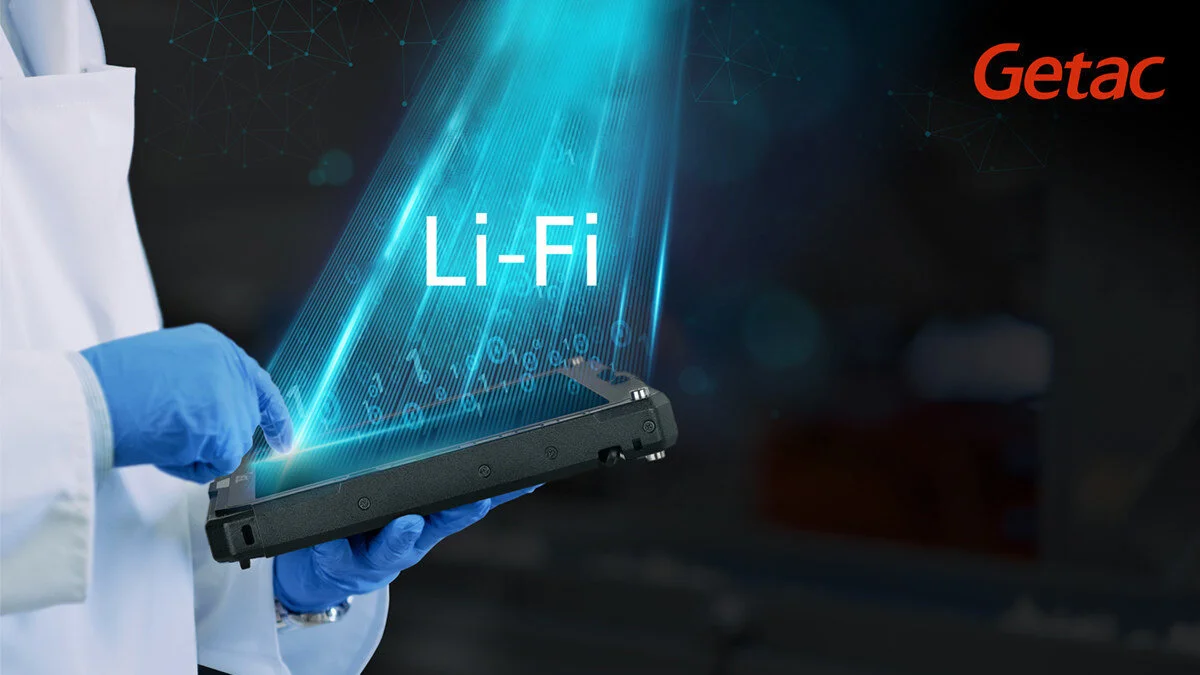
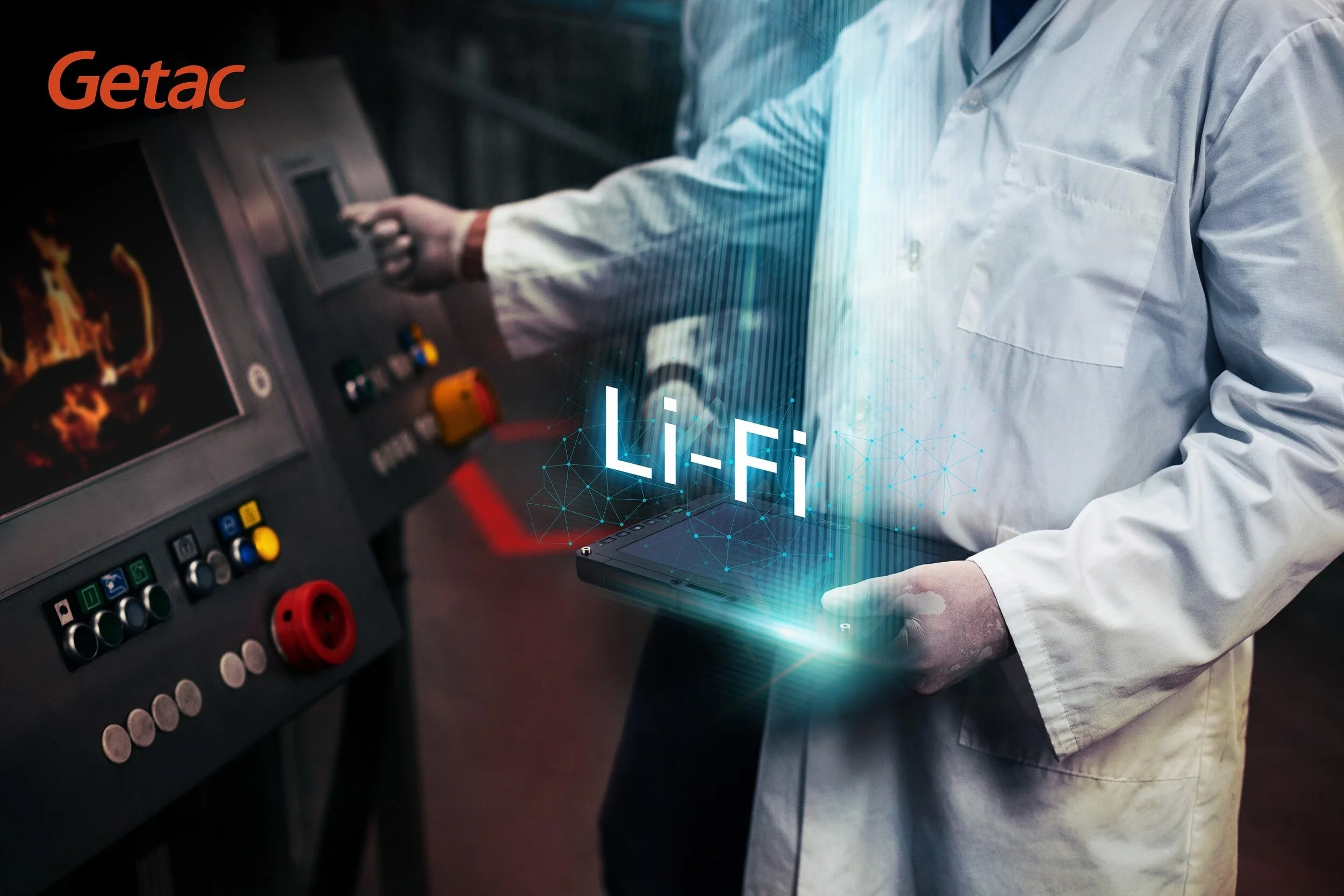
Getac has announced that it is bringing integrated Li-Fi technology powered by pureLiFi to the rugged market for the first time. This means customers across a wide range of professional sectors will soon be able to enjoy the benefits of fully rugged reliability and innovative Li-Fi connectivity in a single device, unlocking a host of powerful new applications and use cases. In 2019, Getac made the announcement of its partnership with Li Fi leading company pureLiFi.

Since 1989, Getac has been manufacturing rugged computers for some of the most demanding users in some of the most demanding environments. As one of the leading rugged computer manufacturers, Getac offers the most extensive rugged computing product lines including notebooks, tablets and handheld computers. As one of the leading rugged computer providers, Getac offers extensive rugged computing product lines including laptops, tablets computers. Getac serves a wide range of vertical markets including military & defence, law enforcement, public safety, emergency services, utility, natural resources, oil and gas, telecommunications, transportation and industrial manufacturing.

Image credit to Getac

Image credit to Getac

Previously, users had to rely on a USB dongle plugged into the side of their device. This approach is highly vulnerable to even the slightest knock or drop, making it unviable in many working environments, such as those found in the defense, public safety, automotive, energy, and manufacturing sectors. With this announcement, users across these sectors will be able to buy a fully rugged solution with LiFi technology fully integrated into the device. The first Getac device to offer integrated LiFi capability will be the recently launched UX10 fully rugged tablet.

Getac UX10 - Image credit to Ruggeddevelopment.com

Getac UX10 - Image credit to Ruggeddevelopment.com

The Getac UX10 has been designed to deliver portable performance across a range of industries, including Industrial Manufacturing, Public Safety and Utility Services, in even the most demanding environments.

The UX10 seamlessly supports digital transformation, offering digital connectivity through BT, WiFi, and optional 4G LTE. An optional RS232 port can support legacy equipment. An optional RFID reader allows information feed-back into the management system. All these functionalities ensure the UX10 stays connected no matter whether outdoors or indoors.

In a world where devices need to work 24/7/365 power-up continuity is essential – in portable devices that means a focus on battery configuration. The UX10 offers a range of battery configurations and options, including an optional high capacity battery and an optional bridge battery that ensures a ‘hot swap’ capability.

What is Li-Fi?

Li-Fi, also known as "Light Fidelity" is a wireless optical networking technology, which uses light-emitting diodes (LEDs) to transmit data. In 2011, professor Harald Haas made a Li-Fi demonstration at the TED (Technology, Entertainment, Design) Global Talk on Visible Light Communication (VLC):

VLC uses light as a medium to deliver high-speed communication like Wi-Fi and complies with the IEEE standard IEEE 802.15.7. The IEEE 802.15.7 is a high-speed, bidirectional, and fully networked wireless communication technology-based standard similar to Wi-Fi's IEEE 802.11.

How does Li-Fi work?

Li-Fi is a high speed, bidirectional, and fully networked wireless communication of data using light. Li-Fi constitutes of several light bulbs that form a wireless network.

When an electrical current goes through to a LED light bulb, a stream of light (photons) emits from the lamp. LED bulbs are semiconductor devices, which means that the brightness of the light flowing through them can change at extremely high speeds. The signal is sent by modulating the light at different rates. The signal can then be received by a detector which interprets the changes in light intensity (the signal) as data. Also when the LED is ON, you transmit a digital 1, and when it is OFF, you transmit a 0.

Li-Fi Benefits

The primary benefits of Li Fi are as follows:

Security: Provides entirely secure access. Where there is no light there is no data.

Safety: Does not produce electromagnetic radiation and does not interfere with existing electronic systems.

Localisation: Allows localisation due to small coverage area of Li-Fi access point - localisation can be used for very precise asset tracking.

Data density: Provides ubiquitous high-speed wireless access that offers substantially greater data density (data rate per unit area) than RF through high bandwidth reuse.

Gigabit article.jpg

In conclusion, if you are also interested to hear more information about the OWNII Coin, investing in it, or to enquire about Li-Fi devices, you can contact our chatbot or send an email through our contact us form. If you enjoyed this post and would like to hear more updates about Li-Fi technology, subscribe to our newsletter. Don’t forget to subscribe to our social media accounts. You can also join on our Telegram group about Li-Fi technology on this link:

https://t.me/joinchat/DcGyJRTMzpodEuCZa1OgHw

Spie and Oledcomm deploy LiFi technology in a high school in the Centre-Val de Loire region

Spie and Oledcomm deploy LiFi technology in a high school in the Centre-Val de Loire region

Image credit to Oldecomm

Image credit to Oldecomm

Spie ICS, a digital services subsidiary of the SPIE Group, an independent European leader in multi-technical services in the fields of energy and communications, and the French start-up Oledcomm, a world leader in Li-Fi technology, have been selected by the Centre-Val de Loire region to set up, within a pilot high school, LiFi technology permitting students to connect to the Internet using light. More secure and more environmentally friendly, Li-Fi is a reliable and promising alternative to Wi-Fi.

SPIE ICS is one of the French leaders in IT Services. The subsidiary’s mission is to provide a complete range of services (consulting-engineering, facilities management and managed/cloud services) to meet the IT architecture challenges now facing companies. SPIE Communications works in the following sectors: Unified Communications and Collaboration, IP Infrastructures, Security, Data Centers and Smart Buildings.

spie fr.jpg

Wishing to preserve equal access to digital technology for young people in rural areas, the Centre-Val de Loire Region wished to offer an innovative experiment in a first establishment, the Bernard Palissy high school in Gien, to deploy LiFi technology in a classroom. It chose the integrator SPIE ICS and its partner Oledcomm, a "made in France" supplier of LiFi technology, to adapt the equipment of the two pilot establishments and make them compatible with this alternative mode of communication.

"Very easy to use, Li-FI technology is superimposed on already existing equipment. Our mission was to adapt to the IT infrastructure and terminals to make the use of LiFi possible. This project immediately attracted the support of 'all of the establishment's teams ", explains Sébastien Lascombe, a business engineer at SPIE ICS, in charge of the project.

Image credit to Oldecomm

Image credit to Oldecomm

What is Li-Fi?

Li-Fi, also known as "Light Fidelity" is a wireless optical networking technology, which uses light-emitting diodes (LEDs) to transmit data. In 2011, professor Harald Haas made a Li-Fi demonstration at the TED (Technology, Entertainment, Design) Global Talk on Visible Light Communication (VLC):

VLC uses light as a medium to deliver high-speed communication like Wi-Fi and complies with the IEEE standard IEEE 802.15.7. The IEEE 802.15.7 is a high-speed, bidirectional, and fully networked wireless communication technology-based standard similar to Wi-Fi's IEEE 802.11.

How does Li-Fi work?

Li-Fi is a high speed, bidirectional, and fully networked wireless communication of data using light. Li-Fi constitutes of several light bulbs that form a wireless network.

When an electrical current goes through to a LED light bulb, a stream of light (photons) emits from the lamp. LED bulbs are semiconductor devices, which means that the brightness of the light flowing through them can change at extremely high speeds. The signal is sent by modulating the light at different rates. The signal can then be received by a detector which interprets the changes in light intensity (the signal) as data. Also when the LED is ON, you transmit a digital 1, and when it is OFF, you transmit a 0.

Li-Fi Benefits

The primary benefits of Li Fi are as follows:

Security: Provides entirely secure access. Where there is no light there is no data.

Safety: Does not produce electromagnetic radiation and does not interfere with existing electronic systems.

Localisation: Allows localisation due to small coverage area of Li-Fi access point - localisation can be used for very precise asset tracking.

Data density: Provides ubiquitous high-speed wireless access that offers substantially greater data density (data rate per unit area) than RF through high bandwidth reuse.

Oledcomm_Transmitter_and_Dongle.png

In conclusion, if you are also interested to hear more information about the OWNII Coin, investing in it, or to enquire about Li-Fi devices, you can contact our chatbot or send an email through our contact us form. If you enjoyed this post and would like to hear more updates about Li-Fi technology, subscribe to our newsletter. Don’t forget to subscribe to our social media accounts. You can also join on our Telegram group about Li-Fi technology on this link:

https://t.me/joinchat/DcGyJRTMzpodEuCZa1OgHw

0 Likes 

Infratel Italia launches a trial of Li-Fi at The National Archaeological Museum of Taranto (Marta)

Infratel Italia launches a trial of Li-Fi at The National Archaeological Museum of Taranto (Marta)

photo5893456585320149012.jpg

Over a week ago, the Ministry of Economic Development made the announcement of a successful Li-Fi trial at the National Archaeological Museum of Taranto.  National Archaeological Museum of Taranto (Marta) is the first museum in Italy to use Li-Fi technology that allows fast and secure data transmission through LED light. A national record made possible thanks to the experimentation launched by Infratel Italia in collaboration with the start-up To Be and the Italian Videogames Academy (Aiv).


The “Li-Fi G1” solution developed and tested by Infratel thanks to the geolocation of information and users, allows the delivery of interactive multimedia contents, associated with the individual works on display, on the visitors' smartphones. The Li-Fi signal is decoded by the smartphone camera through a special app created by Infratel Italia and available on the main marketplaces.


In the continuation of the project, the introduction of technologies such as LiFi and AR / VR / Mixed Reality will make it possible to create and deliver puzzles and games, created by taking inspiration from images of works, artifacts or other contents present in the museum or inspired by the city of Taranto; drawings to colour and made taking inspiration from museum photographs, works, maps or images of finds; Static and dynamic storytelling with images and voices dramatized by actors, accompanied and synchronized with images of the museum or specially created.


CEO of Infratel Italia Marco Bellezza said that: “Through the project with the Marta we propose a model that can be applied to many Italian museums and places of culture, promoting a different and more interactive use of our historical and artistic heritage. We are very happy to leave Taranto for this project of national interest”.


The use of Li-Fi technology inside the museum - which currently houses 25 rooms for permanent exhibitions - aims to make the visitor experience as engaging as possible, accompanying the visitor through videos, touch media, images, recordings, Augmented and Virtual Reality, Mixed Reality technologies particularly appreciated by the new generations.


Eva Degl 'Innocenti, Director of the Museum  said: "The project, which sees the Marta as the first Italian museum to use Li-Fi technology, favours the widest accessibility to the cultural heritage, with the aim of making the museum visit as engaging as possible for the visitor. For this purpose, it was decided to introduce new technology to the Marta capable of making the multimedia contents associated with the works on display accessible, making them accessible to all with ad hoc content for the various visitor targets. The aim is to break down all types of barriers, allowing access to visitors with disabilities, such as deaf or blind people ".

What is Li-Fi?

Li-Fi, also known as "Light Fidelity" is a wireless optical networking technology, which uses light-emitting diodes (LEDs) to transmit data. In 2011, professor Harald Haas made a Li-Fi demonstration at the TED (Technology, Entertainment, Design) Global Talk on Visible Light Communication (VLC):

VLC uses light as a medium to deliver high-speed communication like Wi-Fi and complies with the IEEE standard IEEE 802.15.7. The IEEE 802.15.7 is a high-speed, bidirectional, and fully networked wireless communication technology-based standard similar to Wi-Fi's IEEE 802.11.

How does Li-Fi work?

Li-Fi is a high speed, bidirectional, and fully networked wireless communication of data using light. Li-Fi constitutes of several light bulbs that form a wireless network.

When an electrical current goes through to a LED light bulb, a stream of light (photons) emits from the lamp. LED bulbs are semiconductor devices, which means that the brightness of the light flowing through them can change at extremely high speeds. The signal is sent by modulating the light at different rates. The signal can then be received by a detector which interprets the changes in light intensity (the signal) as data. Also when the LED is ON, you transmit a digital 1, and when it is OFF, you transmit a 0.

In conclusion, if you are also interested to hear more information about the OWNII Coin, investing in it, or to enquire about Li-Fi devices, you can contact our chatbot or send an email through our contact us form. If you enjoyed this post and would like to hear more updates about Li-Fi technology, subscribe to our newsletter. Don’t forget to subscribe to our social media accounts. You can also join on our Telegram group about Li-Fi technology on this link:

https://t.me/joinchat/DcGyJRTMzpodEuCZa1OgHw