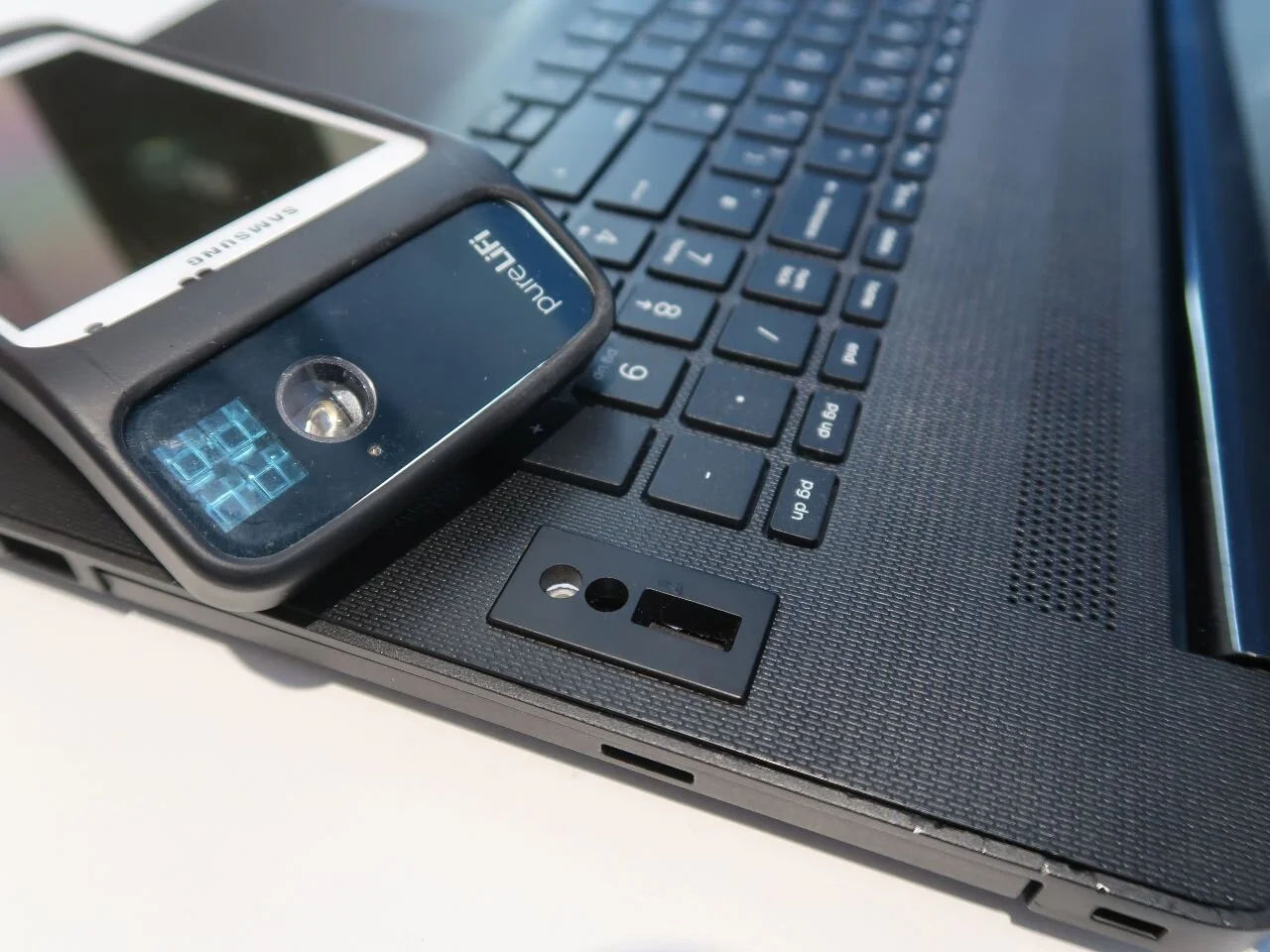
Light Rider announces Quantum Li-Fi Technology Products

Light Rider announces Quantum Li-Fi Technology Products
lifi 1.png

Light Rider Inc

Light Rider Inc, a US-based quantum Li-Fi company, recently announced the unveiling of their quantum Li-Fi products coming up next year in 2021.  Light Rider states that they are a quantum Li-Fi company leveraging the supernatural behaviour of quantum physics for the creation of secure and unparalleled encryption products with their patented technology.

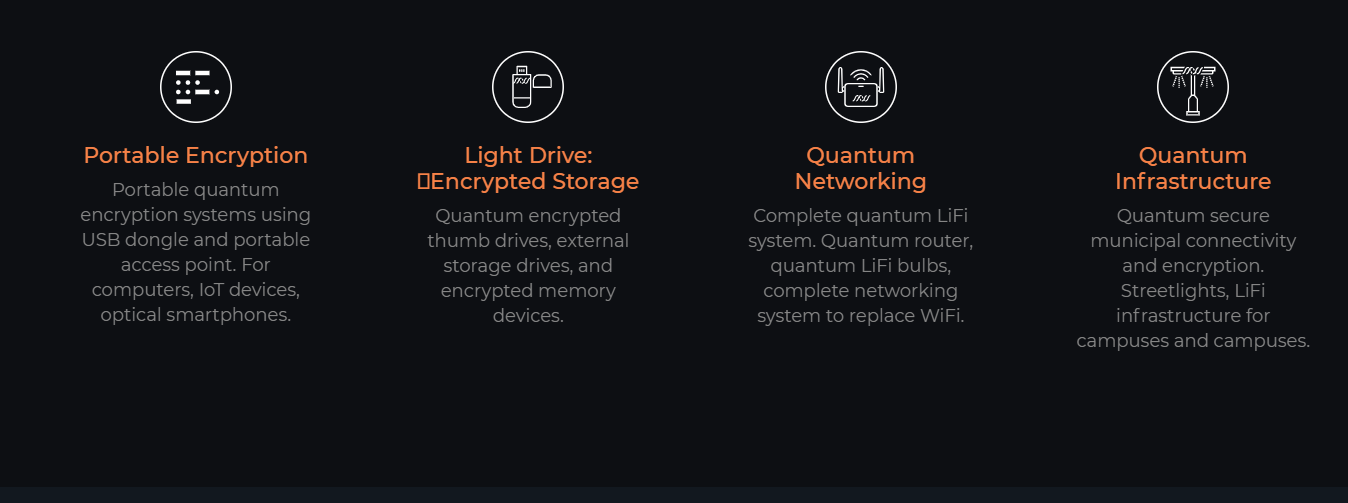
Light Rider is introducing four strategic product lines into the marketplace that will help individuals, businesses, cities, and governments prepare for the coming quantum revolution. Their four primary product lines cover everything from everyday encryption to connected cities, and it all starts with our first two encryption products, Light Rider LT and Light Rider Quantum coming up in late 2020.
Credit to Lightrider

Credit to Lightrider

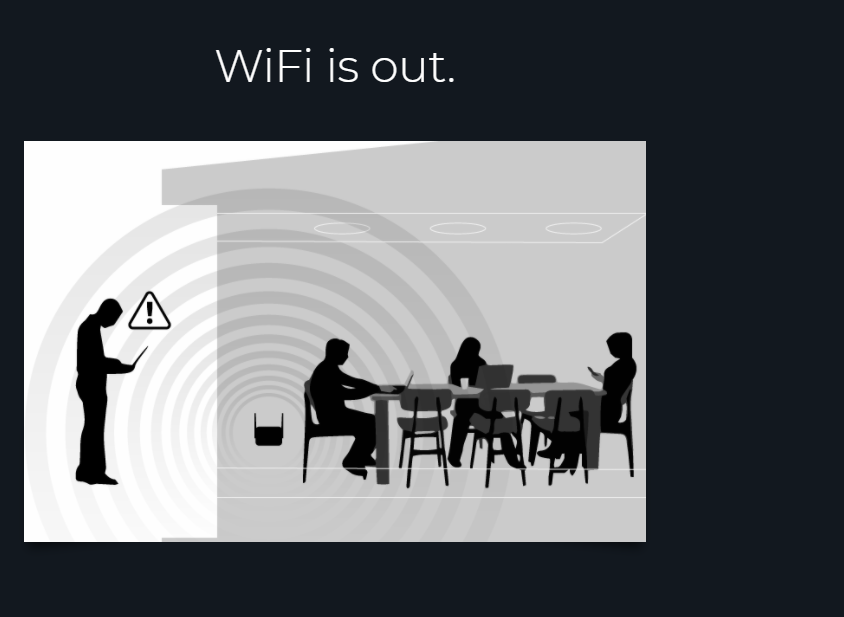
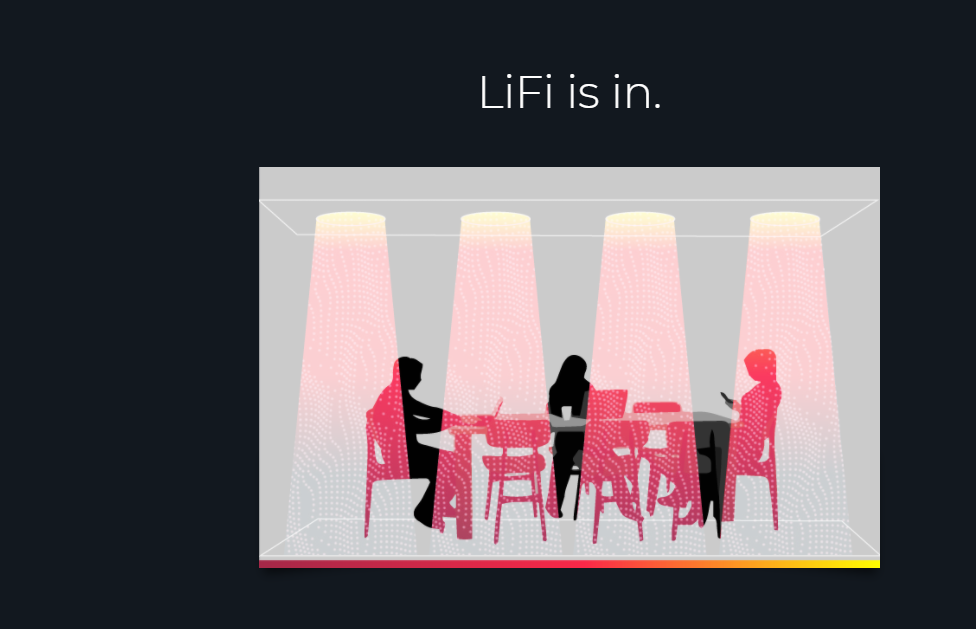
“Traditional methods and technologies are full of vulnerabilities, so we created Light Rider to design and develop products that would enable the most secure network encryption possible,” said Tony Lawrence, CEO, and founder of Light Rider. “There is a global race to operationalise quantum technology, meaning those inflicting cyber threats will have access to this superior technology. Our mission at Light Rider is to equip businesses, organisations, and individuals with powerful, quantum Li-Fi technology that will protect their data, as we strive to create products that are un-hackable.
Credit to Lightrider

Credit to Lightrider

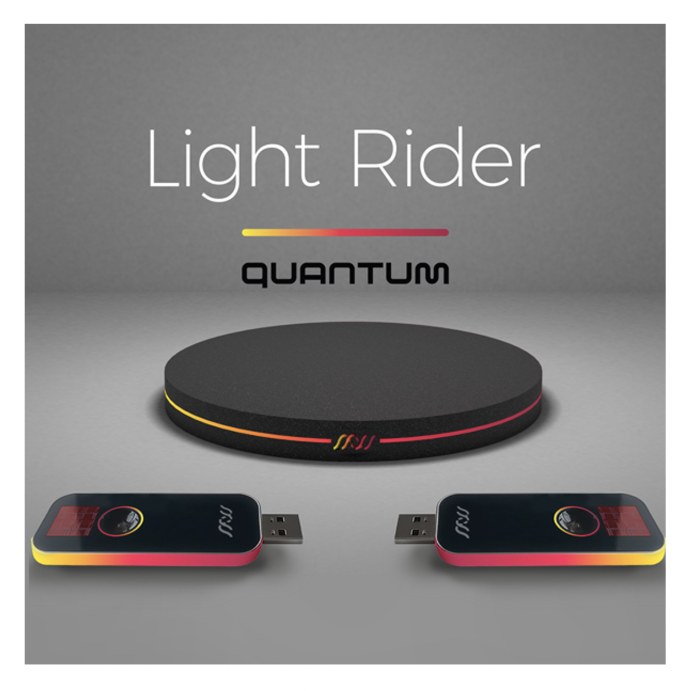
Light Rider’s first two products, Light Rider LT and Light Rider Quantum will be available in 2020 with more products on the way. Their LT and Quantum products are plug and play encryption systems that can protect your connected devices right out of the box. This first step is a quantum leap for those looking for a next-generation encryption system that can deliver unparalleled protection on the go.

Light Rider Products
lifi 2.png

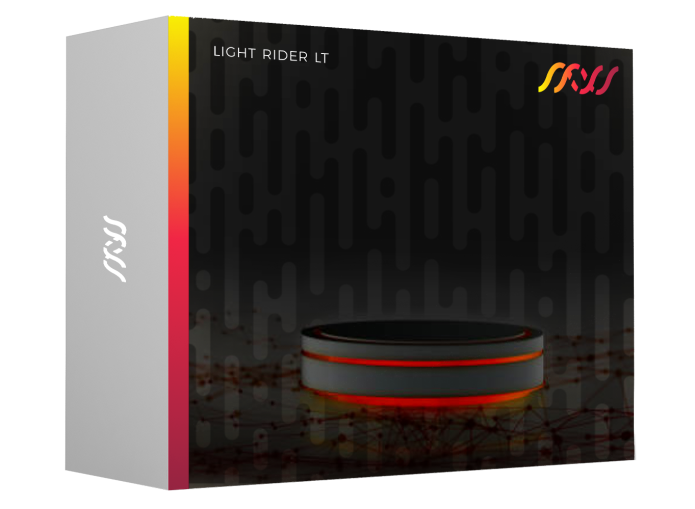
The first two products, Light Rider LT and Light Rider Quantum will be the first quantum encryption products for individual users to hit the market.

Light Rider LT
lifi 9.PNG

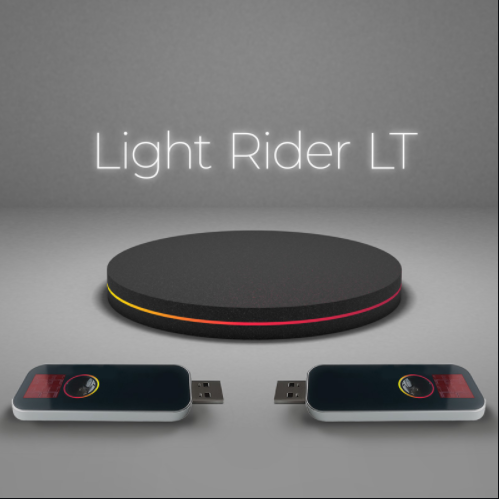
Perfect for home and individual use, Light Rider LT uses quantum software to create the encrypted networking space you need. Simply plug in the Access Point into a USB port or wall outlet and then connect one of the USB Access Dongles to your laptop to begin. A quick start prompt will then guide you through configuring your Light Rider system. All you need to do is ensure that your laptop, Access Point, and Access Dongle are all in the same room and you’ll be set up in no time. Perfect for Home use and individuals.

Light Rider Quantum
lifi 10.PNG

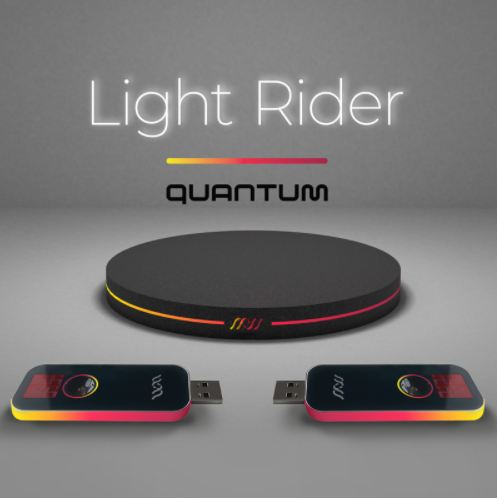
Perfect for protecting the most vital of information for small, medium, or enterprise uses, Light Rider Quantum uses built-in quantum encryption via a quantum chip to create the encrypted networking space you need. Simply plug in the Access Point into a USB port or wall outlet and then connect one of the USB Access Dongles to your laptop to begin. A quick start prompt will then guide you through configuring your Light Rider system. All you need to do is ensure that your laptop, Access Point, and Access Dongle are all in the same room and you’ll be set up in no time. Perfect for offices, businesses, campuses

The difference between the LT and Quantum versions?

Light Rider has only just begun launching new quantum and quantum LiFi products into the market. Currently, the LT and Quantum products serve as quantum encryption systems for your computer and do not utilize LiFi for Internet connectivity. Future Light Rider products will actually create a quantum encrypted LiFi system with quantum-integrated light bulbs that will create a fortress of secure communications in your home or office. Our current product sets are focused on fast and simple quantum encryption right out of the box. The LT version uses quantum software for encryption, the Quantum version contains an actual quantum chip, the most secure encryption method available that leverages onboard processing capabilities for lightning-fast encryption.

You can preorder their first two products at the following link if you are based in the United States:

https://www.indiegogo.com/projects/light-rider-launch#/

What is Li-Fi?

Li-Fi, also known as "Light Fidelity" is a wireless optical networking technology, which uses light-emitting diodes (LEDs) to transmit data. In 2011, professor Harald Haas made a Li-Fi demonstration at the TED (Technology, Entertainment, Design) Global Talk on Visible Light Communication (VLC):

VLC uses light as a medium to deliver high-speed communication like Wi-Fi and complies with the IEEE standard IEEE 802.15.7. The IEEE 802.15.7 is a high-speed, bidirectional, and fully networked wireless communication technology-based standard similar to Wi-Fi's IEEE 802.11.

How does Li-Fi work?

Li-Fi is a high speed, bidirectional, and fully networked wireless communication of data using light. Li-Fi constitutes of several light bulbs that form a wireless network.

When an electrical current goes through to a LED light bulb, a stream of light (photons) emits from the lamp. LED bulbs are semiconductor devices, which means that the brightness of the light flowing through them can change at extremely high speeds. The signal is sent by modulating the light at different rates. The signal can then be received by a detector which interprets the changes in light intensity (the signal) as data. Also when the LED is ON, you transmit a digital 1, and when it is OFF, you transmit a 0.

In conclusion, if you are also interested to hear more information about the OWNII Coin, investing in it, or to enquire about Li-Fi devices, you can contact our chatbot or send an email through our contact us form. If you enjoyed this post and would like to hear more updates about Li-Fi technology, subscribe to our newsletter. Don’t forget to subscribe to our social media accounts. You can also join on our Telegram group about Li-Fi technology on this link:

https://t.me/joinchat/DcGyJRTMzpodEuCZa1OgHw

Fraunhofer HHI announces a new toolkit for the simulation of networked Li Fi systems

Fraunhofer HHI announces a new toolkit for the simulation of networked Li Fi systems

Fraunhofer HHI

The Fraunhofer Institute for Telecommunications, Heinrich Hertz Institute, HHI, also known as Fraunhofer HHI or Fraunhofer Heinrich Hertz Institute, is an organisation of the Fraunhofer Society based in Berlin. The institute engages in applied research and development in the fields of physics, electrical engineering and computer sciences.

The Fraunhofer Heinrich Hertz Institute develops mobile and stationary broadband communication networks and multimedia systems. Focal points of independent and contract research conducted by Fraunhofer HHI are photonic components and systems, fiber optic sensor systems, and image signal processing and transmission. Future applications for broadband networks are developed as well. Research in this area focuses on 3D displays, UHD panorama video production, human-machine interaction through gesture control, optical satellite communication and data transmission technologies such as visible light communications.

A research team from the "Photonic Networks and Systems" department has now created a new toolkit for the simulation of networked LiFi systems.

The research team's implementations are based on a long-term developed MATLAB signal processing toolbox with algorithms being verified by numerous simulations, laboratory experiments, and tests. The LiFi software suite can be used to complete link level simulation chains and to validate LiFi transmission and receive components.

When used for system-level (multilink) simulations, it is possible to optimise LiFi for different applications such as for conference rooms, operating rooms or industrial manufacturing environments. This also supports the further development of standards.

LiFi software suite components can be used individually or as a complete package and can be adapted to specific requirements. Different licensing models depending on individual customer needs are available.
The software was developed within the German research projects OWICELLS , SESAMAIRBORNEERIKA and OTB-5G+ and the European projects VISION and ELIoT.

What is Li-Fi?

Li-Fi, also known as "Light Fidelity" is a wireless optical networking technology, which uses light-emitting diodes (LEDs) to transmit data. In 2011, professor Harald Haas made a Li-Fi demonstration at the TED (Technology, Entertainment, Design) Global Talk on Visible Light Communication (VLC):

VLC uses light as a medium to deliver high-speed communication like Wi-Fi and complies with the IEEE standard IEEE 802.15.7. The IEEE 802.15.7 is a high-speed, bidirectional, and fully networked wireless communication technology-based standard similar to Wi-Fi's IEEE 802.11.

How does Li-Fi work?

Li-Fi is a high speed, bidirectional, and fully networked wireless communication of data using light. Li-Fi constitutes of several light bulbs that form a wireless network.

When an electrical current goes through to a LED light bulb, a stream of light (photons) emits from the lamp. LED bulbs are semiconductor devices, which means that the brightness of the light flowing through them can change at extremely high speeds. The signal is sent by modulating the light at different rates. The signal can then be received by a detector which interprets the changes in light intensity (the signal) as data. Also when the LED is ON, you transmit a digital 1, and when it is OFF, you transmit a 0.

In conclusion, if you are also interested to hear more information about the OWNII Coin, investing in it or to enquire about Li Fi devices, you can contact our chatbot or send an email through our contact us form. If you enjoyed this post and would like to hear more updates about Li-Fi technology, subscribe to our newsletter. Don’t forget to subscribe to our social media accounts. You can also join on our Telegram group about Li-Fi technology on this link:

https://t.me/joinchat/DcGyJRTMzpodEuCZa1OgHw

Signify announces Li-Fi Partnership with Edzcom for quickening the adoption of Li-Fi Technology

Signify announces Li-Fi Partnership with Edzcom for quickening the adoption of Li-Fi Technology


trulifi-2.jpg

Signify

Signify made the announcement on their website that they have partnered with Edzcom for spreading Li-Fi adoption in the manufacturing industry.

Signify is the new brand name of Philips Lighting. The name change occurred in March 2018 to represent the transformation from an analog lighting company into digital lighting and Internet of Things (IoT) company. Signify is the world leader in lighting for professionals, consumers, and lighting for the Internet of Things. The company provides lighting solutions for professional segments such as automotive, healthcare, horticulture, office, outdoor, phototherapy, petrol stations, solar, purification, schools, fashion, cinema, and more. These lighting solutions include indoor and outdoor luminaires, lamps, electronics, lighting controls, lighting control software, IoT systems, and platforms.

Signify that it has partnered with EDZCOM, a Finnish 4G and 5G networking company that will use Signify’s LED-based Trulifi system as part of wireless connectivity schemes in industrial settings.

“Combining Trulifi and EDZCOM’s strengths and capabilities will benefit industries that heavily rely on the cluttered radio spectrum for data communications,” said Signify chief innovation officer Olivia Qiu. “Trulifi can help to offload conventional radio technologies and offers reliable, secure, and high-speed network connectivity where it’s needed.”

Edzcom

Edzcom is a Finnish-based provider of private 4G LTE and 5G NR mobile data networks for the industrial and governmental sectors. It was founded in 2014 as a spiritual successor to the bankrupt company Datame (fi), formerly a CDMA2000 wireless broadband operator owned by 11 companies under the Finnet group of telephone cooperatives. Since summer 2016, Edzcom also provides coverage in the self-governing Åland Islands in partnership with Ålcom, which took a minority stake.

EDZCOM designs, builds, and operates Edge Connectivity solutions. Edge Connectivity is a private wireless solution, seamlessly connecting assets, equipment, and people in the field to enable efficient management of critical operations.

EDZCOM CEO Mikko Uusitalo said: “Signify’s Trulifi is an innovative form of wireless communication that will broaden the scope of business-critical operations solutions we offer to our global customer base”. “Trulifi complements EDZCOM’s offering by providing fast and secure fixed hot-spot communication links.”

What is Li-Fi?

Li-Fi, also known as "Light Fidelity" is a wireless optical networking technology, which uses light-emitting diodes (LEDs) to transmit data. In 2011, professor Harald Haas made a Li-Fi demonstration at the TED (Technology, Entertainment, Design) Global Talk on Visible Light Communication (VLC):

VLC uses light as a medium to deliver high-speed communication like Wi-Fi and complies with the IEEE standard IEEE 802.15.7. The IEEE 802.15.7 is a high-speed, bidirectional, and fully networked wireless communication technology-based standard similar to Wi-Fi's IEEE 802.11.

How does Li-Fi work?

Li-Fi is a high speed, bidirectional, and fully networked wireless communication of data using light. Li-Fi constitutes of several light bulbs that form a wireless network.

When an electrical current goes through to a LED light bulb, a stream of light (photons) emits from the lamp. LED bulbs are semiconductor devices, which means that the brightness of the light flowing through them can change at extremely high speeds. The signal is sent by modulating the light at different rates. The signal can then be received by a detector which interprets the changes in light intensity (the signal) as data. Also when the LED is ON, you transmit a digital 1, and when it is OFF, you transmit a 0.

In conclusion, if you are also interested to hear more information about the OWNII Coin or investing in it, you can contact our chatbot or send an email through our contact us form. If you enjoyed this post and would like to hear more updates about Li-Fi technology, subscribe to our newsletter. Don’t forget to subscribe to our social media accounts. You can also join on our Telegram group about Li-Fi technology on this link:

https://t.me/joinchat/DcGyJRTMzpodEuCZa1OgHw

Oppo Mobile Telecommunications filed a design patent for a smartphone with Li-Fi components

Oppo Mobile Telecommunications filed a design patent for a smartphone with Li-Fi components

li fi 4.PNG

Oppo


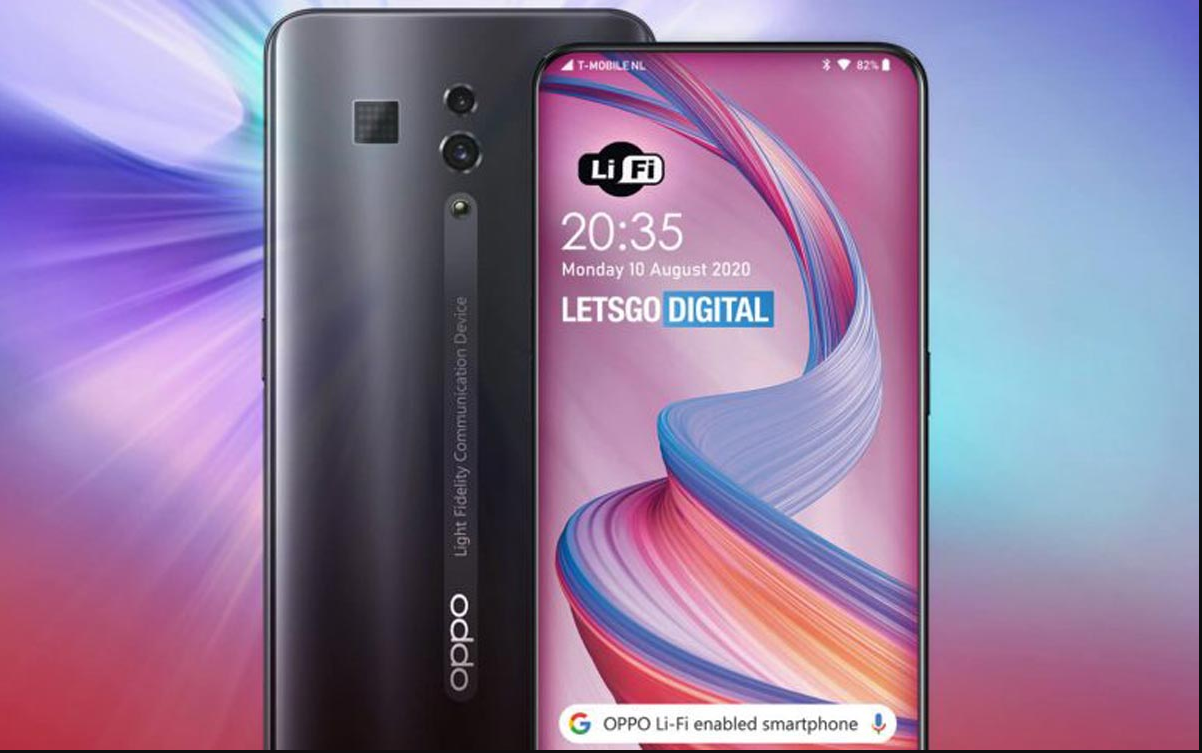
Guangdong Oppo Mobile Telecommunications Corp., Ltd, stylized as oppo, is a Chinese consumer electronics and mobile communications company headquartered in Dongguan, Guangdong. It is a subsidiary of BBK Electronics Corporation along with OnePlus, Vivo, and Realme. Its major product lines include smartphones, audio devices, Blu-ray players, and other electronic products. In December 2019, a design patent was filed by Guangdong Oppo Mobile Telecommunications with the CNIPA (China National Intellectual Property Office). The patent was published on July 31, 2020, and includes 24 product images, combined with a short description showing that this smartphone is suitable for Li-Fi communication.

It is a modern smartphone with narrow screen edges and full-screen design. No front camera is visible. The images show that this Oppo phone will be equipped with a pop-up camera, as we know from the Oppo Reno series.

A rectangle can be seen on the pop-up system, which is used for LiFi communication. This also applies to the rear, right next to the centrally placed vertical camera system, a square Li-Fi device can be seen, which works as a receiver. The photodetector converts the changes in amplitude into an electrical signal to enable Li-Fi communication with the smartphone.

Image from LETSGODIGITAL

Image from LETSGODIGITAL

The patent images also show a dual camera, however, it is quite possible that Oppo will eventually choose three, or even four cameras - as we often see with the Oppo 2020 smartphone models. The small circle under the camera system is striking. This characteristic circle is also called the O-Dot by Oppo and is only used within the Reno telephone series.

The small protruding O-Dot ensures that the phone does not only rest on the camera system when you put the device flat on the table. We can deduce from the O-Dot, combined with the pop-up camera system, that Oppo wants to place this smartphone within the relatively new and extremely innovative Reno series.

There is also a microphone on both the top and bottom of the device as well as a speaker, a SIM card slot, and a USB-C connection at the bottom. The power button can be found on the right and the button on the left logically provides access to the volume settings.


The Oppo Li-Fi Patent


A design patent is only intended to record the design, so little is stated about how Oppo intends to apply the Li-Fi technology. However, the investigative journalists at LetsGoDigital have dug deeper for additional information, and during their search found out that three days after filing this design patent, Oppo also filed an associated utility patent in China.

In the patent called 'Li-Fi device and projection system with the same', it is extensively discussed how Oppo intends to apply LiFi in mobile devices. The patented Li-Fi device can be installed in a smartphone and consists of a housing, a printed circuit board, and a Li-Fi module for signal reception.

Li-Fi not only provides a significantly higher transmission speed than WiFi but the technology is also characterised by a lower latency (delay) just like 5G, it is also possible to transfer high-resolution images with a high frame rate, for example, large video and audio files) - as stated in the patent description.

What is Li-Fi?

Li-Fi, also known as "Light Fidelity" is a wireless optical networking technology, which uses light-emitting diodes (LEDs) to transmit data. In 2011, professor Harald Haas made a Li-Fi demonstration at the TED (Technology, Entertainment, Design) Global Talk on Visible Light Communication (VLC). Below is a video demonstration of Li-Fi technology by professor Harald Haas:

VLC uses light as a medium to deliver high-speed communication like Wi-Fi and complies with the IEEE standard IEEE 802.15.7. The IEEE 802.15.7 is a high-speed, bidirectional, and fully networked wireless communication technology-based standard similar to Wi-Fi's IEEE 802.11.


How does Li-Fi work?

Li-Fi is a high speed, bidirectional, and fully networked wireless communication of data using light. Li-Fi constitutes of several light bulbs that form a wireless network.

When an electrical current goes through to a LED light bulb, a stream of light (photons) emits from the lamp. LED bulbs are semiconductor devices, which means that the brightness of the light flowing through them can change at extremely high speeds. The signal is sent by modulating the light at different rates. The signal can then be received by a detector which interprets the changes in light intensity (the signal) as data. Also when the LED is ON, you transmit a digital 1, and when it is OFF, you transmit a 0.

Nav Wireless announces the development of a Li-Fi tech-based communication facility at Surat Municipal Institute of Medical Education & Research

Nav Wireless announces the development of a Li-Fi tech-based communication facility at Surat Municipal Institute of Medical Education & Research

Gigabit LiFi with mobile case.jpg

Nav Wireless Technology Ltd

Nav Wireless Technology, an R&D initiative in wireless technologies, is currently developing a Li-Fi (Light Fidelity) technology-based communication facility at SMIMER (Surat Municipal Institute of Medical Education & Research). The company has extended its expertise to provide faster and safer light-based communication for COVID-19 patients and all the medical professionals.

In regards to COVID 19 cases, SMIMER developed isolation wards in a very short amount of time. Nav Wireless Technology stated:

“We are the only company in Asia in the Li-Fi sector to receive the first commercial Li-Fi project for the healthcare sector. We will set up around 600 such units there which are completely MADE IN INDIA. All the formalities related to this initiative have been completed with respective authority and we will start the commencement of the installation process very shortly", said Hardik Soni, co-founder & CTO, Nav Wireless Technology.

Constant monitoring of the patient's health condition in the hospital is either manual or wireless fidelity (Wi-Fi)-based system in the ICU. The Wi-Fi-based system becomes slow in speed due to exponentially increased scalability. In this scenario, Li-Fi finds the places wherever Wi-Fi is applicable with additional features of a high-speed data network. Apart from the speed factor, Li-Fi is a more suitable in-hospital application for monitoring the patient's conditions without frequency interference with the human body.

"We saw the live demonstration for monitoring the patient’s conditions such as SPO2, ECG, HR, NIBP using respective sensors integrated with these Li-Fi Transceivers. The data was processed with LiFi transceivers and sent to display unit in the form of graphs, charts, or in required formats that is helpful for the medical teams during the treatment of COVID-19 cases”, said Dr. V S Srivastav, Professor, and Head, Department of Medicine, SMIMER.

With this, all the patients and medical staff for more than 1,000 beds isolation wards will be able to use a radiation-free communication network, connected to hospital instruments such as ventilators data, etc. Furthermore, they will access the internet with a lighting speed compared to existing Wi-Fi internet.

"The Transceiver's network in the hospital for monitoring the patient's conditions such as temperature, pressure, heartbeat, glucose level, and respiratory conditions using respective sensors integrated with our LiFi Transceivers. NavTech LiFi Transceiver developed to increase data security, high capacity, and high speed, eco friendly, and with patient safety," said Soni.

Li-Fi is a mobile wireless technology that uses light rather than radio frequencies to transmit data. In India, Nav Wireless is the only player working on Li-Fi in this segment. The company has successfully installed such a Li-Fi technology-based communication facility for various government institutions and private premises. With LiFi technology-based solutions, Doctors and Hospital Staff are minimized to the risk of spreading coronavirus disease and at the same time provide a live health data monitoring system.

Source: http://pharmabiz.com/NewsDetails.aspx?aid=129465&sid=2

If you enjoyed this post and would like to hear more updates about Li-Fi technology, subscribe to our newsletter. Don’t forget to subscribe to our social media accounts.

You can also join on our Telegram group about Li Fi technology on this link:

https://t.me/joinchat/DcGyJRTMzpodEuCZa1OgHw
CEA-Leti announces a throughput world record 5.1 to 7.7 Gbps in (VLC) using a single GaN blue micro- light-emitting diode (LED)

CEA-Leti announces a throughput world record 5.1 to 7.7 Gbps in VLC using a single GaN blue micro- light-emitting diode (LED)

dark background 4.PNG

CEA-Leti Announcement

A few weeks ago, CEA-Leti, a Grenoble, France-based research institute for electronics and information technologies and one of the world's largest organizations for applied research in microelectronics and nanotechnology, made the announcement of the throughput world record of 5.1 Gbps in visible light communications (VLC) using a single GaN blue micro- light-emitting diode (LED).

Their data transmission rate of 7.7 Gbps achieved with a 10 µm microLED marks another step toward commercialisation and widespread use of LiFi communication.

Benoit Miscopein, a CEA-Leti research scientist, stated that Li Fi technology has exciting potential for mass-market applications. He further stated: "Multi-LED systems could replace WiFi, but wide-scale adoption will require a standardization process to ensure the systems' interoperability between different manufacturers. The Light Communications Alliance was created in 2019 to encourage the industry to implement this standardization.

CEA-Leti MicroLED Li Fi system

CEA-Leti MicroLED Li Fi system

CEA-Leti said that: “In addition to a stand-alone WiFi-like standard, the possibility to include this new technology as a component carrier in the downlink of 5G-NR, a radio-access technology for 5G mobile considerations, is also under investigation to bring a large additional license-free bandwidth. This may be feasible because CEA-Leti's LiFi physical layer relies on the same concepts as WiFi and 5G technologies," said Miscopein. "Matrices of thousands of microLEDs could also open the way to mid- to long-range applications, such as indoor wireless multiple access.”

To preserve the bandwidth of each microLED within a matrix, it requires that each signal is generated as close as possible to the micro-optical source. CEA-Leti said: o meet this challenge, we expect to hybridise the microLED matrix onto another matrix of CMOS drivers: one simple CMOS driver will pilot one microLED," Miscopein said. "This will also enable the additional feature of piloting each microLED pixel independently, and that allows new types of digital-to-optical waveforms that could eliminate the need for digital-to-analog converters commonly used in the conventional 'analogue' implementations of LiFi.

Source: http://www.leti-cea.com/cea-tech/leti/english/Pages/What%27s-On/Press%20release/CEA-Leti-Researchers-Break-Throughput-Record-for-LiFi-Communications-Using-Single-GaN-Blue-Micro-Light-Emitting-Diode.aspx

What is Li Fi?

Li-Fi, also known as "Light Fidelity" is a wireless optical networking technology, which uses light-emitting diodes (LEDs) to transmit data. In 2011, professor Harald Haas made a Li-Fi demonstration at the TED (Technology, Entertainment, Design) Global Talk on Visible Light Communication (VLC). Below is a video demonstration of Li-Fi technology by professor Harald Haas:

VLC uses light as a medium to deliver high-speed communication like Wi-Fi and complies with the IEEE standard IEEE 802.15.7. The IEEE 802.15.7 is a high-speed, bidirectional, and fully networked wireless communication technology-based standard similar to Wi-Fi's IEEE 802.11.

How does Li-Fi work?

Li-Fi is a high speed, bidirectional, and fully networked wireless communication of data using light. Li-Fi constitutes of several light bulbs that form a wireless network.

When an electrical current goes through to a LED light bulb, a stream of light (photons) emits from the lamp. LED bulbs are semiconductor devices, which means that the brightness of the light flowing through them can change at extremely high speeds. The signal is sent by modulating the light at different rates. The signal can then be received by a detector which interprets the changes in light intensity (the signal) as data. Also when the LED is ON, you transmit a digital 1, and when it is OFF, you transmit a 0.

In conclusion, if you are interested to hear more information about the OWNII Coin or investing in it, you can contact our chatbot or send an email through our contact us form. If you enjoyed this post and would like to hear more updates about Li-Fi technology, subscribe to our newsletter. Don’t forget to subscribe to our social media accounts.

You can also join on our Telegram group about Li Fi technology on this link:

https://t.me/joinchat/DcGyJRTMzpodEuCZa1OgHw

OWNII Coin (Li Fi Cryptocurrency) - Launch Update

OWNII Coin (Li Fi Cryptocurrency) - Launch Update

A while back, we wrote an article about a Li-Fi cryptocurrency called “OWNII Coin”. Global Greenology, a privately owned global manufacturing and design company specialising in environmentally friendly, energy-efficient building solutions, developed a cryptocurrency for Li-Fi implementation.

What are cryptocurrencies?

crypto 1.PNG

Cryptocurrencies are virtual or digital currencies that have no centralised regulating authority. This means that money is produced and transferred without the intermediation of banks. Cryptography is used as a means of ensuring transaction security.

Bitcoin, created in 2009, was the first decentralised cryptocurrency and remains the most expensive virtual currency worldwide. Other popular cryptocurrencies include: Bitcoin Cash, Ethereum, Dash, Mixin, Litecoin, Zcash, Bitcoin SV and Monero. The cryptocurrency used in the most transactions daily was Ethereum in 2019.

The decentralised control of each cryptocurrency works through Blockchain, a public transaction database that functions as a distributed ledger. The size of Bitcoin Blockchain grows from year to year and it mounted to around 242 gigabytes as of the third quarter of 2019.

crypto 2.PNG

The prices of cryptocurrencies are quite unstable and strongly dependent on the market sentiment. The price of Bitcoin, for example, experienced an increase from about 371 U.S. dollars in January 2016 to a peak of over 13 thousand by December 2017. Also, market capitalisation of Bitcoin experienced a rapid growth in that time period.

What is OWNII Coin?

photo6010351696603100320.jpg

OWNII stands for Optical Wireless Network Internet Infrastructure. OWNII Coin is developed to oversee, develop, and design the physical infrastructure necessary to implement Li-Fi in the United States and developing nations abroad and is sold privately. The pureLiFi company has manufactures and distributes the equipment needed to stream communication through existing LED bulbs but to implement Li-Fi , installation of this equipment is necessary.

Global Greenology, creator of OWNII Coin, states that the OWNII Coin will promote the creation of a new internet infrastructure in the United States and worldwide. It will also create numerous opportunities for employment, business ownership, and entrepreneurial endeavours selling equipment and services. The multiple streams of revenue that OWNII Coin represents brings unprecedented value. Once launched, the infrastructure creates new technology, software, products and services making this coin and ecosystem very valuable.

OWNII coin and the resulting financial capital it generates allows Global Greenology the opportunity to build the OWNII Ecosystem and effectively provide the technology to reach the end user and provide opportunities for manufacturing of the Li-Fi light bulbs and connection devices. It opens a level playing field for the smaller business owner or an entrepreneurial start-up company to get involved on the ground floor of this opportunity.

crypto 3.PNG

OWNII creates wireless communication, that is faster, addresses issues with internet security, allows localisation due to small coverage area of Li-Fi access points used for precise asset tracking. Furthermore, providing ubiquitous high-speed wireless access that offers substantially greater data density (data rate per unit area) than RF through high bandwidth reuse.

Finally, the OWNII Coin system exploits the advantages of cryptocurrencies over fiat currencies as a medium of exchange. In particular, it does not require any single agent or institution be trusted to keep an honest ledger, provide low transactions costs, or offer increased security to customers. The technical elements and infrastructure needed to implement the OWNII Coin system is already established and ready for execution, the only real challenge is the dissemination. Global Greenology’s establishment of the OWNII Coin system has the potential to disrupt our current expensive wireless communication system.

The primary benefits of Li Fi are as follows:

Security: Provides entirely secure access. Where there is no light there is no data.

Safety: Does not produce electromagnetic radiation and does not interfere with existing electronic systems.

Localisation: Allows localisation due to small coverage area of Li-Fi access point - localisation can be used for very precise asset tracking.

Data density: Provides ubiquitous high-speed wireless access that offers substantially greater data density (data rate per unit area) than RF through high bandwidth reuse.

Launch Update

photo6010351696603100319.jpg

Due to the current Corona virus pandemic, the public launch is being delayed. However, Global Greenology is currently planning the launch of OWNII Coin in 2 phases. The first phase being a private sell of the token in which you can pledge to purchase your amount but will not have to pay for it until the market stabilised. The second phase will be a public purchase just before going live on the exchange. A website specifically for the OWNII coin is also being developed by Global Greenology. Li Fi Tech News will keep you updated on the progress of the OWNII Coin.

In conclusion, if you are interested to hear more information about the OWNII Coin or investing in it, you can contact through our chatbot or send an email through our contact us form. If you enjoyed this post and would like to hear more updates about Li-Fi technology, subscribe to our newsletter. Don’t forget to subscribe on our social media accounts. You can also join on our Telegram group about Li Fi technology on this link:

https://t.me/joinchat/DcGyJRTMzpodEuCZa1OgHw