Will Bitcoin Ever Be Regulated?

Will Bitcoin Ever Be Regulated?

As Bitcoin and other digital assets continue to grow in adoption and popularity, a common topic for discussion is whether the U.S. government, or any government for that matter, can exert control over its use.  There are two core issues that lay the foundation of the Bitcoin regulation debate:

The digital assets pose a macro-economic risk.

Bitcoin and other cryptocurrencies can act as surrogates for an international currency, which throws global economics a curveball. For example, countries such as Russia, China, Venezuela, and Iran have all explored using digital currency to circumvent United States sanctions, which puts the US government at risk of losing its global authority. 

International politics and economics are a very delicate issue, and often sanctions are used in place of military boots on the ground, arguably making the world a safer place. 

The micro risks enabled by cryptocurrency weigh heavily in aggregate.

One of the most attractive features of Bitcoin and other digital assets is that one can send anywhere between a few pennies-worth to billions of dollars of Bitcoin anywhere in the world at any time for a negligible fee (currently around $0.04 to $0.20 depending on the urgency.) 

However, in the hands of malicious parties, this could be very dangerous. The illicit activities inherently supported by a global decentralized currency run the gamut: terrorist funding, selling and buying illegal drugs, ordering assassinations, dodging taxes, laundering money, and so on. 

Can Bitcoin Even Be Regulated?

Before diving deeper, it’s worth asking whether Bitcoin can be regulated in the first place.  The cryptocurrency was built with the primary purpose of being decentralized and distributed– two very important qualities that could make or break Bitcoin’s regulation. 

By being decentralized, Bitcoin doesn’t have a single controlling entity. The control of Bitcoin is shared among several independent entities all over the world, making it nearly impossible for a single entity to wrangle full control over the network and manipulate it as they please. 

By being distributed, Bitcoin exists at many different locations at the same time. This makes it very difficult for a single regulatory power to enforce its will across borders. This means that a government or other third party can’t technically raid an office and shut anything down. 

That being said, there are several choke points that could severely hinder Bitcoin’s adoption and use.

Targeting centralized entities: exchanges and wallets 

A logical first move is to regulate the fiat on ramps (exchanges) , which the United States government has finally been getting around to. In cryptocurrency’s nascent years, cryptocurrency exchanges didn’t require much input or approval from regulatory authorities to run. However, the government started stepping in when cryptocurrency starting hitting the mainstream. 

The SEC, FinCEN (Financial Crimes Enforcement Network), and CFTC have all played a role in pushing Know Your Customer (KYC) protocols and Anti-Money Laundering (AML) policies across all exchanges operating within U.S borders.  

Cryptocurrency exchanges have no options but to adhere to whatever the U.S. government wants. The vast majority of cryptocurrency users rely on some cryptocurrency exchange to utilize their cryptocurrency, so they will automatically bend to exchange-imposed regulation. 

Regulators might not be able to shut down the underlying technology that powers Bitcoin, but they can completely wreck the user experience for the great majority of cryptocurrency users, which serves as enough of an impediment to diminish the use of cryptocurrency for most. 

Targeting users.

The government can also target individual cryptocurrency users. Contrary to popular opinion, Bitcoin (and even some privacy coins) aren’t anonymous. An argument can be made that Bitcoin is even easier to track than fiat because of its public, transparent ledger. 

Combined with every cryptocurrency exchange’s willingness to work with U.S. authorities, a federal task force could easily track money sent and received from certain addresses and pinpoint the actual individual with it. Companies such as Elliptic and Chainalysis have already created solid partnerships with law enforcement in many countries to track down illicit cryptocurrency uses and reveals the identities behind the transactions. 

Beyond that, we dive into the dark web and more professional illicit cryptocurrency usage. Although trickier, the government likely has enough cyber firepower to snipe out the majority of cryptocurrency-related cyber crime. In fact, coin mixers (cryptoMixer.io), coin swap services (ShapeShift) and P2P bitcoin transactions (localbitcoins.com) have been investigated for several years now and most of them have had to add KYC and adhere to strict AML laws. 

Final Thoughts

Ultimately, it’s going to take a lot to enforce any sort of significant global regulation on Bitcoin, with the most important factor being a centralization and consensus of opinion. The majority of the U.S. regulatory alphabet agencies fall into the same camp of “protect the good guys, stop the bad guys”, but there isn’t really a single individual piece of guidance to follow. Currently, cryptocurrencies are regulated in the US by several institutions: CFTC, SEC, IRS, making it difficult to create overarching regulatory guidelines.  

In short, yes– Bitcoin can be regulated. In fact, its regulation has already started with the fiat on ramps and adherence to strict KYC & AML laws. While in countries such as Ecuador, Bolivia, Egypt and Morocco Bitcoin ownership is illegal, in the US, it would take some bending of the moral fabric of the Constitution in order for cryptocurrency ownership rights to be infringed.

However, it cannot be shut down. There are still ways to buy, sell, and trade Bitcoin P2P, without a centralized exchange. It would take an enormous effort by any government to completely uproot something as decentralized as Bitcoin, but that future seems more dystopian than tangible. 

Source for this article: https://albaronventures.com/will-bitcoin-ever-be-regulated/

Credit to Albaron ventures

Latécoère, Signify and Huneed Technologies Announce Strategic Partnership on Li-Fi Implementation in Commercial Aircraft

Latécoère, Signify, and Huneed Technologies Announce Strategic Partnership on Li-Fi Implementation in Commercial Aircraft

Latécoère

Latécoère, the partner of "Tier 1" of major international aircraft manufacturers, is pleased to announce the transition to the industrialisation of its Li-Fi technology, through a memorandum of agreement signed with Signify.

" The Paris Air Show 2019 allowed Latécoère to show the power and speed of Li-Fi. Our technology, which illustrates our leading position in terms of innovation, has raised high expectations from the market and is now ready to take the next step, says Yannick Assouad, CEO of Latécoère.  Signify and Huneed Technologies will open new horizons and new opportunities to Li-Fi, that its use is widespread in aircraft cabins. "

The Li-Fi technology allows a connectivity experience onboard a higher aircraft in terms of bandwidth, latency and stability. Another advantage of Li-Fi is that it does not interfere with sensitive equipment and that the connection is not affected by the movements of the aircraft. Li-Fi also reduces cabling and, coupled with an infrastructure upgrade to low-weight fibre optic solutions, will reduce the weight and fuel consumption of the plane.

Increasing the power of Li-Fi with the Trulifi system developed by Signify

Signify launched its Trulifi systems earlier this year and has installed around 100 projects worldwide. The Trulifi combines energy-efficient LED lighting with reliable, secure and high-speed wireless bi-directional connection, with speeds of up to 250 Mbps for the downlink and uplink.

" Through this partnership, Signify, and Latécoère will transform the passenger cabin experience by providing them with the latest connectivity technology," said Olivia Qiu, Director of Innovation at Signify. The Trulifi has enormous potential, and our ambition is, in addition to aircraft, to also provide this technology to other forms of public transport, so that users have access to a reliable, secure and fast Internet connection, wherever they are."  

As a first step, Trulifi will be used to connect the media players of the headrests. In a second phase, the Li-Fi will allow passengers to connect their devices to embedded media and the Internet, but also to interact with each other and to have the same connectivity experience onboard is on the ground.

Start of the industrialisation phase with Huneed Technologies

Huneed Technologies, a South Korean expert on tactical communications equipment and aerospace, became the third partner in the industrialisation of ' Li-Fi infrastructure in rooms Latécoère. The group will jointly develop with Latécoère for the development and production of the passenger distribution unit and the fibre optic router.

" We are thrilled to be recognised by Latécoère for our expertise in communication technology and knowledge production in the context of this innovative partnership," said Eugene Kim, President of ' Huneed Technologies. This opportunity is a perfect fit with our growth strategy to globally expand our business in the aerospace to ' commercial aviation. Huneed will supply Li-F's electronics and data communications software to enable widespread adoption of this technology, which will play a critical role in the next generation of smart booths to deliver the best possible passenger experience. "

About Latécoère 

Latécoère is a Tier 1 partner of major international aircraft manufacturers (Airbus, Embraer, Dassault, Boeing and Bombardier), in all segments of the aeronautical market (commercial, regional, business and military aircraft), in two areas:

• Aerostructures (58% of total turnover): fuselage sections and doors.          

• Interconnect systems (42% of total revenue): embedded cabling, bundles electric and avionics bays.

As of December 31, 2018, Latécoère employed 4,958 people in 13 different countries. Latécoère, a public limited company with a capital of 189,637,036 euros divided into 94,818,518 shares with a par value of 2 euros, is listed on Euronext Paris - compartment B. ISIN codes: FR000000032278 - Reuters: LAEP.PA - Bloomberg: LAT. FP

About Signify 

Signify (Euronext: LIGHT) is the world leader in lighting for professionals and individuals and lighting for the Internet of Things. Our Philips products, Interact connected lighting systems and data-driven services deliver business value and transform lives in homes, buildings and public spaces. With a turnover of 6.4 billion euros in 2018, we have around 27,000 employees and are present in more than 70 countries. We unlock the extraordinary potential of light for brighter lives and a better world.

About Huneed

Huneed Technologies, a long-time developer and manufacturer of tactical wireless communications systems for the South Korean military, is now ready to manufacture avionics hardware and become a global provider of maintenance, repair and overhaul services.

Over the last ten years, Huneed Technologies has gone from being a company to becoming a leading global supplier to Boeing Defense and Space. Prestigious achievements, including the Boeing Performance Excellence Award 2016 and a Boeing Supplier of the Year nomination, punctuated Huneed's reputation as a trusted global aviation supplier.

Huneed's strategic and measured growth in the aerospace market has allowed it to become the partner of choice for some of the world's largest aerospace companies.

Conclusion

Li-Fi will allow passengers to access a much higher level of bandwidth than the one currently provided by Wi-Fi. Passengers will access faster internet connection, download and stream content at the comfort of their seats.

Professor Haas said: “This technology is perfect for planes as it doesn’t interfere with radio signals in the same way as Wi-Fi, which uses radio waves. Instead, Li-Fi takes advantage of visible light.”

“Li-Fi is a game-changer for three reasons. First, it solves a ‘congestion’ issue. In the data-driven world that we live in, we are running out of radio spectrum. This is a problem in crowded places like airports and aircraft interiors as it means that the current available bandwidth does not support the hundreds of people wishing to use data-intensive applications and the internet in the same place at the same time. Li-Fi solves this issue by using 1,000 times the bandwidth compared with the entire radio frequency spectrum. This is additional free, unregulated bandwidth in the visible light spectrum.

“Second, it paves the way for local-area networks to be established, which means that passengers can make calls, use the internet and access in-flight entertainment systems more easily.

“Third, in a world fast being dominated by big data, safeguarding information is paramount. In the cabin, although Li-Fi signals can leak through windows, the technology offers greater protection to passengers than a Wi-Fi connection. But the biggest gains will be experienced by OEMs. Their manufacturing halls often have lots of LED lighting and few windows, which will enhance data security in their facilities.”


Top 15 Li-Fi Applications (updated list)

Top 15 Li-Fi Applications (updated list)

There are currently 4.3 billion active internet users. In the UK alone, the number of internet users amounted approximately 62.9 million, according to the data provided by the Central Intelligence Agency (CIA) Factbook.

According to a Global Market Insights' report, Li-Fi market value is expected to reach £59.2 billion by 2023. The Li-Fi market is estimated to exhibit high growth potential during the forecast period owing to technological advancements and increasing demand for high-speed data communication.

The energy-efficient LED, and provision of a secure wireless network is boosting the Li-Fi market. The growing internet usage through smartphones and other electronic gadgets is further fuelling the growth of Li-Fi market. Growing demand for innovations and increasing technological advancements are other factors responsible for fuelling the growth of Li-Fi market.

What is Li-Fi?

Li-Fi, also known as "Light Fidelity" is a wireless optical networking technology, which uses light-emitting diodes (LEDs) to transmit data. In 2011, professor Harald Haas made a Li-Fi demonstration at the TED (Technology, Entertainment, Design) Global Talk on Visible Light Communication (VLC). Below is a video demonstration of Li-Fi technology by professor Harald Haas:

VLC uses light as a medium to deliver high-speed communication like Wi-Fi and complies with the IEEE standard IEEE 802.15.7. The IEEE 802.15.7 is a high-speed, bidirectional and fully networked wireless communication technology-based standard similar to Wi-Fi's IEEE 802.11.

How does Li-Fi work?

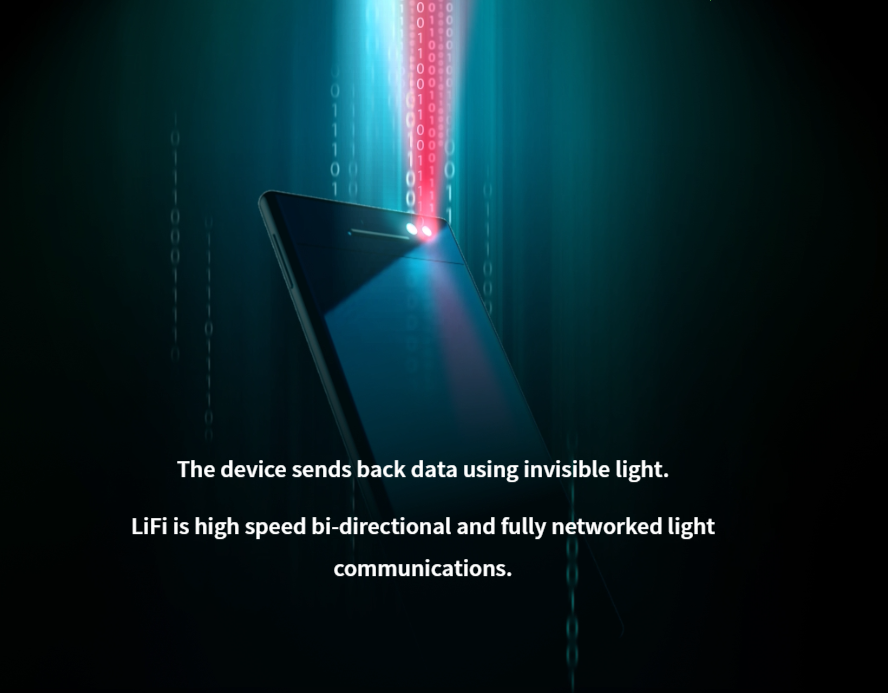
Li-Fi is high speed, bidirectional, and fully networked wireless communication of data using light. Li-Fi constitutes of several light bulbs that form a wireless network.

When an electrical current goes through to a LED light bulb, a stream of light (photons) emits from the lamp. LED bulbs are semiconductor devices, which means that the brightness of the light flowing through them can change at extremely high speeds. The signal is sent by modulating the light at different rates. The signal can then be received by a detector which interprets the changes in light intensity (the signal) as data. Also when the LED is ON, you transmit a digital 1, and when it is OFF, you transmit a 0.

Fig 1. pureLiFi - How Li-Fi work?

Fig 1. pureLiFi - How Li-Fi work?

Fig 2. pureLiFi - How Li-Fi work?

Fig 2. pureLiFi - How Li-Fi work?

Fig 3. pureLiFi - How Li-Fi work?

Fig 3. pureLiFi - How Li-Fi work?

The human eye can not see the intense modulation taking place. With this technique, data can be transmitted from a LED light bulb and back at high speeds.

1. Li-Fi and Live Streaming

According to a Go-Globe report, 82% of consumers prefer to watch live videos from a brand than posts, 80% of brand audience prefer to watch live video from a brand than read a blog and live videos are watched three times longer than videos that are not live anymore. Because of the rapid rates Li-Fi can reach, it can be made available in big shopping malls, sports stadium, street lights, aeroplanes, trains including underground, train stations, airports and hence. This allows any user to consume rich content media like videos as well as live streaming from their smartphones or other mobile devices nearly anywhere they are like in stadiums, trains and planes provided they are exposed to Li-Fi enabled LEDs. Li-Fi live streaming can also be beneficial for the following type of events:

-Conferences

-Seminars

-Meetings

-Team Building events

-Trade shows

-Business dinners

-Press conferences

-Networking events

-Opening Ceremonies

-Product launches

-Theme parties

-Award ceremonies

-Weddings

-Funerals

-Birthday parties

-Concerts

Li-Fi live streaming has a lot of potentials in many years to come.

2. Li-Fi in Hospitals

Because of the non-interference of Li-Fi with radiofrequency devices, Li-Fi can be safely used in many hospital applications. For example, in corridors, waiting rooms, patient rooms and operating theatres, Li-Fi technology will allow a light communication network, which will remove electromagnetic interference issues from smartphones and the use of Wi-Fi in hospitals. Li-Fi can be used for real-time monitoring and report of patient movement and vital signs without the need for wires.

Li-Fi can also enable patients on their beds connecting to internet news, emails, video games and social media platforms through their smartphones. This helps them pass the time during their stay. For medical workers, Li-Fi will enable the tracking and relocation of the positions of critical medical devices, especially those regularly shared by different departments. Check the below diagram for a summary of the benefits of Li-Fi in hospitals.

Oledcomm, one of the leading Li-Fi companies in the world, installed Li-Fi enabled led lights at the Emergency Hospital Centre of Perpignan in 2014. The hospital became the first worldwide hospital with Li-Fi spots in Perpignan. When a patient is admitted to the department and Dr Jean-Marie Bonnec, Emergency Department Head of Perpignan, wants to consult his medical file, he connects to a computer and the Internet. But the wireless connection is made without going through the Wi-Fi network. The wireless connection is made through a Li-Fi system.

Dr Jean-Marie Bonnec stated: " To be mobile between rooms, we are connected in Li-Fi, it is a connection without waves using light waves, thanks to a luminous reception box which will hang the signal on luminous relay terminals which are in the hallway, ".

Li-Fi connection limits the exposure of patients and medical personnel to radio waves.

The Li-Fi technology uses LED light modulated to transmit information to a dedicated receiver that decodes the data on the computer, tablet or smartphone. The transmitter/receiver intercepts the flicker emitted by the bulb and imperceptible to the naked eye.

" We use a conventional box, we get the Internet through the telephone network, the Wi-Fi is off and we send the entire Internet connection through the electricity network to each lamp. The lamp will start to flash more than ten million times a second to transmit a video via Li-Fi, for example, to the laptop. Of course, ten million times, the human eye is unable to see these flickers, but the computer, smartphones, tablets they are capable, " said Suat Topsu, founder of a start-up that wants to meet the technical challenge of" Light Fidelity ".

Impressed by the concept of Li-Fi technology, the IT manager of the Perpignan hospital decided to gradually replace Wi-Fi with Li-Fi.

""In the area where we installed the Li-Fi, we measure 269 millivolts per meter of electromagnetic waves, which is well below the WHO recommendations of 600 millivolts per meter. We still have Wi-Fi, we measure 3 volts per meter, which is ten times higher than we had done in the area equipped with Li-Fi. Our goal is to suppress the waves technologies that allow us to improve the care and health of our users and also our staff because it remains 24/7 within the hospital", according to Vincent Templier, head of the IT department.

Li-Fi technology can also enable robots to deliver equipment and drugs to the departmental wards and different departments in the hospital.

A talking robot named Tug has begun making rounds at St. Elizabeth Healthcare's hospital in Fort Thomas, where it delivers medicine from the pharmacy to nursing stations.

John Giordullo, system director of pharmacy for St. Elizabeth, stated that "The Tug robot allows our pharmacy staff to focus squarely on the clinical and patient-centred parts of their jobs rather than the task of delivering medications through the hospital,"

A software system tracks medication delivery from the pharmacy.

"Tug has been very reliable, predictable and easy to use," said Benita Utz, vice president of nursing for the Fort Thomas hospital. "It has made our jobs as nurses more efficient and has eliminated calls to the pharmacy looking for medication deliveries."

Using a computer, a nurse can see precisely where Tug is at any time.

With the use of Li-Fi, delivery robots can use it to open doors and to call elevators, enabling him to reach all of the patient units in the hospital.

A map of the facility was loaded into the robot's internal computer, enabling Tug to navigate on his own. GPS isn't needed. The robot calculates its location through an odometry algorithm. Sensors, including a laser, detect known and unexpected obstacles, such as people in hallways.

To the amusement of visitors and staff, the robot has raised eyebrows. Powered by an electric motor, the robot rolls along on wheels. It yields to visitors and staff.

When he encounters people, “he announces himself,” Guy Karrick, a spokesman for St. Elizabeth, said. “He’s got a computer-activated voice, the same as if you turn your GPS on in your car.”

The robot also speaks in other circumstances. “Approaching elevator, please stand aside,” Tug says. “Waiting for doors to open.”

Li-Fi based voice-controlled robots are slowly introduced in industries. These robots are used to avoid any accidents that occurred because of workers mistakes. The voice-controlled robot is one of them. By using this robot, workers can control the movements of the robot. The instructions of this operator are transmitted toward robot through Li-Fi technology as such surgical robots can also be implemented.

3. Li-Fi in Pharmacies and the Pharmaceutical Industry

In hospital pharmacies and specifically in aseptic manufacturing sites, Li-Fi could be used by pharmacists for receiving and screening electronically approved prescriptions directly in the unit. Li-Fi can be used for real-time tracking of prescribed aseptic drugs like cytotoxic drugs, Parenteral drugs and centralised intravenous additive services (CIVAS) in the unit and nurses and other healthcare professionals from the ward can check the status without the need of calling or going directly to the aseptic unit.

Automation, including automated inspection and packaging, is becoming an increasingly important part of pharmaceutical manufacturing. The many benefits of automation include efficiency, saving workers from hazardous environments or repetitive tasks, reducing training overhead, eliminating human error, increasing repeatability and reproducibility, and in cleanrooms, removing the potential for human contamination.

Through Li-Fi, the access and sharing of patient records will be done in a convenient, faster and very secure manner.  For pharmacy dispensaries, Li-Fi could be used by patients to check the real-time status of the prescriptions on their smartphones or pharmacy terminals while waiting to collect their scripts. 

Li-Fi can enable data loggers to remotely monitor an environment with periodic data uploads using Li-Fi network without the need of being collected to a PC. Through the Li-Fi system, the data can be collected from any Li-Fi enabled device.

In 2001, the Audit Commission's "Spoonful of sugar" report advocated the use of automation to transform pharmacy services and, since then, many UK hospitals installed dispensary robots. Pharmacy robots have been demonstrated to reduce the incidence of dispensing errors, improve the speed and efficiency of the dispensing process, and optimise the use of space in the pharmacy.

In the UK, the use of robots use in community pharmacies is still limited. However, robots have the potential to handle high volumes of dispensing in community pharmacies or dispensing "hubs", and to release pharmacists to develop and deliver patient-centred services. Li-Fi can enable robots in pharmacies to communicate with staff and other IT systems, delivery of drugs, stock pilling shelves and many more.

As newer, smaller and more efficient machines become available, robot use in all sectors of pharmacy is likely to increase. In addition to that, automated methadone dispensing machines (e.g., Methameasure, Methadose) offer accuracy and efficiency in the laborious methadone dispensing process, and their use will likely increase, too, especially in pharmacies with a high volume of methadone dispensing. Li-Fi will be on the one of the wireless communication technologies that will enable robots to perform their tasks effectively and communicate with other systems and robots.

The Internet of Things (IoT) is currently impacting many industries, including the pharmaceutical industry. Pharmaceutical production processes have to be well-documented to establish and maintain consistent regulatory compliance.

Li-Fi technology can enable pharma IoT connected devices to continuously send data at a very high transmission rate to a server to establish that quality standards are met, which will effectively decrease the amount of manual paperwork and potential margin for error.

4. Li-Fi in the Workplace

Li-Fi will not offer illumination but secure wireless connectivity in workspaces. As well as the networking capability, people will be able to take a Skype video conference call and move from one room to another without that conference call being interrupted. Workers and visitors will have a constant internet speed connection from the Li-Fi networks in the workspace. Through light, network access can also be controlled more effectively. For example, the overhead lighting in an office can provide access to the guest network, while desk lamps can provide access to specific parts of a corporate system with access rights assigned on a desk-by-desk basis.

Philips Lighting's LiFi-enabled LEDs are currently being trialling Li-Fi technology in real-estate company Icade's office in La Defense, Paris.

Emmanuelle Baboulin, head of the company's commercial property investment division said: "LiFi has the potential to be a real game-changer in offices. As the leader in our market, we wanted to explore the possibilities of this technology for existing and future clients." "We plan to showcase the technology in our smart office in La Defense, so aside from stable connectivity, the light quality is crucial to us," he added.

solutions-coworking-schema-desktop.png

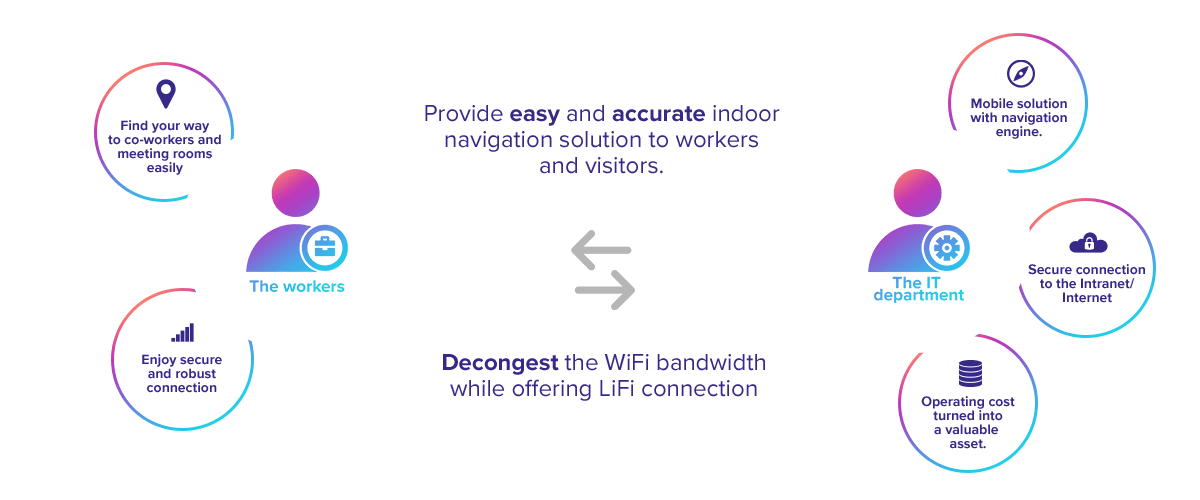
Credit to Oledcomm - Summary of Li-Fi application to the workers and the IT department

5. Li-Fi in Schools

The right wireless network is a crucial component to provide new learning experiences by connecting students and teachers to smart technology, enabling learning applications on any mobile device. Li-Fi can also provide seamless network connectivity and security throughout the whole school, from the classroom through to university dorms. Some schools have even started trialling Li-Fi technology in classrooms.

A school called The Hegel-Gymnasium in Stuttgart is currently testing Li-Fi in classrooms to teach a broad range of subjects from everything to information technology. In Fraunhofer's prototype Li-Fi installation at the Stuttgart school, lightwaves from LED luminaires wirelessly carry data to boxes that are wired via Ethernet to laptops. Fraunhofer is hoping to move the box's electronics onto a dongle, similar to what pureLiFi is doing. Eventually, the chips should reside inside notebooks, phones, and tablets. The school principal Frank Bäuerle stated that "We are happy that our students are involved with a sensational research project, which is concerned with high-speed data communication without electromagnetic interference. Our teaching staff and students will gather experiences on the level of sophistication of the Fraunhofer HHI VLC-modules, as well as on which pedagogical concepts make sense with this technology. In this way, we will be able to assist in the identification of future technological development."

Pupils in the space – at the Hegel-Gymnasium in Stuttgart – uses modulated light from the LED luminaires to receive data to their devices, an emerging technology known as Li-Fi. Photo credit to Stadt Stuttgart, Yves Schneider.

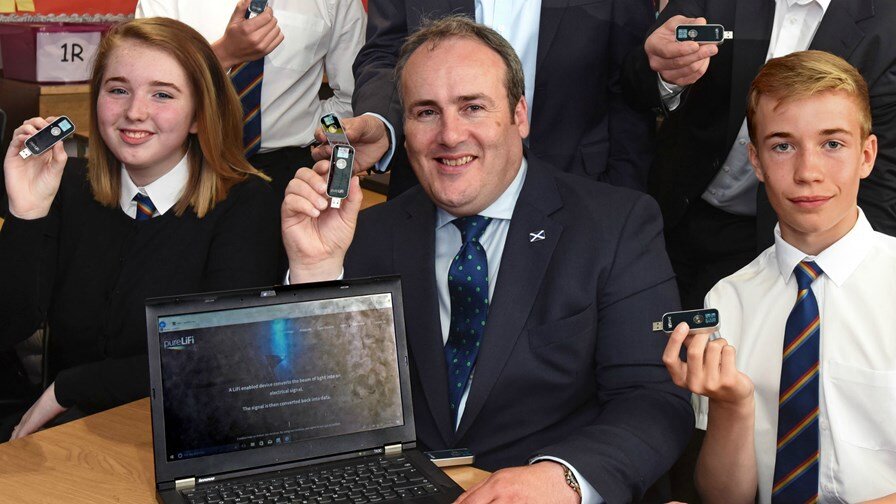
Last year, The Kyle academy, based in Scotland, started using Li-Fi in the classroom. The Li-Fi project was run in collaboration with PureLiFi and The University of Edinburgh. The installation of pureLiFi's LiFi-XC system consists of eight LiFi-enabled LED light bulbs in the ceiling and students have been given access to LiFi-XC Stations that plug into their laptops, enabling high-speed connectivity through the lights.

The Kyle Academy in Scotland has started trialling Li-Fi in classrooms.

lifi-6655.jpg

Photo credit to Lux

Professor Harald Haas stated that "Li-Fi was born in Scotland at a TED Global talk that I presented in 2011. Seven years later, I'm thrilled to see true Li-Fi deployed for the first time in a school in Scotland".

6. Li-Fi in Retail

Li-Fi can help to direct shoppers from the time they enter the shop. It can also help them to locate specific products in the store, collect digital coupons, check store promotions, check stock availability of some products on the shelves, engage in-store online services through their smart devices and improve their store experience.

For retailers, Li-Fi can enable them to send promotions to shoppers' smart devices, displaying promotions and offers. Li-Fi can also help retailers understanding behaviour anonymously for most customers, understanding the demographics of their shoppers, enabling target marketing campaigns, conducting display advertising campaigns and checking real-time stock availability. Li-Fi will bring an opportunity for shopping malls and centres to be a frontrunner in gaining an understanding of their customers and ultimately influencing them.

7) Li-Fi and Airplanes

According to a report carried by Inmarsat, 67% of passengers would be more likely to rebook with an airline if inflight internet connectivity were available. 70% of passengers would be likely to recommend inflight connectivity having tried it previously. 66% believe inflight connectivity is necessary. 65% of passengers that have had access to inflight internet connectivity in the last year used it, and 54% of passengers agreed that if only poor-quality Wi-Fi was on offer, they would prefer not to have it at all.

Li-Fi will allow passengers to access a much higher level of bandwidth than the one currently provided by Wi-Fi. Passengers will access faster internet connection, download and stream content at the comfort of their seats.

Professor Haas said: “This technology is perfect for planes as it doesn’t interfere with radio signals in the same way as Wi-Fi, which uses radio waves. Instead, Li-Fi takes advantage of visible light.

“Li-Fi is a game-changer for three reasons. First, it solves a ‘congestion’ issue. In the data-driven world that we live in, we are running out of radio spectrum. This is a problem in crowded places like airports and aircraft interiors as it means that the current available bandwidth does not support the hundreds of people wishing to use data-intensive applications and the internet in the same place at the same time. Li-Fi solves this issue by using 1,000 times the bandwidth compared with the entire radio frequency spectrum. This is additional free, unregulated bandwidth in the visible light spectrum.

“Second, it paves the way for local-area networks to be established, which means that passengers can make calls, use the internet and access in-flight entertainment systems more easily.

“Third, in a world fast being dominated by big data, safeguarding information is paramount. In the cabin, although Li-Fi signals can leak through windows, the technology offers greater protection to passengers than a Wi-Fi connection. But the biggest gains will be experienced by OEMs. Their manufacturing halls often have lots of LED lighting and few windows, which will enhance data security in their facilities.”

Professor Haas further stated that: “There are several hundred lights in a typical aircraft cabin. You’ll find them embedded in the seats, the floor and underneath the overhead lockers,” he explains. “But let’s take the passenger reading lights, for example. Let’s not think of them as lights, but as wireless routers. By harnessing the power of Li-Fi, an aircraft cabin can deliver speeds 300 times faster than an average Wi-Fi connection.”

“While any LED light source can be used, to guarantee the fastest speeds, aircraft manufacturers would need to install flexible RGB accent lighting, which requires three chips to create artificial white light for the best results. This lighting is more expensive, but it guarantees speeds of five gigabits per second. In contrast, traditional LED lighting only encodes data at a speed of 100 megabits per second.”

“In the future, the avionics databus system on a plane could be used to stream content to each lighting fixture. Each LED light source would transmit the data at high speed to a passenger’s laptop, tablet or smartphone. Each device would be fitted with a dongle that contains a photodetector and an LED – typically an infrared LED – to send data back to the lighting fixture. The photodetector would capture and process the intensity changes that each LED light produces and convert them back into a digital format that we recognise as the digital content, such as a YouTube video.”

“I think that in the future, cabins will be much more modular and malleable. In 10 years’ time, almost cable-free aircraft fuselages will allow airlines to temporarily remove entire seating areas and replace them with freight storage zones if passenger demand for a particular flight is low, and vice versa.

“But most excitingly, I believe that Li-Fi will herald the arrival of next-generation cabin designs. If cabling is no longer an issue, aircraft interiors have the potential to become more like the Japanese Shinkansen high-speed trains in their look and feel. Li-Fi opens the way for manufacturers to install larger windows on planes and bold new seating arrangements, where passengers are at last able to face each other.”

“With rapid integration and miniaturisation of Li-Fi modules, I would predict that in the future the cost to implement Li-Fi into aeroplane cabins would be between £10 (US$12) and £15 (US$18) per unit. Time frames in the aeronautics industry are difficult to predict because of the long development cycles and involved qualification procedures for equipment that goes into an aircraft. Also, it would help if there were a global Li-Fi standard. In this context, it has to be said that Li-Fi is currently being standardised in 802.15.7, and pureLiFi is a major player in this process.”With rapid integration and miniaturisation of Li-Fi modules, I would predict that in the future the cost to implement Li-Fi into aeroplane cabins would be between £10 (US$12) and £15 (US$18) per unit. Time frames in the aeronautics industry are difficult to predict because of the long development cycles and involved qualification procedures for equipment that goes into an aircraft. Also, it would help if there were a global Li-Fi standard. In this context, it has to be said that Li-Fi is currently being standardised in 802.15.7, and pureLiFi is a significant player in this process.”

“What’s more, innovations in airline cabin design are traditionally quite conservative and the pace of change slow. However, in the next three years I can see an opportunity for us to retrofit the technology into commercial airliners.”

Astronics, a leading provider of advanced technologies for the global aerospace and defence industries, sees Li-Fi as an augment to Wi-Fi and to leverage the IoT in aeroplanes.

Mark Schwartz, vice president of PDT, an Astronics Company, stated the following:

“The problem with RF is it has limited bandwidth within the spectrum you’re in. So, if an airplane gets smart, and uses Wi-Fi for sensors and things, and the passengers have higher demands for IFE and higher resolution screens, and then the pilots are using it, you’re going to run out of bandwidth on the plane. You can’t just keep adding WAPs.

You know that if all of us got on the Wi-Fi right now, 55 of us [executives on Astronics’ AIX stand], it would go really slow. So I think the first application should be the embedded systems within the cabin, so either the embedded screenbacks – where the passenger doesn’t even know it exists [and] there is a good line of sight to the receiver – or even like the big screen in the cabin, where you’re streaming down to that.

I think those are really good applications because it just takes some work away from the RF and leaves that for the passengers. Because the fact is, you only have Wi-Fi on your devices right now. Like I said, in two or three years, you’ll have Li-Fi on your COTS device too, or your PED. Once that happens, it should proliferate even more in my opinion because it works really well. And it’s actually true that Li-Fi is now part of the 5G framework because what they’re afraid of is that that’s going to run out of bandwidth when the needs of RF get so high that they’ll layer Li-Fi on top of it so in other words, you may have Li-Fi and Wi-Fi in your house working together.”

“They’re already on the aircraft. Yes you would have to wire them to the server, but you would have the external part of it done, right, because you can modulate these. Again you can use wingtip lights, landing lights, you could do a connection to the terminal itself, you could do a connection from the jetbridge. So while it is kind of a hardship that you’ve got to change the airport facility, if you think about the ROI of eliminating all the touch labor plus happy passengers that you’re learning a lot about, it’s totally worth it. And the last thing is that it takes the stress off of the satcom system, Why would you pay tons of money for satellite time, streaming things, when you can do it more intelligently on the ground by flipping the server at every turn?”

“Think about our portfolio. We own interior lighting. We own the PSUs, which are the lights over your head, we own all the wingtip, landing lights, and all the external lighting on the aircraft. We’re the connectivity guys; we’re the IFE and IFC providers. So this technology is going to go mainstream. It’s just a matter of time in my opinion. And I think we’re super well situated because of all these other complementary technologies. The enablers – we own the enablers.”

8) Li-Fi in Disaster Management

Disaster management: Li-Fi can be used as a powerful means of communication in times of disaster such as earthquake or hurricanes. The average people may not know the protocols during such disasters. Subway stations and tunnels, common dead zones for most emergency communications, pose no obstruction for Li-Fi.

Verizon, Nokia and Aegex Technologies hold a disaster testing resilience testing of the light-based LiFi solutions from pureLiFi, to demonstrate Li-Fi application in rescue communications and emergency response in the event of a disaster event.

The demonstration, called Operation Convergent Response (OCR), was held at the Guardian Centers training facility in the United States. pureLiFi demonstrated the application of LiFi technology in a subway disaster scenario. LiFi technology was used to maintain, real-time, bi-directional communications that could enable communications with a command centre allowing the emergency services to maintain safe, reliable connectivity during a response.

Jeffery Schweitzer, Chief Innovation Architect at Verizon, said:

“pureLiFi demonstrated that LiFi solutions could perform under real life operations and enable critical communications during response missions in chaotic and disastrous environments.”

Aegex CEO Thomas P. Ventulett stated that“Working with our technology partners like pureLiFi at this event truly showed the power of collaborative IoT solutions to solve complex problems in the most critical of operations.”

Alistair Banham, pureLiFi, CEO adds,

“ LiFi provides uniquely reliable wireless communications in unpredictable conditions such as disaster circumstances. Due to the growing pervasiveness of LED lighting and the high speed, safe, secure and noninvasive qualities of LiFi the applications for this technology are limitless. LiFi will provide connectivity for our homes, our offices or public spaces and beyond.

9) Li-Fi and Industry 4.0

Industry 4.0, also known as the “Fourth industrial revolution”, a new approach to combining traditional manufacturing processes and technology, such as the Internet of Things (IOT), and Artificial Intelligence (AI) to improve automation, communication and use of real-time data. It holds the promise of better synergy between machines and their human counterparts and will help manufacturers to innovate faster.

In Industry 4.0, the connected ecosystem of the Internet of Things (IoT), will be able to help manufacturers and consumers alike to provide increased automation, improved communication and monitoring, along with self-diagnosis and new levels of analysis to ensure a truly productive future.

Factories are increasingly automated, and self-monitoring as the machines within are given the ability to analyse and communicate with each other and their human co-workers, granting companies much smoother processes that free up workers for different tasks.

Industry 4.0 isn't only being driven by the Internet of Things, however. Machine learning, artificial intelligence and big data analytics are all expected to contribute towards significant industry change. The development of network technology is also crucial for Industry 4.0 as any insights and efficiencies generated by IoT devices are only useful if they can be easily and quickly accessed.

Li-Fi offers satisfactory performance for real-time and reliability requirements for factory robots, particularly for closed-loop control applications.

Wieland Electric in Bamberg investigated the technological benefits of Lii-Fi technology in industrial environments. The electronics company uses the new data transmission standard in its in-house production to gain experience and include it in the development of LiFi for industrial communication. Wieland Electric uses Li-Fi at a production line for high-quality electronic components, namely for the transmission of data to the machine controller and the collection of operating data between LiFi sender and receiver. Configuration data are sent to the machine while information on output or faults is sent back to the Wieland operating data collection system. The connection to the data network is made with the optical communication solution Trulifi 6013 from Signify, which creates a safe point-to-point connection and enables transmission rates of 250 Mbps in one direction and 2 x 250 Mbps in two directions.

Stephan Lauer, Business Development Manager Light & Building Industry at Wieland states:

"The high data rate is not the only argument for using new technology in industrial environments. The error-free and uncomplicated transmission with LiFi where radio waves or cables make data transmission difficult is much more important."

10) Li-Fi and Augmented Reality (AR)

Augmented  Reality  (AR)  is the process of overlaying and aligning computer-generated content over a view of the physical world.  By using a transparent OpenGL layer over the render surface of a  camera, we can display virtual information over Reality.  Some of the fields where  AR  can get involved are advertisement, architecture,  entertainment or music. Augmented Reality can also show data analytics on the device screen, without interfering with the environment and enriching the user experience. The data can be automatically processed,  like trajectory,  information, fire locations,  average time and escape direction, and the user can interact more dynamically.

Because cables restrict movement and users of mobile applications typically need to have their arms free, wireless data transfer techniques are preferably installed in AR glasses. The usual standards, such as WLAN and Bluetooth, are limited in bandwidth and not designed for real-time transmission. Dr Alexander Noack, Development Manager at the Fraunhofer IPMS, says, "Data glasses are a great example of the benefits of our Li-Fi technology. The optical wireless transmission offers high constant data rates, low latency, and maximum user mobility. It combines the flexibility of wireless solutions with the benefits of cabled transmission and provides even greater bandwidth than radio-based solutions."

Li-Fi technology can be used wherever connectors, cables, sliding contacts, and radio networks need to be replaced.

11) Li-Fi in Airport 4.0

Digital transformation is compulsory to catch up with the growth and trends of passengers who are expected to be more connected and have more control over their journey. In an increasingly competitive environment, airports are focused on expanding and enhancing their appeal to increase their share of air travel and tourism, including innovation and a strong focus on improving customer experience.

 While safety and security always remain the top priority, airport leaders are also focused on ways to streamline the business and operations by leveraging technology to meet goals and objectives, as well as passengers’ demands. After all, in today’s digital world, there is no escaping the power of data, so harnessing its benefits is critical.

With the emergence of digital technologies, enhancing airport processes, airports are becoming more data-centric to ensure fluid processes and will ultimately bring values to passengers. Just look at the numbers.

Airports 4.0 is a digital framework encompassing infrastructure enhancement, capacity development and digital innovation that aims at terminal optimisation, operational efficiency, revenue generation and regulatory compliance. At the same time, this will also lead to the ultimate customer experience.

Li-Fi technology will enable very-high connectivity and real-time information access for passengers and staff by connecting all stakeholders in one fully integrated digital ecosystem.this will also enhance the customer experience.

With Airports 4.0 and the use of Li-Fi, passengers can travel smart and seamlessly with the use of a mobile app and being identified upon checking-in to churn out the single token data that will be used at all other checkpoints till the boarding gate.

12) Li-Fi and Military

The Military industry has developed an interest in the applications of Li-Fi in military operations. Frank Murphy, an engineer on EMSD's System Development and Engineering Team, has been researching on the use of Li-Fi in a tactical environment as the physical characteristics appear to solve many issues facing wired and wireless field command post network systems.

The technology has been used in expeditionary mission commands. EMSD came up with a concept for using LiFi within any enclosed mission command platform. LiFi eliminates the problems associated with the time-consuming task of running data lines in tactical operation centres and command posts. Moreover, since the technology does not use radio waves, it cannot be detected outside the confines of the mission command platform.

"The technology uses light waves to transmit and receive data between the servers and the user's computer," said Melvin Jee, the leader of EMSD's Command Post Platforms Branch. "As light cannot pass through walls, the enemy cannot detect the signal."

Murphy's investigation into the technology was inspired in part by Douglas Tamilio, the director of RDECOM Soldier Center, sharing an article about LiFi with RDECOM Soldier Center leadership. Murphy's investigation was also inspired by the vision of Claudia Quigley, the director of EMSD, and the RDECOM Soldier Center's ongoing partnership with the 82nd Airborne. The RDECOM Soldier Center and the 82nd Airborne have worked together extensively to find out ways to best meet the needs of warfighters.

Murphy explained that Quigley and other members of the directorate were working with the 82nd Airborne during a field exercise. During the exercise, Murphy found out that the setup of IT cabling was proving to be a time-consuming and difficult task.

"They had a hard time setting up their IT network, which isn't usually an NSRDEC area, but we felt that we could address the need," said Murphy. "Tactical speed is absolutely crucial for command post setup. LiFi is potentially faster, easier to install and doesn't have the security and exposure issues of other technologies. LiFi is un-hackable and untraceable when used within the command post shelter."

"It's virtually impossible to find the wavelength the data is being transmitted on, so if LiFi is detected, it's hard to intercept the data stream," said Jee.

EMSD is working with industry partners. Murphy explained that the commercially available technology was modified to fit a tactical environment. The technology will affect how Soldiers communicate and, thus, carry out a mission. 

"A command post of any size is an information processing center," said Murphy, "They take information from the field whether it comes in from a drone, Soldier/squad reports, other personnel in the area, satellite information, information from wheeled vehicles, or from behind the front lines -- all this information gets fed to the command post staff. They make a decision and then the information goes right back out. Lives depend on this communication."

"LiFi is part of NSRDEC's plan to provide a fully integrated platform with all of the necessary infrastructure in order for the warfighter to set up his command post," said Jee. "Just as a house is fully integrated with power, lights and network cabling -- allowing the homeowners to just concentrate on the furnishings -- NSRDEC plans to provide a fully functional house, allowing the warfighter and program managers to provide the "furniture.'" 

"In a command post, everyone has a job to do and they have their information chain," said Murphy.

"All these Soldiers need network access. With this, you simply shine the light over their head. After you hook the transceiver into the USB port, the transceiver will detect the signal and you will be hooked up to the IT network of your command post. It's as simple as that. We also hope to have it integrated into the wiring harness for the lighting so we can just roll up the tent and pack it away during a move."

"The people at the BCIL were incredible," said Murphy. "They gave us the perfect platform to showcase the tactical capabilities of this device. This project really showcases what Natick is all about. The Natick team dove in with both feet. Great things happen when people believe in each other and in an idea. We all want to help the Soldier." 

Murphy believes that LiFi is truly the wave of the future. 

"The demand for data inside the command post is only going to continue to increase," said Murphy, "So data quantity and quality need to improve to meet this demand. This technology can be hooked up permanently in rigid wall mission command platforms, but it can be used anywhere. We will be bringing world-class communications, security, speed and capability to the frontline Soldier. Information in the field is a weapon. This technology will help the warfighter make better decisions and be more effective and lethal in the field. This changes everything in the IT network system. It's a game changer."

13) Li-Fi and Navy

The U.S. Navy has funded a research program to delve into the development of Li-Fi, a method of communication via LED lights.  The Navy wants to employ the use of Li-Fi to enhance submarine communication systems. They currently use a slow and antiquated system for underwater communication that does not quite jibe well with the poor acoustics that lies underwater. Radio waves also do not travel efficiently underwater. For use in petrochemical plants or on aeroplanes, Wi-Fi interferes with onboard electronics.

Because of these limitations, a more straightforward Sailor-built LiFi system modelled after the RONJO design has a place in the Navy today. In a future battlespace of radar spoofing and communication jamming, the Navy needs secondary and tertiary technologies to support these mission-critical functions. Ship-to-ship LiFi can provide a cheap, secure, and, reliable technology for ships in formation.

Through experimentation, the Navy can take immediate advantage of the advances in LiFi discussed above. By looking at LiFi as a high-tech upgrade of the ALDIS lamp, the Navy can provide a necessary, dependable, and affordable capability to the Fleet. LiFi also has applications for the Navy outside of ship-to-ship communication in internal communication systems.

 The Navy has been experimenting Li-Fi technology for secure high data rate communications for facilities, vehicles and submarines.

“The Navy wanted to see what the effects of shock and vibration would have on the wireless link and the equipment,” explained APL communications engineer Ryan Mennecke, who along with APL’s Eddie Holzinger led the Li-Fi experiments. “We designed and manufactured custom mounts to install commercial Li-Fi equipment within the library of the aircraft carrier, which is located underneath catapult three. The test included setting up a standalone network to stream live video and collect test data of the optical link.”

Although the equipment failed during extreme vibration testing at APL, he said, results were better on the ship. “The optical link performed as expected with no loss in [signal-to-noise ratio] or throughput related to the shock and vibration of the catapult system that was launching and retrieving aircraft three feet above the system,” he said. “The system performed flawlessly.” 

Mennecke began exploring the technology through an internal grant to examine atmospheric channel modelling for Li-Fi links to offload data from submersible vehicles to drones.

14) Li-Fi and underwater applications

Most remotely operated underwater vehicles (ROVs) are controlled by wired connections. The length of their cabling places a hard limit on their operational range, and other potential factors such as the cable's weight and fragility may be restrictive. Radio waves are quickly absorbed in water, preventing underwater radio communications. Since light can travel through water, Li-Fi based communications offer much greater mobility. Li-Fi's utility is limited by the distance light can penetrate water. Significant amounts of light do not penetrate further than 200 meters. Past 1000 meters, no light penetrates.

Sunlight entering the water may travel about 1,000 meters (3,280 feet) into the ocean under the right conditions, but there is rarely any significant light beyond 200 meters (656 feet).

The ocean is divided into three zones based on depth and light level. The upper 200 meters (656 feet) of the sea is called the euphotic, or "sunlight," zone. This zone contains the vast majority of commercial fisheries and is home to many protected marine mammals and sea turtles. 

Only a small amount of light penetrates beyond this depth.

The zone between 200 meters (656 feet) and 1,000 meters (3,280 feet) is usually referred to as the "twilight" zone but is officially the dysphotic zone. In this zone, the intensity of light rapidly dissipates as depth increases. Such a minuscule amount of light penetrates beyond a depth of 200 meters that photosynthesis is no longer possible.

The aphotic, or "midnight," zone exists in depths below 1,000 meters (3,280 feet). Sunlight does not penetrate to these depths, and the area is bathed in darkness.

15) Li-Fi and Cryptocurrency

Cryptocurrency is a medium of exchange, which makes use of cryptography to secure transactions and to control the creation of additional currency units through the internet. Cryptocurrency development has been actively growing since 2009, thus offering a broad range of possibilities for transactions between users. The first cryptocurrency created was Bitcoin, and as of September 2015, there were over 14.6 million bitcoins in circulation valued at $3.4 billion (£2.6 Billion). The success of Bitcoin has spawned approximately 1200 competing cryptocurrencies, such as Litecoin, Ethereum and many more.

Global Greenology, a privately owned worldwide manufacturing and design company specialising in environmentally friendly, energy-efficient building solutions, has developed a cryptocurrency for Li-Fi implementation.

OWNII Coin is developed to oversee, develop, and design the physical infrastructure necessary to implement Li-Fi in the United States and developing nations abroad and is sold privately. The pureLiFi company has manufactured and distributes the equipment needed to stream communication through existing LED bulbs but to implement Li-Fi, installation of this equipment is necessary.

Global Greenology states that the OWNII Coin will promote the creation of new internet infrastructure in the United States and beyond. It will also create numerous opportunities for employment, business ownership, and entrepreneurial endeavours selling equipment and services.

More specifically, OWNII creates wireless communication, that is faster, addresses issues with internet security, allows localisation due to small coverage area of Li-Fi access points used for precise asset tracking. Furthermore, providing ubiquitous high-speed wireless access that offers substantially higher data density (data rate per unit area) than RF through high bandwidth reuse.

If you enjoyed this post and would like to hear more updates about Li-Fi technology, subscribe to our newsletter and follow us on our social media channels. You can also join the Li Fi Tech News Telegram group through the link below:

https://t.me/joinchat/FMzOmsEKyJFrU6Af


5G RuralFirst project delivers successful trials of Li-Fi in the Orkney Islands

5G RuralFirst project delivers successful trials of Li-Fi in the Orkney Islands

According to a, We Are Social report in 2019, the number of internet users worldwide was approximately 4.3 billion, up from 3.9 billion in 2018.  This means about 57 per cent of the global population accessed the internet, and internet penetration is 57%.

Worldwide Internet users from the Digital In 2019 report by We Are Social

Worldwide Internet users from the Digital In 2019 report by We Are Social

5G RuralFirst

5G RuralFirst has successfully trialled Li-Fi technology in the Orkney Islands.  5G RuralFirst is a co-innovation project headed by Cisco in conjunction with principal partner university of Strathclyde and other partners from across the business sector, government sector and academia sector.  The first stage of the project is the creation of rural test-beds and trials for 5G wireless and mobile connectivity across the three main sites in the Orkney islands, Somerset and Shropshire.

The project is part-funded by the UK Government’s Department for Digital, Culture, Media and Sport (DCMS) as part of their 5G Testbed and Trial programme and UK-wide 5G strategy. The mission of 5G RuralFirst is to excite government, policymakers, regulators mobile network operators, and other service providers about the partnership potential of 5G in rural areas and help share new market, technology and application opportunities.

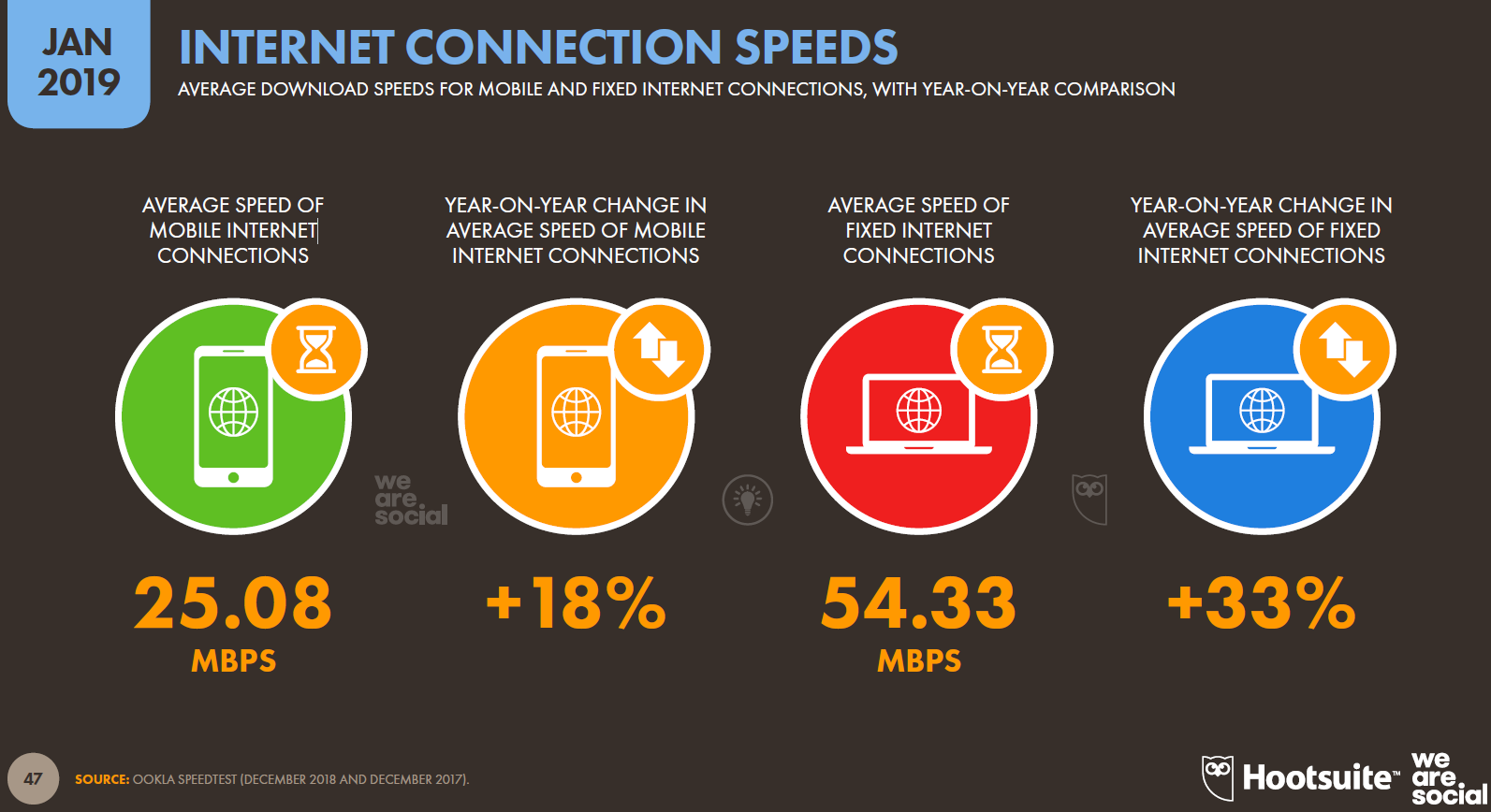
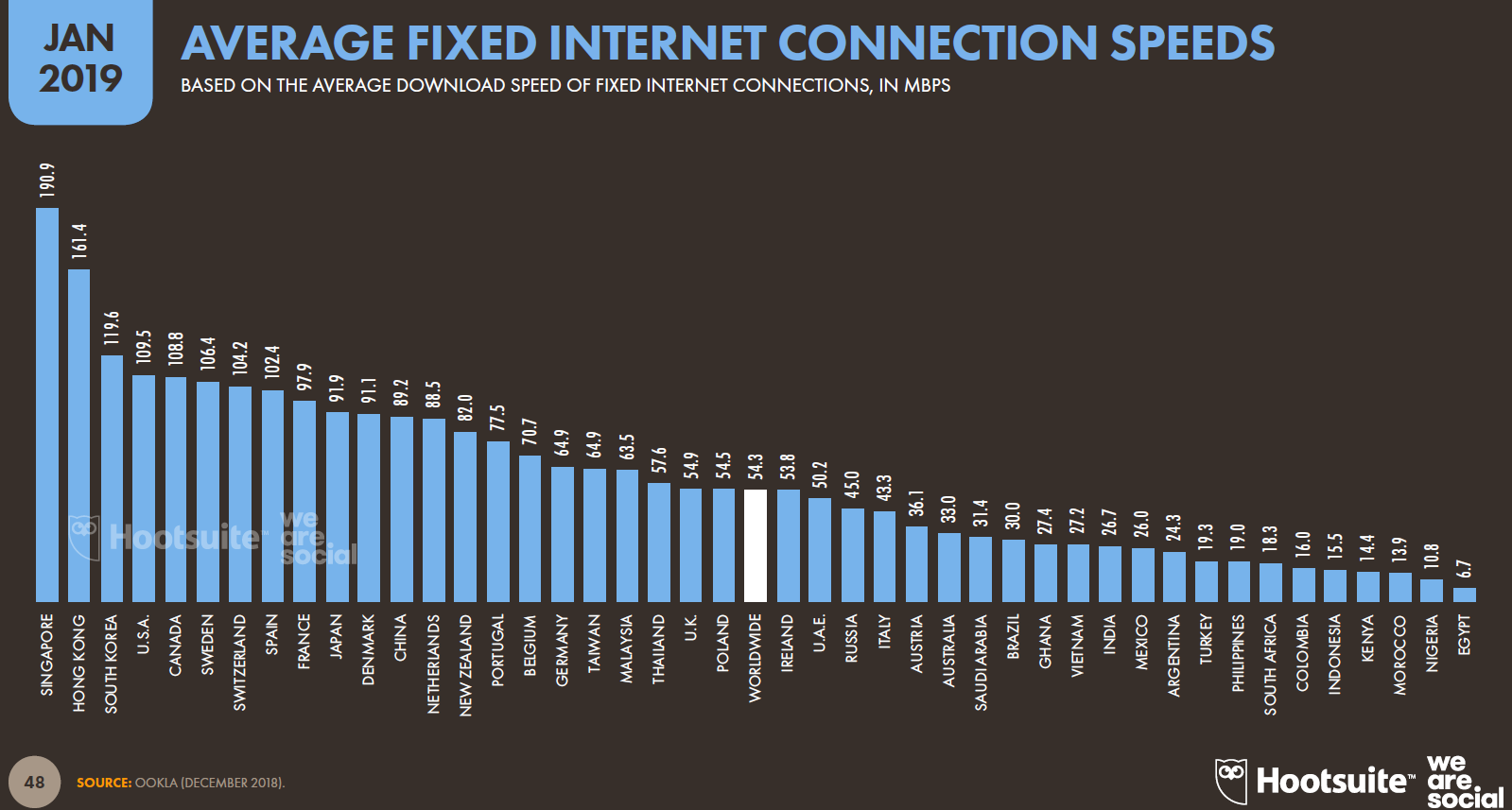
Worldwide average internet connection speeds from the Digital In 2019 report by We Are Social

Worldwide average internet connection speeds from the Digital In 2019 report by We Are Social

In 2017, Orkney was found to have the worst broadband internet speeds across the UK’s 390 council areas, according to a study published by consumer protection watchdog Which.

The research, using data from Speed Checker Ltd from January to March 2017, showed Orkney had an average test speed of just 6.3 Mbps, with Shetland on just 8.4 Mbps.

The speeds both fall far below 10 Mbps, which is the minimum download speed proposed under the Government’s Universal Service Obligation (USO) that anyone in the UK would be entitled to request.

In response, Orkney MSP Liam McArthur has called for a renewed commitment to delivering superfast broadband in the county.

Commenting on the figures, Orkney MSP Liam McArthur stated: “While I recognise progress has been made, these figures reaffirm our fears that the gap in broadband speeds between Orkney and the rest of the UK is growing. This digital divide will only make it harder for Orkney to compete and leaves people with an unacceptable below par service.

“I firmly believe that closing those gaps must be our priority. This may require different technology solutions, but it will also certainly require both the Scottish and UK Government and their agencies to work together.”

Average fixed Internet connection speeds from the Digital In 2019 report by We Are Social

Average fixed Internet connection speeds from the Digital In 2019 report by We Are Social

Professor Harald Haas, co-founder and Chief Science Officer of pureLiFi, said: “Graemsay is in a complex position in terms of upgrading connectivity in the area, with just a copper landline to connect its residents and businesses. Li-Fi allows the area to utilise the light spectrum in two important domains: affordable last-mile connectivity, and high-speed indoor wireless networking.

“Both are essential to overcome the rural divide which increasingly disadvantages rural communities. Graemsay is the first location, which harnesses ordinary solar panels as outdoor broadband detectors and ordinary LED lamps in homes as wireless access points and can now take advantage of advanced connectivity like never before,” said Haas.

“Li-Fi is a particularly sustainable solution to provide wireless connectivity and can be managed by residents themselves and combined with existing networks,” said Dez O’Connor, 5G RuralFirst project chief technology officer and Cisco business development manager for global service providers.

“As well as demonstrating the potential of advanced 5G technology to bridge the digital divide and better connect rural areas, 5G RuralFirst is trialling different technologies such as Li-Fi to solve the challenges posed by remote environments.”

What is Li-Fi?

Li-Fi is a high speed, bidirectional, and fully networked wireless communication of data using light. Li-Fi is made of several light bulbs that form a wireless network. Li-Fi is a disruptive technology in the making, which will impact many industries. It can unlock the Internet of Things, drive Industry 4.0 applications, light as a service (LaaS) in the lighting industry, enable new intelligent transport systems, enhance road safety when there are more and more driverless cars, create new cyber secure wireless networks, enable new ways of health monitoring of ageing societies, offer new solutions to close the digital divide, and enable very high-speed wireless connectivity in future data centres. Watch the video below to see how Li-Fi works. 

Li-Fi Applications

1. Li-Fi and Live Streaming

Because of the rapid rates Li-Fi can reach, it can be made available in big shopping malls, sports stadium, street lights, aeroplanes, trains including underground, train stations, airports. This allows any user to consume rich content media like videos as well as live streaming from their smartphones or other mobile devices nearly anywhere they are like in stadiums, trains and planes provided they are exposed to Li-Fi enabled LEDs.

2. Li-Fi technology in Hospitals

As Li-Fi does not interfere with radio frequency devices, Li-Fi can be safely used in many hospital applications. For example, in corridors, waiting rooms, patient rooms and operating theatres, Li-Fi technology will allow a light communication network, which will remove electromagnetic interference issues from smartphones and the use of Wi-Fi in hospitals. Li-Fi can also be used for real-time monitoring and report of patient movement and vital signs without the need for wires.

3. Li-Fi in the Workplace

Li-Fi will not offer illumination but secure wireless connectivity in workspaces. As well as the networking capability, people will be able to take a Skype video conference call and move from one room to another without that conference call being interrupted. Workers and visitors will have a constant internet speed connection from the Li-Fi networks in the workspace. Using light, network access can also be controlled more effectively. For example, the overhead lighting in an office can provide access to the guest network, while desk lamps can provide access to specific parts of a corporate network with access rights assigned on a desk-by-desk basis.

4. Li-Fi in Schools

The right wireless network is a crucial component to provide new learning experiences by connecting students and teachers to smart technology, enabling learning applications on any mobile device. Li-Fi can also provide seamless network connectivity and security throughout the whole school, from the classroom all the way through to university dorms. Some schools have even started trialling Li-Fi technology in classrooms.

5. Li-Fi in Retail

Li-Fi can help directing shoppers from the time they enter the shop. It can also help them to locate specific products in the store, collect digital coupons, check store promotions, check stock availability of some products on the shelves, engage in online store services through their smart devices and improve their store experience.

You can also read an article of Li-Fi applications here.

Feedspot

Feedspot is a social feed reader compiling news feeds from online sources that user can customise and share with other social network users. Feedspot recently nominated Li Fi Tech News as among the Top 5 Li-Fi blogs on the web. The selection of the brands was ranked based on the following:

  • Google reputation and Google search ranking

  • Influence and popularity on Facebook, Twitter and other social media sites

  • Quality and consistency of posts

  • Feedspot’s editorial team and expert review

You can read more on the Top 5 Li-Fi blog article here:

https://blog.feedspot.com/li_fi_blogs/

If you enjoyed this post and would like to hear more updates about Li-Fi technology, subscribe to our newsletter and follow us on our social media channels.

Signify announces a new Li-Fi system called Trulifi (150 Mbps internet)

Signify announces a new Li-Fi system called Trulifi (150 Mbps internet)

Photo credit to Signify

Photo credit to Signify

According to a 2018 Statista report, the number of internet users worldwide was approximately 3.9 billion, up from 3.65 billion in the previous year. This means about 51 percent of the global population accessed the internet that year. The number of the global internet users will continue to grow. China had about 829 million internet users, nearly triple the amount of third-ranked U.S. with nearly 293 million internet users. India ranked second in number of internet users. The global average internet speed is around at 7.2 Mbps, up from 7.0 Mbps from the last quarter of 2016.

Signify

Credit to Signify

Credit to Signify

Signify is the new brand name of Philips Lighting. The name change occurred in March 2018 to represent the transformation from an analogue lighting company into a digital lighting and Internet of Things (IoT) company. Signify is the world leader in lighting for professionals, consumers and lighting for the Internet of Things. The company provides lighting solutions for professional segments such as automotive, healthcare, horticulture, office, outdoor, phototherapy, petrol stations, solar, purification, schools, fashion, cinema, and more. These lighting solutions include indoor and outdoor luminaries, lamps, electronics, lighting controls, lighting control software, IoT systems and platforms.

Signify has also other brands under its belt such as Philips, Interact, Modular Lighting Instruments, Luceplan, Color Kinetics, ILTI Luce and Philips Hue.

Trulifi system

Signify recently launched a new Li-Fi system called “Trulifi”. Trulifi uses light waves to enable highly reliable, secure two-way wireless communications at speeds far above most conventional workplace wireless technologies.

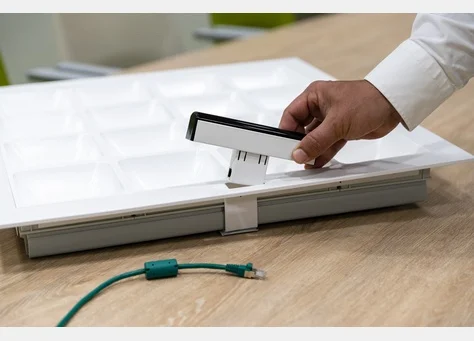
Trulifi uses optical wireless transceiver technology built, or retrofitted, into Philips luminaires. This means customers do not have to replace their existing lighting infrastructure to receive great quality light and wireless connectivity.

Photo credit to Signify

Photo credit to Signify

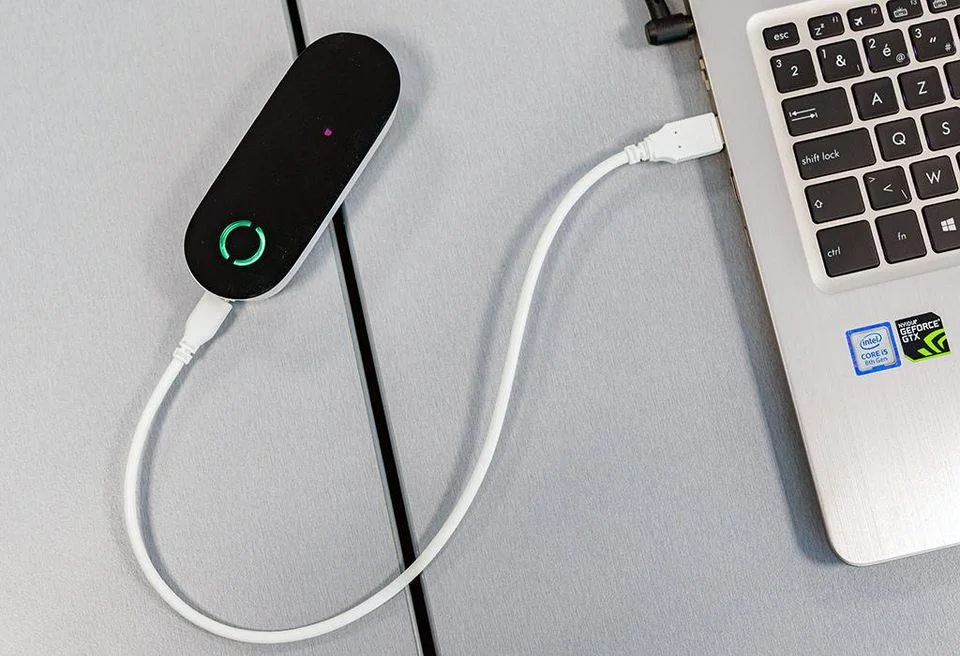
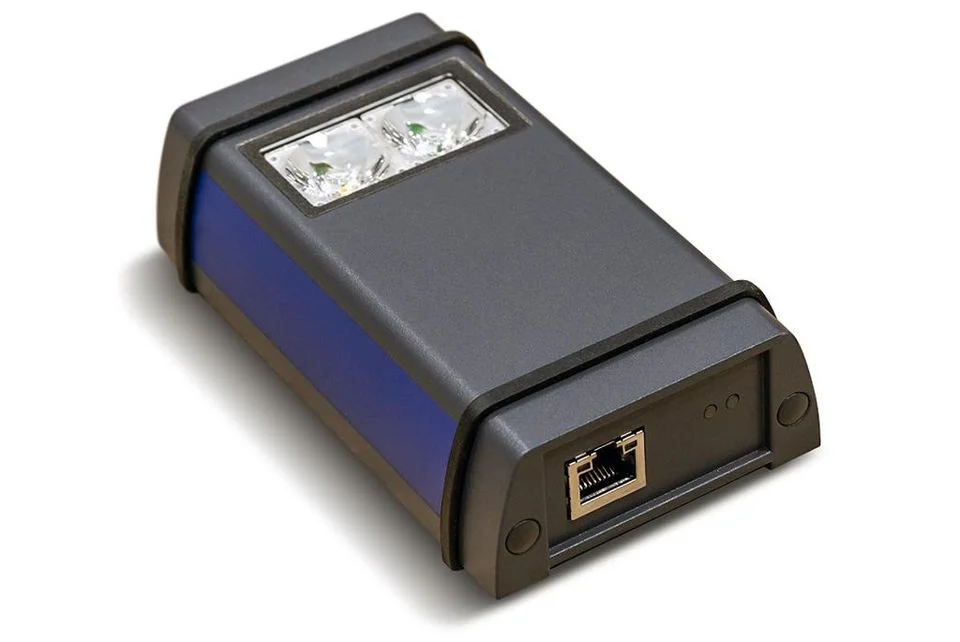
The new Li-Fi system comprises of a USB Network Access adapter, Li-Fi enabled LED lights and a Trulifi-6002 Plug-In Optical Transceiver. The Trulifi-enabled luminaires can provide wireless connectivity at speeds up to 150 Megabits per second (Mbps) over large spaces, such as meeting rooms and office floors. There is seamless handover between each Trulifi-enabled luminaire enabling users to roam around. The speed is fast enough to stream simultaneously 30 1080p HDTV movies. A USB-access key, plugged into a laptop, is needed to receive the LiFi signal and acts as an emitter to send data back to the luminaire.

Photo credit to Signify

Photo credit to Signify

The Trulifi range also includes a fixed point-to-point system, up to 250 Mbps speed, which acts like a wireless cable. This is ideal for mobile devices connectivity. This Li-Fi system can also be useful to connect robots or machines in radio frequency (RF) harsh environments like industrial plants, or hospitals where RF communications may not be permitted, or where there’s a need to send and receive large data files securely and quickly. Currently, Trulifi is aimed at professional markets, including offices, hospitality, retail, industry, construction and healthcare.

Benefits of Trulifi

Signify claimed the following three benefits of their Trulifi system:

Reliable

Trulifi is ideal for busy areas, such as multi-tenancy buildings, stations, airports and public areas. Network availability and overload are no longer an issue. Trulifi provides guaranteed bandwidth without interference from other radio communication systems.

What’s more, it works in places where radio frequencies are not permitted, restricted or could cause interference – such as in hospitals, some schools, aircraft and industrial plants. It also works where radio frequencies don’t work well or at all.

Trulifi actively coordinates traffic, ensuring good quality of service for all users, at all times. It uses the ITU G.9991 LiFi standard. 

The new standard, ITU G.9991, describes the system architecture, physical layer and data link layer specification for ‘high-speed indoor VLC transceivers’, the VLC access points within light bulbs.

Secure

Trulifi uses AES 128-bit encryption. The Advanced Encryption Standard (AES) is a symmetric block cipher chosen by the U.S. government to protect classified information and is implemented in software and hardware throughout the world for the encryption of sensitive data. Information is accessed using a USB access key. What’s more an extra layer of security is built-in, as light waves cannot penetrate walls. This all helps to make Trulifi as secure as wired communication. Perfect for applications where security is paramount:

  • Financial institutions

  • Government

  • Police

  • Military

  • Data centres

  • Corporate organisations

Fast

Trulifi 6002 series has a net data rate up to 150 Mbps for the downlink and the uplink. That’s fast enough to stream simultaneously 30 1080p HDTV movies.

It’s perfect for offices and large spaces as each luminaire transceiver hands off seamlessly to another. And unlike other LiFi systems, it works with the lights on, dimmed or off.

Trulifi 6013 is a fixed point-to-point system. It acts like a wireless cable with a guaranteed net data rate up to 250 Mbps for the downlink and uplink. It can be used in a host of environments – from connecting machines in a factory to sending large image files in a hospital. Trulifi 6013 is available with Blue, Red and Green light.

Li Fi Tech News’ Take

It is great that many leading Li-Fi companies have started releasing Li-Fi products, which are becoming cheaper, cost effective solutions and faster in terms of wireless data transmission. Li-Fi will stand out as a key player in wireless data communications as well as a disruptive technology innovation for the wireless communication industry.

Christoph Ruys, Business Development Manager of Claerhout Communication Campus stated: “We wanted good quality energy-efficient lighting and wireless connectivity capable of handling high resolution images, artwork and big data files. We’ve gone from offering our staff and clients 5 Mbps to a blistering 150 Mbps, and we can roam around freely as one light point hands off to another seamlessly. While it’s encrypted, Trulifi adds an extra layer of security as light can’t pass through walls - so what’s in the room, stays in the room. This is truly game changing technology.”

Grzegorz Strutyński, Commercial Director of Globalworth, said that “The ability to integrate modern technology, such as Trulifi, in office buildings and workplaces, is a source of competitive advantage to attract tenants and increase the value of an asset. As a landlord, we are focused on providing top-notch solutions to our clients. We are also obliged to explore and test the latest technologies on the market. We are happy to be the first in Central Eastern Europe to implement Signify’s Trulifi technology, setting new standards for the real estate industry.”

“Signify is positioned to deliver on the promise of LiFi with attractively priced offerings that could help overcome the budget barrier for potential customers. Signify has also adopted the ITU G.9991 LiFi standard, which is aligned with the market’s move toward increased standardisation,” said Krystal Maxwell, Senior Research Analyst, Navigant Research.

If you enjoyed this post and would like to hear more updates about Li-Fi technology, subscribe to our newsletter. You can also follow us on our social media channels.

Oledcomm, Air France, Latécoère and Ubisoft unveil their Li-Fi project

Oledcomm, Air France, Latécoère and Ubisoft unveil their Li-Fi project

According to a report carried by Inmarsat, 67% of passengers would be more likely to rebook with an airline if in-flight internet connectivity were available.  70% of passengers would be likely to recommend in-flight connectivity having tried it previously.  66% believe in-flight connectivity is necessary.  65% of passengers that have had access to in-flight internet connectivity in the last year used it and 54% of passengers agreed that if only poor-quality Wi-Fi was on offer, they would prefer not to have it at all.

As part of the International Air and Space Show (Salon du Bourget), which opens its doors on June 17, 2019, Air France, Latécoère and Ubisoft will test Li-Fi (Light Fidelity), a new wireless communication technology via light waves that aims to become the next standard after Wi-Fi. For the duration of the show, Latécoère will present on its booth (Hall 2a - B254) a full-size Air France medium-haul reproduction, incorporating Li-Fi technology; visitors will have the opportunity to test live "  the speed and reliability of this innovative technology", according to their joint communique. The French equipment manufacturer has designed an infrastructure solution that allows entertainment and communication system providers to optimise connectivity in-flight, and has many advantages including a multimedia data exchange at very high speed (current speed 100 times higher WiFi), and a reduction in the number of cables on board (elimination of copper cables in favour of optics) which leads to a reduction in the overall weight of the aircraft and therefore in its fuel consumption. 

If this solution was able to be previewed in an Air France cabin,"it is thanks to the pioneering spirit" of Air France Industries KLM Engineering & Maintenance, a major international player in aeronautical maintenance. The Li-Fi was spotted early by its cabin modification experts, who began to think about how to implement this innovative technology on board a device. Latécoère, having also perceived the high potential of Li-Fi, the partnership with Air France is born naturally from a common desire to explore new technological territories. The equipment manufacturer developed the system, AFI KLM E & M realised the certification of the solution and its integration in the cabin. This union of know-how today leads to an unprecedented advance in the world of aeronautics.

In order to demonstrate the potential of Li-Fi technology, Ubisoft will kick off an exceptional tournament in its all-public Trackmania Stadium video game on Monday, June 17 at 10:00 am at the Latécoère stand. During the "Air France Trackmania Cup", the visitors of the Paris Air Show will be able to discover the game by fighting friendly from the tablets installed in the reproduction of a medium-haul cabin of Air France. The official tournament will take place from Saturday, July 6 at 20:00 and will end with the finals in September 2019, during an exceptional commercial flight Air France in a device specially provided for the occasion of 12 seats equipped with LiFi technology from Latécoère. Competitors will occasionally discover circuits specially created for the event and featuring key elements of the Air France and Latécoère universe. Players will be able to register online at www.airfrance-tmcup.com as soon as the tournament opens; the prizes as well as the modalities of the tournament will be communicated soon.

Photo credit to pureLiFi

Photo credit to pureLiFi

Yannick Aswad, CEO of Latécoère said: "The development of Li-Fi technology on airplanes, for which Latécoère is in pole position, redefines the conditions under which passengers and cabin crew will receive and exchange of flight data to horizon 5 years . We are proud to be at the forefront of this innovation and our mastery of this technology underlines the strong R & T efforts of our Group over the past three years . "

Antoine Laborde, Air France Innovation Manager, added: " We are very pleased to have the opportunity to experience the Li-Fi on one of our aircraft, and to organise an on-board video games tournament, two major" world premieres ". In-Flight Entertainment is at the heart of the experience aboard Air France, and it is therefore natural that Air France invests in innovative solutions that will allow our customers to experience new experiences in a few years " .

Deborah Papiernik, Director of Innovative Projects at Ubisoft, concludes: " We are proud to participate in Le Bourget alongside two iconic groups in French aeronautics. This unique partnership is an opportunity to propel Ubisoft into this new territory , 30,000 feet from our usual playground. In-Flight Entertainment will logically take its place in the years to come and Ubisoft is at the forefront of this evolution . "

Air France-KLM is the first Air Group in terms of international traffic from Europe. It offers its customers a network covering 312 destinations in 116 countries in 2019 thanks to Air France, KLM Royal Dutch Airlines and Transavia. With a fleet of 550 aircraft and 101.4 million passengers carried in 2018, Air France-KLM operates up to 2,300 flights per day, mainly from its hubs at Paris-Charles de Gaulle and Amsterdam-Schiphol airports. Its loyalty program Flying Blue is among the leaders in Europe and has more than 15 million members. Air France-KLM operates with its partners Delta Air Lines and Alitalia the largest transatlantic joint venture with more than 275 daily flights; the SkyTeam Alliance Member Group also offers cargo transportation and aeronautical maintenance solutions.

A global "tier 1" partner of the world's leading aircraft manufacturers (Airbus, Embraer, Dassault, Boeing, Bombardier), Latécoère operates in all segments of the aerospace industry (commercial, regional, business and military aircraft) in two areas activities: aerostructures (58% of turnover, fuselage sections and doors), interconnection systems (42% of sales, wiring, electrical furniture and on-board equipment). At December 31, 2018, the Group employed over 4,900 people in 13 different countries.

Ubisoft is a world leader in the creation, publishing and distribution of video games and interactive services. The group has a portfolio of international brands such as Assassin's Creed, Far Cry, Just Dance, Watch_Dogs and the Tom Clancy video game series including Ghost Recon, Rainbow Six and The Division. Ubisoft teams, through their worldwide network of studios and distribution subsidiaries, are committed to providing players with original and unforgettable gaming experiences on all popular platforms, including consoles, mobiles, tablets and PCs. . For the 2017-18 financial year, Ubisoft's turnover amounted to £1,5 billion.

At the second annual Global LiFi Congress, the international event dedicated to Li-Fi, Visible Light Communication held in Paris from 12th June to 13th june 2019, Oledcomm, Latécoère Group, Université Paul Sabatier, and DGAC, unveiled a Li-Fi product designed for aircraft cruising at 30,000 feet.  

Oledcomm chairman Benjamin Azoulay stated that: “LiFi is ideal for the aerospace industry and it enables us to show we are no longer at the research stage but are already creating high added value business applications.”

pureLiFi performs inaugural physics innovation talk at The Institute of Physics (IOP)

pureLiFi performs inaugural physics innovation talk at The Institute of Physics (IOP)

May 16th, 2019 marks the worldwide celebration of the second edition of the International Day of Light.  The International Day of Light is an official observance of the United Nations Educational, Scientific and Cultural Organization  (UNESCO)  that provides an annual focal point for the continued appreciation of light and the role it plays in science, culture and art, education, and sustainable development, and in diverse fields such  as medicine, communications, and energy.   The broad theme of light allows many different sectors of society worldwide to participate in activities that demonstrates how science, technology, art and culture can help achieve the goals of UNESCO, which are education, equality, and peace.

The Institute of Physics (IOP) opened an accelerator centre equipped with Li-Fi equipment in London. This was in partnership with the UK Leading Li-Fi company, pureliFi. pureLiFi is a pioneering Li-Fi company engaged in the research and development of Li-Fi and visible light communication technologies.  pureLiFi seeks to resolve the global struggle for diminishing wireless capacity resulting in the Spectrum Crunch.

credit to pureLiFi

credit to pureLiFi

Professor Haas discussed the humble beginning of pureLiFi starting from a few researchers in a lab to the growing scale-up it is today with 133 deployments across more than 23 countries. Haas discussed the Li-Fi products that pureLiFi has made over the years from the bulky Li-1st to the powerful chip known as GigaLiFi.  The professor explained the potential Li-Fi will offer in the many decades or centuries to come. Haas also shared a few case studies of where Li-Fi is making a difference for industries such as in retail, defence, transport, manufacturing, marine, finance, etc…

credit to pureLiFi

credit to pureLiFi

Professor Haas stated that:

“We actually see Li-Fi in every light bulb, every car, every street, every smartphone, every toaster, everywhere. It will connect us.” 

“It will be the nervous system that enable the industrial revolution”

Alistair, CEO of pureLiFi, said: “My goal as running the company is to stay ahead. I’m pushing integration, increasing performance, making power down, making small enough, making sure we get into these small mobile devices.”

credit to pureLiFi

credit to pureLiFi


You can watch the full video of the OP Li-Fi Launch with pureLiFi below:


If you enjoyed this post and would like to hear more updates about Li-Fi technology, subscribe to our newsletter and follow us on our social media channels.


The Institute of Physics (IOP) Launches new Accelerator Centre with Li-Fi Technology

The Institute of Physics (IOP) Launches new Accelerator Centre with Li-Fi Technology

The Institute of Physics

The Institute of Physics, also known as IOP, is a scientific charity that works for the advancement of physics education, research and application. It was established in 1874 and has a worldwide membership of over 50,000. The IOP supports physics in education, research and industry.  The IOP provides services to its members including careers advice and professional development and grants the professional qualification of Chartered Physicist (CPhys), as well as Chartered Engineer (CEng) as a nominated body of the Engineering Council.  The IOP's publishing company, IOP Publishing, publishes more than 70 academic journals and magazines.


The IOP opens an accelerator centre equipped with Li-Fi equipment in London near Caledonian Road.  Li-Fi, also known as "Light Fidelity" is a wireless optical networking technology, which uses light emitting diodes (LEDs) to transmit data.  In 2011, professor Harald Haas made a Li-Fi demonstration at the TED (Technology, Entertainment, Design) Conference.

 Li-Fi is a high speed, bidirectional, and fully networked wireless communication of data using light. Li-Fi is made of several light bulbs that form a wireless network. In simple words, Li-Fi is the internet through Light. You can watch the video below to see how Li-Fi works.


The IOP's head of science and innovation, Anne Crean stated that the technology was a potential game-changer moving forward.

 She further stated: "We're all so connected now using the internet and downstreaming videos that there's going to be a big data crunch soon and not enough bandwidth for Wi-Fi to work (known as the spectrum crunch).

 "That's why we're moving out into different frequencies such as light.

 "In the future you could be in an office and you wouldn't need a router - it would all be built into the lighting system and you would communicate from the lights.

 "It's an exciting, disruptive technology that might impact on business and the public for years to come."

 "Security-wise you can't tap into it," added Anne. "Wi-Fi leaks through the wall because it uses radio frequency but light doesn't - it's very much a bi-directional communication so secret spies can't tap in!"

The IOP sees the new Accelerator centre as another platform to develop its ties with the Islington community.  It already partners with local schools and desires to grow the industry's employment opportunities in the borough. 

Anne said: "It's here to help entrepreneurs, start-ups and middle-sized organisations come together, network, collaborate and share intelligence. 

"It can help them access funding or for instance put them in touch with someone knowledgeable about bank loans, or perhaps even develop a partnership with the local university.

"The idea is that an organisation's growth will be even greater at the centre because they'll benefit from all the institute's networks."

IOP Li-Fi Launch with pureLiFi

On Thursday 16th May 2019, the International Day of Light, the IOP and pureLiFi will unveil the cutting edge Li-Fi technology in the IOP’s new Accelerator Centre.

This is the first in a series of physics innovation talks being introduced at the IOP aimed at researchers in the field, potential users, as well as inspiring innovators taking tech to market. The inaugural physics innovation talk will be done by Professor Harald Haas from the University of Edinburgh, co-founder of pureLiFi, the leaders in Li-Fi technology, and one of the IOP’s 2017 Business Award winners.

Professor Haas will speak about the journey of building a technology company in the UK starting from a few researchers in a lab to the growing scale-up it is today with more than 130 deployments across more than 24 countries. Haas will speak about the fundamental advantages of Li-Fi. He will illustrate a vision for Li-Fi and how this revolutionary light communications technology will transform the way the world connects and how it will enable other disruptive technologies and applications. Haas will share a few case studies of where Li-Fi is making a difference for industries and communities today.

pureLiFi is a pioneering Li-Fi company engaged in the research and development of Li-Fi and visible light communication technologies.  pureLiFi seeks to resolve the global struggle for diminishing wireless capacity resulting in the Spectrum Crunch. The company is currently developing and delivering technology for secure, reliable, high-speed communication networks that seamlessly integrate data and lighting utility infrastructures and significantly reduce energy consumption.

Photo credit to pureLiFi

Photo credit to pureLiFi


If you enjoyed this post and would like to hear more updates about Li-Fi technology, subscribe to our newsletter and follow us on our social media channels.