pureLiFi demonstrates Gigabit LiFi speed capabilities at the Mobile World Congress 2019

pureLiFi demonstrates Gigabit LiFi speed capabilities at the Mobile World Congress 2019

Few weeks ago, pureLiFi made the announcement that they will unveil their new Li-Fi system, the “Gigabit LiFi”at the Mobile World Congress 2019 in Barcelona from 25th to 28th February 2019.

Mobile World Congress Barcelona

MWC Barcelona (formerly Mobile World Congress) is the largest mobile event in the world, bringing together the latest innovations and leading-edge technology from more than 2,400 leading companies, with a highly-rated conference programme assembling today’s visionaries to explore the hottest topics influencing the industry.

The event also features extensive learning opportunities from dozens of partner-led programmes, GSMA seminars, summits and more. With over 107,000 key decision-makers expected to attend, #MWC19 promises to expand your professional network and help you achieve your goals.
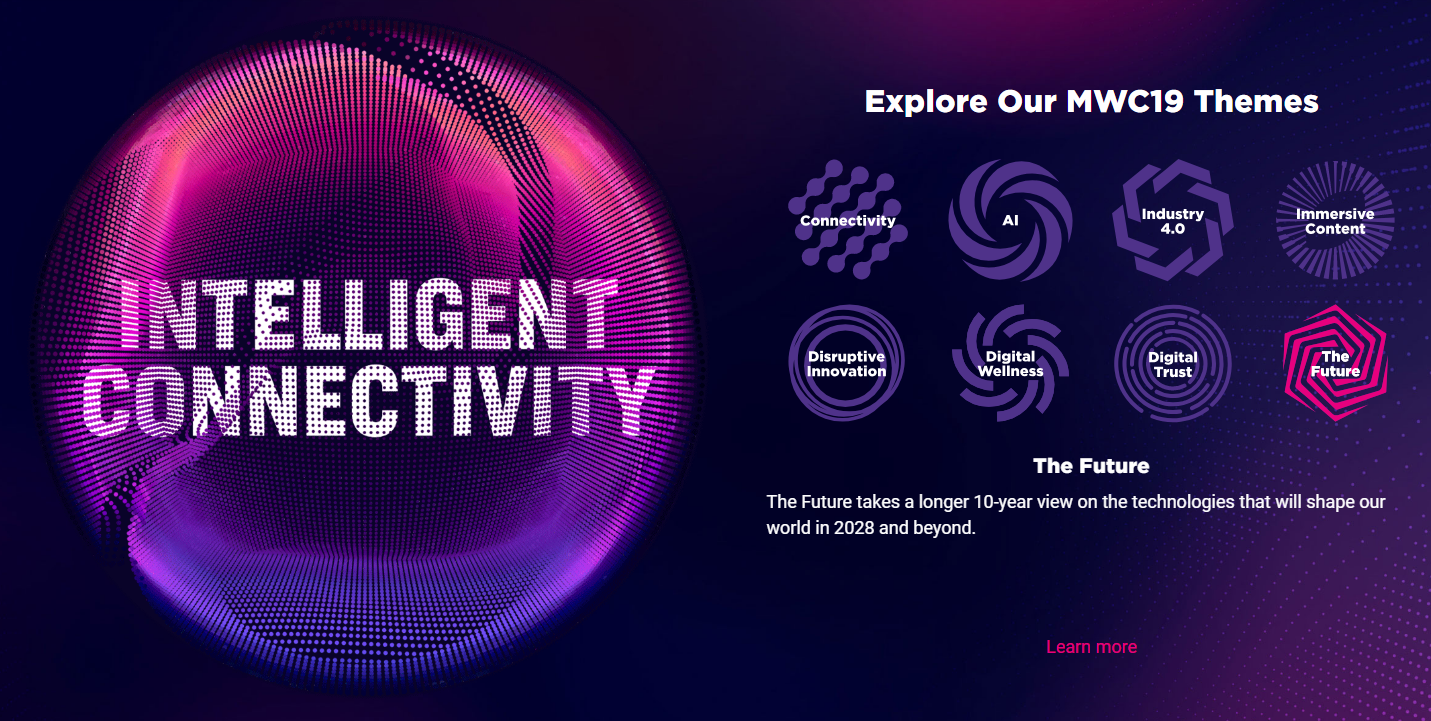
 

MWC 19 Intelligent Connectivity

The theme of this year’s event is ‘Intelligent Connectivity’. This term signifies the powerful combination of flexible, high-speed 5G networks, the Internet of Things (IoT), artificial intelligence (AI) and big data. Intelligent connectivity marks the beginning of a new era defined by highly contextualised and personalised experiences, delivered when and where you want them. This is the future of our industry and our world.

Gigabit LiFi
MWC 19

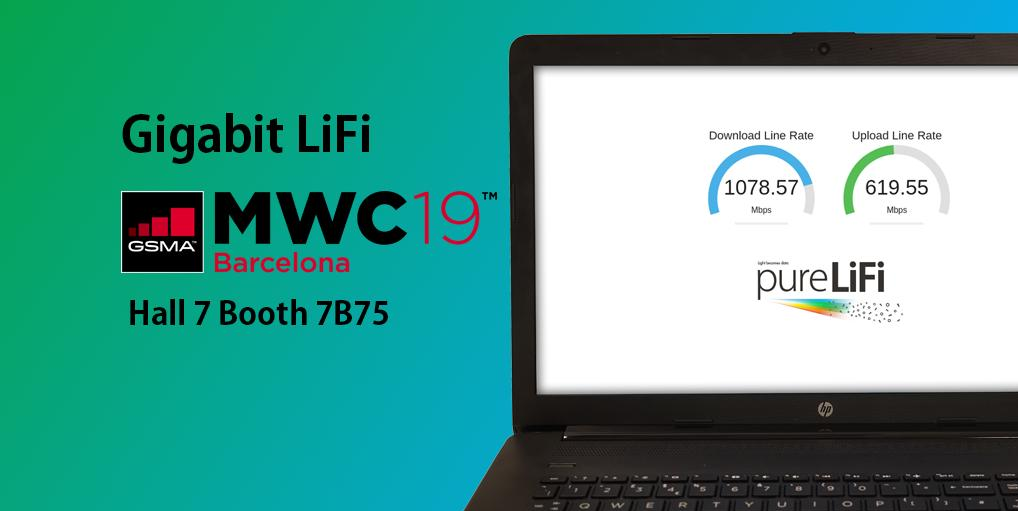
The Gigabit LiFi system is capable of transmitting data of up to 1 Gbps. From the pictures below, the Gigabit LiFi laptop achieved a download line rate of around 975 Mbps and an upload line rate of 377 Mbps. Download speed is the speed at which information is transferred from the internet to your computer whereas upload speed is the speed at which information is transferred from your computer to the internet.
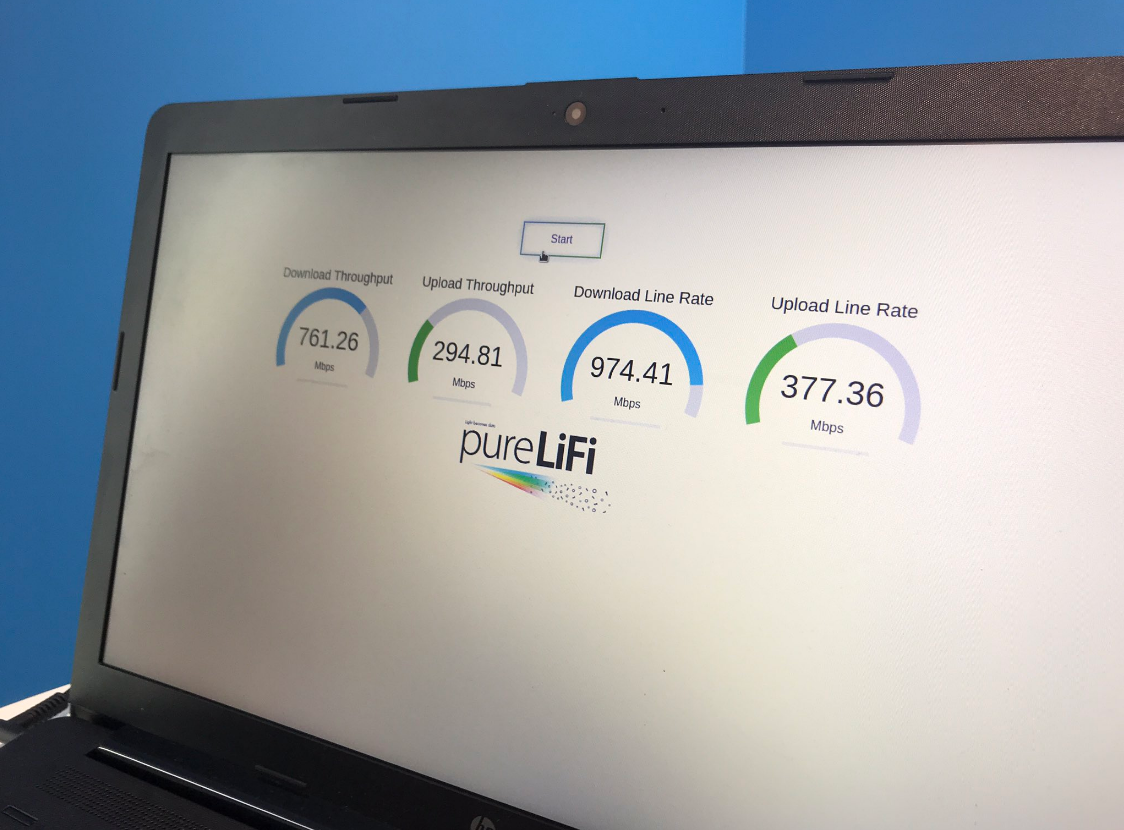
Photo credit to Stephen Speirs

Photo credit to Stephen Speirs

pureLiFi CEO, Alistair Banham, stated about pureLiFi’s readiness to work with device manufacturers:

“Our message to device manufacturers is that we are ready to get on your roadmap. We are developing the components that are necessary for LiFi integration into future generations of mobile devices. This year we have some of these components in action at Mobile World Congress.”
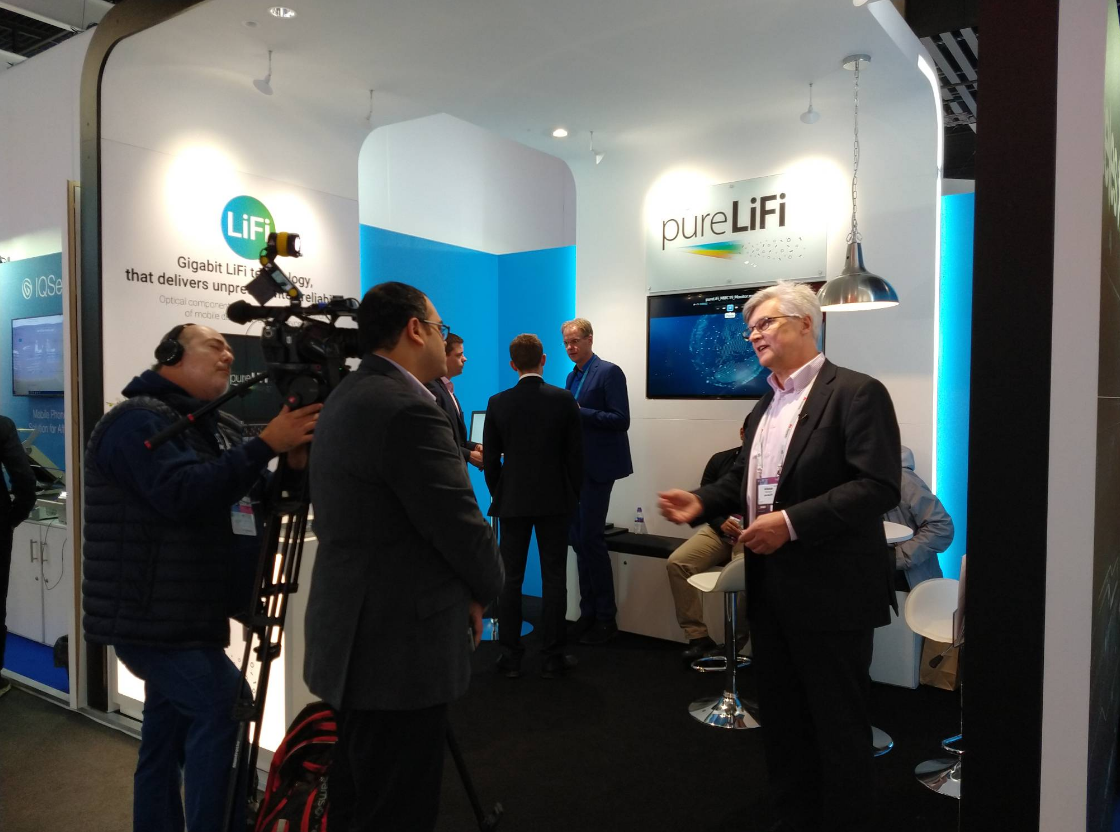
Sky News interview with pureLiFi CEO, Alistair Banham. Photo credit to pureLiFi

Sky News interview with pureLiFi CEO, Alistair Banham. Photo credit to pureLiFi

Co-Founder and CTO, Mostafa Afgani added:

“We are ready to extend wireless communications to new horizons. Getting Gbps of LiFi speed into a tiny package designed for mobile integration is a unique engineering feat. The new optical components are designed to work with a variety of baseband solutions allowing us to work with a wide range of manufacturers on integration.”

pureLiFi is pioneering the advancement of LiFi which will definitively revolutionise wireless communications and deliver to the world unprecedented bandwidth and data.

If you enjoyed this post and would like to hear more updates about Li-Fi technology, subscribe to our newsletter.

pureLiFi announced Gigabit LiFi demonstration at the upcoming MWC 2019

pureLiFi announced Gigabit LiFi demonstration at the upcoming MWC 2019

pureLiFi recently made the announcement that they will unveil their new Li-Fi system, the “Gigabit LiFi”at the Mobile World Congress 2019 in Barcelona.  The company will demonstrate how Li-Fi connectivity can be integrated into mobile handsets.

 Chief executive of pureLiFi, Alistair Banham, stated that “The ecosystem is crying out for new spectrum and new wireless technology that will service the global appetite for more bandwidth and digital innovation. Device manufacturing need new technology to be sure they’re ready for 5g and differentiate between their competition. We’ve led global adoption of LiFi into critical use cases such as government and industry and now we’re bringing the technology into every device and every light for everyone.”

Credit to pureLiFi

Credit to pureLiFi

pureLiFi brought the first commercial LiFi product to the world and continue to lead the advancement of this ground-breaking technology. In 2017, pureLiFi introduced The LiFi-XC is the world’s first certified, complete LiFi system, offering fast, secure mobile communications via light. In 2018,  pureLiFi demonstrated the first LiFi integrated laptop and mobile phone accessory.

pureLiFi has recorded year-on-year quarterly revenue increases of over 300 per cent against Q3 of 2014 and significantly grown its international customer base around the world with international partnerships in place with organisations such as Cisco, Rolls Royce, and O2 Telefonica.

The company was co-founded by Professor Harald Haas in 2011 after his famous Ted Global talk where he demonstrated Light Fidelity for the first time and coined the phrase LiFi. Harald Haas is now broadly known as the “Father of LiFi”.

pureLiFi is pioneering the advancement of LiFi which will revolutionise wireless communications and deliver to the world unprecedented bandwidth and data.

If you enjoyed this post and would like to hear more updates about Li-Fi technology, subscribe to our newsletter.
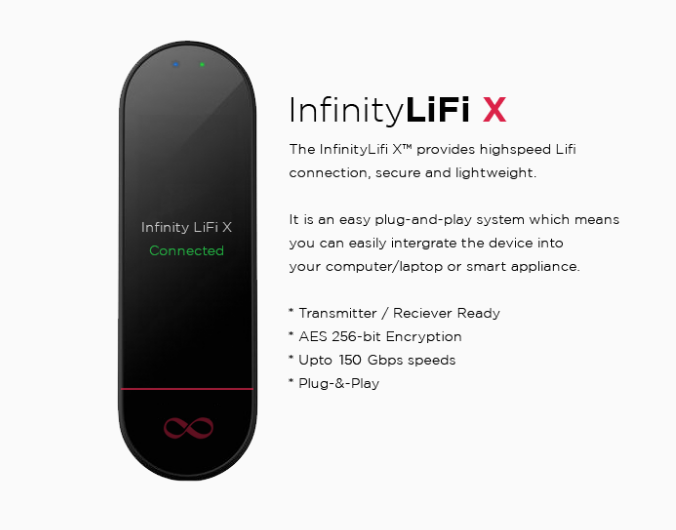
Infinity LiFi X - The Li-Fi system offering 150 Gbps Internet speed

Infinity LiFi X - The Li-Fi system offering 150 Gbps Internet speed

A Hong Kong-based company, called Infinity Technology Services Ltd, has recently released a Li-Fi system that can transmit data of up to 150 Gbps. The company was established in 2015 and provides Lighting and wireless communication solutions with the use of Li-Fi technology.

Infinity Technology Services Ltd claimed that their latest Li-Fi product is the most powerful plug and play system available for Li-Fi communication. The USB device comes with a lightweight body made from black aluminium. It can transmit data up-to 150 Gbps and allows up to 100 simultaneous users to benefit from a secure connection. It is compatible with IOS, Microsoft and Linux operating systems. The Li-Fi system comprises of led light bulbs and Li-Fi receivers and is currently only available to businesses and large organisations.

Infinity Li Fi X by Infinity Technology Services Ltd

Infinity Li Fi X by Infinity Technology Services Ltd

In many ways, smart objects have been employed for decades, such as electronic wristwatches, car alarms and coordinated traffic lights. What the IoT brings is a greater prevalence of smart objects and a higher connectivity between them. According to a Statista report, the installed base of Internet of Things connected devices and things is forecast to reach a figure between 6.6 billion and 30 billion by 2020 depending on the source and definition of what can be considered an IoT device/thing.

The smart home / automated home market, another IoT vertical, is forecast to grow significantly over the next few years, as the global smart home market is forecast to grow to more than 50 billion U.S. dollars (£38 billion). The smart home automation market is projected to reach more than 20 billion U.S. dollars (£15.2 billion) in revenue by that time. The use of IoT extends to all types of buildings.

Mr. Frank Zhu, Head of Investor Relations at Infinity Technology Services Ltd, said: “No matter what way you look at it, LiFi is an inspiring solution, and many investors will be keeping a close eye on how this technology can translate for residential use.” 

The future is really bright for the Li-Fi industry. It is only a matter of time before Li-Fi become part of our daily lives.

Source: https://www.businesswire.com/news/home/20190131005329/en/Infinity-Technology-Services-Limited-220-Gbps-LiFi

If you enjoyed this post and would like to hear more updates about Li-Fi technology, subscribe to our newsletter.
Li-Fi Rewind 2018

Li-Fi Rewind 2018

You have probably heard about YouTube Rewind, a video series about recaps of each year's viral videos, events, trends, and music. You may have also heard about the YouTube 2018 Rewind video who broke the record of the most disliked YouTube video of all time. This article will not talk about YouTube Rewind misery but about the main Li-Fi events that occurred in 2018.

2018 was a year of great developments and advancements for Li-Fi industry. The technology is getting cheaper and better every year. The following timeline displays the main events that took place in regards to Li-Fi.

“MyLiFi”Lamp

JAN 2018

OledComm introduced their Li-Fi internet enabled lamp. The product is called “MyLiFi”. MyLiFi, the world’s very first LiFi connected object available to the general public, along with its professional version, MyLiFi Pro, distributed in North America by Global LiFi Tech.

VLNCOMM

JAN 2018

VLNComm has developed the fastest, most affordable and most innovative Li-Fi LED lighting panel in the industry. Introduced and successfully demonstrated to more than 500 people at CES 2018 in Las Vegas, the LumiNex panel is capable of 108Mbps download speeds and when coupled with the LumiStick 2, 53Mbps upload speeds

pureLiFi and 1st Global Li-Fi Conference

FEB 2018

pureLiFi demonstrated integrated Li-Fi technology in laptops and smartphones. 1st Global Li-Fi Congress Conference held at the prestigious and spacious Palais Brongniart

Philips Lighting

MARCH 2018

Philips Lighting tested its Li-Fi system to Icade office, a real-estate investment company. Philips Lighting launched their Internet of Things (IoT) platform and connected lighting systems

pureLiFi and Havr

APRIL 2018

pureLiFi is providing technology to drive revolutionary connectivity for ground-breaking wireless connectivity solutions within Babcock’s Devonport Connected Facility. Havr has developed a Li-Fi based opening and closing technology called “Bright Lock”

FireFly

MAY 2018

FireFly presented a live demonstration of Li-Fi Technology from its SecureLink products. LED-driven Li-Fi-system from Fraunhofer HHI launched in Japan

BMW

JUNE 2018

BMW completed its three-year test using LED light to transmit automobile inspection information to and from a factory floor robot

BT Defence

JULY 2018

BT Defence teamed up with pureLiFi to deploy Li-Fi in their Adastral Park Facilities for testing and proving use cases of Li-Fi for the defence sector.

O2 and Kyle Academy

AUGUST 2018

O2 mobile operator tests Li-Fi technology to enhance consumer wireless networks. Kyle Academy teamed up with pureLiFi to implement Li-Fi technology in classrooms

Astronics

SEPTEMBER 2018

pureLiFi teamed up with Astronics on Li-Fi based airplanes connectivity

NextLiFi

OCTOBER 2018

NextLiFi and Two Bulls announce Software Development partnership to develop the next generation of wireless applications using Li-Fi technology

Lucibel and Dame Barbara Woodward

NOVEMBER 2018

Dame Barbara Woodward, British Ambassador to China, presented the Li-Fi light bulb to China president Xi Jinping. Lucibel is invited by the French Army to participate at the Defense Innovation Agency

If you enjoyed this post and would like to hear more updates about Li-Fi technology, subscribe to our newsletter.
LiFiMAX - The 100 Mbps Li-Fi system transmitting data from the ceiling of your home or office

LiFiMAX - The 100 Mbps Li-Fi system transmitting data from the ceiling of your home or office

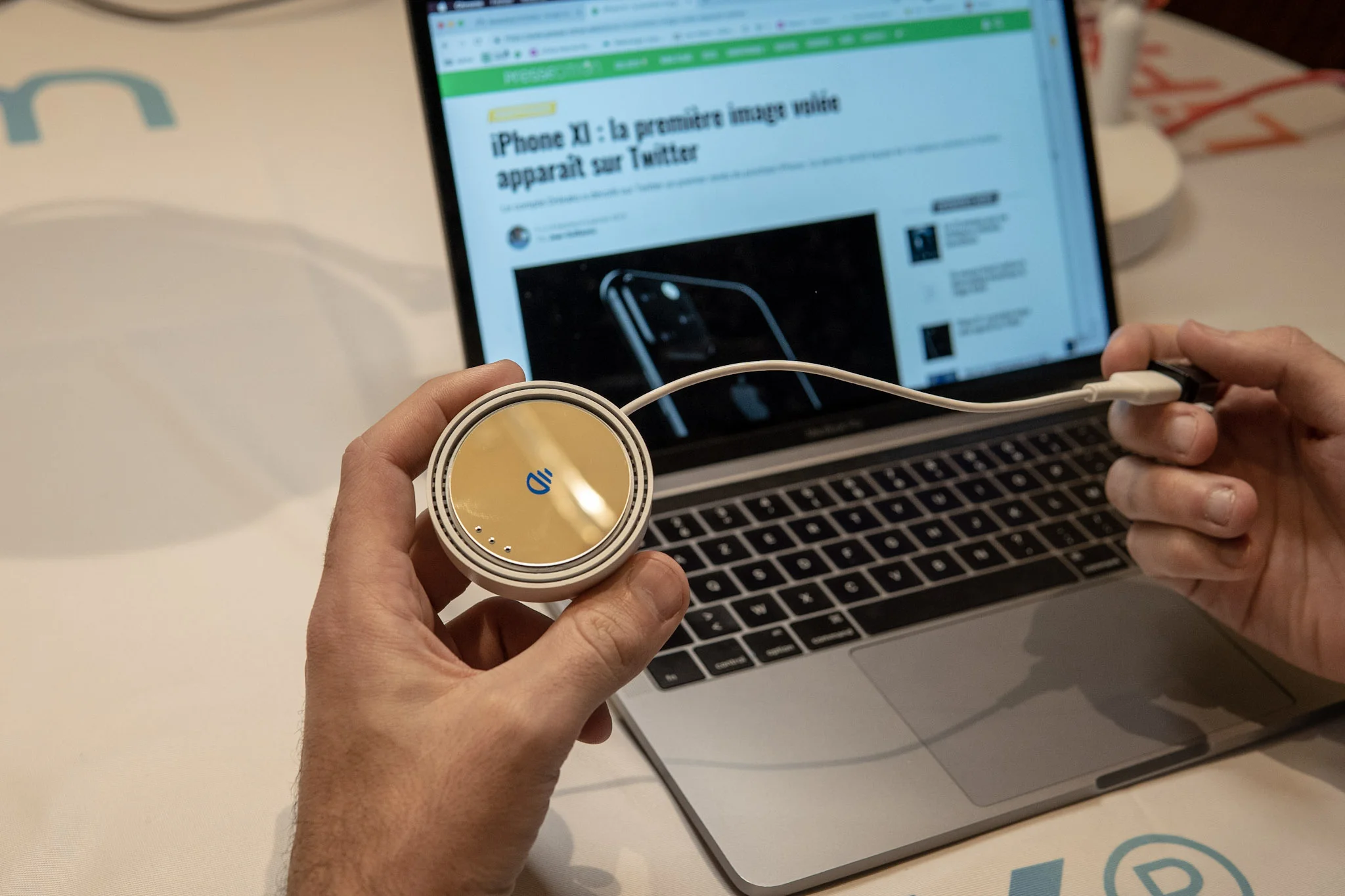
LiFiMAX dongle. Photo credit to Press-Citron

LiFiMAX dongle. Photo credit to Press-Citron

Oledcomm announced their 2nd generation Li-Fi system called “LiFiMAX”. at the 2019 Consumer Electronics Show (CES). Oledcomm designs and develops LiFi network interface devices that enable high-speed wireless data communication. It also serves LiFi equipment in the telecom, datacom, personal electronics, and industrial markets. The company’s product portfolio includes hubs, routers, switches, adapters, drivers, power supplies and many more. Oledcomm was founded in 2012 and is currently based in Paris, France.

After the worldwide success of MyLiFi, the first consumer LiFi lamp, the company has developed a solution for professionals with LiFiMAX. The latter will offer a connection ranging from 40 Mbps to 100 Mbps, over a radius of 28 m², and allowing up to 16 people to connect simultaneously.

Benjamin Azoulay, President of Oledcomm stated that " LiFiMAX is the result of more than 10 years of research. The LiFiMAX connection is particularly required in offices: meeting rooms, flexwork spaces, co-working and M2M industrial environments sensitive to radio frequencies. 

The product will be available from September 2019, for less than 874 euros (£786). Companies like Oledcomm hope to have taken a technological advance enough to dominate the sector. Benjamin Azoulay further stated: "We are lucky for the moment to be under the radars: the big players in the sector [terminal manufacturers] have other priorities. Our strategy is to develop products and know-how, so that when they wake up, they take a license from us instead of spending two or three years developing their own solutions, ".  According to Market Research Future’s report, the LiFi market could weigh as much as $51 billion £40 billion) by 2023.

If you enjoyed this post and would like to hear more updates about Li-Fi technology, subscribe to our newsletter.  
Li-Fi and Power over Ethernet (PoE)

Li-Fi and Power over Ethernet (PoE)

According to a report from the GSMA (Group Special Mobile Association) Intelligence, the global Internet of Things (IoT) market will be worth $1.1 trillion (£856 million) in revenue by 2025 as market value shifts from connectivity to platforms, applications and services. By that point, there will be more than 25 billion IoT connections (cellular and non-cellular), driven largely by growth in the industrial IoT market.

Li-Fi is a very high-speed wireless technology using light waves instead of radio waves to transmit data. However, one popular question about Li-Fi is how the data gets into the LED light bulb. One answer to that is through Power over Ethernet. Power over Ethernet, also known as PoE, is a technology that allows network cables to carry electrical power alongside data. 

How does PoE work?


Network cables, such as Cat 5e and Cat 6, are made of eight wires and are arranged as four twisted pairs.  In 10 and 100BASE-T Ethernet, two of these pairs are used for sending data, and these are known as the data pairs.  The other two pairs are unused and are referred to as the spare pairs (Gigabit Ethernet uses all four pairs). Because electrical currents flow in a loop, two conductors are needed to deliver power over a cable.  PoE treats each pair as a single conductor, and can use either the two data pairs or the two spare pairs to carry electrical current. Power over Ethernet is injected onto the cable at a voltage between 44 and 57 volts DC, and typically 48 volts is used.  This relatively high voltage allows efficient power transfer along the cable, while still being low enough to be regarded as safe.

Check out the following video for an explanation of PoE by Versa Technology:


5 advantages of PoE 

PoE offers the following advantages:

1) Time and cost savings - PoE helps reducing the time and expense of having electrical power cabling installed.  Network cables do not require a qualified electrician to fit them, and can be located anywhere.

2) Flexibility - Without being tethered to an electrical outlet, devices such as IP cameras and wireless access points can be located wherever they are needed most, and re-positioned if required.

3) Safety - POE delivery is intelligent, and designed to protect network equipment from overload, underpowering, or incorrect installation.

4) Reliability - POE power comes from a central and universally compatible source, rather than a collection of distributed wall adaptors.  It can be backed-up by an uninterruptible power supply, or controlled to easily disable or reset devices.

5) Scalability - Having power available on the network means that installation and distribution of network connections is simple and effective.

Devices using PoE technology 

There are currently many devices using PoE technology such as Ethernet extenders, LED Lighting systems, security access controls, smart clocks, wireless access points, PoS kiosks, industrial controls, network switches, digital signage, routers, IP/Pan Zoom cameras and VoIP phones.

If you enjoyed this post and would like to hear more updates about Li-Fi technology, subscribe to our newsletter.
Bright Lock: Security Lock with Li-Fi Technology

Bright Lock: Security Lock with Li-Fi Technology

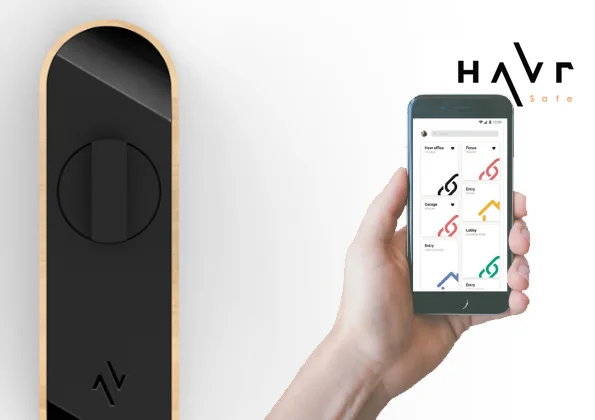
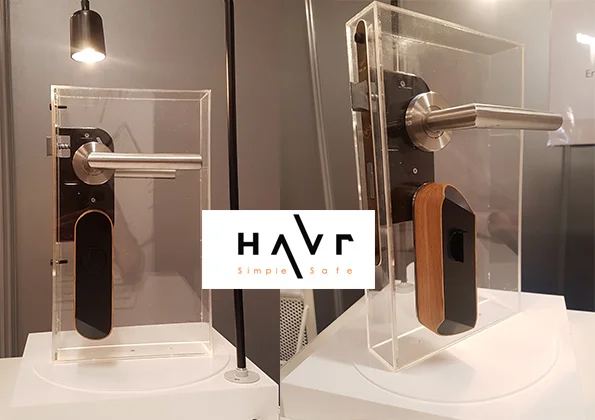
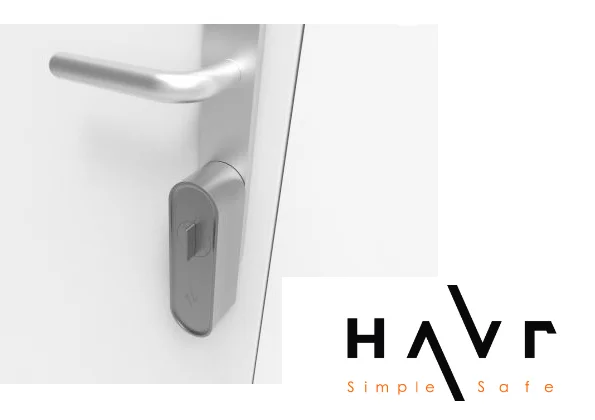
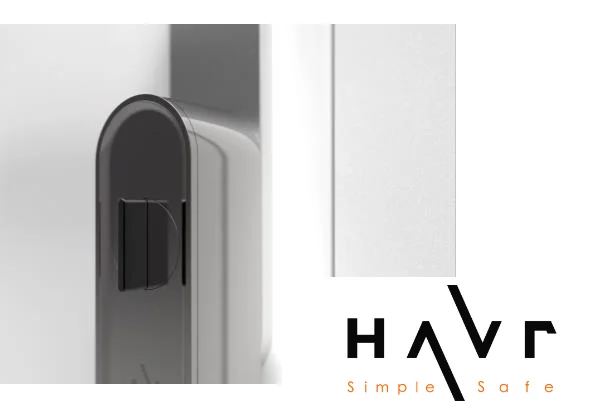
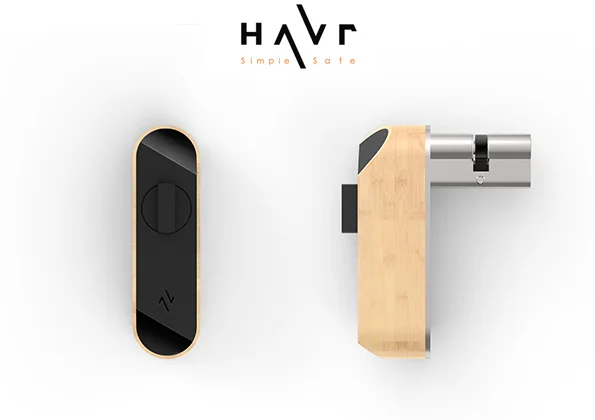
A french start-up, founded by two computer engineering students from the Compiègne University of Technology, Simon Laurent and Alexandre Ballet, Havr has developed a Li-Fi based opening and closing technology. Li-Fi, also known as "Light Fidelity", is a wireless optical networking technology, which uses light emitting diodes (LEDs) to transmit data.  Based on Li-Fi communication technology, the device uses the flash of your smartphone to trigger the opening or closing of your door.

Havr is at the origin of the first lock connected to use the light signals as means of unlocking. The name of the lock is called the Bright Lock.

The Bright Lock made by HAVR. Photo credit to HAVR

The Bright Lock made by HAVR. Photo credit to HAVR

How does the Bright Lock works?

To activate the lock, you will need to have an application downloaded on your smartphone that will trigger a sequence of light specific to your lock to trigger the opening. This flash allows you to authenticate securely. It's very simple, just place your smartphone in front of the lock to open or close the door, it's simple, convenient and secure. Of course it is always possible to open it with a key.  Check out the following video for a quick demo by Havr:

This product is currently being tested by professionals and a limited edition will be available soon. There is still no information about the tariff or the date of availability of this Li-Fi based technology lock system.

OWNII Coin - A cryptocurrency for Li-Fi Implementation

OWNII Coin

“A cryptocurrency for Li-Fi Implementation”

Global Greenology, a privately owned global manufacturing and design company specialising in environmentally friendly, energy efficient building solutions, has developed a cryptocurrency for Li-Fi implementation.

Cryptocurrency is a medium of exchange, which makes use of cryptography to secure transactions and to control the creation of additional currency units through the internet. Cryptocurrency development has been actively growing since 2009, thus offering a broad range of possibilities for transactions between users. The first cryptocurrency created was Bitcoin, and as of September 2015, there were over 14.6 million bitcoins in circulation valued at $3.4 billion (£2.6 Billion). The success of Bitcoin has spawned approximately 1200 competing cryptocurrencies, such as Litecoin, Ethereum and many more.

Blockchain technology powers the cryptocurrency network and is used to store encrypted transactional information online. This digital ledger records all the transactions that have ever been conducted using cryptocurrency, providing the necessary data structure for this ledger and reducing the capability of sensitive information being hacked.

Optical Wireless data transfer, also known as Li-Fi, is the future of wireless communication and was established in 2011 by creator Harald Haas. This new internet streaming method uses visible light waves from the semi-conductive nature of LED light bulbs. Li-Fi is unique in that the same light energy used for illumination can also be captured by specialised equipment and used for communication.

OWNII Coin is developed to oversee, develop, and design the physical infrastructure necessary to implement Li-Fi in the United States and developing nations abroad and is sold privately. The pureLiFi company has manufactures and distributes the equipment needed to stream communication through existing LED bulbs but to implement Li-Fi , installation of this equipment is necessary.

Global Greenology states that the OWNII Coin will promote the creation of a new internet infrastructure in the United States and beyond. It will also create numerous opportunities for employment, business ownership, and entrepreneurial endeavours selling equipment and services. The multiple streams of revenue that OWNII Coin represents brings unprecedented value. Once launched, the infrastructure creates new technology, software, products and services making this coin and ecosystem very valuable.

OWNII coin and the resulting financial capital it generates allows Global Greenology the opportunity to build the OWNII Ecosystem and effectively provide the technology to reach the end user and provide opportunities for manufacturing of the Li-Fi light bulbs and connection devices. It opens a level playing field for the smaller business owner or an entrepreneurial start-up company to get involved on the ground floor of this opportunity.

Photo credit to Imgur

More specifically, OWNII creates wireless communication, that is faster, addresses issues with internet security, allows localisation due to small coverage area of Li-Fi access points used for precise asset tracking. Furthermore, providing ubiquitous high-speed wireless access that offers substantially greater data density (data rate per unit area) than RF through high bandwidth reuse.

Finally, the OWNII Coin system exploits the advantages of cryptocurrencies over fiat currencies as a medium of exchange. In particular, it does not require any single agent or institution be trusted to keep an honest ledger, provide low transactions costs, or offer increased security to customers. The technical elements and infrastructure needed to implement the OWNII Coin system is already established and ready for execution, the only real challenge is the dissemination. Global Greenology’s establishment of the OWNII Coin system has the potential to disrupt our current expensive wireless communication system.