ELIoT (Enhance Lighting for the Internet of Things) H2020 Presents LiFi Solutions For The Mass Market

Table of Contents


    ELIoT (Enhance Lighting for the Internet of Things) H2020 Presents LiFi Solutions For The Mass Market

    The Fraunhofer HHI announced on their website the completion of the ELiOT project. The coordination of this project was done by the Fraunhofer Heinrich Hertz Institute (HHI). The consortium has developed LiFi solutions for the mass market since 2019, enabling wireless data transmission via light in the Internet of Things (IoT). To conclude the project, the researchers demonstrated a new LiFi infrastructure in real-world application scenarios and presented a roadmap for LiFi in the future IoT.

    To make LiFi commercially viable, the ELIoT consortium has researched core aspects and new functionalities of the LiFi infrastructure. These include precise position detection (positioning), wireless networking between multiple transmitters and multiple receivers (multicast communication), and increased security standards. ELIoT has developed and implemented these features and demonstrated them in real-world application scenarios. The final EU project report firmly stated that ELIoT delivered "exceptional results with significant immediate or potential impact."

    Achievements of the ELIoT project


    The consortium demonstrated the use of LiFi for positioning in the industrial sector, where the focus was particularly on integrating positioning and communication in one unified system. LiFi makes localization much more accurate than was previously possible with radio technologies. Additionally, the integration of LiFi and 5G was also demonstrated in an industrial environment. Such systems combine the advantages of radio solutions, such as high mobility, with the high capacities of LiFi.

    Furthermore, ELIoT has optimised the use of LiFi infrastructures in office environments, addressing the core challenges of the modern workplace. Distributed LiFi MIMO bypasses the data congestion issues of traditional networks and provides improved data protection.

    In the ELIoT demo on fixed wireless access, the researchers also presented a pioneering solution for the last mile of optical network connectivity. In the outdoor area, one possible scenario in the future would be point-to-point connections with high bandwidth from roofs to small radio base stations, between street lamps or to private homes (wireless-to-the-home).

    Mobile authentication is becoming increasingly important not only in industrial but also in private settings. With the help of LiFi, the ELIoT researchers demonstrated an energy-saving LiFi-enabled door lock that can be easily integrated into existing LiFi infrastructures. The lock has an integrated LiFi transceiver that enables secure key exchange with a server on the network. Using LiFi, the key's code can now also be renewed more securely than before via WLAN.

    Finally, ELIoT has been able to significantly reduce the load on wireless networks in the context of digital signage in shopping malls by using LiFi to transmit video to displays in real time.

    ELIOT also improved the manageability of LiFi modules, i.e. their installation and maintenance. LiFi networks use a central module to transport the data signals to several distributed LiFi modules. The researchers in the ELIoT project discovered a more robust and manageable solution for data transport: Plastic Optical Fibers (POF). Different LiFi modules are accessed with different colors of light, which transmit the data simultaneously over the same fiber. This means that one thin plastic fiber can replace a whole bundle of cables, reducing installation costs.

    In addition, the researchers successfully provided an open reference architecture to support the IoT using the existing lighting infrastructure. The architecture is very flexible and can cover a wide variety of applications, which together cover the future mass market. The consortium reached a consensus on the optimal architecture. The milestones in the project contributed significantly to the standardization of lighting and telecommunication infrastructures in ITU-T G.9991, IEEE P 802.15.13 and P802.11bb, and they form the basis of the roadmap for the deployment of LiFi in IoT.

    Partners in this EU project were Signify (formerly Philips Lighting), Nokia, MaxLinear, Deutsche Telekom, KPN, Weidmüller, LightBee, as well as Oxford University, Eindhoven University of Technology and Fraunhofer Institutes HHI and FOKUS.

    Article source:

    https://newsletter.fraunhofer.de/viewonline2/17386/713/1/14SHcBTt/UZjW6ZSTbF/1


    ELIoT H2020 Project

    As stated on their website, ELIoT is an EU Horizon 2020 project. It is led by the Fraunhofer Heinrich Hertz Institute. The central aim of the project is the development of mass-market Internet of Things (IoT) solutions using LiFi, a next-generation wireless communication network, that travels over light instead of radio waves. With LiFi, the ELIoT consortium will explore a networked wireless communication technology operating in the previously unused light spectrum, besides WiFi and cellular radio.

    ELIoT has started in 2019 as a project funded by the EU’s biggest Research and Innovation programme, Horizon 2020. This programme promises more breakthroughs by taking great ideas from lab to the market. ELIoT receives €6 million funding from the Public-Private Partnership ‘Photonics21’ and is formed by the partners Signify (formerly Philips Lighting), Nokia, MaxLinear, Deutsche Telekom, KPN, Weidmüller, LightBee, the University of Oxford, Eindhoven Technical University and the two Fraunhofer Institutes; Heinrich Hertz Institute and FOKUS. Even more, companies will shortly be added to the consortium as associated partners.

    Fraunhofer HHI

    The Fraunhofer , Heinrich Hertz Institute, HHI, also known as Fraunhofer HHI or Fraunhofer Heinrich Hertz Institute, is an organisation of the Fraunhofer Society based in Berlin. The institute engages in applied research and development in the fields of physics, electrical engineering and computer sciences.

    The Fraunhofer Heinrich Hertz Institute develops mobile and stationary broadband communication networks and multimedia systems. Focal points of independent and contract research conducted by Fraunhofer HHI are photonic components and systems, fiber optic sensor systems, and image signal processing and transmission. Future applications for broadband networks are developed as well. Research in this area focuses on 3D displays, UHD panorama video production, human-machine interaction through gesture control, optical satellite communication and data transmission technologies such as visible light communications.

    Li-Fi Conference 2022

    The Li-Fi Conference 2022 Edition was a great success. Li Fi Tech News will very soon write articles on the topics treated at the Conference.

    What is LiFi?

    LiFi, also known as "Light Fidelity" is a wireless optical networking technology, which uses light-emitting diodes (LEDs) to transmit data. In 2011, professor Harald Haas made a LiFi demonstration at the TED (Technology, Entertainment, Design) Global Talk on Visible Light Communication (VLC).

    VLC uses light as a medium to deliver high-speed communication like Wi-Fi and complies with the IEEE standard IEEE 802.15.7. The IEEE 802.15.7 is a high-speed, bidirectional, and fully networked wireless communication technology-based standard similar to Wi-Fi's IEEE 802.11.

    How does LiFi work?

    LiFi is a high speed, bidirectional, and fully networked wireless communication of data using light. LiFi constitutes of several light bulbs that form a wireless network.

    When an electrical current goes through to a LED light bulb, a stream of light (photons) emits from the lamp. LED bulbs are semiconductor devices, which means that the brightness of the light flowing through them can change at extremely high speeds. The signal is sent by modulating the light at different rates. The signal can then be received by a detector that interprets the changes in light intensity (the signal) as data. Also when the LED is ON, you transmit a digital 1, and when it is OFF, you transmit a 0.

    LiFi Benefits

    The primary benefits of LiFi are as follows:

    Security: Provides entirely secure access. Where there is no light there is no data.

    Safety: Does not produce electromagnetic radiation and does not interfere with existing electronic systems.

    Localisation: Allows localisation due to the small coverage area of LiFi access point - localisation can be used for very precise asset tracking.

    Data density: Provides ubiquitous high-speed wireless access that offers substantially greater data density (data rate per unit area) than RF through high bandwidth reuse.

    Credit to Oledcomm

    LiFi Applications

    LiFi can be used for so many applications and the list is increasing every year. You can read our updated list of Li-Fi applications at the following link:

    https://www.lifitn.com/blog/2021/2/13/top-30-li-fi-applications-updated-list-including-potential-applications

    Credit to pureLiFi


    LiFi Systems Reviews by LiFi Tech News


    OLEDCOMM LIFIMAX KIT REVIEW - ONE YEAR IN

    We reviewed the LiFiMax kit produced by the leading French LiFi company Oledcomm. We bought this LiFi kit system at the end of 2020. After over a year of use, we decided to write a review of this LiFi system. We looked briefly at the profile of Oledcomm, a brief history of the LiFiMax system, the Kit box contents, some testing and performance results of this LiFi system, the customer experience and our own verdict (the good and the bad points) of the LiFiMax kit.

    You can read the review on this link:

    https://www.lifitn.com/blog/lifimaxreview


    SIGNIFY TRULIFI 6002.1 STARTER KIT SYSTEM REVIEW


    We also reviewed the Trulifi 6002.1 starter kit produced by Signify, the world leader in lighting for professionals, consumers and lighting for the Internet of Things. We got this LiFi kit system with the help of PCDSI and Signify around August 2021. In a similar fashion done with our previous review of the LiFiMax kit a few months ago, we will look briefly at the profile of Signify, a brief history of the Trulifi 6002.1 kit, the Kit box contents, some testing and performance results of this LiFi system, the customer experience and our own verdict (the good points and the bad points) of the Trulifi 6002.1 kit.

    You can read the review on this link:

    https://www.lifitn.com/blog/trulifi6002review


    In conclusion, if you are also interested to hear more information about the OWNII Coin, you can contact the OWNii Support team at info@ownii.net or use the contact form on the new OWNii website, ownii.net. If you are enquiring about LiFi devices such as the LiFiMax kits and the Trulifi kits, you can contact us through our chatbot or by sending an email through our contact us form. If you enjoyed this post and would like to hear more updates about LiFi technology, subscribe to our newsletter. Don’t forget to subscribe to our social media accounts. You can also join our Telegram group about LiFi technology on this link:


    https://t.me/joinchat/FMzOmsEKyJFrU6Af

    OLEDCOMM Awarded The Silver Medal of The Grand Price of Innovation at The CYBERNIGHT Event in Paris

    Table of Contents


      OLEDCOMM Awarded The Silver Medal of The Grand Price of Innovation at The CYBERNIGHT Event in Paris

      EURONAVAL Exhibition 2022 edition

      Photo credit to Jean-Claude Guyard

      CYBER NIGHT, the Night of Cybersecurity, for its second edition brought together more than 800 professionals to celebrate the most beautiful innovations in four categories. The ceremony took place in one of the most beautiful theatres in Paris. Each nominated candidate participated in a grand oral in front of a jury of expert personalities from the world of Cyber ​​a few weeks before the evening.

      CYBER NIGHT 2022 is a unique event that has nothing to do with most awards ceremonies that exist. It's two hours show carried out at a steady pace with multiple testimonies on stage but also in the room thanks to a network of agile cameras broadcasting everything on the big screen.

      ​The CYBER DIRECTORATES highlighted their achievements, but also their teams and their innovations. SERVICE PROVIDERS were able to apply or become a sponsor, participate in the jury and present on stage their companies, services, products, etc...

      Oledcomm was among the 2022 candidates and won the Silver medal for the Grand Price of Innovation. A big CONGRATULATION to Oledcomm for this well-deserved achievement.

      OLEDCOMM

      Oledcomm designs and develops LiFi network interface devices that enable high-speed wireless data communication. It also serves LiFi equipment in the telecom, datacom, personal electronics, and industrial markets. The company’s product portfolio includes hubs, routers, switches, adapters, drivers, power supplies, and more.

      Oledcomm was founded in 2012 and is based in Paris, France. Oledcomm's adventure began in 2005 in the research laboratories of the University of Versailles-Saint-Quentin with the first work on communication by visible light.

      Following years of research & development and a passion for innovation, Oledcomm became the pioneer of LiFi (Light Fidelity) solutions and innovation on a global scale.

      Based in the Paris region, Oledcomm employs around 20 people and designs complete solutions for LiFi operation, including microcontrollers, LiFi photoreceivers and software platforms.

      Today, after more than 28 patents, 15 years of R&D, over 500 trusted clients and several awards, Oledcomm is pursuing a strong mission: to transform the 14 billion points of light in the world into a powerful communication network.


      Li-Fi Conference 2022

      The Li-Fi Conference 2022 Edition was a great success. Li Fi Tech News will very soon write articles on the topics treated at the Conference.

      What is LiFi?

      LiFi, also known as "Light Fidelity" is a wireless optical networking technology, which uses light-emitting diodes (LEDs) to transmit data. In 2011, professor Harald Haas made a LiFi demonstration at the TED (Technology, Entertainment, Design) Global Talk on Visible Light Communication (VLC).

      VLC uses light as a medium to deliver high-speed communication like Wi-Fi and complies with the IEEE standard IEEE 802.15.7. The IEEE 802.15.7 is a high-speed, bidirectional, and fully networked wireless communication technology-based standard similar to Wi-Fi's IEEE 802.11.

      How does LiFi work?

      LiFi is a high speed, bidirectional, and fully networked wireless communication of data using light. LiFi constitutes of several light bulbs that form a wireless network.

      When an electrical current goes through to a LED light bulb, a stream of light (photons) emits from the lamp. LED bulbs are semiconductor devices, which means that the brightness of the light flowing through them can change at extremely high speeds. The signal is sent by modulating the light at different rates. The signal can then be received by a detector that interprets the changes in light intensity (the signal) as data. Also when the LED is ON, you transmit a digital 1, and when it is OFF, you transmit a 0.

      LiFi Benefits

      The primary benefits of LiFi are as follows:

      Security: Provides entirely secure access. Where there is no light there is no data.

      Safety: Does not produce electromagnetic radiation and does not interfere with existing electronic systems.

      Localisation: Allows localisation due to the small coverage area of LiFi access point - localisation can be used for very precise asset tracking.

      Data density: Provides ubiquitous high-speed wireless access that offers substantially greater data density (data rate per unit area) than RF through high bandwidth reuse.

      Credit to Oledcomm

      LiFi Applications

      LiFi can be used for so many applications and the list is increasing every year. You can read our updated list of Li-Fi applications at the following link:

      https://www.lifitn.com/blog/2021/2/13/top-30-li-fi-applications-updated-list-including-potential-applications

      Credit to pureLiFi


      LiFi Systems Reviews by LiFi Tech News


      OLEDCOMM LIFIMAX KIT REVIEW - ONE YEAR IN

      We reviewed the LiFiMax kit produced by the leading French LiFi company Oledcomm. We bought this LiFi kit system at the end of 2020. After over a year of use, we decided to write a review of this LiFi system. We looked briefly at the profile of Oledcomm, a brief history of the LiFiMax system, the Kit box contents, some testing and performance results of this LiFi system, the customer experience and our own verdict (the good and the bad points) of the LiFiMax kit.

      You can read the review on this link:

      https://www.lifitn.com/blog/lifimaxreview


      SIGNIFY TRULIFI 6002.1 STARTER KIT SYSTEM REVIEW


      We also reviewed the Trulifi 6002.1 starter kit produced by Signify, the world leader in lighting for professionals, consumers and lighting for the Internet of Things. We got this LiFi kit system with the help of PCDSI and Signify around August 2021. In a similar fashion done with our previous review of the LiFiMax kit a few months ago, we will look briefly at the profile of Signify, a brief history of the Trulifi 6002.1 kit, the Kit box contents, some testing and performance results of this LiFi system, the customer experience and our own verdict (the good points and the bad points) of the Trulifi 6002.1 kit.

      You can read the review on this link:

      https://www.lifitn.com/blog/trulifi6002review


      In conclusion, if you are also interested to hear more information about the OWNII Coin, you can contact the OWNii Support team at info@ownii.net or use the contact form on the new OWNii website, ownii.net. If you are enquiring about LiFi devices such as the LiFiMax kits and the Trulifi kits, you can contact us through our chatbot or by sending an email through our contact us form. If you enjoyed this post and would like to hear more updates about LiFi technology, subscribe to our newsletter. Don’t forget to subscribe to our social media accounts. You can also join our Telegram group about LiFi technology on this link:

      https://t.me/joinchat/FMzOmsEKyJFrU6Af


      aeroLiFi, a German LiFi Company and a pureLiFi Partner Who Specialises in LiFi solutions For The Aerospace Industry

      Table of Contents

        aeroLiFi, a German LiFi Company and a pureLiFi Partner Who Specialises in LiFi solutions For The Aerospace Industry

        aeroLiFi gmbh


        In this article, we will discuss a German LiFi started called aeroLiFi. We will look at the history of the startup, their team, their achievements over the years, and their demonstration of their LiFi systems at AIX 2019 and 2022 as well as at the Robotics Festivals 2022.

        About aeroLiFi

        Photo credit to aeroLiFi

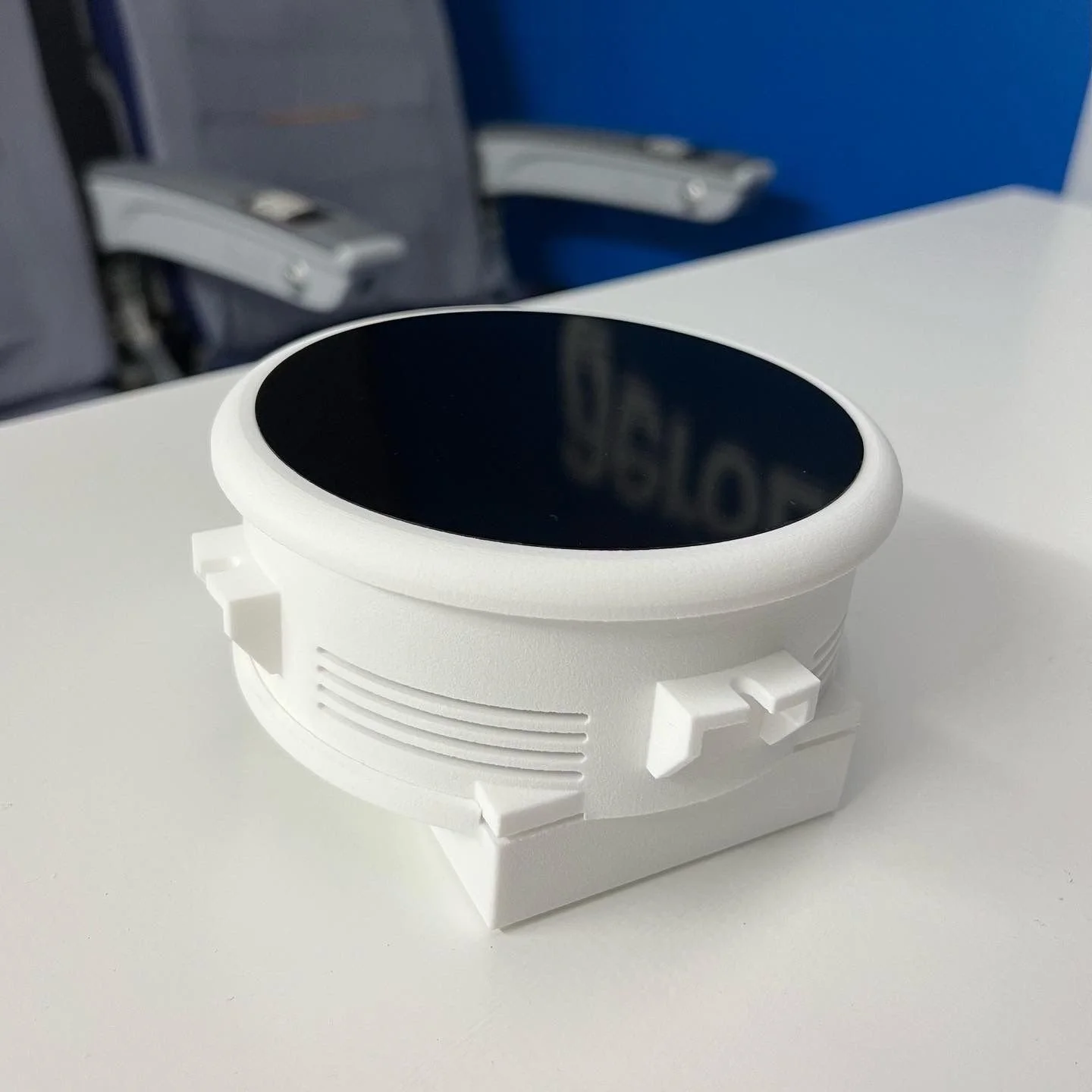
        According to their website, aeroLiFi states that they provide end-to-end solutions for LiFi connectivity including access points and end devices. They offer personalised solutions according to clients' requirements. They are also a pureLiFi partner

        They build on many years of experience in the aeronautic sector, including lighting and connectivity systems development, product and system integration, qualification and certification as well as innovation and technology management.

        They look back to decades of business experience in the high technology sector and have a very good network of contacts in aeronautics and other areas like logistics and medical. Their regular involvement in co-funded research programs provides us with an excellent overview of technology trends and relevant innovations in the wider high-tech ecosystem.

        Photo credit to aeroLiFi

        Photo credit to aeroLiFi

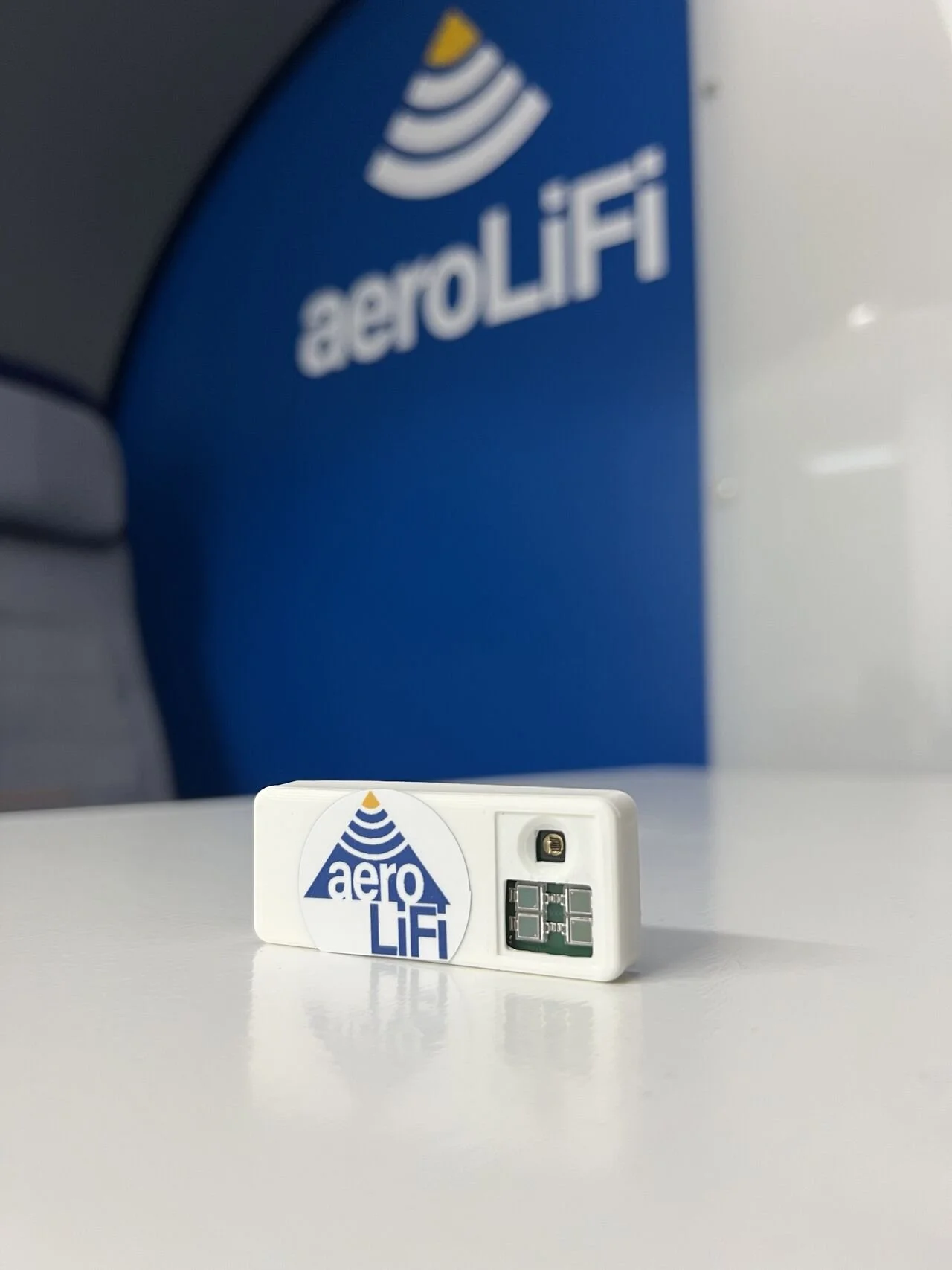
        Photo credit to aeroLiFi - LiFi dongle


        History and Achievements of aeroLiFi


        aeroLiFi was founded in 2018. The company was rated as one of the TOP 50 Startups, by the online and print platform fuer-gruender.de which provides actual information on all topics related to entrepreneurship, startups and investors.

        Photo credit to aeroLiFi


        aeroLiFi won the 1st Price Winner BMWi digital Startup Competition in May 2018. Then, In June 2018, they got their 1st Customer in aviation Project Consulting.

        Their achievement was in January 2019 when they became a partner in 2 aviation-specific research programs.

        The company states that its office is designed to make working as comfortable as possible. They’ve got the basics covered with a good connection to public transport and modern office space equipment, but it’s also a fun place to work, with a seating area in the backyard where you can watch jets taking off all day long, against the backdrop of the Alps.


        At the Aircraft Interiors Expo (AIX) 2019, aeroLiFi demonstrated its multimedia LiFi network for an aircraft cabin. Merging standard LiFi technology components with the latest innovations made in multicast network protocols to show the first all-optical multimedia IFE solution for aircraft cabins.

        Photo credit to FlightGlobal

        Birger Timm, Managing Director of aeroLiFi, said, “LiFi provides a stable communications link that doesn’t degrade and that has enough capacity for each passenger to stream HD and 4K content. We do that by reducing the number of people using each cell, giving airlines the ability to provide a consistent data stream to a lot of people in a small area.”

        Timm continued, “It’s not impossible to hack into a LiFi network, just very hard. You have to get between the light source and the receiver. In an aircraft, that effectively means you need to be sitting on someone’s knee and that’s very noticeable.”

        “In fact, LiFi is so secure that it is already being looked for use in the cockpit for flight critical applications.”

        LiFi can use both visible light and infrared. Therefore, access points can continue working during the plane’s local night. Timm concluded,

        “LiFi is perfect for the aircraft cabin because it requires minimal physical infrastructure, it provides stable and consistent data transmission, and it’s safe.”

        aeroLiFi has integrated Cadami’s coded caching technology into its solution. This helps increase the stability of the solution, as well as the size of the video content library available.


        Moving on to September 2019, aeroliFi installed the 1st PoC LiFi Cabin connectivity system for aviation customers.

        In November 2019, they installed the 1st PoC Secure LiFi Office Communication System.


        AEROLIFI TEAM


        Dr Markus Werner - Managing Director Technology and Software Development

        Photo credit to aeroLiFi

        Dr Markus has a PhD in satellite communication technologies, experience in wireless communication systems and software as well as research and development in national and international research programs.

        He is a founder and former CEO of an aerospace company with a focus on wireless communication and software development. He is also a member of IEEE, AIAA, DGLR and VDE/ITG.

        In the below YouTube video, Dr Markus was talking about which public funding programs start-ups need in Germany. The video is in German but we translated some of his statements into English.


        Dr Markus Werner: ”I had already founded a company from a research company, from research institutions from the DLR. This was actually very helpful as a starting position because you actually have a certain security. Proximity to high-tech, research. And at that time, we learned with my fellow colleagues in research how to actually get co-financing, and how to get co-financing for new ideas. This is in fact one of the most important sources and one of the most important ways in which it sometimes falls short. Today, when you see how start-ups are being promoted, there is often a big hype. In the first six months of the year and after that, there is a threshold that is difficult to understand. And one would wish that politics would be more systematic in such an accelerator incubator for phase two.”

        Birger Timm - Managing Director LED Lighting Systems, Product Development

        Photo credit to aeroLiFi

        Birger graduated in medical engineering with a focus on measurement and application technology. Later focused on LED lighting technology.

        He is experienced in product development as well as research and development and light measurement. He also has a lot of experience in lighting system development and project management.


        Birger stated some of the following statements in the video:

        “And that's one of the good things about the LiFi technology. So, what we are doing is, effectively increasing the data rate per passenger, what we call the data density. So, when you imagine, many people can share one WiFi network. So, if you look at your phone, how many WiFi networks are available, it's hundreds, especially in crowded places like here. And all of the passengers, for example, in an aeroplane share, this one network and the data rate effectively per passenger goes down. When using LiFi technology, the effective data rate per passenger rises because less people share one access point. And that's because every light can be an access point. And by physical laws, not hundreds of people can gather under one light. And that's why the data rate is higher.”

        “Yes, so the light path of the light cannot go through walls. And that is, on one hand, a great advantage because it increases the security of the data link massively because nobody can sit behind the wall and hack into your network. On the other hand, of course, you're right. If I block the connection, no data can go to the sensor. But for the IoT application, we have a very smart solution we work together with our colleagues from Cadami, who developed a software solution that enables us to very, very fast and effective cache and buffer the data which comes to the IFP screens so that a blockage or light path of 10, 20 seconds or more does not degrade the performance.”


        Aircraft Interiors Expo (AIX) 2022

        Phot credit to aeroLiFi


        Aircraft Interiors Expo (AIX) is the world’s leading marketplace for airlines and the supply chain to meet.

        The expo brings the whole industry together so we can explore and source the latest products, find practical solutions, collaborate and build relationships with the right people, find the best products to enhance our cabin interiors, and discover those hidden gems to create the ultimate cabin and passenger experience. It is ultimately a professional platform where airlines, designers, engineers, specifiers, and manufacturers come together to share, collaborate, and find practical and innovative solutions took place in Hamburg.

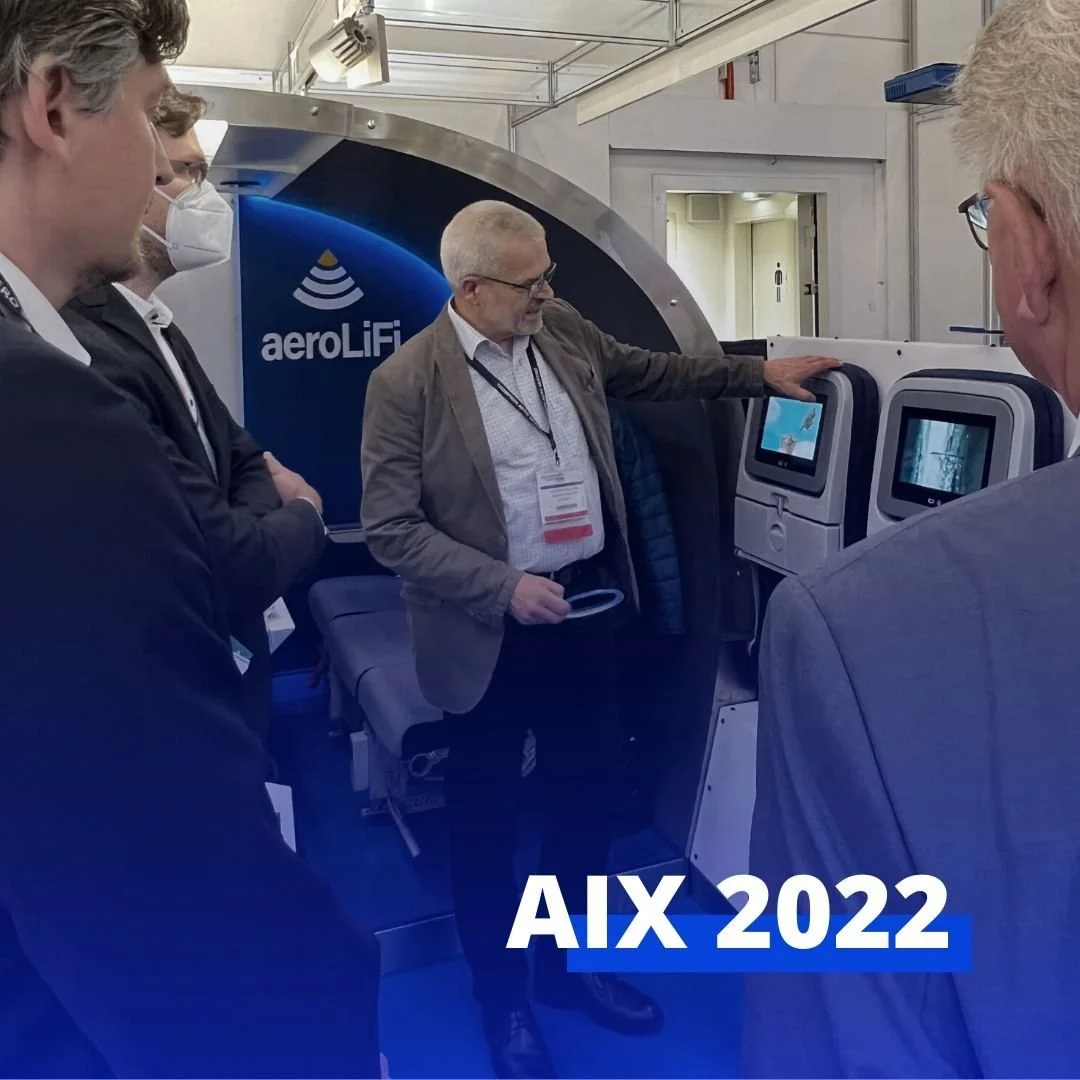
        The AIX 2022 took place between the 14th and 16th of June 2022. aeroLiFi team presented their new prototypes of wireless communication solutions based on LiFi technology. They demonstrated their unique system to visitors using for example a live camera stream to show a high level of security and speed of our access points.

        Visitors were able to see their modern dongles which are used to connect with the access points and can Interface with all common end-user devices such as laptops and tablets.

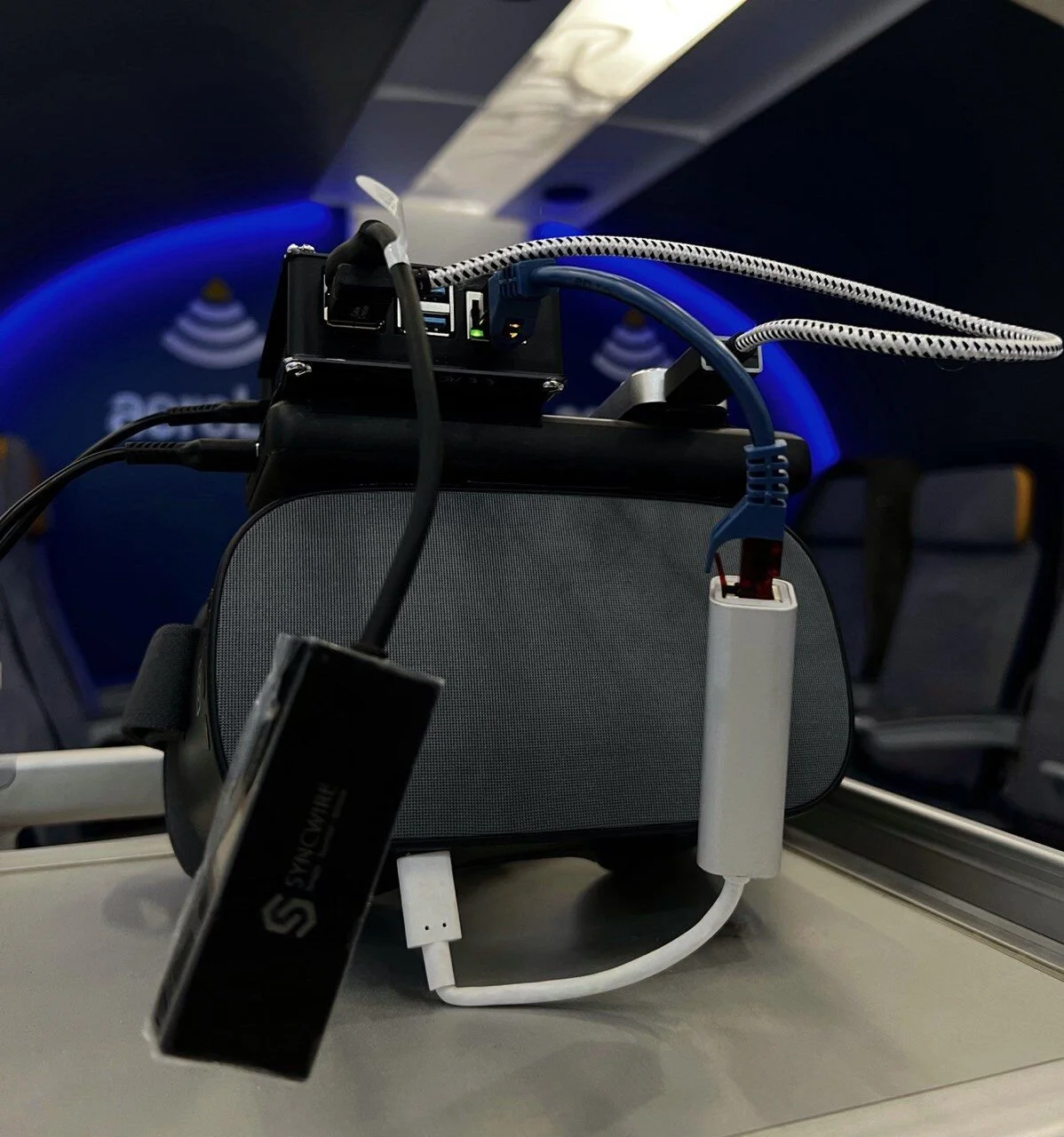
        Using the example of virtual reality headsets, they demonstrated a mix of wireless technologies for data transmission, WiFi and LiFi. The essence of the hybrid lies in the fact that when these two technologies are complementary and if one stops working, the second one is connected to replace it.

        Benefits of the onboard LiFi system

        1. Less wiring - more space for seats and luggage

        The LiFi system may be mounted in a light source (reading lamp, interior lighting, etc.) or may use dedicated infrared transceivers. Thus, to place the technology on board, it is enough to have light sources that are already installed in the cabin by default.

        2. Security

        This technology is perfect for planes as it doesn’t interfere with radio signals in the same way as WiFi, which uses radio waves. Instead, LiFi takes advantage of visible or infrared light. This means that passengers can make calls, use the Internet and access in-flight entertainment systems more easily.


        Robotics Festival 2022


        The Robotics Festival gathers a curated crowd of forward-thinking industry leaders, researchers and entrepreneurs who are truly passionate about robotics and its uplifting potential in the industry and beyond.

        It is an event that helps professionals in the industry and enthusiasts to get insights into what leading researchers and the top voices of the industry think about the future of the robotics & automation sector, and what topics they want to research and invest in over the next years. The Robotics Festival 2022 held from the 13th to the 15th of September 2022.

        Photo credit to Cadami

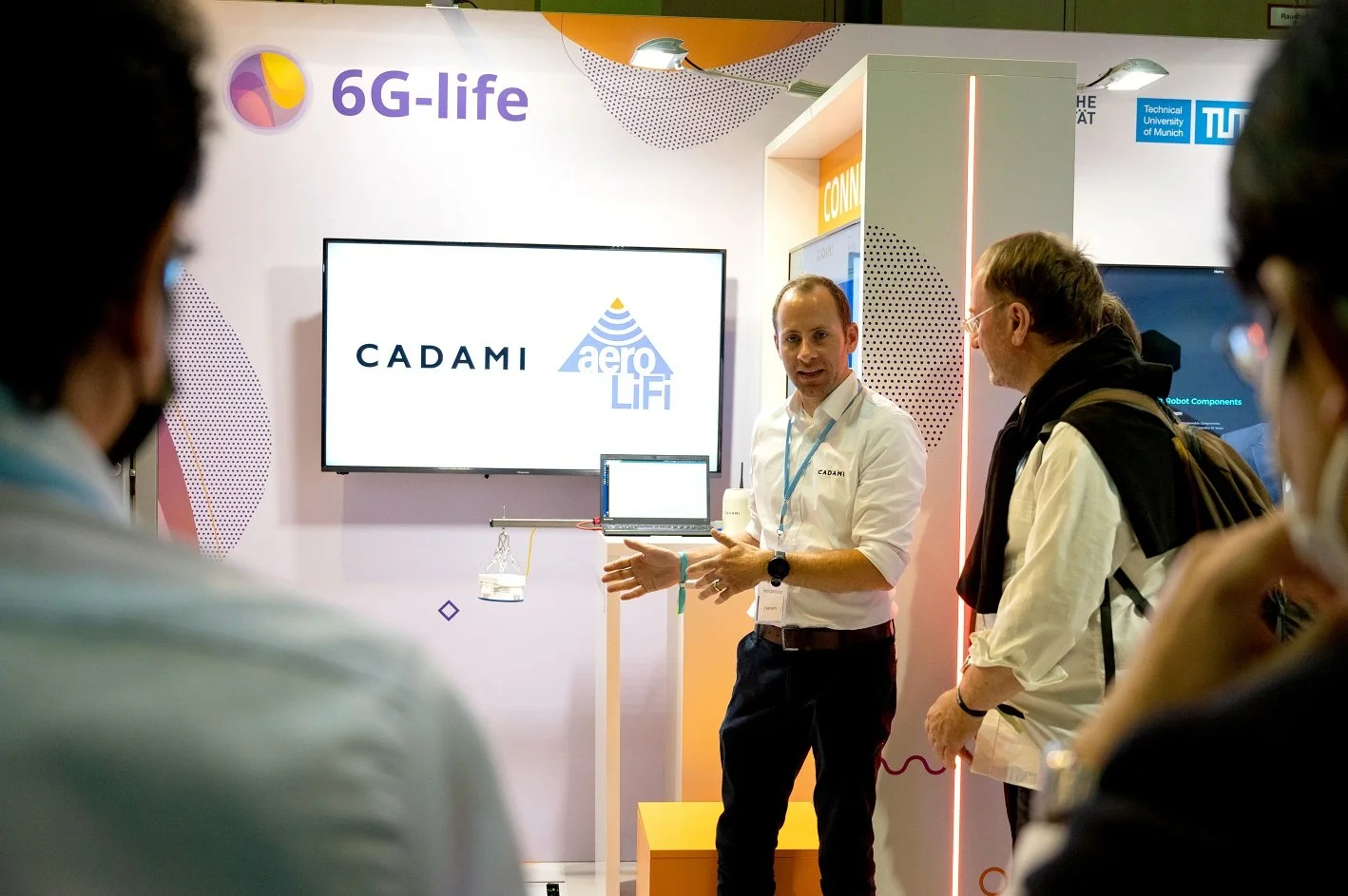
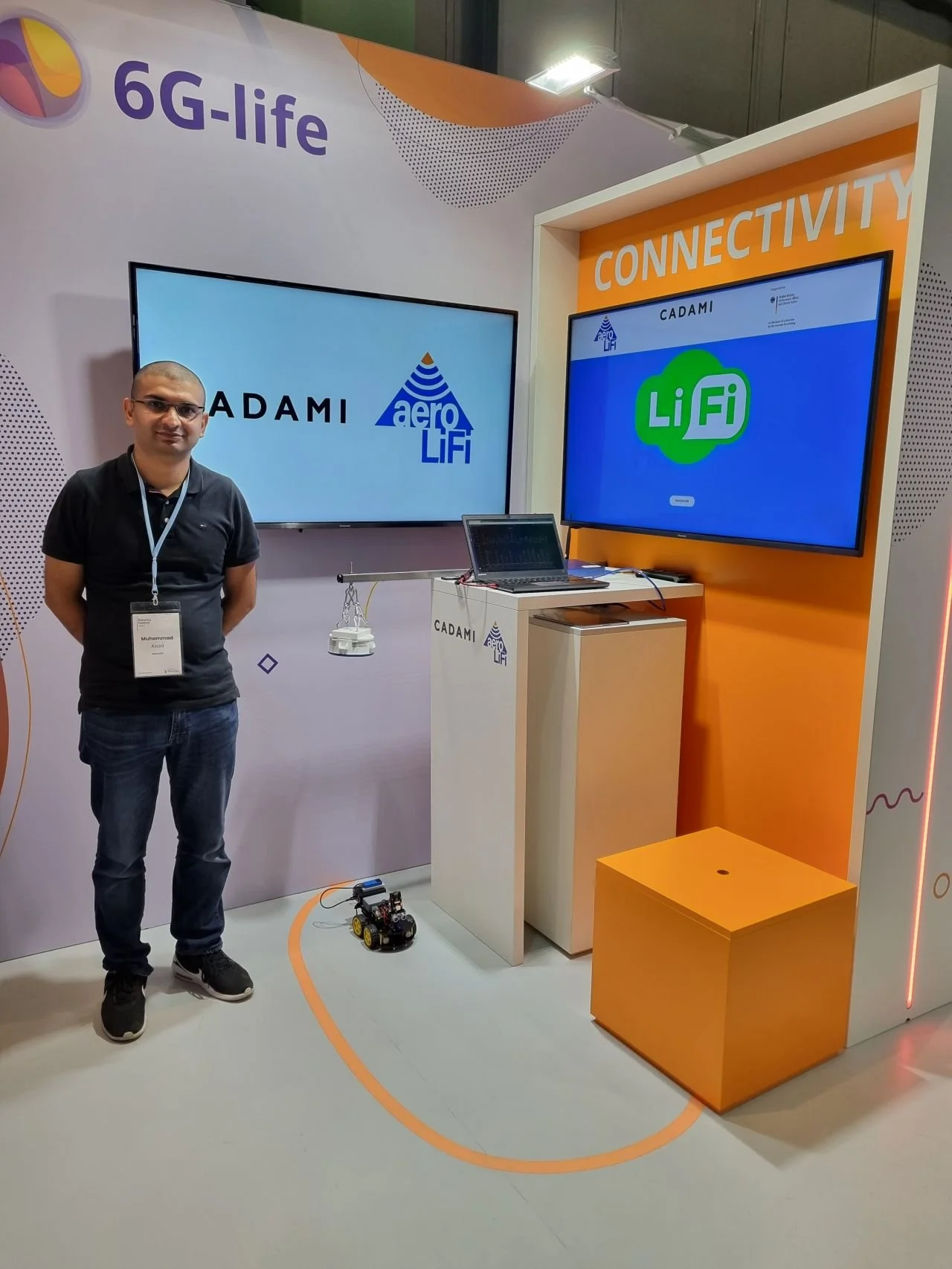
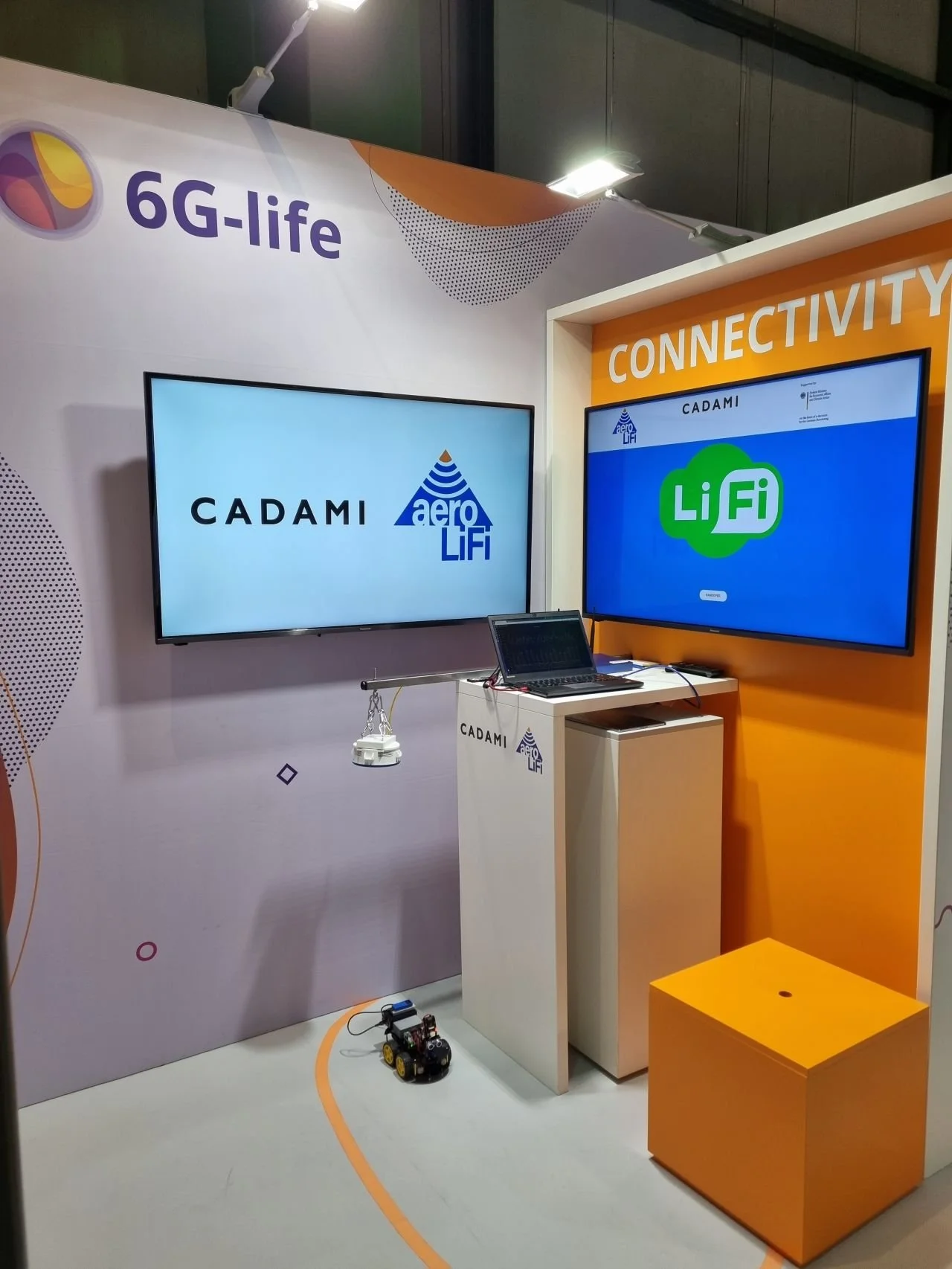
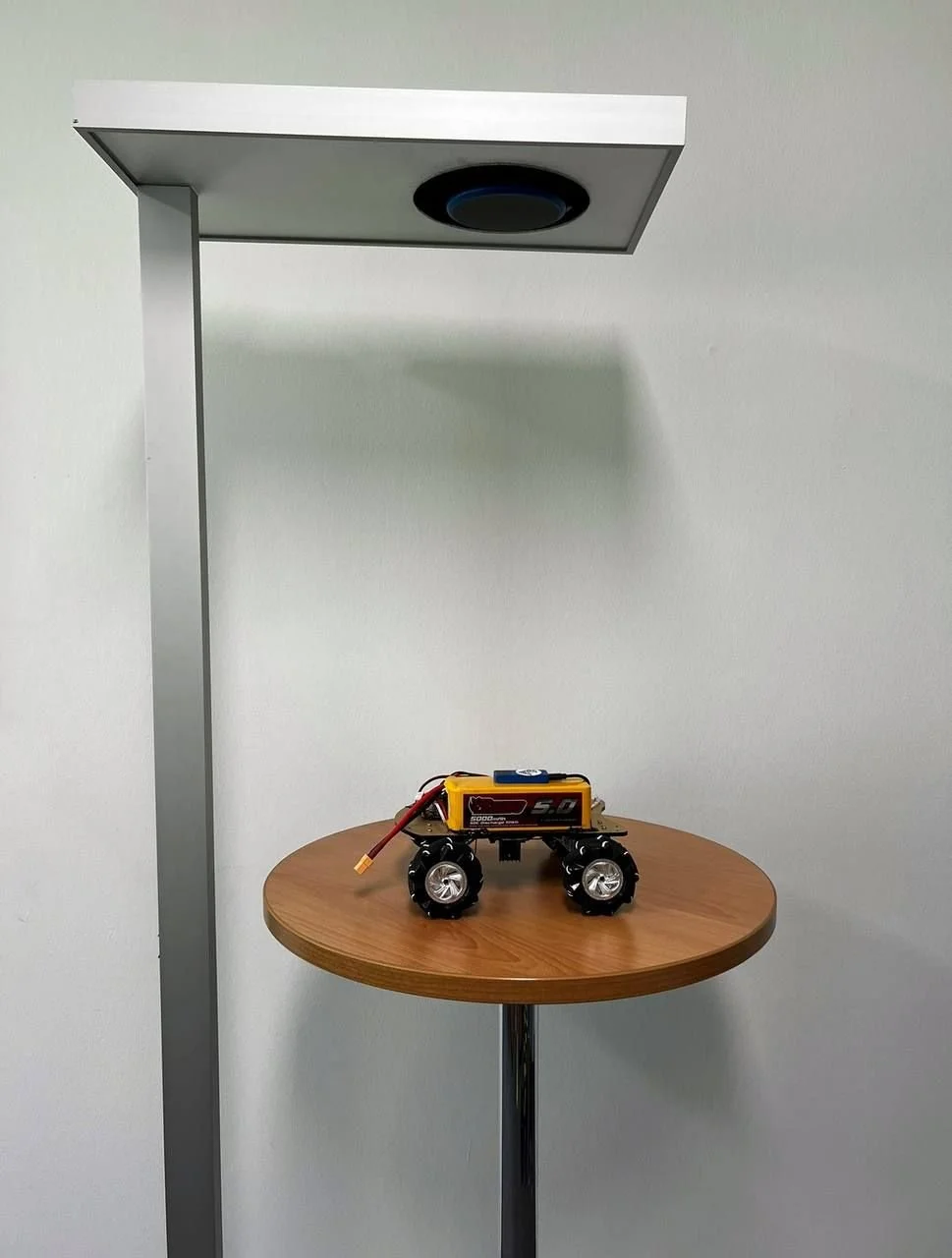
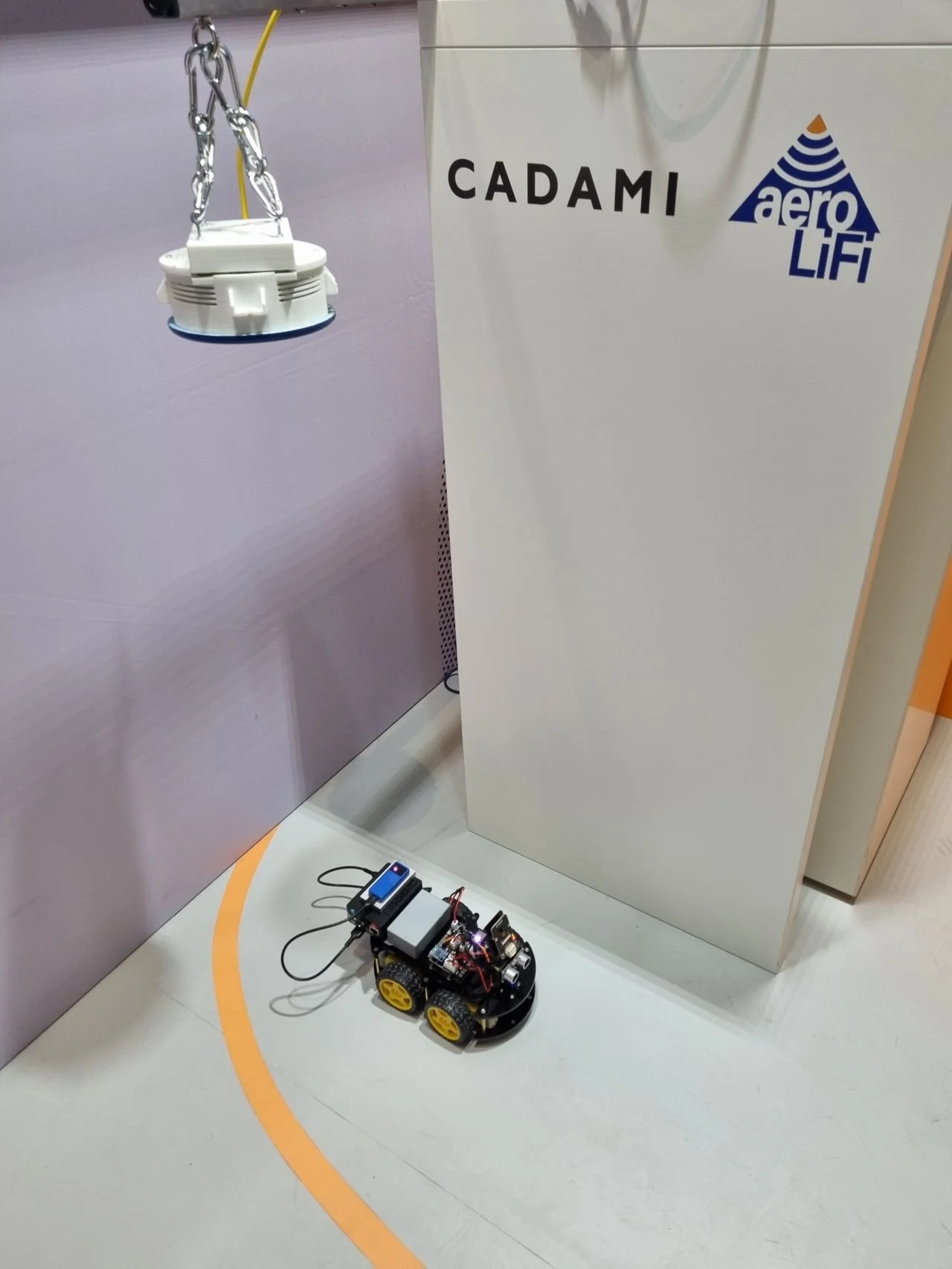
        aeroLiFi team demonstrated their brand new combined WiFi and LiFi demo technology on the robot car in Leipzig from 13th to 15th September together with our partner - Cadami GmbH.

        They demonstrated a mix of wireless technologies for connecting WiFi and LiFi. The essence of the hybrid lies in the fact that when these two technologies are interchangeable and if one stops working, the second one is connected to replace it.

        Photo credit to aeroLiFi

        Photo credit to aeroLiFi

        Photo credit to aeroLiFi

        Photo credit to aeroLiFi

        Photo credit to aeroLiFi - Hybrid LiFi and WiFi system by aeroLiFi


        Contact aeroLiFi

        If you:

        - have any kind of questions concerning LiFi technology;

        - would like to cooperate with aeroLiFi on a LiFi project;

        - would like to book an individual technology demonstration;

        You can contact them via their email address:

        info@aerolifi.com

        You can also contact them on their web page www.aerolifi.com (Contact page).

        Li-Fi Conference 2022

        The Li-Fi Conference 2022 Edition was a great success. Li Fi Tech News will very soon write articles on the topics treated at the Conference.

        What is LiFi?

        LiFi, also known as "Light Fidelity" is a wireless optical networking technology, which uses light-emitting diodes (LEDs) to transmit data. In 2011, professor Harald Haas made a LiFi demonstration at the TED (Technology, Entertainment, Design) Global Talk on Visible Light Communication (VLC).

        VLC uses light as a medium to deliver high-speed communication like Wi-Fi and complies with the IEEE standard IEEE 802.15.7. The IEEE 802.15.7 is a high-speed, bidirectional, and fully networked wireless communication technology-based standard similar to Wi-Fi's IEEE 802.11.

        How does LiFi work?

        LiFi is a high speed, bidirectional, and fully networked wireless communication of data using light. LiFi constitutes of several light bulbs that form a wireless network.

        When an electrical current goes through to a LED light bulb, a stream of light (photons) emits from the lamp. LED bulbs are semiconductor devices, which means that the brightness of the light flowing through them can change at extremely high speeds. The signal is sent by modulating the light at different rates. The signal can then be received by a detector that interprets the changes in light intensity (the signal) as data. Also when the LED is ON, you transmit a digital 1, and when it is OFF, you transmit a 0.

        LiFi Benefits

        The primary benefits of LiFi are as follows:

        Security: Provides entirely secure access. Where there is no light there is no data.

        Safety: Does not produce electromagnetic radiation and does not interfere with existing electronic systems.

        Localisation: Allows localisation due to the small coverage area of LiFi access point - localisation can be used for very precise asset tracking.

        Data density: Provides ubiquitous high-speed wireless access that offers substantially greater data density (data rate per unit area) than RF through high bandwidth reuse.

        Credit to Oledcomm

        LiFi Applications

        LiFi can be used for so many applications and the list is increasing every year. You can read our updated list of Li-Fi applications at the following link:

        https://www.lifitn.com/blog/2021/2/13/top-30-li-fi-applications-updated-list-including-potential-applications

        Credit to pureLiFi


        LiFi Systems Reviews by LiFi Tech News


        OLEDCOMM LIFIMAX KIT REVIEW - ONE YEAR IN

        We reviewed the LiFiMax kit produced by the leading French LiFi company Oledcomm. We bought this LiFi kit system at the end of 2020. After over a year of use, we decided to write a review of this LiFi system. We looked briefly at the profile of Oledcomm, a brief history of the LiFiMax system, the Kit box contents, some testing and performance results of this LiFi system, the customer experience and our own verdict (the good and the bad points) of the LiFiMax kit.

        You can read the review on this link:

        https://www.lifitn.com/blog/lifimaxreview


        SIGNIFY TRULIFI 6002.1 STARTER KIT SYSTEM REVIEW


        We also reviewed the Trulifi 6002.1 starter kit produced by Signify, the world leader in lighting for professionals, consumers and lighting for the Internet of Things. We got this LiFi kit system with the help of PCDSI and Signify around August 2021. In a similar fashion done with our previous review of the LiFiMax kit a few months ago, we will look briefly at the profile of Signify, a brief history of the Trulifi 6002.1 kit, the Kit box contents, some testing and performance results of this LiFi system, the customer experience and our own verdict (the good points and the bad points) of the Trulifi 6002.1 kit.

        You can read the review on this link:

        https://www.lifitn.com/blog/trulifi6002review


        In conclusion, if you are also interested to hear more information about the OWNII Coin, you can contact the OWNii Support team at info@ownii.net or use the contact form on the new OWNii website, ownii.net. If you are enquiring about LiFi devices such as the LiFiMax kits and the Trulifi kits, you can contact us through our chatbot or by sending an email through our contact us form. If you enjoyed this post and would like to hear more updates about LiFi technology, subscribe to our newsletter. Don’t forget to subscribe to our social media accounts. You can also join our Telegram group about LiFi technology on this link:
        https://t.me/joinchat/FMzOmsEKyJFrU6Af


        Chantefleur, The First Nursery School in Paris Equipped with LiFi, Feedbacks Their Experience with Oledcomm LiFi system

        Table of Contents

          Chantefleur, The First Nursery School in Paris Equipped with LiFi, Feedbacks Their Experience with Oledcomm LiFi system

          Credit to Oledcomm

          Chantefleur Nursery School


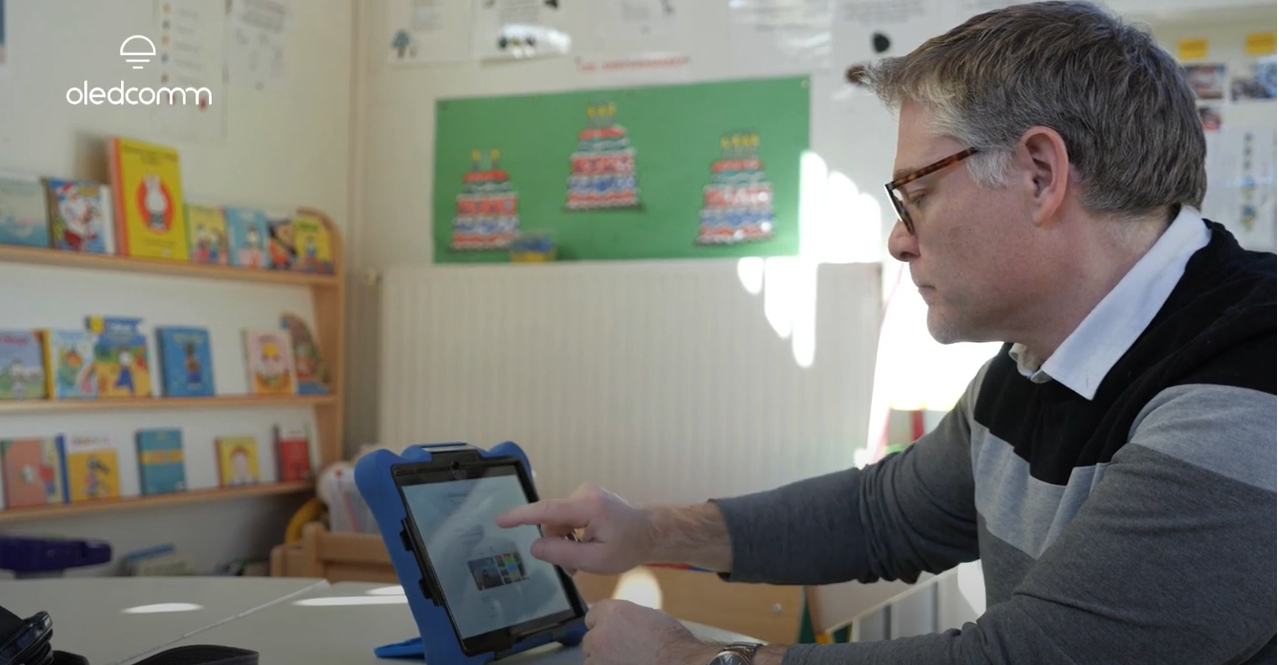
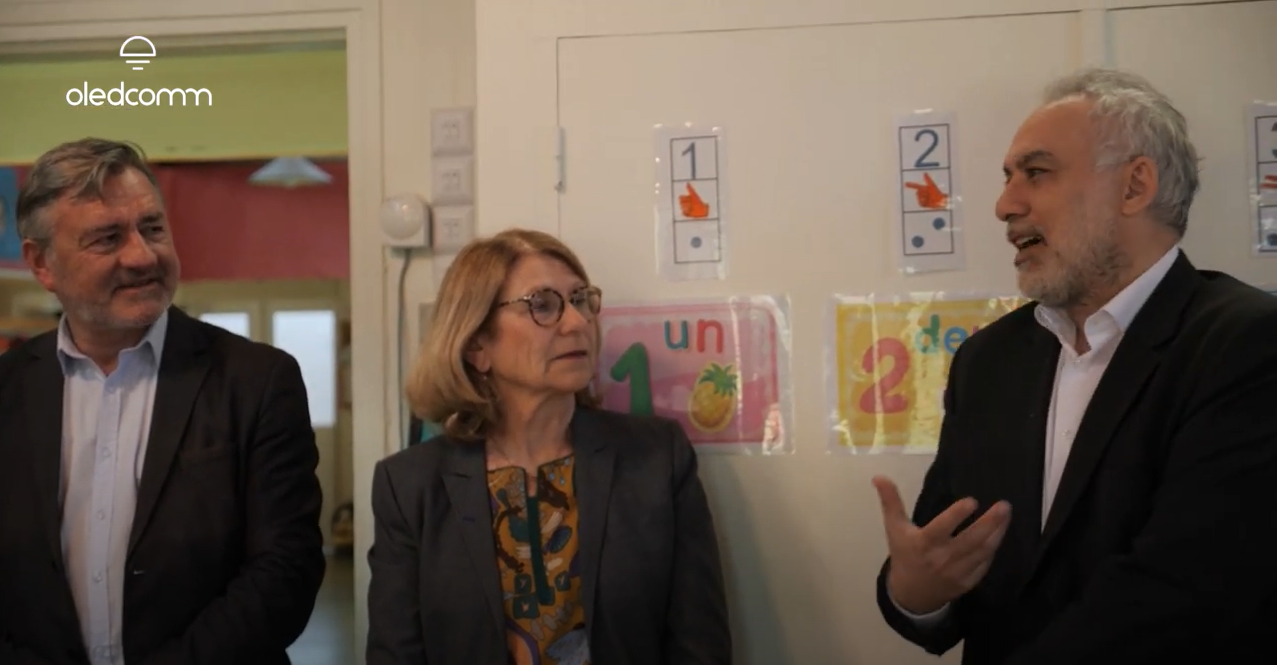
          Oledcomm released a video showcasing the positive reviews of staff at Chantefleur school in L’Isle-Adam. Chantefleur is the First Nursery School in Paris Equipped with LiFi technology. The nursery school reviewed their experience of using LiFi in the classrooms. Stephan Gardel, IT Manager in L’Isle-Adam, said:

          “So, Oledcomm recommended and offered me their LiFi solution. It was perfect timing since I was looking for different solutions. Eventually, we went ahead with the LiFi solution, which fulfilled our requirements, especially regarding safety for children and the somewhat ecological aspect. Of course, I learned more about the technology. It consumes about 50% less electricity, so it's energy efficient.”

          Credit to Oledcomm - Stephan Gardel, IT Manager in L’Isle-Adam, with the LiFiMAX tablet


          Benjamin Azoulay, CEO of Oledcomm, said:

          “It's a breakthrough technology because instead of using radio frequency waves, we use photon light to connect to the internet. It's completely new. It uses LEDs, a bit like Morse code, that is to say that we will flash the LEDs at very high speed at 30 MHz, 30 million times per second in order to be able to connect to the Internet.”

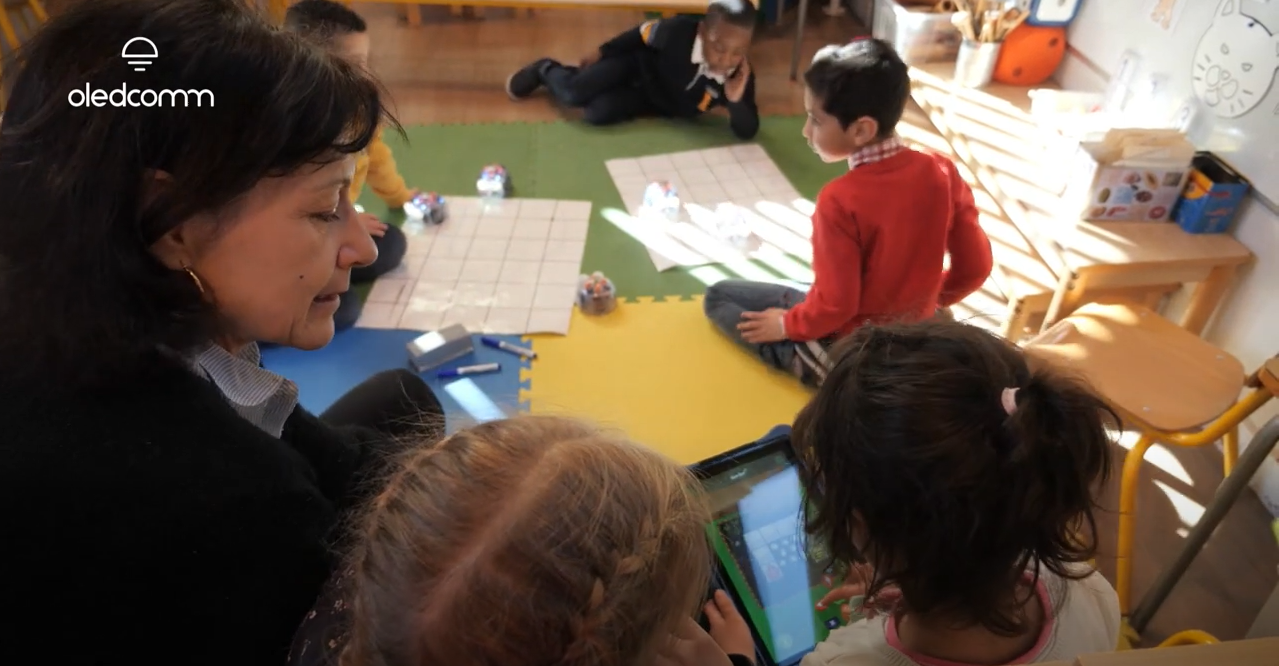
          Florence Berckelaers, Headteacher and Director at Chantefleur school, stated that “With LiFi, we were able to set up educational activities with the little ones, with the very young, which we haven't done until now. We were able to set up activities that allow direct communication via the Internet, via the Benelux, from the school, with the parents or with other classes or with other schools. And since the connection is very reliable and very fast, that opens up fields of activities that we didn't have until then and which are very, very interesting.”

          Credit to Oledcomm

          Chrystelle Lacroix Touroude, teacher at Chantefleur school, said in her statement:

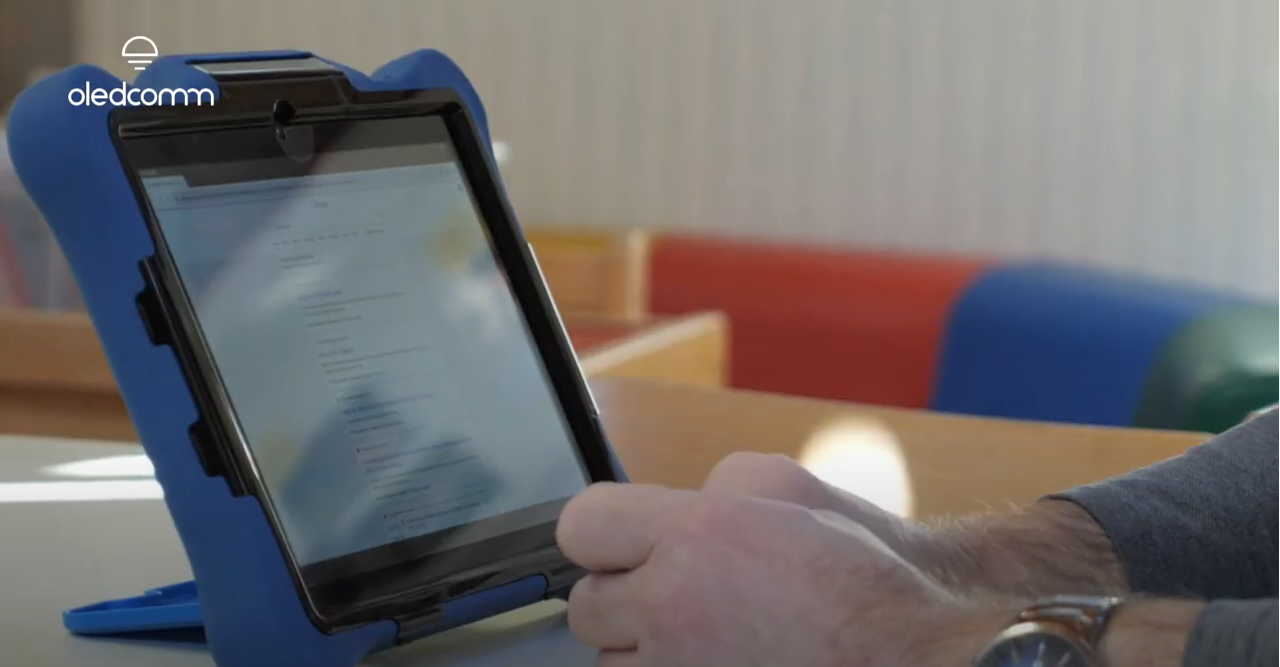
          “The tablet allows fairly simple manipulation of the software and distribution to other classes as well. It makes it possible not to have cables and to allow other classes to have access to this kind of software quite easily. It allows some children in difficulty not to have this barrier of the sheet or let's say that it diversifies our supports. So, it's not the only support in kindergarten, it shouldn't be the only support, but it's a very interesting tool for us and for the children.”

          Credit to Oledcomm

          Stephan Gardel, further stated:

          “The installation went well, there were no issues. Once the wiring was stretched, it came with the accessories and we installed them. It happened very simply. After 12 o'clock, we equipped two rooms to start and it worked right away. So, I am satisfied. We work in complete transparency, that's important. And there is a certain reactivity, indeed. And this is important. I like to work only with companies, with people I work with, who I can trust. In fact.”

          Credit to Oledcomm

          Sebastien Poniatowski, Mayor of L’Isle-Adam, concluded with the following statements:

          “Our city's responsibility, on the other hand, is to equip our schools so that children can teach, learn and grow in the best possible conditions. So, it's both the buildings, the schools, but it's also what there is, the equipment and the technology that is offered to the children. So, the challenge for us is above all to offer the best to children and above all to give them a setting that can be a fulfilling setting for them.”


          You can watch the following video by Oledcomm. The video is in French:


          Oledcomm

          Oledcomm designs and develops LiFi network interface devices that enable high-speed wireless data communication. It also serves LiFi equipment in the telecom, datacom, personal electronics, and industrial markets. The company’s product portfolio includes hubs, routers, switches, adapters, drivers, power supplies, and more.

          Oledcomm was founded in 2012 and is based in Paris, France. Oledcomm's adventure began in 2005 in the research laboratories of the University of Versailles-Saint-Quentin with the first work on communication by visible light.

          Following years of research & development and a passion for innovation, Oledcomm became the pioneer of LiFi (Light Fidelity) solutions and innovation on a global scale.

          Based in the Paris region, Oledcomm employs around 20 people and designs complete solutions for LiFi operation, including microcontrollers, LiFi photoreceivers and software platforms.

          Today, after more than 28 patents, 15 years of R&D, over 500 trusted clients and several awards, Oledcomm is pursuing a strong mission: to transform the 14 billion points of light in the world into a powerful communication network.


          Li-Fi Conference 2022


          The Li-Fi Conference 2022 Edition was a great success. Li Fi Tech News will very soon write articles on the topics treated at the Conference.

          What is LiFi?

          LiFi, also known as "Light Fidelity" is a wireless optical networking technology, which uses light-emitting diodes (LEDs) to transmit data. In 2011, professor Harald Haas made a LiFi demonstration at the TED (Technology, Entertainment, Design) Global Talk on Visible Light Communication (VLC).

          VLC uses light as a medium to deliver high-speed communication like Wi-Fi and complies with the IEEE standard IEEE 802.15.7. The IEEE 802.15.7 is a high-speed, bidirectional, and fully networked wireless communication technology-based standard similar to Wi-Fi's IEEE 802.11.

          How does LiFi work?

          LiFi is a high speed, bidirectional, and fully networked wireless communication of data using light. LiFi constitutes of several light bulbs that form a wireless network.

          When an electrical current goes through to a LED light bulb, a stream of light (photons) emits from the lamp. LED bulbs are semiconductor devices, which means that the brightness of the light flowing through them can change at extremely high speeds. The signal is sent by modulating the light at different rates. The signal can then be received by a detector that interprets the changes in light intensity (the signal) as data. Also when the LED is ON, you transmit a digital 1, and when it is OFF, you transmit a 0.

          LiFi Benefits

          The primary benefits of LiFi are as follows:

          Security: Provides entirely secure access. Where there is no light there is no data.

          Safety: Does not produce electromagnetic radiation and does not interfere with existing electronic systems.

          Localisation: Allows localisation due to the small coverage area of LiFi access point - localisation can be used for very precise asset tracking.

          Data density: Provides ubiquitous high-speed wireless access that offers substantially greater data density (data rate per unit area) than RF through high bandwidth reuse.

          Credit to Oledcomm

          LiFi Applications

          LiFi can be used for so many applications and the list is increasing every year. You can read our updated list of Li-Fi applications at the following link:

          https://www.lifitn.com/blog/2021/2/13/top-30-li-fi-applications-updated-list-including-potential-applications

          Credit to pureLiFi


          LiFi Systems Reviews by LiFi Tech News


          OLEDCOMM LIFIMAX KIT REVIEW - ONE YEAR IN

          We reviewed the LiFiMax kit produced by the leading French LiFi company Oledcomm. We bought this LiFi kit system at the end of 2020. After over a year of use, we decided to write a review of this LiFi system. We looked briefly at the profile of Oledcomm, a brief history of the LiFiMax system, the Kit box contents, some testing and performance results of this LiFi system, the customer experience and our own verdict (the good and the bad points) of the LiFiMax kit.

          You can read the review on this link:

          https://www.lifitn.com/blog/lifimaxreview


          SIGNIFY TRULIFI 6002.1 STARTER KIT SYSTEM REVIEW


          We also reviewed the Trulifi 6002.1 starter kit produced by Signify, the world leader in lighting for professionals, consumers and lighting for the Internet of Things. We got this LiFi kit system with the help of PCDSI and Signify around August 2021. In a similar fashion done with our previous review of the LiFiMax kit a few months ago, we will look briefly at the profile of Signify, a brief history of the Trulifi 6002.1 kit, the Kit box contents, some testing and performance results of this LiFi system, the customer experience and our own verdict (the good points and the bad points) of the Trulifi 6002.1 kit.

          You can read the review on this link:

          https://www.lifitn.com/blog/trulifi6002review


          In conclusion, if you are also interested to hear more information about the OWNII Coin or enquire about LiFi devices such as the LiFiMax and Trulifi, you can contact us through our chatbot or by sending an email through our contact us form. If you enjoyed this post and would like to hear more updates about LiFi technology, subscribe to our newsletter. Don’t forget to subscribe to our social media accounts. You can also join our Telegram group about LiFi technology on this link:
          https://t.me/joinchat/FMzOmsEKyJFrU6Af


          Radio 4 Brainport Podcast - Prof Jean-Paul Linnartz Interviewed Prof Harald Haas on Where Do We Stand in 2022 on LiFi and Optical Wireless Communications

          Table of Contents

            Radio 4 Brainport Podcast - Prof Jean-Paul Linnartz Interviewed Prof Harald Haas on Where Do We Stand in 2022 on LiFi and Optical Wireless Communications

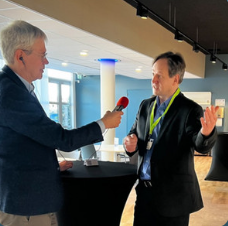
            Jean-Paul Linnartz, Research Fellow at Signify, Professor at the Eindhoven University of Technology and a Radio 4 Brainport reporter, interviewed Professor Harald Haas on where do we stand in 2022 on LiFi technology and Optical Wireless Communications.

            Below are some of the Podcast conversations. Some of the conversations have been edited by Chuks from LiFi Tech News:

            Jean-Paul Linnartz: “The internet is not always as fast as we would like it to be. But that may not be a problem on the internet, though it may be a problem in the wireless link towards the internet. We are used to doing that via radio communications. But it can be done much faster. And by reusing light, one of the pioneers in that field is none other than the person who launched the term LiFi is Professor Harald. He coined the term quite a couple of years ago. What have you learned since then?”


            Prof.Harald Haas: “Thank you. Sure, Paul. And I'm very pleased for the interview. And thanks for that very important equation. So, really, what we wanted to do is with LiFi, we build a similar experience to an end user, like WiFi, or three GPP. But we are using the visible light spectrum and the infrared spectrum, to basically grade bigger data pipes, provide more data, higher data rates, and more secure communication. And, really unlocking the future of wireless communications because there's this spectrum crunch in RF that we're seeing, and there's no new spectrum that's required in the light spectrum, which is able to provide free and unlicensed spectrum to do that. And what we've learned is that LiFi is a technology that solves one major big problem in the area of security. So, LiFi is much more secure than radio communications from a physic layer perspective. That's where the technology at the moment takes up commercially. But what we have learned is that LiFi can really unlock the terabit per second data rates that we are now trying to achieve in 6G.”

            Jean-Paul Linnartz: “We have seen very impressive bit rates. I even had a colleague of you say that possibly the wireless optical channel could be faster than the fibre channels. So, possibly the bit rates there are unlimited, you also reach very high bit rates. But I also sometimes think if I want to go through Mumbai congested or through London and a congested moment, I do not need a Ferrari. So, is it really the bitrate only or other other things that are very key and possibly also light is very attractive?”

            Prof.Harald Haas: “I think data rate is one key performance indicator there. Obviously others as well, like user experience, you want to have your data in a reliable way and in a secure way, and you want to achieve the connectivity of many devices. So, we have an explosion of devices in a personal sphere, went from one smartphone to maybe now 10s and even 20 of different devices that are attached to a person so, that there's an explosion of devices. So, we need to have both we have higher data rate but also achieve higher density of devices and provide them with reliable data in  RF, it has a problem because RF always spreads the signal out and that if you want to put in more transmitters or access points, you end up in a problem of interference. And that really reduces the lead area capacity in RF but visible light communication, if you imagine a laser pointer and when you're doing your presentations is a very tiny sport. And that idea of tiny sports and containing a signal is something we can leverage really to unlock the number of devices per area with LiFi. And that is an element that is often overlooked when looking at LiFi. If you're not looking on Yeti, it's probably coming from the old view of optical VR as being the sort of the modern, the TV remote control on steroids. But it is not the remote control on steroids. It's a network technology, providing coverage and providing mobility and providing all the things we know in WiFi and cellular. And that's a very important point to be aware of.”

            Jean-Paul Linnartz: So, interesting developments down the radio people also make huge progress, they believe they can steer a beam, but that requires a lot of signal processing and many antenna elements. So, the complexity of that technology is increasing a lot. You think of a very simple solution pointing a laser beam?”

            Prof.Harald Haas: “We do think in the same vein, it's an inherent feature of using sort of what we call segmented ops. The optics are basically beans. But we are not thinking of steering a beam or putting very expensive optomechanical systems into smartphones. It's really building on the idea of a grid of beams. So, having multiple, multiple lasers if you want that point in slightly different directions. And then you just turn them on when you need an area to be covered and you turn all the others off. But it's done very simply with a simple lens systems in front of the device. So, we don't need a bank of patient a phase shifters, we don't need a bank of power amplifiers. It's the complexity for achieving exactly what Millimetre waves have less to do, and terahertz have to do. We achieve it with a less significant less technical complexity.”

            Jean-Paul Linnartz: “And some of that technology is already already entering the smartphones, very tiny lasers to do all kinds of measurements, we see the same in autonomous driving with LIDAR systems. So, there are a number of technological drives that really make that alternative to radio communication mature.”

            Prof.Harald Haas: “That's true, I think that's really one of the key points is we have already devices out there commercially deployed, you mentioned LIDAR, it's very important, but also mean every smartphone has face recognition inside every laptop has face recognition, these are lasers these are so called vertical cavity surface emitting lasers, which says that there are buildings that have already user experience. And then we will probably see that the light sensing functionality will enter the smartphone device. And if you ever if this device is there, why don't use it, to also do communications across these devices. Yes, these things are coming into that space. And we are now preparing the grounds to use them in a vise and sensible way to build the ultimate nervous system, plus the sensing capabilities. And if you put sensing capabilities in the nervous system together, you're exactly in a 6G space. And this is exactly where we drive this technology at the moment.”

            Jean-Paul Linnartz: “We are very happy to have you here today in Veldhoven, the Metro centre, so we do not have to go to Edinburgh go to straight line. If you look around in this environment and listening to your presentation, you pointed out there is a difference between shooting laser beams between satellites at very impressive bit rates terabits per second. But that is not exactly the same technology as what you named LiFi. Where are the differences?”

            Prof.Harald Haas: “And the difference really is the coverage. And like you said, we have free space optics, we have the laser pointer I've mentioned. It's a point to point link, it's very for fixed location, you can’t move the beams, you can’t move the transmitter, you can’t move the receiver, it has to be aligned. And so, in fact, Pima acquisition and tracking systems, very complex devices in these optical links, we want to cover an entire room, we want to cover maybe an entire city at some point, using street lamps and other other devices. And therefore we spread the photons out that means if we have a detector that is tasked to be fast and small, we need to somehow collect all these photons back into the receiver. And the way we do that is where some of the engineering challenges lie. But it is all doable with different opto electronic and optics than elements that exist at the moment. Yeah, it's just putting things together in the correct way.”

            Jean-Paul Linnartz: “We don't have that in 4g, we do not have that in 5g. 6g is the opportunity which can go to optical communication. 6g is the moment that we need to go to optical?”

            Prof.Harald Haas: “Absolutely, 6g is where optical wireless communications should be playing a major role. I know that many people do about terahertz communications and that's the good thing. The message is that a spectrum crunch really exists. We need more spectrum. And that's that's a given. Whether you do it in a space where there are no devices and where you need another 20 years or 10 or 20 years in order to build the ecosystem or whether you use existing devices. Now that is the big question. But I think it's a strong commercial and scientific argument to say this is now the time to get optic violets kind of communications out into the consumer world into the mass market into the cellular space. It is really where it should be in the building ubiquitous, sorts of nervous systems, in our homes, in our streets, in all our environments, and we are ready for that.”

            Jean-Paul Linnartz: “We are ready for that. you're already pushing that you have been pushing that a lot from the UK, you also have many contacts internationally. With California. Now you're in the Brainport region, where are the strengths or the opportunities whereas your competition in the Brainport region?”

            Prof.Harald Haas: “I think there is a lot going on. And that's a good sign because that signifies that many companies and many people think and realise the opportunities and it's an ecosystem that we need. And it's never if we build something big, like cellular it's never done by a single company or a single element especially if it's complex like this because you need a complete ecosystem with devices but with transmitters with systems with optics and it's good to see that that that is much do multiple great developments going on and you mentioned KSD, they are building now, laser lighting, which is the next sort of revolution in lighting pay basis based on on blue lasers rather than blue LEDs. But that comes with it again with a great advantage that these devices have a high bandwidth. And we've shown it at CES this year, 100 gigabit per second with a WDM system from these devices. I mean that there's many examples and that where people build parts of the ecosystem, and it comes together. And that's the very important aspect. And that's why I like this conference like this. It brings people together, building an ecosystem.”

            Jean-Paul Linnartz: “I heard you talk, let's say 10 years ago about we will have LEDs everywhere, we can modulate the LEDs. But now we see that these LEDs have some limitations, you're moving to lasers. Coming also from a radio environment I sometimes tend to say but listening causes more effort than talking we may see the same in optical wireless communication that leads us are ultimately fast. Here in this presentation, you also said there is something in the detectors in the photodiode. So that is also part of that ecosystem, much more than having a faster laser.”

            Prof.Harald Haas: “That is correct, we need to look at the end to end system and transmitters are important. And LEDs, as you say commercially, are designed for lighting and all the efficiencies, the cost of the drivers and so on. And that compromises bandwidth and data rates. That's understood. But the other part of the equation is the receivers have to be flat, because you want to integrate it into mobile devices, at the same time collecting a lot of energy. So, photonic energy around it. And building the architecture for that is but an area which basically has not been looked at that much or less, there's a lot of work in other around the world. But that's an element that has to grow and build practical receivers as well. But with the LEDs, I think you mentioned the limitations, but it's still an option that is providing an indoor connectivity, it is not all about data read, as you say if you look at secure communication in the company you're presenting signify and others and build these products that allow indoor navigation at that at fairly high speeds and also in a secure way.”

            Jean-Paul Linnartz: “If I listen to you, as a university professor, and someone who is very active in companies who already do this, there is still a lot to do in terms of research, pure research from the academia Bucha results. So, the time is getting there to really make it happen.”

            Prof.Harald Haas: “I think the time is getting there. And I think we are commercially at a stage where LiFi now has entered or moved away from the prototyping from the pilots. And there's been hundreds of pilots around the world where technology has been proven in various environments in an industrial setting, in a defense setting, and so on. But we now see the defence sectors, basically picking up the technology in buying these consumer devices that the company I represent pureLiFi they are selling and it's huge. So it's a commercial reality. Now, it's a question of how to move from this beachhead into the consumer. And that's where there is further development needed. But research is needed. But there's also product solutions for that space out there. At the moment.”


            Jean-Paul Linnartz: “It sounds very futuristic, we will communicate via steerable laser beams. But if I remember correctly, there was a time that Philips and other companies launched a CD player, which in essence is a steerable laser beam that reached at very high speed. So, there is also if I continue that line of thought there is a possibility to make it a mass market and to really go down to ultimate cost down for these kinds of devices.”

            Prof.Harald Haas: “That is absolutely correct. And that's one of the great examples where you have seen that with optical systems. And if you look at SFPs modules of fibre comes they're also in the sort of $10 region and so on . There are these existing devices out there, there's technologies that we can build steerable laser beams if we wanted, also for optical wireless communications at a low cost. So that's an advantage we should be leveraging.”

            Jean-Paul Linnartz: “I still hear the same drive as when you started with pureLiFi modulating the LEDs and now it starts to become the time to really have it in a mass market for 6g and that is all coming up. Thank you very much.”


            Prof.Harald Haas: “Thank you very much been delighted to speak to you. Thanks”


            Podcast Recording


            You can also listen to the podcast in full on the following link:

            https://open.spotify.com/episode/7rrEz3GnewPZNYv8PLDLYY

            Radio 4 Brainport


            Radio 4 Brainport is a community radio station for you and by you. We aim to bring topics that cover the experiences of the international community in the Brainport region

            We broadcast 24 hours a day an English language program consisting of music, news and information about culture, science and technology for the international community in the Brainport region.

            We have teamed up with several partners that help us provide you with international, national and local news, background information, interesting reports etc.

            During rush hours we provide detailed traffic information for major routes in and around Eindhoven.


            Jean-Paul Linnartz and Harald Haas

            Professor Jean-Paul Linnartz

            As stated on his LinkedIn profile, Professor Jean-Paul Linnartz focuses on LiFi research, sensor networks and personalised Human Centric Lighting. He holds more than 70 granted patents. His many scientific papers about electronic watermarks, anonymous biometrics, radio communications (e.g. MC-CDMA) and Optical Wireless Communication (LiFi) have been cited more than 12,000 times. His research results have also been commercialised in ventures, such as Intrinsic-ID, GenKey, and Civolution. He was a faculty member at the University of California at Berkeley and at the Delft University of Technology. As a Senior Director at Philips Research, he has headed research groups on information security, wireless connectivity and on IC design.


            PROFESSOR HARALD HAAS

            Professor Harald Haas received a PhD degree from the University of Edinburgh in 2001. He currently holds the Chair of Mobile Communications at the University of Edinburgh, and is co-founder and Chief Scientific Officer of pureLiFi Ltd as well as the Director of the LiFi Research and Development Center at the University of Edinburgh. His main research interests are in optical wireless communications, hybrid optical wireless and RF communications, spatial modulation, and interference coordination in wireless networks. He first introduced and coined spatial modulation and LiFi. LiFi was listed among the 50 best inventions in TIME Magazine 2011.

            Prof. Haas was an invited speaker at TED Global 2011, and his talk: "Wireless Data from Every Light Bulb" has been watched online more than 2.2 million times. He gave a second TED Global lecture in 2015 on the use of solar cells as LiFi data detectors and energy harvesters. This has been viewed online more than 1 million times.  Professor Haas holds 31 patents and has more than 30 pending patent applications. He has published 300 conference and journal papers including a paper in Science. He co-authored a book entitled: "Principles of LED Light Communications Towards Networked Li-Fi" published by Cambridge University Press in 2015. Prof. Haas is the editor of IEEE Transactions on Communications and IEEE Journal of Lightwave Technologies. He was co-recipient of recent best paper awards at the IEEE Vehicular Technology Conference (VTC-Fall) in Las Vegas in 2013, and VTC-Spring in Glasgow in 2015. He was co-recipient of the EURASIP Best Paper Award for the Journal on Wireless Communications and Networking in 2015, and co-recipient of the Jack Neubauer Memorial Award of the IEEE Vehicular Technology Society. In 2012, he was the recipient of the prestigious Established Career Fellowship from the EPSRC (Engineering and Physical Sciences Research Council) within Information and Communications Technology in the UK.  Prof. Haas is recipient of the Tam Dalyell Prize 2013 awarded by the University of Edinburgh for excellence in engaging the public with science.  In 2014, he was selected by EPSRC as one of ten RISE (Recognising Inspirational Scientists and Engineers) Leaders in the UK.

            LiFi Research and Development Centre (LRDC) at The University of Strathclyde / Glasgow

            The University of Strathclyde (UStrath) is a leading international technological university. It is one of the UK’s top 20 universities for research intensity according to the Times Higher Education (THE) and it is the first university to receive the THE’s ‘UK University of the Year Award’ twice (2012 and 2019). UStrath is a member of CESAER, the European association of leading specialised and comprehensive universities of science and technology, and it is internationally recognised for its standing in applied research, technological innovation and university-business partnerships.

            The LiFi Research and Development Centre (The Centre) is dedicated to accelerating the development of LiFi as a major global industry, through creating a pipeline for innovative ideas, technologies, products and partnerships.

            The LiFi R&D Centre conducts internationally leading research in collaboration with, and on behalf of industry. It aims to accelerate society’s adoption of LiFi and emerging wireless technology through engagement with major industrial partners, to fully harness the commercial and innovative potential of LiFi, and to help establish a major new £5 billion ($8.5 billion) LiFi industry by 2018.

            The UK based research and development centre was formed in 2013, and stems from research into fundamental communications science begun in 2002 that has now received in excess of £8 million ($13.5 million) of competitively won funding.

            By facilitating collaboration between industry, internationally renowned experts from the University of Strathclyde, and other key research institutes around the world, the Centre is taking emerging LiFi technologies through into mainstream applications that will soon begin to impact on many aspects of the modern world. The Centre, with its partners and collaborators, will foster the wide spread market adoption of LiFi technologies.

            The Centre continues to drive all aspects of LiFi communication from novel devices, through to the integration of LiFi access points in agile heterogeneous 5G and 6G networks enabled by emerging software defined networking (SDN) infrastructures.


            Li-Fi Conference 2022


            The Li-Fi Conference 2022 Edition was a great success. Li Fi Tech News will very soon write articles on the topics treated at the Conference.

            What is LiFi?

            LiFi, also known as "Light Fidelity" is a wireless optical networking technology, which uses light-emitting diodes (LEDs) to transmit data. In 2011, professor Harald Haas made a LiFi demonstration at the TED (Technology, Entertainment, Design) Global Talk on Visible Light Communication (VLC).

            VLC uses light as a medium to deliver high-speed communication like Wi-Fi and complies with the IEEE standard IEEE 802.15.7. The IEEE 802.15.7 is a high-speed, bidirectional, and fully networked wireless communication technology-based standard similar to Wi-Fi's IEEE 802.11.

            How does LiFi work?

            LiFi is a high speed, bidirectional, and fully networked wireless communication of data using light. LiFi constitutes of several light bulbs that form a wireless network.

            When an electrical current goes through to a LED light bulb, a stream of light (photons) emits from the lamp. LED bulbs are semiconductor devices, which means that the brightness of the light flowing through them can change at extremely high speeds. The signal is sent by modulating the light at different rates. The signal can then be received by a detector that interprets the changes in light intensity (the signal) as data. Also when the LED is ON, you transmit a digital 1, and when it is OFF, you transmit a 0.

            LiFi Benefits

            The primary benefits of LiFi are as follows:

            Security: Provides entirely secure access. Where there is no light there is no data.

            Safety: Does not produce electromagnetic radiation and does not interfere with existing electronic systems.

            Localisation: Allows localisation due to the small coverage area of LiFi access point - localisation can be used for very precise asset tracking.

            Data density: Provides ubiquitous high-speed wireless access that offers substantially greater data density (data rate per unit area) than RF through high bandwidth reuse.

            Credit to Oledcomm

            LiFi Applications

            LiFi can be used for so many applications and the list is increasing every year. You can read our updated list of Li-Fi applications at the following link:

            https://www.lifitn.com/blog/2021/2/13/top-30-li-fi-applications-updated-list-including-potential-applications

            Credit to pureLiFi


            LiFi Systems Reviews by LiFi Tech News


            OLEDCOMM LIFIMAX KIT REVIEW - ONE YEAR IN

            We reviewed the LiFiMax kit produced by the leading French LiFi company Oledcomm. We bought this LiFi kit system at the end of 2020. After over a year of use, we decided to write a review of this LiFi system. We looked briefly at the profile of Oledcomm, a brief history of the LiFiMax system, the Kit box contents, some testing and performance results of this LiFi system, the customer experience and our own verdict (the good and the bad points) of the LiFiMax kit.

            You can read the review on this link:

            https://www.lifitn.com/blog/lifimaxreview


            SIGNIFY TRULIFI 6002.1 STARTER KIT SYSTEM REVIEW


            We also reviewed the Trulifi 6002.1 starter kit produced by Signify, the world leader in lighting for professionals, consumers and lighting for the Internet of Things. We got this LiFi kit system with the help of PCDSI and Signify around August 2021. In a similar fashion done with our previous review of the LiFiMax kit a few months ago, we will look briefly at the profile of Signify, a brief history of the Trulifi 6002.1 kit, the Kit box contents, some testing and performance results of this LiFi system, the customer experience and our own verdict (the good points and the bad points) of the Trulifi 6002.1 kit.

            You can read the review on this link:

            https://www.lifitn.com/blog/trulifi6002review


            In conclusion, if you are also interested to hear more information about the OWNII Coin, you can contact the OWNii Support team at info@ownii.net or use the contact form on the new OWNii website, ownii.net. If you are enquiring about LiFi devices such as the LiFiMax kits and the Trulifi kits, you can contact us through our chatbot or by sending an email through our contact us form. If you enjoyed this post and would like to hear more updates about LiFi technology, subscribe to our newsletter. Don’t forget to subscribe to our social media accounts. You can also join our Telegram group about LiFi technology on this link:
            https://t.me/joinchat/FMzOmsEKyJFrU6Af


            Photonic Networks Experts Prof. Volker Jungnickel & Dr. Christoph Kottke Interviewed by InnoVisions on LiFi Technology

            Table of Contents

              Photonic Networks Experts Prof. Volker Jungnickel & Dr. Christoph Kottke Interviewed by InnoVisions on LiFi Technology

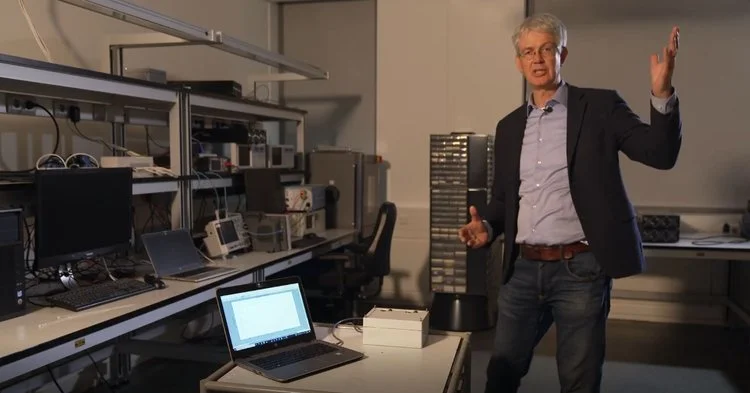
              Last week, Prof. Dr. Volker Jungnickel and Dr. Christoph Kottke from Fraunhofer HHI were interviewed and asked hard questions by InnoVisions on LiFi.

              ELIoT has shown that the underlying technologies are ready for commercial application. But what is still missing is a significant increase in awareness of the technology and the interest of the target groups that goes with it.

              Reliability, low latency and bandwidths up to the gigabit range: these are the technological triad without which the Internet of Things cannot function satisfactorily. But what to do if 5G and WLAN on site do not provide the required performance? Will electronic devices and control systems then remain cut off from the Internet? Prof. Dr. Volker Jungnickel and Dr. Christoph Kottke from Fraunhofer HHI explain why and how it is possible to close these connection gaps with light.


              Question 1: Almost all of us have tried Morse code with a flashlight and have found that this method is both tedious and extremely error-prone. You use the same basic principle in research into optical wireless communication at the Fraunhofer Institute for Telecommunications, Heinrich Hertz Institute HHI. But you claim that you can use it to outshine wireless solutions such as 5G and WLAN?


              Jungnickel: “We don't just claim that, we have also proven it long ago. In fact, our Light Fidelity (LiFi) communication network is based on the simple principle of turning an LED or laser on and off very quickly. In contrast to Morse code, however, this is controlled by the latest digital technologies, so that the on/off processes can be controlled at extremely high speed and with absolute precision. With this technology and our transmitter/receiver modules, we can achieve transmissions with a data rate in the gigabit/s range, even with a simple setup with a ceiling light and the laptop on the desk. The only condition is a clear line of sight between them.”


              Question 2: However, a WLAN network also offers comparable bandwidths. And that everywhere in the room - even without visual contact with the transmitting antenna. So, what is the advantage of LiFi?


              Kottke: “Of course you can also establish broadband connections via WLAN. At least, as long as the number of access points and users is limited. Things look different in a training room, a workspace or a classroom: Here, the bandwidth of the radio network has to be shared among many people. Data-intensive applications are then hardly possible for the individual. You block each other. With LiFi, on the other hand, a separate gigabit connection can be easily set up for each workstation. And you solve the problem of an unobstructed view by distributing as many communication modules over the ceiling surface that line of sight is always possible.”


              Jungnickel: “And the optical interface has other advantages: in terms of susceptibility to faults and data security, for example. If a robot in industry is controlled with light via LiFi, connection problems caused by interference with wireless connections working in parallel in its environment are ruled out. In addition, due to the system, it is not possible for a malicious jammer to attempt interference, nor for unnoticed hacking in, for example from the next room. Wireless networks are much more vulnerable in this regard.”

              Nevertheless, LiFi networks are still hard to find in offices and industrial environments...

              Jungnickel: “But that could change fundamentally in the next few years. The ELIoT project, funded by the European Commission, has key prerequisites for this. In this project, we have developed the LiFi technologies together with international partners from research and industry into a system concept that can be used for a wide variety of requirements and areas of application. And that works seamlessly with wireless and cable-based networks of all kinds. To do this, however, we had to ensure that all functionalities could be provided via a chipset. We have also integrated new procedures for the handover: You can now move from one LiFi spot to the next without losing your data connection. And when the connected IoT object leaves the LiFi environment, a seamless transition to a WiFi or cellular connection is possible.” 

              Kottke: “ELIoT provided us with important insights and inputs to establish internationally valid standards for the technology. All in all, LiFi has now reached a development stage that is no longer limited to individual, highly specific special applications, but is ready for the mass market. The ELIoT demonstrators that we have set up together with our project partners demonstrate how diverse the potential of optical wireless communication in the Internet of Things is.”


              Question 3: These options include, for example, equipping training rooms or controlling industrial robots?


              Kotke: “This is by far not everything. For example, think of the data connection of driverless transport vehicles in a logistics centre. They are seamlessly connected to their data centre via LiFi modules in the hall lighting. The LiFi installation itself can also be carried out wirelessly - via a line of sight from one module to the next. This enables quick reconfiguration, for example when the production environment or processes change. In addition, the optical interfaces can offer a special, additional feature for the operation of this Automated Guided Vehicle (AGV): Reliable and highly accurate position detection. Because the light signals propagate mainly directly along the line of sight, our newly developed LiFi positioning achieves an accuracy in the centimetre range. With a radio system, on the other hand, the waves spread mainly via detours and reflections in the room. Moving objects can be located using it in a correspondingly more complex and less precise manner.”


              Jungnickel: “One of our demonstrators is addressing something completely different: A LiFi solution for the hotel industry is used here, in which guests can transfer the code to open the room door from their smartphone screen to the electronic lock. And in recreation rooms, from lounges to shopping malls, optical interfaces wirelessly supply information and entertainment screens with changing content. This is not only convenient, it also protects the WLAN, which can now be used entirely for other purposes.”


              Question 4: So, your system is another connection option for indoor use in trade and industry, which should usually work in parallel with the WLAN?


              Jungnickel: “Not only that. Our project partners are also testing optical wireless communication, for example in the area of ​​broadband expansion. It should therefore be a cost-effective and powerful option in the wireless-to-the-home sector. LiFi closes the profitability gap over the last mile, or the last few meters, from the fibre optic or 5G infrastructure to a small radio cell or into buildings and apartments. From the lamppost on the sidewalk, the LiFi module provides the broadband connection through a window to its counterpart in the house or apartment. In many cases, a closed window is an unbridgeable barrier for wireless systems. But not for light. And the owners can save themselves the laying of a cable on their property.”  

              Kottke: “Inside the house, the Internet then reaches the living room TV, the home office, the basement and up to the roof via light, for example in combination with Powerline LiFi adapters. This is also one of the scenarios that have already been implemented in live operation in an ElioT demonstration.”


              Question 5: Nevertheless, functioning demonstrators pave the way towards the mass market. Are you still a long way from reaching your goal?

              Kottke: “That's not necessarily our job as researchers either: ELIoT has shown that the basic technologies are ready for commercial application. But what is still missing is a significant increase in awareness of the technology and the interest of the target groups that goes with it. ELIoT has brought together strong industrial partners within the consortium and beyond, who are now continuing on this path to establish LiFi in a wide variety of areas. We will continue to support them in this.” 


              Jungnickel : “The developments through the Internet of Things have only just begun. Wireless communication is an indispensable basis for this. However, wireless systems, including the latest developments in 5G and the next generation of mobile communications, are reaching their limits in many areas. Frequency jungle and disturbing interference are difficult to control when more and more IoT objects in buildings or outdoors should and must communicate reliably with the Internet and with each other. It is all the more important to be able to use different systems that can exploit their advantages appropriately depending on the situation. Data transmission with light is therefore a very sensible and efficient expansion of the usable technology portfolio for the Internet of Things. 5G, 6G, WiFi and LiFi are not competitors, they complement each other.” 

              Article source: https://www.fraunhofer-innovisions.de/iot-und-sensorik/mehr-licht-fuer-ein-besseres-internet-der-dinge/

              ELIoT

              As stated on their website, ELIoT is an EU Horizon 2020 project. It is led by the Fraunhofer Heinrich Hertz Institute. The central aim of the project is the development of mass-market Internet of Things (IoT) solutions using LiFi, a next-generation wireless communication network, that travels over light instead of radio waves. With LiFi, the ELIoT consortium will explore a networked wireless communication technology operating in the previously unused light spectrum, besides WiFi and cellular radio.

              ELIoT has started in 2019 as a project funded by the EU’s biggest Research and Innovation programme, Horizon 2020. This programme promises more breakthroughs by taking great ideas from lab to the market. ELIoT receives €6 million funding from the Public-Private Partnership ‘Photonics21’ and is formed by the partners Signify (formerly Philips Lighting), Nokia, MaxLinear, Deutsche Telekom, KPN, Weidmüller, LightBee, the University of Oxford, Eindhoven Technical University and the two Fraunhofer Institutes; Heinrich Hertz Institute and FOKUS. Even more, companies will shortly be added to the consortium as associated partners.

              InnoVisions

              InnoVisions reports on innovations and future technologies from the institutes of the Fraunhofer ICT group. The focus is not only on the visions, but also on the paths that technologies take from the idea to marketing. Dossiers summarize all content, experts and events on overarching topics.

              The researchers and developers behind the developments also play an important role. InnoVisions also makes it easy to contact these experts. In many modern online formats in text, image, video and sound, the future magazine reports on research projects, places them in the larger context of the IT world, discusses current technical developments in the industry and thus makes it clear how the Fraunhofer Institutes Conduct research for the benefit of society. 

              Fraunhofer HHI

              The Fraunhofer , Heinrich Hertz Institute, HHI, also known as Fraunhofer HHI or Fraunhofer Heinrich Hertz Institute, is an organisation of the Fraunhofer Society based in Berlin. The institute engages in applied research and development in the fields of physics, electrical engineering and computer sciences.

              The Fraunhofer Heinrich Hertz Institute develops mobile and stationary broadband communication networks and multimedia systems. Focal points of independent and contract research conducted by Fraunhofer HHI are photonic components and systems, fiber optic sensor systems, and image signal processing and transmission. Future applications for broadband networks are developed as well. Research in this area focuses on 3D displays, UHD panorama video production, human-machine interaction through gesture control, optical satellite communication and data transmission technologies such as visible light communications.

              Li-Fi Conference 2022

              The Li-Fi Conference 2022 Edition was a great success. Li Fi Tech News will very soon write articles on the topics treated at the Conference.

              What is LiFi?

              LiFi, also known as "Light Fidelity" is a wireless optical networking technology, which uses light-emitting diodes (LEDs) to transmit data. In 2011, professor Harald Haas made a LiFi demonstration at the TED (Technology, Entertainment, Design) Global Talk on Visible Light Communication (VLC).

              VLC uses light as a medium to deliver high-speed communication like Wi-Fi and complies with the IEEE standard IEEE 802.15.7. The IEEE 802.15.7 is a high-speed, bidirectional, and fully networked wireless communication technology-based standard similar to Wi-Fi's IEEE 802.11.

              How does LiFi work?

              LiFi is a high speed, bidirectional, and fully networked wireless communication of data using light. LiFi constitutes of several light bulbs that form a wireless network.

              When an electrical current goes through to a LED light bulb, a stream of light (photons) emits from the lamp. LED bulbs are semiconductor devices, which means that the brightness of the light flowing through them can change at extremely high speeds. The signal is sent by modulating the light at different rates. The signal can then be received by a detector that interprets the changes in light intensity (the signal) as data. Also when the LED is ON, you transmit a digital 1, and when it is OFF, you transmit a 0.

              LiFi Benefits

              The primary benefits of LiFi are as follows:

              Security: Provides entirely secure access. Where there is no light there is no data.

              Safety: Does not produce electromagnetic radiation and does not interfere with existing electronic systems.

              Localisation: Allows localisation due to the small coverage area of LiFi access point - localisation can be used for very precise asset tracking.

              Data density: Provides ubiquitous high-speed wireless access that offers substantially greater data density (data rate per unit area) than RF through high bandwidth reuse.

              Credit to Oledcomm

              LiFi Applications

              LiFi can be used for so many applications and the list is increasing every year. You can read our updated list of Li-Fi applications at the following link:

              https://www.lifitn.com/blog/2021/2/13/top-30-li-fi-applications-updated-list-including-potential-applications

              Credit to pureLiFi


              LiFi Systems Reviews by LiFi Tech News


              OLEDCOMM LIFIMAX KIT REVIEW - ONE YEAR IN

              We reviewed the LiFiMax kit produced by the leading French LiFi company Oledcomm. We bought this LiFi kit system at the end of 2020. After over a year of use, we decided to write a review of this LiFi system. We looked briefly at the profile of Oledcomm, a brief history of the LiFiMax system, the Kit box contents, some testing and performance results of this LiFi system, the customer experience and our own verdict (the good and the bad points) of the LiFiMax kit.

              You can read the review on this link:

              https://www.lifitn.com/blog/lifimaxreview


              SIGNIFY TRULIFI 6002.1 STARTER KIT SYSTEM REVIEW


              We also reviewed the Trulifi 6002.1 starter kit produced by Signify, the world leader in lighting for professionals, consumers and lighting for the Internet of Things. We got this LiFi kit system with the help of PCDSI and Signify around August 2021. In a similar fashion done with our previous review of the LiFiMax kit a few months ago, we will look briefly at the profile of Signify, a brief history of the Trulifi 6002.1 kit, the Kit box contents, some testing and performance results of this LiFi system, the customer experience and our own verdict (the good points and the bad points) of the Trulifi 6002.1 kit.

              You can read the review on this link:

              https://www.lifitn.com/blog/trulifi6002review


              In conclusion, if you are also interested to hear more information about the OWNII Coin, you can contact the OWNii Support team at info@ownii.net or use the contact form on the new OWNii website, ownii.net. If you are enquiring about LiFi devices such as the LiFiMax kits and the Trulifi kits, you can contact us through our chatbot or by sending an email through our contact us form. If you enjoyed this post and would like to hear more updates about LiFi technology, subscribe to our newsletter. Don’t forget to subscribe to our social media accounts. You can also join our Telegram group about LiFi technology on this link:
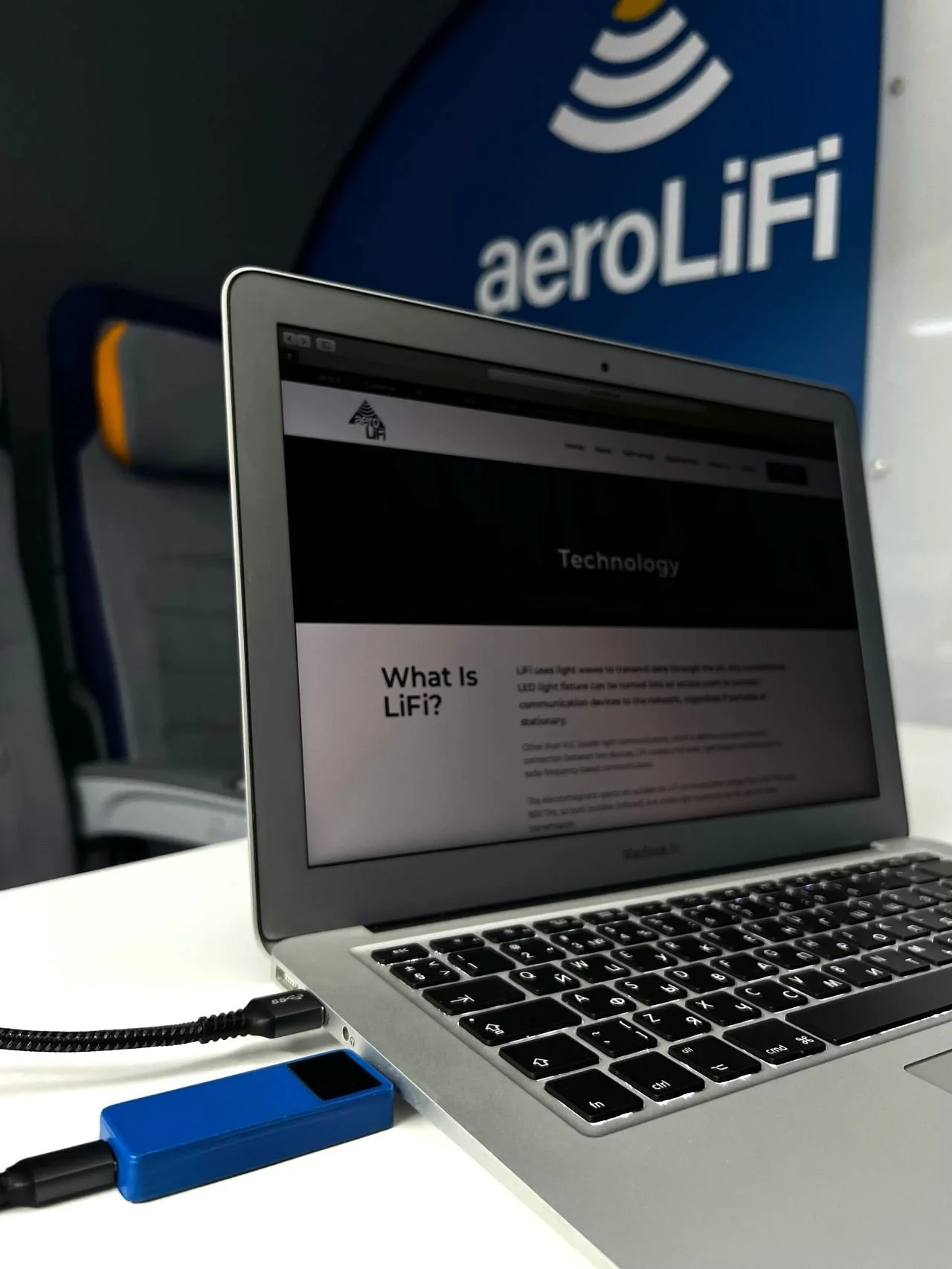
              https://t.me/joinchat/FMzOmsEKyJFrU6Af


              Installation of Li-Fi GigaDock® of Fraunhofer Institute for Photonic Microsystems (IPMS) On The ISS Space Station

              Table of Contents

                Installation of Li-Fi GigaDock® of Fraunhofer Institute for Photonic Microsystems IPMS On The ISS Space Station

                The Fraunhofer Institute for Photonic Microsystems (IPMS) released a press statement on its website on Monday 07th November. They have developed a LiFi transceiver that guarantees data transfer between the components. This was integrated into the iBOSS GmbH interface and has been on board the ISS (International Space Station) for testing purposes since February 2022.

                In order to be able to flexibly attach and detach modules directly in space, easy-to-couple and standardized components are particularly important. In addition to the mechanical coupling of the individual modules, it is essentially a matter of ensuring the transfer of data and energy between the individual modules so that satellites can be combined as required. For this reason, RWTH Aachen University applied for a patent years ago, which has now been brought to market by the spin-off iBOSS GmbH as iSSI® (intelligent Space System Interface) and forms a standard interface for such systems.

                Credit to Fraunhofer IPMS - Li-Fi GigaDock® transceiver for short-range, high data rate data transmission with light


                Part of the interface is a development of Fraunhofer IPMS and also known as Li-Fi GigaDock®. The core of the technology is an optical wireless transceiver, a highly integrated device that enables contactless full-duplex and bidirectional data transmission with a data rate of up to 5 Gbps. The possible transmission distance of the optical data interface is five centimetres. The component can also be used for rotor-to-stator transmission, as the transceiver functions perfectly even at high speeds.

                "Building on this component, Fraunhofer IPMS has developed a communication module for iBOSS that has now made it into space, or to be more precise, even onto the ISS," says a delighted Alexander Noack, head of development for optical wireless communication. "In addition to space travel, the component can be found in industrial communication systems, in medical technology as well as in docking applications," he continues.

                Credit to iBoss GmbH - iSSI® (intelligent Space System Interface) of iBoss GmbH, in which the LiFi Gigadock® transceiver of Fraunhofer IPMS is installed.


                In February, the interface flew into space for testing and demonstration purposes and was mounted by a robot for the first time on the Japanese part of the ISS. The module is to remain there until mid-December and prove its operational capability under vacuum conditions and the influence of radiation.

                Interested parties can find out more about the technology at the Electronica trade fair in Munich from November 15 - 18, 2022. Fraunhofer IPMS will exhibit its LiFi developments in hall B4 (booth B4.258).


                Article source: https://www.ipms.fraunhofer.de/en/press-media/press/2022/LiFi-Gigadock-at-ISS-space-station.html

                Li-Fi Conference 2022

                The Li-Fi Conference 2022 Edition was a great success. Li Fi Tech News will very soon write articles on the topics treated at the Conference.

                What is LiFi?

                LiFi, also known as "Light Fidelity" is a wireless optical networking technology, which uses light-emitting diodes (LEDs) to transmit data. In 2011, professor Harald Haas made a LiFi demonstration at the TED (Technology, Entertainment, Design) Global Talk on Visible Light Communication (VLC).

                VLC uses light as a medium to deliver high-speed communication like Wi-Fi and complies with the IEEE standard IEEE 802.15.7. The IEEE 802.15.7 is a high-speed, bidirectional, and fully networked wireless communication technology-based standard similar to Wi-Fi's IEEE 802.11.

                How does LiFi work?

                LiFi is a high speed, bidirectional, and fully networked wireless communication of data using light. LiFi constitutes of several light bulbs that form a wireless network.

                When an electrical current goes through to a LED light bulb, a stream of light (photons) emits from the lamp. LED bulbs are semiconductor devices, which means that the brightness of the light flowing through them can change at extremely high speeds. The signal is sent by modulating the light at different rates. The signal can then be received by a detector that interprets the changes in light intensity (the signal) as data. Also when the LED is ON, you transmit a digital 1, and when it is OFF, you transmit a 0.

                LiFi Benefits

                The primary benefits of LiFi are as follows:

                Security: Provides entirely secure access. Where there is no light there is no data.

                Safety: Does not produce electromagnetic radiation and does not interfere with existing electronic systems.

                Localisation: Allows localisation due to the small coverage area of LiFi access point - localisation can be used for very precise asset tracking.

                Data density: Provides ubiquitous high-speed wireless access that offers substantially greater data density (data rate per unit area) than RF through high bandwidth reuse.

                Credit to Oledcomm

                LiFi Applications

                LiFi can be used for so many applications and the list is increasing every year. You can read our updated list of Li-Fi applications at the following link:

                https://www.lifitn.com/blog/2021/2/13/top-30-li-fi-applications-updated-list-including-potential-applications

                Credit to pureLiFi


                LiFi Systems Reviews by LiFi Tech News


                OLEDCOMM LIFIMAX KIT REVIEW - ONE YEAR IN

                We reviewed the LiFiMax kit produced by the leading French LiFi company Oledcomm. We bought this LiFi kit system at the end of 2020. After over a year of use, we decided to write a review of this LiFi system. We looked briefly at the profile of Oledcomm, a brief history of the LiFiMax system, the Kit box contents, some testing and performance results of this LiFi system, the customer experience and our own verdict (the good and the bad points) of the LiFiMax kit.

                You can read the review on this link:

                https://www.lifitn.com/blog/lifimaxreview


                SIGNIFY TRULIFI 6002.1 STARTER KIT SYSTEM REVIEW


                We also reviewed the Trulifi 6002.1 starter kit produced by Signify, the world leader in lighting for professionals, consumers and lighting for the Internet of Things. We got this LiFi kit system with the help of PCDSI and Signify around August 2021. In a similar fashion done with our previous review of the LiFiMax kit a few months ago, we will look briefly at the profile of Signify, a brief history of the Trulifi 6002.1 kit, the Kit box contents, some testing and performance results of this LiFi system, the customer experience and our own verdict (the good points and the bad points) of the Trulifi 6002.1 kit.

                You can read the review on this link:

                https://www.lifitn.com/blog/trulifi6002review


                In conclusion, if you are also interested to hear more information about the OWNII Coin, you can contact the OWNii Support team at info@ownii.net or use the contact form on the new OWNii website, ownii.net. If you are enquiring about LiFi devices such as the LiFiMax kits and the Trulifi kits, you can contact us through our chatbot or by sending an email through our contact us form. If you enjoyed this post and would like to hear more updates about LiFi technology, subscribe to our newsletter. Don’t forget to subscribe to our social media accounts. You can also join our Telegram group about LiFi technology on this link:
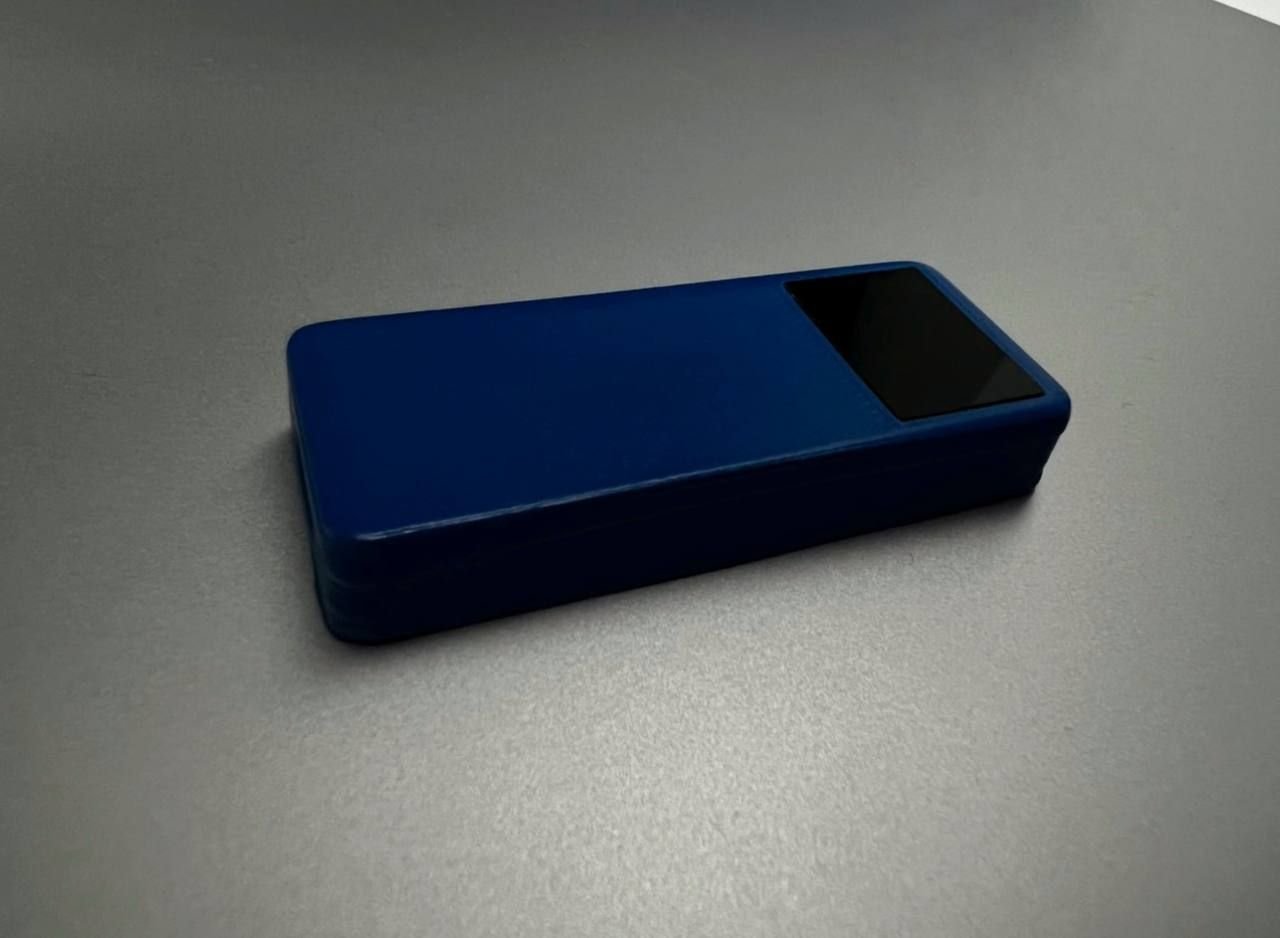
                https://t.me/joinchat/FMzOmsEKyJFrU6Af


                OWNii Coin (LiFi Cryptocurrency) Updates And Highlights From A Recent OWNii Twitter Space Podcast

                Table of Contents

                  OWNii Coin (LiFi Cryptocurrency) Updates And Highlights From A Recent OWNii Twitter Space Podcast

                  The CEO of the OWNii Token, Mr Ken Peterson, conducted an AMA (Ask Me Anything) twitter podcast on Sunday 23rd October 2022. Prior to this, questions were sent to the OWNii team and Mr Ken went through the questions during the podcast. Roger Williams, CEO of Mobile Blockchain Solutions was also in attendance. During the podcast, Mr Ken Peterson released some interesting updates about the OWNii coin while going through the questions.

                  Below are some of the Podcast conversations about OWNii and LiFi. Some of the conversations have been edited by Chuks from LiFi Tech News::


                  Roger Williams: “Hi, I'm Roger Williams, and I am the CEO, and founder of mobile blockchain solutions. Currently, we are partnered with Mr. Ken Peterson to help deliver the OWNii token as right now we are in a rebuilding mode, we decided that having this on board would be a different situation and just a better situation for our users to get a supreme experience. And so, what Mr Ken wanted to do was to rebrand the token and, and make sure that all the components of his vision for OWNii would bring to the community and LiFi, and be able to live by the world. So, that's why we were brought in to help rebrand and help get the token offering service going in. Right now, we're currently in the process of getting ready for private sale, and the launch of the token.”


                  Mr Ken Peterson: “Okay, I appreciate that. Quick summary, guys, he does a lot more than that. But that's kind of like the elevator speech. And I appreciate him, kind of letting you know, the more technical stuff, you probably wouldn't be able to grasp it because it's our back office stuff. But at the end of the day, he is the person and his group has got to be responsible for the launch, which we're pretty close to doing. But they had to come in and fix some things. So, I'm just going to go over the questions right now I'm gonna jump into it. The way we're going to do it here is that I'm going to read all the questions that were sent to me, given by the person's first name, and then I'm gonna give the answer to that question. And then the last portion of it is going to be a summary as to what we're going to do next.”

                   
                  Mr Ken Peterson: “Next Question. How many companies or households have been using this technology successfully? The answer to that is, right now, LiFi is in beta testing mode. A lot of companies are developing end-user products for the technology as soon as LiFi is available. That's why we have developed the coin because the coin will actually help us with the infrastructure and the LiFi equipment.”

                  “LiFi is faster than WiFi because LiFi uses light to transmit data, as opposed to WiFi using radio waves. LiFi is also more secure and does not allow the information to be hacked. Because light doesn't travel through walls.”

                  Mr Ken Peterson: “A fourth question was, what do you expect your first year earnings to look like, for selling this technology? This young lady must be a salesperson because she's dead on the sales portion of it. My answer to that is first LiFi city said is expected to generate sales of $15 million the first year, but the coin is not figured into that equation.”

                  Mr Ken Peterson: “Next question, what makes this coin different from the others? Okay, here we go. This is an asset-backed with technology coin just designed to create revenue through internet service providers. We are an Internet service provider. And we are licenced in all 50 states. Because the coin raises funds for the infrastructure. Each time, we installed into a new area, we raised the value of the coin. And because some of the funds goes back into the coin, the value goes up. And that's just a layman's explanation. But, you guys will get more information on this when we're ready to go public.”

                  “The next question is, when will the coin go public? Okay, this coin will go public very soon. The issue has always been the installation of the LiFi internet. We want to actually install in our first city, and our first city is scheduled to launch here in the United States real soon.”

                  Mr Ken Peterson: “What is the current value of the coin? Right now, the coin is valued at 25 cents, and it's being offered to our seasoned people for 50 cents on a website that is entitled private.ownii.net.”

                  Mr Ken Peterson: “How soon will the investment reimbursement take place? My answer is I can tell by your statement, you are frustrated, which is the reason for this podcast. I feel that because of time restraints, to have a live broadcast would get too lengthy. And I want to answer everybody's questions with complete transparency, and not have a back-and-forth for obvious reasons. The time is not productive, and would not be fair to the other people on this podcast for them to hear this sort of bickering when I want to share good and positive news.”

                  “This is not your typical coin. There are more than 8000 coins on the exchange and none of them have the capability that OWNii has. We have a utility coin that would generate revenue with the new LiFi Internet, and that's the direction that we have always been.”

                  “If you're unhappy with what you did, with your purchases, all you have to do is request your money back. And I will return it to you.”

                  Mr Ken Peterson: “I'm interested in knowing how LiFi technology can be useful in green and sustainability, health. And, well, smart homes. Great question. LiFi is the internet through light. Light is safe and secure and green because it transmits data at the speed of light. The Smart Green City needs to operate at that speed and WiFi will not sustain the bandwidth to accomplish the goal. 5G has already been identified as unhealthy, and LiFi operates at 4G.”  


                  Roger Williams: “We've launched the new ownii.net website. We're also in preparation for the private sale which will be happening between now and the end of the year. There will be a communication email coming that will let you know when we will launch the actual private sale. And then we're going to go to presale, next. And then after presale, we will go public and then we'll be on a big exchange. So, right between now and the end of the year, the private sale will actually be started.”

                  Roger Williams: “So, the new OWNii website is up any information on what is going to be happening, you'll be able to get an update on the email. If there's any issues, you can hit the contact section on the OWNii website. And we will have a message and we'll respond back as well from there. So, once we launched the actual tokens, they'll go straight into your trust wallet, and we'll be able to send them there. So, we're going to set the blockchain team is working on getting all that stuff together and organising it and we're also going to be working on helping Mr. Ken on getting out better communications.”

                  Mr Ken Peterson: “Last question is when is the release date for the coin? And the answer is the release date is pending on the release date of the first LiFi city. And that is something that we're going to publicise the LiFi city release date here real soon. Like I said, we just don't want to step ahead of the contract that we have on that, because this is a huge opportunity, guys, we got three cities that we're getting ready to launch. And we want don't really want to put the information out there too eagerly.”


                  Podcast Recording


                  You can also listen to the podcast in full on the following link:

                  https://twitter.com/OwniiToken/status/1584226947759976448?cxt=HHwWgMCtjf6Ap_wrAAAA


                  OWNii Coin


                  OWNii stands for Optical Wireless Network Internet Infrastructure.  OWNii Coin is developed to oversee, develop, and design the physical infrastructure necessary to implement LiFi in the United States and other nations on a global scale.

                  OWNii creates wireless communication that is faster, addresses issues with internet security, and allows localisation due to the small coverage area of LiFi access points used for precise asset tracking. Furthermore, providing ubiquitous high-speed wireless access that offers substantially greater data density (data rate per unit area) than RF through high bandwidth reuse.

                  The OWNii Ecosystem is well-positioned to achieve that, and in the process of its overall development plans, achieve the very much-needed balance between the demand for speed, capacity, data throughput, security, sustainability and growth-related issues.


                  Highlights from the Podcast


                  We picked a few highlights of the recent OWNii Token Twitter Podcast:

                  1) The OWNii coin is an asset-backed with technology coin designed to create a revenue through internet service providers.

                  2) The redesign of the OWNii website is completed. The website address is ownii.net

                  3) The OWNii team will make an announcement of the release date of the first LiFi city in the United States very soon.

                  4) The OWNii private sale for the public will be announced soon.

                  5) The public launch of the OWNii coin will go ahead sometime after the implementation of the first LiFi city.

                  6) For those who have already invested in the coin and would like a refund of their investment, they can contact Mr Ken and the OWNii team.


                  Li-Fi Conference 2022


                  The Li-Fi Conference 2022 Edition was a great success. Li Fi Tech News will very soon write articles on the topics treated at the Conference.

                  What is LiFi?

                  LiFi, also known as "Light Fidelity" is a wireless optical networking technology, which uses light-emitting diodes (LEDs) to transmit data. In 2011, professor Harald Haas made a LiFi demonstration at the TED (Technology, Entertainment, Design) Global Talk on Visible Light Communication (VLC).

                  VLC uses light as a medium to deliver high-speed communication like Wi-Fi and complies with the IEEE standard IEEE 802.15.7. The IEEE 802.15.7 is a high-speed, bidirectional, and fully networked wireless communication technology-based standard similar to Wi-Fi's IEEE 802.11.

                  How does LiFi work?

                  LiFi is a high speed, bidirectional, and fully networked wireless communication of data using light. LiFi constitutes of several light bulbs that form a wireless network.

                  When an electrical current goes through to a LED light bulb, a stream of light (photons) emits from the lamp. LED bulbs are semiconductor devices, which means that the brightness of the light flowing through them can change at extremely high speeds. The signal is sent by modulating the light at different rates. The signal can then be received by a detector that interprets the changes in light intensity (the signal) as data. Also when the LED is ON, you transmit a digital 1, and when it is OFF, you transmit a 0.

                  LiFi Benefits

                  The primary benefits of LiFi are as follows:

                  Security: Provides entirely secure access. Where there is no light there is no data.

                  Safety: Does not produce electromagnetic radiation and does not interfere with existing electronic systems.

                  Localisation: Allows localisation due to the small coverage area of LiFi access point - localisation can be used for very precise asset tracking.

                  Data density: Provides ubiquitous high-speed wireless access that offers substantially greater data density (data rate per unit area) than RF through high bandwidth reuse.

                  Credit to Oledcomm

                  LiFi Applications

                  LiFi can be used for so many applications and the list is increasing every year. You can read our updated list of Li-Fi applications at the following link:

                  https://www.lifitn.com/blog/2021/2/13/top-30-li-fi-applications-updated-list-including-potential-applications

                  Credit to pureLiFi


                  LiFi Systems Reviews by LiFi Tech News


                  OLEDCOMM LIFIMAX KIT REVIEW - ONE YEAR IN

                  We reviewed the LiFiMax kit produced by the leading French LiFi company Oledcomm. We bought this LiFi kit system at the end of 2020. After over a year of use, we decided to write a review of this LiFi system. We looked briefly at the profile of Oledcomm, a brief history of the LiFiMax system, the Kit box contents, some testing and performance results of this LiFi system, the customer experience and our own verdict (the good and the bad points) of the LiFiMax kit.

                  You can read the review on this link:

                  https://www.lifitn.com/blog/lifimaxreview


                  SIGNIFY TRULIFI 6002.1 STARTER KIT SYSTEM REVIEW


                  We also reviewed the Trulifi 6002.1 starter kit produced by Signify, the world leader in lighting for professionals, consumers and lighting for the Internet of Things. We got this LiFi kit system with the help of PCDSI and Signify around August 2021. In a similar fashion done with our previous review of the LiFiMax kit a few months ago, we will look briefly at the profile of Signify, a brief history of the Trulifi 6002.1 kit, the Kit box contents, some testing and performance results of this LiFi system, the customer experience and our own verdict (the good points and the bad points) of the Trulifi 6002.1 kit.

                  You can read the review on this link:

                  https://www.lifitn.com/blog/trulifi6002review


                  In conclusion, if you are also interested to hear more information about the OWNII Coin, you can contact the OWNii Support team at info@ownii.net or use the contact form on the new OWNii website, ownii.net. If you are enquiring about LiFi devices such as the LiFiMax kits and the Trulifi kits, you can contact us through our chatbot or by sending an email through our contact us form. If you enjoyed this post and would like to hear more updates about LiFi technology, subscribe to our newsletter. Don’t forget to subscribe to our social media accounts. You can also join our Telegram group about LiFi technology on this link:
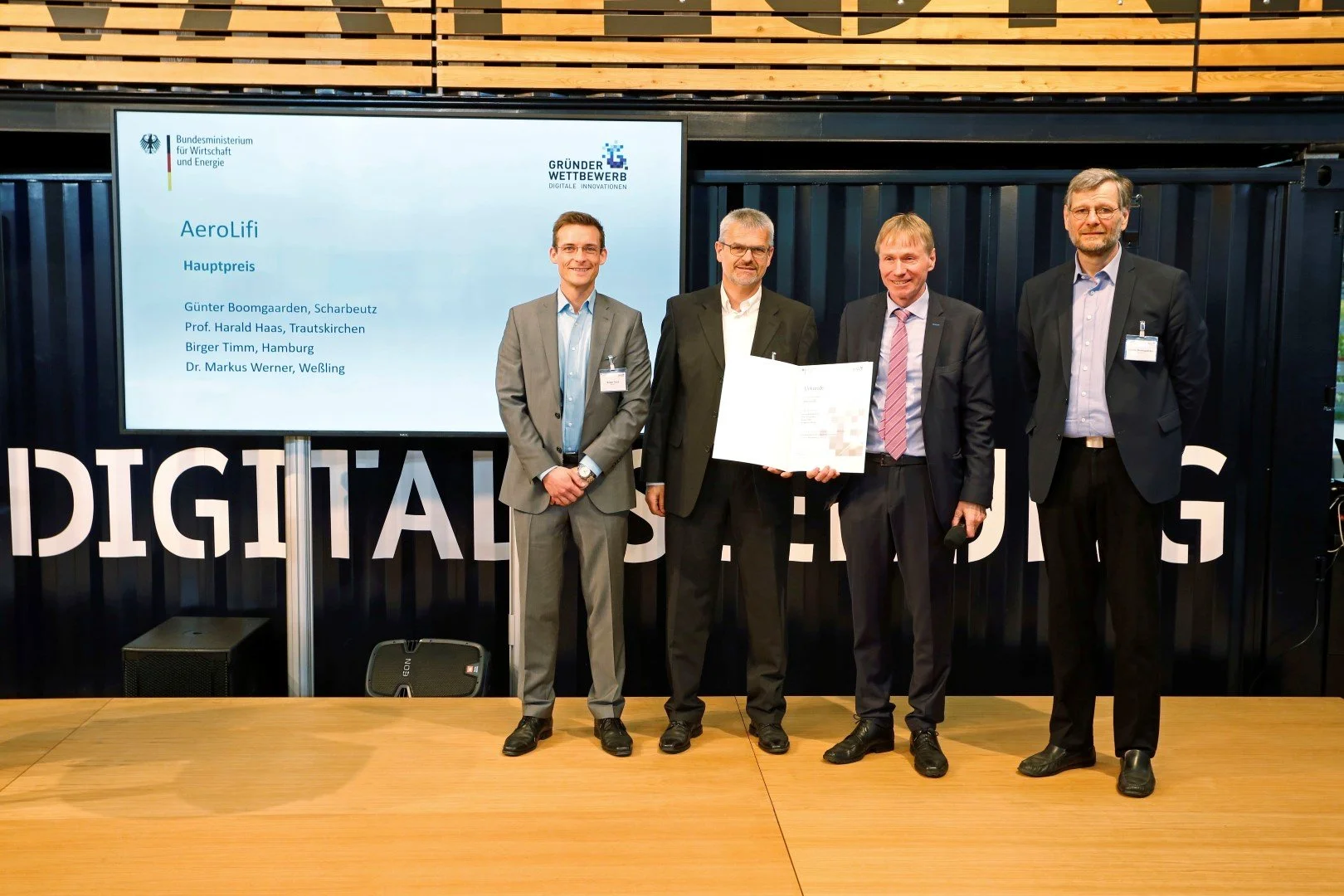
                  https://t.me/joinchat/FMzOmsEKyJFrU6Af