Get A Grip Lighting Podcast
At LiFi Tech News, we are so passionate about LiFi technology and in today’s article, we revisited a Get a Grip Lighting podcast episode 192 held around June 2021. In a guest appearance on the Get A Grip On Lighting podcast, Tony Lawrence spoke on what it means to be a cyber warrior, how LiFi can be used to secure communications, their quantum LiFi solutions, what are quantum computers, why the government needs to take the quantum threat seriously, and theories behind quantum computing and entanglement.
Get a Grip Lighting podcast delivers discussions about hot topics in the lighting industry. The podcast shows are produced by Michael Colligan of Atlas Lighting and Greg Ehrich of Premier Lighting.
Below are some of the Podcast conversations about LiFi and quantum technology. Some of the conversations have been edited:
Tony Lawrence: “So, I joined the agency when I was 17. I got recruited by the army originally, right after the Twin Towers spill. So as soon as the Twin Towers fell, I was about 16 years old in high school. And I realised that I wanted to protect my country. So I enlisted at the needs of the army, which was infantry. And I tested very well, very high. And when I was a junior in high school, that's when I went to basic training, came back from basic training, finished up my degree, my high school degree. And then I joined the NSA when I was 17.”
Tony Lawrence: “So back when I started, it was basically intercepting our adversaries communications through satellites, mainly cell phone towers. And I would collect these things just straight out of the air and then I would decrypt the messages and then I'll report on that information. And that's what led into what's called modern day cyber security. Originally, it was signals intelligence is kind of what we call it here in the United States.”
Tony Lawrence: “Okay, great. Yes. So prior to leaving the army, I did multiple deployments. I spent about six months in Iraq, few months in Afghanistan, and about three years in Korea. So when I was in our rack, I saw first-hand devastation of you know, kinetic or normal warfare.”
“But I was the first person to integrate cyber warfare into the mix. And this was in the 2008-2009 timeframe. And because of my experience there, I had a kind of an unconventional outlook on, you know, how to stop adversaries from collecting our information, and how to steal theirs. So once I separated from the army, I started a company called Vor technology.”
“Within five years, we became the largest defence contractor, small business contractor at the National Security Agency, the NSA. And I saw everything at the agency. So, at the agency, they had quantum computers, and I had an opportunity to work with those. They were pretty amazing. And they were testing LiFi systems, very, very early tests, and I got to see all that stuff.”
“So that's how I developed our solution today, because just from all that experience, I was able to create our quantum LiFi solution. And so, for Light Rider, this is pretty interesting. We had a prime contract working at the White House on protecting the President's communications And we had a task to develop 100%, secure communications for Air Force One. And that's when I got really heavy into the quantum, I invested a lot of money into it. And we were using quantum basically lasers to send information to and from Air Force One. And it popped up in my mind one day, why can't we just do this with normal lives? Why can't we do something similar to this with normal light bulbs. And that's when I created Light Rider technology. And in 2019, I spun that away from my government contracting firm, and I started a pure play commercial startup. I'm providing quantum communications or quantum messages through the light bulbs.”
Tony Lawrence: “Well, LiFi has many advantages over traditional WiFi. The largest advantage, in my opinion, is the bandwidth. So when you're using light to send communications, light has unlimited bandwidth, you're never going to run out of IP addresses, or you're never going to run out of storage, or you're never going to run out of the ability to send information.”
“And it's so quick, the speed of LiFi operates at, you know, over 100 gigabytes, right. So basically, when you flip that light switch in your room, as fast as it takes the light to go from the bulb to your eye, that's how fast information is moving. And it's basically moving at the speed of thought. And that information can move across the planet, just that fast, utilising LiFi.”
“So, our LiFi systems are compatible with the new iPhone, the LIDAR. So you know, if you have a LIDAR phone, or LiFi LIDAR compatible phone, you will be able to use, you know, instantaneous communications via LiFi. Other benefits are line of sight. So from a security perspective, with our LiFi solution, if you're not in that specific light bulb, you won't be able to access the software. So at Light Rider, we encrypt the software, the password to the software sits in the light bulb. So does that make sense to you guys? So yeah, the password is in the light bulb, and the light bulbs in your room. And if you're not underneath that light bulb, if you're not in line of sight of that light bulb, you won't be able to access the software or the hardware on your computer. So, somebody can walk into your office or your home, steal all your electronics, and they can take it to a different location. And they can plug it into a quantum computer, they can plug it into a supercomputer, but no matter what, they won't be able to access the data on those systems, because they're not in the light that's in your specific location.”
”So, you're using we're using matter or we're using, I mean, we can put, we can put the LiFi solution in a in your mouse, or we can put it in shades, or we can use an infrared, we can put the password pretty much in anything. And we're using matter or tangible things to tether your cyber data to you, or to a specific place. So yeah, just as you said, we're kind of wall and then your, your cyber communications or your communications, just like you would, you know, with, like, if you had a million dollars, and you wanted to keep it safe, you will put it in a safe. And you know, you will have to someone will have to break into that safe to get access to your million dollars. So, the same thing is happening with your critical information, someone will have to break into your home or office steal everything, and then they can access your communications. But if not, they won't be able to see anything.”
“So, LiFi is the optimal communication system for something like that. In addition to that virtual reality, LiFi is the perfect transmission method for virtual reality. And gentlemen, what we're looking at is the creation or the start of the quantum internet. So, LiFi is the Wi-Fi for the quantum internet. And that's why you know, LiFi is so cool, because it has unlimited bandwidth. So, with that quantum internet, as you tap into people's brains, you know, as we're using these very sophisticated VR systems, you won't have any lag and you won't have any delays, or you won't have any Max bandwidth issues, because everything's dependent upon light.”
Tony Lawrence: “So, there's so the word quantum means small, right? So when we use quantum here at Light Rider, we're using small particles of light to encrypt things. So, we take a particle of light, and we put it, we have a chip, and our quantum processor has a small particle light that's going crazy, spinning to the left is spinning to the right. And it's superpositions. So, that particle light can spin to the left and the right at the same time. So, when you look at conventional computing, you have a one and you have a zero. But when you look at quantum computing, you have a one, you have a zero, and you have a 01. So, you have this third extra bit. So, with quantum systems, they're secure because you have this unstable third bit. And if you don't have that specific chip, or you don't have that specific system, you can't guess what that third bit is going to be. So, Samsung has a new quantum Galaxy cell phone. You guys can buy it today online. You can also get them in South Korea here, United States, South Korea, and they're both 5g phones. And those phones are using quantum chips to protect people getting in and out of the phone. So, they're using a particle of light to secure that entire phone. So here at Light Rider, we're using particles of light to encrypt your computer and protect your communications.”
“So, there are scientists in China that are doing exactly that. They're entangled in light from distant stars, right over in China. They're very, very advanced. So, there's a theory called the unified energy theory that suggests that all light in our universe is connected. And that's why things like entanglement work. So with quantum entanglement, there's matter. And there's, and you could use light, but so like, if you take certain types of crystals, and you chop them in half, and you take one crystal to the other side of the world, and you have one here, if I send an electrical current to this crystal, it automatically hit this the other crystal will light up on other side of the world.”
Tony Lawrence: “NSA has many cyber weapons, and they deploy those weapons through US Cyber comm. You can go online and google some of their technologies. But quantum computers are a brute force system. A quantum computer is like a huge calculator right now. So if you guys tried to log into your Facebook account, and you put in the wrong password, Facebook will stop you and Facebook has a firewall or a like a like, basically a string of code that says, hey, if you don't insert the right password, we're going to stop you guys from breaking in. So it's encryption, right? You have different types of encryption, RSA encryption, you got pseudo random encryption, so that encryption stops you from getting into Facebook. But once you put in the right password, then you can get into your Facebook account. So what a quantum computer could do is once you log in three times to your Facebook account, and you put in the wrong password, the quantum computer can guess the password, almost immediately, quantum computer can guess it, because the encryption tables only have about maybe 1500 characters. And after 1500 characters, there's going to be a zero or a one. So, the quantum computer would guess which is coming next as 01. And then boom there into the system. Because it's running millions of calculations per second, right? So, it’s like a huge calculator running millions and millions of calculations per second, faster than it would take the computer to jump to one or zero.”
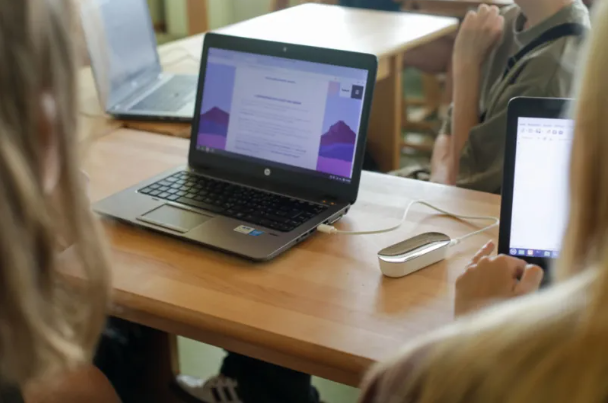
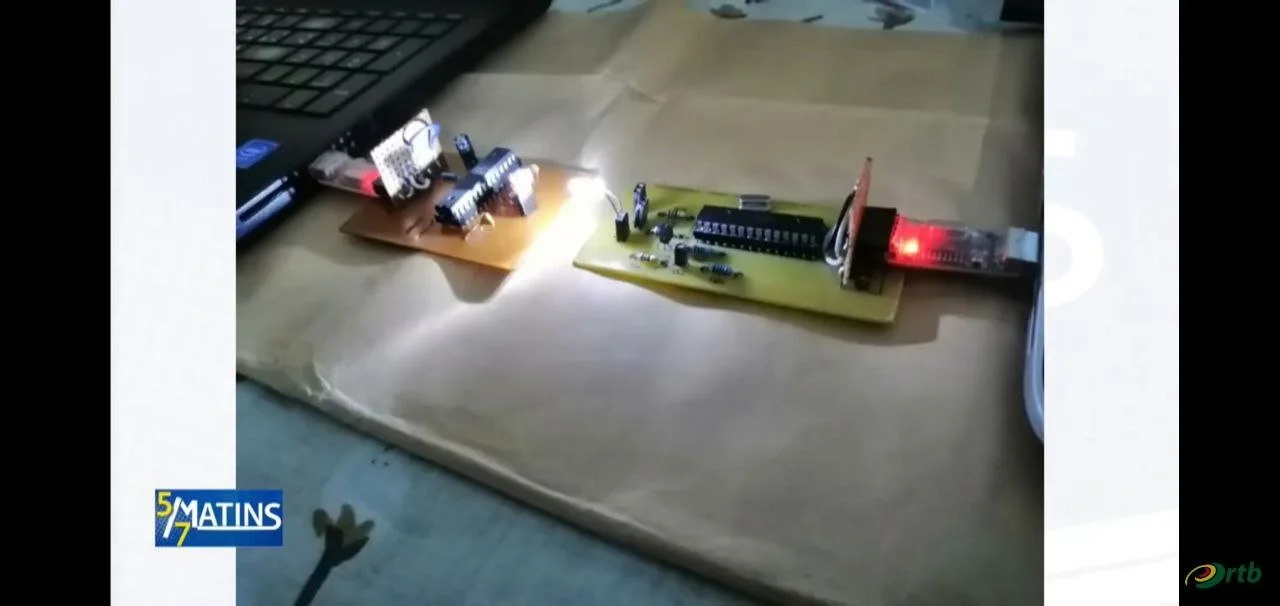
Tony Lawrence: “Yeah, we have light bulbs. So, we sell light bulbs. Now the cool thing about our bulbs is the light bulbs, they blink passwords, and they blink information. Alright, so the light bulbs are blinking faster than the human eye can see. And it's blinking a message kind of like Morse code. And we have these lets us you guys, remember, when WiFi first started, it used to have a thumb drive that you would plug into your computer or get internet access. That's where we are with LiFi. So the light blinks the message, it goes to the USB that's connected to your system, that message could be a password, or it can be checked. That's how our bulb works. We also have quantum network equipment that connects to your wireless router. And a quantum encrypts your wireless router. And it connects your wireless router to the light bulbs. In addition to that, we have just desktop software you can download and use and sin files quantum encrypted through the normal internet. And you can play our games we have very cool games we are we use quantum our quantum systems to generate Powerball numbers and make a million numbers. And people have actually been winning, you know, small, small prizes. So, that's the cool thing about quantum. So, we specifically use quantum random number generation to protect our clients, hardware software, and to fuel the game. So, it's called QRNG. And QRNG is probably the easiest application of quantum communications you can use in your home or in your office. And um, you know, you'll hear people talk about quantum key distribution and all this other stuff. You don't need that stuff, right? Quantum random number generation is all you need to provide truly random information or create encryption technology for your clients or for yourself.”
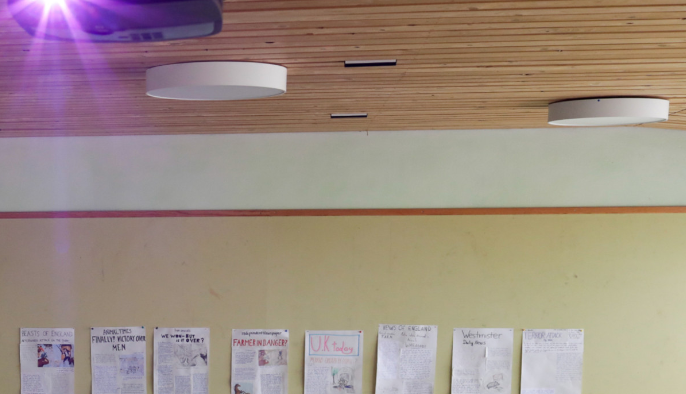
Tony Lawrence: “we can use any standard five watt light bulb, and connect our system to it. It's really, it's really cool. It's really simple. And again, as we just blink the lights, all we're doing is blinking the lights, and we have our box, our quantum LiFi box has a modulator on it, that tells it like when to turn on and off. And it just blinks the light on and off. And then that sends the message to the USB thumb drives.”
“So as light is broadcasted through the room, we can tell you exactly where we can see somebody walking around in a room, and we will see all the furniture, we can recognise them. Right when you identify them, like can you identify and identify them? That's right, I can measure their body temperature, right. So as when you talk about data analytics and big data analytics, LiFi is the holy grail. And let's take it one step further. Again, I think I said this earlier, but LiFi will replace WiFi, right WiFi is nothing but a two way walkie talkie that's connecting your computer to your WiFi router. It's I mean, it's a walkie talkie. That's why people are hacking into them so easily. That's why ransomware is at an all time high. It's because we're using the walkie talkies, walkie talkies to send our critical information from point A to point B. So LiFi will be physically installed into your room into your office it can be put into a lamp, it can be pretty much put into anything is physically tied to that room. So as the quantum internet becomes more advanced, more prevalent, as 5g becomes more prevalent, LiFi will be the only communications mechanism that can handle it. So, LiFi is the transport for quantum information.”
Tony Lawrence: “I want to say to everyone, you know, with with cybersecurity issues, cybersecurity is only an issue because people aren't thinking outside of the box. And when it comes to lighting in a lighting sector, we control the space within somebody's homes, we control the space within people's offices. So if people can think of more innovative ways to utilise the lighting to make our lives easier, whether it's through communications, gaming, lottery, even transportation, right, any way you can think about using what's in your existing space to make everyone's lives easier. I will say that's a great investment of your time. And I think it will pay off here in the next couple of years.”
You can watch the full podcast video on the following link: