Experimentation of a LiFi Prototype System For Data Transmission in Museums in Benin, West Africa

Table of Contents

    Experimentation of a LiFi Prototype System For Data Transmission in Museums in Benin, West Africa
    LiFi Prototype System in Museums, Benin


    Last week, we wrote an article about a LiFi prototype system developed at the École Polytechnique, D'Abomey-Calavi (EPAC).  Anaïs Nassara carried out a research study on LiFi technology under the supervision of Dr SANYA Max Fréjus Owolabi. He is an Assistant Professor and a Senior Researcher at EPAC.  Since then, a few other projects have been carried out. One of them has been a LiFi experimentation of a LiFi prototype system with smartphones in museums.
     

    Credit to Dr SANYA Max Fréjus Owolabi, Jekhiel CHABI SARE and Biaou David Bathélémy KOCHONI

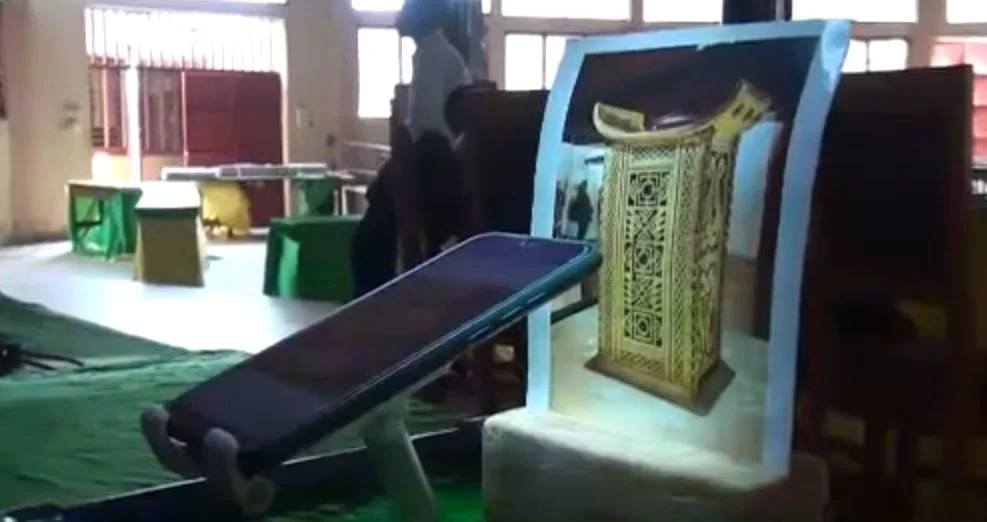
    In order to offer a unique visitor experience in sites and museums, the genius creativity of two students of the National Higher Institute of Industrial Technology INSTI ex-IUT of Lokossa demonstrated LiFi as an innovative solution. Jekhiel CHABI SARE and Biaou David Bathélémy KOCHONI made available to the public a LiFi prototype system for the transmission of data in museums. They worked under the supervision of Dr Max Fréjus Owolabi SANYA.

    The LiFi prototype designed has just won the 1st Innovation Prize (Category: Digital Solution) in the innovation competition organised by the Géneb at the IUT-LOKOSSA.
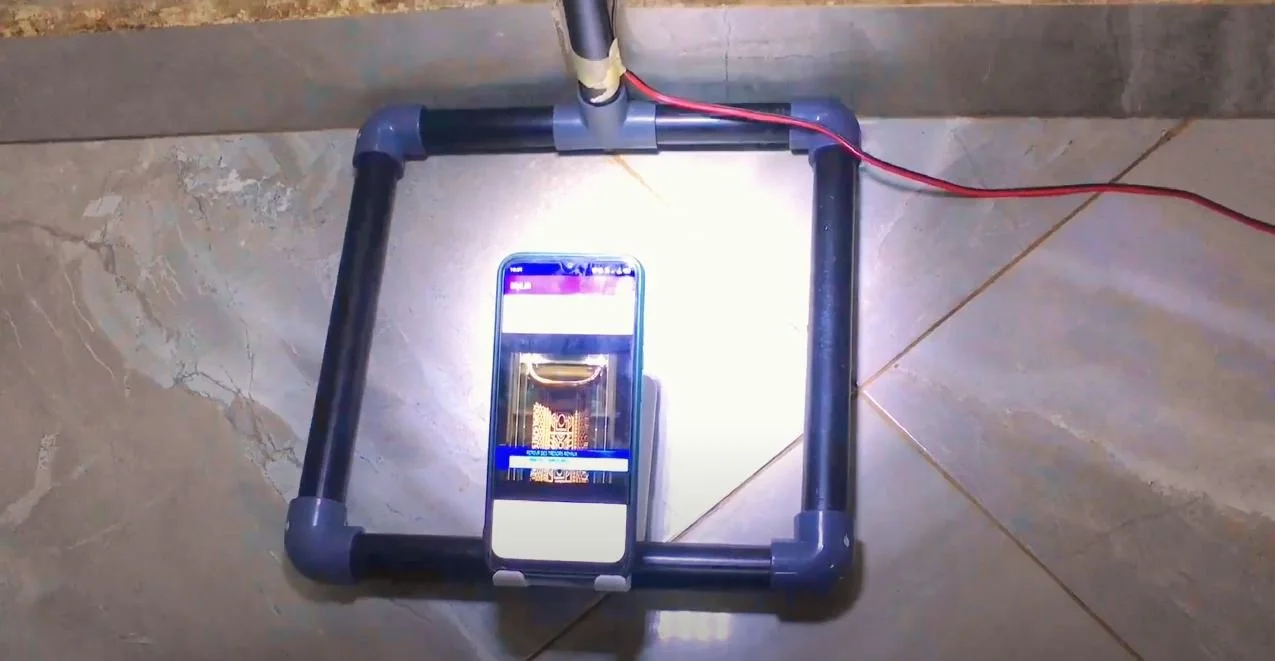
    Credit to Dr SANYA Max Fréjus Owolabi, Jekhiel CHABI SARE and Biaou David Bathélémy KOCHONI
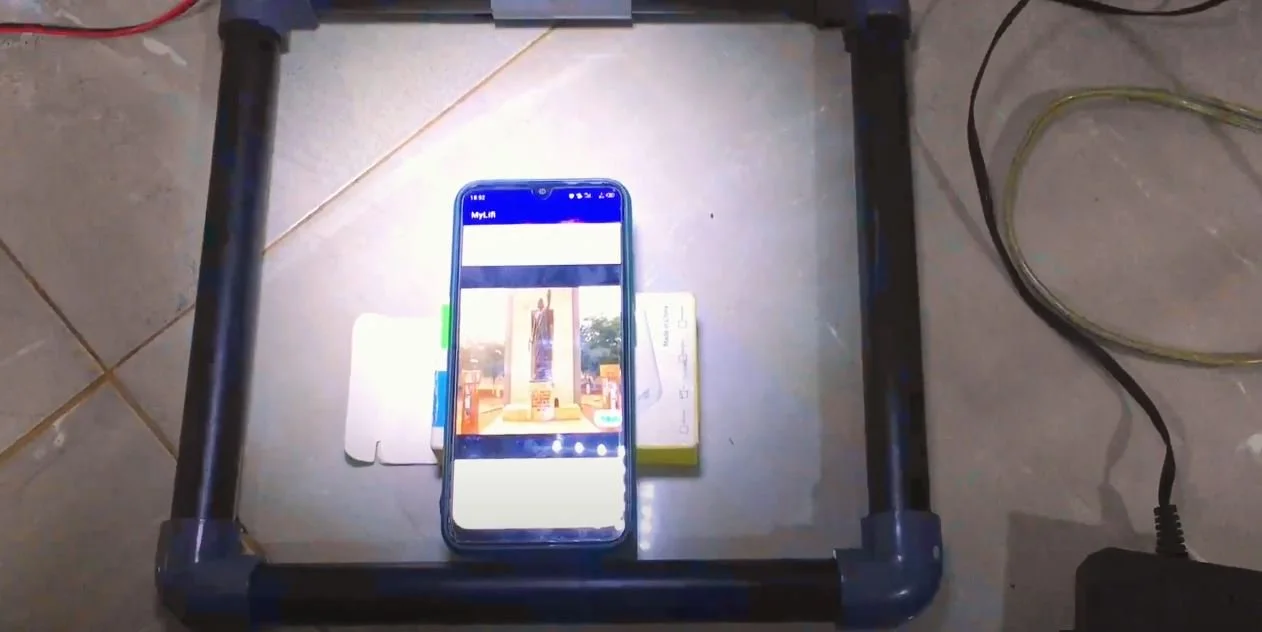
     

    Credit to Dr SANYA Max Fréjus Owolabi, Jekhiel CHABI SARE and Biaou David Bathélémy KOCHONI

    It can be used everywhere and in all areas where you want to use existing visible light to transmit useful information to the public (example: hospitals, places open to the public such as town halls, ministries, embassies, airports, shopping centres, shops, hotels, bars and restaurants, nightclubs, etc.). According to Dr SANYA Max Fréjus, the LiFi prototype will soon be improved and coupled with other options for more freedom and innovative experiences as per the needs of Beninese communities.

    You can also watch the video below:

    Below are some of the statements from the video. These statements have been translated from French to English:

    Biaou David: “Hello everyone. I am Biaou David and this is Jekhiel Chabi. We are in front of a LiFi prototype for the transmission of information in a museum. And this system allows us to send information through the light stand to our smartphone. Thus, we can take the history of the art that we have in the museum with our smartphone equipped with the application and an ambient light sensor that we have with us. Here, we have a smartphone equipped with a light sensor which will allow us to receive the information given by the light. See when the smartphone is dropped on the light spectrum, automatically, a video is triggered to give us the history of where we have in front of us. And when you come to a museum at the entrance, you can have a poster that will allow you to download an application. This poster will direct you to the application you have installed on your smartphone.”

    Biaou David: “If you don't have a smartphone, you can enter the museum and the museum will give you a tablet. With this tablet, you will be able to take the information of all the tunes that we have. In Benin, as in most other African countries, the visit to a museum is always guided by a well-trained guide on the history of art. But it is found that very often these guides lack the words to explain the object in front of them and this can distort the tourist experience. In the case of museums, we have created this device which will allow us or any visitor equipped with a personal smartphone or a museum tablet to be able to point towards a light source in order to take information relating to a work of art.”

    “The designed system sends information to the smartphone through light. When we find ourselves under the spectrum of light in front of a tree, a video is automatically triggered to explain the history of the art. Here we have the throne of Guézo and when the smartphone is removed from the spectrum of light, automatically the video stops. And we are now going under the high sphere of light to see the history of Béhanzin. The video starts and here we have the statue of Béhanzin.”

    Li-Fi Conference 2022


    The Li-Fi Conference 2022 Edition was a great success. Li Fi Tech News will very soon write articles on the topics treated at the Conference.

    What is LiFi?

    LiFi, also known as "Light Fidelity" is a wireless optical networking technology, which uses light-emitting diodes (LEDs) to transmit data. In 2011, professor Harald Haas made a LiFi demonstration at the TED (Technology, Entertainment, Design) Global Talk on Visible Light Communication (VLC).

    VLC uses light as a medium to deliver high-speed communication like Wi-Fi and complies with the IEEE standard IEEE 802.15.7. The IEEE 802.15.7 is a high-speed, bidirectional, and fully networked wireless communication technology-based standard similar to Wi-Fi's IEEE 802.11.

    How does LiFi work?

    LiFi is a high speed, bidirectional, and fully networked wireless communication of data using light. LiFi constitutes of several light bulbs that form a wireless network.

    When an electrical current goes through to a LED light bulb, a stream of light (photons) emits from the lamp. LED bulbs are semiconductor devices, which means that the brightness of the light flowing through them can change at extremely high speeds. The signal is sent by modulating the light at different rates. The signal can then be received by a detector that interprets the changes in light intensity (the signal) as data. Also when the LED is ON, you transmit a digital 1, and when it is OFF, you transmit a 0.

    LiFi Benefits

    The primary benefits of LiFi are as follows:

    Security: Provides entirely secure access. Where there is no light there is no data.

    Safety: Does not produce electromagnetic radiation and does not interfere with existing electronic systems.

    Localisation: Allows localisation due to the small coverage area of LiFi access point - localisation can be used for very precise asset tracking.

    Data density: Provides ubiquitous high-speed wireless access that offers substantially greater data density (data rate per unit area) than RF through high bandwidth reuse.

    Credit to Oledcomm

    LiFi Applications

    LiFi can be used for so many applications and the list is increasing every year. You can read our updated list of Li-Fi applications at the following link:

    https://www.lifitn.com/blog/2021/2/13/top-30-li-fi-applications-updated-list-including-potential-applications

    Credit to pureLiFi


    LiFi Systems Reviews by LiFi Tech News


    OLEDCOMM LIFIMAX KIT REVIEW - ONE YEAR IN

    We reviewed the LiFiMax kit produced by the leading French LiFi company Oledcomm. We bought this LiFi kit system at the end of 2020. After over a year of use, we decided to write a review of this LiFi system. We looked briefly at the profile of Oledcomm, a brief history of the LiFiMax system, the Kit box contents, some testing and performance results of this LiFi system, the customer experience and our own verdict (the good and the bad points) of the LiFiMax kit.

    You can read the review on this link:

    https://www.lifitn.com/blog/lifimaxreview


    SIGNIFY TRULIFI 6002.1 STARTER KIT SYSTEM REVIEW


    We also reviewed the Trulifi 6002.1 starter kit produced by Signify, the world leader in lighting for professionals, consumers and lighting for the Internet of Things. We got this LiFi kit system with the help of PCDSI and Signify around August 2021. In a similar fashion done with our previous review of the LiFiMax kit a few months ago, we will look briefly at the profile of Signify, a brief history of the Trulifi 6002.1 kit, the Kit box contents, some testing and performance results of this LiFi system, the customer experience and our own verdict (the good points and the bad points) of the Trulifi 6002.1 kit.

    You can read the review on this link:

    https://www.lifitn.com/blog/trulifi6002review


    In conclusion, if you are also interested to hear more information about the OWNII Coin or enquire about LiFi devices such as the LiFiMax and Trulifi, you can contact us through our chatbot or by sending an email through our contact us form. If you enjoyed this post and would like to hear more updates about LiFi technology, subscribe to our newsletter. Don’t forget to subscribe to our social media accounts. You can also join our Telegram group about LiFi technology on this link:

    https://t.me/joinchat/FMzOmsEKyJFrU6Af



    Musa Unmehopa, Chair of the HomeGrid Forum LiFi Task Force, Shares His Highlights of The Li-Fi Conference 2022

    Table of Contents

      Musa Unmehopa, Chair of the HomeGrid Forum LiFi Task Force, Shares His Highlights of The Li-Fi Conference 2022

      Chair of the HomeGrid Forum LiFi Task Force

      HomeGrid Forum released a video where Musa Unmehopa, Chair of the HomeGrid Forum LiFi Task Force, talks about the highlights of the recent LiFi Conference 2022 edition.

      Mr Musa is also the Head of Wireless Standards & Regulations at Signify. Prior to joining Philips Lighting in 2013, he worked for Bell Labs, Lucent Technologies, and Alcatel-Lucent. Musa has held senior leadership roles in various standards bodies, trade organizations and industry consortia, including chairman of the Technical Plenary of the Open Mobile Alliance, vice-chairman of the Board of the Zigbee Alliance, and Secretary-General of the Zhaga Consortium. He also served on the boards of The Connected Lighting Alliance, the Emerge Alliance, and the Parlay Group, and is an advisor to several technology start-ups. Author of two technology books, Musa has been an invited keynote speaker and panellist at various industry events. His publications include numerous papers in technical journals and conferences. He holds two patents. Musa received a BSc. and MSc. degree in computer science from Twente University and MBA degrees from TIAS Business School and University of Bradford School of Management.

      In the video, he stated the following statements:

      “Very recently on June 28, we participated in the LiFi conference in Eindhoven, the Netherlands, which is the premiere event for LiFi, the LiFi industry where all the major players from the industry come together from all geographies. And in all stakeholder segments. It was a great one-day event, I enjoyed it very much, that we had the opportunity to meet with some of our friends from the LiFi space, as well as make new friends and branch out to other industry segments. I think the coverage was great. We had speakers from the academic and research environments. But interestingly, where previously, we talked a lot about breakthroughs in research and results, fantastic results in our labs, this year's conference had a lot of focus on companies actually deploying the technology and using it for real-life problems that they face in their businesses and environments. And this is really, to me, a signal that the technology is maturing, that the industry is picking up, and that we're ready for even further growth. And I think that's an excellent point in time where more companies interested in technology can join the ecosystem, and start contributing to even furthering the technology and growing the market. So for me, it was a fantastic event. And I'm also looking forward to next year's rendition.”

      “I think interoperability is key to market enablement. It is often important, especially in the communications industry, that products from multiple companies can work together because that means that end customers don't lock themselves into a single manufacturer. It means that end customers can mix and match the best of breed from all companies out there. They can choose their access points from one manufacturer and their endpoints from another manufacturer. They can also choose a multi-sourcing strategy from multiple vendors. So, they are not dependent on a single supply chain. All these aspects are very important. Now, interoperability doesn't come for free, it requires hard work to get it done. And the HomeGrid Forum is tooling up a certification and interoperability certification programme to ensure that products from multiple manufacturers that are all standards-based can work together. And for this, we are introducing a test specification and a certification programme that will be based on extensive and rigorous testing. It will use third-party independent test houses that will validate the conformance implementations, we will use automated toolsets to further increase the quality and companies that pass the certification process will be issued a mark and interoperability mark or a logo which can be used by consumers to identify Hey, this is a not only a conformance compliant product but also an interoperable product. And if it can work together with another product that bears the same interoperability mark. and we've seen it throughout the industry, we know it from WiFi. And we know it from other products that we use in our homes in our daily lives. That this is really a good mechanism to increase the confidence level of consumers, but also of large companies who have procurement processes. And they're more comfortable procuring standards-based and interoperable products than proprietary products from a single manufacturer.”

      “The LiFi conference, which was held last month was a great opportunity to learn from other stakeholders in the industry. So, I had the opportunity to present but while there, I also took the opportunity to listen to all the other speakers. And there's a couple, a couple of them that jumped out to me. Particularly, I liked the presentation from MaxLinear, Marcos Martínez, who gave the perspective of a silicon vendor on how the LiFi market is evolving and how it can grow even further with the support of silicon vendors. That to me provided a lot of interesting insights. What I also found interesting was the presentation from Cisco, certainly a very large player in the networking equipment market. And if they start paying attention to the technology, I think that's another sign that LiFi is maturing. There were some very interesting presentations. I remember a presentation focusing on the economic aspects of rolling out these systems. Ultimately, technology is great and can do fantastic stuff, but you need to pay for it, and it needs to solve a real-life business problem. So, these economic considerations are very important. And as always, I liked the presentation from the Light Communications Alliance, which is a sister organisation, where many of the LiFi companies come together to drive the development of the market. There are many more that I forget at present, but I believe online videos and many of these presentations are available. And, I would encourage everyone to take a moment to look at these at your leisure and share with your colleagues and networks.”

      “If I were to take a moment to look forward and engage into my crystal ball, I think some of the next steps that we may be anticipating are the miniaturisation of the technology and the miniaturisation of the power consumption. With the purpose of integrating the technology into the devices that we use on a day-to-day basis. Think about laptops, tablets and mobile handsets. I think that's going to be the next stage in the growth of the market, where we really see the inflection point and the hockey stick curve beginning for LiFi. It's a goal that we all aim for. And I think as we now see the early use cases and the early adoption, we need to branch out into more use cases and increase the volumes and I think device integration could be a fantastic enabler to make that a realisation. And I'm hoping that in a year from now, we look back at the year and see some initial steps in that direction and that will be really exciting to see.”

      You can also watch the video below:


      HomeGrid Forum

      According to their website, HomeGrid Forum (HGF) is an industry alliance formed to support the development and deployment of a unified coaxial, phone line, powerline, and plastic optical fibre home networking technology called G.hn (Gigabit Home Networking). G.hn technology is based on standards developed by the UN’s International Telecommunications Union – Telecom (ITU-T) standards development organization.

      HomeGrid Certification ensures compliance and interoperability (C&I) of silicon and systems through plugfests and rigorous C&I testing. A logo is issued for certified systems’ packaging and documentation of G.hn-based systems. HGF Certification ensures that retail customers and Service Providers have confidence in, and great satisfaction with all HGF G.hn Certified Certified products.

      HomeGrid Forum members comprise an eco-system covering all aspects of the technology from Retailers to Service Providers, Utilities to Smart Grid think tanks, System Developers to Test Houses and Silicon Companies.

      HomeGrid currently has four workgroups: a Clean Tech/Smart Grid/Smart Energy workgroup focused on in-home energy management and utility Distribution Automation and AMI applications for G.hn, a G.hn Contributions workgroup that continuously works to develop advanced enhancements for wired home networking, a Compliance & Interoperability workgroup, and a Marketing workgroup focused on promoting all HomeGrid Certified Products and technologies.

      The purpose of HomeGrid Forum is to:

      • Lead the work within the ITU-T to continuously expand G.hn, through a sustained effort to improve and extend this advanced home networking technology for any in-home wiring (coaxial cable, phone line, powerline and plastic optical fiber).

      • Encourage and evangelize the adoption and widespread deployments of G.hn by Service Providers and through Retail channels.

      • Provide a clear migration path for all legacy wired technologies to G.hn, where coexistence and G.hn’s ability to work over any wire type enables Service Providers to extend the life of their existing network investments while increasing coverage, robustness, and throughput in the home.

      • Maintain a comprehensive compliance and interoperability program to promote an ecosystem of compliant silicon and interoperable products based on the ITU-T G.hn standards.

      Li-Fi Conference 2022


      The Li-Fi Conference 2022 Edition was a great success. Li Fi Tech News will very soon write articles on the topics treated at the Conference.

      What is LiFi?

      LiFi, also known as "Light Fidelity" is a wireless optical networking technology, which uses light-emitting diodes (LEDs) to transmit data. In 2011, professor Harald Haas made a LiFi demonstration at the TED (Technology, Entertainment, Design) Global Talk on Visible Light Communication (VLC).

      VLC uses light as a medium to deliver high-speed communication like Wi-Fi and complies with the IEEE standard IEEE 802.15.7. The IEEE 802.15.7 is a high-speed, bidirectional, and fully networked wireless communication technology-based standard similar to Wi-Fi's IEEE 802.11.

      How does LiFi work?

      LiFi is a high speed, bidirectional, and fully networked wireless communication of data using light. LiFi constitutes of several light bulbs that form a wireless network.

      When an electrical current goes through to a LED light bulb, a stream of light (photons) emits from the lamp. LED bulbs are semiconductor devices, which means that the brightness of the light flowing through them can change at extremely high speeds. The signal is sent by modulating the light at different rates. The signal can then be received by a detector that interprets the changes in light intensity (the signal) as data. Also when the LED is ON, you transmit a digital 1, and when it is OFF, you transmit a 0.

      LiFi Benefits

      The primary benefits of LiFi are as follows:

      Security: Provides entirely secure access. Where there is no light there is no data.

      Safety: Does not produce electromagnetic radiation and does not interfere with existing electronic systems.

      Localisation: Allows localisation due to the small coverage area of LiFi access point - localisation can be used for very precise asset tracking.

      Data density: Provides ubiquitous high-speed wireless access that offers substantially greater data density (data rate per unit area) than RF through high bandwidth reuse.

      Credit to Oledcomm

      LiFi Applications

      LiFi can be used for so many applications and the list is increasing every year. You can read our updated list of Li-Fi applications at the following link:

      https://www.lifitn.com/blog/2021/2/13/top-30-li-fi-applications-updated-list-including-potential-applications

      Credit to pureLiFi


      LiFi Systems Reviews by LiFi Tech News


      OLEDCOMM LIFIMAX KIT REVIEW - ONE YEAR IN

      We reviewed the LiFiMax kit produced by the leading French LiFi company Oledcomm. We bought this LiFi kit system at the end of 2020. After over a year of use, we decided to write a review of this LiFi system. We looked briefly at the profile of Oledcomm, a brief history of the LiFiMax system, the Kit box contents, some testing and performance results of this LiFi system, the customer experience and our own verdict (the good and the bad points) of the LiFiMax kit.

      You can read the review on this link:

      https://www.lifitn.com/blog/lifimaxreview


      SIGNIFY TRULIFI 6002.1 STARTER KIT SYSTEM REVIEW


      We also reviewed the Trulifi 6002.1 starter kit produced by Signify, the world leader in lighting for professionals, consumers and lighting for the Internet of Things. We got this LiFi kit system with the help of PCDSI and Signify around August 2021. In a similar fashion done with our previous review of the LiFiMax kit a few months ago, we will look briefly at the profile of Signify, a brief history of the Trulifi 6002.1 kit, the Kit box contents, some testing and performance results of this LiFi system, the customer experience and our own verdict (the good points and the bad points) of the Trulifi 6002.1 kit.

      You can read the review on this link:

      https://www.lifitn.com/blog/trulifi6002review


      In conclusion, if you are also interested to hear more information about the OWNII Coin or enquire about LiFi devices such as the LiFiMax and Trulifi, you can contact us through our chatbot or by sending an email through our contact us form. If you enjoyed this post and would like to hear more updates about LiFi technology, subscribe to our newsletter. Don’t forget to subscribe to our social media accounts. You can also join our Telegram group about LiFi technology on this link:

      https://t.me/joinchat/FMzOmsEKyJFrU6Af
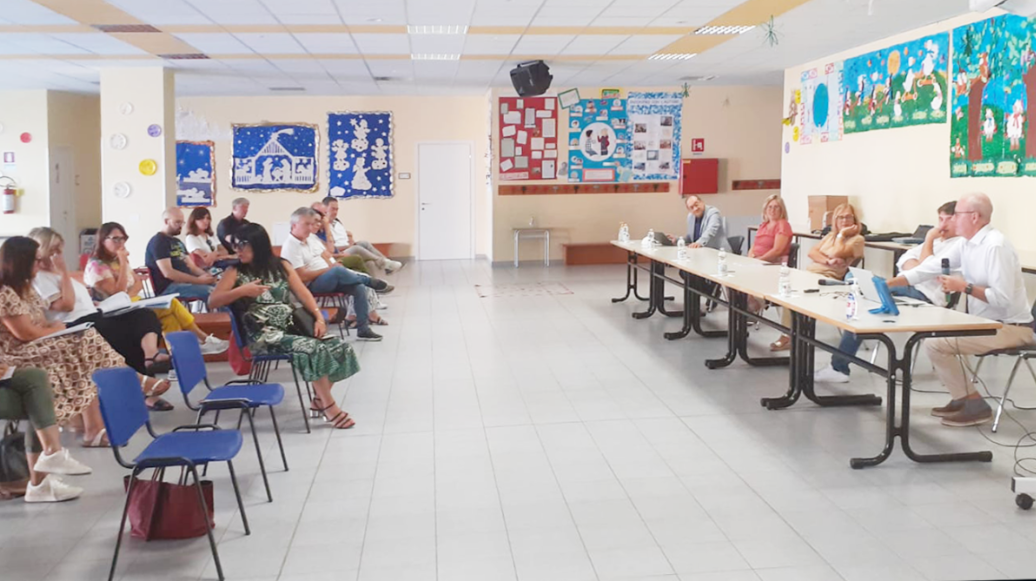


      Presentation of a LiFi Project at the Olimpia Primary School in Montefano, Italy

      Table of Contents

        Presentation of a LiFi Project at the Olimpia Primary School in Montefano, Italy

        LiFi Installation at The Olimpia Primary School

        Credit to Aura Taitle

        The works for installing the LiFi network in the Olimpia Primary School were completed at the end of August 2022.

        The new system allows high-speed Internet browsing by using data transmission technology through infrared rays, thus avoiding the spread of electromagnetic waves in the environment. This is in mind to protect the health of pupils, teachers and school staff.

        The Mayor, Angela Barbieri, appreciated all those present for their participation, commenting with satisfaction on this important step forward: “We participated with interest in the Call for School Services for the Wireless Zero EMF Local Network. The project obtained funding from the Marche Region for a total amount of € 59,999.60 for the construction of a wireless LiFi network at this school, providing for interventions and supplies of equipment for 4 classrooms used as laboratories/libraries for an equal area of sqm. 165, which later became 268 with the extension of the signal coverage area also to the open space for common activities. We have eliminated radio frequency emissions in almost all school environments by using the modulation of light waves rather than potentially harmful radio magnetic waves. Therefore, the commitment of the Municipality of Montefano for a connected, fast, safe and sustainable future is realised”.

        After the greetings of the Headmaster Professor Greco, who spoke about how school infrastructures must be enhanced by services, Engineer Massimo Trojani, RUP for the Marche Region, stated the following: “It is now possible to combine broadband services with highly digitised services. What is the first principle of Public Administration? It is a precautionary measure with a view to protecting the health of citizens. This can be done through LiFi networks. We know that, especially under the age of 10, it is very important to implement precautionary systems regarding exposure to electromagnetic waves."

        Giuliano Mazzarini of Studio STEP in Jesi, commissioned by the Municipality for the technical design of the network, stated that thanks to the new technologies that now make it more accessible also from an economic point of view, the LiFi system can take up space in many areas.

        For the LiFi installation, the Municipality of Montefano has entrusted the Aura Taitle company of Bologna, the leader in Italy with the implementation of innovative projects in which light, connectivity, energy and sustainability are functional elements for safety and human well-being. Ulrik Bertelsen, the CEO, illustrated through a video the peculiarities of the LiFi network and the many opportunities it can offer.

        The meeting concluded with a hands-on demonstration in one of the LiFi-equipped classrooms. If you look closely at the photo on the right, you will see one LiFiMAX tab on one of the desks.


        Article source: https://www.aurataitle.com/presentazione-del-progetto-lifi-alla-scuola-primaria-olimpia-di-montefano-mc/


        Li-Fi Conference 2022


        The Li-Fi Conference 2022 Edition was a great success. Li Fi Tech News will very soon write articles on the topics treated at the Conference.

        What is LiFi?

        LiFi, also known as "Light Fidelity" is a wireless optical networking technology, which uses light-emitting diodes (LEDs) to transmit data. In 2011, professor Harald Haas made a LiFi demonstration at the TED (Technology, Entertainment, Design) Global Talk on Visible Light Communication (VLC).

        VLC uses light as a medium to deliver high-speed communication like Wi-Fi and complies with the IEEE standard IEEE 802.15.7. The IEEE 802.15.7 is a high-speed, bidirectional, and fully networked wireless communication technology-based standard similar to Wi-Fi's IEEE 802.11.

        How does LiFi work?

        LiFi is a high speed, bidirectional, and fully networked wireless communication of data using light. LiFi constitutes of several light bulbs that form a wireless network.

        When an electrical current goes through to a LED light bulb, a stream of light (photons) emits from the lamp. LED bulbs are semiconductor devices, which means that the brightness of the light flowing through them can change at extremely high speeds. The signal is sent by modulating the light at different rates. The signal can then be received by a detector that interprets the changes in light intensity (the signal) as data. Also when the LED is ON, you transmit a digital 1, and when it is OFF, you transmit a 0.

        LiFi Benefits

        The primary benefits of LiFi are as follows:

        Security: Provides entirely secure access. Where there is no light there is no data.

        Safety: Does not produce electromagnetic radiation and does not interfere with existing electronic systems.

        Localisation: Allows localisation due to the small coverage area of LiFi access point - localisation can be used for very precise asset tracking.

        Data density: Provides ubiquitous high-speed wireless access that offers substantially greater data density (data rate per unit area) than RF through high bandwidth reuse.

        Credit to Oledcomm

        LiFi Applications

        LiFi can be used for so many applications and the list is increasing every year. You can read our updated list of Li-Fi applications at the following link:

        https://www.lifitn.com/blog/2021/2/13/top-30-li-fi-applications-updated-list-including-potential-applications

        Credit to pureLiFi


        LiFi Systems Reviews by LiFi Tech News


        OLEDCOMM LIFIMAX KIT REVIEW - ONE YEAR IN

        We reviewed the LiFiMax kit produced by the leading French LiFi company Oledcomm. We bought this LiFi kit system at the end of 2020. After over a year of use, we decided to write a review of this LiFi system. We looked briefly at the profile of Oledcomm, a brief history of the LiFiMax system, the Kit box contents, some testing and performance results of this LiFi system, the customer experience and our own verdict (the good and the bad points) of the LiFiMax kit.

        You can read the review on this link:

        https://www.lifitn.com/blog/lifimaxreview


        SIGNIFY TRULIFI 6002.1 STARTER KIT SYSTEM REVIEW


        We also reviewed the Trulifi 6002.1 starter kit produced by Signify, the world leader in lighting for professionals, consumers and lighting for the Internet of Things. We got this LiFi kit system with the help of PCDSI and Signify around August 2021. In a similar fashion done with our previous review of the LiFiMax kit a few months ago, we will look briefly at the profile of Signify, a brief history of the Trulifi 6002.1 kit, the Kit box contents, some testing and performance results of this LiFi system, the customer experience and our own verdict (the good points and the bad points) of the Trulifi 6002.1 kit.

        You can read the review on this link:

        https://www.lifitn.com/blog/trulifi6002review


        In conclusion, if you are also interested to hear more information about the OWNII Coin or enquire about LiFi devices such as the LiFiMax and Trulifi, you can contact us through our chatbot or by sending an email through our contact us form. If you enjoyed this post and would like to hear more updates about LiFi technology, subscribe to our newsletter. Don’t forget to subscribe to our social media accounts. You can also join our Telegram group about LiFi technology on this link:

        https://t.me/joinchat/FMzOmsEKyJFrU6Af



        ICLFT 2022: 16. International Conference on Li-Fi Technology Coming up On September 15-16, 2022 in Zurich, Switzerland

        Table of Contents

          ICLFT 2022: 16. International Conference on Li-Fi Technology Coming up On September 15-16, 2022 in Zurich, Switzerland

          ICLFT 2022: 16. International Conference on Li-Fi Technology

          XVI. International Li-Fi Technology Conference is coming up on September 15-16 2022 in Zurich, Switzerland. The International Conference on Li-Fi Technology aims to bring together leading academic scientists, researchers and research scholars to exchange and share their experiences and research results on all aspects of LiFi Technology. It also provides opportunities and a premier interdisciplinary platform for researchers, practitioners and educators to present and discuss the most recent innovations, trends, and concerns as well as practical challenges encountered and solutions adopted in the fields of LiFi Technology.

          Prospective authors are kindly encouraged to contribute and help shape the conference through submissions of their research abstracts, papers and e-posters. Also, high quality research contributions describing original and unpublished results of conceptual, constructive, empirical, experimental, or theoretical work in all areas of Li-Fi Technology are cordially invited for presentation at the conference. The conference solicits contributions of abstracts, papers and e-posters that address themes and topics of the conference, including figures, tables and references of novel research materials.

          International Conference on Li-Fi Technology has also teamed up with the Special Journal Issue on Li-Fi Technology. A number of selected high-impact full text papers will also be considered for the special journal issues. All submitted papers will have the opportunity to be considered for this Special Journal Issue. The paper selection will be carried out during the peer review process as well as at the conference presentation stage. Submitted papers must not be under consideration by any other journal or publication. The final decision for paper selection will be made based on peer review reports by the Guest Editors and the Editor-in-Chief jointly. Selected full-text papers will be published online free of charge.


          Venue and registration details

          This conference will be held Live and Online.

          You can also find more information on the following link:

          https://waset.org/li-fi-technology-conference-in-september-2022-in-zurich

          Ticket prices are as followed:

          • Non-Student Oral/Poster Presenter Registration cost €500

          • Student Oral/Poster Presenter Registration cost €400

          • Listener Registration cost €300

          All conference materials and services will be delivered digitally to the participant with the online conference management system. Conference registration includes the following digital materials and services:

          • e-certificates [for Authors: Certificate of Attendance and Presentation; for Listeners: Certificate of Attendance; for Chairs: Certificate of Attendance and Appreciation; for Presenters: Certificate of Best Presentation (if conferred based appraisal)]

          • e-program

          • e-book

          • e-name badge

          • e-receipt

          • e-presentation

          Presentation Types:

          Physical presentation is an oral conferencing presentation that is made using digital technology including embedded digital elements ( texts, tables, graphs, or videos ) for PowerPoint sharing.

          Digital presentation is a digital conferencing presentation that is made using digital technology including embedded digital elements ( texts, tables, graphs, or videos ) for PowerPoint sharing.

          SEPTEMBER 15-16, 2022: DIGITAL PROGRAM

          DAY 1: VIRTUAL MEETING
          The digital presentation session will start at 12 p.m. (midday) on September 15, 2022 London local time. The link to join the virtual conference will be available for registered delegates 10 minutes before the session at https://waset.org/profile/messages.

          DAY 2: PERTINENT READING
          Digital program consists of an e-book of relevant studies to download for future reading on September 16, 2022.

          Digital Program consists of the e-proceedings book which is available online-only and includes the conference communications (proceedings abstracts and papers). Registered participants can access the digitally available conference proceedings ( and certificates ) by visiting their profile pages.

          Li-Fi Conference 2022


          The Li-Fi Conference 2022 Edition was a great success. Li Fi Tech News will very soon write articles on the topics treated at the Conference.

          What is LiFi?

          LiFi, also known as "Light Fidelity" is a wireless optical networking technology, which uses light-emitting diodes (LEDs) to transmit data. In 2011, professor Harald Haas made a LiFi demonstration at the TED (Technology, Entertainment, Design) Global Talk on Visible Light Communication (VLC).

          VLC uses light as a medium to deliver high-speed communication like Wi-Fi and complies with the IEEE standard IEEE 802.15.7. The IEEE 802.15.7 is a high-speed, bidirectional, and fully networked wireless communication technology-based standard similar to Wi-Fi's IEEE 802.11.

          How does LiFi work?

          LiFi is a high speed, bidirectional, and fully networked wireless communication of data using light. LiFi constitutes of several light bulbs that form a wireless network.

          When an electrical current goes through to a LED light bulb, a stream of light (photons) emits from the lamp. LED bulbs are semiconductor devices, which means that the brightness of the light flowing through them can change at extremely high speeds. The signal is sent by modulating the light at different rates. The signal can then be received by a detector that interprets the changes in light intensity (the signal) as data. Also when the LED is ON, you transmit a digital 1, and when it is OFF, you transmit a 0.

          LiFi Benefits

          The primary benefits of LiFi are as follows:

          Security: Provides entirely secure access. Where there is no light there is no data.

          Safety: Does not produce electromagnetic radiation and does not interfere with existing electronic systems.

          Localisation: Allows localisation due to the small coverage area of LiFi access point - localisation can be used for very precise asset tracking.

          Data density: Provides ubiquitous high-speed wireless access that offers substantially greater data density (data rate per unit area) than RF through high bandwidth reuse.

          Credit to Oledcomm

          LiFi Applications

          LiFi can be used for so many applications and the list is increasing every year. You can read our updated list of Li-Fi applications at the following link:

          https://www.lifitn.com/blog/2021/2/13/top-30-li-fi-applications-updated-list-including-potential-applications

          Credit to pureLiFi


          LiFi Systems Reviews by LiFi Tech News


          OLEDCOMM LIFIMAX KIT REVIEW - ONE YEAR IN

          We reviewed the LiFiMax kit produced by the leading French LiFi company Oledcomm. We bought this LiFi kit system at the end of 2020. After over a year of use, we decided to write a review of this LiFi system. We looked briefly at the profile of Oledcomm, a brief history of the LiFiMax system, the Kit box contents, some testing and performance results of this LiFi system, the customer experience and our own verdict (the good and the bad points) of the LiFiMax kit.

          You can read the review on this link:

          https://www.lifitn.com/blog/lifimaxreview


          SIGNIFY TRULIFI 6002.1 STARTER KIT SYSTEM REVIEW


          We also reviewed the Trulifi 6002.1 starter kit produced by Signify, the world leader in lighting for professionals, consumers and lighting for the Internet of Things. We got this LiFi kit system with the help of PCDSI and Signify around August 2021. In a similar fashion done with our previous review of the LiFiMax kit a few months ago, we will look briefly at the profile of Signify, a brief history of the Trulifi 6002.1 kit, the Kit box contents, some testing and performance results of this LiFi system, the customer experience and our own verdict (the good points and the bad points) of the Trulifi 6002.1 kit.

          You can read the review on this link:

          https://www.lifitn.com/blog/trulifi6002review


          In conclusion, if you are also interested to hear more information about the OWNII Coin or enquire about LiFi devices such as the LiFiMax and Trulifi, you can contact us through our chatbot or by sending an email through our contact us form. If you enjoyed this post and would like to hear more updates about LiFi technology, subscribe to our newsletter. Don’t forget to subscribe to our social media accounts. You can also join our Telegram group about LiFi technology on this link:

          https://t.me/joinchat/FMzOmsEKyJFrU6Af



          Data Transmission via LiFi Between Two Computers at The École Polytechnique, D'Abomey-Calavi (EPAC) in Benin, Africa

          Table of Contents

            Data Transmission via LiFi Between Two Computers at The École Polytechnique, D'Abomey-Calavi (EPAC) in Benin, Africa

            Today, we will briefly discuss about a LiFi project carried out in Benin, Africa. Anaïs Nassara, an Engineering student at the École Polytechnique, D'Abomey-Calavi (EPAC), carried out a research study on LiFi technology. She also developed a LiFi transmission system prototype and presented it along with her project results.

            Anais stated: “I worked on the production of a prototype of LiFi data transmission. And this prototype allowed us to be able to show the feasibility of transmission using light. That's why we talk about LiFi.”

            “We want to be able to implement and use this prototype in different sectors such as in the medical sector where we can seek to transmit data via light instead of using WiFi.”


            If you have not been aware, LiFi technology has been experimented with in some African countries. For example, in Ivory Coast, LiFiLED, an African LiFi company delivers LiFi technology in rural areas.

            In Nigeria, a small group of Nigerian entrepreneurs from LiFi Infinity extensively experimented with different LiFi systems in co-working spaces and residential spaces. The mission of Li Fi Infinity is to solve the issue of poor internet connectivity for everyone in Nigeria and later the entire continent of Africa, by delivering quality LiFi products and other services. Its main mission also aims to deliver high-speed and stable internet connections for individuals and corporate bodies in Nigeria and Africa at cheaper rates and educate the masses about LiFi technology.


            You can watch the video below about the LiFi prototype. Mind you, the video is in french:

            It is a prototype of data transmission by light. This opens the possibility of Internet access by light in Benin at low cost! This work follows another project in the same direction outside (FSO: Free space Optics) which will allow easy access to the internet while optical (non-wired solution) with a speed almost close to that of Fiber. optical.


            We translated the transcript from French to English: You can read the following statements that were said in the video:

            Reporter 1: “The digital revolution rhymes with the advance of technologies and source of Internet access. WiFi corresponds to the transmission of data by radio signal. A new technology is gradually appearing, with certain advantages in terms of economics, health and connection speed. This is Li-Fi, a method of transmitting data via light in Benin, mainly at the École Polytechnique, D'abomey-Calavi, EPAC. A student at the end of her engineering design cycle in computer engineering and telecommunications, Anaïs Nassarah, set up this prototype of data transmission by light.”

            Anaïs Nassara: “I worked on the production of a prototype of LiFi data transmission. And this prototype allowed us to be able to show the feasibility of transmission using light. That's why we talk about LiFi.”

            Reporter 1: “LiFi technology consists of using the light from electric bulbs to access the Internet connection on computers, tablets, and smartphones. Anaïs brilliantly presented the results of her research on this technology through a thesis defence on Wednesday, December 22, 2021 at EPAC. Dr Fréjus Sanya, teacher at EPAC, was her supervisor.”

            Dr Fréjus Sanya: “Illustrating a bit of what is called LiFi optical transmission. It's that when you take your remote control home, you press your TV channel and finally, you see the reactions on the TV. This is to say that the transmission is done in the optics the same thing. It would take this time to transmit data. Agree from one terminal to another, therefore from one computer to another. This is what we wanted to achieve through this thesis to show that, instead of connecting computers to each other in a computer network, for example with cables or with WiFi, it's easy, we can do it through light.”

            Reporter 1: “LiFi offers four main advantages over WiFi. First, the prototype manufactured by Anaïs is deployed at a very low cost, unlike a Li-Fi device from the West. Then, in general, LiFi limits the risks of remote hacking in terms of health. Li-Fi is not subject to any exposure to electromagnetic waves deemed harmful to the human body.”

            Anaïs Nassara: “We want to be able to implement and use this prototype in different sectors, such as in the medical sector where we can seek to transmit data via light instead of using WiFi, which has potential risks for human health.”

            Reporter 1: “Beyond health, LiFi offers the advantage of a very high speed close to fibre optics, which is the most optimal process in the world in terms of Internet connection.”

            Dr Fréjus Sanya: “When you're used to WiFi, it's because when you become numerous in a WiFi network, the speed drops so it becomes slow. On the other hand, with the light, as long as you are under the light, the lighting, you all have exactly the flow that you are given by everyone. Exactly, the same flow no matter how many of you are under the light.”

            Reporter 1: “This wireless data transmission technology using light can be implemented in various fields. Already experimented in diverse domains, LiFi can also be deployed in medicine and aeronautics.”

            Dr Fréjus Sanya: “In the case of hospitals, where we tell people not to hang around with their smartphones because of the risks in harming some medical equipment. The same goes for the planes, we tell them to switch their phones so that it does not interfere with the pilot’s control panel. But today, thanks to any light source, we can now help people easily.”

            Reporter 1: “As part of her work, Anaïs Nassara has already produced a first Li-Fi prototype that has been proven to be effective. But for its large-scale implementation, the necessary means must be provided.”

            Anaïs Nassara: “We naturally need financial help to be able to say that we are going to make several prototypes and in order to make a concrete implementation.”

            Dr Fréjus Sanya: “With the prototype she has developed, for example, we are able to transfer images and other data from one PC to another. If you want to go beyond, you must review and improve the electronics behind. And that's where we want to apply for funding for that.”

            Li-Fi Conference 2022


            The Li-Fi Conference 2022 Edition was a great success. Li Fi Tech News will very soon write articles on the topics treated at the Conference.

            What is LiFi?

            LiFi, also known as "Light Fidelity" is a wireless optical networking technology, which uses light-emitting diodes (LEDs) to transmit data. In 2011, professor Harald Haas made a LiFi demonstration at the TED (Technology, Entertainment, Design) Global Talk on Visible Light Communication (VLC).

            VLC uses light as a medium to deliver high-speed communication like Wi-Fi and complies with the IEEE standard IEEE 802.15.7. The IEEE 802.15.7 is a high-speed, bidirectional, and fully networked wireless communication technology-based standard similar to Wi-Fi's IEEE 802.11.

            How does LiFi work?

            LiFi is a high speed, bidirectional, and fully networked wireless communication of data using light. LiFi constitutes of several light bulbs that form a wireless network.

            When an electrical current goes through to a LED light bulb, a stream of light (photons) emits from the lamp. LED bulbs are semiconductor devices, which means that the brightness of the light flowing through them can change at extremely high speeds. The signal is sent by modulating the light at different rates. The signal can then be received by a detector that interprets the changes in light intensity (the signal) as data. Also when the LED is ON, you transmit a digital 1, and when it is OFF, you transmit a 0.

            LiFi Benefits

            The primary benefits of LiFi are as follows:

            Security: Provides entirely secure access. Where there is no light there is no data.

            Safety: Does not produce electromagnetic radiation and does not interfere with existing electronic systems.

            Localisation: Allows localisation due to the small coverage area of LiFi access point - localisation can be used for very precise asset tracking.

            Data density: Provides ubiquitous high-speed wireless access that offers substantially greater data density (data rate per unit area) than RF through high bandwidth reuse.

            Credit to Oledcomm

            LiFi Applications

            LiFi can be used for so many applications and the list is increasing every year. You can read our updated list of Li-Fi applications at the following link:

            https://www.lifitn.com/blog/2021/2/13/top-30-li-fi-applications-updated-list-including-potential-applications

            Credit to pureLiFi


            LiFi Systems Reviews by LiFi Tech News


            OLEDCOMM LIFIMAX KIT REVIEW - ONE YEAR IN

            We reviewed the LiFiMax kit produced by the leading French LiFi company Oledcomm. We bought this LiFi kit system at the end of 2020. After over a year of use, we decided to write a review of this LiFi system. We looked briefly at the profile of Oledcomm, a brief history of the LiFiMax system, the Kit box contents, some testing and performance results of this LiFi system, the customer experience and our own verdict (the good and the bad points) of the LiFiMax kit.

            You can read the review on this link:

            https://www.lifitn.com/blog/lifimaxreview


            SIGNIFY TRULIFI 6002.1 STARTER KIT SYSTEM REVIEW


            We also reviewed the Trulifi 6002.1 starter kit produced by Signify, the world leader in lighting for professionals, consumers and lighting for the Internet of Things. We got this LiFi kit system with the help of PCDSI and Signify around August 2021. In a similar fashion done with our previous review of the LiFiMax kit a few months ago, we will look briefly at the profile of Signify, a brief history of the Trulifi 6002.1 kit, the Kit box contents, some testing and performance results of this LiFi system, the customer experience and our own verdict (the good points and the bad points) of the Trulifi 6002.1 kit.

            You can read the review on this link:

            https://www.lifitn.com/blog/trulifi6002review


            In conclusion, if you are also interested to hear more information about the OWNII Coin or enquire about LiFi devices such as the LiFiMax and Trulifi, you can contact us through our chatbot or by sending an email through our contact us form. If you enjoyed this post and would like to hear more updates about LiFi technology, subscribe to our newsletter. Don’t forget to subscribe to our social media accounts. You can also join our Telegram group about LiFi technology on this link:

            https://t.me/joinchat/FMzOmsEKyJFrU6Af
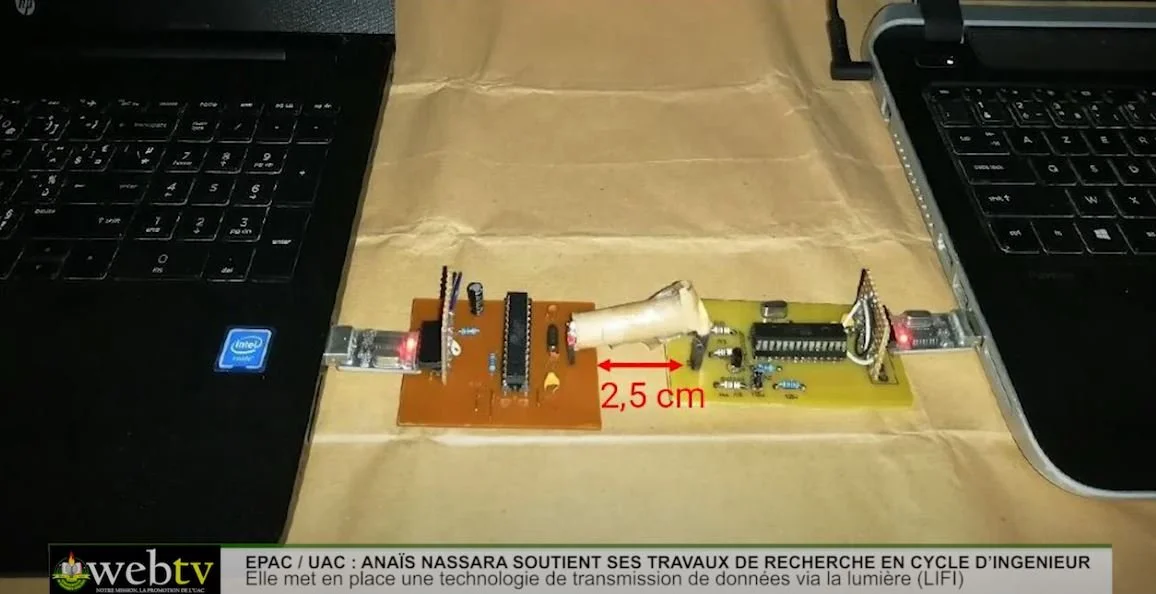


            LiFi MIMO Demonstration by ELIoT

            Table of Contents

              LiFi MIMO Demonstration by ELIoT

              Credit to ELIoT

              Hi everyone and a happy new month.

              Today, ELIoT released a demonstration video of optical wireless communication with LiFi in different environments. The video showed the application of LiFi in an office scenario and the implementation of a Multiple Input Multiple Output (MIMO) approach to avoid a signal loss if the line of sight is interrupted.

              In simple terms, MIMO can be defined as a smart antenna technology for wireless communication in which multiple transmitting and receiving antennas are used at the source and the destination to send and receive more data. The use of multiple antennas can increase performance, data speeds, and transmission data capacity

              In the video, Jean-Paul Linnartz, a Technical Leader ELIoT Signify Researcher and a Professor at the Eindhoven University of Technology demonstrated the LiFi MIMO approach.

              Credit to ELIoT

              Credit to ELIoT


              As stated on his LinkedIn profile, Professor Jean-Paul Linnartz focuses on LiFi research, sensor networks and personalised Human Centric Lighting. He holds more than 70 granted patents. His many scientific papers about electronic watermarks, anonymous biometrics, radio communications (e.g. MC-CDMA) and Optical Wireless Communication (LiFi) have been cited more than 12,000 times. His research results have also been commercialised in ventures, such as Intrinsic-ID, GenKey, and Civolution. He was a faculty member at the University of California at Berkeley and at the Delft University of Technology. As a Senior Director at Philips Research, he has headed research groups on information security, wireless connectivity and on IC design.

              You can watch the video below about LiFi MIMO:

              The ELIoT project demonstrates optical wireless communication with light (Light Fidelity - LiFi) in different environments. This videos shows the application of LiFi in an office scenario. Key feature is the implementation of a Multiple Input Multiple Output (MIMO) approach to avoid a signal loss, if the line of sight is interrupted.


              Here is a transcript of the video demonstration with a few editing:

              “The internet is not always as fast as we'd like it to be, particularly if we communicate wireless via WiFi. And the problem is quite often that there is congestion that are too many people trying to access the internet at the same time and all the signals interfere with each other. But if we now communicate via light, we may solve that problem.”

              “Light does not go through the wall. So here in my environment, I don't get interference from people using the spectrum. Next Door, light travels via a line of sight. But that also has a disadvantage. And quite often I hear the concern, what if I block that line of sight, then isn't communication gone as well? Well, the same principle may work as what I see when I hold my hand on top of a sheet of paper in a well-illuminated office space where I don't see a very sharp, harsh shadow. When I hold my hand above a sheet of paper, the light comes in from multiple angles. And that's exactly what we do with our communication system, we build an infrared light communication system.”

              “But we have multiple points in the ceiling from where we reach the client’s device. And the example of this room, we communicate to this client device from six points in the ceiling, from six light points, six emitters that all contribute and cooperate to provide connectivity to the client device. But how do we make sure that these light points in the ceiling cooperate in a proper way to optimise the performance of the connection to the client’s device? So, this is what we call distributed MIMO distributed because, at multiple different positions in the ceiling, we have a light source and emitter, those are the multiple inputs to the communication system. And they communicate over the channel to multiple outputs of the channel multiple detectors. And in that way, we see a lot of line of sight.”

              “And if I block one line of sight, there is still a connection going on from the other point in the ceiling. In the ideal situation, these detectors see the light points in the ceiling, the communication is at its best. If I block one of the detectors, I block one of the lines of sight. So, in one of the links from an emitter, we see that the throughput goes down, but there is still a reliable link. Also, a reliable link continues to be there if I block the other line of sight. So in that way, we can make sure that there's always at least one of the emitters in the ceiling that is seen by at least one of these detectors, but we can go even further because, in fact, this detector sees a mixture of multiple light sources in the ceiling.”

              “The other detector will also see a mixture of light sources, but that is a different mixture. And because of these differences in the mixture, the mathematical operations can separate these such that we have clean lines of sight that can be separated the first line of sight can carry the first part of the data, and the line of sight can carry other parts of the data and thereby we increase the throughput of these optical wireless communication systems by distributed MIMO.”

              “So, we have busted the myth that LiFi stops working if someone accidentally blocks a line of sight. And we have shown that we have an existing set of ICS integrated circuits that have been optimised for another application for communication over wires, and over power lines and we are misusing that so to say for LiFi. But we have shown that it is possible and of course, in the earlier project, we have also improved the algorithms such a system can adapt much faster and can optimise really the performance for optical wireless communication. And with that, the project makes the next step into making LiFi a reality.”


              ELIoT

              As stated on their website, ELIoT is an EU Horizon 2020 project. It is led by the Fraunhofer Heinrich Hertz Institute. The central aim of the project is the development of mass-market Internet of Things (IoT) solutions using LiFi, a next-generation wireless communication network, that travels over light instead of radio waves. With LiFi, the ELIoT consortium will explore a networked wireless communication technology operating in the previously unused light spectrum, besides WiFi and cellular radio.

              ELIoT has started in 2019 as a project funded by the EU’s biggest Research and Innovation programme, Horizon 2020. This programme promises more breakthroughs by taking great ideas from lab to the market. ELIoT receives €6 million funding from the Public-Private Partnership ‘Photonics21’ and is formed by the partners Signify (formerly Philips Lighting), Nokia, MaxLinear, Deutsche Telekom, KPN, Weidmüller, LightBee, the University of Oxford, Eindhoven Technical University and the two Fraunhofer Institutes; Heinrich Hertz Institute and FOKUS. Even more, companies will shortly be added to the consortium as associated partners.

              Li-Fi Conference 2022


              The Li-Fi Conference 2022 Edition was a great success. Li Fi Tech News will very soon write articles on the topics treated at the Conference.

              What is LiFi?

              LiFi, also known as "Light Fidelity" is a wireless optical networking technology, which uses light-emitting diodes (LEDs) to transmit data. In 2011, professor Harald Haas made a LiFi demonstration at the TED (Technology, Entertainment, Design) Global Talk on Visible Light Communication (VLC).

              VLC uses light as a medium to deliver high-speed communication like Wi-Fi and complies with the IEEE standard IEEE 802.15.7. The IEEE 802.15.7 is a high-speed, bidirectional, and fully networked wireless communication technology-based standard similar to Wi-Fi's IEEE 802.11.

              How does LiFi work?

              LiFi is a high speed, bidirectional, and fully networked wireless communication of data using light. LiFi constitutes of several light bulbs that form a wireless network.

              When an electrical current goes through to a LED light bulb, a stream of light (photons) emits from the lamp. LED bulbs are semiconductor devices, which means that the brightness of the light flowing through them can change at extremely high speeds. The signal is sent by modulating the light at different rates. The signal can then be received by a detector that interprets the changes in light intensity (the signal) as data. Also when the LED is ON, you transmit a digital 1, and when it is OFF, you transmit a 0.

              LiFi Benefits

              The primary benefits of LiFi are as follows:

              Security: Provides entirely secure access. Where there is no light there is no data.

              Safety: Does not produce electromagnetic radiation and does not interfere with existing electronic systems.

              Localisation: Allows localisation due to the small coverage area of LiFi access point - localisation can be used for very precise asset tracking.

              Data density: Provides ubiquitous high-speed wireless access that offers substantially greater data density (data rate per unit area) than RF through high bandwidth reuse.

              Credit to Oledcomm

              LiFi Applications

              LiFi can be used for so many applications and the list is increasing every year. You can read our updated list of Li-Fi applications at the following link:

              https://www.lifitn.com/blog/2021/2/13/top-30-li-fi-applications-updated-list-including-potential-applications

              Credit to pureLiFi


              LiFi Systems Reviews by LiFi Tech News


              OLEDCOMM LIFIMAX KIT REVIEW - ONE YEAR IN

              We reviewed the LiFiMax kit produced by the leading French LiFi company Oledcomm. We bought this LiFi kit system at the end of 2020. After over a year of use, we decided to write a review of this LiFi system. We looked briefly at the profile of Oledcomm, a brief history of the LiFiMax system, the Kit box contents, some testing and performance results of this LiFi system, the customer experience and our own verdict (the good and the bad points) of the LiFiMax kit.

              You can read the review on this link:

              https://www.lifitn.com/blog/lifimaxreview


              SIGNIFY TRULIFI 6002.1 STARTER KIT SYSTEM REVIEW


              We also reviewed the Trulifi 6002.1 starter kit produced by Signify, the world leader in lighting for professionals, consumers and lighting for the Internet of Things. We got this LiFi kit system with the help of PCDSI and Signify around August 2021. In a similar fashion done with our previous review of the LiFiMax kit a few months ago, we will look briefly at the profile of Signify, a brief history of the Trulifi 6002.1 kit, the Kit box contents, some testing and performance results of this LiFi system, the customer experience and our own verdict (the good points and the bad points) of the Trulifi 6002.1 kit.

              You can read the review on this link:

              https://www.lifitn.com/blog/trulifi6002review


              In conclusion, if you are also interested to hear more information about the OWNII Coin or enquire about LiFi devices such as the LiFiMax and Trulifi, you can contact us through our chatbot or by sending an email through our contact us form. If you enjoyed this post and would like to hear more updates about LiFi technology, subscribe to our newsletter. Don’t forget to subscribe to our social media accounts. You can also join our Telegram group about LiFi technology on this link:

              https://t.me/joinchat/FMzOmsEKyJFrU6Af


              Podcast Episode 6 - Guest Speaker Tobias Hlobil Discusses LiFi Technology and Innovation Resistance

              Table of Contents

                Podcast Episode 6 - Guest Speaker Tobias Hlobil Discusses LiFi Technology and Innovation Resistance

                Hi everyone and welcome once again to LiFi Tech News. Today, we revisit the Twitter podcast held on Sunday 21st August 2022.

                Guest speaker Tobias Hlobil, an Economic Engineering student with a focus on Environment and Resource Management at the University of Applied Science in Berlin. was invited to discuss LiFi technology on the podcast.

                The exponential growth in the number of mobile devices and wireless services has significantly impacted the demand for increasingly powerful communication technologies. Despite tremendous technical advances in RF technology, the efficiency of the available spectrum has stagnated. In this context, a large part of mobile data traffic is generated indoors, and offloading using wireless technologies, such as WLAN and LiFi, holds great potential to relieve the current network and prepare it for the future requirements of a connected society, as well as Industry 4.0. The focus of his thesis is on LiFi as a complementary technology to WLAN.

                Below are some of the Podcast conversations. Some of the conversations have been edited:


                Chuks: “Hi everyone, this is Chuks from LiFi Tech News and today we have a guest from Germany. His name is Mr Tobias Hlobil and He's going to discuss his master thesis on LiFi that he did. We will also have a very good conversation on LiFi technology as well as a few topics related to the internet in Germany. Tobias, would you like to introduce yourself to our listeners, as well as tell us more about your background?”


                Tobias: “Yeah, for sure. My name is Tobias Hlobil. I'm 30 years old. And I'm studying economic engineering with a focus on Environment and Resource Management at the University of Applied Science in Berlin. And at the moment, I'm currently writing a thesis about identifying innovation barriers that need to be overcome for the widespread use of LiFi. Two years ago, over the course of my studies, I had to write a paper about environmental problems. And then I was like, I want to check if there is a problem with like the electromagnetic radiation ionizing range, like from WiFi or under mobile standards? So, I stumbled over LiFi, and so, there's an alternative technology for data transmission, especially when interference with our radio frequencies is undesirable such as in hospitals.”


                Chuks: “I know that you're based in Germany, but in terms of LiFi, is it widely known to the masses in Germany?”

                Tobias: “To be honest, in my experience, it's a few 100 People. When it comes to Germany when it comes to the research side, I would say we are pretty on the top when it comes to LiFi research. The Fraunhofer Heinrich Hertz Institute and some other kinds of institutes in Germany have a good focus and really try to push this LiFi technology. But when I talked to people at the schools, like where this stuff was deployed, they say that it's nice technology, but to be honest, like our needs are fulfilled by WiFi. So we don't need WiFi at school. So it's a good test rounding to get the technology further and to get like some money from the government to do this research. But the need isn't there in schools yet. So where we apply it now, it's just more for testing. I think standardisation will be key for mass adoption when it comes to the consumer market.”


                Mr Ken: “Tobias has been describing a phenomenon that is normally usually present when you have new technology that has been integrated into an existing community that is used to our resistance to change on any new technology that is there. And if we stop and look at WiFi, for instance, it was the internet was always hardwired until WiFi hit the scene. And when WiFi hit the scene, it was very hard to integrate it because of the resistance to change what was already present. But WiFi introduced a couple of things that hardware can do and as a result, everybody adapted to WiFi and then it became more widespread when more and more people got familiar with working with it and it solved a lot of the problems that the hardware presented. Now we have LiFi which is the next step in the evolution of the Internet, and how we're going to perceive getting information is going to ultimately come through light. Right now, people are resistant to it, because there's not enough out there, there's not enough publicity. And there's not enough product development that will interest people to make the change. But because of some of the things that are going on, right now, as we look at the ability for WiFi, to reach everyone, because it is a sketchy area, when you talk about it. If WiFi is so popular, why is it not as widespread as it should be? Well, there's some limitations, that WiFi presents, that LiFi will pick up. And at the end of the day, it'll make it a better connectivity for the internet. So what we're doing now is exposing people to the opportunities of what LiFi presents and also giving everybody the opportunity to create solutions to the problems that exist through WiFi and LiFi. Because there are some issues that LiFi will be able to answer the WiFi hasn't done. And it's just that paradigm that you have to shift to, in order to have a new product. So he's describing everything that we're proposing. And what we're doing, we know that there's not enough infrastructure, we know that there's not enough infrastructure for WiFi. But what we're proposing what we're doing, we're having solutions, of course, everything boils down to money. And, that is the other thing that has to be looked at. But I truly believe that once we are able to properly introduce LiFi to the masses, and what I mean by that is that we can successfully pull off an instal and say maybe a city or community somewhere where it is consistently looked at, monitored and successful in its installation and rollout. That is when we will get the attention of everything and everybody and then we can roll to that critical mass that we're trying to get to in order for everybody to be comfortable with what LiFi presents.”


                Chuks: “Another thing Mr Ken, from your own perspective, when do you see LiFi be available to the masses? Is it going to be in the next five years? 10 years or even shorter than that? What's your opinion on that?”

                Mr Ken: “I think within the next five years, LiFi will be a part of the topic of discussions and probably at a point where you will see critical mass, and people really start to pay attention because right now the military is most concerned and looking at LiFi right now. And when you have the military looking at a product, you can rest assured that the next step is going to be the community outside the military, that's going to be exposed to it. So that should be your first telltale sign that there is going to be a development of LiFi technology, and we will wound up using it in the community as go the military is how the community will go. And if you see the military already looking into it, you can rest assured that should give you some sort of indication of where we're going with that. And the other thing is, is that the reason why I say within five years, is because more and more people will start to come on board and start to investigate, start to develop, there's gonna be a lot of internet of things that's gonna go on, but it's gonna happen. After we get that first city, that first town, that first community completely set up, which is what we're doing now.”


                Podcast Recording


                You can also listen and download the full audio recording below:

                Podcast Episode 6 - Li-Fi, Blockchain, web3 Round Table - 21st August 2022

                You can also listen the podcast on the following Twitter link:

                https://twitter.com/i/spaces/1vAxRkDnraqKl

                Li-Fi Conference 2022

                The Li-Fi Conference 2022 Edition was a great success. Li Fi Tech News will very soon write articles on the topics treated at the Conference.

                What is LiFi?

                LiFi, also known as "Light Fidelity" is a wireless optical networking technology, which uses light-emitting diodes (LEDs) to transmit data. In 2011, professor Harald Haas made a LiFi demonstration at the TED (Technology, Entertainment, Design) Global Talk on Visible Light Communication (VLC).

                VLC uses light as a medium to deliver high-speed communication like Wi-Fi and complies with the IEEE standard IEEE 802.15.7. The IEEE 802.15.7 is a high-speed, bidirectional, and fully networked wireless communication technology-based standard similar to Wi-Fi's IEEE 802.11.

                How does LiFi work?

                LiFi is a high speed, bidirectional, and fully networked wireless communication of data using light. LiFi constitutes of several light bulbs that form a wireless network.

                When an electrical current goes through to a LED light bulb, a stream of light (photons) emits from the lamp. LED bulbs are semiconductor devices, which means that the brightness of the light flowing through them can change at extremely high speeds. The signal is sent by modulating the light at different rates. The signal can then be received by a detector that interprets the changes in light intensity (the signal) as data. Also when the LED is ON, you transmit a digital 1, and when it is OFF, you transmit a 0.

                LiFi Benefits

                The primary benefits of LiFi are as follows:

                Security: Provides entirely secure access. Where there is no light there is no data.

                Safety: Does not produce electromagnetic radiation and does not interfere with existing electronic systems.

                Localisation: Allows localisation due to the small coverage area of LiFi access point - localisation can be used for very precise asset tracking.

                Data density: Provides ubiquitous high-speed wireless access that offers substantially greater data density (data rate per unit area) than RF through high bandwidth reuse.

                Credit to Oledcomm

                LiFi Applications

                LiFi can be used for so many applications and the list is increasing every year. You can read our updated list of Li-Fi applications at the following link:

                https://www.lifitn.com/blog/2021/2/13/top-30-li-fi-applications-updated-list-including-potential-applications

                Credit to pureLiFi


                LiFi Systems Reviews by LiFi Tech News


                OLEDCOMM LIFIMAX KIT REVIEW - ONE YEAR IN

                We reviewed the LiFiMax kit produced by the leading French LiFi company Oledcomm. We bought this LiFi kit system at the end of 2020. After over a year of use, we decided to write a review of this LiFi system. We looked briefly at the profile of Oledcomm, a brief history of the LiFiMax system, the Kit box contents, some testing and performance results of this LiFi system, the customer experience and our own verdict (the good and the bad points) of the LiFiMax kit.

                You can read the review on this link:

                https://www.lifitn.com/blog/lifimaxreview


                SIGNIFY TRULIFI 6002.1 STARTER KIT SYSTEM REVIEW


                We also reviewed the Trulifi 6002.1 starter kit produced by Signify, the world leader in lighting for professionals, consumers and lighting for the Internet of Things. We got this LiFi kit system with the help of PCDSI and Signify around August 2021. In a similar fashion done with our previous review of the LiFiMax kit a few months ago, we will look briefly at the profile of Signify, a brief history of the Trulifi 6002.1 kit, the Kit box contents, some testing and performance results of this LiFi system, the customer experience and our own verdict (the good points and the bad points) of the Trulifi 6002.1 kit.

                You can read the review on this link:

                https://www.lifitn.com/blog/trulifi6002review


                In conclusion, if you are also interested to hear more information about the OWNII Coin or enquire about LiFi devices such as the LiFiMax and Trulifi, you can contact us through our chatbot or by sending an email through our contact us form. If you enjoyed this post and would like to hear more updates about LiFi technology, subscribe to our newsletter. Don’t forget to subscribe to our social media accounts. You can also join our Telegram group about LiFi technology on this link:

                https://t.me/joinchat/FMzOmsEKyJFrU6Af


                US Podcast Episode 5 - Guest Speaker Fernando DeLosReyes Discusses LiFi Technology on OWNii, LiFi and Blockchain Twitter Space Podcast

                Table of Contents

                  US Podcast Episode 5 - Guest Speaker Fernando DeLosReyes Discusses LiFi Technology on OWNii, LiFi and Blockchain Twitter Space Podcast

                  In today’s article, we revisited the Twitter podcast held on Wednesday 10th August 2022.

                  Guest speaker Fernando DeLosReyes, Solutions Architect Manager at Wildflower International, LTD was invited to discuss LiFi technology.


                  Below are some of the Podcast conversations. Some of the conversations have been edited:


                  Fernando DeLosReyes: “Thank you so much. Hi, everyone. My name is Fernando. I'm a Solutions Architect manager at Wildflower based in southern Arizona. But I've been in federal sales for the last 20 years. We're based out of Albuquerque, and we're a value-added reseller to the federal government.”


                  Donovan James: “Great. So Fernando, how did you get into the LiFi space?”


                  Fernando DeLosReyes: “So thanks for that's a great question. And, and I'm going to try to go really fast because we got a lot of ground cover. But I’m an Army veteran and I was in the Signal Corps. So, I was you know, in the army, I was fixing networks. So that's my background. And for the last, my last couple of jobs, I've been working at companies that sell network and you know, Wi-Fi test equipment at the top companies actually NetScout slash net ally. And I ended up at Wildflower right before COVID. And so we're you know, we've been doing really good. But we saw that the US Army about two years ago was asking for, they had a request for information for LiFi. And there's a whole history behind that. But you know, we wanted to respond to it. So I got as smart as I could at the time. This is two years ago, I read everything I could about it I read, you know, Harald has his book, The principles of LED light communication. And, well, you know, like with Wildflower, you want to come up with the best solution. And you know, that's good. I want to go into that a little bit deeper. But so I was helping customers for the last seven years, I was helping them with Wi-Fi problems. So you know, I love helping customers with Wi-Fi problems.”

                  “And when we saw the request for LiFi, I'm like, Hey, let's go check it out. You know, so I saw it at the TechNet Augusta last year. And I immediately saw the value immediately because it doesn't it's not on the RF spectrum, like I said, for the last seven years, and I got some stories I'll share with you. But for the last seven years, I've been helping people with you know, RF Wi-Fi problems. Okay, I think this is cool. But you know, I've been in situations before where I get it, I think it's cool, but you know, does the customer gonna you know, is the customer going to like it or they're going to buy it that's the main thing. So I brought as many customers as we had and I'll share with you you know I had customers stop by our Wildflower booth and say what does Wildflower do and I would take him around the corner to the pureLiFi booth and I'd say Hey, this is LiFi, Light Fidelity internet and an overlay and, you know, share what I knew about it and talked about it. And then, I'd say wildflower brings you the best technologies. That's what Wildflower do. So anyway, so you know, so I talked to a lot of customers and then We ended up, you know, we ended up selling a multimillion-dollar opportunity to the US Army, who made a huge investment in LiFi. And ever since then I've been taught I probably talked to about 1000 people since last year about LiFi.”


                  Donovan James: “Well, that I mean, that is that's phenomenal. Can you just tell us one quick story about like how you helped one of your customers with LiFi?”


                  Fernando DeLosReyes: “Okay with LiFi. So, the reason why the US Army made such a huge investment, it's public information, you can actually go to pureLiFi’s website, they got a blog or press about it. But the reason why the US Army in Europe made such a huge investment in LiFi was that depending on the country, the weather, and the season, would determine what Wi-Fi Channel, you were going to be on, you almost had to be an expert at Wi-Fi, just to turn on an access point. But because the light spectrum is unlicensed and 2600 times larger than the RF spectrum, you don't have to be an expert to flip on a light switch.”


                  Roger: “I read that a couple of schools in Rome started implementing LiFi into the schools for kids that are under four years old, because of the fact that the radiation from Wi-Fi is so bad for kids that most schools don't have Wi-Fi because of how bad the radiation is, in the Wi-Fi, is that true?”


                  Fernando DeLosReyes: “Well, I'll jump in, I always get really nervous about talking about, you know how dangerous radiation is because you know because that still needs to be determined. However, in France, there are laws against RF Wi-Fi has been deployed. They have a problem with their children being bombarded with RF Wi-Fi all day long, you know, so, and what they found that they're having a lot of success with it because they only deploy. And here's something I want everybody to listen to the term because I think it's important that we start getting on the same page of terminology. So, we all start talking the same, but they only deploy the LiFi access points over the workspaces, where they're needed over the children's work areas, over their desks, over the teacher's desk, where the teachers’ work areas, but not in the hallway, not in the cafeteria, not in the bathroom. And you can only get on the network with their equipment or where they're issued equipment or where they issue passwords. And so they're having a lot of success within France.”

                  “My final statement would be the call to action is on LiFi. The call to action is, look, we're not trying to compete with Wi-Fi because you got to understand that I'm coming in settling into the federal government where it takes a long time for things to get adopted. There's a lot of regulation. We're talking about highly regulated secure networks on the planet. But, you know, for me selling into the federal government, what I'm sharing and my call to action is, look, we know that there is spectrum congestion, you know, we need to get the high priority users off of the RF spectrum, which we know is easy to manipulate onto a more secure spectrum, which is 2600 times faster, it reconnects faster, you don't even know what's on unless you're in the room.”


                  Podcast Recording


                  You can also listen and download the full audio recording below:

                  US Podcast Episode 5 - 10th August 2022


                  You can also listen the podcast on the following Twitter link:

                  https://twitter.com/i/spaces/1vAxRkDnraqKl


                  Li-Fi Conference 2022


                  The Li-Fi Conference 2022 Edition was a great success. Li Fi Tech News will very soon write articles on the topics treated at the Conference.

                  What is LiFi?

                  LiFi, also known as "Light Fidelity" is a wireless optical networking technology, which uses light-emitting diodes (LEDs) to transmit data. In 2011, professor Harald Haas made a LiFi demonstration at the TED (Technology, Entertainment, Design) Global Talk on Visible Light Communication (VLC).

                  VLC uses light as a medium to deliver high-speed communication like Wi-Fi and complies with the IEEE standard IEEE 802.15.7. The IEEE 802.15.7 is a high-speed, bidirectional, and fully networked wireless communication technology-based standard similar to Wi-Fi's IEEE 802.11.

                  How does LiFi work?

                  LiFi is a high speed, bidirectional, and fully networked wireless communication of data using light. LiFi constitutes of several light bulbs that form a wireless network.

                  When an electrical current goes through to a LED light bulb, a stream of light (photons) emits from the lamp. LED bulbs are semiconductor devices, which means that the brightness of the light flowing through them can change at extremely high speeds. The signal is sent by modulating the light at different rates. The signal can then be received by a detector that interprets the changes in light intensity (the signal) as data. Also when the LED is ON, you transmit a digital 1, and when it is OFF, you transmit a 0.

                  LiFi Benefits

                  The primary benefits of LiFi are as follows:

                  Security: Provides entirely secure access. Where there is no light there is no data.

                  Safety: Does not produce electromagnetic radiation and does not interfere with existing electronic systems.

                  Localisation: Allows localisation due to the small coverage area of LiFi access point - localisation can be used for very precise asset tracking.

                  Data density: Provides ubiquitous high-speed wireless access that offers substantially greater data density (data rate per unit area) than RF through high bandwidth reuse.

                  Credit to Oledcomm

                  LiFi Applications

                  LiFi can be used for so many applications and the list is increasing every year. You can read our updated list of Li-Fi applications at the following link:

                  https://www.lifitn.com/blog/2021/2/13/top-30-li-fi-applications-updated-list-including-potential-applications

                  Credit to pureLiFi


                  LiFi Systems Reviews by LiFi Tech News


                  OLEDCOMM LIFIMAX KIT REVIEW - ONE YEAR IN

                  We reviewed the LiFiMax kit produced by the leading French LiFi company Oledcomm. We bought this LiFi kit system at the end of 2020. After over a year of use, we decided to write a review of this LiFi system. We looked briefly at the profile of Oledcomm, a brief history of the LiFiMax system, the Kit box contents, some testing and performance results of this LiFi system, the customer experience and our own verdict (the good and the bad points) of the LiFiMax kit.

                  You can read the review on this link:

                  https://www.lifitn.com/blog/lifimaxreview


                  SIGNIFY TRULIFI 6002.1 STARTER KIT SYSTEM REVIEW


                  We also reviewed the Trulifi 6002.1 starter kit produced by Signify, the world leader in lighting for professionals, consumers and lighting for the Internet of Things. We got this LiFi kit system with the help of PCDSI and Signify around August 2021. In a similar fashion done with our previous review of the LiFiMax kit a few months ago, we will look briefly at the profile of Signify, a brief history of the Trulifi 6002.1 kit, the Kit box contents, some testing and performance results of this LiFi system, the customer experience and our own verdict (the good points and the bad points) of the Trulifi 6002.1 kit.

                  You can read the review on this link:

                  https://www.lifitn.com/blog/trulifi6002review


                  In conclusion, if you are also interested to hear more information about the OWNII Coin or enquire about LiFi devices such as the LiFiMax and Trulifi, you can contact us through our chatbot or by sending an email through our contact us form. If you enjoyed this post and would like to hear more updates about LiFi technology, subscribe to our newsletter. Don’t forget to subscribe to our social media accounts. You can also join our Telegram group about LiFi technology on this link:

                  https://t.me/joinchat/FMzOmsEKyJFrU6Af