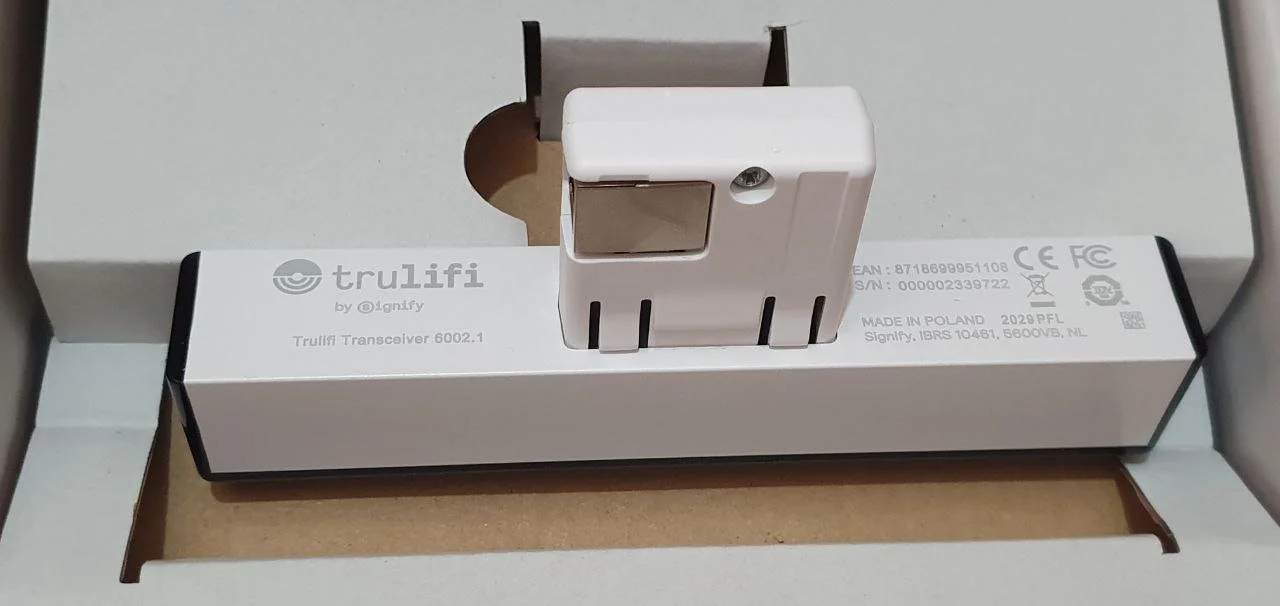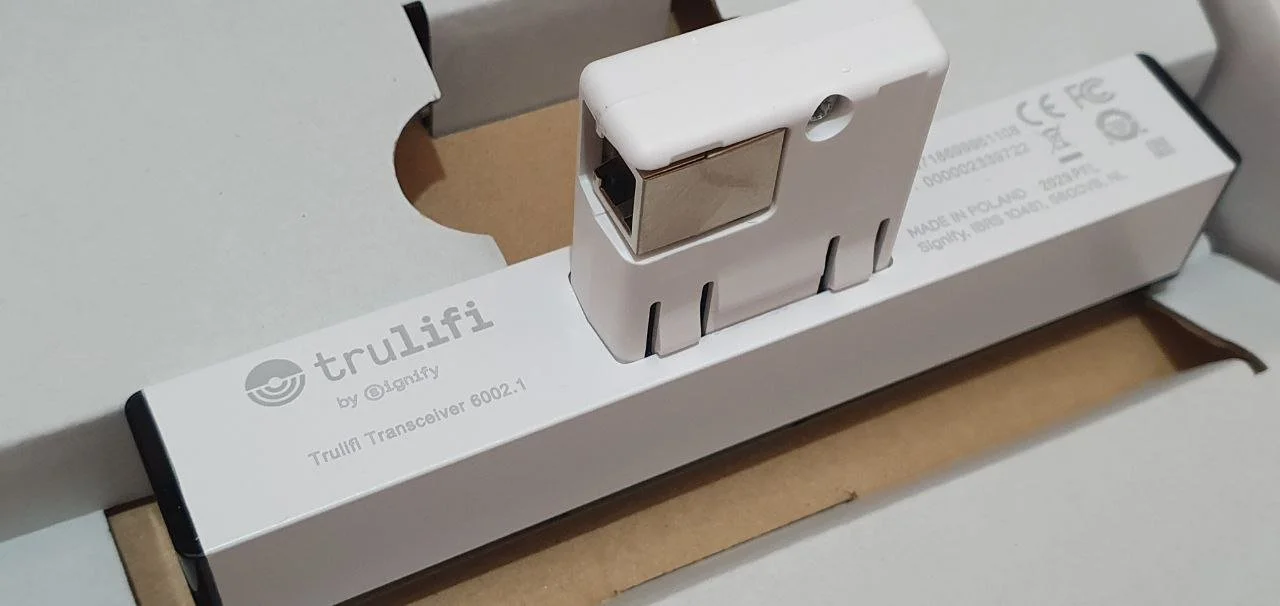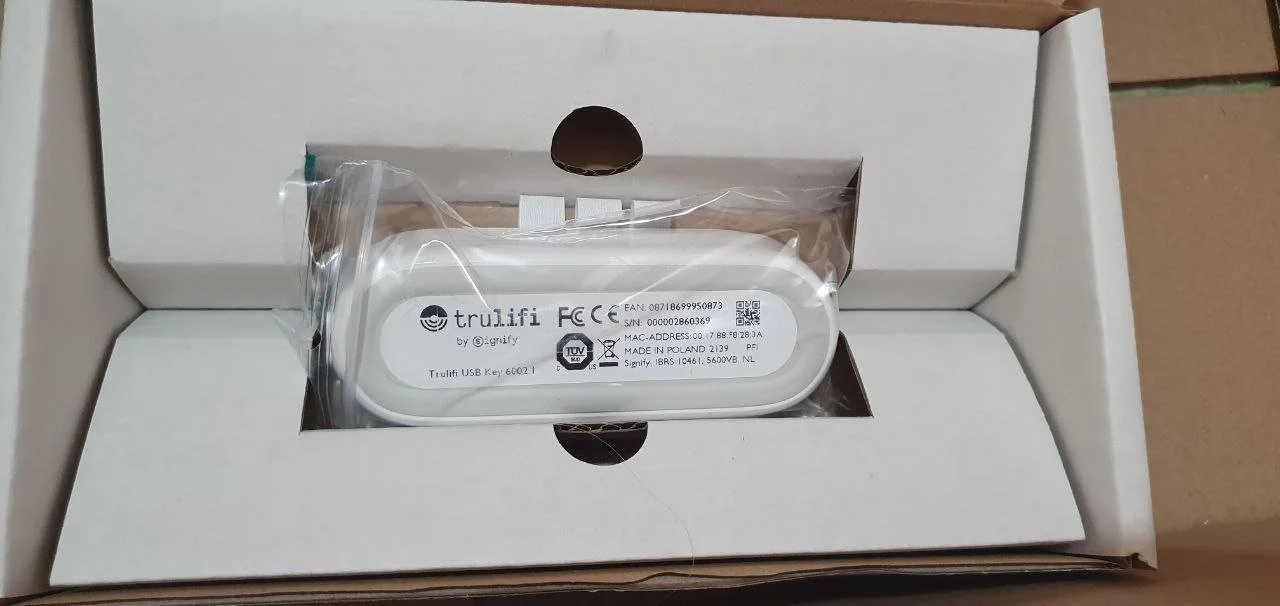
Trulifi Signify Discussed LiFi Technology on OWNii, LiFi and Blockchain Twitter Space Podcast

Table of Contents

    Trulifi Signify Discussed LiFi Technology on OWNii, LiFi and Blockchain Twitter Space Podcast

    Another Twitter podcast was held on Wednesday 13th of July discussing a few topics on Blockchain technology, OWNii and LiFi technology. The hosts of the podcast were Roger Williams, Founder of Mobile Blockchain Solutions and Donovan James. Chuks Livinus, Owner of LiFi Tech News, was in attendance. Ken Peterson, CEO of Global Greenology and the Brainchild behind OWNii, and Glenda Chambliss, Vice President of PCDSI (Power Community Development Systems, Inc.) were also in attendance as speakers.

    Tom Setaro, Head of Sales, Americas - IT LiFi Wireless Network Division at Signify, was a guest speaker on the Twitter Space Podcast discussing and answering questions about LiFi technology. Tom's current role at Signify is to work extensively with C-Suite at End Customers, Partners, and Internal Executives to bring this new tech to market. His main responsibilities include: achieving the ambitious revenue targets, building partner and OEM channels, hiring and coaching the Sales Team – Americas, and collaborating with internal teams to develop tools and processes.

    Below are some of the Podcast conversations about LiFi technology. Some of the conversations have been edited by Chuks from LiFi Tech News:

    Mr Ken Peterson: “This is what I guess it's all about where you can take your product, you can work it, you can do great things and ideas with it. But then at the end of the day, it all comes back to the internet. And over the past 33 years or so, since the internet first came on the scene, it's made a lot of billionaires because it's given you a platform that you can work from, and that you can spread the word, if you got news, you can share your products, if you got products, you can do all these things over the internet. And the Internet has proven to be a great asset to anyone who's trying to reach out to customers, you're trying to reach around the world at first, when we had sales territories and what have you, you were confined to your one little area, you one little space, you went out and you did your market and so your goods and what have you, and you will only, I guess, accepted by that smaller group and that smaller territory that you had. But then, with the invention of the internet and the introduction of it, you were able to reach people around the world that you never would have come in contact with had it not been for that. And the internet over the past 33 or so years has slowly evolved, where it's performing a lot better and is providing you all the tools that you need in order to promote your business. But at some point, the internet is getting ready to get bogged down because it's slowing down with so many people relying on it. So many businesses, governments, and everybody now are relying on the internet. And if we aren't fast enough to stay ahead of the curve on all the people that are coming on to the internet within is not going to be of any use to any of us when we eventually get to that peak where we max out. So now you got LiFi because WiFi got us to this point. And it was probably one of the most recognised transitions of the internet when we first started using it because everybody remembers the little dial tone and all the fuzzy and all that stuff that came on when we first got it. And then it evolved into, I guess the landline where you could now have direct access. And then we have fibre optics and all the other things that have evolved the Internet to where it is. And then we got WiFi, which was a radio wave that we were all used to use NG, and we were able to incorporate that into the intranet. And now we're getting ready to incorporate light into the intranet. So LiFi is the new intranet. LiFi has a lot of great benefits that we're going to be able to capitalise off of we're going to create jobs with it and a lot more people out there are going to be reliable on it because we have the connection with a few companies that are promoting all of their products. And we just happen to have one of them on the line tonight. Now this gentleman that we're going to be talking to was introduced to me by a lady by the name of Glenda Chambliss, and she's on call tonight as well. And what I'm going to do now is turn it over to Glenda so she can introduce Tom and where she knows and how we came in contact with him. And then we're gonna let Tom do his thing because he's got a lot of information that I know everybody will be interested in once they hear it. So if Glenda is available, I'll let you take it over to introduce Tom and what he's all about because you guys are gonna be thrilled. Once you learned who Tom is.


    Glenda Chambliss: Amazing. Thank you so much Ken Appreciate it. As he mentioned, my name is Glenda and I'm glad to be here, learning of all of the exciting disruptive technologies, and is just unique, that all of these things will complement each other. And we'll work hand in hand work together. And this is going to be a very unique thing for us to be the pioneers and make it all happen. And as Ken mentioned already, we have a phenomenal guy. His name, of course, is Tom Setaro. And he has been innovative in LiFi technology. As Ken mentioned, there are pretty much three primary companies. And we've been very pleased with this particular company because they're very fast at what they do. They're not only a part of a LiFi technology company but a part of Philips Lighting. So they are involved in quite a few things been around for centuries. And they're just going to make this LiFi technology move faster, and be able to reach around the world and get everything done. Now, of course, I've been involved with Ken with the OWNii, and the LiFi technology. He introduced our company PCDSI to it. And it's been a phenomenal relationship ever since. So we're in partnership together, working on all things to make sure that we're able to supply the market with the LiFi technology and to be able to supply them with whatever solutions that they need for their company. And so who we have on tonight. But he is certainly the head of sales for commercial accounts in all of America. America is I should say because he covers the US, he covered Canada. He covers Central and South America. So he definitely has a broad area that he covers in making sure that everybody gets everything that they need for the LiFi in being able to do what their needs are to provide solutions and smart communities and hospitalities and schools in aeroplanes and I'm not going to steal his thunder.

    Donovan James: “So let's why don't we just let Tom short introduction. I know you've been introduced already, but if he wants to say anything about you know what you specifically and your company specifically do?

    Roger: “Also another question, how did you get into LiFi as well?”


    Tom Setaro: “Okay, so my name is Tom Setaro. I'm the head of sales for all of the Americas for Signify corporation. Signify cooperation is the largest LED manufacturer in the world. We own 16 brands, one of the brands more commonly known as Philips Lighting, Philips to nature connect, and another brand name specifically towards agriculture or commercial video wide spectrum products to LiFi is one of the divisions.

    And so, we're the largest manufacturer globally for LED products. With that being said, I think the question was, why did I join Signify? So I've been with Signify for a little over two years. I was with Cisco for a number of years prior to that. And then a few other networking companies riverbed, Broadcom Brocade. So I've been in the IT networking space throughout my entire 30-year career. And then when I became introduced to LiFi, using, as you described earlier, lightwaves instead of the radio spectrum, I kind of saw where the future this would be going. And so I left Cisco, and I joined, Signify to head of sales for the Americas. I see the total addressable market in the future to be very bright. So I wanted to get myself on my career personally, on a train that was kind of moving north. So that's why I joined.


    Donovan James: “Awesome. So you know, on this podcast, we've talked about what is LiFi, but can you tell our audience, what is LiFi from a company that produces the actual product?


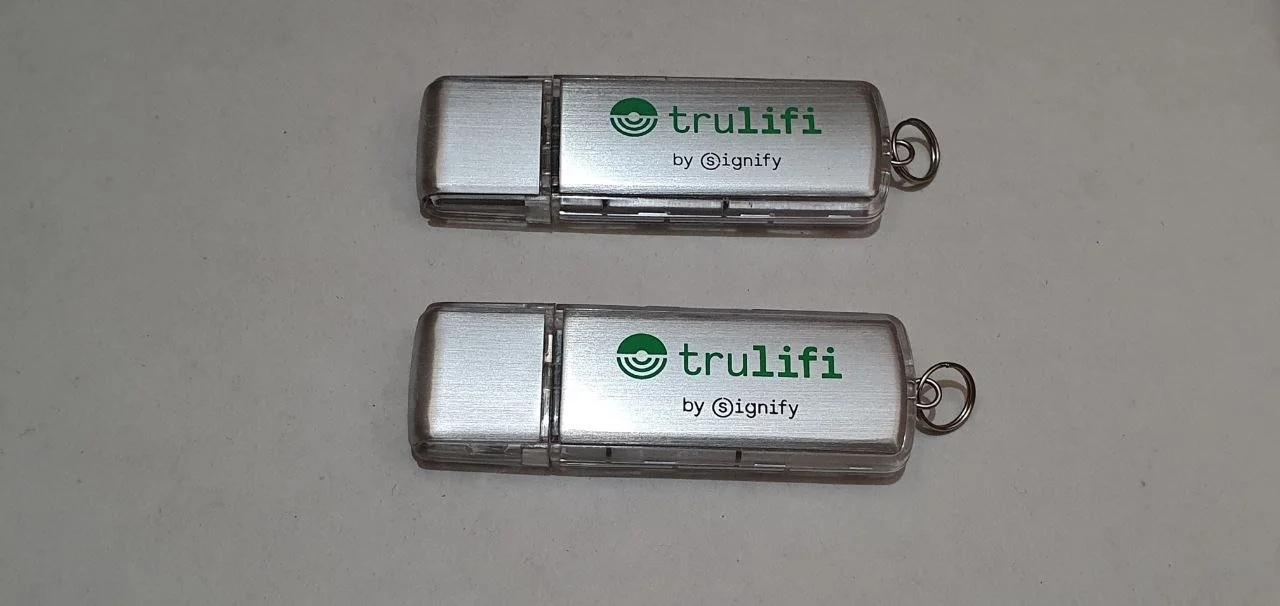
    Tom Setaro: “So LiFi. And I guess I just talked about it from a basic standpoint for this podcast. LiFi is a wireless communication technology. And it uses light waves, instead of radio waves, the radio spectrum is very constrained. LiFi, however, is capable of transmitting data over light at high speeds. And we use the light spectrum tied to visible light or infrared light. LiFi is mostly used in areas where wireless is a must-have. But where the use of radio is not available. Radio doesn't work reliably, or is just flat out by governance not allowed. So devices need a LiFi receiver, like a USB key and a transceiver connected today. Our system works with Windows, it works with Mac OS. And then we proceed in the future that the LiFi technology will be available on tablets, smartphones, AR, VR, and XR. Which is virtual reality mixed reality, or augmented reality, where LiFi is integrated directly into the device. So that's what LiFi is, it's basically a wireless communication for sending data packets. And instead of using radio, it uses light.

    Donovan James: “Okay, okay. So is, what do you think? Is LiFi ready for the world? You know, in terms of like supply and demand?

    Tom Setaro: “Well, yes, the product is readily available for sale. And it's been installed in a lot of locations around the globe, but the footprint of LiFi is extremely small compared to what WiFi is. So, there is an immense total addressable market which can be penetrated yet. So as this product continues to grow in awareness, and as a normal evolution of IT products would go, we will see a much larger market share. But the research and development have been done over the last number of years, and we're starting to ship to the second generation.


    Roger Williams: “I got a quick question. How do you think LiFi is gonna match up with the Internet of Things? I know the Internet of Things is a very big industry right now. And where do you see LiFi, helping the Internet of Things, blockchain mining and inexpensively the gaming community? How is it going to have an effect on all these industries that are getting ready to open up the internet, per se?

    Tom Setaro: “Yeah, that's a good question. So to us, you know, we look at the data globally, and the worldwide data volume for Internet traffic doubles every two years. So you know, we go back to let's say 2018, You're looking at about 20,000 petabytes per month. Now you're looking at close to 80,000 petabytes per month in data traffic. So when you start seeing cars coming online, and you have to see that you know what, well talk to me about cars coming online. Well, if we're gonna have autonomous driving or driverless vehicles, they have to communicate with their environment and continue to know where they're going, what maps they're going to announce, they're going to take or they're going to be safe for people. And so you're going to have an internet connection tied to every lamppost, every highway sign, every Tollbooth, every car, and then for the drivers inside the car, what are they going to be doing, someone's not going to be driving, they're going to be sitting, communicating, whether it be on a, on a wireless device for data, or communicating, you know, via the internet, video conferences, or other people and other cars are doing commuting. Then you have all the wireless remote workers.

    As we started moving after COVID to a lot of remote environments, the amount of internet traffic that has moved to the household has tripled. And so now your Xbox is connected, your desktop workstation is connected, your refrigerator, your stovetop, every all of these devices are connected and communicating in the background, consistently. So as that data continues to grow, you start to say, well, how can we handle all that network traffic? As I heard described earlier, the cellular 4g bandwidth is getting close to maximum capacity.

    And so 5g has been created to create more bandwidth. Well, one of the concerns about cellular on the 5g side is the cost of it. The government sell to the wireless carriers, and there's bandwidth for billions of dollars, which they, in turn, pass on to the users. And that's why a lot of times people will turn off their cellular data connection or will only receive the internet wirelessly because they don't want to pay that cost for how many gigs per month they transfer on their phone.

    So then WiFi is another way to connect wirelessly. Well, that works great except it's only using radio for how many times have you gone into an area where they said well don't turn your cell phone on, on a plane, in surgical intensive care inside of the hospital. The military and the government fulfilled positions concerned about people hacking them, or jamming them.

    The airports with the FAA just told Verizon and ATT not to put any 5g towers near the Airports Worldwide because the planes have an altimeter, which is a radio altimeter and it uses radio frequency to determine how hard the plane is from takeoff and landing. And if it was to interfere with someone who was connecting to Facebook, on their 5g phones, that can be a life and death scenario. So they just say you know what, no 5g Around, around the towers and around the airport landing strips. So, 5g does have interference, it does have concerns. There are also a number of studies out there that you can Google about the safety of 5g and 5g to be able to work outside the 4g spectrum. It has increased the amplitude and the frequency of those radio waves. So basically, if you would have a stereo system 4g would be at a level two-volume, and with 5g, it turns it up to a level 10 volume. And so it's blasting the airwaves with the 5g things, schools out in Europe, in Italy, in Germany and France, they're starting to prevent them from going inside the school systems because of health reasons. There are a number of groups out there and you're starting to investigate how safe is 5g or not. You know, having confidence in the amount of billions of dollars that are put into these technologies, they'll figure out a way to make sure that it's safe. But they are rolling it out fast and there are concerns that go around it.

    So you know, LiFi uses visible light and uses infrared light. These have been used for many years like in their television remote, infrared, you know a fibre optics really using light to transmit data. But this isn't really the first time it was a commercial application for using light to transmit data packets wirelessly. So it's not a replacement for cellular. It's not a replacement for wireless. Think of it as a replacement for hardwire cable. Think of it as it another flavour of ice cream. It's not chocolate. It's Rocky Road or strawberry, but it gives you more options. Each has its advantages. And each has its concerns, which makes it another great possible solution. Where the technology is today, we're finding niche markets that see its use cases and the applications for it. As time goes on, and the product continues to develop and evolve, as you would expect with any IoT product, it gets miniaturised, the price gets commoditized, and the speed gets increased, no more expecting a substantial increase in adoption as we go forward.


    Donovan James: “Okay, so, when do you think LiFi will be more mainstream?

    Tom Setaro: “Yeah, that's a good question. So, you know, from my viewpoint, LiFi is the technology that enables those groups that you just described like gaming, and those kinds of areas, it's like kind of talking about the highway, you know, people talk about the cars on the highway and how fast they go, they don't talk about the highway itself. So we're the technology that enables, those are the areas I like to describe it as a use case, versus applications. So for the use case, we would say our technology allows you to have a consistent stream of data. Light is much more stable than radio, it doesn't respond to electromagnetic interference. So it stays consistent. It doesn't have latencies that radio waves will have from bouncing off metal objects. So with a stable connection, well, that would be the use case, the application that might want to support that use case, or find that use case, beneficial, would be gaming, you don't want to be on a game. And all of a sudden, in the middle of Halo, your player freezes up, because your WiFi connection froze up, whether it be someone turned on a microwave, or your neighbour has a very noisy WiFi IoT device, and then yours freezes up. And then because of it, you lose your advantage in the game. And for gamers that use that application need is very important to them. And so how could they fix an inconsistent data stream with latencies and drops that they're getting on WiFi? Well, they can use, they can, they can convert their, their highway to LiFi. And they don't have the starts and stops. So besides streets, they would be on the highway, there will be high speed, it would be consistent, it would be stable. So we're kind of the pavement to enable these other applications that are out there supporting IoT gaming, things of that sort. So you don't hear about it as much in the application. But the networking groups who are very tied to the infrastructure of it, that's where the sound bites are, and the communication itself.


    Roger: “I also want to kind of jump behind you and talk about also traders. You know, trading is like a big thing in our country. You know, whether it be crypto or whether it be, you know, just regular stocks. LiFi probably would definitely affect trading as well, right?

    Tom Setaro: “Yeah. So again, so what you would do is you would put up a use case to say, who would desire a high-speed, stable connection? That would be the question that would be posed. And then every industry is going to have some kind of response. You're right for financial institutions that are involved in trading. Yeah, I don't, you know, if I'm someone who is doing arbitrage, and they're transacting deals, you know, 1000s per second, or hundreds of 1000s per minute, they have a drop in technology they can monetize with that drop cost them, they couldn't do 10,000 trades that minute, and in trade with another than $1. And they all of a sudden drop their connection for one minute. Well, that just cost them $10,000. So they can monetize that very directly. And that would be their application and their cost. And the gaming world as we just used an example that would cost a user a life. And again, that may not mean that much monetarily, but emotionally to the user, that could be substantial. So again, so we put the use case out there. That can go for military, you can go for federal, it can go for a lot of areas where having no downtime is important. And you hear about things like even on the cloud, on the web, and you hear those terms, you know, five nines or four nines that determine how much downtime they have in the course of the year. And then can you convert that downtime into minutes, which then time is money and then into dollars? So how much does that downtime cost you monetarily? And then those are the folks who would say, yeah, consistent high-speed cable was paramount to me and my business. One of them is that LiFi plays well.


    Donovan James: “Okay, so along the lines of those downtimes, you're talking about, I mean, I've been watching, as much as America, I'm sure when it comes to streaming, I'm not as big as in gaming, but I love watching movies. And I know my WiFi is not the best, you know, all the time, I'm in the middle of a movie and it goes down. But what do you think? You know, when when you're comparing the two? What do you think? Like, do you think LiFi is better than WiFi? And if so, why?


    Tom Setaro: “So there's a lot of reasons why your TV set can put up those three dots and not be connected. It could be because of your ISP provider, it could be your routers having problems, there can be a number of reasons why that happening, and your wireless connection is just one of many. But if that is what the cause of it is, then yes, then you can be in an environment where maybe your WiFi access point needs to be replaced, because it's an older version, and it's not keeping up. Or it could be the fact that you have a microwave. A lot of people don't have shielded microwaves or turn the microwaves on and the WiFi goes down for a period of time if you have a lot of noise. So the more IoT devices that you have your refrigerator, your stove, your Xbox, your wireless laptop, your tablet, your phone, these are all hitting the antenna have the WiFi simultaneously. And then the antenna has to try to juggle all of them. And it gets overloaded with the number of people that want to send and receive it. And so because of that, it can't accommodate all signals simultaneously. And so then all of a sudden, your phone doesn't get the response. And so maybe that website hangs for a couple of seconds, which you may or may not notice, or your refrigerator can communicate on its temperature, probably not that big of a deal.

    But now you're streaming a movie, and then your movie holds up. You notice that immediately in every pore stop, pause, stop. And as a business user, I noticed that in my Zoom meetings, or MIT's meetings, and the video pauses, or gets choppy. So So one of the use cases, and there is only one of the use cases that we're describing where LiFi has benefited over WiFi is in the consistency of the segment. And then those are some of the applications that are tied to the other use cases that are out there. Security. It provides a physical layer of security that WiFi doesn't provide. It has a wider bandwidth, the waves are shorter. And by having shorter ways you can handle a lot more data on it. So a lot of people talk about speed. Oh, is it faster? Well, if you were to tell me you're going to put a car on the highway and the car goes 55 miles an hour, and I put my car on the highway. And it also does 55 miles an hour. is one faster than the other? Well, the answer is no. But LiFi because it has 10 times the bandwidth. So are the cars going faster now, but am I carrying more data, a substantial amount, and that 10 times more data. So now if you're uploading and downloading data, that movie can buffer a lot more data and have it sitting there local on your TV set. So even if it did have some level of interruption, you would never know because it's already buffered enough to character not the next two to three seconds, but maybe 20 or 30 minutes. And that's because you can do this throughput in the background. And so again, the user experience is improved. So throughput is better, security is better. Consistency of connection is better. And then those are the use cases and the applications that come with it. I think the other party questions do I think, life algorithm washroom or WiFi as new technology. And as new technology goes through a normal evolution curve.

    As time and Development continued with the products, as I mentioned before, they get miniaturised and commoditized. And then eventually, the big thing for the big jump was the one they get integrated into the devices where when you buy an iPhone, or you buy a Dell laptop, it's just gonna have WiFi in it. That's not the case today. So today, we have to use a USB key. And we use a transceiver for the infrastructure and the connection between the two. But the technology by far is a great innovation, it's kind of like when we were back in the late 90s. And people had those SD cards that they put in with the antenna on the laptop so they can communicate. And then eventually they integrated those circuits, they made them a lot smaller. So they're just they're the size of a thumb. Now, they're integrated into laptops. And so you just buy and when you buy a laptop, you get it out of the box, that's where this technology needs to go if it's going to get caught on fully mainstream. But the technology is a great innovation, it's got a fantastic future ahead of it. And so that's where we see the total addressable market. And then the long-term vision is where there is light, there's data. And you don't have to think about it to come into a room. You know, light bulbs are on or even if they're off, they don't need to be on for LiFi to work. It works with infinite infrared, which is not visible light. But wherever you would have light, you would have data, you don't have to think about, oh, I have to have an access point. And I have to have radio, I want to have lights over my desk where I work, wherever there's like there's data, that's where it's gone. And LiFi is the way to go.”


    Roger: “So basically, you're saying is LiFi, mainly a rural area solution for service? Is it going to penetrate the urban markets?


    Tom Setaro: “Yeah, so right now it's more of a business solution than it is a more of a consumer solution. It'll become a consumer solution. When you walk into a Starbucks, and they have LiFi infrastructure in place, then you'll be able to say, I've got a LiFi enabled device, and I can use it there. So it's not there yet. So it's not a mass adoptable consumer solution today. And I say today, in terms of why would LiFi exists, or as a solution. Yeah, so everything offers a different thing. But the way that I received that question is, you know, is a car you know, gonna get replaced by a bus. And that's kind of what LiFi and WiFi are, there will always be WiFi. And there always be a place for WiFi. WiFi is ubiquitous today with anyone who says kind of wireless outside of cellular. So those are the two wireless solutions. There are other ones out there, right? There's Bluetooth, there's NFR there's a new one that Apple just pushed out when you go on iPhone or an iPhone and you transfer massive pockets. Each one has benefit and use. So it's where it is a carve out the market. What is the total addressable market that these solutions can have? Wireless WiFi we know one of its Achilles heels, has been kind of explained already is that there's an inconsistent connection. And there's latency, the speed that you get to your Desktop is determined by your ISP. So, urban areas or rural areas even more so that have slow internet speeds, it's more a function of the service provider putting out slow speed than it is their WiFi connection.

    In fact, in most meetings, most videos, and the movies that you're talking about, it's not the speed that you're transferring at, that's causing the problem. It's the WiFi dropping coming back online, dropping and coming back online because it's juggling multiple wireless devices simultaneously. So, it drops for a millisecond, you don't say it drops for a second, maybe you pick up on it drops for a half a minute, now, you'll begin to notice that the drops are two to three minutes or five minutes or five minutes. Now you're frustrated, and you're calling someone. So these continue constantly because the interference is constant. And so the devices continually try to work ways around it. And the latest solution because it's gotten so congested is to come out with 5g. And it's just a way of just turning up the amplitude of 4g. That's really simplifying what 5g is, but in essence that whether it is to LiFi just says forget it, let's get off the streets, I got a whole brand new empty Highway over here that you can travel on, you can't go further than the speed limit that's set by the government, let's say making an artificial analogy. But the road is empty. There are no potholes, there's no stop signs, there's no red lights, you get on and you go. And so that's where LiFi is kind of coming to market. But it can't replace WiFi today, you can't use it on any endpoint or device that doesn't have a USB port, because it needs that USB key to be attached to it. When that eventually gets integrated, then you don't have to worry about that. So today business users who see the advantage of both paying for LiFi and WiFi together in a hybrid environment, it makes sense for the individual user for the home users. We have a lot of executives who are saying you know what, I want LiFi on my home. My kid comes home from school. And every time he gets on the Xbox, my Zoom meetings, crash, or, Hey, you know what I'm transferring, very secure private data, my financials, my r&d, whatever, I don't want someone outside my building, or outside my house, stealing my wireless data packets, and creating a security problem for me.

    So with LiFi, they know they're never going to have interference from the Xbox or the refrigerator, or the noisy neighbours whatever. And they're never going to have a security problem working wirelessly because it works with line or line of sight security. So again, what is your application in need? And what is the best technology that's going to support that need? And LiFi certainly supports those multiple areas, those use cases that I said are better than WiFi. Now he turned to me and said, I just want cheap, cheap wireless, WiFi is not the answer. WiFi is a much better solution. It's less expensive because it's been commoditized for the last two decades. And radio, you only have to put up one access point. Because radio goes through walls, it goes through windows, it goes through floors. So you put one up and you can cover your entire building. That's great. If you're worried about infrastructure costs. It's not great if you're worried about security, and people pulling packets out of the air because that part that CFO or that executive working from home is at his desk. His signal can be seen from 10 feet, 100 feet, and 100 yards. And so that's where the security leak or the breach comes through. If you go out there and Google, NSA, national security, NSA, no WiFi, they just put a public out there just put a post out there publicly on Eric called zero trust and WiFi and they will not allow any federal agency or military person to now using guest WiFi because they recognise the threat of data being stolen.”


    Roger: “Also, I guess safety. I mean with the radio waves. I mean, that's another issue as well having that, you know, strung up throughout the whole house or you know if that's something that you're willing to risk. You know, having the radio waves throughout your whole house as well. Right?


    Tom Setaro: “Yeah with 5g because 5g Now is a technology that also doesn't go through walls, which actually there they find as a detriment If you have to put 5g transmitters in all of your rooms, and the amplitude is getting turned up, I mean, it's exponential the number of radio waves that you're bombarding your body with. With 5g versus the 4g that's out there today, it's exponential. And we don't know what that's going to do for a long time. There are studies, and there's a lot of posts, and there's a lot of communities talking about that, that you can go research.


    Roger: “What economic opportunities come from that?"


    Tom Setaro: “Well, so everything works backwards, you know, ROI, and our I'm gonna allow, I guess, you know, everyone to identify what their own individual benefit and both financial or you know, performance or whatever capabilities that they determine are beneficial for them. From my standpoint, the total addressable market of LiFi is enormous. I moved my personal career from a well-established 800-pound gorilla networking, which is Cisco, to come to Signify. And so I believe in the technology and where it's going to where it's gonna go. It's in the early stages. And so for some people, that could be scary, because well, hey, is not a proven solution yet. But I'll tell you, the alternative is once it becomes a proven solution, then it's going to be well, hey, there's, there's not a lot of everybody's selling it, and everybody has been, where's my opportunity? Why? So we're in the early adopters' phase or the product development is moving leaps and bounds. We, a few years ago, didn't have a product itself and we came up with our second generation. The third generation should be out beginning of the New Year potentially. We have competitors who are entering the marketplace, which is good because the more awareness that gets of the technology, the more the public will know about it, and the more adoption that will be. So we are absolutely in an innovative and awareness space. So I have not come across anyone that I've spoken to when I begin to explain the technology that doesn't get excited about it. And where there's excitement, generally, people are going to want to say how can I have it? And where can I use it? And we continually have and again, I break it down to use case applications. I have a lot of applications that come back to me that I didn't even think of our will do you know, inside of bank vaults. The door is magnetically sealed. We can't use WiFi and I didn't know that. You know, you can make DVDs. So we can transmit wirelessly from inside the bank bowl. Well, that's great, because we keep running in and out of the bank wall to enter. Again, I have no idea. Okay, so I've worked for banks over casinos that had bank walls, also. And so now that there's a whole other application. So, you know, there's so much out there that can be done. We're not even the eyedropper of the iceberg at this point. So I'm just leaving it at that in terms of opportunity.”


    Roger: “And then I got one more question. From a Trulifi perspective, what are the challenges in bringing LiFi systems and other LiFi products to the mass market users?


    Tom Setaro: “It's just a matter of time. The product is still going through its innovation phase. It'll continue to get smaller and miniaturised into existing products, tablets, smartphones, and laptops out of the box, it'll increase the speed; the opportunity for light to be faster than radio is, I think obvious. Light travels substantially faster than radio could ever travel. You hear about planes, travelling at Mach one, Mach two, Mach three, where mach two is two times the speed of sound, that's 780 miles per second, light travels at 186,000 miles per second, but it's, it's substantially fast. So, it can outperform radio in so many different capacities, also, because the light wave is shorter if you carry 10 times the amount of data. So you think about it yourself. I've got a technology which is safer, faster, and can carry more data. Cheaper, light spectrum versus a cellular spectrum? Yeah, I think it's just a question of when, how fast can you get these products to evolve? Where the components are not in a USB key, but integrated into the device? How could before we ramped up the speeds commoditization, as we get more manufacturers and competitors who are selling these same integrated circuits will commoditize and bring the price down? All those things will lead to faster adoption.


    Podcast Recording


    You can also listen ad download the raw audio recording below from the part where LiFi was being conversed:


    Li-Fi Conference 2022


    The Li-Fi Conference 2022 Edition was a great success. Li Fi Tech News will very soon write articles on the topics treated at the Conference.

    What is LiFi?

    LiFi, also known as "Light Fidelity" is a wireless optical networking technology, which uses light-emitting diodes (LEDs) to transmit data. In 2011, professor Harald Haas made a LiFi demonstration at the TED (Technology, Entertainment, Design) Global Talk on Visible Light Communication (VLC).

    VLC uses light as a medium to deliver high-speed communication like Wi-Fi and complies with the IEEE standard IEEE 802.15.7. The IEEE 802.15.7 is a high-speed, bidirectional, and fully networked wireless communication technology-based standard similar to Wi-Fi's IEEE 802.11.

    How does LiFi work?

    LiFi is a high speed, bidirectional, and fully networked wireless communication of data using light. LiFi constitutes of several light bulbs that form a wireless network.

    When an electrical current goes through to a LED light bulb, a stream of light (photons) emits from the lamp. LED bulbs are semiconductor devices, which means that the brightness of the light flowing through them can change at extremely high speeds. The signal is sent by modulating the light at different rates. The signal can then be received by a detector that interprets the changes in light intensity (the signal) as data. Also when the LED is ON, you transmit a digital 1, and when it is OFF, you transmit a 0.

    LiFi Benefits

    The primary benefits of LiFi are as follows:

    Security: Provides entirely secure access. Where there is no light there is no data.

    Safety: Does not produce electromagnetic radiation and does not interfere with existing electronic systems.

    Localisation: Allows localisation due to the small coverage area of LiFi access point - localisation can be used for very precise asset tracking.

    Data density: Provides ubiquitous high-speed wireless access that offers substantially greater data density (data rate per unit area) than RF through high bandwidth reuse.

    Credit to Oledcomm

    LiFi Applications

    LiFi can be used for so many applications and the list is increasing every year. You can read our updated list of Li-Fi applications at the following link:

    https://www.lifitn.com/blog/2021/2/13/top-30-li-fi-applications-updated-list-including-potential-applications

    Credit to pureLiFi


    LiFi Systems Reviews by LiFi Tech News


    OLEDCOMM LIFIMAX KIT REVIEW - ONE YEAR IN

    We reviewed the LiFiMax kit produced by the leading French LiFi company Oledcomm. We bought this LiFi kit system at the end of 2020. After over a year of use, we decided to write a review of this LiFi system. We looked briefly at the profile of Oledcomm, a brief history of the LiFiMax system, the Kit box contents, some testing and performance results of this LiFi system, the customer experience and our own verdict (the good and the bad points) of the LiFiMax kit.

    You can read the review on this link:

    https://www.lifitn.com/blog/lifimaxreview


    SIGNIFY TRULIFI 6002.1 STARTER KIT SYSTEM REVIEW


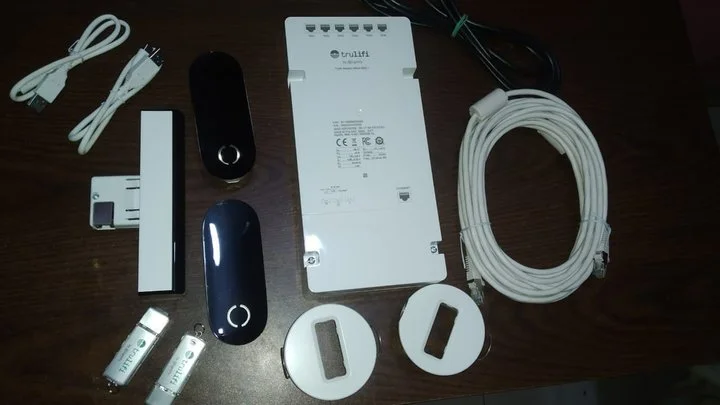
    We also reviewed the Trulifi 6002.1 starter kit produced by Signify, the world leader in lighting for professionals, consumers and lighting for the Internet of Things. We got this LiFi kit system with the help of PCDSI and Signify around August 2021. In a similar fashion done with our previous review of the LiFiMax kit a few months ago, we will look briefly at the profile of Signify, a brief history of the Trulifi 6002.1 kit, the Kit box contents, some testing and performance results of this LiFi system, the customer experience and our own verdict (the good points and the bad points) of the Trulifi 6002.1 kit.

    You can read the review on this link:

    https://www.lifitn.com/blog/trulifi6002review


    In conclusion, if you are also interested to hear more information about the OWNII Coin or enquire about LiFi devices such as the LiFiMax and Trulifi, you can contact us through our chatbot or by sending an email through our contact us form. If you enjoyed this post and would like to hear more updates about LiFi technology, subscribe to our newsletter. Don’t forget to subscribe to our social media accounts. You can also join our Telegram group about LiFi technology on this link:

    https://t.me/joinchat/FMzOmsEKyJFrU6Af


    pureLiFi Secures £10 Million From The Scottish National Investment Bank

    Table of Contents

      pureLiFi Secures £10 Million From The Scottish National Investment Bank

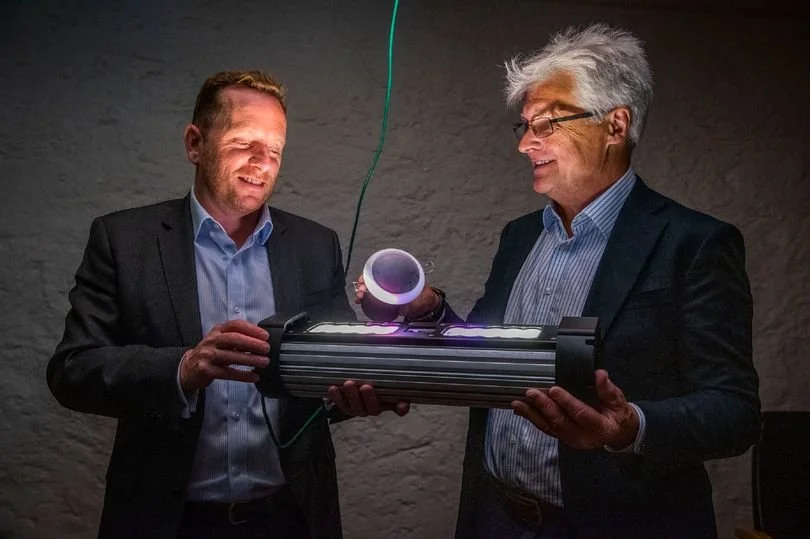
      Photo credit to Chris Watt

      In today’s article, pureLiFi announced an investment of £10 million from the Scottish National Investment Bank.

      The investment aligns with the Bank’s mission to invest in innovation and industries of the future, creating high-value jobs in world-class businesses.

      pureLiFi CEO Alistair Banham stated the following statements:

      “The Bank’s investment will help us achieve our vision to connect everyone and everything with LiFi.

      “We introduced our technology to the world from Scotland and it is important for us to grow our company and ecosystem from here.

      “Our vision is for Scotland to be a recognised centre of excellence for LiFi. In the future customers from around the world will come to us for our innovative technology and leverage the wider photonics ecosystem that already exists here in Scotland.”

      The Bank’s investment will allow pureLiFi to further develop new technologies while opening up additional markets in areas such as mobile phones, tablets, wearables and other connected devices.

      LiFi solves the biggest challenges faced by current wireless communications technologies by decreasing congestion, improving security and quality of connection

      Jimmy Williamson, Executive Director, at the Scottish National Investment Bank stated the following:

      “The Bank’s investment will support pureLiFi as they look to scale up their operation, allowing them to take the innovative technology to the global market.

      “By backing them the Bank is also investing in highly skilled research and development jobs in Scotland and endorsing pureLiFi’s vision to create a centre of excellence for LiFi.

      “We are excited to provide them with the growth capital that will help them reach the next stage in their development.”

      pureLiFi

      pureLiFi develops technology for communication networks that integrates data and lighting utility infrastructures. It offers a LiFi-enabled device that converts the beam of lights into an electrical signal. The signal is then converted back into data. The company was founded in 2012 and is headquartered in Edinburgh.

      Technologies such as WiFi, 4G and 5G use radio frequencies to transmit data, which produce large areas of radio frequency emissions that are easy to detect, intercept, and can cause overcrowding resulting in slow speeds and unreliable communications due to increased RF congestion. LiFi uses light rather than radio frequencies resulting in wireless communications that are more reliable, significantly more secure, and simpler to deploy.

      The Scottish National Investment Bank

      The Scottish National Investment Bank is a development investment bank, established and funded by Scottish Ministers on behalf of the people of Scotland.

      Development banks seek to invest where the private sector is not providing sufficient investment to businesses or projects that support the development of a country's economy.

      The Bank has been established to operate commercially and is operationally independent of the government.

      The Bank was launched in November 2020 to be a development investment bank for Scotland, delivering patient, mission impact investment to the Scottish economy.

      The Bank will provide patient (long-term) capital to businesses and projects throughout Scotland to support the development of a fairer, more sustainable economy.

      The Bank has the ambition to not only invest its allocated public capital but to encourage additional private capital to invest alongside it, to support the delivery of the missions.

      Scottish National Investment Bank plc is a public limited company incorporated and domiciled in Scotland under the Companies Act 2006 whose shares are not publicly traded. The company registration number is SC677431. The registered address is Waverley Gate, 2-4 Waterloo Place, Edinburgh EH1 3EG.

      The Scottish National Investment Bank has three legal entities in its structure. The Scottish National Investment Bank plc, a holding company for the group; Scottish Investments Limited, the company through which all investments are made and Scottish Investment Services Limited, the operational services company to the group.

      The Bank invests in Scottish businesses, projects and communities to deliver environmental, social and financial returns for the people of Scotland.

      Investments in debt and equity are made on commercial terms based on the needs of individual projects or businesses. The Bank seeks to invest widely and diversely and approaches every opportunity on an individual basis so that the financing offered is tailored to the needs of the individual business or project seeking support.

      The Bank invests in businesses based in Scotland, projects based in Scotland, or businesses seeking to move to Scotland. Typically the Bank will invest in businesses and projects seeking more than £1m in investment support (debt or equity).

      All investments must deliver both commercial returns and mission impact returns that support at least one of the Bank's missions.

      Li-Fi Conference 2022

      The Li-Fi Conference 2022 Edition was a great success. Li Fi Tech News will very soon write articles on the topics treated at the Conference.

      What is LiFi?

      LiFi, also known as "Light Fidelity" is a wireless optical networking technology, which uses light-emitting diodes (LEDs) to transmit data. In 2011, professor Harald Haas made a LiFi demonstration at the TED (Technology, Entertainment, Design) Global Talk on Visible Light Communication (VLC).

      VLC uses light as a medium to deliver high-speed communication like Wi-Fi and complies with the IEEE standard IEEE 802.15.7. The IEEE 802.15.7 is a high-speed, bidirectional, and fully networked wireless communication technology-based standard similar to Wi-Fi's IEEE 802.11.

      How does LiFi work?

      LiFi is a high speed, bidirectional, and fully networked wireless communication of data using light. LiFi constitutes of several light bulbs that form a wireless network.

      When an electrical current goes through to a LED light bulb, a stream of light (photons) emits from the lamp. LED bulbs are semiconductor devices, which means that the brightness of the light flowing through them can change at extremely high speeds. The signal is sent by modulating the light at different rates. The signal can then be received by a detector that interprets the changes in light intensity (the signal) as data. Also when the LED is ON, you transmit a digital 1, and when it is OFF, you transmit a 0.

      LiFi Benefits

      The primary benefits of LiFi are as follows:

      Security: Provides entirely secure access. Where there is no light there is no data.

      Safety: Does not produce electromagnetic radiation and does not interfere with existing electronic systems.

      Localisation: Allows localisation due to the small coverage area of LiFi access point - localisation can be used for very precise asset tracking.

      Data density: Provides ubiquitous high-speed wireless access that offers substantially greater data density (data rate per unit area) than RF through high bandwidth reuse.

      Credit to Oledcomm

      LiFi Applications

      LiFi can be used for so many applications and the list is increasing every year. You can read our updated list of Li-Fi applications at the following link:

      https://www.lifitn.com/blog/2021/2/13/top-30-li-fi-applications-updated-list-including-potential-applications

      Credit to pureLiFi


      LiFi Systems Reviews by LiFi Tech News


      OLEDCOMM LIFIMAX KIT REVIEW - ONE YEAR IN

      We reviewed the LiFiMax kit produced by the leading French LiFi company Oledcomm. We bought this LiFi kit system at the end of 2020. After over a year of use, we decided to write a review of this LiFi system. We looked briefly at the profile of Oledcomm, a brief history of the LiFiMax system, the Kit box contents, some testing and performance results of this LiFi system, the customer experience and our own verdict (the good and the bad points) of the LiFiMax kit.

      You can read the review on this link:

      https://www.lifitn.com/blog/lifimaxreview


      SIGNIFY TRULIFI 6002.1 STARTER KIT SYSTEM REVIEW


      We also reviewed the Trulifi 6002.1 starter kit produced by Signify, the world leader in lighting for professionals, consumers and lighting for the Internet of Things. We got this LiFi kit system with the help of PCDSI and Signify around August 2021. In a similar fashion done with our previous review of the LiFiMax kit a few months ago, we will look briefly at the profile of Signify, a brief history of the Trulifi 6002.1 kit, the Kit box contents, some testing and performance results of this LiFi system, the customer experience and our own verdict (the good points and the bad points) of the Trulifi 6002.1 kit.

      You can read the review on this link:

      https://www.lifitn.com/blog/trulifi6002review


      In conclusion, if you are also interested to hear more information about the OWNII Coin or enquire about LiFi devices such as the LiFiMax and Trulifi, you can contact us through our chatbot or by sending an email through our contact us form. If you enjoyed this post and would like to hear more updates about LiFi technology, subscribe to our newsletter. Don’t forget to subscribe to our social media accounts. You can also join our Telegram group about LiFi technology on this link:

      https://t.me/joinchat/FMzOmsEKyJFrU6Af



      Invitation To Attend and Listen to a Twitter Space Podcast on LiFi Technology and Blockchain Technology

      Table of Contents

        Invitation To Attend and Listen to a Twitter Space Podcast on LiFi Technology and Blockchain Technology

        In today’s article, we will discuss a podcast focusing on LiFi technology and Blockchain technology. Since the beginning of this week, a podcast has been set up on a Twitter space. This Twitter space aims to be a platform where people can have conversations on any topic in relation to LiFi and blockchain.

        As stated by Twitter, Twitter Spaces are where live audio conversations happen. These ephemeral, live audio conversations allow for open, authentic, and unfiltered discussions, and there's a Space for any and every topic and conversation, from small and intimate to millions of listeners.

        The next podcast episode is coming up on Sunday 10th July between 6 pm and 7 pm UK and Nigeria Time. For those based in Europe, the podcast will start at 7 pm. A few selected speakers will discuss their journey and some projects on LiFi technology. Other speakers will talk about Blockchain, NFTs and the upcoming launching of the OWNii coin.

        You are invited to join the podcast space tomorrow at the following link:

        https://twitter.com/i/spaces/1gqGvlldmvqxB

        Li-Fi Conference 2022

        The Li-Fi Conference 2022 Edition was a great success. Li Fi Tech News will very soon write articles on the topics treated at the Conference.

        What is LiFi?

        LiFi, also known as "Light Fidelity" is a wireless optical networking technology, which uses light-emitting diodes (LEDs) to transmit data. In 2011, professor Harald Haas made a LiFi demonstration at the TED (Technology, Entertainment, Design) Global Talk on Visible Light Communication (VLC).

        VLC uses light as a medium to deliver high-speed communication like Wi-Fi and complies with the IEEE standard IEEE 802.15.7. The IEEE 802.15.7 is a high-speed, bidirectional, and fully networked wireless communication technology-based standard similar to Wi-Fi's IEEE 802.11.

        How does LiFi work?

        LiFi is a high speed, bidirectional, and fully networked wireless communication of data using light. LiFi constitutes of several light bulbs that form a wireless network.

        When an electrical current goes through to a LED light bulb, a stream of light (photons) emits from the lamp. LED bulbs are semiconductor devices, which means that the brightness of the light flowing through them can change at extremely high speeds. The signal is sent by modulating the light at different rates. The signal can then be received by a detector that interprets the changes in light intensity (the signal) as data. Also when the LED is ON, you transmit a digital 1, and when it is OFF, you transmit a 0.

        LiFi Benefits

        The primary benefits of LiFi are as follows:

        Security: Provides entirely secure access. Where there is no light there is no data.

        Safety: Does not produce electromagnetic radiation and does not interfere with existing electronic systems.

        Localisation: Allows localisation due to the small coverage area of LiFi access point - localisation can be used for very precise asset tracking.

        Data density: Provides ubiquitous high-speed wireless access that offers substantially greater data density (data rate per unit area) than RF through high bandwidth reuse.

        Credit to Oledcomm

        LiFi Applications

        LiFi can be used for so many applications and the list is increasing every year. You can read our updated list of Li-Fi applications at the following link:

        https://www.lifitn.com/blog/2021/2/13/top-30-li-fi-applications-updated-list-including-potential-applications

        Credit to pureLiFi


        LiFi Systems Reviews by LiFi Tech News


        OLEDCOMM LIFIMAX KIT REVIEW - ONE YEAR IN

        We reviewed the LiFiMax kit produced by the leading French LiFi company Oledcomm. We bought this LiFi kit system at the end of 2020. After over a year of use, we decided to write a review of this LiFi system. We looked briefly at the profile of Oledcomm, a brief history of the LiFiMax system, the Kit box contents, some testing and performance results of this LiFi system, the customer experience and our own verdict (the good and the bad points) of the LiFiMax kit.

        You can read the review on this link:

        https://www.lifitn.com/blog/lifimaxreview


        SIGNIFY TRULIFI 6002.1 STARTER KIT SYSTEM REVIEW


        We also reviewed the Trulifi 6002.1 starter kit produced by Signify, the world leader in lighting for professionals, consumers and lighting for the Internet of Things. We got this LiFi kit system with the help of PCDSI and Signify around August 2021. In a similar fashion done with our previous review of the LiFiMax kit a few months ago, we will look briefly at the profile of Signify, a brief history of the Trulifi 6002.1 kit, the Kit box contents, some testing and performance results of this LiFi system, the customer experience and our own verdict (the good points and the bad points) of the Trulifi 6002.1 kit.

        You can read the review on this link:

        https://www.lifitn.com/blog/trulifi6002review


        In conclusion, if you are also interested to hear more information about the OWNII Coin or enquire about LiFi devices such as the LiFiMax and Trulifi, you can contact us through our chatbot or by sending an email through our contact us form. If you enjoyed this post and would like to hear more updates about LiFi technology, subscribe to our newsletter. Don’t forget to subscribe to our social media accounts. You can also join our Telegram group about LiFi technology on this link:

        https://t.me/joinchat/FMzOmsEKyJFrU6Af


        Signify Talked About The Use of LiFi To Deliver Wireless Data for XR at The AWE USA 2022

        Table of Contents

          Signify Talked About The Use of LiFi To Deliver Wireless Data for XR at The AWE USA 2022


          John Parsons, Global Director for GTM Device Integration for LiFi - Augmented and Virtual Real at Signify, delivered a presentation on using LiFi instead of WiFi to deliver wireless data for XR at the AWE USA 2022 event. LiFi is a technology that provides high-speed data wirelessly to XR devices using light waves. Signify is connecting XR devices with stable speeds of 250 Mbps, with ultra-low latency that is stable, safe and secure.

          John Parsons started his career in technology working for Microsoft EMEA HQ, managing Tier 1 Partners such as Accenture, SAP and Deloitte. John has held positions in fast-growth technology companies within communications and enterprise software applications. For the past 7 years, he has been focused on the Augmented Reality space, working as the lead for PTC (Vuforia) within the Military and Defense segments for the Americas as well as start-ups within this space.

          John stated the following statements during his presentation at the AWE USA 2022:

          “So what's our goal? What do we want to do? My goal with working with this technology is to untether VR. I don't want to carry a backpack and neither does anyone else. I don't want to carry a side piece, no one else does either. I want to have full connectivity, I want to be at two to three, probably gigabytes, upload, download, lightweight, and it's running VR.

          And that's where we're going to push this into this market because we believe that that is the future. And so I don't believe that Wi-Fi can enable that at this point in time. And I don't think that it will get there if you have multiple users on the same system. And so that gives you a little bit about what we're doing now. We've got a prototype at the V6 booth running on an M400. So you can go by and look at it. It is on their M400 series, but it also will work on their blade and they're the 4000s. We've got the HoloLens 2 working on LiFi, so you have upload, and download capability on HoloLens 2.

          And we're working with just a couple of other XR device manufacturers in order to bring this into the market. As far as us taking this and adding it on to one of your laptops, we can do that today. We have a dongle, plug it in. It's a transceiver that hits the ceiling, and away you go. So that's easy to do. It's this technology here that we're working on. And it really has to do with microbeam steering. And it has to do with high speeds and has to do with thermals and how we're going to develop this. And untether all XR devices so that you can then have a lightweight device”.


          You can watch the following YouTube video of the presentation:


          AWE USA 2022


          The following information has been taken from the AWE website.


          Since 2010 over 5,000 companies and 60,000 professionals have trusted AWE to learn, connect and grow their business in the XR ecosystem.

          Join this inspiring community of XR professionals that brings together:

          • End-users and solution providers,

          • Investors and startups,

          • Creators, developers and brands,

          • Job seekers and recruiters.


          What is AWE?


          The AWE community now operates online and offline around the world, 365 days a year to offer:


          The HQ for everything Spatial Computing, including Augmented Reality (AR), Virtual Reality (VR), and Mixed Reality (MR), collectively referred to as Extended Reality (XR); as well as enabling technologies such as Artificial Intelligence (AI), bio-interfaces, haptics, 5G, streaming and more.

          Every minute engaged in AWE contributes to the acceleration of the XR industry, ultimately driving us closer to the goal declared by AWE's cofounder:


          "If we are able to harness the power of XR and AI to help fight some of the greatest challenges facing humanity, then by 2030 Spatial Computing will be a trillion-dollar industry. The XR community is therefore faced with a moral responsibility to further human progress through technology, and with that comes a huge economic opportunity.”

          Ori Inbar, AWE co-founder

          mission

          Its mission is to help the XR community advance Augmented Reality and Virtual Reality technology in order to further human progress. With the industry successfully reaching the milestone of 1 billion active users of AR in 2020, over the next decade AWE aims to guide the industry’s attention towards our own core objectives of enabling people across the globe to learn, connect and grow within the XR industry.

          The AWE community is committed to pursuing the goal of building a 1 trillion dollar XR industry by 2030, while ensuring the outcome is a world worth living in.

          values

          • Passion for XR

          • Collaboration and respect to everyone in the community

          • Openness, diversity and inclusion

          • Security, safety and privacy

          • Making a difference in the world


          Brief History of AWE

          AWE was first organised in 2010 by augmentereality.org and the primary mission was to accelerate the adoption of augmented reality by bringing together the industry: developers, creators, founders, product leads, C-level executives, enthusiasts, media and analysts.

          The first AWE event started with only 300 attendees and a handful of exhibitors. Today, AWE events have grown to thousands of attendees from around the world, hundreds of sponsors and exhibitors and an extensive network of professionals in Augmented Reality, Virtual Reality and other immersive technologies.

          In 2015, the first AWE ASIA event was organised, in 2016 the first AWE Europe event was held in Germany, and AWE Tel Aviv followed in 2018. AWE also introduced its long-running ‘AWE Nite’ series and chapters have since been created in 8 countries and 19 cities around the world.

          AWE’s annual Auggie Awards continue to be the most recognised AR & VR industry awards in the world since they began in 2010, and today continue to showcase the best solutions and innovations in Augmented, Virtual and Mixed Reality.


          Over the past decade, AWE has become the most valuable AR/VR global community, always striving to help its members learn and connect, whilst facilitating new business opportunities.


          The AWE Council

          The AWE Advisory Council comprises industry luminaries, thought leaders and influencers who share AWE’s aspiration of seeing XR enter the mainstream and become an essential part of our lives and work. AWE harnesses the Council’s depth and expertise in XR to curate the most important and influential people, products and ideas shaping the Spatial Computing industry and form a strong, inclusive and positive force for the future of humanity. Learn more about the council.


          Signify

          Signify is the new brand name of Philips Lighting. The name change occurred in March 2018 to represent the transformation from an analogue lighting company into a digital lighting and Internet of Things (IoT) company. Signify is the world leader in lighting for professionals, consumers and lighting for the Internet of Things. The company provides lighting solutions for professional segments such as automotive, healthcare, horticulture, office, outdoor, phototherapy, petrol stations, solar, purification, schools, fashion, cinema, and more. These lighting solutions include indoor and outdoor luminaries, lamps, electronics, lighting controls, lighting control software, IoT systems and platforms.

          Credit to Signify

          Signify has also other brands under its belt such as Philips, Interact, Modular Lighting Instruments, Luceplan, Color Kinetics, ILTI Luce and Philips Hue.


          Trulifi system

          Signify launched a LiFi system called “Trulifi” back in 2019. Trulifi uses light waves to enable highly reliable, secure two-way wireless communications at speeds far above most conventional workplace wireless technologies.

          Trulifi uses optical wireless transceiver technology built, or retrofitted, into Philips luminaires. This means customers do not have to replace their existing lighting infrastructure to receive great quality light and wireless connectivity.

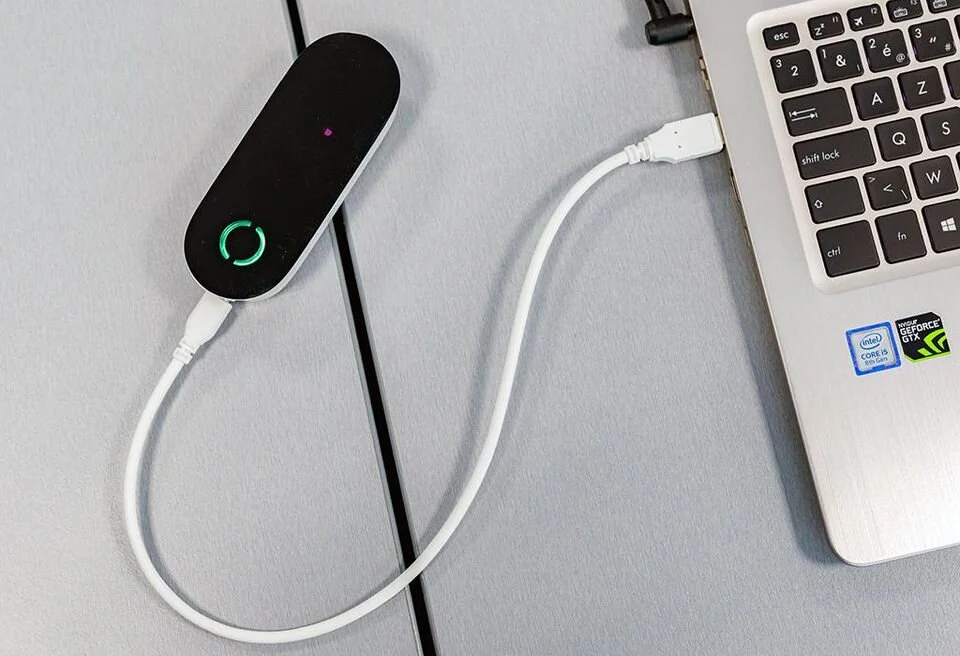
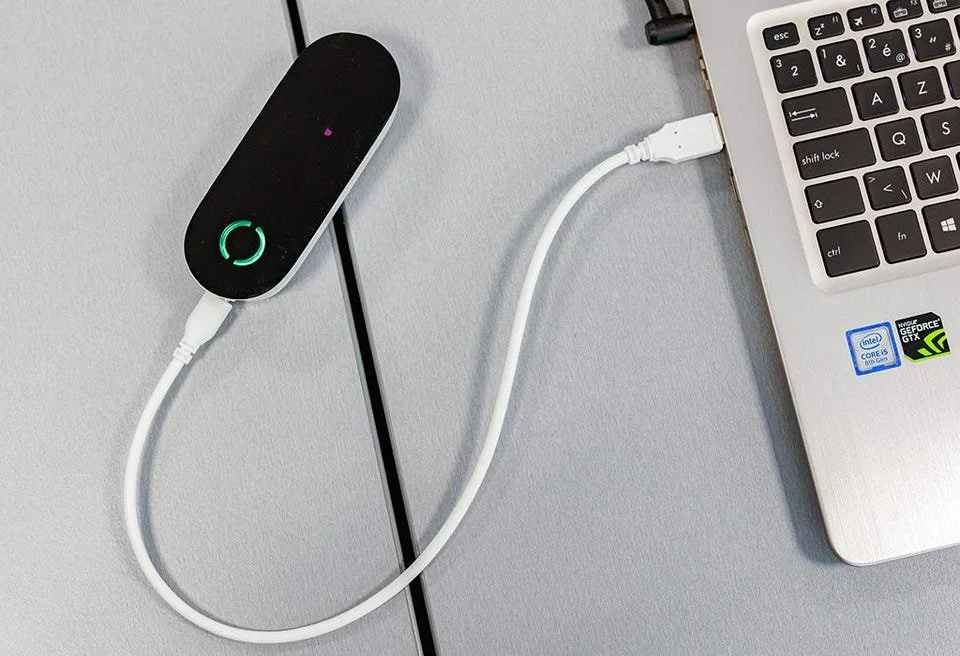
          Trulifi 6002 dongle and USB cable - Credit to Signify

          The LiFi system comprises of a USB Network Access adapter, LiFi-enabled LED lights and a Trulifi-6002 Plug-In Optical Transceiver. The Trulifi-enabled luminaires can provide wireless connectivity at speeds up to 150 Megabits per second (Mbps) over large spaces, such as meeting rooms and office floors. There is seamless handover between each Trulifi-enabled luminaire enabling users to roam around. The speed is fast enough to stream simultaneously 30 1080p HDTV movies. A USB-access key, plugged into a laptop, is needed to receive the LiFi signal and acts as an emitter to send data back to the luminaire.

          The Trulifi range also includes a fixed point-to-point system, up to 250 Mbps speed, which acts like a wireless cable. This is ideal for mobile device connectivity. This LiFi system can also be useful to connect robots or machines in radio frequency (RF) harsh environments like industrial plants, or hospitals where RF communications may not be permitted, or where there’s a need to send and receive large data files securely and quickly. Currently, Trulifi is aimed at professional markets, including offices, hospitality, retail, industry, construction and healthcare.

          Benefits of Trulifi

          Signify claimed the following three benefits of their Trulifi system:

          RELIABLE

          Trulifi is ideal for busy areas, such as multi-tenancy buildings, stations, airports and public areas. Network availability and overload are no longer an issue. Trulifi provides guaranteed bandwidth without interference from other radio communication systems.

          What’s more, it works in places where radio frequencies are not permitted, restricted or could cause interference – such as in hospitals, some schools, aircraft and industrial plants. It also works where radio frequencies don’t work well or at all.

          Trulifi actively coordinates traffic, ensuring good quality of service for all users, at all times. It uses the ITU G.9991 LiFi standard. 

          The new standard, ITU G.9991, describes the system architecture, physical layer and data link layer specification for ‘high-speed indoor VLC transceivers’, the VLC access points within light bulbs.

          SECURE

          Trulifi uses AES 128-bit encryption. The Advanced Encryption Standard (AES) is a symmetric block cipher chosen by the U.S. government to protect classified information and is implemented in software and hardware throughout the world for the encryption of sensitive data. Information is accessed using a USB access key. What’s more, an extra layer of security is built-in, as light waves cannot penetrate walls. This all helps to make Trulifi as secure as wired communication. Perfect for applications where security is paramount:

          • Financial institutions

          • Government

          • Police

          • Military

          • Data centres

          • Corporate organisations

          FAST

          Trulifi 6002 series has a net data rate of up to 150 Mbps for the downlink and the uplink. That’s fast enough to stream simultaneously 30 1080p HDTV movies.

          It’s perfect for offices and large spaces as each luminaire transceiver hands-off seamlessly to another. And unlike other LiFi systems, it works with the lights on, dimmed or off.

          Trulifi 6013 is a fixed point-to-point system. It acts like a wireless cable with a guaranteed net data rate of up to 250 Mbps for the downlink and uplink. It can be used in a host of environments – from connecting machines in a factory to sending large image files in a hospital. Trulifi 6013 is available with Blue, Red and Green lights.


          Li-Fi Conference 2022

          The Li-Fi Conference 2022 Edition was a great success. Li Fi Tech News will very soon write articles on the topics treated at the Conference.

          What is LiFi?

          LiFi, also known as "Light Fidelity" is a wireless optical networking technology, which uses light-emitting diodes (LEDs) to transmit data. In 2011, professor Harald Haas made a LiFi demonstration at the TED (Technology, Entertainment, Design) Global Talk on Visible Light Communication (VLC).

          VLC uses light as a medium to deliver high-speed communication like Wi-Fi and complies with the IEEE standard IEEE 802.15.7. The IEEE 802.15.7 is a high-speed, bidirectional, and fully networked wireless communication technology-based standard similar to Wi-Fi's IEEE 802.11.

          How does LiFi work?

          LiFi is a high speed, bidirectional, and fully networked wireless communication of data using light. LiFi constitutes of several light bulbs that form a wireless network.

          When an electrical current goes through to a LED light bulb, a stream of light (photons) emits from the lamp. LED bulbs are semiconductor devices, which means that the brightness of the light flowing through them can change at extremely high speeds. The signal is sent by modulating the light at different rates. The signal can then be received by a detector that interprets the changes in light intensity (the signal) as data. Also when the LED is ON, you transmit a digital 1, and when it is OFF, you transmit a 0.

          LiFi Benefits

          The primary benefits of LiFi are as follows:

          Security: Provides entirely secure access. Where there is no light there is no data.

          Safety: Does not produce electromagnetic radiation and does not interfere with existing electronic systems.

          Localisation: Allows localisation due to the small coverage area of LiFi access point - localisation can be used for very precise asset tracking.

          Data density: Provides ubiquitous high-speed wireless access that offers substantially greater data density (data rate per unit area) than RF through high bandwidth reuse.

          Credit to Oledcomm

          LiFi Applications

          LiFi can be used for so many applications and the list is increasing every year. You can read our updated list of Li-Fi applications at the following link:

          https://www.lifitn.com/blog/2021/2/13/top-30-li-fi-applications-updated-list-including-potential-applications

          Credit to pureLiFi


          LiFi Systems Reviews by LiFi Tech News


          OLEDCOMM LIFIMAX KIT REVIEW - ONE YEAR IN

          We reviewed the LiFiMax kit produced by the leading French LiFi company Oledcomm. We bought this LiFi kit system at the end of 2020. After over a year of use, we decided to write a review of this LiFi system. We looked briefly at the profile of Oledcomm, a brief history of the LiFiMax system, the Kit box contents, some testing and performance results of this LiFi system, the customer experience and our own verdict (the good and the bad points) of the LiFiMax kit.

          You can read the review on this link:

          https://www.lifitn.com/blog/lifimaxreview


          SIGNIFY TRULIFI 6002.1 STARTER KIT SYSTEM REVIEW


          We also reviewed the Trulifi 6002.1 starter kit produced by Signify, the world leader in lighting for professionals, consumers and lighting for the Internet of Things. We got this LiFi kit system with the help of PCDSI and Signify around August 2021. In a similar fashion done with our previous review of the LiFiMax kit a few months ago, we will look briefly at the profile of Signify, a brief history of the Trulifi 6002.1 kit, the Kit box contents, some testing and performance results of this LiFi system, the customer experience and our own verdict (the good points and the bad points) of the Trulifi 6002.1 kit.

          You can read the review on this link:

          https://www.lifitn.com/blog/trulifi6002review


          In conclusion, if you are also interested to hear more information about the OWNII Coin or enquire about LiFi devices such as the LiFiMax and Trulifi, you can contact us through our chatbot or by sending an email through our contact us form. If you enjoyed this post and would like to hear more updates about LiFi technology, subscribe to our newsletter. Don’t forget to subscribe to our social media accounts. You can also join our Telegram group about LiFi technology on this link:

          https://t.me/joinchat/FMzOmsEKyJFrU6Af



          Consolite Technology Introduces Military LiFi systems For Naval and Ground Forces Purposes

          Table of Contents

            Consolite Technology Introduces Military LiFi systems For Naval and Ground Forces Purposes

            Credit to Consolite Technology


            Consolite Technology


            Consolite Technology recently announced on their website the introduction of military LiFi systems for both naval and ground forces use.

            LiFi is a rapidly developing technology with many advantages over WiFi, and Consolite is at the forefront of developing ruggedised military applications.

            According to their site, Consolite Technology is well established in its field, having started in 1980 with the design and manufacture of cockpit lighting indicators for the UK Sea Harrier programme.

            In 1984, Consolite introduced the thumbwheel potentiometer used on the F-16 HUD, and to this day is the sole supplier of this item. The design has been developed for the F-22 fighter and now a mechanical encoder for the Block 60 F-16 HUD and an optical encoder for the Eurofighter Typhoon have been added to the range. A set of variants for the C-17 programme is also produced.

            In the mid-1980s Consolite developed a capability in the design and development of NVG-compatible filters for cockpit lighting and so was an early leader in the field. The capability was later extended to full cockpit upgrades for many of the world’s major aircraft types.

            More recently the company has achieved great success in the modification and supply of lighting on warships, including complete upgrades to major aircraft carriers and complete lighting systems for new build warships.


            Consolite Technology is also a leading designer, manufacturer and supplier of night vision lighting technology, including:

            • NVG compatible lighting systems and filters

            • NVG compliant modifications to aircraft, warships and military vehicles

            • NVG lighting consultancy and testing


            The strengths of the company have also been recognised by US suppliers, including Korry and Lumitron, who have selected them to stock and sell their products in the UK.

            Consolite is a leading producer of advanced warship lighting systems, including:

            • LED internal lighting

            • LED external lighting

            • LED navigation lighting


            Their latest development is the design and manufacture of military LiFi communication systems.

            They have full capability in the design, development, manufacture and test of night vision lighting systems and other lighting equipment. They provide innovative design and rapid and flexible responses to customer requirements. Consolite can also support its customers with assembly work and with rapid prototyping facilities.

            Consolite is located in a modern, spacious facility in southern England with excellent transport links to London and regional airports. The company has a full quality certification to the latest standard of ISO9001.


            Ground Forces LiFi System


            Providing fast, secure wireless data which is easily transported and quickly deployed, linking each shelter without the need for cumbersome cables. Operators can become connected in the same way as society does. Fast communications, video linking, geo-location, instant access to documents, on-the-job training through augmented reality and fast logging of maintenance activities are just some of the new realities of a secure Command Post.

            The connectivity of the medical centre can help medical professionals link with their counterparts at Base Camp to help with complicated procedures and allow real-time support where time is crucial. The addition of augmented reality or head-up video and voice devices like the Microsoft Hololens or Vuzix Blade makes access to information as fast as anywhere in the world.


            Credit to Consolite Technology


            The following information is taken from the datasheet available on Consolite Technology’s website.

            Based on Signify’s highly successful LiFi system, Consolite has re-engineered the technology to be suitable for the Military environment.

            Meeting the relevant Def Stans and Mil-Stds this product is developed for use in situations where Wi-Fi is not an option.

            The system consists of 3 components:

            • 1 x Access Point to connect power and data

            • Up to 6 x Transceivers can be connected to the Access Point

            • Up to 16 x USB Keys can be connected at any time

            Credit to Consolite Technology


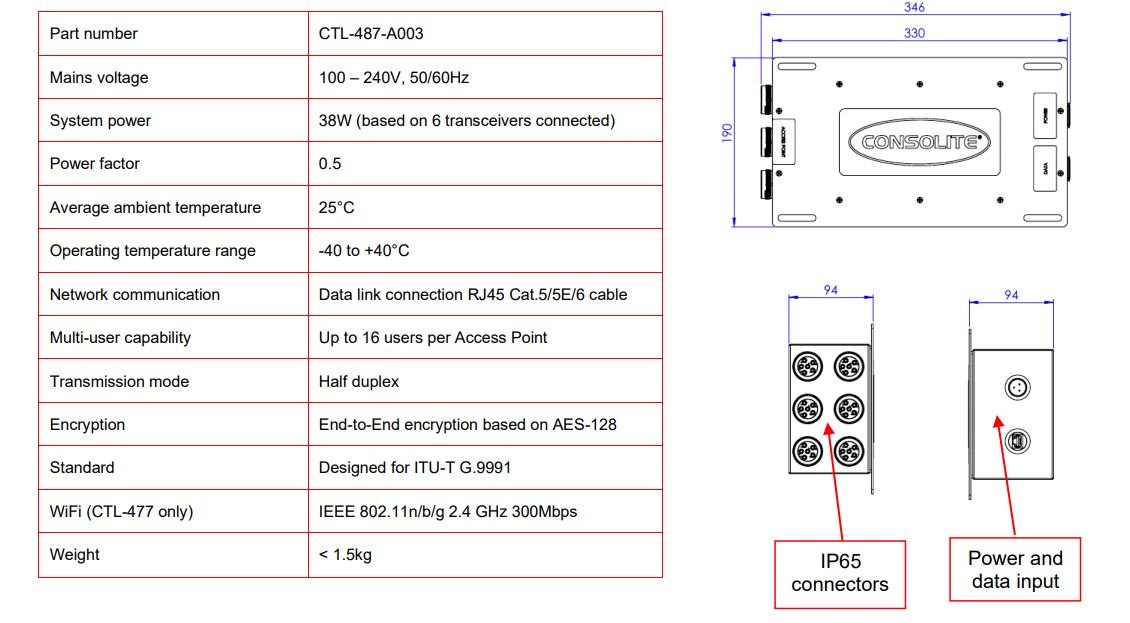
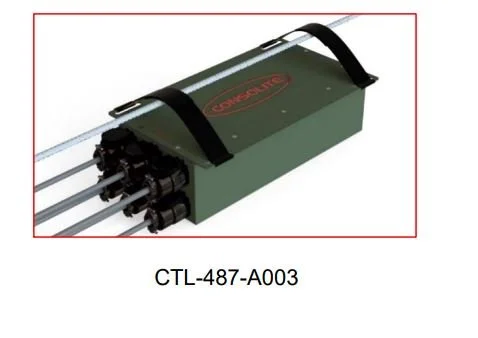
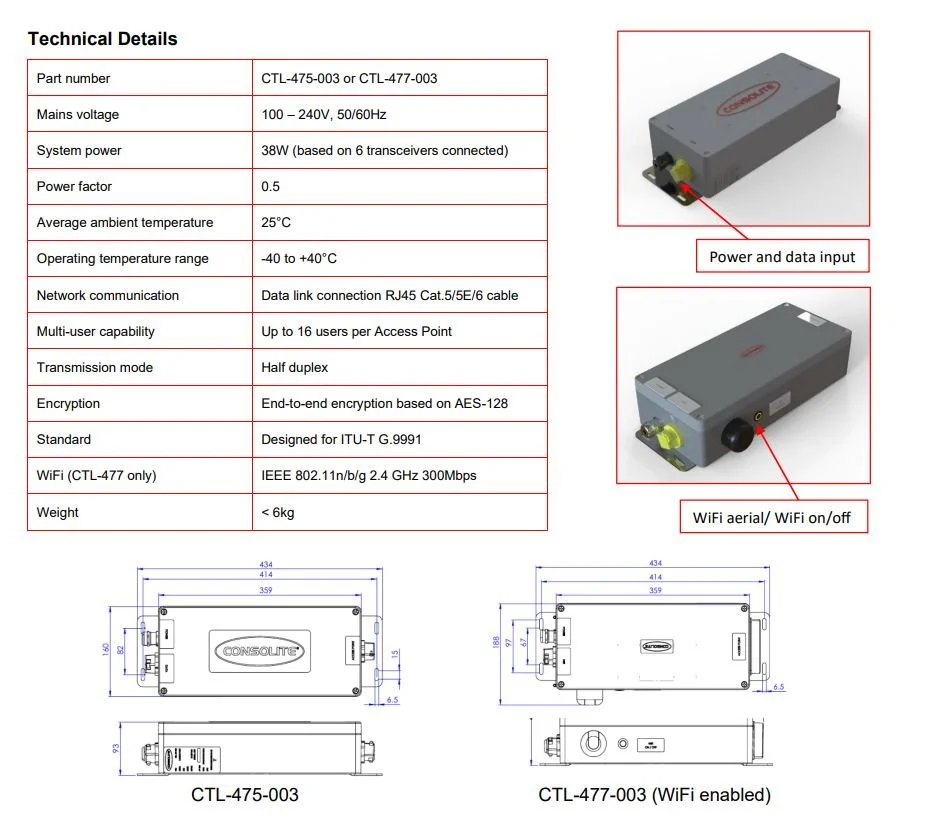
            Access Point (connection for data and power)


            The Access Point is the connection point for power and data. The Transceivers are plugged in here with IP65 glands. A WiFi-capable version is available – the WiFi is disabled locally when not required.

            Technical Details

            Credit to Consolite Technology


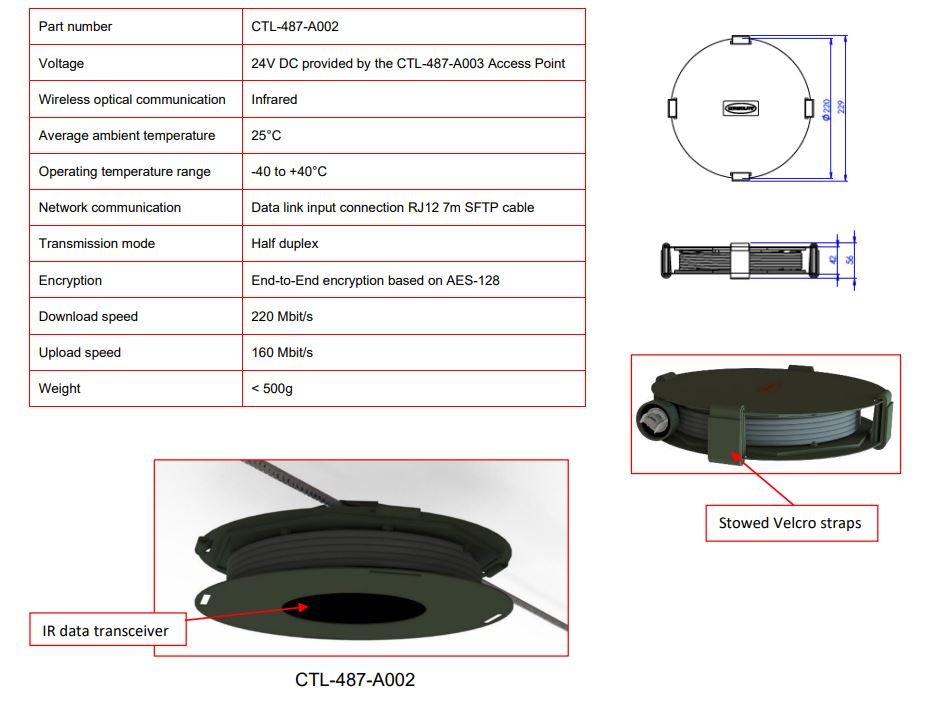
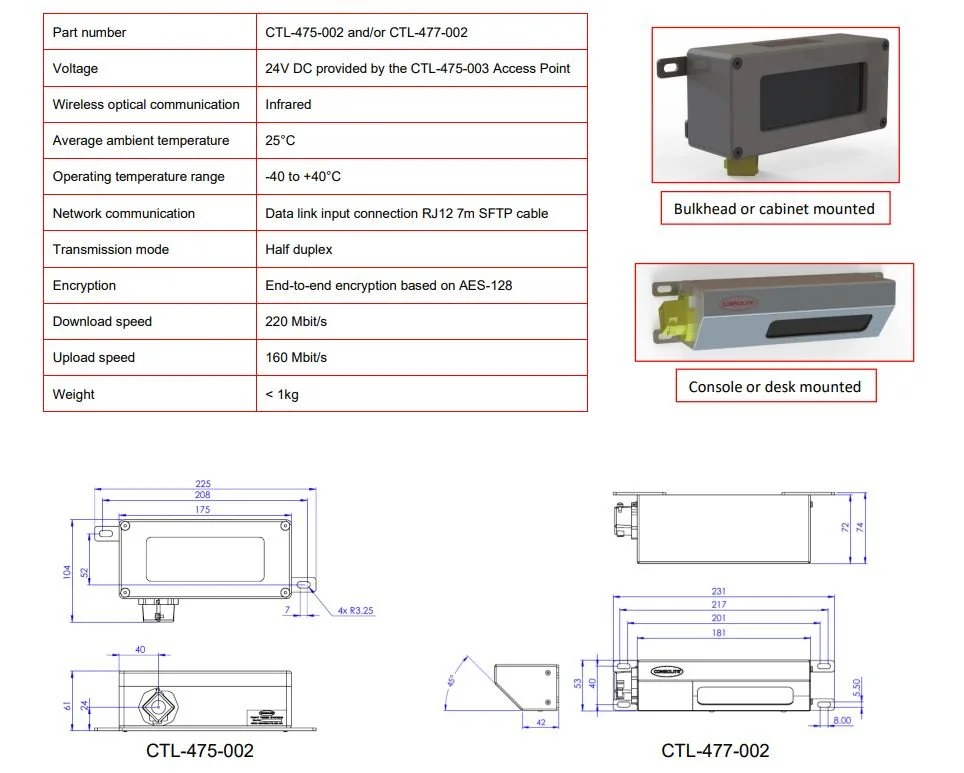
            Transceiver (detector connected to access point)

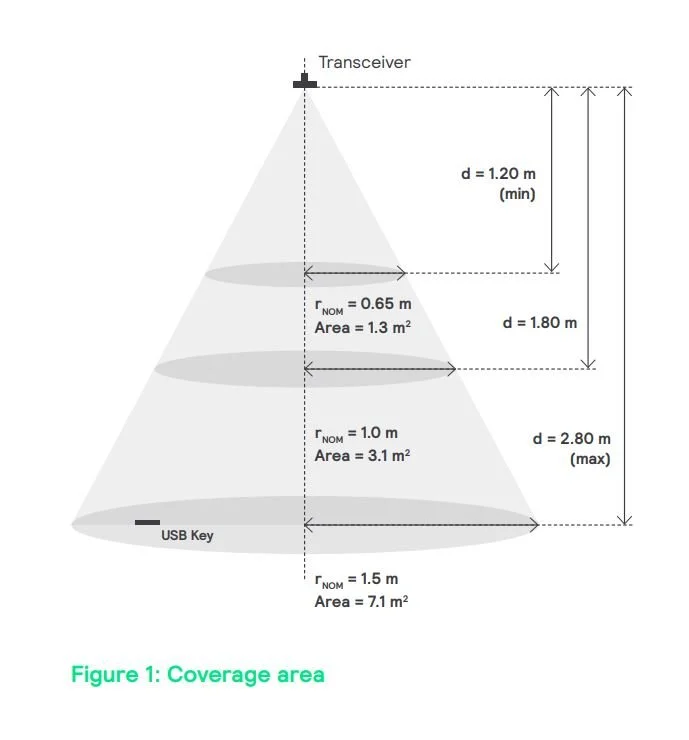
            The transceiver is designed to be used between 1.2 and 2.8m from the USB key. Data rates are best inside a 60-degree cone. The transceiver is designed to stow data cable wrapped around the transceiver's body.

            The exit window is in the central part of the product. The unit is hung with Velcro for easy deployment to cords, cables or poles.


            Technical Details


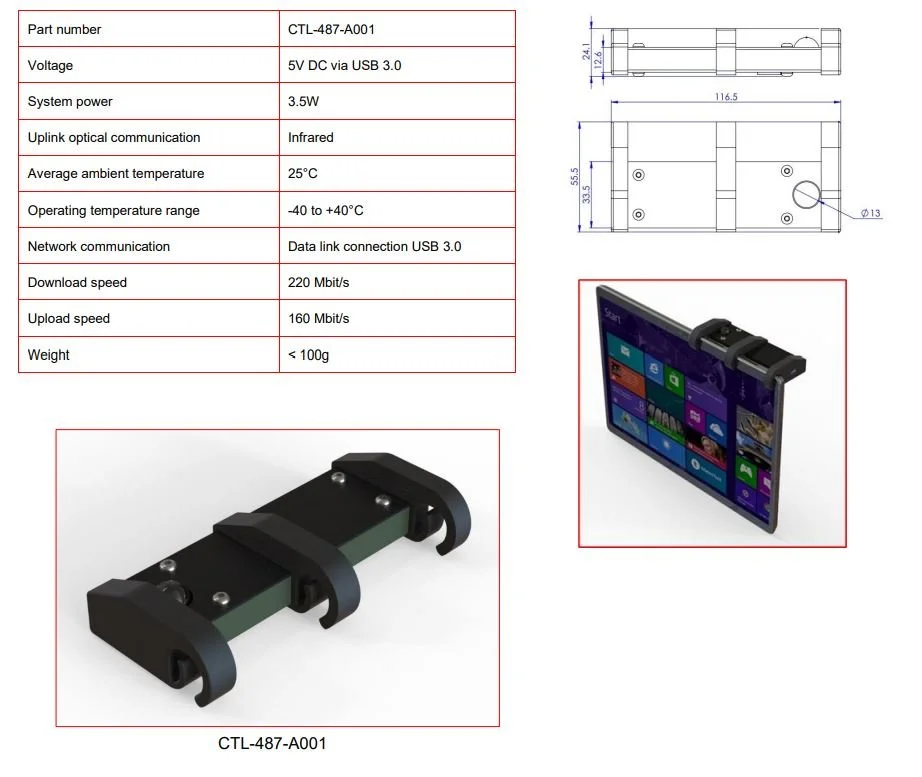
            USB Key (for connection to your device)


            The USB Key is necessary for the device to communicate with the Transceiver. It is plugged by wire directly into the PC, Laptop, Tablet or Smart Phone.

            The format shown below is hooked over the monitor, laptop, the tablet to allow easy removal and storage. It is fitted with impact absorption bump strips to protect against drops and impact in the field. It is resistant to drops in excess of 5m.

            As with the Transceiver, other housings and fixing methods can be tailored to different applications and Consolite Technology specialise in customisation


            Technical Details


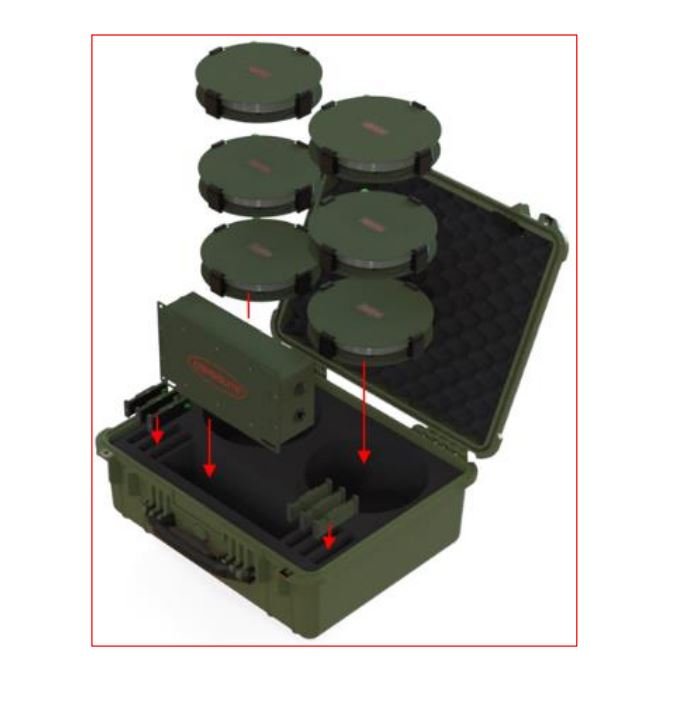
            Deployable System


            A Rugged case containing the following:

            • 1 x Access Point

            • 6 x Transceivers

            • 6 x USB Keys

            Dimensions: 616 x 493 x 220mm

            Weight: 13.3kg (net weight 7.1kg)


            Naval LiFi System


            Providing fast data rates throughout a ship allows connectivity in a way that hasn’t been experienced before. Crew can become connected in the same way as society does. Fast communications, video linking, geo-location, instant access to maintenance documents, on-the-job training through augmented reality, and fast logging of maintenance activities are just some of the new realities of a connected warship.

            Shipyard worker connectivity during refit can provide significant time savings – studies estimate at least 20% savings by providing data at the point of need. Imagine a 20% saving in labour during a refit period on an aircraft carrier. Designers and project managers could have access to maintenance documentation and e-mail whilst out of the office as well as a solid phone signal on the lower decks of the ship.

            The following information is taken from the datasheet available on Consolite Technology’s website.

            ACCESS POINT (CONNECTION FOR DATA AND POWER)

            Credit to Consolite Technology


            Transceiver (detector connected to access point)

            The transceiver is designed to be used between 1.2 and 2.8m from the USB key. Data rates are best inside a 60-degree cone. The transceiver is designed to stow data cable wrapped around the transceiver's body.


            Technical Details

            Credit to Consolite Technology


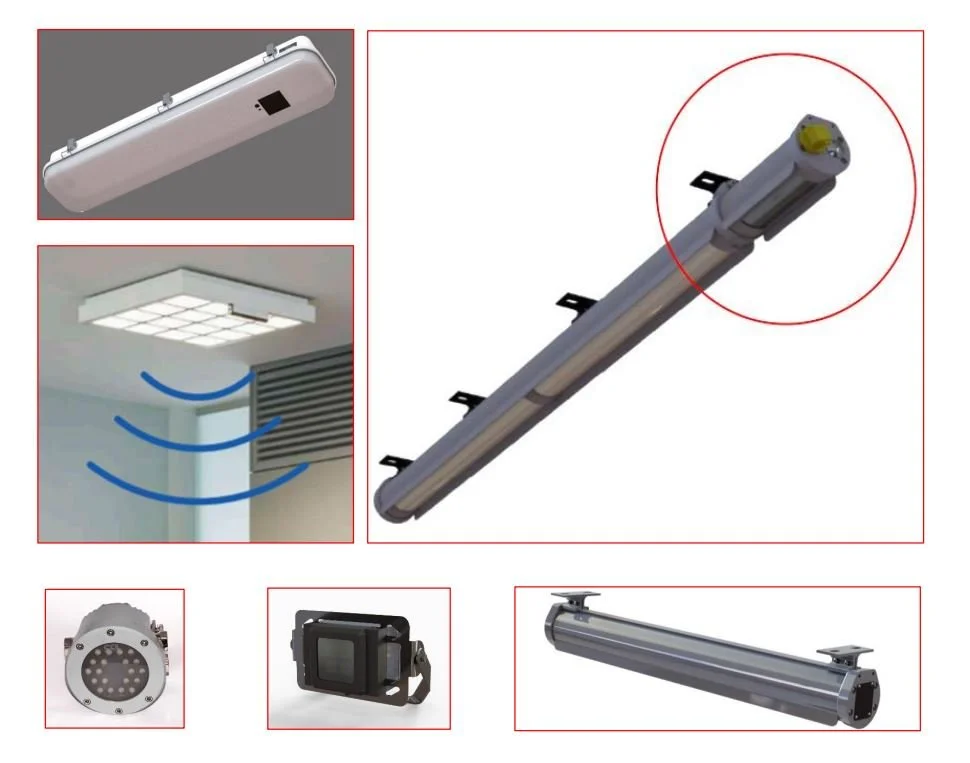
            Co-location with light sources

            As a light manufacturer, Consolite works hard to manage lighting efficiencies, angles, colour temperature, dimming and different lighting modes like red or night vision compatible lighting.

            To use LiFi through some (or all) of those other considerations would mean a compromise on light output, data rate, temperature resilience and/or lighting efficiency. The IR modules can be added to suitable light fittings without changing the fitting.


            Credit to Consolite Technology


            USB KEY (FOR CONNECTION TO YOUR DEVICE)


            The USB Key is necessary for the device to communicate with the Transceiver. It is plugged by wire directly into the PC, Laptop, Tablet or Smart Phone.

            The format shown below is hooked over the monitor, laptop, the tablet to allow easy removal and storage. It is fitted with impact absorption bump strips to protect against drops and impact in the field. It is resistant to drops in excess of 5m.

            As with the Transceiver, other housings and fixing methods can be tailored to different applications and Consolite Technology specialise in customisation


            Technical Details

            Credit to Consolite Technology


            Consolite Technology Contact Details

            If you are interested in getting more information about their products or purchasing any of their products for military or navy purposes, you can contact Consolite on the following details:

            Phone: +44 (0)1747 840900

            Email: sales@consolite.co.uk

            Address:

            Consolite Technology Limited

            St.Martin's Business Park

            Bells Lane, Zeals

            Wiltshire, BA12 6LY

            United Kingdom

            Company Registration Number: 1530246 (England & Wales)

            Quality Assured to ISO9001:2015

            Consolite has worked with military lighting for over 40 years on both Air and Ship platforms. Consolite specialises in advanced lighting design and tests and has become the authority in lighting for Naval applications worldwide. The Consolite Data via Infra-Red system is the next generation of that expertise, taking lighting to a new level.

            Consolite’s partnership with the Signify Team has brought the combination of Signify’s huge industrial investment with Consolite specialist military focus. As a team and partners, they are providing connectivity to Naval ship operations which are revolutionising data use at sea.

            Signify

            Signify is the new brand name of Philips Lighting. The name change occurred in March 2018 to represent the transformation from an analogue lighting company into a digital lighting and Internet of Things (IoT) company. Signify is the world leader in lighting for professionals, consumers and lighting for the Internet of Things. The company provides lighting solutions for professional segments such as automotive, healthcare, horticulture, office, outdoor, phototherapy, petrol stations, solar, purification, schools, fashion, cinema, and more. These lighting solutions include indoor and outdoor luminaries, lamps, electronics, lighting controls, lighting control software, IoT systems and platforms.

            Credit to Signify

            Signify has also other brands under its belt such as Philips, Interact, Modular Lighting Instruments, Luceplan, Color Kinetics, ILTI Luce and Philips Hue.


            Trulifi system

            Signify launched a LiFi system called “Trulifi” back in 2019. Trulifi uses light waves to enable highly reliable, secure two-way wireless communications at speeds far above most conventional workplace wireless technologies.

            Trulifi uses optical wireless transceiver technology built, or retrofitted, into Philips luminaires. This means customers do not have to replace their existing lighting infrastructure to receive great quality light and wireless connectivity.

            Trulifi 6002 dongle and USB cable - Credit to Signify

            The LiFi system comprises of a USB Network Access adapter, LiFi enabled LED lights and a Trulifi-6002 Plug-In Optical Transceiver. The Trulifi-enabled luminaires can provide wireless connectivity at speeds up to 150 Megabits per second (Mbps) over large spaces, such as meeting rooms and office floors. There is seamless handover between each Trulifi-enabled luminaire enabling users to roam around. The speed is fast enough to stream simultaneously 30 1080p HDTV movies. A USB-access key, plugged into a laptop, is needed to receive the LiFi signal and acts as an emitter to send data back to the luminaire.

            The Trulifi range also includes a fixed point-to-point system, up to 250 Mbps speed, which acts like a wireless cable. This is ideal for mobile devices connectivity. This LiFi system can also be useful to connect robots or machines in radio frequency (RF) harsh environments like industrial plants, or hospitals where RF communications may not be permitted, or where there’s a need to send and receive large data files securely and quickly. Currently, Trulifi is aimed at professional markets, including offices, hospitality, retail, industry, construction and healthcare.

            Benefits of Trulifi

            Signify claimed the following three benefits of their Trulifi system:

            RELIABLE

            Trulifi is ideal for busy areas, such as multi-tenancy buildings, stations, airports and public areas. Network availability and overload are no longer an issue. Trulifi provides guaranteed bandwidth without interference from other radio communication systems.

            What’s more, it works in places where radio frequencies are not permitted, restricted or could cause interference – such as in hospitals, some schools, aircraft and industrial plants. It also works where radio frequencies don’t work well or at all.

            Trulifi actively coordinates traffic, ensuring good quality of service for all users, at all times. It uses the ITU G.9991 LiFi standard. 

            The new standard, ITU G.9991, describes the system architecture, physical layer and data link layer specification for ‘high-speed indoor VLC transceivers’, the VLC access points within light bulbs.

            SECURE

            Trulifi uses AES 128-bit encryption. The Advanced Encryption Standard (AES) is a symmetric block cipher chosen by the U.S. government to protect classified information and is implemented in software and hardware throughout the world for the encryption of sensitive data. Information is accessed using a USB access key. What’s more an extra layer of security is built-in, as light waves cannot penetrate walls. This all helps to make Trulifi as secure as wired communication. Perfect for applications where security is paramount:

            • Financial institutions

            • Government

            • Police

            • Military

            • Data centres

            • Corporate organisations

            FAST

            Trulifi 6002 series has a net data rate up to 150 Mbps for the downlink and the uplink. That’s fast enough to stream simultaneously 30 1080p HDTV movies.

            It’s perfect for offices and large spaces as each luminaire transceiver hands off seamlessly to another. And unlike other LiFi systems, it works with the lights on, dimmed or off.

            Trulifi 6013 is a fixed point-to-point system. It acts like a wireless cable with a guaranteed net data rate up to 250 Mbps for the downlink and uplink. It can be used in a host of environments – from connecting machines in a factory to sending large image files in a hospital. Trulifi 6013 is available with Blue, Red and Green light.


            Li-Fi Conference 2022

            The Li-Fi Conference 2022 Edition was a great success. Li Fi Tech News will very soon write articles on the topics treated at the Conference.

            What is LiFi?

            LiFi, also known as "Light Fidelity" is a wireless optical networking technology, which uses light-emitting diodes (LEDs) to transmit data. In 2011, professor Harald Haas made a LiFi demonstration at the TED (Technology, Entertainment, Design) Global Talk on Visible Light Communication (VLC).

            VLC uses light as a medium to deliver high-speed communication like Wi-Fi and complies with the IEEE standard IEEE 802.15.7. The IEEE 802.15.7 is a high-speed, bidirectional, and fully networked wireless communication technology-based standard similar to Wi-Fi's IEEE 802.11.

            How does LiFi work?

            LiFi is a high speed, bidirectional, and fully networked wireless communication of data using light. LiFi constitutes of several light bulbs that form a wireless network.

            When an electrical current goes through to a LED light bulb, a stream of light (photons) emits from the lamp. LED bulbs are semiconductor devices, which means that the brightness of the light flowing through them can change at extremely high speeds. The signal is sent by modulating the light at different rates. The signal can then be received by a detector that interprets the changes in light intensity (the signal) as data. Also when the LED is ON, you transmit a digital 1, and when it is OFF, you transmit a 0.

            LiFi Benefits

            The primary benefits of LiFi are as follows:

            Security: Provides entirely secure access. Where there is no light there is no data.

            Safety: Does not produce electromagnetic radiation and does not interfere with existing electronic systems.

            Localisation: Allows localisation due to the small coverage area of LiFi access point - localisation can be used for very precise asset tracking.

            Data density: Provides ubiquitous high-speed wireless access that offers substantially greater data density (data rate per unit area) than RF through high bandwidth reuse.

            Credit to Oledcomm

            LiFi Applications

            LiFi can be used for so many applications and the list is increasing every year. You can read our updated list of Li-Fi applications at the following link:

            https://www.lifitn.com/blog/2021/2/13/top-30-li-fi-applications-updated-list-including-potential-applications

            Credit to pureLiFi

            LiFi Systems Reviews by LiFi Tech News

            OLEDCOMM LIFIMAX KIT REVIEW - ONE YEAR IN


            We reviewed the LiFiMax kit produced by the leading French LiFi company Oledcomm. We bought this LiFi kit system at the end of 2020. After over a year of use, we decided to write a review of this LiFi system. We looked briefly at the profile of Oledcomm, a brief history of the LiFiMax system, the Kit box contents, some testing and performance results of this LiFi system, the customer experience and our own verdict (the good and the bad points) of the LiFiMax kit.

            You can read the review on this link:

            https://www.lifitn.com/blog/lifimaxreview

            SIGNIFY TRULIFI 6002.1 STARTER KIT SYSTEM REVIEW

            We also reviewed the Trulifi 6002.1 starter kit produced by Signify, the world leader in lighting for professionals, consumers and lighting for the Internet of Things. We got this LiFi kit system with the help of PCDSI and Signify around August 2021. In a similar fashion done with our previous review of the LiFiMax kit a few months ago, we will look briefly at the profile of Signify, a brief history of the Trulifi 6002.1 kit, the Kit box contents, some testing and performance results of this LiFi system, the customer experience and our own verdict (the good points and the bad points) of the Trulifi 6002.1 kit.

            You can read the review on this link:

            https://www.lifitn.com/blog/trulifi6002review

            In conclusion, if you are also interested to hear more information about the OWNII Coin or enquire about LiFi devices such as the LiFiMax and Trulifi, you can contact us through our chatbot or by sending an email through our contact us form. If you enjoyed this post and would like to hear more updates about LiFi technology, subscribe to our newsletter. Don’t forget to subscribe to our social media accounts. You can also join our Telegram group about LiFi technology on this link:

            https://t.me/joinchat/FMzOmsEKyJFrU6Af


            In conclusion, if you are also interested to hear more information about the OWNII Coin or enquire about LiFi devices such as the LiFiMax and Trulifi, you can contact us through our chatbot or by sending an email through our contact us form. If you enjoyed this post and would like to hear more updates about LiFi technology, subscribe to our newsletter. Don’t forget to subscribe to our social media accounts. You can also join our Telegram group about LiFi technology on this link:

            https://t.me/joinchat/FMzOmsEKyJFrU6Af
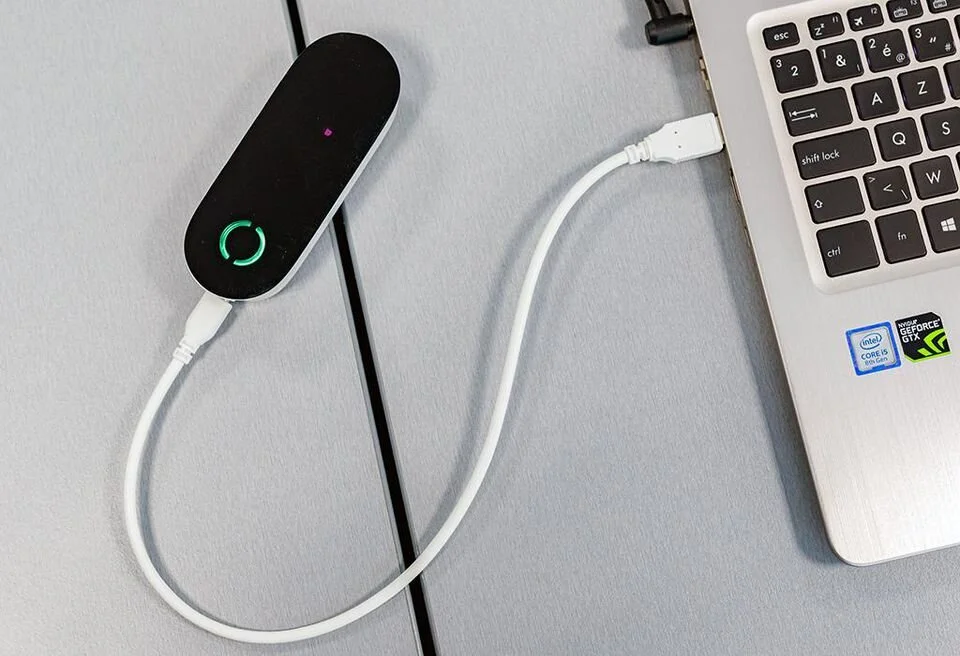

            OWNii Coin (LiFi Cryptocurrency) Launch Update 2022 - Private Sale Coming Up in July 2022

            Table of Contents

              OWNii Coin (LiFi Cryptocurrency) Launch Update 2022 - Private Sale Coming Up in July 2022

              Launch Update and Upcoming Private Sale


              This week, we had another interesting conversation with the CEO of Global Greenology and the different teams working on the launch of the OWNii Coin. We were informed that another private sale for the OWNii coin is coming sometime in the month of July 2022. This also means that the public launching of the OWNii coin is very near.

              LiFi Tech News will continue to keep you updated on the progress of the OWNii Coin Launching.

              OWNii Coin


              OWNii stands for Optical Wireless Network Internet Infrastructure.  OWNii Coin is developed to oversee, develop, and design the physical infrastructure necessary to implement LiFi in the United States and developing nations abroad.

              OWNii creates wireless communication that is faster, addresses issues with internet security, and allows localisation due to the small coverage area of LiFi access points used for precise asset tracking. Furthermore, providing ubiquitous high-speed wireless access that offers substantially greater data density (data rate per unit area) than RF through high bandwidth reuse.


              Credit to Signify - Trulifi dongle

              The State of Wireless Communications

              Whether it is replying to an email on your laptop or posting pictures on social media through a Smartphone, wireless networks play an important role in facilitating communication in a world that is constantly on the move. Currently, the most popular technologies in use are based on radio frequencies of the electromagnetic spectrum. Cellular communication and Wi-Fi are based on this technology.

              Cellular Communication

              Today, 67% of the world’s population uses mobile phones. Of this number, it is estimated that 2.5 billion people are Smartphone users. Smartphones coupled with internet access have allowed greater mobility and revolutionised the way people communicate. Wireless communications have evolved into a utility like water and electricity, fundamental to the socio-economic growth of modern society.

              Current networks support voice and data communications, but, they offer average transfer rates of 7 Mbps. Meanwhile, 4G speeds range between 15 to 20 Mbps, while 5G speeds can range from 50 Mbps to over 1,000 Mbps (1 Gbit/s).

              Cellular communications are affected by a variety of factors with the main one being propagation path obstruction. This refers to the obstruction to radio waves caused by natural or man-made features such as buildings, caves, clouds, etc. This disruption results in issues such as connectivity issues and duplicity of data.

              Meanwhile, traffic using mobile data is on the rise. According to one report, the total mobile data traffic is estimated to increase by eight times by 2023. This increase is attributed to the growing popularity of video-based media such as YouTube, Netflix, social media and games and the IoT.

              To meet the ever-growing demand for mobile communications, cellular networks have to grow from simple local service providers into large, complex cooperative systems. The main challenge for cellular communication operators will revolve around addressing this exponential demand created by consumers. The exponential growth in demand for wireless data is outpacing the supply of current and emerging wireless networks.

              So far, additional frequency spectra and denser cell sites are being allocated to answer this challenge, but these short-term solutions will only delay the inevitable spectrum crunch. In addition, up to 70 per cent of the wireless data demand is coming from indoor locations, which are currently being served by Wi-Fi APs and femto-cellular communications.

              An indirect, but increasingly becoming a significant direct factor in the forms of current communications and technologies is the overall energy usage involved in the backbone infrastructures and enabling technologies. It is increasingly and becoming statistically significant on the correlation between the increase in volume and throughput of voice and data communications and energy consumption.

              A combined increase in the speed of such communications systems and technologies, coupled with the adoption and switch to the sustainable energy source of electricity, would significantly have a positive impact to achieve a balance, and in ensuring sustainable growth in the demand for processing, throughput, speed, storage and management of such infrastructures and facilities.

              The OWNii Ecosystem aims to contribute to part of the problem solution and participate in the revolutionary technological advances in these aspects.

              Wi-Fi Communication

              With increased smartphone usage, the demand for data has increased exponentially. This has led to using the use of radio frequency bands below the 10 GHz range. Wi-Fi routers operate in the frequency bands of 2.4 GHz and 5 GHz.

              Wi-Fi gives wireless access to the internet by connecting the home or office Ethernet to the Smartphone or any other device to enable data transfer. Wi-Fi is gaining popularity because it provides higher data transfer rates when compared to cellular communication. The average WLAN-11n Wi-Fi router can give speeds up to 150 Mbps while the more expensive WiGig routers can scale up to 1-2 Gbps.

              While Wi-Fi communications allow faster data transfer, it suffers from issues ranging from security to scalability. Wi-Fi uses encrypted radio waves to transmit data over a network. These waves can travel through walls thus making them vulnerable to interception and potential hacking. Apart from Wi-Fi routers, there are other household appliances that operate in the low radio frequency spectrum. These include devices such as garage doors, baby monitors and cordless phones. Radio signals from these devices can disrupt the proper functioning of a Wi-Fi router leading to frequent connectivity or data transfer issues.

              Finally, the demand for inexpensive high-speed networks is increasing by the day. It is predicted that within the next 3-5 years, the global demand for data will be twice the amount of data supplied via traditional wireless communications.

              The OWNii Ecosystem proposed is well-positioned to achieve that, and in the process of its overall development plans, achieve the very much-needed balance between the demand for speed, capacity, data throughput, security, sustainability and growth-related issues.

              What is LiFi?

              Li-Fi, also known as "Light Fidelity" is a wireless optical networking technology, which uses light-emitting diodes (LEDs) to transmit data. In 2011, professor Harald Haas made a LiFi demonstration at the TED (Technology, Entertainment, Design) Global Talk on Visible Light Communication (VLC).

              VLC uses light as a medium to deliver high-speed communication like Wi-Fi and complies with the IEEE standard IEEE 802.15.7. The IEEE 802.15.7 is a high-speed, bidirectional, and fully networked wireless communication technology-based standard similar to Wi-Fi's IEEE 802.11.

              How does Li Fi work?

              Li-Fi is a high speed, bidirectional, and fully networked wireless communication of data using light. Li-Fi constitutes of several light bulbs that form a wireless network.

              When an electrical current goes through to a LED light bulb, a stream of light (photons) emits from the lamp. LED bulbs are semiconductor devices, which means that the brightness of the light flowing through them can change at extremely high speeds. The signal is sent by modulating the light at different rates. The signal can then be received by a detector that interprets the changes in light intensity (the signal) as data. Also when the LED is ON, you transmit a digital 1, and when it is OFF, you transmit a 0.

              LiFi Benefits

              The primary benefits of LiFi are as follows:

              Security: Provides entirely secure access. Where there is no light there is no data.

              Safety: Does not produce electromagnetic radiation and does not interfere with existing electronic systems.

              Localisation: Allows localisation due to the small coverage area of LiFi access point - localisation can be used for very precise asset tracking.

              Data density: Provides ubiquitous high-speed wireless access that offers substantially greater data density (data rate per unit area) than RF through high bandwidth reuse.

              Credit to Signify

              LiFi Applications

              LiFi can be used for so many applications and the list is increasing every year. You can read our updated list of LiFi applications at the following link:

              https://www.lifitn.com/blog/2021/2/13/top-30-li-fi-applications-updated-list-including-potential-applications

              Credit to Oledcomm

              LiFi Systems Reviews by LiFi Tech News

              OLEDCOMM LIFIMAX KIT REVIEW - ONE YEAR IN


              We reviewed the LiFiMax kit produced by the leading French LiFi company Oledcomm. We bought this LiFi kit system at the end of 2020. After over a year of use, we decided to write a review of this LiFi system. We looked briefly at the profile of Oledcomm, a brief history of the LiFiMax system, the Kit box contents, some testing and performance results of this LiFi system, the customer experience and our own verdict (the good and the bad points) of the LiFiMax kit.

              You can read the review on this link:

              https://www.lifitn.com/blog/lifimaxreview


              SIGNIFY TRULIFI 6002.1 STARTER KIT SYSTEM REVIEW

              We also reviewed the Trulifi 6002.1 starter kit produced by Signify, the world leader in lighting for professionals, consumers and lighting for the Internet of Things. We got this LiFi kit system with the help of PCDSI and Signify around August 2021. In a similar fashion done with our previous review of the LiFiMax kit a few months ago, we will look briefly at the profile of Signify, a brief history of the Trulifi 6002.1 kit, the Kit box contents, some testing and performance results of this LiFi system, the customer experience and our own verdict (the good points and the bad points) of the Trulifi 6002.1 kit.

              You can read the review on this link:

              https://www.lifitn.com/blog/trulifi6002review

              In conclusion, if you are also interested to hear more information about the OWNII Coin or enquire about LiFi devices such as the LiFiMax and Trulifi, you can contact us through our chatbot or by sending an email through our contact us form. If you enjoyed this post and would like to hear more updates about LiFi technology, subscribe to our newsletter. Don’t forget to subscribe to our social media accounts. You can also join our Telegram group about LiFi technology on this link:

              https://t.me/joinchat/FMzOmsEKyJFrU6Af

              FlightPath3D and Latécoère Announced A Partnership To Supply 4K Plug and Play 3D Flight Map on Smart LiFi Monitor

              Table of Contents

                FlightPath3D and Latécoère Announced A Partnership To Supply 4K Plug and Play 3D Flight Map on Smart LiFi Monitor

                Credit to economyandclassbeyond


                A few days ago, FlightPath3D and Latécoère announced a partnership to supply 4K Plug and Play 3D Flight Map on the Smart LiFi Monitor.

                FlightPath3D President Duncan Jackson stated: “We are delighted to be partnering with Latécoère on their unique premium Smart LiFi Monitor. As a leading provider of innovative systems to enhance the passenger experience and aiming to take the Inflight entertainment concept to another level, Latécoère deserves the most interactive, innovative and compelling map to complement this offering."

                Laurent Groux Director of Latécoère Systems Business Unit said, “The flight journey is captivating with our 4K Smart Lifi Monitors and FlightPath3D moving map. Augmented views and satellite imagery are crisp, clear and displayed with detailed visuals. FlightPath3D offers one of the most compelling and innovative 3D moving map experiences with customization potential from interest for corporate use.”


                Article source: https://flightpath3d.com/news/flightpath3d-500-installs-1h21-akwfy-kshg9

                The ACJ Smart LiFi Monitor

                Credit to Airbus

                At the Dubai Air Show 2021, Airbus announced launching “The ACJ Smart LiFi Monitor” developed with Latécoère.

                Airbus Corporate Jets (ACJ) and Alpha Star Aviation signed a letter of understanding at the Dubai Airshow for a new and unique in-flight entertainment (IFE) technology - "The ACJ Smart LiFi Monitor", in the presence of Abdulnaser Al Kheraif and Ibrahim Al Yaheyan, respectively CEO and VP-Tech of Alpha Star Aviation, and Benoit Defforge, president of ACJ.

                Developed in partnership with Latécoère, this new technology was designed as an easy “plug and play” solution.

                In May 2021, Airbus stated that the ACJ Smart LiFi Monitor “provides a unique entertainment experience and was designed to be an easy plug and play solution”. It is a multi-technology smart 4K monitor offering Wi-Fi, Bluetooth and LiFi connectivity. It will include analog audio output, USB-C ports as well as HDMI connections. Features include audio video on demand (AVOD), streaming, mirroring, a web browser, live TV, and its own built-in video conferencing.

                You can read our previous article on the partnership between Airbus Corporate Jet and Latécoère Interconnection Systems On Delivering ACJ Smart LiFi Monitors on the link below:

                https://www.lifitn.com/blog/2021/5/19/airbus-corporate-jet-announces-partnership-with-latcore-interconnection-systems-on-delivering-acj-smart-lifi-monitors

                FlightPath3D

                FlightPath3D is the IFE industry’s most compelling and innovative interactive 3D Moving Map experience enhanced with relevant and engaging ‘geotainment’ information services. We enhance your passenger’s In-Flight Experience with entertaining and informative solutions designed for the entire family.

                Any Aircraft. Any Platform. Any Device. A truly fleet-wide IFE system-agnostic moving map solution for airlines.

                Timely, Relevant Geotainment. Follow your flight route and explore the world around you. Fully detailed city street maps with city, airport and attraction POIs with our Destination City Guide.

                First flown by Norwegian Airlines on their inaugural B787 flight on May 30th 2013 FlightPath3D is now viewed by over 155 million airline passengers a year.

                Betria Interactive (dba FlightPath3D) have the industry's largest specialized map team providing customized map software development and maintenance. They deliver reliable highly customizable inflight map experiences built from the ground up, especially for the airline business with an upgradeable path to the connected future.


                Global Li-Fi Conference 2022


                LiFi is a wireless communication technology which uses light to transmit data and position between devices. The technology is similar to Wi-Fi but uses light to transmit data instead of radiofrequency in terms of its end-use.

                Using light to transmit data allows LiFi to offer several advantages, most notably a wider bandwidth channel, the ability to safely function in areas otherwise susceptible to electromagnetic interference (e.g. aircraft cabins, hospitals, military), and offering higher transmission speeds.

                It is interesting to realise that lights that illuminate offices, homes, cars, factories, our streets and more locations also can connect us to data and hence power the growing demand for connectivity and speed.

                Li-Fi Conference is an annual event held online and in a physical venue where professionals from all over the globe gather together in order to share applications, ideas, LiFi trends, new developments and ways to integrate LiFi into services, both for consumers and professionals.

                As stated by JakajimaTV, the following topics that will be covered at the upcoming conference are as followed:

                • Market Development

                • Ecosystem

                • Telecom/datacom (incl. 5G)

                • ICT

                • Security (with role from governmental institutions)

                • Chipset Manufacturers

                • Electrical Contractors

                • System Integrators

                • Applications

                • Home

                • Office

                • Healthcare

                • Education

                • Industry 4.0

                • Mobility (Aviation/Automotive)

                • Standardisation

                • The role of startups

                • Research meets industry

                Who should attend:

                • Business Development, Innovation staff and management of

                • Telecom operators

                • ICT / System integrators

                • Service providers

                • Hardware manufacturers

                • Retailers

                • Electrical Contractors

                • Real Estate

                • Industry 4.0

                • Automotive

                • Aviation

                • Chipset Manufacturers

                • Telecom / datacom (incl. 5G)

                • Governmental bodies

                • Regulatory institutions

                • Investors

                • Start-Ups

                • Students

                • Consumers

                • Professionals of all industries

                • LiFi enthusiasts

                • Tech enthusiasts

                Venue and registration details

                This conference will be held Live and Online. The venue will be the High Tech Campus 1, The Strip 5656 AE Eindhoven The Netherlands.

                You can also find more information on transportation and accommodation details on the following link:

                https://lificonference.com/venue/

                Ticket prices are as followed:

                • Live Standard Rate ticket costs €345,00 (£290)

                • Online Standard Rate ticket costs €155,00 (£134)

                • Live Student Rate ticket costs €125 (£107)

                • Online Student Rate ticket costs €65,00 (£57)

                Prices do not include VAT except where stated otherwise.

                Online tickets can be bought at the following link:

                https://tikcit.com/register/61e002336d7fc4b6745cab83/

                Partners of Li-Fi Conference 2022 Edition

                Signify, HomeGrid Forum, Fraunhofer HHI and LiFi Tech News are partners of the upcoming 2022 edition of the LiFi Conference.

                Signify

                Signify is the world leader in lighting for professionals, consumers and lighting for the Internet of Things. Their energy-efficient lighting products, systems and services enable their customers to enjoy a superior quality of light, and make people’s lives safer and more comfortable, businesses more productive and cities more livable.

                With 2021 sales of EUR 6.9 billion, approximately 37,000 employees and a presence in over 70 countries, Signify is unlocking the extraordinary potential of light for brighter lives and a better world.

                LiFi Tech News

                LiFi Tech News is a media news platform covering articles, photos, videos and news about LiFi, the next level and revolution in wireless communications. LiFi Tech News's mission is to enlighten individuals and bring awareness of the mechanism, potential, applications and benefits of this wireless communication technology called LiFi. The vision of LiFi Tech News is to become the leading platform for LiFi news from anywhere in the world.

                HomeGrid Forum

                HomeGrid Forum (HGF) is an industry alliance formed to support the development and deployment of a unified coaxial, phoneline, powerline, and plastic optical fiber home networking technology called G.hn (Gigabit Home Networking). G.hn technology is based on standards developed by the UN’s International Telecommunications Union – Telecom (ITU-T) standards development organization.

                HomeGrid Certification ensures compliance and interoperability (C&I) of silicon and systems through plugfests and rigorous C&I testing. A logo is issued for certified systems’ packaging and documentation of G.hn-based systems. HGF Certification ensures that retail customers and Service Providers have confidence in, and great satisfaction with all HGF G.hn Certified Certified products.

                Fraunhofer HHI

                Innovations for the digital society of the future are the focus of research and development work at the Fraunhofer Institute for Telecommunications, Heinrich Hertz Institute, HHI. In this area, Fraunhofer HHI is a world leader in the development for mobile and optical communication networks and systems as well as processing and coding of video signals.


                Benefits of Attending The Conference


                1.Learn the existing and latest LiFi trends in the Light and LiFi Industry


                Conferences address the main issues and provide in-depth industry news that is relevant to a particular sector. As an attendee, you will benefit from comprehensive knowledge about the latest news in the Light and LiFi industry; where the LiFi trends will go and how to adapt to them in the future or in your business and work activities.


                2. discover current research developments


                You will learn current and updated research work and development by some leading LiFi companies, Manufacturers, Suppliers and Academic institutions from the Light Communications Alliance. This can give you a deeper insight into some of the behind scenes works and research in regard to LiFi technology.


                3. Networking


                Events usually include a dedicated time for networking, which attendees can take advantage of to create a connection with other professionals in the industry and to renew contact with those they already know. With the upcoming Li-Fi conference, it is no different when it comes to networking.


                4. Learning beyond your field of interest


                Attending the conference dramatically can enhance both your professional and personal development, as well as give you tools and skills which you cannot be taught in-house or online. The focused nature of learning at a conference allows you to dig deeper with the understanding of your topic of interest, especially in the field of LiFi technology.


                5. listen to different points of view and perspectives from different companies in the light and lifi industry


                Attending the conference will give a range of perspectives from different key players in the Light industry in regard to the applications of LiFi technology.


                LiFi Systems Reviews by LiFi Tech News


                Oledcomm LIFIMax Kit Review - One Year In


                We reviewed the LiFiMax kit produced by the leading French LiFi company Oledcomm. We bought this LiFi kit system at the end of 2020. After over a year of use, we decided to write a review of this LiFi system. We looked briefly at the profile of Oledcomm, a brief history of the LiFiMax system, the Kit box contents, some testing and performance results of this LiFi system, the customer experience and our own verdict (the good and the bad points) of the LiFiMax kit.

                You can read the review on this link:

                https://www.lifitn.com/blog/lifimaxreview


                Signify Trulifi 6002.1 Starter Kit System Review

                We reviewed the Trulifi 6002.1 starter kit produced by Signify, the world leader in lighting for professionals, consumers and lighting for the Internet of Things. We got this LiFi kit system with the help of PCDSI and Signify around August 2021. In a similar fashion done with our previous review of the LiFiMax kit a few months ago, we will look briefly at the profile of Signify, a brief history of the Trulifi 6002.1 kit, the Kit box contents, some testing and performance results of this LiFi system, the customer experience and our own verdict (the good points and the bad points) of the Trulifi 6002.1 kit.

                You can read the review on this link:

                https://www.lifitn.com/blog/trulifi6002review


                What is LiFi?


                LiFi, also known as "Light Fidelity" is a wireless optical networking technology, which uses light-emitting diodes (LEDs) to transmit data. In 2011, professor Harald Haas made a LiFi demonstration at the TED (Technology, Entertainment, Design) Global Talk on Visible Light Communication (VLC).

                VLC uses light as a medium to deliver high-speed communication like Wi-Fi and complies with the IEEE standard IEEE 802.15.7. The IEEE 802.15.7 is a high-speed, bidirectional, and fully networked wireless communication technology-based standard similar to Wi-Fi's IEEE 802.11.

                How does LiFi work?

                LiFi is a high speed, bidirectional, and fully networked wireless communication of data using light. LiFi constitutes of several light bulbs that form a wireless network.

                When an electrical current goes through to a LED light bulb, a stream of light (photons) emits from the lamp. LED bulbs are semiconductor devices, which means that the brightness of the light flowing through them can change at extremely high speeds. The signal is sent by modulating the light at different rates. The signal can then be received by a detector that interprets the changes in light intensity (the signal) as data. Also when the LED is ON, you transmit a digital 1, and when it is OFF, you transmit a 0.

                LiFi Benefits

                The primary benefits of LiFi are as follows:

                Security: Provides entirely secure access. Where there is no light there is no data.

                Safety: Does not produce electromagnetic radiation and does not interfere with existing electronic systems.

                Localisation: Allows localisation due to the small coverage area of LiFi access point - localisation can be used for very precise asset tracking.

                Data density: Provides ubiquitous high-speed wireless access that offers substantially greater data density (data rate per unit area) than RF through high bandwidth reuse.

                Credit to Oledcomm

                LiFi Applications

                LiFi can be used for so many applications and the list is increasing every year. You can read our updated list of Li-Fi applications at the following link:

                https://www.lifitn.com/blog/2021/2/13/top-30-li-fi-applications-updated-list-including-potential-applications

                Credit to pureLiFi

                In conclusion, if you are also interested to hear more information about the OWNII Coin or enquire about LiFi devices such as the LiFiMax and Trulifi, you can contact us through our chatbot or by sending an email through our contact us form. If you enjoyed this post and would like to hear more updates about LiFi technology, subscribe to our newsletter. Don’t forget to subscribe to our social media accounts. You can also join our Telegram group about LiFi technology on this link:

                https://t.me/joinchat/FMzOmsEKyJFrU6Af
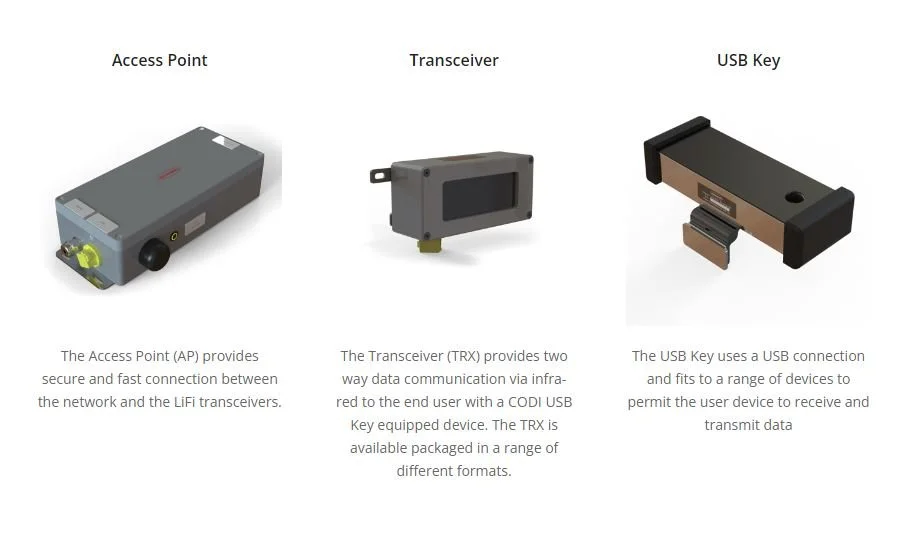

                Signify Trulifi 6002.1 Starter Kit System Review By LiFi Tech News

                Table of Contents

                  Signify Trulifi 6002.1 Starter Kit System Review By LiFi Tech News

                  Today, we are going to review the Trulifi 6002.1 starter kit produced by Signify, the world leader in lighting for professionals, consumers and lighting for the Internet of Things. We got this LiFi kit system with the help of PCDSI and Signify around August 2021. In a similar fashion done with our previous review of the LiFiMax kit a few months ago, we will look briefly at the profile of Signify, a brief history of the Trulifi 6002.1 kit, the Kit box contents, some testing and performance results of this LiFi system, the customer experience and our own verdict (the good points and the bad points) of the Trulifi 6002.1 kit.

                  Signify

                  Signify is the new brand name of Philips Lighting. The name change occurred in March 2018 to represent the transformation from an analogue lighting company into digital lighting and Internet of Things (IoT) company. Signify is the world leader in lighting for professionals, consumers and lighting for the Internet of Things. The company provides lighting solutions for professional segments such as automotive, healthcare, horticulture, office, outdoor, phototherapy, petrol stations, solar, purification, schools, fashion, cinema, and more. These lighting solutions include indoor and outdoor luminaires, lamps, electronics, lighting controls, lighting control software, IoT systems and platforms.

                  Credit to Signify

                  Signify has also other brands under its belt such as Philips, Interact, Modular Lighting Instruments, Luceplan, Color Kinetics, ILTI Luce and Philips Hue.


                  Trulifi System History

                  Around June 2019, we wrote an article about the announcement of a new version of the Trulifi system by Signify. Trulifi uses light waves to enable highly reliable, secure two-way wireless communications at speeds far above most conventional workplace wireless technologies.

                  Trulifi uses optical wireless transceiver technology built, or retrofitted, into Philips luminaires. This means customers do not have to replace their existing lighting infrastructure to receive great quality light and wireless connectivity.

                  Trulifi 6002 dongle and USB cable - Credit to Signify

                  The LiFi system comprises a USB Network Access adapter, LiFi enabled LED lights and a Trulifi-6002 Plug-In Optical Transceiver. The Trulifi-enabled luminaires can provide wireless connectivity at speeds up to 150 Megabits per second (Mbps) over large spaces, such as meeting rooms and office floors. There is seamless handover between each Trulifi-enabled luminaire enabling users to roam around. The speed is fast enough to stream simultaneously 30 1080p HDTV movies. A USB-access key, plugged into a laptop, is needed to receive the LiFi signal and acts as an emitter to send data back to the luminaire.

                  The Trulifi range also includes a fixed point-to-point system, up to 250 Mbps speed, which acts like a wireless cable. This is ideal for mobile device connectivity. This LiFi system can also be useful to connect robots or machines in radio frequency (RF) harsh environments like industrial plants, or hospitals where RF communications may not be permitted, or where there’s a need to send and receive large data files securely and quickly. Currently, Trulifi is aimed at professional markets, including offices, hospitality, retail, industry, construction and healthcare.

                  Christoph Ruys, Business Development Manager of Claerhout Communication Campus stated: “We wanted good quality energy-efficient lighting and wireless connectivity capable of handling high-resolution images, artwork and big data files. We’ve gone from offering our staff and clients 5 Mbps to a blistering 150 Mbps, and we can roam around freely as one light point hands off to another seamlessly. While it’s encrypted, Trulifi adds an extra layer of security as light can’t pass through walls - so what’s in the room, stays in the room. This is truly game-changing technology.”

                  Grzegorz Strutyński, Commercial Director of Globalworth, said that “The ability to integrate modern technology, such as Trulifi, in office buildings and workplaces, is a source of competitive advantage to attract tenants and increase the value of an asset. As a landlord, we are focused on providing top-notch solutions to our clients. We are also obliged to explore and test the latest technologies on the market. We are happy to be the first in Central Eastern Europe to implement Signify’s Trulifi technology, setting new standards for the real estate industry.”

                  “Signify is positioned to deliver on the promise of LiFi with attractively priced offerings that could help overcome the budget barrier for potential customers. Signify has also adopted the ITU G.9991 LiFi standard, which is aligned with the market’s move toward increased standardisation,” said Krystal Maxwell, Senior Research Analyst, Navigant Research.

                  Benefits of Trulifi

                  Signify claimed the following three benefits of their Trulifi system:

                  1.RELIABLE

                  Trulifi is ideal for busy areas, such as multi-tenancy buildings, stations, airports and public areas. Network availability and overload are no longer an issue. Trulifi provides guaranteed bandwidth without interference from other radio communication systems.

                  What’s more, it works in places where radio frequencies are not permitted, restricted or could cause interference – such as in hospitals, some schools, aircraft and industrial plants. It also works where radio frequencies don’t work well or at all.

                  Trulifi actively coordinates traffic, ensuring good quality of service for all users, at all times. It uses the ITU G.9991 LiFi standard. 

                  The new standard, ITU G.9991, describes the system architecture, physical layer and data link layer specification for ‘high-speed indoor VLC transceivers’, the VLC access points within light bulbs.

                  2.SECURE

                  Trulifi uses AES 128-bit encryption. The Advanced Encryption Standard (AES) is a symmetric block cipher chosen by the U.S. government to protect classified information and is implemented in software and hardware throughout the world for the encryption of sensitive data. Information is accessed using a USB access key. What’s more an extra layer of security is built-in, as light waves cannot penetrate walls. This all helps to make Trulifi as secure as wired communication. Perfect for applications where security is paramount:

                  • Financial institutions

                  • Government

                  • Police

                  • Military

                  • Data centres

                  • Corporate organisations

                  3.FAST

                  Trulifi 6002 series has a net data rate up to 150 Mbps for the downlink and the uplink. That’s fast enough to stream simultaneously 30 1080p HDTV movies.

                  It’s perfect for offices and large spaces as each luminaire transceiver hands off seamlessly to another. And unlike other LiFi systems, it works with the lights on, dimmed or off.

                  Trulifi 6013 is a fixed point-to-point system. It acts like a wireless cable with a guaranteed net data rate up to 250 Mbps for the downlink and uplink. It can be used in a host of environments – from connecting machines in a factory to sending large image files in a hospital. Trulifi 6013 is available with Blue, Red and Green light.


                  Trulifi 6002.1 Starter Kit Price and Shipping Information

                  The price of a Trulifi 6200.1 Starter Kit is around 1660 euros (around £1370) at the time. The quoted price was provided by PCDSI in collaboration with Signify. The Box is shipped via FEDEX from poland and depending on your location, you can receive the kit within 7 days. In some cases, you may not have to pay custom duty. For those ordering to african destinations, it is best to hire a custom agent to deal with custom duty on your behalf as the custom duty prices vary from country to country and could be pricey.

                  Trulifi 6002.1 Starter Kit BOX CONTENTS

                  When ordering a Trulifi 6002.1 Starter Kit from PCDSI and Signify, you will receive the following contents in the box:

                  • 1 x Trulifi Access Point 6002.1

                  • 1 x Trulifi Transceiver IR/IR 6002.1

                  • 2 x Trulifi USB Key 6002.1

                  • 1 x USB-C Cable 0.45m

                  • 1 x Transceiver RJ12 cable

                  • 1 x Trulifi Ceiling Holder

                  • 1 x User Manual in English

                  • 1 x Power Cable for Trulifi Access Point 6002.1

                  • 2 x USB Keys

                  Below are some photos of the Trulifi 6002.1 starter kit box contents:

                  Trulifi Access Point 6002.1

                  Trulifi Transceiver IR/IR 6002.1

                  Trulifi USB Key 6002.1

                  Trulifi Ceiling Holder

                  Transceiver RJ12 cable

                  User Manual

                  Power Cable for Trulifi Access Point 6002.1

                  USB Keys

                  You can also watch a video made recently by Signy about the unboxing of a Trulifi 6002.1 kit system:

                  Trulifi 6002.1 Starter kit Specifications

                  Here are some specifications of the TruliFi 6002.1 system:

                  Trulifi System 6002.1 Specifications

                  • Humidity: 20 - 90% non-condensing

                  • Storage temperature: -40 to +80 °C

                  • Standards: IEC 62368-1, IEC 62471, IEC 60825-1, IEC 60825-12

                  • Certification: CE/NRTL US Canada/FCC

                  Trulifi Access Point 6002.1 Specifications

                  • Mains voltage: 100-240 V, 50/60 Hz

                  • System power: 35 W (based on 6 transceivers connected)

                  • Power factor: 0.9

                  • Average ambient temperature: 25 °C

                  • Operating temperature range: +10 to +40 °C

                  • Network communication: Data link input connection RJ45 Cat. 5/5E/6 Ethernet cable (cable not included)

                  • Multi-user capability: Up to 16 users per Access Point

                  • Transmission mode: Half-duplex

                  • Encryption: End-to-End encryption based on AES-128

                  • Standard: Designed for ITU-T G.9991

                  Trulifi Transceiver 6002.1 Specifications

                  • Voltage: 24 V DC provided by the Trulifi Access Point 6002.1

                  • System power: 5 W at 230 V AC (supplied by Trulifi Access Point 6002.1)

                  • Downlink wireless optical communication support: Infrared

                  • Average ambient temperature: 25 °C

                  • Operating temperature range: +10 to +40 °C

                  • Network communication: Data link input connection RJ12 - 7m SFTP cable (cable included)

                  • Multi-user capability: Up to 16 users per Access Point

                  • Transmission mode: Half-duplex

                  • Encryption: End-to-End encryption based on AES-128

                  • Standard: Designed for ITU-T G.9991

                  Trulifi USB Key 6002.1 Specifications

                  • Voltage: 5 V DC provided via USB 3.0

                  • System power: 3.5 W

                  • Uplink wireless optical communication support: Infrared

                  • Average ambient temperature: 25 °C

                  • Operating temperature range: +10 to +35 °C

                  • Network communication: Data link input connection USB 3.0 Type-C (cable included)

                  System Date rate

                  Net data rate: 150 Mbit/s download & 140 Mbit/s upload

                  Measurement conditions:

                  • 1.2 m distance between USB Key and transceiver

                  • USB Key located straight under transceiver (radius 0)

                  • 6 transceivers connected

                  System operating distance and coverage area

                  Operating distance between USB Key and transceiver: 1.2 m to 2.8 m

                  Connectivity coverage area per transceiver

                  As stated by Signify, the LiFi coverage area of one transceiver is a circle of which the radius depends on the distance d between the transceiver and the USB key. Radial distance 0 represents the location directly under the transceiver. The recommended operational area spreads from 0 up to the nominal radial distance rNOM as depicted in Figure 1.

                  Credit to Signify

                  The downlink and uplink data rates depend on the distance d between the transceiver and the USB key, as well as the radial distance, as depicted in Figure 2 and Figure 3.

                  Credit to Signify

                  Credit to Signify

                  Trulifi 6002.1 Starter kit Installation

                  Below are the installation steps for the Trulifi 6002 series demonstrated by Signify. The first three steps are compulsory to make the LiFi system works on your computer system. Step 4 and Step are optional or if you have bought the specific equipment as shown in the videos. In the videos, they use a Trulifi 6002.2 system to demonstrate the installation steps however these steps can also be applied to the trulifi 6002.1 system.

                  Step 1 - Installing the Trulifi 6002 Access point

                  Step 2 - Installing the Trulifi 6002 Transceiver

                  Step 3 - Installing the Trulifi 6002 USB ACCESS KEY

                  Step 4 - UPGRADING the Trulifi FIRMWARE

                  Step 5 - ACTIVATING the Trulifi CONTROLLER LICENSE KEY

                  Trulifi 6002.1 Starter kit TESTING AND PERFORMANCE

                  Just like with the LiFiMax kit, we did a series of tests by playing YouTube videos at different resolutions. We tested the performance of the Trulifi 6002.1 starter kit when playing YouTube videos at 1080p, 2K and 4k resolutions respectively. Before that, we did a quick Internet speed test. The download rate was over 100 Mbps and the upload rate was over 45 Mbps. Download rate refers to how many megabits (Mbps) per second it takes your server to download data to your device. Upload rate refers to the time it takes for your connection to send data back to the speed test server. The speed test results depend on the Internet signal from the Internet service provider and the router/modem used.

                  In our own case, we installed and tested the Trulifi 6002.1 starter kit system in a residential home setting both in the UK and in Lagos, Nigeria. The installation steps were similar to the ones demonstrated in the Signify videos.

                  We proceeded to place the USB Access key in the coverage area of the Trulifi access point. We then went on to play some YouTube videos at different resolutions via LiFi network connection. Below are some few performance results of the Trulifi 6002.1 starter kit when playing the YouTube videos at different resolutions:

                  Playing at 1080p resolution

                  Throughout the play of the video, there was no buffering showing at 1080p resolution.

                  Playing at 2K resolution

                  Again, no buffering showing at 2k resolution.

                  Playing at 4K resolution

                  During this test at 4k resolution, at least 2 episodes of buffering were showing but these lasted no more than 1 second. It is usually recommended to have internet speeds of at least 100 Mbps to play videos at 4k resolution without much buffering.


                  Trulifi 6002.1 Starter kit - Our verdict from LiFi Tech News

                  Overall, we are really impressed with the quality performance of this Trulifi 6002.1 starter kit. We have highlighted some negative points and positive points about this LiFi kit.

                  NEGATIVE POINTS

                  1) This is a very minor negative point in our opinion. There is a need beforehand to install the Trulifi drivers for the Trulifi 6002.1 USB keys to work on your computer system. After this, you will experience a plug and play experience with this LiFi system.

                  2) In contrast to other smaller LiFi systems such as the ones from ZERO1, Oledcomm, Lina and LightRider, the Trulifi system can be seen as slightly bulkier and heavier. However, it is not as heavy in contrast to the pureLiFi XC system.

                  3) In regards to the Trulifi 6002.1 Access Point, the screws for removing the cover section were really tightened. This made it very hard and a big challenge to remove the screws even when using a screwdriver.

                  4) This starter kit can be seen as pricey for the average consumers and some businesses. However, in contrast to other LiFi systems like the pureLiFi XC, and Hyperion LiFi, this Trulifi 6002.1 Starter kit is a good deal similar to the LiFiMAX systems.

                  POSITIVE POINTS

                  1) This starter kit comes with at least one CAT6/RJ45 Ethernet cable. Some other LiFi kit systems do not offer it such as the LiFiMax kit from Oledcomm.

                  2) The latency of this starter kit has been very low during our test and daily uses. In our opinion, along with the LiFiMax kit, the Trulifi 6002.1 starter kit has one of the best performances in terms of latency.

                  3) The customer support from Signify in collaboration with Glenda Chambliss from PCDSI has been nothing but a great customer experience and after support. We really like their professionalism and willingness to take any constructive feedback on board.

                  4) Overall, the Trulifi kit does provide consistent and very fast connectivity. The USB Access key connects very quickly to the Internet when placing it in the coverage area of the Trulifi access point.

                  5) There is no need to get a PoE switch device to make the Trulifi 6002.1 start kit to work. Just plug the RJ45 cable directly from the Modem/Router device in your home or office.

                  6) The Trulifi 6002.1 USB keys do not get too hot even after being plugged for many hours on any computer system. On some other LiFi systems, the LiFi dongles will get very hot after many hours of use.

                  7) Easy access to user manual and installation steps. You can access those information from the provided USB keys, on Signify site and watch installation steps videos on Signify YouTube channels.

                  Li-Fi Conference 2022

                  The next Li-Fi Conference is coming up on the 28th of June 2022 between 10 am and 4.30 pm CET.

                  It is interesting to realise that lights that illuminate offices, homes, cars, factories, our streets and more locations also can connect us to data and hence power the growing demand for connectivity and speed.

                  At this conference professionals from all over the globe will gather together in order to share applications, ideas, new developments and ways to integrate Li-Fi in services, both for consumers and professionals.

                  This conference will be held Live and Online. The venue will be the High Tech Campus 1, The Strip 5656 AE Eindhoven The Netherlands.

                  Online tickets can be bought at the following link:

                  https://tikcit.com/register/61e002336d7fc4b6745cab83/

                  Benefits of Attending The Li-Fi Conference 2022 Edition

                  1.LEARN THE EXISTING AND LATEST LIFI TRENDS IN THE LIGHT AND LIFI INDUSTRY

                  Conferences address the main issues and provide in-depth industry news that is relevant to a particular sector. As an attendee, you will benefit from comprehensive knowledge about the latest news in the Light and LiFi industry; where the LiFi trends will go and how to adapt to them in the future or in your business and work activities.

                  2. DISCOVER CURRENT RESEARCH DEVELOPMENTS

                  You will learn current and updated research work and development by some leading LiFi companies, Manufacturers, Suppliers and Academic institutions from the Light Communications Alliance. This can give you a deeper insight into some of the behind scenes works and research in regard to LiFi technology.

                  3. NETWORKING

                  Events usually include a dedicated time for networking, which attendees can take advantage of to create a connection with other professionals in the industry and to renew contact with those they already know. With the upcoming Li-Fi conference, it is no different when it comes to networking.

                  4. LEARNING BEYOND YOUR FIELD OF INTEREST

                  Attending the conference dramatically can enhance both your professional and personal development, as well as give you tools and skills which you cannot be taught in-house or online. The focused nature of learning at a conference allows you to dig deeper with the understanding of your topic of interest, especially in the field of LiFi technology.

                  5. LISTEN TO DIFFERENT POINTS OF VIEW AND PERSPECTIVES FROM DIFFERENT COMPANIES IN THE LIGHT AND LIFI INDUSTRY

                  Attending the conference will give a range of perspectives from different key players in the Light industry in regard to the applications of LiFi technology.

                  What is LiFi?

                  LiFi, also known as "Light Fidelity" is a wireless optical networking technology, which uses light-emitting diodes (LEDs) to transmit data. In 2011, professor Harald Haas made a LiFi demonstration at the TED (Technology, Entertainment, Design) Global Talk on Visible Light Communication (VLC).

                  VLC uses light as a medium to deliver high-speed communication like Wi-Fi and complies with the IEEE standard IEEE 802.15.7. The IEEE 802.15.7 is a high-speed, bidirectional, and fully networked wireless communication technology-based standard similar to Wi-Fi's IEEE 802.11.

                  How does LiFi work?

                  LiFi is a high speed, bidirectional, and fully networked wireless communication of data using light. LiFi constitutes of several light bulbs that form a wireless network.

                  When an electrical current goes through to a LED light bulb, a stream of light (photons) emits from the lamp. LED bulbs are semiconductor devices, which means that the brightness of the light flowing through them can change at extremely high speeds. The signal is sent by modulating the light at different rates. The signal can then be received by a detector that interprets the changes in light intensity (the signal) as data. Also when the LED is ON, you transmit a digital 1, and when it is OFF, you transmit a 0.

                  LiFi Benefits

                  The primary benefits of LiFi are as follows:

                  Security: Provides entirely secure access. Where there is no light there is no data.

                  Safety: Does not produce electromagnetic radiation and does not interfere with existing electronic systems.

                  Localisation: Allows localisation due to the small coverage area of LiFi access point - localisation can be used for very precise asset tracking.

                  Data density: Provides ubiquitous high-speed wireless access that offers substantially greater data density (data rate per unit area) than RF through high bandwidth reuse.

                  Credit to Oledcomm

                  LiFi Applications

                  LiFi can be used for so many applications and the list is increasing every year. You can read our updated list of Li-Fi applications at the following link:

                  https://www.lifitn.com/blog/2021/2/13/top-30-li-fi-applications-updated-list-including-potential-applications

                  Credit to pureLiFi

                  In conclusion, if you are also interested to hear more information about the OWNII Coin or enquire about LiFi devices such as the LiFiMax and Trulifi, you can contact us through our chatbot or by sending an email through our contact us form. If you enjoyed this post and would like to hear more updates about LiFi technology, subscribe to our newsletter. Don’t forget to subscribe to our social media accounts. You can also join our Telegram group about LiFi technology on this link:

                  https://t.me/joinchat/FMzOmsEKyJFrU6Af