Consolite Technology Introduces Military LiFi systems For Naval and Ground Forces Purposes

Table of Contents

    Consolite Technology Introduces Military LiFi systems For Naval and Ground Forces Purposes
    Credit to Consolite Technology


    Consolite Technology


    Consolite Technology recently announced on their website the introduction of military LiFi systems for both naval and ground forces use.

    LiFi is a rapidly developing technology with many advantages over WiFi, and Consolite is at the forefront of developing ruggedised military applications.

    According to their site, Consolite Technology is well established in its field, having started in 1980 with the design and manufacture of cockpit lighting indicators for the UK Sea Harrier programme.

    In 1984, Consolite introduced the thumbwheel potentiometer used on the F-16 HUD, and to this day is the sole supplier of this item. The design has been developed for the F-22 fighter and now a mechanical encoder for the Block 60 F-16 HUD and an optical encoder for the Eurofighter Typhoon have been added to the range. A set of variants for the C-17 programme is also produced.

    In the mid-1980s Consolite developed a capability in the design and development of NVG-compatible filters for cockpit lighting and so was an early leader in the field. The capability was later extended to full cockpit upgrades for many of the world’s major aircraft types.

    More recently the company has achieved great success in the modification and supply of lighting on warships, including complete upgrades to major aircraft carriers and complete lighting systems for new build warships.


    Consolite Technology is also a leading designer, manufacturer and supplier of night vision lighting technology, including:

    • NVG compatible lighting systems and filters

    • NVG compliant modifications to aircraft, warships and military vehicles

    • NVG lighting consultancy and testing


    The strengths of the company have also been recognised by US suppliers, including Korry and Lumitron, who have selected them to stock and sell their products in the UK.

    Consolite is a leading producer of advanced warship lighting systems, including:

    • LED internal lighting

    • LED external lighting

    • LED navigation lighting


    Their latest development is the design and manufacture of military LiFi communication systems.

    They have full capability in the design, development, manufacture and test of night vision lighting systems and other lighting equipment. They provide innovative design and rapid and flexible responses to customer requirements. Consolite can also support its customers with assembly work and with rapid prototyping facilities.

    Consolite is located in a modern, spacious facility in southern England with excellent transport links to London and regional airports. The company has a full quality certification to the latest standard of ISO9001.


    Ground Forces LiFi System


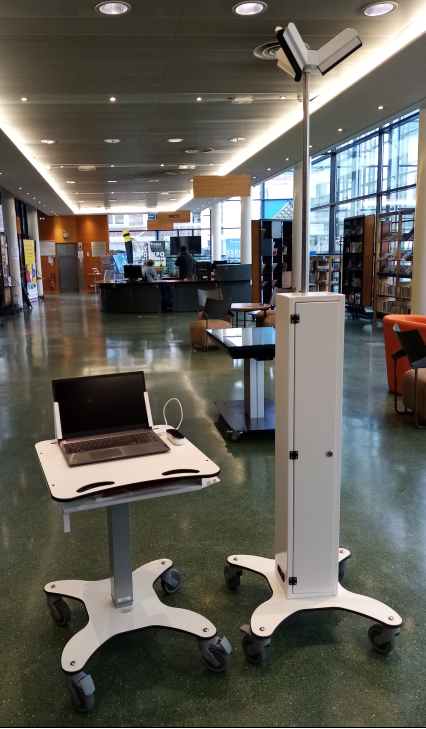
    Providing fast, secure wireless data which is easily transported and quickly deployed, linking each shelter without the need for cumbersome cables. Operators can become connected in the same way as society does. Fast communications, video linking, geo-location, instant access to documents, on-the-job training through augmented reality and fast logging of maintenance activities are just some of the new realities of a secure Command Post.

    The connectivity of the medical centre can help medical professionals link with their counterparts at Base Camp to help with complicated procedures and allow real-time support where time is crucial. The addition of augmented reality or head-up video and voice devices like the Microsoft Hololens or Vuzix Blade makes access to information as fast as anywhere in the world.

    Credit to Consolite Technology


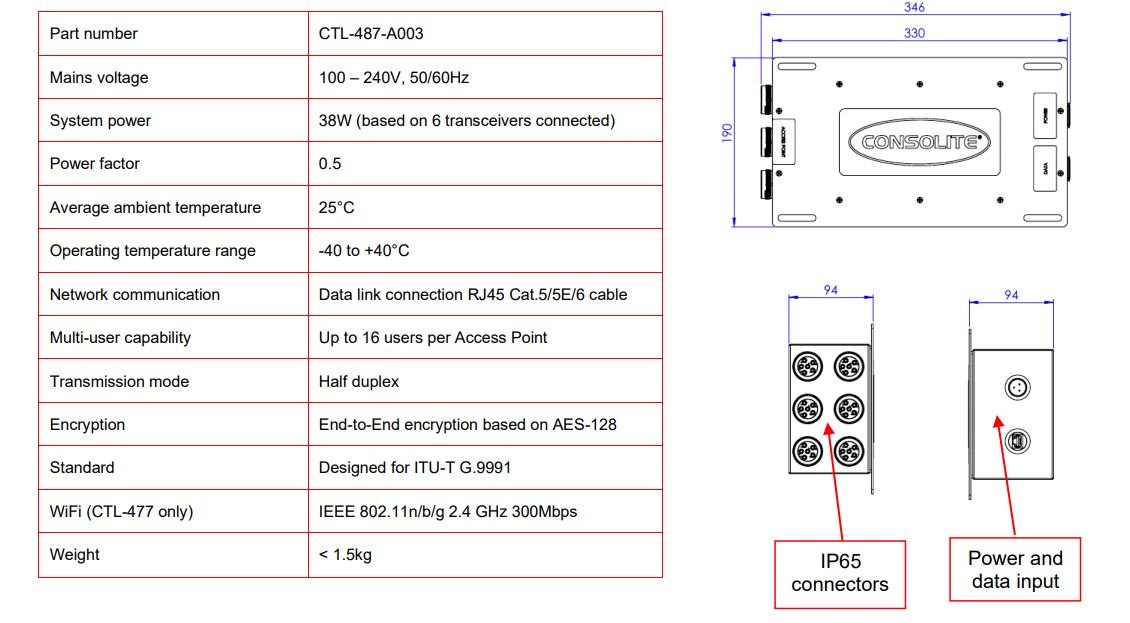
    The following information is taken from the datasheet available on Consolite Technology’s website.

    Based on Signify’s highly successful LiFi system, Consolite has re-engineered the technology to be suitable for the Military environment.

    Meeting the relevant Def Stans and Mil-Stds this product is developed for use in situations where Wi-Fi is not an option.

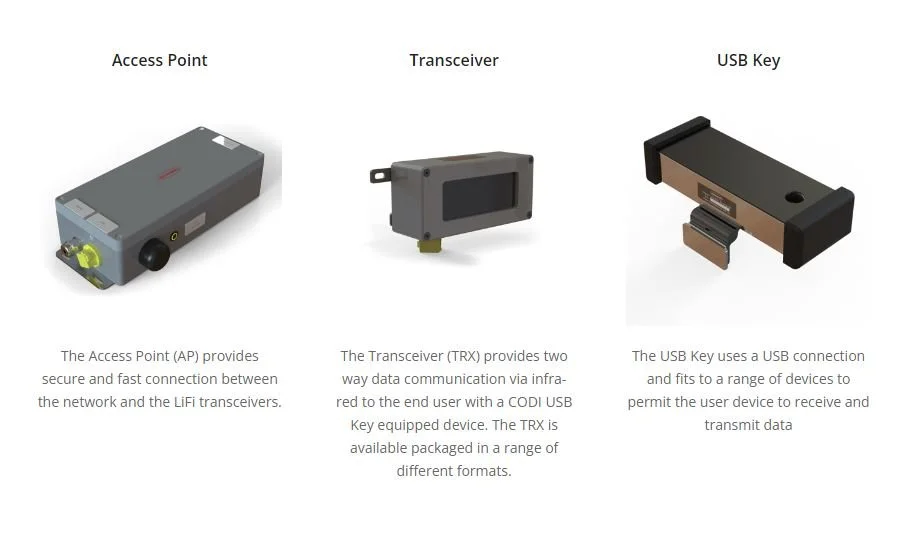
    The system consists of 3 components:

    • 1 x Access Point to connect power and data

    • Up to 6 x Transceivers can be connected to the Access Point

    • Up to 16 x USB Keys can be connected at any time

    Credit to Consolite Technology


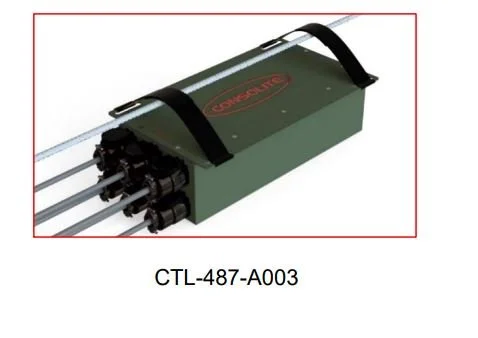
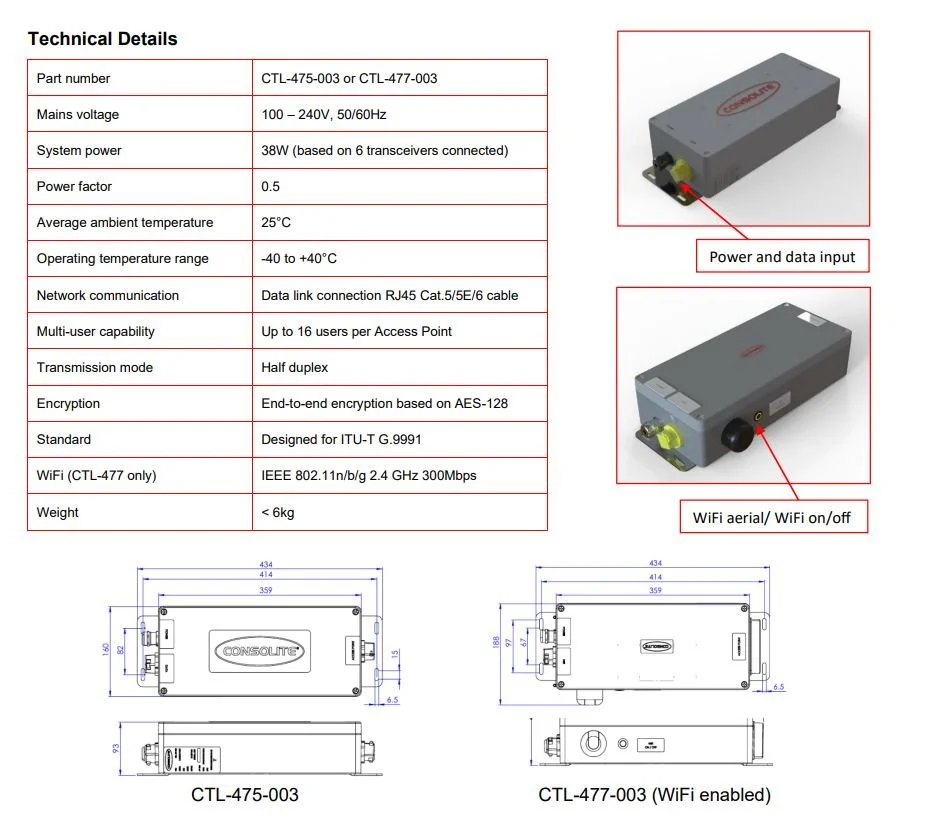
    Access Point (connection for data and power)


    The Access Point is the connection point for power and data. The Transceivers are plugged in here with IP65 glands. A WiFi-capable version is available – the WiFi is disabled locally when not required.

    Technical Details
    Credit to Consolite Technology

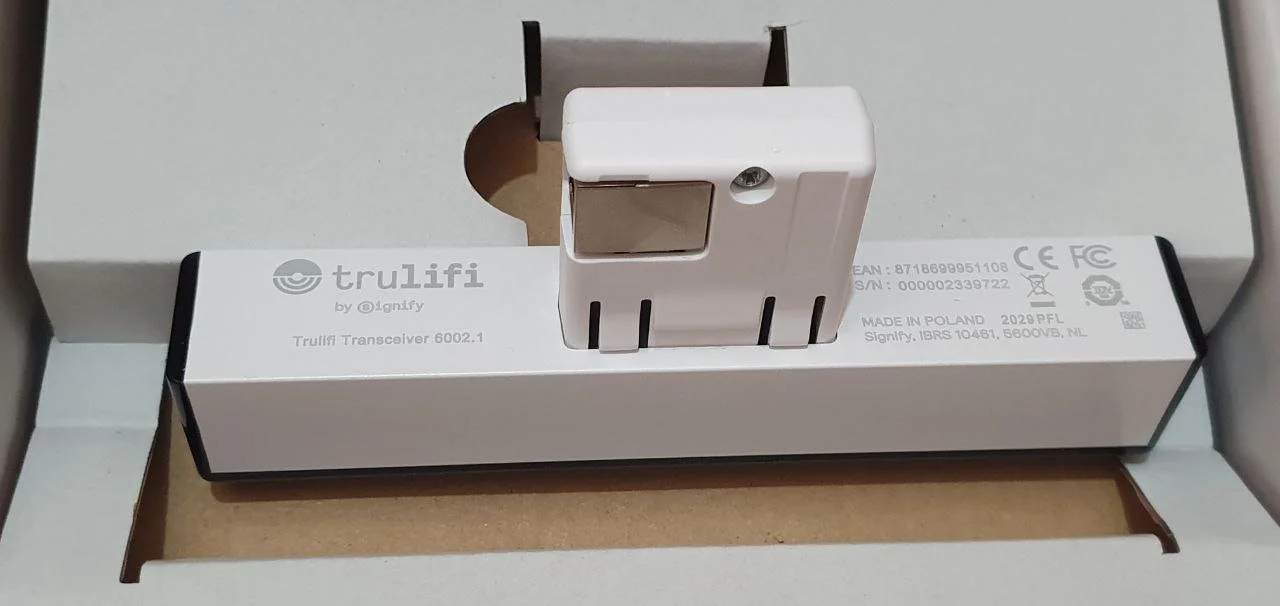
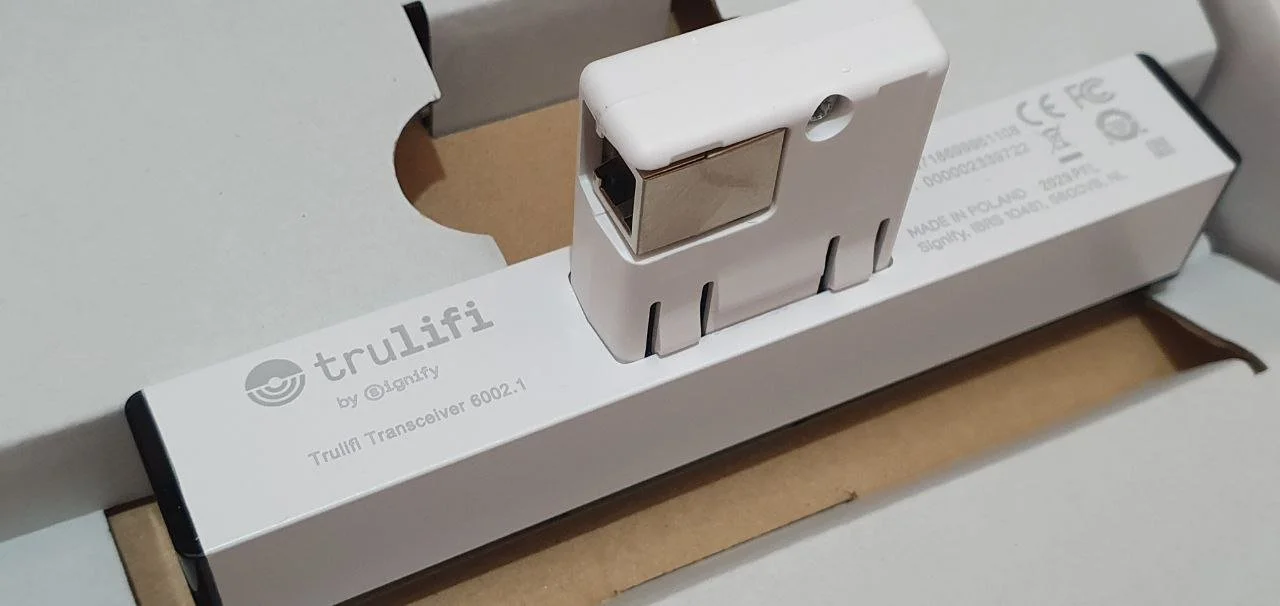
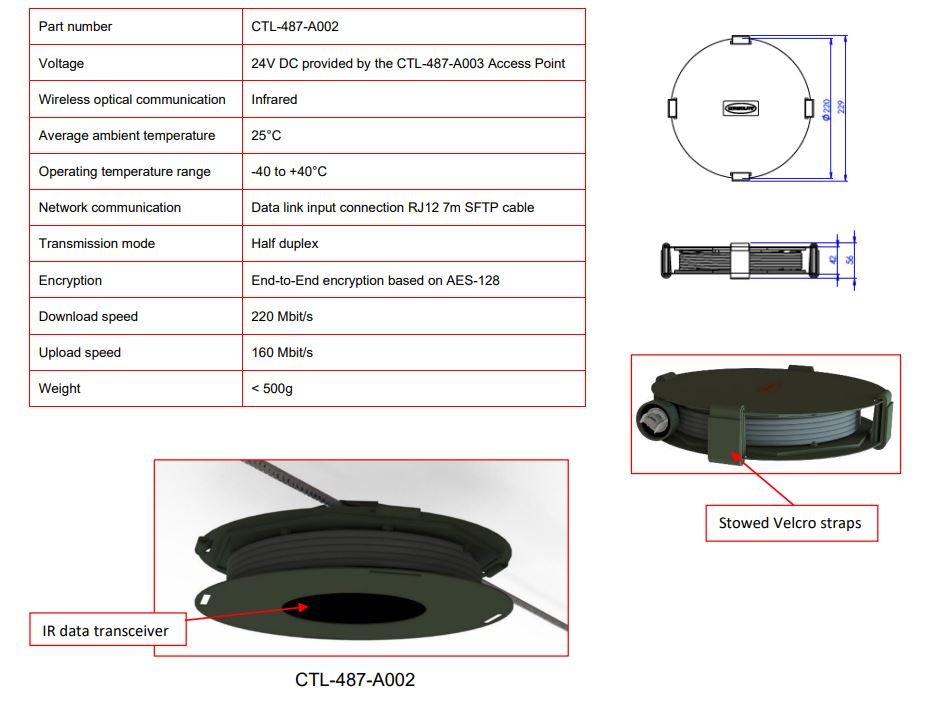
    Transceiver (detector connected to access point)

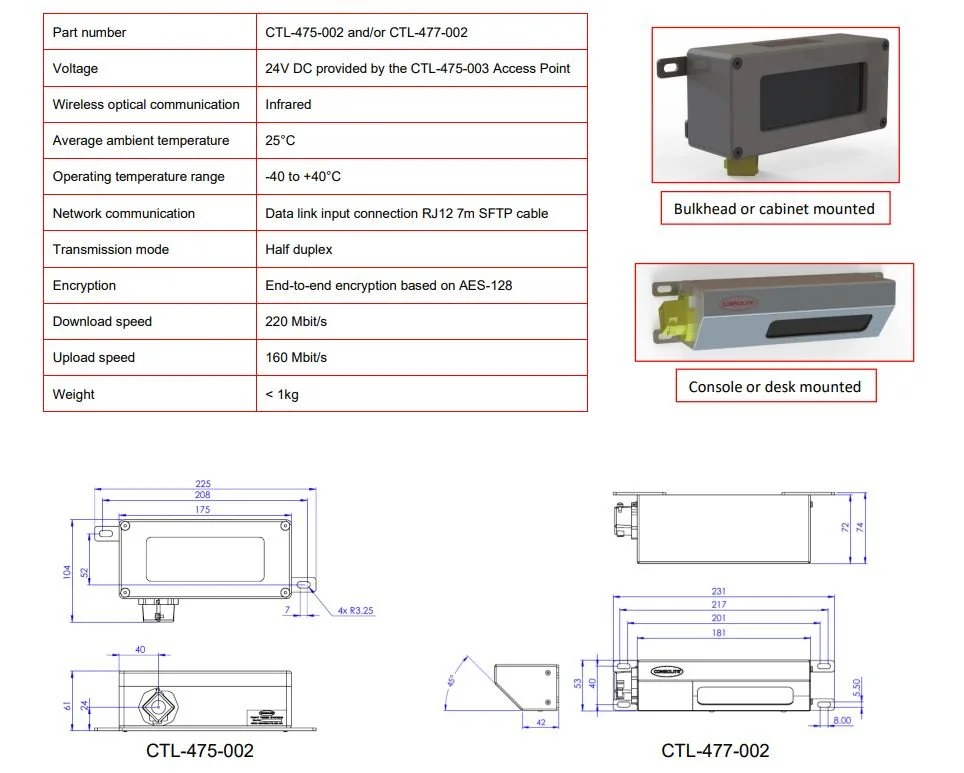
    The transceiver is designed to be used between 1.2 and 2.8m from the USB key. Data rates are best inside a 60-degree cone. The transceiver is designed to stow data cable wrapped around the transceiver's body.

    The exit window is in the central part of the product. The unit is hung with Velcro for easy deployment to cords, cables or poles.


    Technical Details

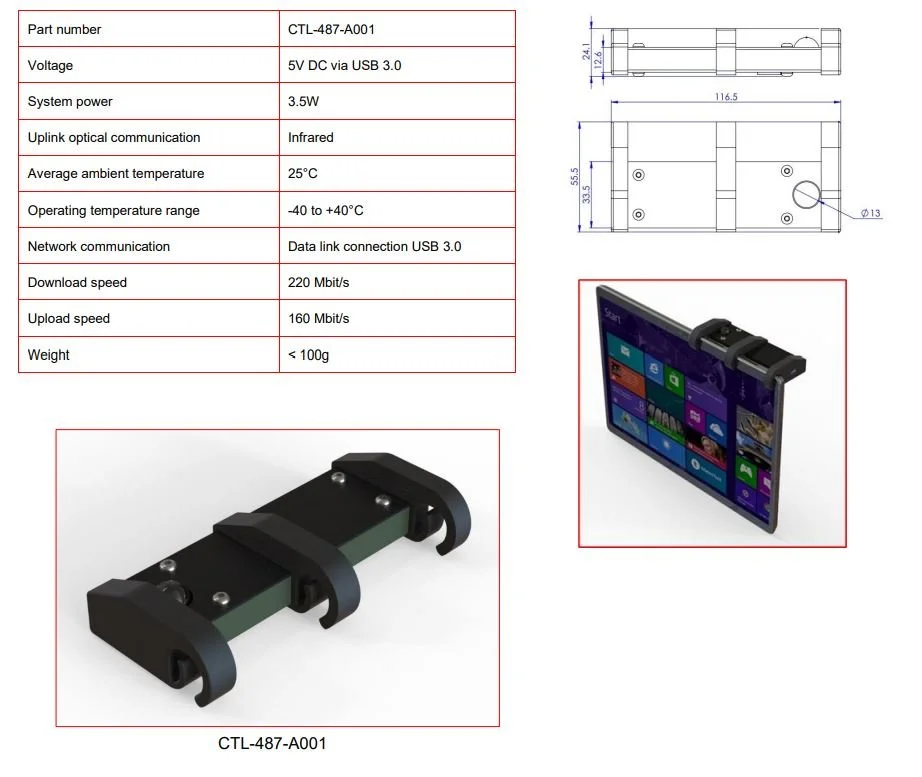
    USB Key (for connection to your device)


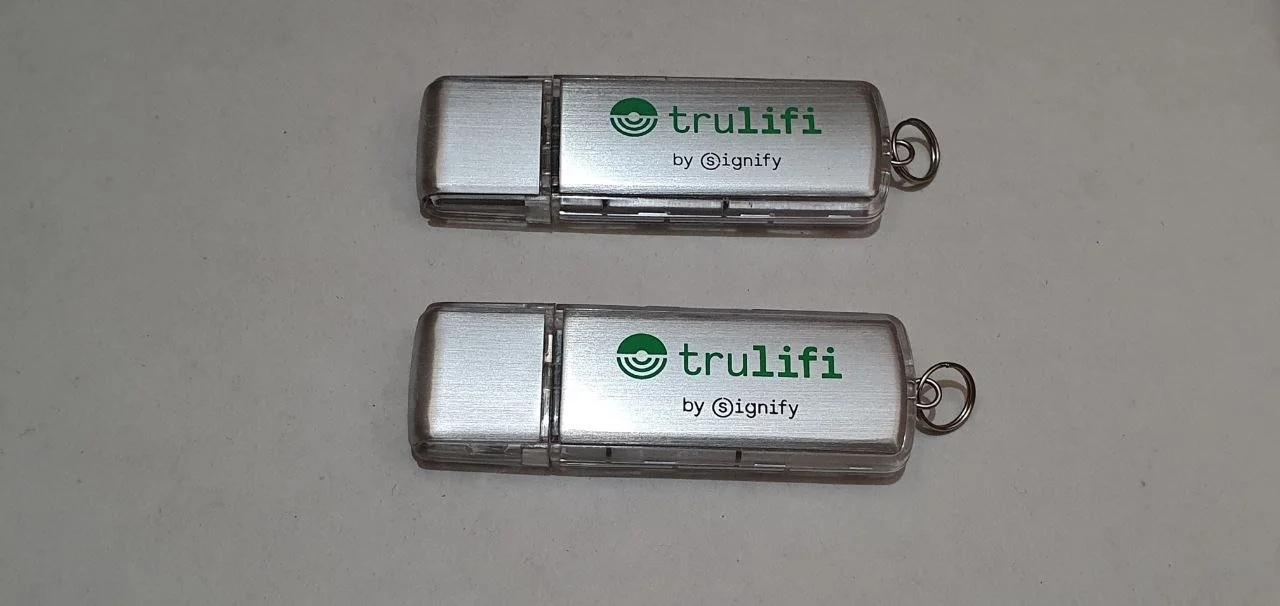
    The USB Key is necessary for the device to communicate with the Transceiver. It is plugged by wire directly into the PC, Laptop, Tablet or Smart Phone.

    The format shown below is hooked over the monitor, laptop, the tablet to allow easy removal and storage. It is fitted with impact absorption bump strips to protect against drops and impact in the field. It is resistant to drops in excess of 5m.

    As with the Transceiver, other housings and fixing methods can be tailored to different applications and Consolite Technology specialise in customisation


    Technical Details

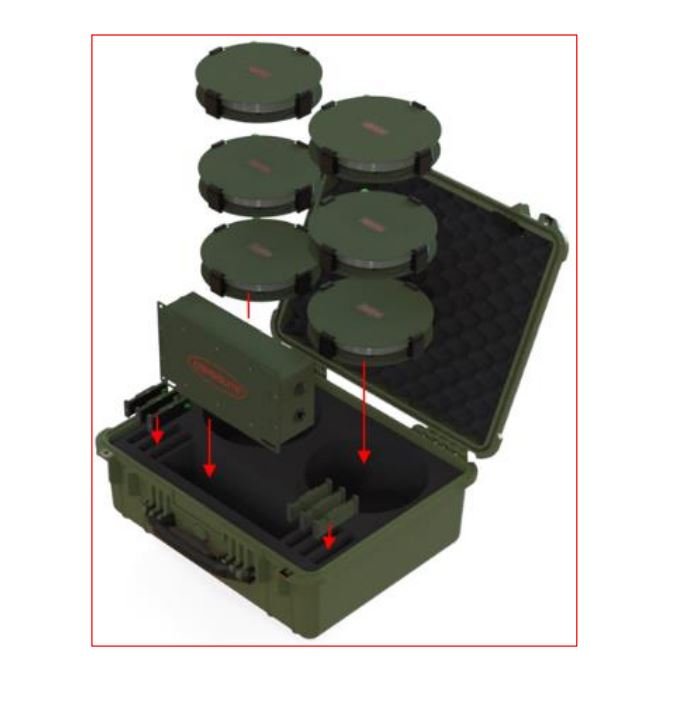
    Deployable System


    A Rugged case containing the following:

    • 1 x Access Point

    • 6 x Transceivers

    • 6 x USB Keys

    Dimensions: 616 x 493 x 220mm

    Weight: 13.3kg (net weight 7.1kg)


    Naval LiFi System


    Providing fast data rates throughout a ship allows connectivity in a way that hasn’t been experienced before. Crew can become connected in the same way as society does. Fast communications, video linking, geo-location, instant access to maintenance documents, on-the-job training through augmented reality, and fast logging of maintenance activities are just some of the new realities of a connected warship.

    Shipyard worker connectivity during refit can provide significant time savings – studies estimate at least 20% savings by providing data at the point of need. Imagine a 20% saving in labour during a refit period on an aircraft carrier. Designers and project managers could have access to maintenance documentation and e-mail whilst out of the office as well as a solid phone signal on the lower decks of the ship.

    The following information is taken from the datasheet available on Consolite Technology’s website.

    ACCESS POINT (CONNECTION FOR DATA AND POWER)
    Credit to Consolite Technology


    Transceiver (detector connected to access point)

    The transceiver is designed to be used between 1.2 and 2.8m from the USB key. Data rates are best inside a 60-degree cone. The transceiver is designed to stow data cable wrapped around the transceiver's body.


    Technical Details
    Credit to Consolite Technology


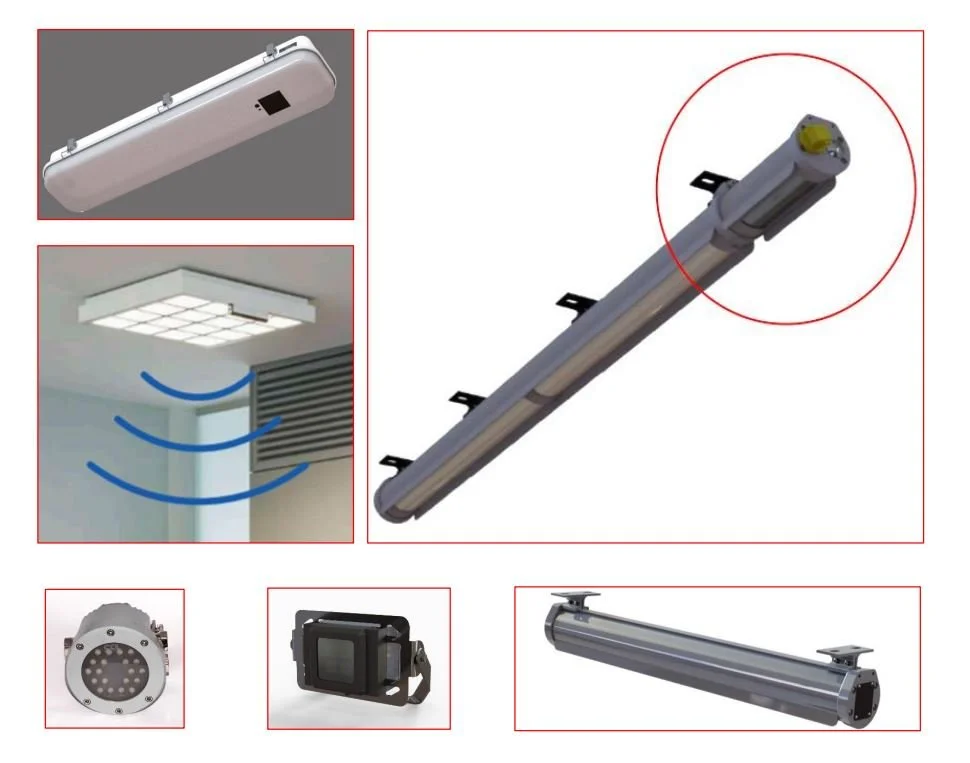
    Co-location with light sources

    As a light manufacturer, Consolite works hard to manage lighting efficiencies, angles, colour temperature, dimming and different lighting modes like red or night vision compatible lighting.

    To use LiFi through some (or all) of those other considerations would mean a compromise on light output, data rate, temperature resilience and/or lighting efficiency. The IR modules can be added to suitable light fittings without changing the fitting.

    Credit to Consolite Technology


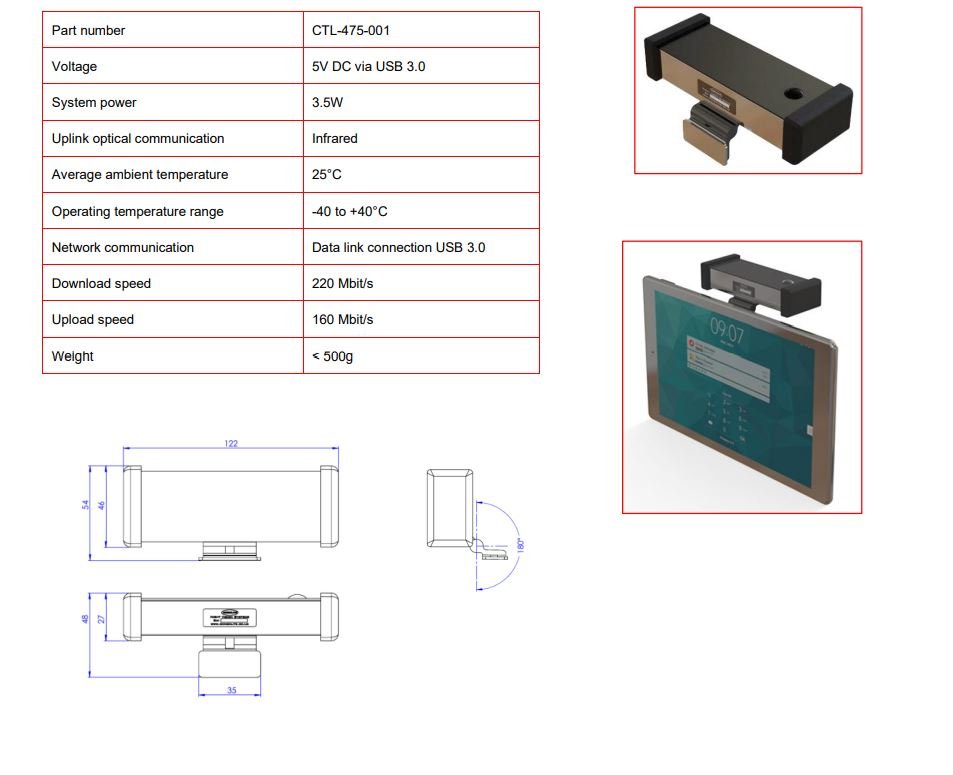
    USB KEY (FOR CONNECTION TO YOUR DEVICE)


    The USB Key is necessary for the device to communicate with the Transceiver. It is plugged by wire directly into the PC, Laptop, Tablet or Smart Phone.

    The format shown below is hooked over the monitor, laptop, the tablet to allow easy removal and storage. It is fitted with impact absorption bump strips to protect against drops and impact in the field. It is resistant to drops in excess of 5m.

    As with the Transceiver, other housings and fixing methods can be tailored to different applications and Consolite Technology specialise in customisation


    Technical Details
    Credit to Consolite Technology


    Consolite Technology Contact Details

    If you are interested in getting more information about their products or purchasing any of their products for military or navy purposes, you can contact Consolite on the following details:

    Phone: +44 (0)1747 840900

    Email: sales@consolite.co.uk

    Address:

    Consolite Technology Limited

    St.Martin's Business Park

    Bells Lane, Zeals

    Wiltshire, BA12 6LY

    United Kingdom

    Company Registration Number: 1530246 (England & Wales)

    Quality Assured to ISO9001:2015

    Consolite has worked with military lighting for over 40 years on both Air and Ship platforms. Consolite specialises in advanced lighting design and tests and has become the authority in lighting for Naval applications worldwide. The Consolite Data via Infra-Red system is the next generation of that expertise, taking lighting to a new level.

    Consolite’s partnership with the Signify Team has brought the combination of Signify’s huge industrial investment with Consolite specialist military focus. As a team and partners, they are providing connectivity to Naval ship operations which are revolutionising data use at sea.

    Signify

    Signify is the new brand name of Philips Lighting. The name change occurred in March 2018 to represent the transformation from an analogue lighting company into a digital lighting and Internet of Things (IoT) company. Signify is the world leader in lighting for professionals, consumers and lighting for the Internet of Things. The company provides lighting solutions for professional segments such as automotive, healthcare, horticulture, office, outdoor, phototherapy, petrol stations, solar, purification, schools, fashion, cinema, and more. These lighting solutions include indoor and outdoor luminaries, lamps, electronics, lighting controls, lighting control software, IoT systems and platforms.
    Credit to Signify

    Signify has also other brands under its belt such as Philips, Interact, Modular Lighting Instruments, Luceplan, Color Kinetics, ILTI Luce and Philips Hue.


    Trulifi system

    Signify launched a LiFi system called “Trulifi” back in 2019. Trulifi uses light waves to enable highly reliable, secure two-way wireless communications at speeds far above most conventional workplace wireless technologies.

    Trulifi uses optical wireless transceiver technology built, or retrofitted, into Philips luminaires. This means customers do not have to replace their existing lighting infrastructure to receive great quality light and wireless connectivity.
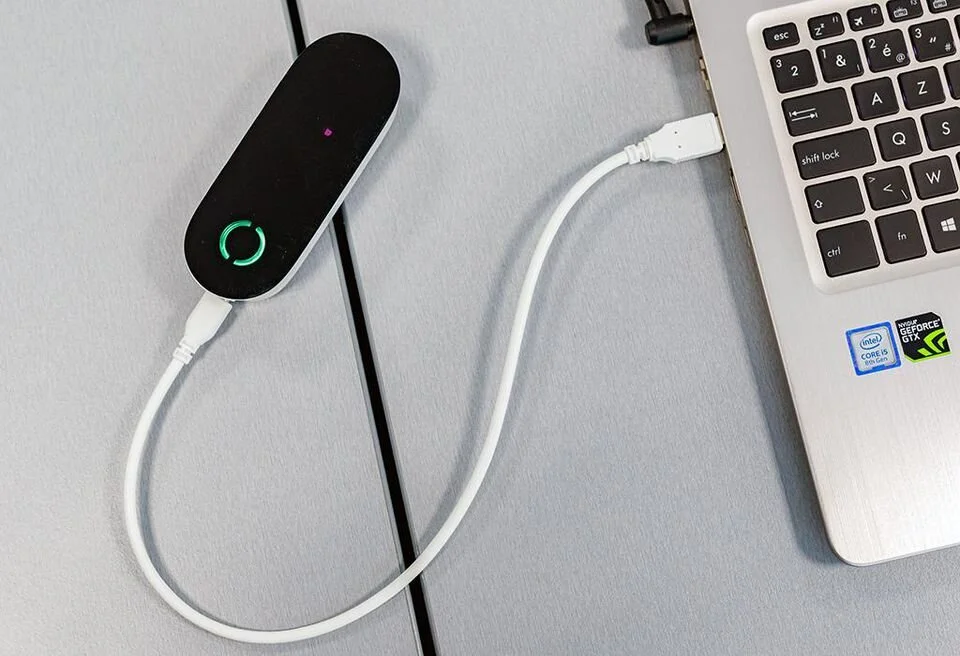
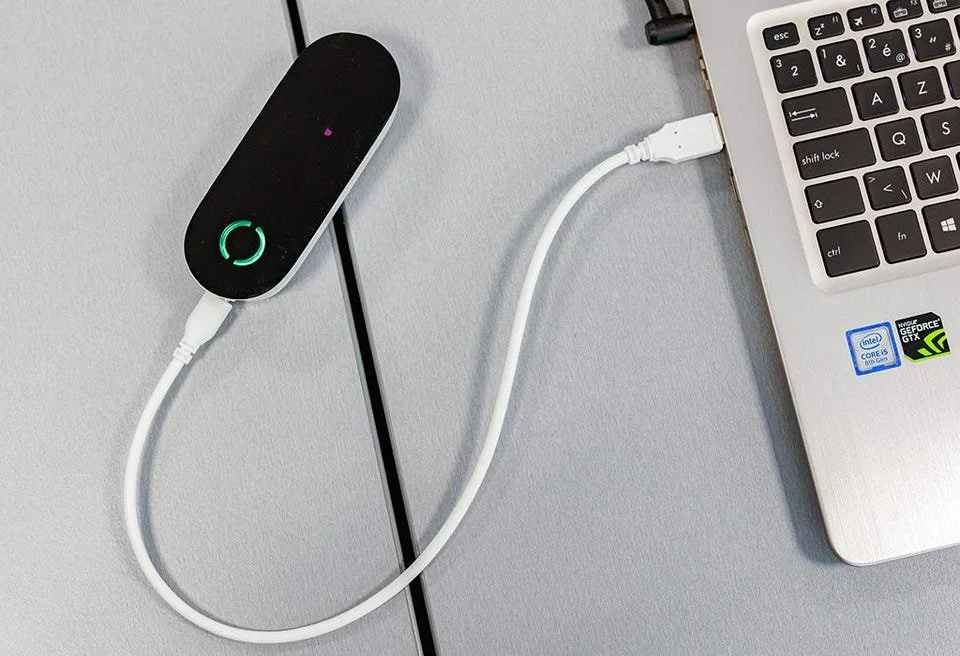
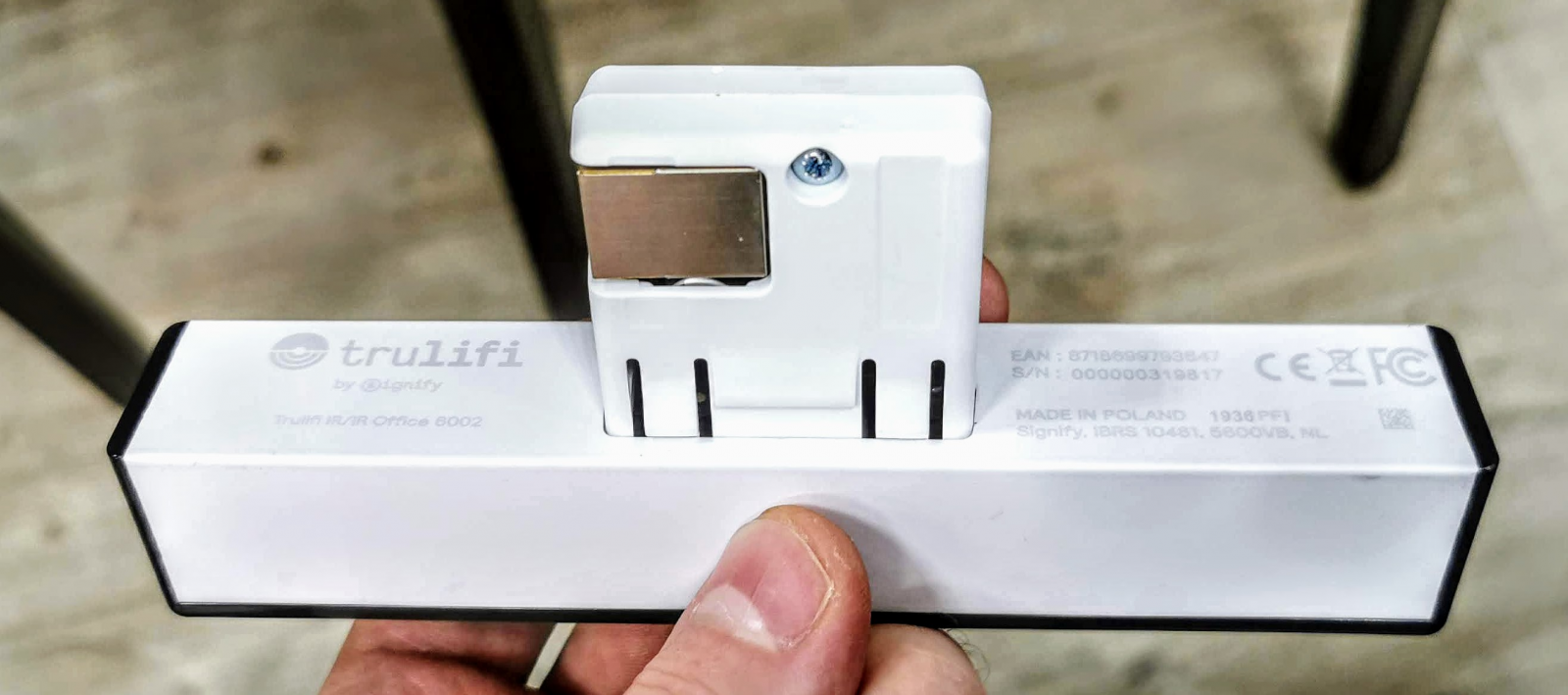
    Trulifi 6002 dongle and USB cable - Credit to Signify

    The LiFi system comprises of a USB Network Access adapter, LiFi enabled LED lights and a Trulifi-6002 Plug-In Optical Transceiver. The Trulifi-enabled luminaires can provide wireless connectivity at speeds up to 150 Megabits per second (Mbps) over large spaces, such as meeting rooms and office floors. There is seamless handover between each Trulifi-enabled luminaire enabling users to roam around. The speed is fast enough to stream simultaneously 30 1080p HDTV movies. A USB-access key, plugged into a laptop, is needed to receive the LiFi signal and acts as an emitter to send data back to the luminaire.

    The Trulifi range also includes a fixed point-to-point system, up to 250 Mbps speed, which acts like a wireless cable. This is ideal for mobile devices connectivity. This LiFi system can also be useful to connect robots or machines in radio frequency (RF) harsh environments like industrial plants, or hospitals where RF communications may not be permitted, or where there’s a need to send and receive large data files securely and quickly. Currently, Trulifi is aimed at professional markets, including offices, hospitality, retail, industry, construction and healthcare.

    Benefits of Trulifi

    Signify claimed the following three benefits of their Trulifi system:

    RELIABLE

    Trulifi is ideal for busy areas, such as multi-tenancy buildings, stations, airports and public areas. Network availability and overload are no longer an issue. Trulifi provides guaranteed bandwidth without interference from other radio communication systems.

    What’s more, it works in places where radio frequencies are not permitted, restricted or could cause interference – such as in hospitals, some schools, aircraft and industrial plants. It also works where radio frequencies don’t work well or at all.

    Trulifi actively coordinates traffic, ensuring good quality of service for all users, at all times. It uses the ITU G.9991 LiFi standard. 

    The new standard, ITU G.9991, describes the system architecture, physical layer and data link layer specification for ‘high-speed indoor VLC transceivers’, the VLC access points within light bulbs.

    SECURE

    Trulifi uses AES 128-bit encryption. The Advanced Encryption Standard (AES) is a symmetric block cipher chosen by the U.S. government to protect classified information and is implemented in software and hardware throughout the world for the encryption of sensitive data. Information is accessed using a USB access key. What’s more an extra layer of security is built-in, as light waves cannot penetrate walls. This all helps to make Trulifi as secure as wired communication. Perfect for applications where security is paramount:

    • Financial institutions

    • Government

    • Police

    • Military

    • Data centres

    • Corporate organisations

    FAST

    Trulifi 6002 series has a net data rate up to 150 Mbps for the downlink and the uplink. That’s fast enough to stream simultaneously 30 1080p HDTV movies.

    It’s perfect for offices and large spaces as each luminaire transceiver hands off seamlessly to another. And unlike other LiFi systems, it works with the lights on, dimmed or off.

    Trulifi 6013 is a fixed point-to-point system. It acts like a wireless cable with a guaranteed net data rate up to 250 Mbps for the downlink and uplink. It can be used in a host of environments – from connecting machines in a factory to sending large image files in a hospital. Trulifi 6013 is available with Blue, Red and Green light.


    Li-Fi Conference 2022

    The Li-Fi Conference 2022 Edition was a great success. Li Fi Tech News will very soon write articles on the topics treated at the Conference.

    What is LiFi?

    LiFi, also known as "Light Fidelity" is a wireless optical networking technology, which uses light-emitting diodes (LEDs) to transmit data. In 2011, professor Harald Haas made a LiFi demonstration at the TED (Technology, Entertainment, Design) Global Talk on Visible Light Communication (VLC).

    VLC uses light as a medium to deliver high-speed communication like Wi-Fi and complies with the IEEE standard IEEE 802.15.7. The IEEE 802.15.7 is a high-speed, bidirectional, and fully networked wireless communication technology-based standard similar to Wi-Fi's IEEE 802.11.

    How does LiFi work?

    LiFi is a high speed, bidirectional, and fully networked wireless communication of data using light. LiFi constitutes of several light bulbs that form a wireless network.

    When an electrical current goes through to a LED light bulb, a stream of light (photons) emits from the lamp. LED bulbs are semiconductor devices, which means that the brightness of the light flowing through them can change at extremely high speeds. The signal is sent by modulating the light at different rates. The signal can then be received by a detector that interprets the changes in light intensity (the signal) as data. Also when the LED is ON, you transmit a digital 1, and when it is OFF, you transmit a 0.

    LiFi Benefits

    The primary benefits of LiFi are as follows:

    Security: Provides entirely secure access. Where there is no light there is no data.

    Safety: Does not produce electromagnetic radiation and does not interfere with existing electronic systems.

    Localisation: Allows localisation due to the small coverage area of LiFi access point - localisation can be used for very precise asset tracking.

    Data density: Provides ubiquitous high-speed wireless access that offers substantially greater data density (data rate per unit area) than RF through high bandwidth reuse.

    Credit to Oledcomm

    LiFi Applications

    LiFi can be used for so many applications and the list is increasing every year. You can read our updated list of Li-Fi applications at the following link:

    https://www.lifitn.com/blog/2021/2/13/top-30-li-fi-applications-updated-list-including-potential-applications

    Credit to pureLiFi

    LiFi Systems Reviews by LiFi Tech News

    OLEDCOMM LIFIMAX KIT REVIEW - ONE YEAR IN


    We reviewed the LiFiMax kit produced by the leading French LiFi company Oledcomm. We bought this LiFi kit system at the end of 2020. After over a year of use, we decided to write a review of this LiFi system. We looked briefly at the profile of Oledcomm, a brief history of the LiFiMax system, the Kit box contents, some testing and performance results of this LiFi system, the customer experience and our own verdict (the good and the bad points) of the LiFiMax kit.

    You can read the review on this link:

    https://www.lifitn.com/blog/lifimaxreview

    SIGNIFY TRULIFI 6002.1 STARTER KIT SYSTEM REVIEW

    We also reviewed the Trulifi 6002.1 starter kit produced by Signify, the world leader in lighting for professionals, consumers and lighting for the Internet of Things. We got this LiFi kit system with the help of PCDSI and Signify around August 2021. In a similar fashion done with our previous review of the LiFiMax kit a few months ago, we will look briefly at the profile of Signify, a brief history of the Trulifi 6002.1 kit, the Kit box contents, some testing and performance results of this LiFi system, the customer experience and our own verdict (the good points and the bad points) of the Trulifi 6002.1 kit.

    You can read the review on this link:

    https://www.lifitn.com/blog/trulifi6002review

    In conclusion, if you are also interested to hear more information about the OWNII Coin or enquire about LiFi devices such as the LiFiMax and Trulifi, you can contact us through our chatbot or by sending an email through our contact us form. If you enjoyed this post and would like to hear more updates about LiFi technology, subscribe to our newsletter. Don’t forget to subscribe to our social media accounts. You can also join our Telegram group about LiFi technology on this link:

    https://t.me/joinchat/FMzOmsEKyJFrU6Af


    In conclusion, if you are also interested to hear more information about the OWNII Coin or enquire about LiFi devices such as the LiFiMax and Trulifi, you can contact us through our chatbot or by sending an email through our contact us form. If you enjoyed this post and would like to hear more updates about LiFi technology, subscribe to our newsletter. Don’t forget to subscribe to our social media accounts. You can also join our Telegram group about LiFi technology on this link:

    https://t.me/joinchat/FMzOmsEKyJFrU6Af


    OWNii Coin (LiFi Cryptocurrency) Launch Update 2022 - Private Sale Coming Up in July 2022

    Table of Contents

      OWNii Coin (LiFi Cryptocurrency) Launch Update 2022 - Private Sale Coming Up in July 2022

      Launch Update and Upcoming Private Sale


      This week, we had another interesting conversation with the CEO of Global Greenology and the different teams working on the launch of the OWNii Coin. We were informed that another private sale for the OWNii coin is coming sometime in the month of July 2022. This also means that the public launching of the OWNii coin is very near.

      LiFi Tech News will continue to keep you updated on the progress of the OWNii Coin Launching.

      OWNii Coin


      OWNii stands for Optical Wireless Network Internet Infrastructure.  OWNii Coin is developed to oversee, develop, and design the physical infrastructure necessary to implement LiFi in the United States and developing nations abroad.

      OWNii creates wireless communication that is faster, addresses issues with internet security, and allows localisation due to the small coverage area of LiFi access points used for precise asset tracking. Furthermore, providing ubiquitous high-speed wireless access that offers substantially greater data density (data rate per unit area) than RF through high bandwidth reuse.


      Credit to Signify - Trulifi dongle

      The State of Wireless Communications

      Whether it is replying to an email on your laptop or posting pictures on social media through a Smartphone, wireless networks play an important role in facilitating communication in a world that is constantly on the move. Currently, the most popular technologies in use are based on radio frequencies of the electromagnetic spectrum. Cellular communication and Wi-Fi are based on this technology.

      Cellular Communication

      Today, 67% of the world’s population uses mobile phones. Of this number, it is estimated that 2.5 billion people are Smartphone users. Smartphones coupled with internet access have allowed greater mobility and revolutionised the way people communicate. Wireless communications have evolved into a utility like water and electricity, fundamental to the socio-economic growth of modern society.

      Current networks support voice and data communications, but, they offer average transfer rates of 7 Mbps. Meanwhile, 4G speeds range between 15 to 20 Mbps, while 5G speeds can range from 50 Mbps to over 1,000 Mbps (1 Gbit/s).

      Cellular communications are affected by a variety of factors with the main one being propagation path obstruction. This refers to the obstruction to radio waves caused by natural or man-made features such as buildings, caves, clouds, etc. This disruption results in issues such as connectivity issues and duplicity of data.

      Meanwhile, traffic using mobile data is on the rise. According to one report, the total mobile data traffic is estimated to increase by eight times by 2023. This increase is attributed to the growing popularity of video-based media such as YouTube, Netflix, social media and games and the IoT.

      To meet the ever-growing demand for mobile communications, cellular networks have to grow from simple local service providers into large, complex cooperative systems. The main challenge for cellular communication operators will revolve around addressing this exponential demand created by consumers. The exponential growth in demand for wireless data is outpacing the supply of current and emerging wireless networks.

      So far, additional frequency spectra and denser cell sites are being allocated to answer this challenge, but these short-term solutions will only delay the inevitable spectrum crunch. In addition, up to 70 per cent of the wireless data demand is coming from indoor locations, which are currently being served by Wi-Fi APs and femto-cellular communications.

      An indirect, but increasingly becoming a significant direct factor in the forms of current communications and technologies is the overall energy usage involved in the backbone infrastructures and enabling technologies. It is increasingly and becoming statistically significant on the correlation between the increase in volume and throughput of voice and data communications and energy consumption.

      A combined increase in the speed of such communications systems and technologies, coupled with the adoption and switch to the sustainable energy source of electricity, would significantly have a positive impact to achieve a balance, and in ensuring sustainable growth in the demand for processing, throughput, speed, storage and management of such infrastructures and facilities.

      The OWNii Ecosystem aims to contribute to part of the problem solution and participate in the revolutionary technological advances in these aspects.

      Wi-Fi Communication

      With increased smartphone usage, the demand for data has increased exponentially. This has led to using the use of radio frequency bands below the 10 GHz range. Wi-Fi routers operate in the frequency bands of 2.4 GHz and 5 GHz.

      Wi-Fi gives wireless access to the internet by connecting the home or office Ethernet to the Smartphone or any other device to enable data transfer. Wi-Fi is gaining popularity because it provides higher data transfer rates when compared to cellular communication. The average WLAN-11n Wi-Fi router can give speeds up to 150 Mbps while the more expensive WiGig routers can scale up to 1-2 Gbps.

      While Wi-Fi communications allow faster data transfer, it suffers from issues ranging from security to scalability. Wi-Fi uses encrypted radio waves to transmit data over a network. These waves can travel through walls thus making them vulnerable to interception and potential hacking. Apart from Wi-Fi routers, there are other household appliances that operate in the low radio frequency spectrum. These include devices such as garage doors, baby monitors and cordless phones. Radio signals from these devices can disrupt the proper functioning of a Wi-Fi router leading to frequent connectivity or data transfer issues.

      Finally, the demand for inexpensive high-speed networks is increasing by the day. It is predicted that within the next 3-5 years, the global demand for data will be twice the amount of data supplied via traditional wireless communications.

      The OWNii Ecosystem proposed is well-positioned to achieve that, and in the process of its overall development plans, achieve the very much-needed balance between the demand for speed, capacity, data throughput, security, sustainability and growth-related issues.

      What is LiFi?

      Li-Fi, also known as "Light Fidelity" is a wireless optical networking technology, which uses light-emitting diodes (LEDs) to transmit data. In 2011, professor Harald Haas made a LiFi demonstration at the TED (Technology, Entertainment, Design) Global Talk on Visible Light Communication (VLC).

      VLC uses light as a medium to deliver high-speed communication like Wi-Fi and complies with the IEEE standard IEEE 802.15.7. The IEEE 802.15.7 is a high-speed, bidirectional, and fully networked wireless communication technology-based standard similar to Wi-Fi's IEEE 802.11.

      How does Li Fi work?

      Li-Fi is a high speed, bidirectional, and fully networked wireless communication of data using light. Li-Fi constitutes of several light bulbs that form a wireless network.

      When an electrical current goes through to a LED light bulb, a stream of light (photons) emits from the lamp. LED bulbs are semiconductor devices, which means that the brightness of the light flowing through them can change at extremely high speeds. The signal is sent by modulating the light at different rates. The signal can then be received by a detector that interprets the changes in light intensity (the signal) as data. Also when the LED is ON, you transmit a digital 1, and when it is OFF, you transmit a 0.

      LiFi Benefits

      The primary benefits of LiFi are as follows:

      Security: Provides entirely secure access. Where there is no light there is no data.

      Safety: Does not produce electromagnetic radiation and does not interfere with existing electronic systems.

      Localisation: Allows localisation due to the small coverage area of LiFi access point - localisation can be used for very precise asset tracking.

      Data density: Provides ubiquitous high-speed wireless access that offers substantially greater data density (data rate per unit area) than RF through high bandwidth reuse.

      Credit to Signify

      LiFi Applications

      LiFi can be used for so many applications and the list is increasing every year. You can read our updated list of LiFi applications at the following link:

      https://www.lifitn.com/blog/2021/2/13/top-30-li-fi-applications-updated-list-including-potential-applications

      Credit to Oledcomm

      LiFi Systems Reviews by LiFi Tech News

      OLEDCOMM LIFIMAX KIT REVIEW - ONE YEAR IN


      We reviewed the LiFiMax kit produced by the leading French LiFi company Oledcomm. We bought this LiFi kit system at the end of 2020. After over a year of use, we decided to write a review of this LiFi system. We looked briefly at the profile of Oledcomm, a brief history of the LiFiMax system, the Kit box contents, some testing and performance results of this LiFi system, the customer experience and our own verdict (the good and the bad points) of the LiFiMax kit.

      You can read the review on this link:

      https://www.lifitn.com/blog/lifimaxreview


      SIGNIFY TRULIFI 6002.1 STARTER KIT SYSTEM REVIEW

      We also reviewed the Trulifi 6002.1 starter kit produced by Signify, the world leader in lighting for professionals, consumers and lighting for the Internet of Things. We got this LiFi kit system with the help of PCDSI and Signify around August 2021. In a similar fashion done with our previous review of the LiFiMax kit a few months ago, we will look briefly at the profile of Signify, a brief history of the Trulifi 6002.1 kit, the Kit box contents, some testing and performance results of this LiFi system, the customer experience and our own verdict (the good points and the bad points) of the Trulifi 6002.1 kit.

      You can read the review on this link:

      https://www.lifitn.com/blog/trulifi6002review

      In conclusion, if you are also interested to hear more information about the OWNII Coin or enquire about LiFi devices such as the LiFiMax and Trulifi, you can contact us through our chatbot or by sending an email through our contact us form. If you enjoyed this post and would like to hear more updates about LiFi technology, subscribe to our newsletter. Don’t forget to subscribe to our social media accounts. You can also join our Telegram group about LiFi technology on this link:

      https://t.me/joinchat/FMzOmsEKyJFrU6Af


      FlightPath3D and Latécoère Announced A Partnership To Supply 4K Plug and Play 3D Flight Map on Smart LiFi Monitor

      Table of Contents

        FlightPath3D and Latécoère Announced A Partnership To Supply 4K Plug and Play 3D Flight Map on Smart LiFi Monitor

        Credit to economyandclassbeyond


        A few days ago, FlightPath3D and Latécoère announced a partnership to supply 4K Plug and Play 3D Flight Map on the Smart LiFi Monitor.

        FlightPath3D President Duncan Jackson stated: “We are delighted to be partnering with Latécoère on their unique premium Smart LiFi Monitor. As a leading provider of innovative systems to enhance the passenger experience and aiming to take the Inflight entertainment concept to another level, Latécoère deserves the most interactive, innovative and compelling map to complement this offering."

        Laurent Groux Director of Latécoère Systems Business Unit said, “The flight journey is captivating with our 4K Smart Lifi Monitors and FlightPath3D moving map. Augmented views and satellite imagery are crisp, clear and displayed with detailed visuals. FlightPath3D offers one of the most compelling and innovative 3D moving map experiences with customization potential from interest for corporate use.”


        Article source: https://flightpath3d.com/news/flightpath3d-500-installs-1h21-akwfy-kshg9

        The ACJ Smart LiFi Monitor

        Credit to Airbus

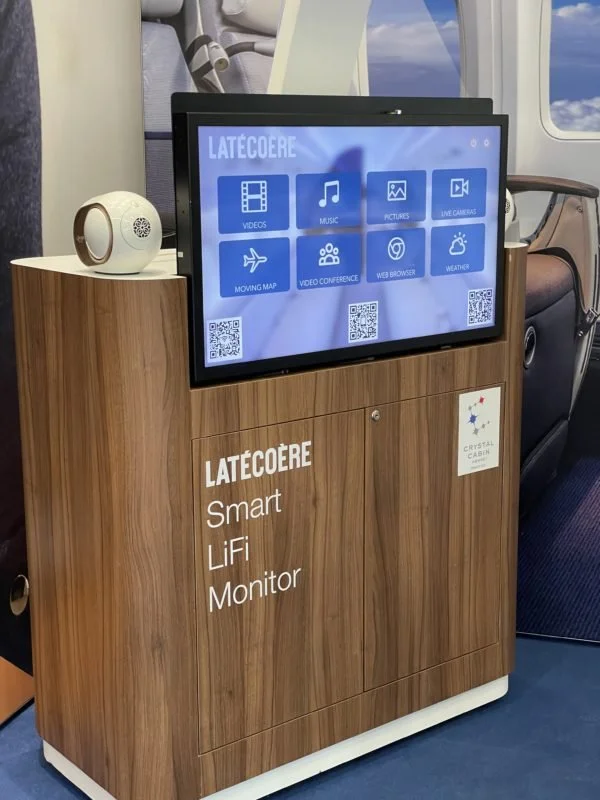
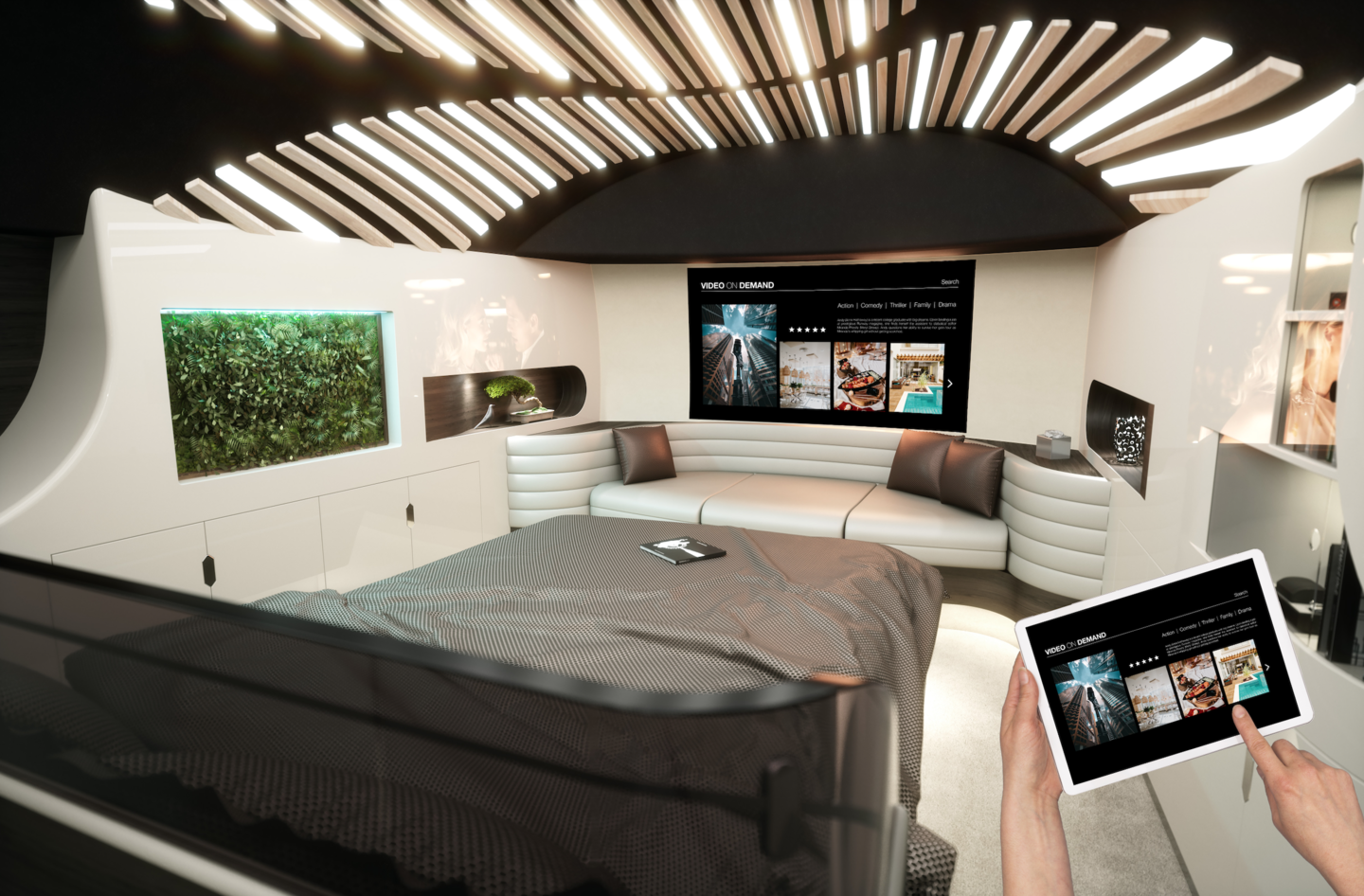
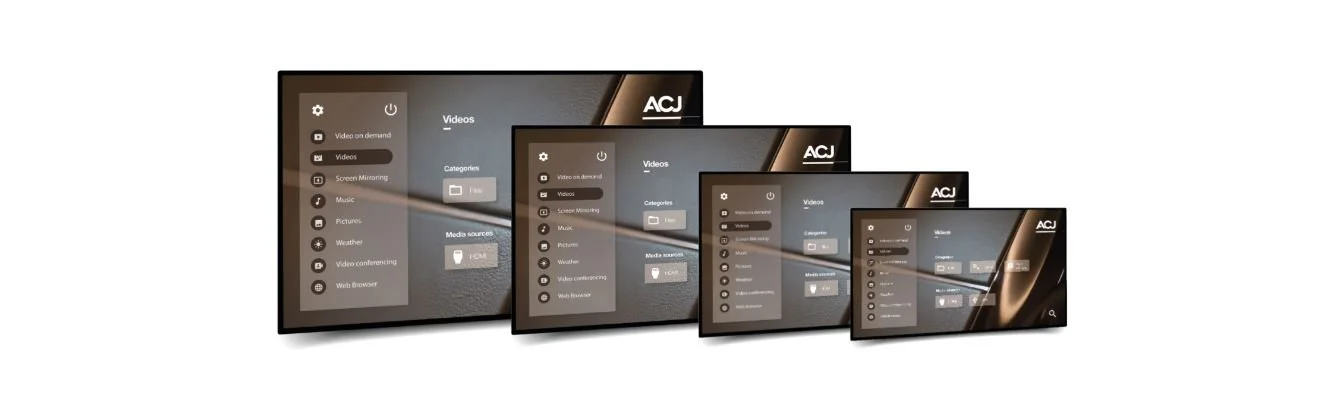
        At the Dubai Air Show 2021, Airbus announced launching “The ACJ Smart LiFi Monitor” developed with Latécoère.

        Airbus Corporate Jets (ACJ) and Alpha Star Aviation signed a letter of understanding at the Dubai Airshow for a new and unique in-flight entertainment (IFE) technology - "The ACJ Smart LiFi Monitor", in the presence of Abdulnaser Al Kheraif and Ibrahim Al Yaheyan, respectively CEO and VP-Tech of Alpha Star Aviation, and Benoit Defforge, president of ACJ.

        Developed in partnership with Latécoère, this new technology was designed as an easy “plug and play” solution.

        In May 2021, Airbus stated that the ACJ Smart LiFi Monitor “provides a unique entertainment experience and was designed to be an easy plug and play solution”. It is a multi-technology smart 4K monitor offering Wi-Fi, Bluetooth and LiFi connectivity. It will include analog audio output, USB-C ports as well as HDMI connections. Features include audio video on demand (AVOD), streaming, mirroring, a web browser, live TV, and its own built-in video conferencing.

        You can read our previous article on the partnership between Airbus Corporate Jet and Latécoère Interconnection Systems On Delivering ACJ Smart LiFi Monitors on the link below:

        https://www.lifitn.com/blog/2021/5/19/airbus-corporate-jet-announces-partnership-with-latcore-interconnection-systems-on-delivering-acj-smart-lifi-monitors

        FlightPath3D

        FlightPath3D is the IFE industry’s most compelling and innovative interactive 3D Moving Map experience enhanced with relevant and engaging ‘geotainment’ information services. We enhance your passenger’s In-Flight Experience with entertaining and informative solutions designed for the entire family.

        Any Aircraft. Any Platform. Any Device. A truly fleet-wide IFE system-agnostic moving map solution for airlines.

        Timely, Relevant Geotainment. Follow your flight route and explore the world around you. Fully detailed city street maps with city, airport and attraction POIs with our Destination City Guide.

        First flown by Norwegian Airlines on their inaugural B787 flight on May 30th 2013 FlightPath3D is now viewed by over 155 million airline passengers a year.

        Betria Interactive (dba FlightPath3D) have the industry's largest specialized map team providing customized map software development and maintenance. They deliver reliable highly customizable inflight map experiences built from the ground up, especially for the airline business with an upgradeable path to the connected future.


        Global Li-Fi Conference 2022


        LiFi is a wireless communication technology which uses light to transmit data and position between devices. The technology is similar to Wi-Fi but uses light to transmit data instead of radiofrequency in terms of its end-use.

        Using light to transmit data allows LiFi to offer several advantages, most notably a wider bandwidth channel, the ability to safely function in areas otherwise susceptible to electromagnetic interference (e.g. aircraft cabins, hospitals, military), and offering higher transmission speeds.

        It is interesting to realise that lights that illuminate offices, homes, cars, factories, our streets and more locations also can connect us to data and hence power the growing demand for connectivity and speed.

        Li-Fi Conference is an annual event held online and in a physical venue where professionals from all over the globe gather together in order to share applications, ideas, LiFi trends, new developments and ways to integrate LiFi into services, both for consumers and professionals.

        As stated by JakajimaTV, the following topics that will be covered at the upcoming conference are as followed:

        • Market Development

        • Ecosystem

        • Telecom/datacom (incl. 5G)

        • ICT

        • Security (with role from governmental institutions)

        • Chipset Manufacturers

        • Electrical Contractors

        • System Integrators

        • Applications

        • Home

        • Office

        • Healthcare

        • Education

        • Industry 4.0

        • Mobility (Aviation/Automotive)

        • Standardisation

        • The role of startups

        • Research meets industry

        Who should attend:

        • Business Development, Innovation staff and management of

        • Telecom operators

        • ICT / System integrators

        • Service providers

        • Hardware manufacturers

        • Retailers

        • Electrical Contractors

        • Real Estate

        • Industry 4.0

        • Automotive

        • Aviation

        • Chipset Manufacturers

        • Telecom / datacom (incl. 5G)

        • Governmental bodies

        • Regulatory institutions

        • Investors

        • Start-Ups

        • Students

        • Consumers

        • Professionals of all industries

        • LiFi enthusiasts

        • Tech enthusiasts

        Venue and registration details

        This conference will be held Live and Online. The venue will be the High Tech Campus 1, The Strip 5656 AE Eindhoven The Netherlands.

        You can also find more information on transportation and accommodation details on the following link:

        https://lificonference.com/venue/

        Ticket prices are as followed:

        • Live Standard Rate ticket costs €345,00 (£290)

        • Online Standard Rate ticket costs €155,00 (£134)

        • Live Student Rate ticket costs €125 (£107)

        • Online Student Rate ticket costs €65,00 (£57)

        Prices do not include VAT except where stated otherwise.

        Online tickets can be bought at the following link:

        https://tikcit.com/register/61e002336d7fc4b6745cab83/

        Partners of Li-Fi Conference 2022 Edition

        Signify, HomeGrid Forum, Fraunhofer HHI and LiFi Tech News are partners of the upcoming 2022 edition of the LiFi Conference.

        Signify

        Signify is the world leader in lighting for professionals, consumers and lighting for the Internet of Things. Their energy-efficient lighting products, systems and services enable their customers to enjoy a superior quality of light, and make people’s lives safer and more comfortable, businesses more productive and cities more livable.

        With 2021 sales of EUR 6.9 billion, approximately 37,000 employees and a presence in over 70 countries, Signify is unlocking the extraordinary potential of light for brighter lives and a better world.

        LiFi Tech News

        LiFi Tech News is a media news platform covering articles, photos, videos and news about LiFi, the next level and revolution in wireless communications. LiFi Tech News's mission is to enlighten individuals and bring awareness of the mechanism, potential, applications and benefits of this wireless communication technology called LiFi. The vision of LiFi Tech News is to become the leading platform for LiFi news from anywhere in the world.

        HomeGrid Forum

        HomeGrid Forum (HGF) is an industry alliance formed to support the development and deployment of a unified coaxial, phoneline, powerline, and plastic optical fiber home networking technology called G.hn (Gigabit Home Networking). G.hn technology is based on standards developed by the UN’s International Telecommunications Union – Telecom (ITU-T) standards development organization.

        HomeGrid Certification ensures compliance and interoperability (C&I) of silicon and systems through plugfests and rigorous C&I testing. A logo is issued for certified systems’ packaging and documentation of G.hn-based systems. HGF Certification ensures that retail customers and Service Providers have confidence in, and great satisfaction with all HGF G.hn Certified Certified products.

        Fraunhofer HHI

        Innovations for the digital society of the future are the focus of research and development work at the Fraunhofer Institute for Telecommunications, Heinrich Hertz Institute, HHI. In this area, Fraunhofer HHI is a world leader in the development for mobile and optical communication networks and systems as well as processing and coding of video signals.


        Benefits of Attending The Conference


        1.Learn the existing and latest LiFi trends in the Light and LiFi Industry


        Conferences address the main issues and provide in-depth industry news that is relevant to a particular sector. As an attendee, you will benefit from comprehensive knowledge about the latest news in the Light and LiFi industry; where the LiFi trends will go and how to adapt to them in the future or in your business and work activities.


        2. discover current research developments


        You will learn current and updated research work and development by some leading LiFi companies, Manufacturers, Suppliers and Academic institutions from the Light Communications Alliance. This can give you a deeper insight into some of the behind scenes works and research in regard to LiFi technology.


        3. Networking


        Events usually include a dedicated time for networking, which attendees can take advantage of to create a connection with other professionals in the industry and to renew contact with those they already know. With the upcoming Li-Fi conference, it is no different when it comes to networking.


        4. Learning beyond your field of interest


        Attending the conference dramatically can enhance both your professional and personal development, as well as give you tools and skills which you cannot be taught in-house or online. The focused nature of learning at a conference allows you to dig deeper with the understanding of your topic of interest, especially in the field of LiFi technology.


        5. listen to different points of view and perspectives from different companies in the light and lifi industry


        Attending the conference will give a range of perspectives from different key players in the Light industry in regard to the applications of LiFi technology.


        LiFi Systems Reviews by LiFi Tech News


        Oledcomm LIFIMax Kit Review - One Year In


        We reviewed the LiFiMax kit produced by the leading French LiFi company Oledcomm. We bought this LiFi kit system at the end of 2020. After over a year of use, we decided to write a review of this LiFi system. We looked briefly at the profile of Oledcomm, a brief history of the LiFiMax system, the Kit box contents, some testing and performance results of this LiFi system, the customer experience and our own verdict (the good and the bad points) of the LiFiMax kit.

        You can read the review on this link:

        https://www.lifitn.com/blog/lifimaxreview


        Signify Trulifi 6002.1 Starter Kit System Review

        We reviewed the Trulifi 6002.1 starter kit produced by Signify, the world leader in lighting for professionals, consumers and lighting for the Internet of Things. We got this LiFi kit system with the help of PCDSI and Signify around August 2021. In a similar fashion done with our previous review of the LiFiMax kit a few months ago, we will look briefly at the profile of Signify, a brief history of the Trulifi 6002.1 kit, the Kit box contents, some testing and performance results of this LiFi system, the customer experience and our own verdict (the good points and the bad points) of the Trulifi 6002.1 kit.

        You can read the review on this link:

        https://www.lifitn.com/blog/trulifi6002review


        What is LiFi?


        LiFi, also known as "Light Fidelity" is a wireless optical networking technology, which uses light-emitting diodes (LEDs) to transmit data. In 2011, professor Harald Haas made a LiFi demonstration at the TED (Technology, Entertainment, Design) Global Talk on Visible Light Communication (VLC).

        VLC uses light as a medium to deliver high-speed communication like Wi-Fi and complies with the IEEE standard IEEE 802.15.7. The IEEE 802.15.7 is a high-speed, bidirectional, and fully networked wireless communication technology-based standard similar to Wi-Fi's IEEE 802.11.

        How does LiFi work?

        LiFi is a high speed, bidirectional, and fully networked wireless communication of data using light. LiFi constitutes of several light bulbs that form a wireless network.

        When an electrical current goes through to a LED light bulb, a stream of light (photons) emits from the lamp. LED bulbs are semiconductor devices, which means that the brightness of the light flowing through them can change at extremely high speeds. The signal is sent by modulating the light at different rates. The signal can then be received by a detector that interprets the changes in light intensity (the signal) as data. Also when the LED is ON, you transmit a digital 1, and when it is OFF, you transmit a 0.

        LiFi Benefits

        The primary benefits of LiFi are as follows:

        Security: Provides entirely secure access. Where there is no light there is no data.

        Safety: Does not produce electromagnetic radiation and does not interfere with existing electronic systems.

        Localisation: Allows localisation due to the small coverage area of LiFi access point - localisation can be used for very precise asset tracking.

        Data density: Provides ubiquitous high-speed wireless access that offers substantially greater data density (data rate per unit area) than RF through high bandwidth reuse.

        Credit to Oledcomm

        LiFi Applications

        LiFi can be used for so many applications and the list is increasing every year. You can read our updated list of Li-Fi applications at the following link:

        https://www.lifitn.com/blog/2021/2/13/top-30-li-fi-applications-updated-list-including-potential-applications

        Credit to pureLiFi

        In conclusion, if you are also interested to hear more information about the OWNII Coin or enquire about LiFi devices such as the LiFiMax and Trulifi, you can contact us through our chatbot or by sending an email through our contact us form. If you enjoyed this post and would like to hear more updates about LiFi technology, subscribe to our newsletter. Don’t forget to subscribe to our social media accounts. You can also join our Telegram group about LiFi technology on this link:

        https://t.me/joinchat/FMzOmsEKyJFrU6Af


        Signify Trulifi 6002.1 Starter Kit System Review By LiFi Tech News

        Table of Contents

          Signify Trulifi 6002.1 Starter Kit System Review By LiFi Tech News

          Today, we are going to review the Trulifi 6002.1 starter kit produced by Signify, the world leader in lighting for professionals, consumers and lighting for the Internet of Things. We got this LiFi kit system with the help of PCDSI and Signify around August 2021. In a similar fashion done with our previous review of the LiFiMax kit a few months ago, we will look briefly at the profile of Signify, a brief history of the Trulifi 6002.1 kit, the Kit box contents, some testing and performance results of this LiFi system, the customer experience and our own verdict (the good points and the bad points) of the Trulifi 6002.1 kit.

          Signify

          Signify is the new brand name of Philips Lighting. The name change occurred in March 2018 to represent the transformation from an analogue lighting company into digital lighting and Internet of Things (IoT) company. Signify is the world leader in lighting for professionals, consumers and lighting for the Internet of Things. The company provides lighting solutions for professional segments such as automotive, healthcare, horticulture, office, outdoor, phototherapy, petrol stations, solar, purification, schools, fashion, cinema, and more. These lighting solutions include indoor and outdoor luminaires, lamps, electronics, lighting controls, lighting control software, IoT systems and platforms.

          Credit to Signify

          Signify has also other brands under its belt such as Philips, Interact, Modular Lighting Instruments, Luceplan, Color Kinetics, ILTI Luce and Philips Hue.


          Trulifi System History

          Around June 2019, we wrote an article about the announcement of a new version of the Trulifi system by Signify. Trulifi uses light waves to enable highly reliable, secure two-way wireless communications at speeds far above most conventional workplace wireless technologies.

          Trulifi uses optical wireless transceiver technology built, or retrofitted, into Philips luminaires. This means customers do not have to replace their existing lighting infrastructure to receive great quality light and wireless connectivity.

          Trulifi 6002 dongle and USB cable - Credit to Signify

          The LiFi system comprises a USB Network Access adapter, LiFi enabled LED lights and a Trulifi-6002 Plug-In Optical Transceiver. The Trulifi-enabled luminaires can provide wireless connectivity at speeds up to 150 Megabits per second (Mbps) over large spaces, such as meeting rooms and office floors. There is seamless handover between each Trulifi-enabled luminaire enabling users to roam around. The speed is fast enough to stream simultaneously 30 1080p HDTV movies. A USB-access key, plugged into a laptop, is needed to receive the LiFi signal and acts as an emitter to send data back to the luminaire.

          The Trulifi range also includes a fixed point-to-point system, up to 250 Mbps speed, which acts like a wireless cable. This is ideal for mobile device connectivity. This LiFi system can also be useful to connect robots or machines in radio frequency (RF) harsh environments like industrial plants, or hospitals where RF communications may not be permitted, or where there’s a need to send and receive large data files securely and quickly. Currently, Trulifi is aimed at professional markets, including offices, hospitality, retail, industry, construction and healthcare.

          Christoph Ruys, Business Development Manager of Claerhout Communication Campus stated: “We wanted good quality energy-efficient lighting and wireless connectivity capable of handling high-resolution images, artwork and big data files. We’ve gone from offering our staff and clients 5 Mbps to a blistering 150 Mbps, and we can roam around freely as one light point hands off to another seamlessly. While it’s encrypted, Trulifi adds an extra layer of security as light can’t pass through walls - so what’s in the room, stays in the room. This is truly game-changing technology.”

          Grzegorz Strutyński, Commercial Director of Globalworth, said that “The ability to integrate modern technology, such as Trulifi, in office buildings and workplaces, is a source of competitive advantage to attract tenants and increase the value of an asset. As a landlord, we are focused on providing top-notch solutions to our clients. We are also obliged to explore and test the latest technologies on the market. We are happy to be the first in Central Eastern Europe to implement Signify’s Trulifi technology, setting new standards for the real estate industry.”

          “Signify is positioned to deliver on the promise of LiFi with attractively priced offerings that could help overcome the budget barrier for potential customers. Signify has also adopted the ITU G.9991 LiFi standard, which is aligned with the market’s move toward increased standardisation,” said Krystal Maxwell, Senior Research Analyst, Navigant Research.

          Benefits of Trulifi

          Signify claimed the following three benefits of their Trulifi system:

          1.RELIABLE

          Trulifi is ideal for busy areas, such as multi-tenancy buildings, stations, airports and public areas. Network availability and overload are no longer an issue. Trulifi provides guaranteed bandwidth without interference from other radio communication systems.

          What’s more, it works in places where radio frequencies are not permitted, restricted or could cause interference – such as in hospitals, some schools, aircraft and industrial plants. It also works where radio frequencies don’t work well or at all.

          Trulifi actively coordinates traffic, ensuring good quality of service for all users, at all times. It uses the ITU G.9991 LiFi standard. 

          The new standard, ITU G.9991, describes the system architecture, physical layer and data link layer specification for ‘high-speed indoor VLC transceivers’, the VLC access points within light bulbs.

          2.SECURE

          Trulifi uses AES 128-bit encryption. The Advanced Encryption Standard (AES) is a symmetric block cipher chosen by the U.S. government to protect classified information and is implemented in software and hardware throughout the world for the encryption of sensitive data. Information is accessed using a USB access key. What’s more an extra layer of security is built-in, as light waves cannot penetrate walls. This all helps to make Trulifi as secure as wired communication. Perfect for applications where security is paramount:

          • Financial institutions

          • Government

          • Police

          • Military

          • Data centres

          • Corporate organisations

          3.FAST

          Trulifi 6002 series has a net data rate up to 150 Mbps for the downlink and the uplink. That’s fast enough to stream simultaneously 30 1080p HDTV movies.

          It’s perfect for offices and large spaces as each luminaire transceiver hands off seamlessly to another. And unlike other LiFi systems, it works with the lights on, dimmed or off.

          Trulifi 6013 is a fixed point-to-point system. It acts like a wireless cable with a guaranteed net data rate up to 250 Mbps for the downlink and uplink. It can be used in a host of environments – from connecting machines in a factory to sending large image files in a hospital. Trulifi 6013 is available with Blue, Red and Green light.


          Trulifi 6002.1 Starter Kit Price and Shipping Information

          The price of a Trulifi 6200.1 Starter Kit is around 1660 euros (around £1370) at the time. The quoted price was provided by PCDSI in collaboration with Signify. The Box is shipped via FEDEX from poland and depending on your location, you can receive the kit within 7 days. In some cases, you may not have to pay custom duty. For those ordering to african destinations, it is best to hire a custom agent to deal with custom duty on your behalf as the custom duty prices vary from country to country and could be pricey.

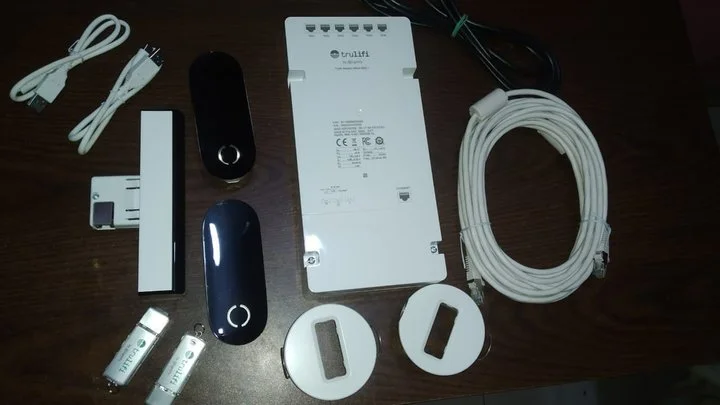
          Trulifi 6002.1 Starter Kit BOX CONTENTS

          When ordering a Trulifi 6002.1 Starter Kit from PCDSI and Signify, you will receive the following contents in the box:

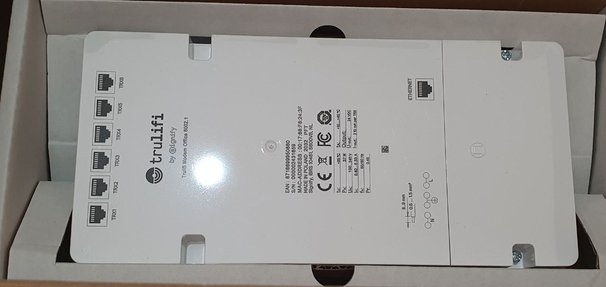
          • 1 x Trulifi Access Point 6002.1

          • 1 x Trulifi Transceiver IR/IR 6002.1

          • 2 x Trulifi USB Key 6002.1

          • 1 x USB-C Cable 0.45m

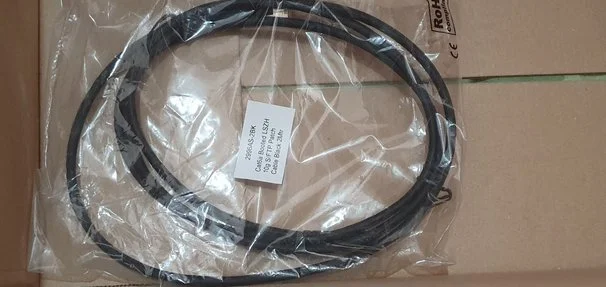
          • 1 x Transceiver RJ12 cable

          • 1 x Trulifi Ceiling Holder

          • 1 x User Manual in English

          • 1 x Power Cable for Trulifi Access Point 6002.1

          • 2 x USB Keys

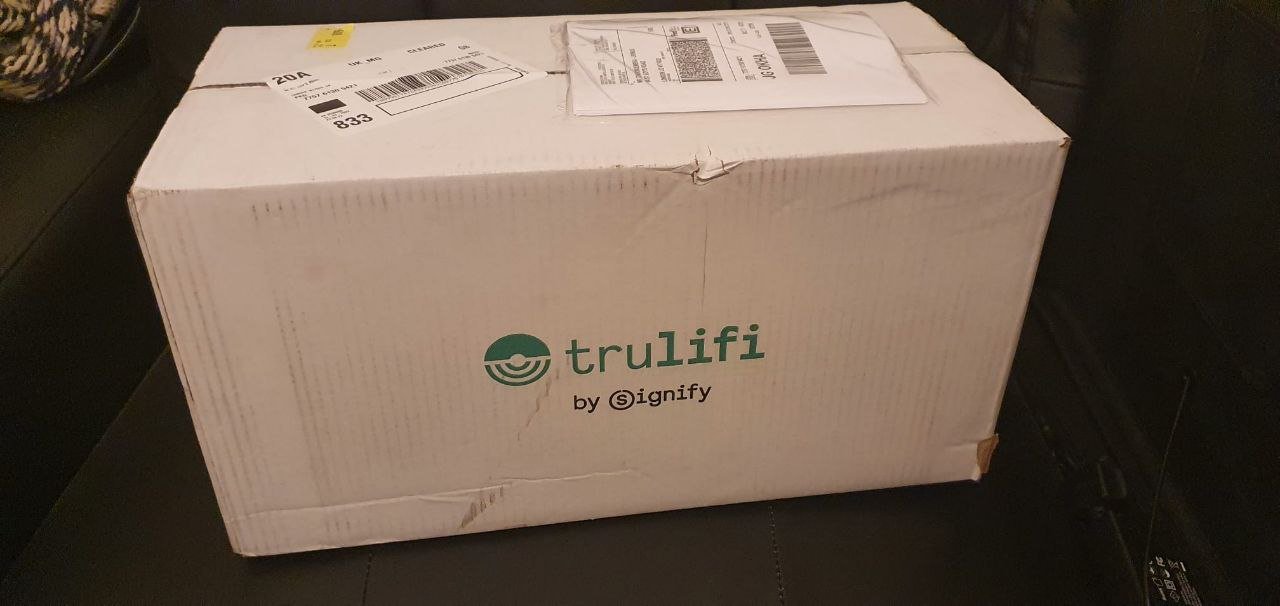
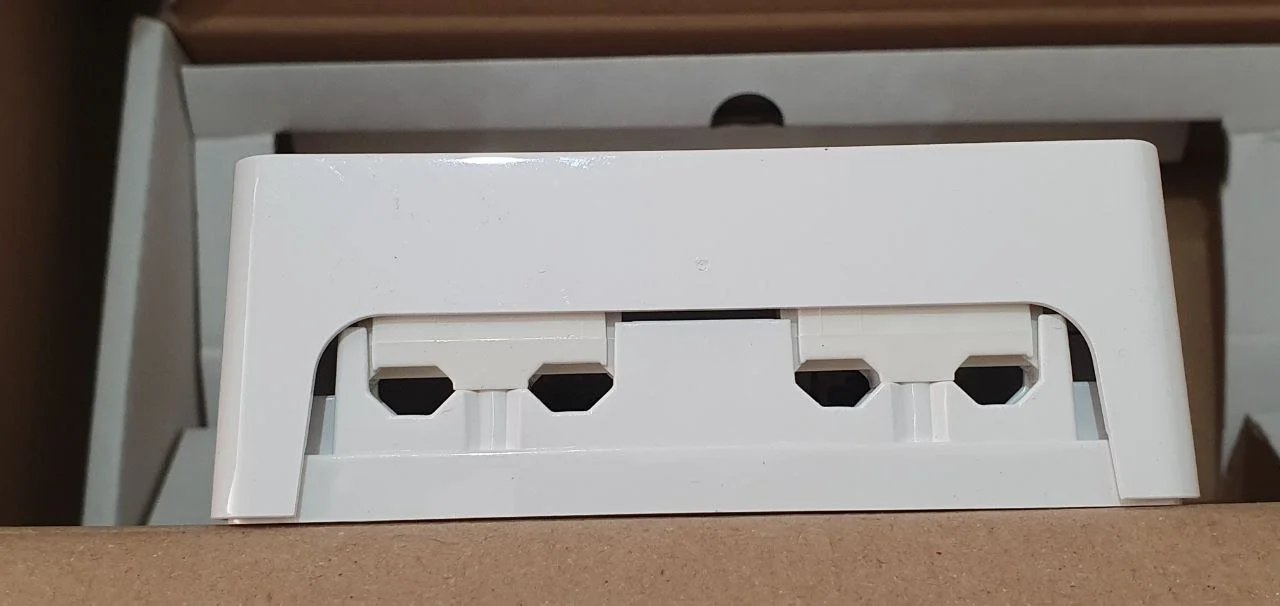
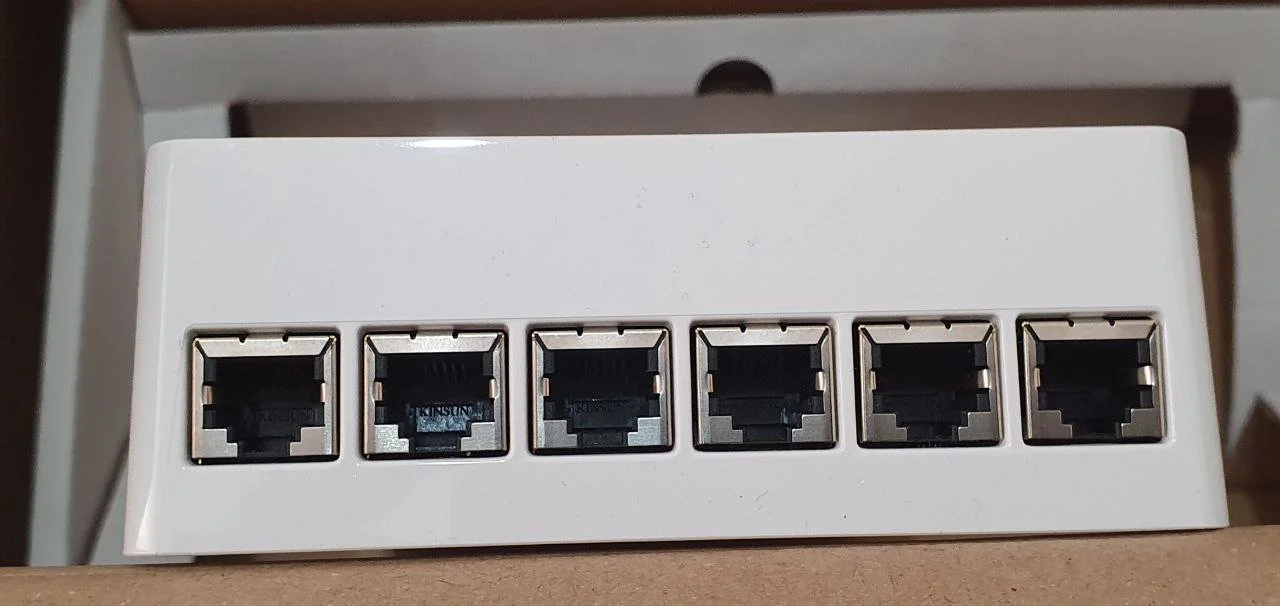
          Below are some photos of the Trulifi 6002.1 starter kit box contents:

          Trulifi Access Point 6002.1

          Trulifi Transceiver IR/IR 6002.1

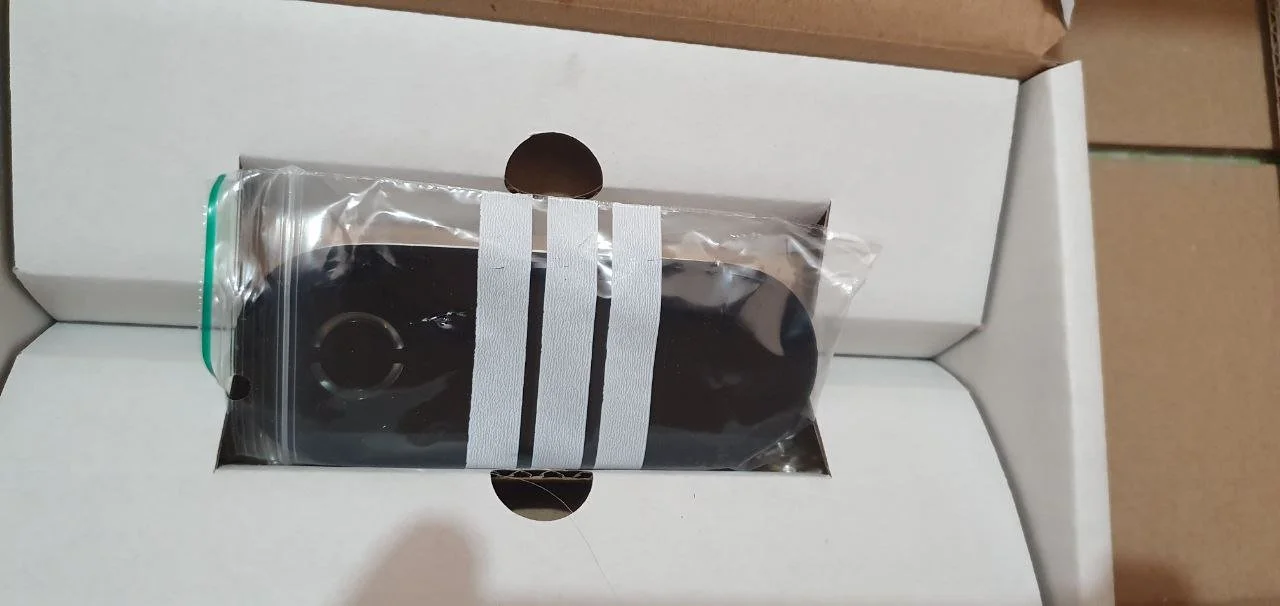
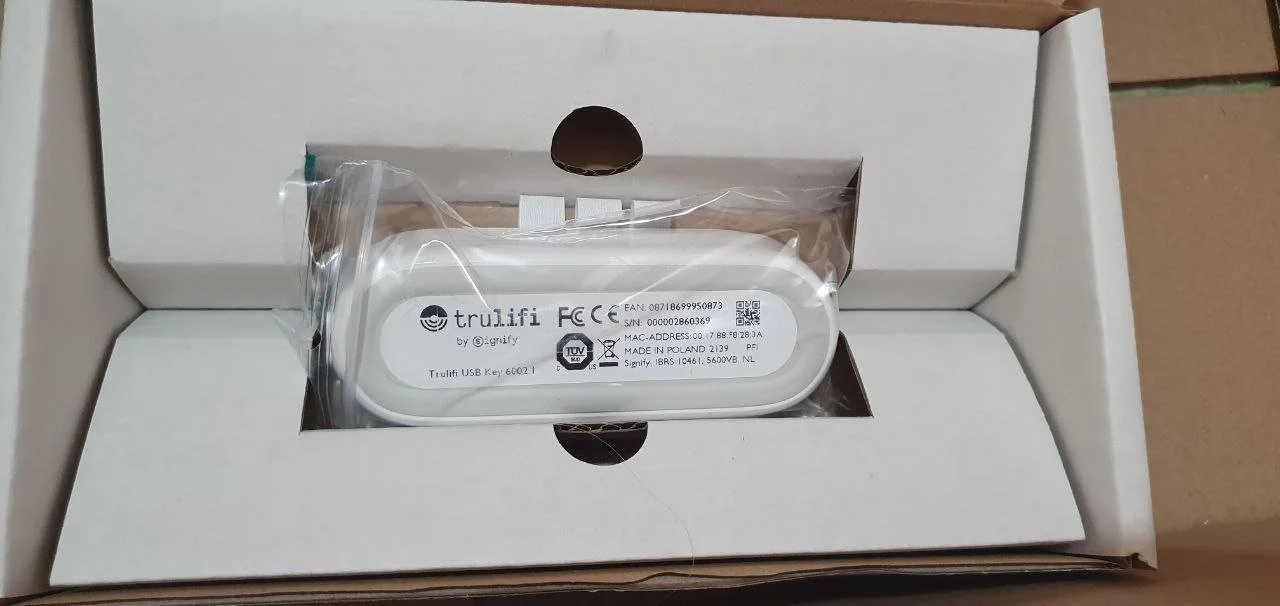
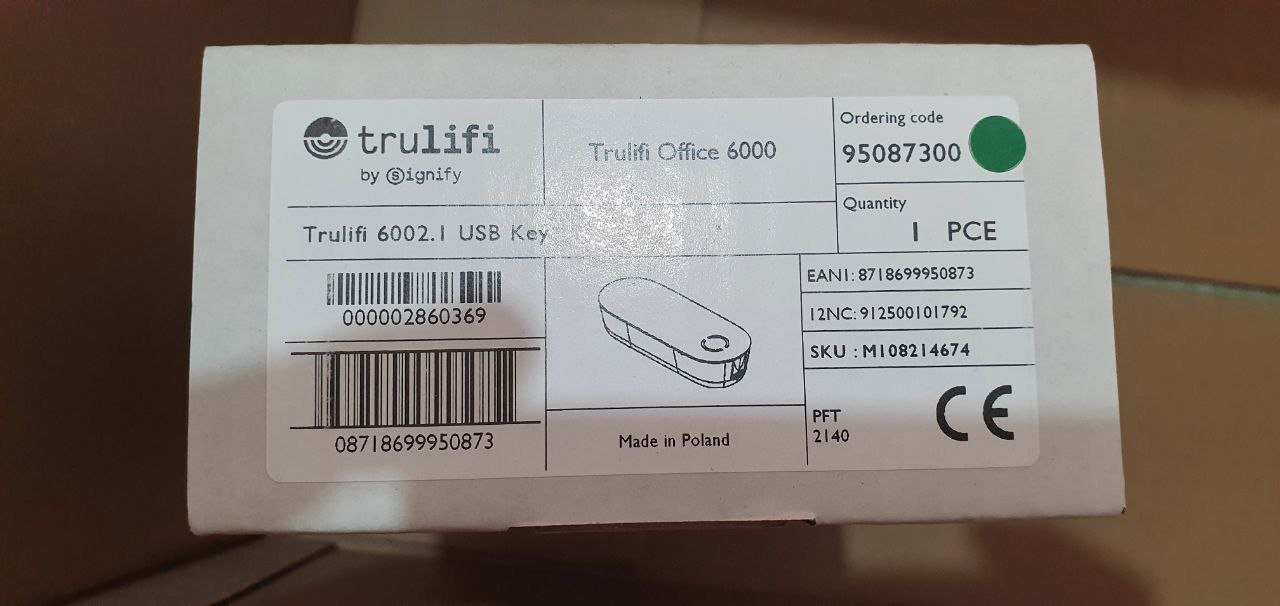
          Trulifi USB Key 6002.1

          Trulifi Ceiling Holder

          Transceiver RJ12 cable

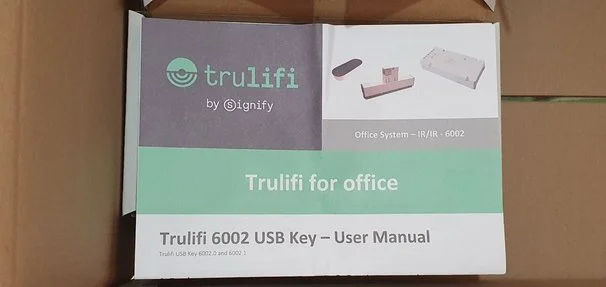
          User Manual

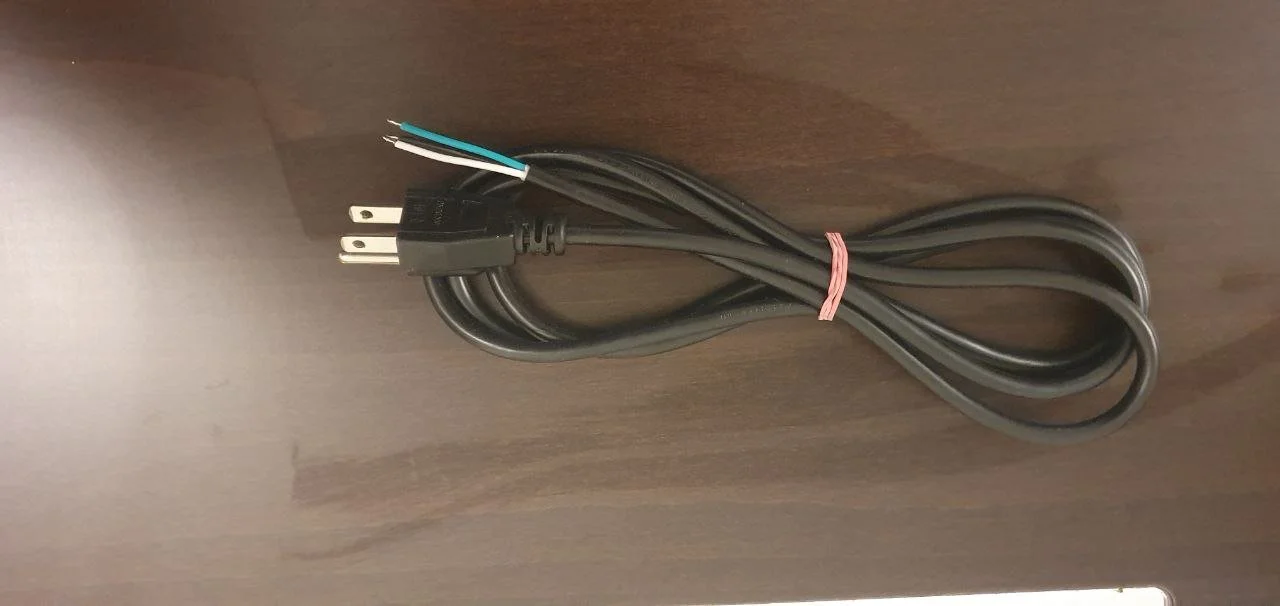
          Power Cable for Trulifi Access Point 6002.1

          USB Keys

          You can also watch a video made recently by Signy about the unboxing of a Trulifi 6002.1 kit system:

          Trulifi 6002.1 Starter kit Specifications

          Here are some specifications of the TruliFi 6002.1 system:

          Trulifi System 6002.1 Specifications

          • Humidity: 20 - 90% non-condensing

          • Storage temperature: -40 to +80 °C

          • Standards: IEC 62368-1, IEC 62471, IEC 60825-1, IEC 60825-12

          • Certification: CE/NRTL US Canada/FCC

          Trulifi Access Point 6002.1 Specifications

          • Mains voltage: 100-240 V, 50/60 Hz

          • System power: 35 W (based on 6 transceivers connected)

          • Power factor: 0.9

          • Average ambient temperature: 25 °C

          • Operating temperature range: +10 to +40 °C

          • Network communication: Data link input connection RJ45 Cat. 5/5E/6 Ethernet cable (cable not included)

          • Multi-user capability: Up to 16 users per Access Point

          • Transmission mode: Half-duplex

          • Encryption: End-to-End encryption based on AES-128

          • Standard: Designed for ITU-T G.9991

          Trulifi Transceiver 6002.1 Specifications

          • Voltage: 24 V DC provided by the Trulifi Access Point 6002.1

          • System power: 5 W at 230 V AC (supplied by Trulifi Access Point 6002.1)

          • Downlink wireless optical communication support: Infrared

          • Average ambient temperature: 25 °C

          • Operating temperature range: +10 to +40 °C

          • Network communication: Data link input connection RJ12 - 7m SFTP cable (cable included)

          • Multi-user capability: Up to 16 users per Access Point

          • Transmission mode: Half-duplex

          • Encryption: End-to-End encryption based on AES-128

          • Standard: Designed for ITU-T G.9991

          Trulifi USB Key 6002.1 Specifications

          • Voltage: 5 V DC provided via USB 3.0

          • System power: 3.5 W

          • Uplink wireless optical communication support: Infrared

          • Average ambient temperature: 25 °C

          • Operating temperature range: +10 to +35 °C

          • Network communication: Data link input connection USB 3.0 Type-C (cable included)

          System Date rate

          Net data rate: 150 Mbit/s download & 140 Mbit/s upload

          Measurement conditions:

          • 1.2 m distance between USB Key and transceiver

          • USB Key located straight under transceiver (radius 0)

          • 6 transceivers connected

          System operating distance and coverage area

          Operating distance between USB Key and transceiver: 1.2 m to 2.8 m

          Connectivity coverage area per transceiver

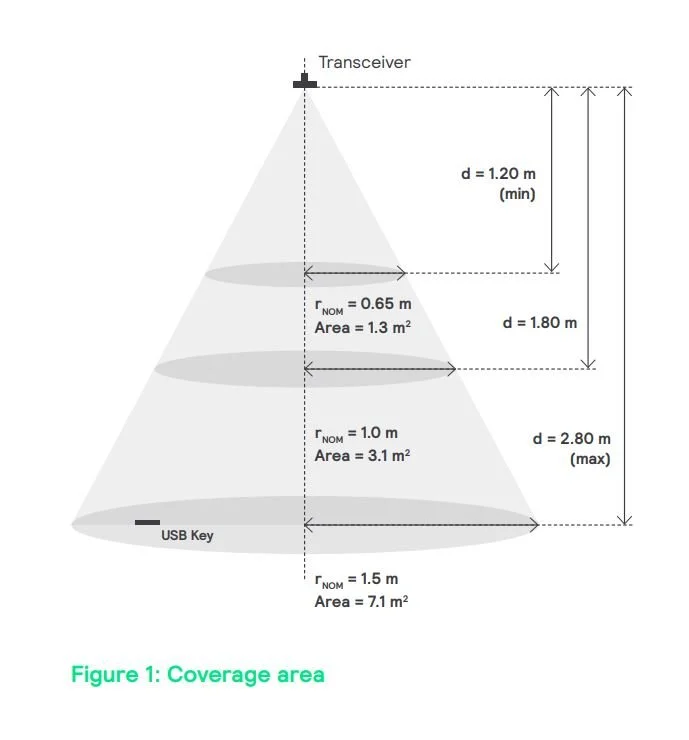
          As stated by Signify, the LiFi coverage area of one transceiver is a circle of which the radius depends on the distance d between the transceiver and the USB key. Radial distance 0 represents the location directly under the transceiver. The recommended operational area spreads from 0 up to the nominal radial distance rNOM as depicted in Figure 1.

          Credit to Signify

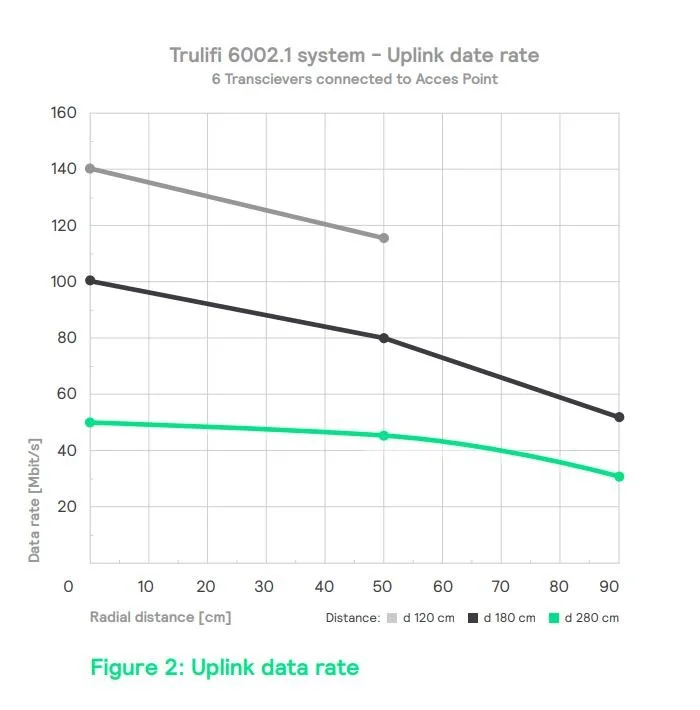
          The downlink and uplink data rates depend on the distance d between the transceiver and the USB key, as well as the radial distance, as depicted in Figure 2 and Figure 3.

          Credit to Signify

          Credit to Signify

          Trulifi 6002.1 Starter kit Installation

          Below are the installation steps for the Trulifi 6002 series demonstrated by Signify. The first three steps are compulsory to make the LiFi system works on your computer system. Step 4 and Step are optional or if you have bought the specific equipment as shown in the videos. In the videos, they use a Trulifi 6002.2 system to demonstrate the installation steps however these steps can also be applied to the trulifi 6002.1 system.

          Step 1 - Installing the Trulifi 6002 Access point

          Step 2 - Installing the Trulifi 6002 Transceiver

          Step 3 - Installing the Trulifi 6002 USB ACCESS KEY

          Step 4 - UPGRADING the Trulifi FIRMWARE

          Step 5 - ACTIVATING the Trulifi CONTROLLER LICENSE KEY

          Trulifi 6002.1 Starter kit TESTING AND PERFORMANCE

          Just like with the LiFiMax kit, we did a series of tests by playing YouTube videos at different resolutions. We tested the performance of the Trulifi 6002.1 starter kit when playing YouTube videos at 1080p, 2K and 4k resolutions respectively. Before that, we did a quick Internet speed test. The download rate was over 100 Mbps and the upload rate was over 45 Mbps. Download rate refers to how many megabits (Mbps) per second it takes your server to download data to your device. Upload rate refers to the time it takes for your connection to send data back to the speed test server. The speed test results depend on the Internet signal from the Internet service provider and the router/modem used.

          In our own case, we installed and tested the Trulifi 6002.1 starter kit system in a residential home setting both in the UK and in Lagos, Nigeria. The installation steps were similar to the ones demonstrated in the Signify videos.

          We proceeded to place the USB Access key in the coverage area of the Trulifi access point. We then went on to play some YouTube videos at different resolutions via LiFi network connection. Below are some few performance results of the Trulifi 6002.1 starter kit when playing the YouTube videos at different resolutions:

          Playing at 1080p resolution

          Throughout the play of the video, there was no buffering showing at 1080p resolution.

          Playing at 2K resolution

          Again, no buffering showing at 2k resolution.

          Playing at 4K resolution

          During this test at 4k resolution, at least 2 episodes of buffering were showing but these lasted no more than 1 second. It is usually recommended to have internet speeds of at least 100 Mbps to play videos at 4k resolution without much buffering.


          Trulifi 6002.1 Starter kit - Our verdict from LiFi Tech News

          Overall, we are really impressed with the quality performance of this Trulifi 6002.1 starter kit. We have highlighted some negative points and positive points about this LiFi kit.

          NEGATIVE POINTS

          1) This is a very minor negative point in our opinion. There is a need beforehand to install the Trulifi drivers for the Trulifi 6002.1 USB keys to work on your computer system. After this, you will experience a plug and play experience with this LiFi system.

          2) In contrast to other smaller LiFi systems such as the ones from ZERO1, Oledcomm, Lina and LightRider, the Trulifi system can be seen as slightly bulkier and heavier. However, it is not as heavy in contrast to the pureLiFi XC system.

          3) In regards to the Trulifi 6002.1 Access Point, the screws for removing the cover section were really tightened. This made it very hard and a big challenge to remove the screws even when using a screwdriver.

          4) This starter kit can be seen as pricey for the average consumers and some businesses. However, in contrast to other LiFi systems like the pureLiFi XC, and Hyperion LiFi, this Trulifi 6002.1 Starter kit is a good deal similar to the LiFiMAX systems.

          POSITIVE POINTS

          1) This starter kit comes with at least one CAT6/RJ45 Ethernet cable. Some other LiFi kit systems do not offer it such as the LiFiMax kit from Oledcomm.

          2) The latency of this starter kit has been very low during our test and daily uses. In our opinion, along with the LiFiMax kit, the Trulifi 6002.1 starter kit has one of the best performances in terms of latency.

          3) The customer support from Signify in collaboration with Glenda Chambliss from PCDSI has been nothing but a great customer experience and after support. We really like their professionalism and willingness to take any constructive feedback on board.

          4) Overall, the Trulifi kit does provide consistent and very fast connectivity. The USB Access key connects very quickly to the Internet when placing it in the coverage area of the Trulifi access point.

          5) There is no need to get a PoE switch device to make the Trulifi 6002.1 start kit to work. Just plug the RJ45 cable directly from the Modem/Router device in your home or office.

          6) The Trulifi 6002.1 USB keys do not get too hot even after being plugged for many hours on any computer system. On some other LiFi systems, the LiFi dongles will get very hot after many hours of use.

          7) Easy access to user manual and installation steps. You can access those information from the provided USB keys, on Signify site and watch installation steps videos on Signify YouTube channels.

          Li-Fi Conference 2022

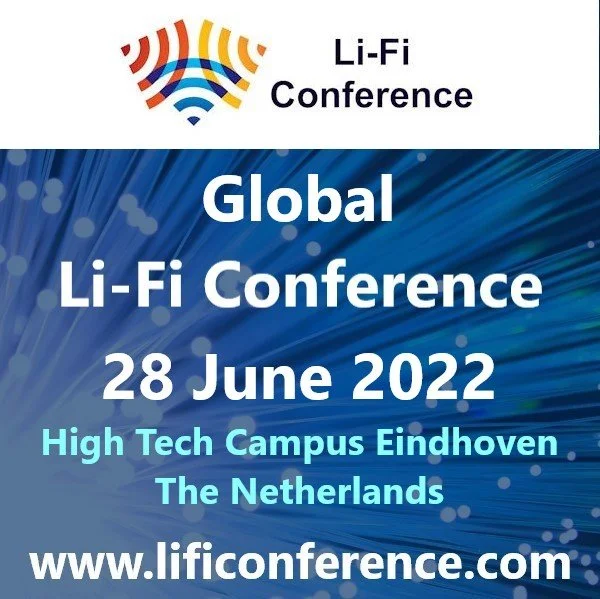
          The next Li-Fi Conference is coming up on the 28th of June 2022 between 10 am and 4.30 pm CET.

          It is interesting to realise that lights that illuminate offices, homes, cars, factories, our streets and more locations also can connect us to data and hence power the growing demand for connectivity and speed.

          At this conference professionals from all over the globe will gather together in order to share applications, ideas, new developments and ways to integrate Li-Fi in services, both for consumers and professionals.

          This conference will be held Live and Online. The venue will be the High Tech Campus 1, The Strip 5656 AE Eindhoven The Netherlands.

          Online tickets can be bought at the following link:

          https://tikcit.com/register/61e002336d7fc4b6745cab83/

          Benefits of Attending The Li-Fi Conference 2022 Edition

          1.LEARN THE EXISTING AND LATEST LIFI TRENDS IN THE LIGHT AND LIFI INDUSTRY

          Conferences address the main issues and provide in-depth industry news that is relevant to a particular sector. As an attendee, you will benefit from comprehensive knowledge about the latest news in the Light and LiFi industry; where the LiFi trends will go and how to adapt to them in the future or in your business and work activities.

          2. DISCOVER CURRENT RESEARCH DEVELOPMENTS

          You will learn current and updated research work and development by some leading LiFi companies, Manufacturers, Suppliers and Academic institutions from the Light Communications Alliance. This can give you a deeper insight into some of the behind scenes works and research in regard to LiFi technology.

          3. NETWORKING

          Events usually include a dedicated time for networking, which attendees can take advantage of to create a connection with other professionals in the industry and to renew contact with those they already know. With the upcoming Li-Fi conference, it is no different when it comes to networking.

          4. LEARNING BEYOND YOUR FIELD OF INTEREST

          Attending the conference dramatically can enhance both your professional and personal development, as well as give you tools and skills which you cannot be taught in-house or online. The focused nature of learning at a conference allows you to dig deeper with the understanding of your topic of interest, especially in the field of LiFi technology.

          5. LISTEN TO DIFFERENT POINTS OF VIEW AND PERSPECTIVES FROM DIFFERENT COMPANIES IN THE LIGHT AND LIFI INDUSTRY

          Attending the conference will give a range of perspectives from different key players in the Light industry in regard to the applications of LiFi technology.

          What is LiFi?

          LiFi, also known as "Light Fidelity" is a wireless optical networking technology, which uses light-emitting diodes (LEDs) to transmit data. In 2011, professor Harald Haas made a LiFi demonstration at the TED (Technology, Entertainment, Design) Global Talk on Visible Light Communication (VLC).

          VLC uses light as a medium to deliver high-speed communication like Wi-Fi and complies with the IEEE standard IEEE 802.15.7. The IEEE 802.15.7 is a high-speed, bidirectional, and fully networked wireless communication technology-based standard similar to Wi-Fi's IEEE 802.11.

          How does LiFi work?

          LiFi is a high speed, bidirectional, and fully networked wireless communication of data using light. LiFi constitutes of several light bulbs that form a wireless network.

          When an electrical current goes through to a LED light bulb, a stream of light (photons) emits from the lamp. LED bulbs are semiconductor devices, which means that the brightness of the light flowing through them can change at extremely high speeds. The signal is sent by modulating the light at different rates. The signal can then be received by a detector that interprets the changes in light intensity (the signal) as data. Also when the LED is ON, you transmit a digital 1, and when it is OFF, you transmit a 0.

          LiFi Benefits

          The primary benefits of LiFi are as follows:

          Security: Provides entirely secure access. Where there is no light there is no data.

          Safety: Does not produce electromagnetic radiation and does not interfere with existing electronic systems.

          Localisation: Allows localisation due to the small coverage area of LiFi access point - localisation can be used for very precise asset tracking.

          Data density: Provides ubiquitous high-speed wireless access that offers substantially greater data density (data rate per unit area) than RF through high bandwidth reuse.

          Credit to Oledcomm

          LiFi Applications

          LiFi can be used for so many applications and the list is increasing every year. You can read our updated list of Li-Fi applications at the following link:

          https://www.lifitn.com/blog/2021/2/13/top-30-li-fi-applications-updated-list-including-potential-applications

          Credit to pureLiFi

          In conclusion, if you are also interested to hear more information about the OWNII Coin or enquire about LiFi devices such as the LiFiMax and Trulifi, you can contact us through our chatbot or by sending an email through our contact us form. If you enjoyed this post and would like to hear more updates about LiFi technology, subscribe to our newsletter. Don’t forget to subscribe to our social media accounts. You can also join our Telegram group about LiFi technology on this link:

          https://t.me/joinchat/FMzOmsEKyJFrU6Af

          Li-Fi Conference 2022 Edition - Coming Up on Tuesday 28th June 2022 - High Tech Campus Eindhoven/Online, The Netherlands

          Table of Contents

            Li-Fi Conference 2022 Edition - Coming Up on Tuesday 28th June 2022 - High Tech Campus Eindhoven/Online, The Netherlands

            Last month, we wrote a 10-part article recap series about the ONLINE Li-Fi Conference 2021 held last year in June 2021. The conference was organised by the Jakajima, the global High Tech Conference organiser, and the Light Communications Alliance.

            Jakajima, Matchmaker for Innovators in the high tech industry, organises many events, ranging from LiFi Technology industry trends, 3D Printing to the Internet of Things, from Unmanned Cargo Aircraft to Health Tech, from 4D Printing to Photonics and from Vertical Farming to Sustainable Materials.

            The online Li-Fi Conference included live presentations from researchers, executives and industry specialists from pureLiFi, Nokia, Signify, Orange, Radiocommunications Agency Netherlands, Velmenni, OLEDCOMM, HomeGrid Forum and Weidmüller Deutschland.

            In today's article, we are going to discuss the upcoming and anticipated Li-Fi Conference 2022. The conference is coming up on the 28th June 2022. We will also talk about the moderators, speakers and the companies they work for, the Light Communications Alliance (LCA), the venue and registration details, partners of the Li-Fi Conference event and reasons/benefits for attending the conference.

            Global Li-Fi Conference 2022

            LiFi is a wireless communication technology which uses light to transmit data and position between devices. The technology is similar to Wi-Fi but uses light to transmit data instead of radiofrequency in terms of its end-use.

            Using light to transmit data allows LiFi to offer several advantages, most notably a wider bandwidth channel, the ability to safely function in areas otherwise susceptible to electromagnetic interference (e.g. aircraft cabins, hospitals, military), and offering higher transmission speeds.

            It is interesting to realise that lights that illuminate offices, homes, cars, factories, our streets and more locations also can connect us to data and hence power the growing demand for connectivity and speed.

            Li-Fi Conference is an annual event held online and in a physical venue where professionals from all over the globe gather together in order to share applications, ideas, LiFi trends, new developments and ways to integrate LiFi into services, both for consumers and professionals.

            As stated by JakajimaTV, the following topics that will be covered at the upcoming conference are as followed:

            • Market Development

            • Ecosystem

            • Telecom/datacom (incl. 5G)

            • ICT

            • Security (with role from governmental institutions)

            • Chipset Manufacturers

            • Electrical Contractors

            • System Integrators

            • Applications

            • Home

            • Office

            • Healthcare

            • Education

            • Industry 4.0

            • Mobility (Aviation/Automotive)

            • Standardisation

            • The role of startups

            • Research meets industry

            Who should attend:

            • Business Development, Innovation staff and management of

            • Telecom operators

            • ICT / System integrators

            • Service providers

            • Hardware manufacturers

            • Retailers

            • Electrical Contractors

            • Real Estate

            • Industry 4.0

            • Automotive

            • Aviation

            • Chipset Manufacturers

            • Telecom / datacom (incl. 5G)

            • Governmental bodies

            • Regulatory institutions

            • Investors

            • Start-Ups

            • Students

            • Consumers

            • Professionals of all industries

            • LiFi enthusiasts

            • Tech enthusiasts

            The Moderators and Speakers for the Li-Fi Conference 2022 edition

            Pieter Hermans and Richard Bijlard will be the two moderators for the Li-Fi Conference 2022 edition. So far, 18 speakers have been confirmed for the upcoming Li-Fi Conference. We will update on any new developments.

            Pieter Hermans - Moderator

            Photo credit to Jakajima

            According to the profile on Jakajima website, Pieter Hermans acquired Jakajima, a Benelux publishing company, and restructured it into a matchmaker for innovators in the high tech industry, ranging from 3D Additive Manufacturing to Internet of Things, from Unmanned Systems to Health Tech, from Photonics to 3D Bioprinting and from Experience Design to Virtual Reality.

            As the technology develops itself from atoms to bits and from bits to atoms, traditional boundaries between value chains disappear which offers new business opportunities. Pieter Hermans, a matchmaker for innovators, focuses on these crossovers.

            Since July 2021 he is Chairman of the Platform Unmanned Cargo Aircraft, which is an open, non-profit association of member organizations which aims to support the development and deployment of Unmanned Cargo Aircraft, while driving a consistent, focused and concise approach to market education that will highlight the benefits, use cases and deployments of Unmanned Cargo Aircraft (UCA) from the first mile to middle mile and last mile and with small to large cargo implementations.

            He has been chairman/moderator of several international conferences and has given many presentations on these crossovers of technology, business and creativity – not to forget enthusiasm and humour.

            Richard Bijlard - MODERATOR

            Photo credit to Jakajima

            After having worked in international marketing and sales for large multinationals as well as for high-tech startups in the electronics- and advanced materials industry for over 20 years, Richard is now offering his experience and networks to help out others. As connector and business coach, he is involved in the European Union EASME project for SMEs, acts as Advisory Committee Member for NWO subsidies and is Chairman of the Board of ‘Brainport Centre for Technology & Law’ (an organisation that facilitates knowledge- and contacts exchange between high-tech entrepreneurs and investors, patent attorneys, lawyers and accountants).

            Techno-broker BV

            Technobroker BV, owned by Richard Bijlard is focused on connecting various parties in the high-tech playfield. We help companies that provide solutions and look for partners and customers. Techno-broker provides assistance to streamline innovation processes and effectively develop sales channels and ecosystems in high-tech. Activities include business coaching, marketing development and IP protection advice.

            Brainport Centre for Technology & Law

            Brainport TechLaw exists since 2013 and is a platform where technology and law come together, literally and figuratively speaking. Our goal is to combine, share and ensure specific knowledge in technology and law. This is achieved, among others, by connecting our members – entrepreneurs in (high)tech branches and specialist advisers (including accountants, lawyers, and patent attorneys) – and by organising thematic events.

            Marc Fleschen - Speaker 1

            Photo credit to Tharawat Magazine

            Next to being chairman of the LCA, he is the founder of Zero1 company specialising in optical camera communication. Winner of the French tech startup awards 2017, start-up of the year 2018 by CCI French tech international, Prix du jury 2018 UAE French embassy. Marc Fleschen will do a presentation about The Light Communication Alliance.

            Zero.1

            Zero.1 is a Hardware and Software provider specialising in Optical Camera Communication founded in 2016. Through its unique driver, any LED can become compatible, a simple app downloadable on the IOS and Android Store will allow cameras of mobiles devices to receive OCC signal, Zero.1 provides Cloud and services associated such as but not limited to, Indoor positioning system, localisation based services, geolocalised information’s, crowd management and data analytics etc.

            Musa Unmehopa - Speaker 2

            Mr Musa is the Head of Ecosystems and Strategic Alliances for LiFi, at Signify. Prior to joining Philips Lighting in 2013, he worked for Bell Labs, Lucent Technologies, and Alcatel-Lucent. Musa has held senior leadership roles in various standards bodies, trade organizations and industry consortia, including chairman of the Technical Plenary of the Open Mobile Alliance, vice-chairman of the Board of the Zigbee Alliance, and Secretary-General of the Zhaga Consortium. He also served on the boards of The Connected Lighting Alliance, the Emerge Alliance, and the Parlay Group, and is an advisor to several technology start-ups. Author of two technology books, Musa has been an invited keynote speaker and panellist at various industry events. His publications include numerous papers in technical journals and conferences. He holds two patents. Musa received a BSc. and MSc. degree in computer science from Twente University and MBA degrees from TIAS Business School and University of Bradford School of Management.

            Musa will deliver a presentation on 'Together we build the LiFi ecosystem'.

            Signify

            Signify is the new brand name of Philips Lighting. The name change occurred in March 2018 to represent the transformation from an analogue lighting company into digital lighting and Internet of Things (IoT) company. Signify is the world leader in lighting for professionals, consumers and lighting for the Internet of Things. The company provides lighting solutions for professional segments such as automotive, healthcare, horticulture, office, outdoor, phototherapy, petrol stations, solar, purification, schools, fashion, cinema, and more. These lighting solutions include indoor and outdoor luminaires, lamps, electronics, lighting controls, lighting control software, IoT systems and platforms.

            Max Riegel - Speaker 3

            Maximilian Riegel received his Dipl.-Ing. degree in Electrical Engineering from TU Munich, Germany and is currently responsible for IEEE & Wi-Fi standardization within Nokia. He participates in IEEE 802 and other Wi-Fi related standardization for more than 15 years and led the development of IEEE 802.1CF-2019 specification. He was NWG vice chair in the WiMAX Forum, led the Ethernet over cellular work in IETF 16ng WG, and chaired the OmniRAN SG/TG activities in IEEE 802. He regularly acts as a lecturer for Wi-Fi and as a speaker at technical conferences. Formerly, he held R&D management positions within Siemens Communications and Philips Communication Industry.

            Max Riegel will deliver a presentation on 'LiFi Standardization Status and Evolution'.

            Nokia

            Nokia creates technology that helps the world act together. As a trusted partner for critical networks, Nokia is committed to innovation and technology leadership across mobile, fixed and cloud networks. It creates value with intellectual property and long-term research, led by the award-winning Nokia Bell Labs. Adhering to the highest standards of integrity and security, Nokia helps to build the capabilities needed for a more productive, sustainable and inclusive world. Nokia continues to be a major patent licensor for most large mobile phone vendors. As of 2018, Nokia is the world's third-largest network equipment manufacturer.

            The company was viewed with national pride by Finns, as its mobile phone business made it by far the largest worldwide company and brand from Finland.

            professor Harald Haas - Speaker 4

            Professor Haas received a PhD degree from the University of Edinburgh in 2001. He currently holds the Chair of Mobile Communications at the University of Edinburgh, and is co-founder and Chief Scientific Officer of pureLiFi Ltd as well as the Director of the LiFi Research and Development Center at the University of Edinburgh. His main research interests are in optical wireless communications, hybrid optical wireless and RF communications, spatial modulation, and interference coordination in wireless networks. He first introduced and coined spatial modulation and LiFi. LiFi was listed among the 50 best inventions in TIME Magazine 2011.

            Prof. Haas was an invited speaker at TED Global 2011, and his talk: "Wireless Data from Every Light Bulb" has been watched online more than 2.2 million times. He gave a second TED Global lecture in 2015 on the use of solar cells as LiFi data detectors and energy harvesters. This has been viewed online more than 1 million times.  Professor Haas holds 31 patents and has more than 30 pending patent applications. He has published 300 conference and journal papers including a paper in Science. He co-authored a book entitled: "Principles of LED Light Communications Towards Networked Li-Fi" published by Cambridge University Press in 2015. Prof. Haas is the editor of IEEE Transactions on Communications and IEEE Journal of Lightwave Technologies. He was co-recipient of recent best paper awards at the IEEE Vehicular Technology Conference (VTC-Fall) in Las Vegas in 2013, and VTC-Spring in Glasgow in 2015. He was co-recipient of the EURASIP Best Paper Award for the Journal on Wireless Communications and Networking in 2015, and co-recipient of the Jack Neubauer Memorial Award of the IEEE Vehicular Technology Society. In 2012, he was the recipient of the prestigious Established Career Fellowship from the EPSRC (Engineering and Physical Sciences Research Council) within Information and Communications Technology in the UK.  Prof. Haas is recipient of the Tam Dalyell Prize 2013 awarded by the University of Edinburgh for excellence in engaging the public with science.  In 2014, he was selected by EPSRC as one of ten RISE (Recognising Inspirational Scientists and Engineers) Leaders in the UK.

            Professor Haas will deliver a presentation on 'Towards Terabit per Second Wireless Networking with Light'.

            LiFi Research and Development Centre (LRDC) at The University of Strathclyde / Glasgow

            The University of Strathclyde (UStrath) is a leading international technological university. It is one of the UK’s top 20 universities for research intensity according to the Times Higher Education (THE) and it is the first university to receive the THE’s ‘UK University of the Year Award’ twice (2012 and 2019). UStrath is a member of CESAER, the European association of leading specialised and comprehensive universities of science and technology, and it is internationally recognised for its standing in applied research, technological innovation and university-business partnerships.

            The LiFi Research and Development Centre (The Centre) is dedicated to accelerating the development of LiFi as a major global industry, through creating a pipeline for innovative ideas, technologies, products and partnerships.

            The LiFi R&D Centre conducts internationally leading research in collaboration with, and on behalf of industry. It aims to accelerate society’s adoption of LiFi and emerging wireless technology through engagement with major industrial partners, to fully harness the commercial and innovative potential of LiFi, and to help establish a major new £5 billion ($8.5 billion) LiFi industry by 2018.

            The UK based research and development centre was formed in 2013, and stems from research into fundamental communications science begun in 2002 that has now received in excess of £8 million ($13.5 million) of competitively won funding.

            By facilitating collaboration between industry, internationally renowned experts from the University of Strathclyde, and other key research institutes around the world, the Centre is taking emerging LiFi technologies through into mainstream applications that will soon begin to impact on many aspects of the modern world. The Centre, with its partners and collaborators, will foster the wide spread market adoption of LiFi technologies.

            The Centre continues to drive all aspects of LiFi communication from novel devices, through to the integration of LiFi access points in agile heterogeneous 5G and 6G networks enabled by emerging software defined networking (SDN) infrastructures.

            Marcos Martínez - Speaker 5

            Marcos Martínez received an M.S. degree in telecommunications engineering from the Polytechnic University of Valencia (Spain). He worked for Alcatel Microelectronics, DS2 and Marvell Semiconductors in the design of high performance embedded systems in automotive, DSL, Optical access and powerline, focusing on R&D activities. In 2017, he joined MaxLinear Inc where he has been leading the standardization activities related to wireline networking and has participated in different standardization groups working on wireline networking (ITU-T Q18/15, BBF, HomeGrid Forum and Gigawire Alliance). Recently, he has been a key contributor to ITU-T G.9991 Recommendation on LiFi transceivers.

            About MaxLinear Inc

            MaxLinear delivers high-performance broadband and networking semiconductors based on its highly integrated radio frequency analog technology, high-performance optical networking technology and its pioneering MoCA and Direct Broadcast Satellite ODU single-wire technology.

            MaxLinear was founded in 2003. The company’s original high performance, radio-frequency receiver products capture and process digital and analog broadband signals for applications including terrestrial, cable and satellite television and DOCSIS broadband. These products include both RF receivers and RF receiver systems-on-chip, or SoCs, which incorporate highly integrated radio system architecture and demodulator technology. The company’s products were based on its pioneering low power, low cost CMOS process technology.

            In 2015, the company acquired Entropic, the world leader in semiconductor solutions for the connected home. Entropic pioneered multimedia over coax (MoCA) home networking technology. The company’s technology transforms how traditional broadcast and IP streaming video is seamlessly, reliably, and securely delivered, processed, and distributed into and throughout the home.

            MaxLinear also offers optical networking driver and trans-impedance amplifier ICs for 100G / 400G optical data center networks. The devices use advanced technology that cut in half the number of channels needed in optical transmission modules, reducing power consumption, size and cost for 100Gbps and 400Gbps networks.

            MaxLinear technology is trusted by leading telephone, cable and satellite operators, set-top box manufacturers, networking equipment providers and consumer technology providers.

            Carmen Mas Machuca - Speaker 6

            Carmen Mas Machuca (Senior Member,IEEE) received the Dipl.-Ing. degree (master’s) from the Universitat Politècnica de Catalunya, UPC, Spain, in 1995, and the Dr.-Ing. Degree (Ph.D.) from the École Polytechnique Fédérale de Lausanne, EPFL, Switzerland, in 2000. She is currently a Privat Dozent/Adjunct Teaching Professor with the Chair of Communication Networks, Technical University of Munich (TUM), Germany. She has published more than 150 peer-reviewed articles. Her main research interests include techno-economic studies, network planning and resilience, SDN/NFV optimization problems, and next-generation converged access networks.

            Carmen will deliver a presentation on 'Techno-economic analysis and planning issues for LiFi solutions'.

            Technische Universität München


            Technische Universität München (TUM) is one of the top technical universities in Germany and is ranked in the top-50 worldwide (e.g., position 50 in the Shanghai Ranking, position 41 in the Times Higher Education ranking). TUM ranked as the University of Excellence in Germany provides an excellent environment for research and education to more than 40.000 students. TUM has 14 departments focusing on natural sciences, engineering sciences, life and food sciences, medicine, technology-oriented business management and education. The department of Electrical and Computer Engineering hosts 26 chairs covering a wide range of areas and expertise. The Department of Electrical and Computer Engineering, where the Chair of Communication Networks (TUM-LKN) belongs, has 45 professorships and offers 5-degree courses to more than 3.300 students.

            Nikola Serafimovski - Speaker 7

            Nikola worked with major companies in the area of LiFi technology and commercialisation, leading the creation and cultivation of the LiFi ecosystem, marketing, sales and standardization. His experience with T-Mobile and T-Home in Macedonia focused on mobile network deployment and analysis as well as database app development. Nikola worked for the UK-China Science Bridges project to successfully demonstrate the world’s first practical implementation of the Spatial Modulation MIMO concept. He received a BSc in electrical engineering and computer science and an MSc in communications, systems and electronics, both from Jacobs University Bremen, Germany. Nikola earned his PhD in digital communications and signal processing from the University of Edinburgh.

            Nikola will deliver a presentation on 'LiFi in Defence'.

            pureLiFi

            pureLiFi develops technology for communication networks that integrates data and lighting utility infrastructures. It offers a LiFi enabled device that converts the beam of lights into an electrical signal. The signal is then converted back into data. The company was founded in 2012 and is headquartered in Edinburgh.

            pureLiFi demonstrated the next LiFi system for the home at Mobile World Congress (MWC) 2022 in Barcelona. pureLiFi stated that this is the world’s first LiFi ecosystem for the consumer market, named LiFi@Home™.

            pureLiFi CEO, Alistair Banham stated the following:

            The door is open for LiFi to fill the gap. LiFi is the key to unlocking the next generation of connected experiences in an ecosystem where WiFi and 5G alone are not enough. What we’ve demonstrated here for the first time is how simple it is to bring LiFi into consumer environments. We’ve done all the hard work to make LiFi easy to integrate and simple to get started.”   

            The LiFi@Home™ family of LiFi connected experiences is made of a consumer-style downlighter, a smartphone, a smart TV and an AR Headset all connected by LiFi. The LiFi@Home system is powered by an easy to install power line communication (PLC) network backhaul that uses existing electrical cabling to connect everything to the internet. Installing the LiFi@Home™ system is as simple as changing a downlighter.

            Adding LiFi technology to a home will not only accommodate the growing demand for connected devices, it will also improve the user experience. LiFi enables more reliable connectivity that significantly improves latency and jitter and does not divide bandwidth. Next-generation experiences such as the metaverse and 8K streaming will be possible for everyone, pureLiFi claimed.

            pureLiFi’s demonstration of consumer-ready LiFi products is enabled by their world-leading light antennas which are compatible with the same WiFi basebands that already exist in billions of connected devices today, allowing for easy integration of LiFi technology.

            At MWC in Barcelona, pureLiFi CEO Alistair Banham made a direct call to the industry to show leadership beyond using WiFi and 5G. LiFi is for leaders who want to differentiate and offer their customers the best experience. We are calling on the industry to look beyond ordinary and unleash innovation with LiFi. The next and best in connectivity solutions is ready for the taking. LiFi is ready for you to design into your products and put you at the forefront of the next big wave of technology innovation.”

            Catherine Lepers - Speaker 8

            Catherine Lepers received the PHD degree (Chaotic Dynamics in Lasers) from University of Lille, France, in 1993. She is Full Professor with the department of Electrical Engineering and Dean for Faculty affairs at Institut Polytechnique de Paris/ Telecom SudParis. She was the Head of the Optics and Photonics Group in her department from 2008 to 2021. Before joining IP Paris/ Telecom SudParis, she was an Associate Professor at University of Lille where she conducted research on Dynamics in Lasers and Photonics. From 2000 to 2008, she performed research on OCDMA in optical communications at IP Paris/ Telecom Paris as associate researcher.
            Her present research interests in SAMOVAR Lab. include machine learning for optical networks and visible light communications. She managed projects devoted to home networking, ROADM node evaluation and multilayer network dimensioning. She supervised a MOOC on Optical Access Networks.
            She is a full member of the Light Communications Alliance (LCA). She is Deputy Head of the research committee in DIGICOSME Labex. She is a member of the Academic Council from IP Paris.

            Telecom SudParis

            Telecom SudParis is one of the top French engineering schools of higher education and research that awards engineering degrees in France. It produces engineers with skills in information and telecommunication science and technology, and expertise in economic, social, and environmental fields.

            Danilo Fattorini - Speaker 9

            Danilo Fattorini is an experienced business developer, critical thinker and charismatic networker, fascinated by the power of companies to shape society and committed to have a positive impact on the world through entrepreneurship. MSc in International Business with a specialisation in Entrepreneurship & SME Management, he has been working for 5 years with several start-ups in the Netherlands, Portugal and Italy, dealing with the development of business plans, management and streamlining of internal processes.

            He is currently focused on promoting Li-Fi technology for To Be Srl. They believe Visible Light Communication represents a faster, safer and greener alternative to Wi-Fi and we are excited to explore the advantages of this technology in different markets. Their mantra is “Listen to People, Spread the Solutions”.

            To Be Srl

            To Be Srl is a young, visionary team, eager to bring space to life through light thanks to Li-Fi.

            The company wants to unleash the potential of light, connect things and people in a sustainable way and be a seed of innovation for a better world.

            They are developing LiFi solutions to meet the growing demand for data traffic and to drive the transition to a fast, secure and sustainable connection that can be integrated with lighting systems that reduce energy consumption.

            Francesco Paolo Russo and Raniero Pani are the co-founders of To Be Srl.

            "Through Li-Fi, light no longer just illuminates a space, it brings it to life." (FPRusso)

            Alessandro Pasquali - Speaker 10

            Alessandro Pasquali was born in 1990 in the Alps of Italy. He studied in Rome and Milano and he spent the last 11 years in Switzerland where he worked at first as High School chemistry and physics professor and then he founded the S-Lux company following his researches that he always conducted in parallel.
            He started researches about light transmission when he was 16th years old transmitting informations at just 10 cm of distance. He continued his studies for years and using the same very low power class of LED used in the beginning, he was able to demonstrate for example a transmission by light from Dover Cliffs (England) to Calais (France) across the English Channel for a total free space distance of 33Km. His Company owns different patents and solution on light transmission and photonic applications.

            Alessandro will deliver a presentation on 'A vision about future developments in wireless light communication'.

            S-Lux GmbH

            S-Lux is today focused on the development and selling of specific technologies of light transmission and photonic applications invented by Alessandro Pasquali.
            The Compay was reported by Start-Us Insight in the top 5 Worldwide Li-Fi startups impacting the Industry. The Company's activities were reported also by the Swiss Federal office of Telecommunication, Forbes, Focus and trade magazines.

            Fathi Abdeldayem - Speaker 11

            Mr Abdeldayem started his career at Siemens ICM in Munich Germany as an R&D Engineer, before moving to BenQ and then o2 Germany. He then moved to the automotive industry working for BMW and Audi in the automotive engineering domain. The next step was back to the Telecommunication industry at Telefonica Germany in developing technology roadmaps for products and services working very closely with the business unit to develop the Telefonica Germany portfolio. Managing Tier 1 key vendors such as Apple and Nokia was his next step as a global telecom expert interacting with the other Telefonica Group teams.

            Fathi will deliver a presentation on 'LiFi from Operator Perspective'.

            du

            Since the inception of its business in 2006, du has worked hard to enhance and expand its services in an industry that is at the heart of economic and social transformation. Their aim is to bring people and businesses together is what they do best, by offering mobile and fixed services, broadband connectivity and IPTV services to people, homes and businesses all over the UAE. They are building a telecommunication company by taking connectivity to the next level to fit the future and the people's needs because their customers will always be their main focus. Therefore, we are providing carrier services, a data hub, internet exchange facilities and satellite service for broadcasters.

            Ron Schaeffer - Speaker 12

            Ron Schaeffer has a proven track record in portfolio management, product management and development in smartphones, connected devices, mobile apps & services, semiconductors and consumer electronics, with global responsibility from start-ups to multinationals. He has also defined, managed & launched some of the world’s first smartphones and is equally adept in both technical and commercial environments. Experience and knowledge include as followed:

            • Product portfolio planning, product road mapping, development and product lifecycle management

            • Opportunity analysis and market requirements gathering

            • Strategy, brand, product and proposition definition

            • Product and portfolio management consulting and coaching

            • Business Development; Customer and partner relationship management, including of suppliers, manufacturers/ODMs and mobile network operators

            • Line management and department building; Business process creation

            • Benchmarking, competitive intelligence, consumer research

            • Broad & deep understanding of wireless handset technology, trends & services

            • Diverse OS, user interface & application layer software experience, including Android

            • Familiarity with a variety of project management paradigms for both hardware & software, including Agile

            Ron will deliver a presentation on 'Market Conditions Pulling LiFi Towards the Consumer'.

            Jonathan Oostvogels - Speaker 13

            Jonathan Oostvogels is a doctoral researcher at KU Leuven and a member of the imec-DistriNet research group. Jonathan works on the design of next-generation network architectures and techniques for low-latency and high-throughput wireless cyber-physical systems. His work has been featured in several top-tier publications, including both academic and popularising media.

            Jonathan will deliver a presentation on 'Symbol-Synchronous Buses: Deterministic, Low-Latency Wireless Mesh Networking with LEDs'.

            imec-DistriNet, KU Leuven

            The imec-DistriNet research group is part of the Department of Computer Science at the KU Leuven. The general domain of expertise and innovation of DistriNet is the development of open, distributed object support platforms for advanced applications. The research is always application-driven and is often conducted in close collaboration with the industry.

            Sandrine Gihr - Speaker 14

            With a higher education in business management, Sandrine joined Marc Fleschen in Zero1 in 2015, then took charge of the French subsidiary, Zero1 FR in 2017.

            Sandrine will deliver a duo presentation with Gregory Botanes on 'Symbol-Synchronous Buses: Deterministic, Low-Latency Wireless Mesh Networking with LEDs'.

            Gregory Botanes - Speaker 15

            Situm’s Vice president and CGO since 2015, Gregory has more than 25 years of experience in the Computing industry, both, HW & SW sectors (Microsoft, DIGITAL/HP…), in the Telecommunications and ISPs markets (Vodafone, ONO, The Phone House / The Carphone Warehouse, Deutsch Telekom/YACOM…) and in the Aviation industry.

            Gregory will deliver a duo presentation with Sandrine on 'Symbol-Synchronous Buses: Deterministic, Low-Latency Wireless Mesh Networking with LEDs'.

            Situm

            Situm is one of the main world’s leading providers of technology and positioning systems for wayfinding solutions and indoor staff monitoring.

            The company has its origins in the technological research about autonomous robotics carried out by the three founding partners, Víctor Álvarez, Adrián Canedo and Cristina Gamallo. The result was a unique algorithm to position mobiles indoors with high precision and minimal infrastructure. In 2015, Situm was established to commercially employ this technology, thanks to the business model definition by the new partner, Gregory Botanes, and the entity Unirisco.

            Nowadays, their multidisciplinary team – formed by PhDs, physicists, software developers and telecommunication engineers – works with leading companies in their sectors to optimize their services. With their indoor technology, they improve the visitor experience in hospitals, shopping malls and airports; they facilitate the transit and assistance to people with reduced mobility in different facilities with high concurrence; they manage security services and cleaning staff or we increase the productivity of human teams and mobile assets in factories.

            Their technology has already been deployed in thousands of buildings in more than 70 countries and our solutions are used by leading companies in their sectors, making them an international reference for indoor navigation, guidance, tracking and monitoring solutions.

            Livia Rosu - Speaker 16

            Livia is a Computer Science engineer with 18 years of business development experience in the telecommunications industry, dedicated to semiconductors and the standardization of revolutionary technologies ranging from Smart Cards to Smart Cities.

            Livia joined Marvell Semiconductor, a US-based leading fabless semiconductor company with expertise in microprocessor architecture and digital signal processing, in 2010. At Marvell Livia managed strategic marketing and competitive positioning of G.hn, working closely with system vendors and carriers that require Plug & Play networking capabilities. In 2017 Livia joined MaxLinear, a leading US provider of high-performance radio-frequency and mixed-signal semiconductor solutions for the connected home, wired and wireless infrastructure markets when it acquired Marvell’s G.hn business unit.

            Livia has built a strong knowledge of industry associations having served 8 years as Internet Business Development Officer and Head of External Relations for ETSI, the European Telecommunications Standards Institute in France until 2006, as a strategic signatory of 68 Co-operation Agreements with standards development organizations and alliances among which ITU, IPv6 Forum and IETF. Before HomeGrid Forum Livia also acted as Chair of the PSO Protocol Council of ICANN (Internet Corporation for Assigned Names and Numbers) and Member of the Interim Steering Group (ISG) by the EC-POP (European Commission Panel of Participants in Internet Organisation and Management), for the creation of the “Dot EU” Top Level Domain and Member of the ISOC-AC (Internet Society Advisory Council), in charge of open standards and protocols for the Internet administration.

            Livia received a Master in Business Administration (MBA) from EDHEC Business School in France in 1999. She holds a Master in Computer Science and Internet Security (M.Sc., 1997) and a Bachelor of Science degree with Honours in Automation Engineering and Network Management (B.Sc., 1996) from the Polytechnic University of Romania with a scholarship award from France. Livia is fluent in 6 languages.

            HomeGrid Forum

            According to their website, HomeGrid Forum (HGF) is an industry alliance formed to support the development and deployment of a unified coaxial, phone line, powerline, and plastic optical fibre home networking technology called G.hn (Gigabit Home Networking). G.hn technology is based on standards developed by the UN’s International Telecommunications Union – Telecom (ITU-T) standards development organization.

            HomeGrid Certification ensures compliance and interoperability (C&I) of silicon and systems through plugfests and rigorous C&I testing. A logo is issued for certified systems’ packaging and documentation of G.hn-based systems. HGF Certification ensures that retail customers and Service Providers have confidence in, and great satisfaction with all HGF G.hn Certified Certified products.

            HomeGrid Forum members comprise an eco-system covering all aspects of the technology from Retailers to Service Providers, Utilities to Smart Grid think tanks, System Developers to Test Houses and Silicon Companies.

            HomeGrid currently has four workgroups: a Clean Tech/Smart Grid/Smart Energy workgroup focused on in-home energy management and utility Distribution Automation and AMI applications for G.hn, a G.hn Contributions workgroup that continuously works to develop advanced enhancements for wired home networking, a Compliance & Interoperability workgroup, and a Marketing workgroup focused on promoting all HomeGrid Certified Products and technologies.

            The purpose of HomeGrid Forum is to:

            • Lead the work within the ITU-T to continuously expand G.hn, through a sustained effort to improve and extend this advanced home networking technology for any in-home wiring (coaxial cable, phone line, powerline and plastic optical fibre).

            • Encourage and evangelize the adoption and widespread deployments of G.hn by Service Providers and through Retail channels.

            • Provide a clear migration path for all legacy wired technologies to G.hn, where coexistence and G.hn’s ability to work over any wire type enables Service Providers to extend the life of their existing network investments while increasing coverage, robustness, and throughput in the home.

            • Maintain a comprehensive compliance and interoperability program to promote an ecosystem of compliant silicon and interoperable products based on the ITU-T G.hn standards.

            Volker Jungnickel - Speaker 17

            Volker Jungnickel (M) received doctoral and habilitation degrees in Physics and Communications Engineering from Humboldt University and Technical University in Berlin in 1995 and 2015, respectively. He joined Fraunhofer HHI in 1997 working on optical wireless communication, multiple antenna techniques in mobile networks and new fixed acess network infrastructures. Besides, he serves as Privatdozent at Technical University in Berlin with lectures and supervises Masters and Ph.D. thesis.

            Fraunhofer Heinrich Hertz Institute HHI

            The Fraunhofer Institute for Telecommunications, Heinrich Hertz Institute, HHI, also known as Fraunhofer HHI or Fraunhofer Heinrich Hertz Institute, is an organisation of the Fraunhofer Society based in Berlin. The institute engages in applied research and development in the fields of physics, electrical engineering and computer sciences.

            The Fraunhofer Heinrich Hertz Institute develops mobile and stationary broadband communication networks and multimedia systems. Focal points of independent and contract research conducted by Fraunhofer HHI are photonic components and systems, fiber optic sensor systems, and image signal processing and transmission. Future applications for broadband networks are developed as well. Research in this area focuses on 3D displays, UHD panorama video production, human-machine interaction through gesture control, optical satellite communication and data transmission technologies such as visible light communications.

            Fraunhofer Heinrich Hertz Institute HHI is technology partner of the LiFi Conference and will exhibit.

            John Peek - Speaker 18

            After graduation from Eindhoven University of Technology in 1977, John has taken many positions at Philips (Lighting). In 2015, he retired from the CTO position at Philips Automotive Lighting.
            As an R&D professional, working and living in diverse cultures (European countries, the Americas, East Asia), he familiarized with the broad variety of innovation aspects, which – in interdependency – determine whether a new product/service proposition actually makes it in the marketplace.
            John Peek joined the start-up (K)SLD Laser as a consultant to support them in growing the company and her business.

            KSLD

            KYOCERA SLD Laser is pioneering the future of light. As stated on their website, new ideas are being harnessed to realise tomorrow’s product innovations.

            The next generation in lighting has arrived, shining brighter and farther than ever before. In the last decade, LED enabled a new generation of lighting that changed everything. Now, LaserLight outshines the limits of LED to deliver safe, high luminance white light from an incredibly small point source. LaserLight doesn’t just offer superior technology, it’s enabling entirely new opportunities.

            KYOCERA SLD are commercialising revolutionary semi-polar GaN LaserLight for the next generation of display, automotive, and specialty applications. LaserLight sources are used directly in single color and R-G-B applications, or integrated into laser pumped phosphor architectures.

            As an independent spin-off from Soraa Inc, SLD Laser was founded in 2013 by several leading global pioneers in solid state lighting, including Dr. Shuji Nakamura, a 2014 Nobel Laureate in Physics for his groundbreaking work with LEDs, Dr. Steve Denbaars, Dr. James Raring, and Dr. Paul Rudy. Our laser technology incorporates a robust intellectual property portfolio of over 500 patents. SLD Laser was acquired by KYOCERA Corporation and has commenced operations as a Kyocera group company under the name KYOCERA SLD Laser, Inc.

            KSLD's DataLight LiFi innovation uses dual-emission visible and infrared LaserLight sources. These sources enable customers to commercialise potent intelligent illumination systems including functionality of spatially dynamic lighting, night vision illumination, accurate sensing and 3D LIDAR, as well as optical power transmission. DataLight engines can be configured for customer specific applications and have exciting potential to be performance optimised using artificial intelligence and machine learning.

            The company demonstrated its DataLight innovation for automotive and consumer applications at the last Consumer Electronics Show, Las Vegas in January 2022.

            James Raring, CEO of Kyocera SLD Laser, stated that: “We are thrilled to announce KSLD's achievement of world record LiFi data rate of 90 Gbps and our demonstration of this DataLight innovation at CES 2022 in our exhibition booth. To pioneer the future of lighting and wireless connectivity, our ultra-high speed LiFi technology is eye-safe, impervious to ambient lighting, secure, efficient, and RF-free. KSLD is commercialising LiFi solutions for customers in mobility applications, automotive, and undersea, as well as RF-sensitive environments such as airplane cabins, smart factories, healthcare, secure government facilities, and smart cities.”

            Light Communication Alliance

            The Light Communication Alliance (LCA) is the authority on light communication. The LCA states that they are the most extensive light communications alliance in the world, a recognised leader. They are building demand for light communication through collaboration. As an alliance, they leverage partnerships between industry leaders to validate use cases and build functioning ecosystems. With the aim of ultimately inspiring global investment in light communication.

            The LCA is an open, non-profit association of members who aim to promote Light Communications technology with a consistent, focused and concise approach. The LCA highlights the benefits, use cases and timelines for Light Communications adoption. The organisation aligns innovative leaders across the industries that light and communications touches, defining standards for education, communication, and interoperability.

            The founding members of the LCA are Nokia, Emirates Integrated Telecommunications Company (du), Liberty Global, Lucibel,  pureLiFi, LiFi Research & Development Centre, Velmenni, Zero.1, CEA Leti, and Institut Mines-Télécom.

            Light Communication technologies include Light Fidelity (LiFi) and Optical Camera Communications (OCC) both of which have been attracting increased attention over recent years within several industries, such as smart cities and homes, industry 4.0 and manufacturing environments, as well as retail and tourism.

            Global Market Insights predicts that the LiFi market will be worth $75 billion by 2025, creating broad, far-reaching opportunities for the related industries to benefit from Visible Light Communications.

            Founding Members of the LCA

            Nokia

            Nokia creates the technology to connect the world. They develop and deliver the industry’s only end-to-end portfolio of network equipment, software, services and licensing that is available globally. Their customers include communications service providers whose combined networks support 6.1 billion subscriptions, as well as enterprises in the private sector and public sector that use their network portfolio to increase productivity and enrich lives.

            Through their research teams, including the world-renowned Nokia Bell Labs, they are leading the world to adopt end-to-end 5G networks that are faster, more secure and capable of revolutionizing lives, economies and societies. Nokia adheres to the highest ethical business standards as they create technology with social purpose, quality and integrity.

            nokia.com

            pureLiFi

            pureLiFi is a Light Communications company that was founded by Prof. Harald Haas and Dr Mostafa Afgani in 2012 as a spin out of the University of Edinburgh. pureLiFi offers both LiFi systems and Gigabit LiFi light antennas to OEM’s for integration. The company formed in response to the exponential growth in global demand for wireless bandwidth. pureLiFi has grown its international customer base with more than 130 deployments of LiFi in over 24 countries. The firm has also secured international partnerships with organisations such as Cisco, Wipro and O2 Telefonica.

            pureLIFi.com

            Zero.1

            Zero.1 is a Hardware and Software provider specialising in Optical Camera Communication founded in 2016. Through its unique driver, any LED can become compatible, a simple app downloadable on the IOS and Android Store will allow cameras of mobiles devices to receive OCC signal, Zero.1 provides Cloud and services associated such as but not limited to, Indoor positioning system, localisation based services, geolocalised information’s, crowd management and data analytics etc.

            zero1.zone

            du

            Emirates Integrated Telecommunications Company (du) is a vibrant and multiple award-winning telecommunications service provider in the United Arab Emirates serving 9 million individual customers with its mobile, fixed-line, broadband internet, and Home services over its 4G LTE network. du also caters to over 100,000 UAE businesses with its vast range of ICT and managed services.

            du.ae/personal

            Velmenni

            Velmenni has been working on LiFi Technology for the past 5 years. It has achieved multiple research and development milestones within Optical Wireless Communication including the development of the Optical Wireless Mesh Network. Today, Velmenni’s main focus is on the optimisation of speed, efficiency and seamless connectivity within the LiFi domain. Having held successful runs of LiFi technology in multiple locations, we’re presently conducting pilot projects to utilise bidirectional Light Communication in diverse industrial conditions. The goal remains to integrate LiFi and Wi-Fi to create impeccable, efficient and productive networks.

            velmenni.com

            Lucibel

            LUCIBEL is an innovative French group that designs and manufactures in France new generation LED lighting products and solutions. LUCIBEL is also a pioneer in the development and marketing of LiFi, a light internet access solution co-developed with its pureLiFi partner in Scotland.

            lucibel.io

            LiFi Research & Development Centre (LiFi R&D Centre)

            The LiFi R&D Centre translates internationally leading fundamental research to high technology readiness levels and conducts research in collaboration with, and on behalf of the industry. It aims to accelerate society’s adoption of LiFi and emerging wireless technology through engagement with major industrial partners, to fully harness the commercial and innovative potential of LiFi, and to help establish a major new LiFi industry. The LiFi R&D Centre includes 40 researchers including three academics.

            lifi-centre.com

            IMT

            Institut Mines-Télécom is a public institution dedicated to higher education and research for innovation in the fields of engineering and digital technology. Always tuned in to the economic world, it combines high academic and scientific legitimacy with close business relations and a unique positioning in 3 major transformations of the 21st century: Digital Affairs, Energy and Ecology, and Industry. Its training and research for innovation are conducted in the Mines and Télécom Graduate Schools under the supervision of the Minister for Industry and Electronic Communications, in two subsidiaries and in institutions that are associate partners or under contract. Institut Mines-Télécom is a founding member of the Industry of the Future Alliance. It has two Carnot labels for the quality of its research partnerships. Every year, around one hundred startup companies leave its incubators.

            imt.fr

            About Liberty Global

            Liberty Global (NASDAQ: LBTYA, LBTYB and LBTYK) is the world’s largest international TV and broadband company, with operations in 10 European countries under the consumer brands Virgin Media, Unitymedia, Telenet and UPC. They invest in the infrastructure and digital platforms that empower our customers to make the most of the video, internet and communications revolution. Their substantial scale and commitment to innovation enable us to develop market-leading products delivered through next-generation networks that connect 21 million customers subscribing to 45 million TV, broadband internet and telephony services. We also serve 6 million mobile subscribers and offer Wi-Fi service through 12 million access points across our footprint.

            In addition, Liberty Global owns 50% of VodafoneZiggo, a joint venture in the Netherlands with 4 million customers subscribing to 10 million fixed-line and 5 million mobile services, as well as significant investments in ITV, All3Media, ITI Neovision, Casa Systems, LionsGate, the Formula E racing series and several regional sports networks.

            libertyglobal.com

            CEA Leti

            Leti, a technology research institute at CEA Tech, pioneers micro and nanotechnologies, tailoring differentiating applicative solutions that ensure competitiveness in a wide range of markets. Leti developed a high-speed bi-directional LiFi solution successfully transferred to Luciom, where each LED lamp can connect up to 15 users to the Internet. Leti is also conducting cutting-edge research on LED sources combined with advanced wireless communication processing targeting very high throughput LiFi systems.

            leti-cea.com/cea-tech/leti/english

            Venue and registration details

            This conference will be held Live and Online. The venue will be the High Tech Campus 1, The Strip 5656 AE Eindhoven The Netherlands.

            You can also find more information on transportation and accommodation details on the following link:

            https://lificonference.com/venue/

            Ticket prices are as followed:

            • Live Standard Rate ticket costs €345,00 (£290)

            • Online Standard Rate ticket costs €155,00 (£134)

            • Live Student Rate ticket costs €125 (£107)

            • Online Student Rate ticket costs €65,00 (£57)

            Prices do not include VAT except where stated otherwise.

            Online tickets can be bought at the following link:

            https://tikcit.com/register/61e002336d7fc4b6745cab83/

            Partners of Li-Fi Conference 2022 Edition

            Oledcomm, Signify, HomeGrid Forum, Fraunhofer HHI and LiFi Tech News are partners of the upcoming 2022 edition of the LiFi Conference.


            OLEDCOMM


            Oledcomm is a spin-off from Paris-Saclay University laboratory research who co-invented the Visible Light

            Communication in 2005. Following more than a decade of rigorous R&D and passion for innovation, we’ve quickly grown into a LiFi technology leader with global ambitions. We create technology and products to connect people and objects with light. We are a leading ‘Telecom of Light’ company and a fabless supplier of wireless photonic modems and components.

            Today, with a growing team, powerful partnerships, an industry focus, and a solid portfolio of LiFi-focused patents and products, we’re setting the pace and shaping the next wave of the technological revolution.


            Signify

            Signify is the world leader in lighting for professionals, consumers and lighting for the Internet of Things. Their energy-efficient lighting products, systems and services enable their customers to enjoy a superior quality of light, and make people’s lives safer and more comfortable, businesses more productive and cities more livable.

            With 2021 sales of EUR 6.9 billion, approximately 37,000 employees and a presence in over 70 countries, Signify is unlocking the extraordinary potential of light for brighter lives and a better world.

            LiFi Tech News

            LiFi Tech News is a media news platform covering articles, photos, videos and news about LiFi, the next level and revolution in wireless communications. LiFi Tech News's mission is to enlighten individuals and bring awareness of the mechanism, potential, applications and benefits of this wireless communication technology called LiFi. The vision of LiFi Tech News is to become the leading platform for LiFi news from anywhere in the world.

            HomeGrid Forum

            HomeGrid Forum (HGF) is an industry alliance formed to support the development and deployment of a unified coaxial, phoneline, powerline, and plastic optical fiber home networking technology called G.hn (Gigabit Home Networking). G.hn technology is based on standards developed by the UN’s International Telecommunications Union – Telecom (ITU-T) standards development organization.

            HomeGrid Certification ensures compliance and interoperability (C&I) of silicon and systems through plugfests and rigorous C&I testing. A logo is issued for certified systems’ packaging and documentation of G.hn-based systems. HGF Certification ensures that retail customers and Service Providers have confidence in, and great satisfaction with all HGF G.hn Certified Certified products.

            Fraunhofer HHI

            Innovations for the digital society of the future are the focus of research and development work at the Fraunhofer Institute for Telecommunications, Heinrich Hertz Institute, HHI. In this area, Fraunhofer HHI is a world leader in the development for mobile and optical communication networks and systems as well as processing and coding of video signals.

            Benefits of Attending The Conference

            1.Learn the existing and latest LiFi trends in the Light and LiFi Industry

            Conferences address the main issues and provide in-depth industry news that is relevant to a particular sector. As an attendee, you will benefit from comprehensive knowledge about the latest news in the Light and LiFi industry; where the LiFi trends will go and how to adapt to them in the future or in your business and work activities.

            2. discover current research developments

            You will learn current and updated research work and development by some leading LiFi companies, Manufacturers, Suppliers and Academic institutions from the Light Communications Alliance. This can give you a deeper insight into some of the behind scenes works and research in regard to LiFi technology.

            3. Networking

            Events usually include a dedicated time for networking, which attendees can take advantage of to create a connection with other professionals in the industry and to renew contact with those they already know. With the upcoming Li-Fi conference, it is no different when it comes to networking.

            4. Learning beyond your field of interest

            Attending the conference dramatically can enhance both your professional and personal development, as well as give you tools and skills which you cannot be taught in-house or online. The focused nature of learning at a conference allows you to dig deeper with the understanding of your topic of interest, especially in the field of LiFi technology.

            5. listen to different points of view and perspectives from different companies in the light and lifi industry

            Attending the conference will give a range of perspectives from different key players in the Light industry in regard to the applications of LiFi technology.

            What is LiFi?

            LiFi, also known as "Light Fidelity" is a wireless optical networking technology, which uses light-emitting diodes (LEDs) to transmit data. In 2011, professor Harald Haas made a LiFi demonstration at the TED (Technology, Entertainment, Design) Global Talk on Visible Light Communication (VLC).

            VLC uses light as a medium to deliver high-speed communication like Wi-Fi and complies with the IEEE standard IEEE 802.15.7. The IEEE 802.15.7 is a high-speed, bidirectional, and fully networked wireless communication technology-based standard similar to Wi-Fi's IEEE 802.11.

            How does LiFi work?

            LiFi is a high speed, bidirectional, and fully networked wireless communication of data using light. LiFi constitutes of several light bulbs that form a wireless network.

            When an electrical current goes through to a LED light bulb, a stream of light (photons) emits from the lamp. LED bulbs are semiconductor devices, which means that the brightness of the light flowing through them can change at extremely high speeds. The signal is sent by modulating the light at different rates. The signal can then be received by a detector that interprets the changes in light intensity (the signal) as data. Also when the LED is ON, you transmit a digital 1, and when it is OFF, you transmit a 0.

            LiFi Benefits

            The primary benefits of LiFi are as follows:

            Security: Provides entirely secure access. Where there is no light there is no data.

            Safety: Does not produce electromagnetic radiation and does not interfere with existing electronic systems.

            Localisation: Allows localisation due to the small coverage area of LiFi access point - localisation can be used for very precise asset tracking.

            Data density: Provides ubiquitous high-speed wireless access that offers substantially greater data density (data rate per unit area) than RF through high bandwidth reuse.

            Credit to Oledcomm

            LiFi Applications

            LiFi can be used for so many applications and the list is increasing every year. You can read our updated list of Li-Fi applications at the following link:

            https://www.lifitn.com/blog/2021/2/13/top-30-li-fi-applications-updated-list-including-potential-applications

            Credit to pureLiFi

            In conclusion, if you are also interested to hear more information about the OWNII Coin or enquire about LiFi devices such as the LiFiMax and Trulifi, you can contact us through our chatbot or by sending an email through our contact us form. If you enjoyed this post and would like to hear more updates about LiFi technology, subscribe to our newsletter. Don’t forget to subscribe to our social media accounts. You can also join our Telegram group about LiFi technology on this link:

            https://t.me/joinchat/FMzOmsEKyJFrU6Af
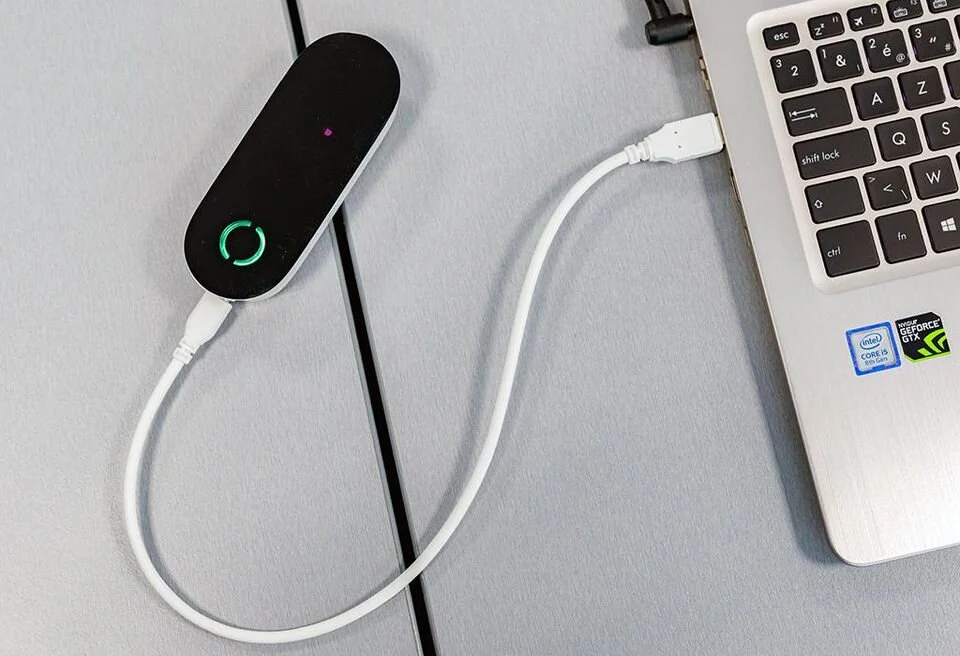

            Nadabet Gets Internet Powered By LiFi Technology From Ahmedabad-Based NAV Wireless Technologies Pvt Ltd

            Table of Contents

              Nadabet Gets Internet Powered By LiFi Technology From Ahmedabad-Based NAV Wireless Technologies Pvt Ltd

              From a recent article written by The Indian Express, Ahmedabad-based NAV Wireless Technologies Pvt Ltd has been providing LiFi technology and improving the internet broadband needs of Border Security Force (BSF) and tourists at Nadabet, which is the farthest and one of the most secluded points on the India-Pakistan border in Gujarat, since the last nine months.

              Hardik Soni, a co-founder of NAV Wireless Technologies Pvt Ltd, stated the following:

              “Nadabet is located on the border and it is connected by a small road to Suigam (in Banaskantha district) located 30 kilometres away. The saline ecosystem does not allow the laying of underground or overhead optic fibre cables. Radio frequencies cannot be used as it is near Pakistan. So state government was facing an issue in providing Internet connectivity to Nadabet which is now being developed as a tourist location,”

              “Since last nine months, internet provided by this technology is being used by soldiers of BSF and tourists alike. Around 15,000 people visit Nadabet every month and they are able to use the high-speed internet. This is the first big project taken up by the state and central governments to deploy LiFi technology at a spot having difficult terrain and security concerns,”

              “We have connected the optic fibre cable in Suigam to our LiFi devices in Suigam and Nadabet to provide high bandwidth Internet. Multiple users and 100 MBPS (megabits per second) will not be sufficient. So this technology provides speeds in gigabytes,” the official said adding that the telecom infrastructure of BSNL and Gujarat Informatics Ltd has also been used to provide this service.

              “We are not the telecom or internet service provider. We only handle the technology and the equipment,” he added.

              Article source: https://indianexpress.com/article/cities/ahmedabad/lifi-technology-from-ahmedabad-firm-powers-internet-at-nadabet-7928544/

              Nav Wireless Technologies Pvt Ltd

              According to its website, Nav Wireless Technologies Pvt Ltd is a global leading solutions and services provider of wireless and information communications systems with its own R&D facilities, manufacturing base, and sales and service teams. The company offers a comprehensive suite of products and services including Optical Wireless Communication Systems, Wireless Electricity Transmission systems, Electronic Tattoo for Healthcare Monitoring systems, Wireless enhancement products, and subsystems and wireless transmission systems to its global customers.

              NavTech is a technology company focused on Research, Design and Development in the field of Optical Wireless Communications, Electronic Materials, Renewable Energy – Nanoscale to develop high-efficiency photovoltaic devices. NavTech's R&D initiative brings advanced wireless technologies to improving lives with projects that strengthen economic and social development.

              NavTech product portfolio includes Optical Wireless Communication, Smart LED Lights, Advanced Wireless Transmission Systems, Wireless Broadband and Wireless Access Equipment. NavTech's services range includes consultation, product & network design, optimisation and commissioning.

              Li-Fi Conference 2022

              The next Li-Fi Conference is coming up on the 28th of June 2022 between 10 am and 4.30 pm CET.

              It is interesting to realise that lights that illuminate offices, homes, cars, factories, our streets and more locations also can connect us to data and hence power the growing demand for connectivity and speed.

              At this conference professionals from all over the globe will gather together in order to share applications, ideas, new developments and ways to integrate Li-Fi in services, both for consumers and professionals.

              This conference will be held Live and Online. The venue will be the High Tech Campus 1, The Strip 5656 AE Eindhoven The Netherlands.

              Online tickets can be bought at the following link:

              https://tikcit.com/register/61e002336d7fc4b6745cab83/

              What is LiFi?

              LiFi, also known as "Light Fidelity" is a wireless optical networking technology, which uses light-emitting diodes (LEDs) to transmit data. In 2011, professor Harald Haas made a LiFi demonstration at the TED (Technology, Entertainment, Design) Global Talk on Visible Light Communication (VLC).

              VLC uses light as a medium to deliver high-speed communication like Wi-Fi and complies with the IEEE standard IEEE 802.15.7. The IEEE 802.15.7 is a high-speed, bidirectional, and fully networked wireless communication technology-based standard similar to Wi-Fi's IEEE 802.11.

              How does LiFi work?

              LiFi is a high speed, bidirectional, and fully networked wireless communication of data using light. LiFi constitutes of several light bulbs that form a wireless network.

              When an electrical current goes through to a LED light bulb, a stream of light (photons) emits from the lamp. LED bulbs are semiconductor devices, which means that the brightness of the light flowing through them can change at extremely high speeds. The signal is sent by modulating the light at different rates. The signal can then be received by a detector that interprets the changes in light intensity (the signal) as data. Also when the LED is ON, you transmit a digital 1, and when it is OFF, you transmit a 0.

              LiFi Benefits

              The primary benefits of LiFi are as follows:

              Security: Provides entirely secure access. Where there is no light there is no data.

              Safety: Does not produce electromagnetic radiation and does not interfere with existing electronic systems.

              Localisation: Allows localisation due to the small coverage area of LiFi access point - localisation can be used for very precise asset tracking.

              Data density: Provides ubiquitous high-speed wireless access that offers substantially greater data density (data rate per unit area) than RF through high bandwidth reuse.

              Credit to Oledcomm

              LiFi Applications

              LiFi can be used for so many applications and the list is increasing every year. You can read our updated list of LiFi applications at the following link:

              https://www.lifitn.com/blog/2021/2/13/top-30-li-fi-applications-updated-list-including-potential-applications

              Credit to pureLiFi

              In conclusion, if you are also interested to hear more information about the OWNII Coin or enquire about LiFi devices such as the LiFiMax and Trulifi, you can contact us through our chatbot or by sending an email through our contact us form. If you enjoyed this post and would like to hear more updates about LiFi technology, subscribe to our newsletter. Don’t forget to subscribe to our social media accounts. You can also join our Telegram group about LiFi technology on this link:

              https://t.me/joinchat/FMzOmsEKyJFrU6Af
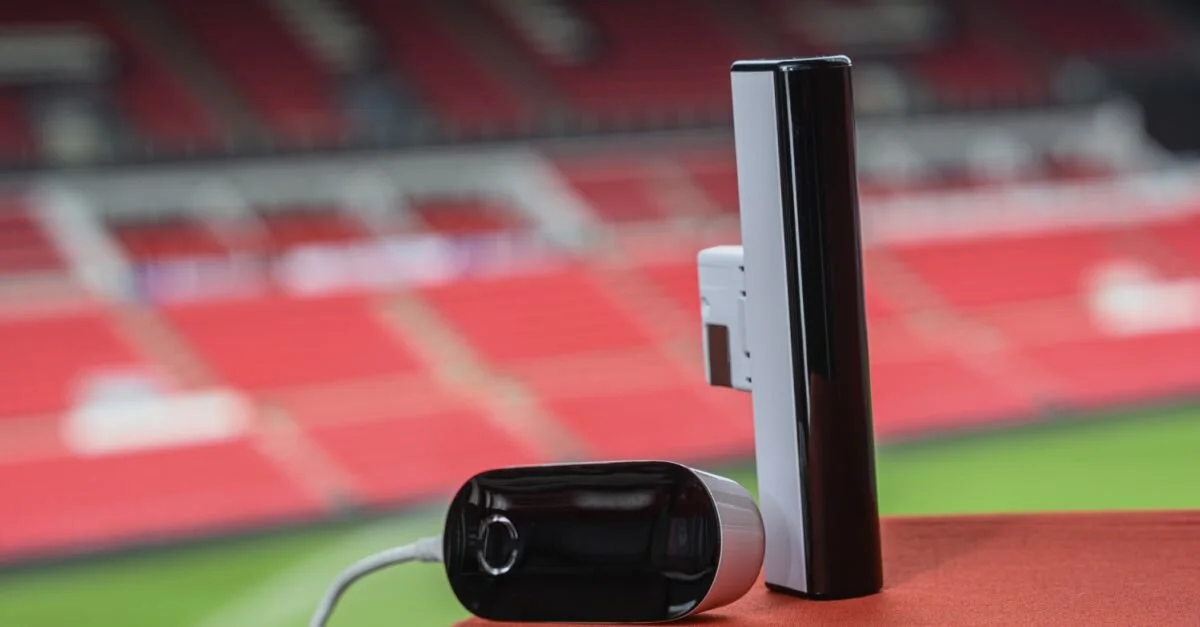

              The Mobile Internet Extranet LiFi Access (MIELA) System By PoE-Tic

              Table of Contents

                The Mobile Internet Extranet LiFi Access (MIELA) System By PoE-Tic

                Today, we are going to talk about the The Mobile Internet LiFi Access (MIELA) made by PoE-Tic in collaboration with Signify. We will discuss about the company PoE-Tic, its CEO and founder and the MIELA system.

                PoE-Tic

                PoE-Tic was founded in 2019. PoE-Tic offers its expertise in the implementation of alternative wireless infrastructures: BPL and BPL/LiFi (PoE-BPL and PoE-LiFi).

                To limit radio waves in schools or hospitals, PoE-Tic has designed an exclusive device -PoE-Sea- which allows teachers to cut WiFi terminals at the end of a teaching activity; in accordance with the legislation (Bee law).

                To completely eliminate electromagnetic emissions, PoE-Tic has selected the best LiFi offers that use light to transmit data bidirectionally, with an upload speed of around 100 Mbps.

                The BPL (Broadband over Power Lines) or Courant Porteur pro broadcasts broadband access through power outlets or the lighting circuit. This high-performance technology significantly facilitates the networking of LiFi and/or WiFi wireless access points by avoiding the need to pull RJ45 or FO cables.

                Industries (M2M, IoT), the Smart City, schools or hospitals as well as businesses are among the sectors where the demand for alternative connectivity solutions is growing the fastest.

                With the credit of its founder, Dominique Le Bourse, several hundred schools and numerous installations in industrial and hospital environments; PoE-Tic transmits its know-how to its partners.

                Approved under the “PoE-T” brand; these installers, resellers and integrators established in France take advantage of these innovative alternative technologies by bringing added value to their own offers to win and retain new customers: JOIN THEM NOW!


                The CEO and Founder of PoE-Tic


                Dominique Le Bourse is the CEO and Founder of Poe-Tic. He is also a LiFi expert and the Designer and Manufacturer of PoE-Sea and MIELA: both innovative devices to moderate or totally suppress the exposure of young pupils to radio waves.

                Dominique Le Bourse is an experienced Sales Manager with a demonstrated history of working in the information technology and services industry as well as skilled in Partner Relationship Management, Go-to-market Strategy, Management, Product Marketing.

                He is an expert in alternative networks such as CPL pro, BPL (Broadband over Power Lines), BPL/WiFi, BPL/LiFi and LiFi.

                We asked Mr Dominique Le Bourse some few additional questions about its company and the MIELA product.

                Question 1. Could you tell me more about your business?

                Dominique Le Bourse: I integrate, design and manufacture solutions and products that decrease or eliminate radiowaves in 1st degree schools.

                There is a specific law in France called “Loi Abeille – the name of the ecological deputy” that requires WiFi to be switch off at the end of pedagogic activities.

                Question 2. A summary of your background

                Dominique Le Bourse: Strongly involved in the Education market where I deploy hundreds of PLC (Power Lines) infrastructures inside schools that have been difficult to wire.

                Question 3. Your passion for LiFi technology

                Dominique Le Bourse: an alternative and efficient solution to totally suppress radiowaves when taking benefit of performance wireless access

                Question 4. More information about MIELA like price,et

                Dominique Le Bourse: you can read more information about MIELA on this link:

                https://bit.ly/plaquetteMIELA1

                Though it is in French.

                Question 5. How did the idea of MIELA came to be?

                Dominique Le Bourse: LiFi is expensive for collectivities in charge of school equipment. Equipment installation in ceiling of classrooms can be very costly. Comparing with the use of mobile furniture that houses tablets, I had the idea to actualize a LiFi connection by transforming fixed installation into a mobile one.

                I contacted some LiFi manufacturers and an industrial specialist in medical furniture. I wanted something looking as a pole of perfusion that would be able to rolling and passing doors.

                Question 6. What about your partnership with Signify to produce MIELA?

                Dominique Le Bourse: I had the chance to meet the right guy in Signify that trusted in that “exotic” idea.

                Question 7. Do you have a website about your products?

                Dominique Le Bourse: yes, I do have a website, www.poe-tic.com


                MIELA System

                The sobriety of radio waves in motion

                PoE-Tic develops and integrates alternative wireless network infrastructures that limit cabling work and guarantee sobriety, or even total suppression of radio waves.

                World leader in lighting, Signify has designed the Trulifi offer which allows transmit high-speed data LiFi, with a bandwidth of around 150 Mbps.

                PoE-Tic and Signify have combined their know-how to meet connectivity and mobility needs in environments that must be free of radio frequencies. This is how the MIELA was born; innovative LiFi equipment that combines Mobility, Sobriety and Scalability.

                Mobility : Easily move your wireless LiFi Access Point, depending on your connectivity needs.

                Sobriety: Communicate in non-visible light (IR), without any exposure to electromagnetic fields, in reference to the Bee law of February 9, 2015.

                Scalability: Evaluate the advantages of LiFi in a mobile version, before opting for connected, low-energy LED lighting that will cover all of your buildings.

                What does the Bee Law (Loi Abeille) say?

                LAW n° 2015-136 of February 9, 2015 relating to sobriety, transparency, information and consultation in terms of exposure to electromagnetic waves - known as the Bee law (Loi Abeille), named after the deputy Laurence Abeille whose scope states in article 7 (excerpt):

                I. - [...] the installation of fixed terminal equipment equipped with wireless access [Wi-Fi, editor's note] to the internet is prohibited in spaces dedicated to the reception, rest and activities of children under three years old.

                II. - In primary school classes, wireless access [...] is disabled when not in use for digital educational activities.

                III. - In primary schools, any new installation of a radio network is subject to prior information from the school council.

                THE CONCEPT OF MIELA

                An Access Point is embedded inside the MIELA.

                Three transceivers are placed at the top of the device which communicate with the USB keys connected to each workstation.

                The Access Point is interconnected to the local wired network (RJ45) or via a Power Line Carrier (CPL) terminal supplied as an option.

                The MIELA is height adjustable from 1.40 to 2.50 m to make it easier to pass through doors.

                Once fully deployed, the MIELA covers an area of ​​about twenty m² in which a maximum of sixteen users can share the high-speed LiFi connection. An optimal speed of 150/140 Mbps is obtained at 1.20 m from the USB key when the MIELA is set at 1.80 m from the ground; with a 60 cm worktop.

                MIELA TECHNICAL CHARACTERISTICS

                Trulifi configuration (starter kit): an Access Point, three transceivers and a USB key.

                Number of connections per MIELA: a maximum of 16 Trulifi 6002 USB sticks can be managed by one Access Point.

                Electrical protection: chassis electrical socket with switch + 16 A circuit breaker.

                Wired network connection: RJ45 frame F/F socket.

                Height (min / max): 1.40 / 2.50 m.

                Dimensions of the mobile base: 55 x 55 cm

                Wheels Type: Four Ø 95 mm wheels, two of which are fitted with a brake.

                Total weight: 24 kg.

                PLC configuration (optional): a Dinrail G.hn or HPAV2 module.

                Main advantages

                As stated by Dominique Le Bourse, the MIELA makes it possible to have a LiFi wireless connection as close as possible to the users, without the need to carry out costly and tedious preliminary work. In addition, compatibility with PLC allows the MIELA to have broadband access to all power outlets, without any additional wiring.

                Thanks to MIELA, nurseries, neighborhood centres, kindergartens and maternity rooms now have a wireless connection that fully complies with legislation.

                Thus, whether for budgetary or health reasons or simply as a precautionary principle, the MIELA is a major asset for adopting LiFi technology without delay.

                MIELA DATASHEET IN ENGLISH

                https://poe-tic.com/wp-content/uploads/2022/08/Plaquette-MIELA_en_v2.1.pdf

                POE-TIC contact details

                If you are interested in getting more information about their products or purchasing any of their products, you can contact Poe-Tic on the following details:

                Phone: +33 7 64 75 30 28

                Email: info@poe-tic.com

                Address: SAS PoE-Tic | 6, Rue du Bois Sauvage 91000 EVRY-COURCOURONNES

                Li-Fi Conference 2022

                The next Li-Fi Conference is coming up on the 28th of June 2022 between 10 am and 4.30 pm CET.

                It is interesting to realise that lights that illuminate offices, homes, cars, factories, our streets and more locations also can connect us to data and hence power the growing demand for connectivity and speed.

                At this conference professionals from all over the globe will gather together in order to share applications, ideas, new developments and ways to integrate Li-Fi in services, both for consumers and professionals.

                This conference will be held Live and Online. The venue will be the High Tech Campus 1, The Strip 5656 AE Eindhoven The Netherlands.

                Online tickets can be bought at the following link:

                https://tikcit.com/register/61e002336d7fc4b6745cab83/

                What is LiFi?

                LiFi, also known as "Light Fidelity" is a wireless optical networking technology, which uses light-emitting diodes (LEDs) to transmit data. In 2011, professor Harald Haas made a LiFi demonstration at the TED (Technology, Entertainment, Design) Global Talk on Visible Light Communication (VLC).

                VLC uses light as a medium to deliver high-speed communication like Wi-Fi and complies with the IEEE standard IEEE 802.15.7. The IEEE 802.15.7 is a high-speed, bidirectional, and fully networked wireless communication technology-based standard similar to Wi-Fi's IEEE 802.11.

                How does LiFi work?

                LiFi is a high speed, bidirectional, and fully networked wireless communication of data using light. LiFi constitutes of several light bulbs that form a wireless network.

                When an electrical current goes through to a LED light bulb, a stream of light (photons) emits from the lamp. LED bulbs are semiconductor devices, which means that the brightness of the light flowing through them can change at extremely high speeds. The signal is sent by modulating the light at different rates. The signal can then be received by a detector that interprets the changes in light intensity (the signal) as data. Also when the LED is ON, you transmit a digital 1, and when it is OFF, you transmit a 0.

                LiFi Benefits

                The primary benefits of LiFi are as follows:

                Security: Provides entirely secure access. Where there is no light there is no data.

                Safety: Does not produce electromagnetic radiation and does not interfere with existing electronic systems.

                Localisation: Allows localisation due to the small coverage area of LiFi access point - localisation can be used for very precise asset tracking.

                Data density: Provides ubiquitous high-speed wireless access that offers substantially greater data density (data rate per unit area) than RF through high bandwidth reuse.

                Credit to Oledcomm

                LiFi Applications

                LiFi can be used for so many applications and the list is increasing every year. You can read our updated list of LiFi applications at the following link:

                https://www.lifitn.com/blog/2021/2/13/top-30-li-fi-applications-updated-list-including-potential-applications

                Credit to pureLiFi

                In conclusion, if you are also interested to hear more information about the OWNII Coin or enquire about LiFi devices such as the LiFiMax and Trulifi, you can contact us through our chatbot or by sending an email through our contact us form. If you enjoyed this post and would like to hear more updates about LiFi technology, subscribe to our newsletter. Don’t forget to subscribe to our social media accounts. You can also join our Telegram group about LiFi technology on this link:

                https://t.me/joinchat/FMzOmsEKyJFrU6Af
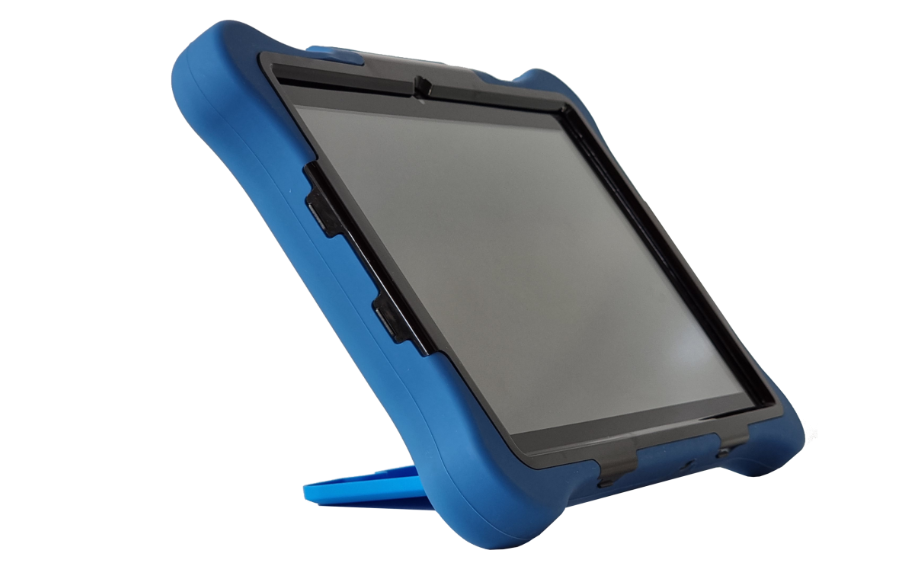

                Signify Announced A Strategic Technology Partnership With Intelligent Waves, Award-Winning, Cyber-Defense Solution, GRAYPATH

                Table of Contents
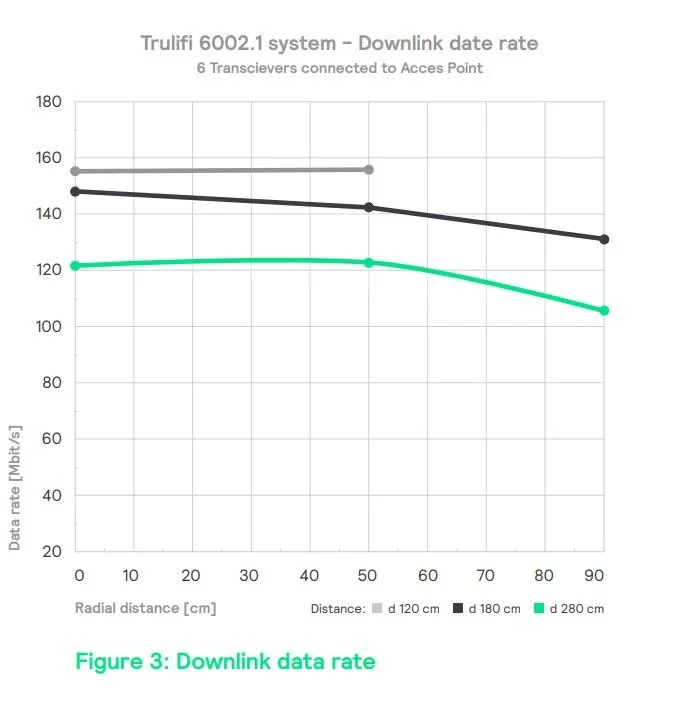
                  Signify Announced A Strategic Technology Partnership With Intelligent Waves, Award-Winning, Cyber-Defense Solution, GRAYPATH

                  Trulifi 6002 transceiver - Photo Credit to mobilegeeks

                  Signify and Intelligent Waves

                  Signify announced a strategic technology partnership with Intelligent Waves, developer of the award-winning, cyber-defense solution, GRAYPATH. Signify LiFi system, Trulifi, and the GRAYPATH software use invisible light waves to allow reliable, secure, two-way wireless data communication, which in turn provide defense personnel with mission-critical connectivity.

                  “We are thrilled to partner with Signify, a pioneer in lighting and light-based communication. Together, we will be able to better serve the most demanding and secure special operators in austere environments, and we look forward to integrating Signify’s innovation into the platform.”

                  Signify’s unique Trulifi solution provides physical security via dedicated USB access keys and a consistent, high-speed wireless connection through light, while GRAYPATH uses the cloud to randomise and distribute data across multiple paths and encrypted channels. The technology integration enables the secure transmission of data from high-risk operational locations without the danger of information being jammed, intercepted or disrupted.

                  Richard Honey, Head of Trulifi by Signify sales, US Defense sector  stated that: "We are excited to offer our solution, in partnership with Intelligent Waves, to the defense industry. Light-based communication, unlike conventional radio technologies such as Wi-Fi and 4G/5G, offers a critical, extra layer of security; it can be controlled within a restricted space and does not penetrate through walls. This benefit has already been recognised by defence customers, with the US Army, Navy and Marines adopting our game-changing LiFi technology."

                  John Hammes, Chief Strategy Officer of Intelligent Waves, said: "We are thrilled to partner with Signify, a pioneer in lighting and light-based communication. Together, we will be able to better serve the most demanding and secure special operators in austere environments, and we look forward to integrating Signify’s innovation into the platform."

                  According to Joe Vano, Transmission Group Lead, Program Management Office – Tactical Network, Technical Management Division of the US Army, “LiFi can enhance the Low Probability of Intercept/Low Probability of Detection attribute on the battlefield. This helps securing the Tactical Operations Center (TOC) to a higher degree due to its insignificant and largely undetectable RF signature while maintaining high-speed connectivity within the TOC. Reducing our adversaries’ ability to intercept and jam the battlefield Commander’s network while still maintaining a network cable-free environment within the TOC is advantageous.”

                  Article source: https://www.businesswire.com/news/home/20220516005122/en/Signify-and-Intelligent-Waves-Enter-Into-Strategic-Collaboration-to-Deliver-Mission-critical-Light-Waves-based-Wireless-Connectivity

                  Intelligent Waves

                  Intelligent Waves delivers mission-focused multi-domain operational expertise and innovation to the Government through high-impact technology solutions in cybersecurity, data science, enterprise network engineering, software development, and platform mission support. Always ready. Anytime. Anywhere. Any domain.

                  Since 2006, they have proudly served federal agencies including the Department of Defense. Their ability to operate globally in a wide range of environments coupled with their deep understanding of customer needs and requirements enables them to provide cost-effective solutions and support the most complex missions.

                  Intelligent Waves brings an enterprise perspective to IT infrastructure. Their systems engineers understand the complexities of sophisticated technologies, platforms and user-facing applications and use a disciplined approach to addressing system-of-systems architectures to enable system adaptability, scalability and sustainment. Their comprehensive understanding of IT/IS allows customers to promote a common technical framework and vision across the organization, promoting a better institutional understanding of IT operations and decreasing total cost of ownership for deployed solutions.

                  Intelligent Waves supports numerous systems engineering projects for the Department of Defense (DoD) and the Department of Veterans Affairs (VA). Their centralised engineering services include management of their customers technical framework. This includes supporting system optimisation, design, testing, and integration to critical application deployments across an enterprise. Their agile approach to enterprise systems engineering practices help them to deliver higher quality software solutions faster in response to diverse customer needs.

                  GRAYPATH

                  GRAYPATH (GP) is the award winning, next generation of expeditionary communications. Through its patented IP Spread Spectrum technology, GP leverages the cloud to randomize and distribute message packets through the simultaneous use of multiple transport paths and encrypted channels. GP algorithms optimize throughput by continuously sensing and adjusting the message flow according to channel availability and bandwidth capacity creating a smoother connection even for HD video transmissions. GP dramatically lowers the risk of detection and interception and is nearly impervious to disruption.

                  Signify

                  Signify is the new brand name of Philips Lighting. The name change occurred in March 2018 to represent the transformation from an analogue lighting company into a digital lighting and Internet of Things (IoT) company. Signify is the world leader in lighting for professionals, consumers and lighting for the Internet of Things. The company provides lighting solutions for professional segments such as automotive, healthcare, horticulture, office, outdoor, phototherapy, petrol stations, solar, purification, schools, fashion, cinema, and more. These lighting solutions include indoor and outdoor luminaries, lamps, electronics, lighting controls, lighting control software, IoT systems and platforms.

                  Credit to Signify

                  Signify has also other brands under its belt such as Philips, Interact, Modular Lighting Instruments, Luceplan, Color Kinetics, ILTI Luce and Philips Hue.


                  Trulifi system

                  Signify launched a LiFi system called “Trulifi” back in 2019. Trulifi uses light waves to enable highly reliable, secure two-way wireless communications at speeds far above most conventional workplace wireless technologies.

                  Trulifi uses optical wireless transceiver technology built, or retrofitted, into Philips luminaires. This means customers do not have to replace their existing lighting infrastructure to receive great quality light and wireless connectivity.

                  Trulifi 6002 dongle and USB cable - Credit to Signify

                  The LiFi system comprises of a USB Network Access adapter, LiFi enabled LED lights and a Trulifi-6002 Plug-In Optical Transceiver. The Trulifi-enabled luminaires can provide wireless connectivity at speeds up to 150 Megabits per second (Mbps) over large spaces, such as meeting rooms and office floors. There is seamless handover between each Trulifi-enabled luminaire enabling users to roam around. The speed is fast enough to stream simultaneously 30 1080p HDTV movies. A USB-access key, plugged into a laptop, is needed to receive the LiFi signal and acts as an emitter to send data back to the luminaire.

                  The Trulifi range also includes a fixed point-to-point system, up to 250 Mbps speed, which acts like a wireless cable. This is ideal for mobile devices connectivity. This LiFi system can also be useful to connect robots or machines in radio frequency (RF) harsh environments like industrial plants, or hospitals where RF communications may not be permitted, or where there’s a need to send and receive large data files securely and quickly. Currently, Trulifi is aimed at professional markets, including offices, hospitality, retail, industry, construction and healthcare.

                  Benefits of Trulifi

                  Signify claimed the following three benefits of their Trulifi system:

                  RELIABLE

                  Trulifi is ideal for busy areas, such as multi-tenancy buildings, stations, airports and public areas. Network availability and overload are no longer an issue. Trulifi provides guaranteed bandwidth without interference from other radio communication systems.

                  What’s more, it works in places where radio frequencies are not permitted, restricted or could cause interference – such as in hospitals, some schools, aircraft and industrial plants. It also works where radio frequencies don’t work well or at all.

                  Trulifi actively coordinates traffic, ensuring good quality of service for all users, at all times. It uses the ITU G.9991 LiFi standard. 

                  The new standard, ITU G.9991, describes the system architecture, physical layer and data link layer specification for ‘high-speed indoor VLC transceivers’, the VLC access points within light bulbs.

                  SECURE

                  Trulifi uses AES 128-bit encryption. The Advanced Encryption Standard (AES) is a symmetric block cipher chosen by the U.S. government to protect classified information and is implemented in software and hardware throughout the world for the encryption of sensitive data. Information is accessed using a USB access key. What’s more an extra layer of security is built-in, as light waves cannot penetrate walls. This all helps to make Trulifi as secure as wired communication. Perfect for applications where security is paramount:

                  • Financial institutions

                  • Government

                  • Police

                  • Military

                  • Data centres

                  • Corporate organisations

                  FAST

                  Trulifi 6002 series has a net data rate up to 150 Mbps for the downlink and the uplink. That’s fast enough to stream simultaneously 30 1080p HDTV movies.

                  It’s perfect for offices and large spaces as each luminaire transceiver hands off seamlessly to another. And unlike other LiFi systems, it works with the lights on, dimmed or off.

                  Trulifi 6013 is a fixed point-to-point system. It acts like a wireless cable with a guaranteed net data rate up to 250 Mbps for the downlink and uplink. It can be used in a host of environments – from connecting machines in a factory to sending large image files in a hospital. Trulifi 6013 is available with Blue, Red and Green light.


                  Li-Fi Conference 2022

                  The next Li-Fi Conference is coming up on the 28th of June 2022 between 10 am and 4.30 pm CET.

                  It is interesting to realise that lights that illuminate offices, homes, cars, factories, our streets and more locations also can connect us to data and hence power the growing demand for connectivity and speed.

                  At this conference professionals from all over the globe will gather together in order to share applications, ideas, new developments and ways to integrate Li-Fi in services, both for consumers and professionals.

                  This conference will be held Live and Online. The venue will be the High Tech Campus 1, The Strip 5656 AE Eindhoven The Netherlands.

                  Online tickets can be bought at the following link:

                  https://tikcit.com/register/61e002336d7fc4b6745cab83/


                  What is LiFi?

                  LiFi, also known as "Light Fidelity" is a wireless optical networking technology, which uses light-emitting diodes (LEDs) to transmit data. In 2011, professor Harald Haas made a LiFi demonstration at the TED (Technology, Entertainment, Design) Global Talk on Visible Light Communication (VLC).

                  VLC uses light as a medium to deliver high-speed communication like Wi-Fi and complies with the IEEE standard IEEE 802.15.7. The IEEE 802.15.7 is a high-speed, bidirectional, and fully networked wireless communication technology-based standard similar to Wi-Fi's IEEE 802.11.

                  How does LiFi work?

                  LiFi is a high speed, bidirectional, and fully networked wireless communication of data using light. LiFi constitutes of several light bulbs that form a wireless network.

                  When an electrical current goes through to a LED light bulb, a stream of light (photons) emits from the lamp. LED bulbs are semiconductor devices, which means that the brightness of the light flowing through them can change at extremely high speeds. The signal is sent by modulating the light at different rates. The signal can then be received by a detector that interprets the changes in light intensity (the signal) as data. Also when the LED is ON, you transmit a digital 1, and when it is OFF, you transmit a 0.

                  LiFi Benefits

                  The primary benefits of LiFi are as follows:

                  Security: Provides entirely secure access. Where there is no light there is no data.

                  Safety: Does not produce electromagnetic radiation and does not interfere with existing electronic systems.

                  Localisation: Allows localisation due to the small coverage area of LiFi access point - localisation can be used for very precise asset tracking.

                  Data density: Provides ubiquitous high-speed wireless access that offers substantially greater data density (data rate per unit area) than RF through high bandwidth reuse.

                  Credit to Oledcomm

                  LiFi Applications

                  LiFi can be used for so many applications and the list is increasing every year. You can read our updated list of Li-Fi applications at the following link:

                  https://www.lifitn.com/blog/2021/2/13/top-30-li-fi-applications-updated-list-including-potential-applications

                  Credit to pureLiFi

                  In conclusion, if you are also interested to hear more information about the OWNII Coin or enquire about LiFi devices such as the LiFiMax and Trulifi, you can contact us through our chatbot or by sending an email through our contact us form. If you enjoyed this post and would like to hear more updates about LiFi technology, subscribe to our newsletter. Don’t forget to subscribe to our social media accounts. You can also join our Telegram group about LiFi technology on this link:

                  https://t.me/joinchat/FMzOmsEKyJFrU6Af