

Table of Contents
Lawrence Woodmere Academy Installs Signify Trulifi 6002 LED Infrared (IR) Transceivers
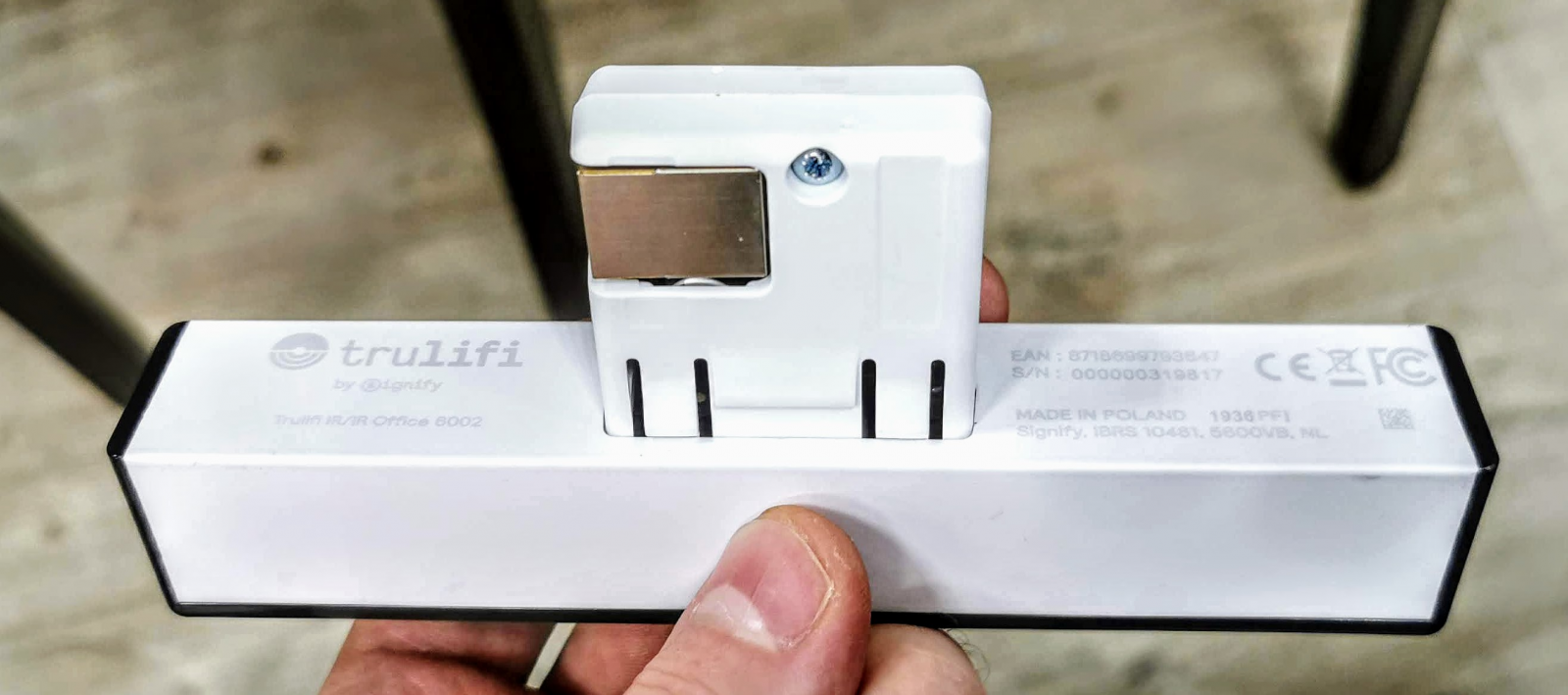
Trulifi 6002 transceiver - Photo Credit to mobilegeeks
Lawrence Woodmere Academy
According to a recent article from LEDs Magazine, Lawrence Woodmere Academy recently installed Signify Trulifi 6002 LED infrared (IR) transceivers, but without the luminaires that can come from Signify’s LiFi kits. NY-based June Lite served as the integrator on this LiFi project. June Lite stated that the school is using the LiFi at its new STEM (science, technology, engineering, and math) centre, first in a robotics and gaming area, with the main computing room to follow after.
Woodmere Academy, like other customers, decided on a system that excludes the luminaires but mounts the Infrared transceivers on the ceiling.
Neither June Lite nor Signify revealed how may transceivers Woodmere is using or how much area the LiFi covers.
According to LEDs Magazine, the two vendors also did not state how much the school paid for the system. June Lite plants trees around the world based on the value of a sale. It said that it is planting 60 trees in Ethiopia as a result of the school installation.
June Lite also noted that LiFi can be healthier for students because it does not include any radio waves. A Signify spokesperson stated: “the Wi-Fi will at times be switched off to limit the children’s exposure to radio frequency radiation.” The Signify spokesperson further informed LEDs Magazine that Woodmere decided on a “hybrid” LiFi/Wi-Fi environment. The school added LiFi to the mix “to enhance the speed in which the children are experiencing the varied projects they engage in.”.
Presumably, the Woodmere deployment includes dongles. Neither June Lite nor Signify elaborated on that according to LEDs magazine.
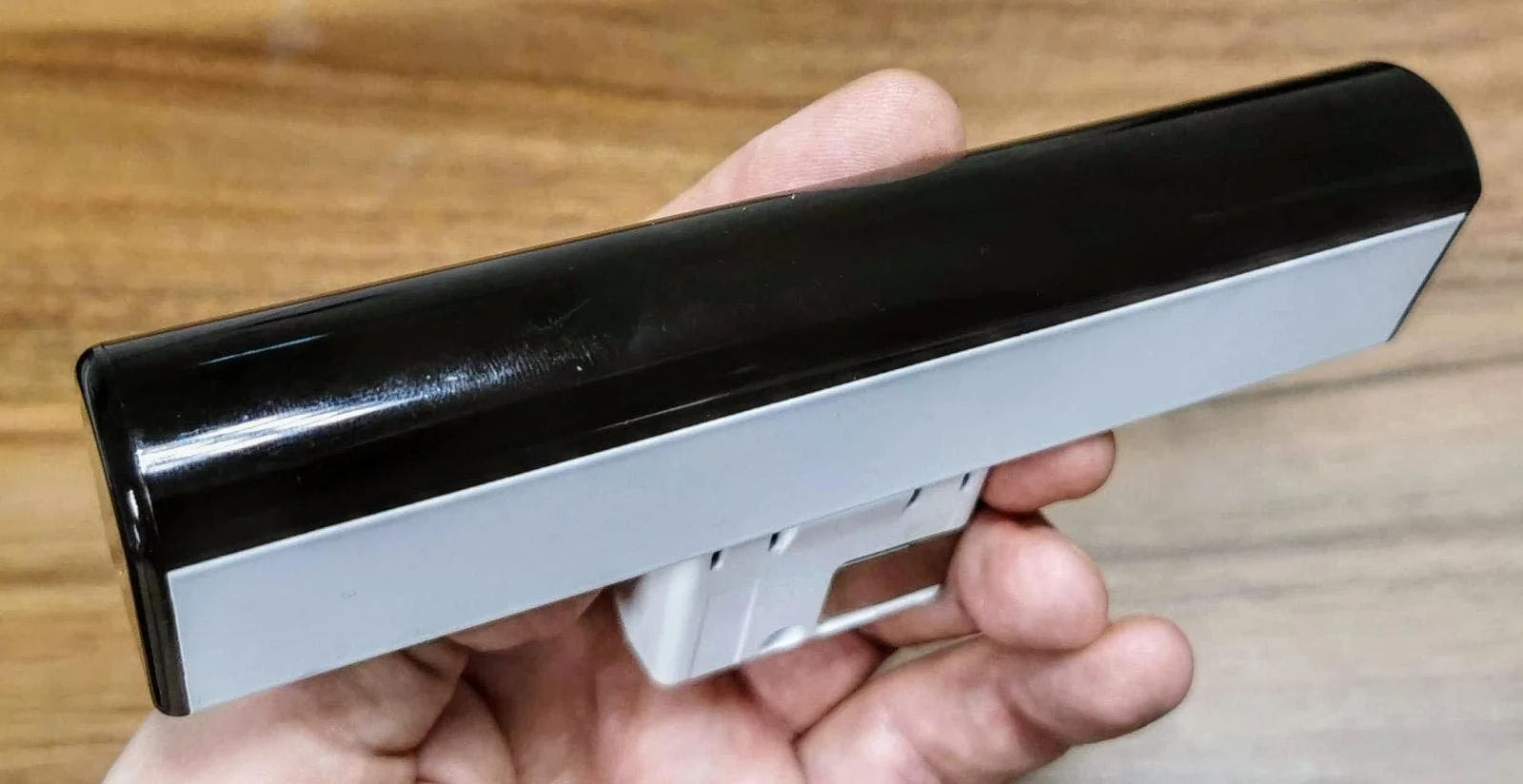
Trulifi 6002 transceiver - Photo Credit to mobilegeeks

Signify is the new brand name of Philips Lighting. The name change occurred in March 2018 to represent the transformation from an analogue lighting company into a digital lighting and Internet of Things (IoT) company. Signify is the world leader in lighting for professionals, consumers and lighting for the Internet of Things. The company provides lighting solutions for professional segments such as automotive, healthcare, horticulture, office, outdoor, phototherapy, petrol stations, solar, purification, schools, fashion, cinema, and more. These lighting solutions include indoor and outdoor luminaries, lamps, electronics, lighting controls, lighting control software, IoT systems and platforms.

Credit to Signify
Signify has also other brands under its belt such as Philips, Interact, Modular Lighting Instruments, Luceplan, Color Kinetics, ILTI Luce and Philips Hue.
Trulifi system
Signify launched a LiFi system called “Trulifi” back in 2019. Trulifi uses light waves to enable highly reliable, secure two-way wireless communications at speeds far above most conventional workplace wireless technologies.
Trulifi uses optical wireless transceiver technology built, or retrofitted, into Philips luminaires. This means customers do not have to replace their existing lighting infrastructure to receive great quality light and wireless connectivity.
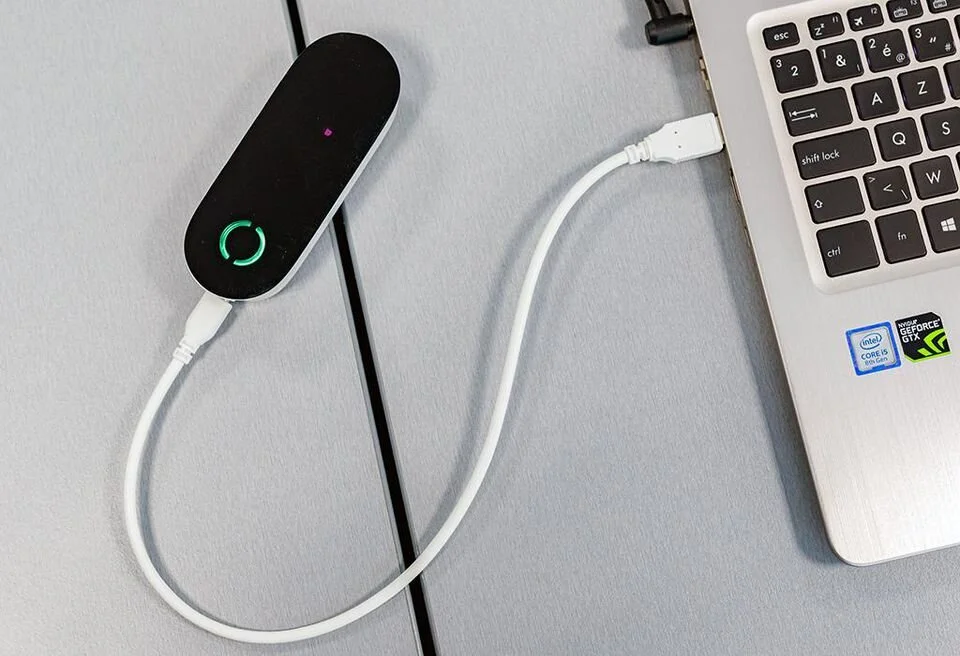
Trulifi 6002 dongle and USB cable - Credit to Signify
The LiFi system comprises of a USB Network Access adapter, LiFi enabled LED lights and a Trulifi-6002 Plug-In Optical Transceiver. The Trulifi-enabled luminaires can provide wireless connectivity at speeds up to 150 Megabits per second (Mbps) over large spaces, such as meeting rooms and office floors. There is seamless handover between each Trulifi-enabled luminaire enabling users to roam around. The speed is fast enough to stream simultaneously 30 1080p HDTV movies. A USB-access key, plugged into a laptop, is needed to receive the LiFi signal and acts as an emitter to send data back to the luminaire.
The Trulifi range also includes a fixed point-to-point system, up to 250 Mbps speed, which acts like a wireless cable. This is ideal for mobile devices connectivity. This LiFi system can also be useful to connect robots or machines in radio frequency (RF) harsh environments like industrial plants, or hospitals where RF communications may not be permitted, or where there’s a need to send and receive large data files securely and quickly. Currently, Trulifi is aimed at professional markets, including offices, hospitality, retail, industry, construction and healthcare.
Benefits of Trulifi
Signify claimed the following three benefits of their Trulifi system:
RELIABLE
Trulifi is ideal for busy areas, such as multi-tenancy buildings, stations, airports and public areas. Network availability and overload are no longer an issue. Trulifi provides guaranteed bandwidth without interference from other radio communication systems.
What’s more, it works in places where radio frequencies are not permitted, restricted or could cause interference – such as in hospitals, some schools, aircraft and industrial plants. It also works where radio frequencies don’t work well or at all.
Trulifi actively coordinates traffic, ensuring good quality of service for all users, at all times. It uses the ITU G.9991 LiFi standard.
The new standard, ITU G.9991, describes the system architecture, physical layer and data link layer specification for ‘high-speed indoor VLC transceivers’, the VLC access points within light bulbs.
SECURE
Trulifi uses AES 128-bit encryption. The Advanced Encryption Standard (AES) is a symmetric block cipher chosen by the U.S. government to protect classified information and is implemented in software and hardware throughout the world for the encryption of sensitive data. Information is accessed using a USB access key. What’s more an extra layer of security is built-in, as light waves cannot penetrate walls. This all helps to make Trulifi as secure as wired communication. Perfect for applications where security is paramount:
Financial institutions
Government
Police
Military
Data centres
Corporate organisations
FAST
Trulifi 6002 series has a net data rate up to 150 Mbps for the downlink and the uplink. That’s fast enough to stream simultaneously 30 1080p HDTV movies.
It’s perfect for offices and large spaces as each luminaire transceiver hands off seamlessly to another. And unlike other LiFi systems, it works with the lights on, dimmed or off.
Trulifi 6013 is a fixed point-to-point system. It acts like a wireless cable with a guaranteed net data rate up to 250 Mbps for the downlink and uplink. It can be used in a host of environments – from connecting machines in a factory to sending large image files in a hospital. Trulifi 6013 is available with Blue, Red and Green light.
What is LiFi?
LiFi, also known as "Light Fidelity" is a wireless optical networking technology, which uses light-emitting diodes (LEDs) to transmit data. In 2011, professor Harald Haas made a LiFi demonstration at the TED (Technology, Entertainment, Design) Global Talk on Visible Light Communication (VLC).
VLC uses light as a medium to deliver high-speed communication like Wi-Fi and complies with the IEEE standard IEEE 802.15.7. The IEEE 802.15.7 is a high-speed, bidirectional, and fully networked wireless communication technology-based standard similar to Wi-Fi's IEEE 802.11.
How does LiFi work?
LiFi is a high speed, bidirectional, and fully networked wireless communication of data using light. LiFi constitutes of several light bulbs that form a wireless network.
When an electrical current goes through to a LED light bulb, a stream of light (photons) emits from the lamp. LED bulbs are semiconductor devices, which means that the brightness of the light flowing through them can change at extremely high speeds. The signal is sent by modulating the light at different rates. The signal can then be received by a detector that interprets the changes in light intensity (the signal) as data. Also when the LED is ON, you transmit a digital 1, and when it is OFF, you transmit a 0.
LiFi Benefits
The primary benefits of LiFi are as follows:
• Security: Provides entirely secure access. Where there is no light there is no data.
• Safety: Does not produce electromagnetic radiation and does not interfere with existing electronic systems.
• Localisation: Allows localisation due to the small coverage area of LiFi access point - localisation can be used for very precise asset tracking.
• Data density: Provides ubiquitous high-speed wireless access that offers substantially greater data density (data rate per unit area) than RF through high bandwidth reuse.

Credit to Oledcomm
LiFi Applications
LiFi can be used for so many applications and the list is increasing every year. You can read our updated list of Li-Fi applications at the following link:

Credit to pureLiFi
In conclusion, if you are also interested to hear more information about LiFi devices such as the LiFiMax and Trulifi, you can contact us through our chatbot or by sending an email through our contact us form. If you enjoyed this post and would like to hear more updates about LiFi technology, subscribe to our newsletter. Don’t forget to subscribe to our social media accounts. You can also join our Telegram group about LiFi technology on this link:
https://t.me/joinchat/FMzOmsEKyJFrU6Af