Li-Fi Conference 2021 - Recap Part 4 - Taking LiFi Mainstream

Table of Contents

    Li-Fi Conference 2021 - Recap Part 4 - Taking LiFi Mainstream

    Li-Fi Conference 2021

    In our last article from our ONLINE Li-Fi Conference 2021 recap series, we discussed the presentation delivered by Livia Rosu on “G.hn Backbone And Ecosystem Support For Li-Fi Use Cases, Standardization, Spectrum and Security”. The conference was organised by the Jakajima, the global High Tech Conference organiser, and the Light Communications Alliance.

    Jakajima, Matchmaker for Innovators in the high tech industry, organises many events, ranging from LiFi Technology industry trends, 3D Printing to the Internet of Things, from Unmanned Cargo Aircraft to Health Tech, from 4D Printing to Photonics and from Vertical Farming to Sustainable Materials.

    The online Li-Fi Conference included live presentations from researchers, executives and industry specialists from pureLiFi, Nokia, Signify, Orange, Radiocommunications Agency Netherlands, Velmenni, OLEDCOMM, HomeGrid Forum and Weidmüller Deutschland.

    In another article recap series, we will talk about the presentation on taking LiFi mainstream delivered by Nikola Serafimovski from pureLiFi. Before this, let’s talk briefly about pureLiFi.

    pureLiFi
    pureLiFi develops technology for communication networks that integrates data and lighting utility infrastructures. It offers a LiFi enabled device that converts the beam of lights into an electrical signal. The signal is then converted back into data. The company was founded in 2012 and is headquartered in Edinburgh.

    pureLiFi demonstrated the next LiFi system for the home at Mobile World Congress (MWC) 2022 in Barcelona. pureLiFi stated that this is the world’s first LiFi ecosystem for the consumer market, named LiFi@Home™.

    pureLiFi CEO, Alistair Banham stated the following:

    The door is open for LiFi to fill the gap. LiFi is the key to unlocking the next generation of connected experiences in an ecosystem where WiFi and 5G alone are not enough. What we’ve demonstrated here for the first time is how simple it is to bring LiFi into consumer environments. We’ve done all the hard work to make LiFi easy to integrate and simple to get started.”   

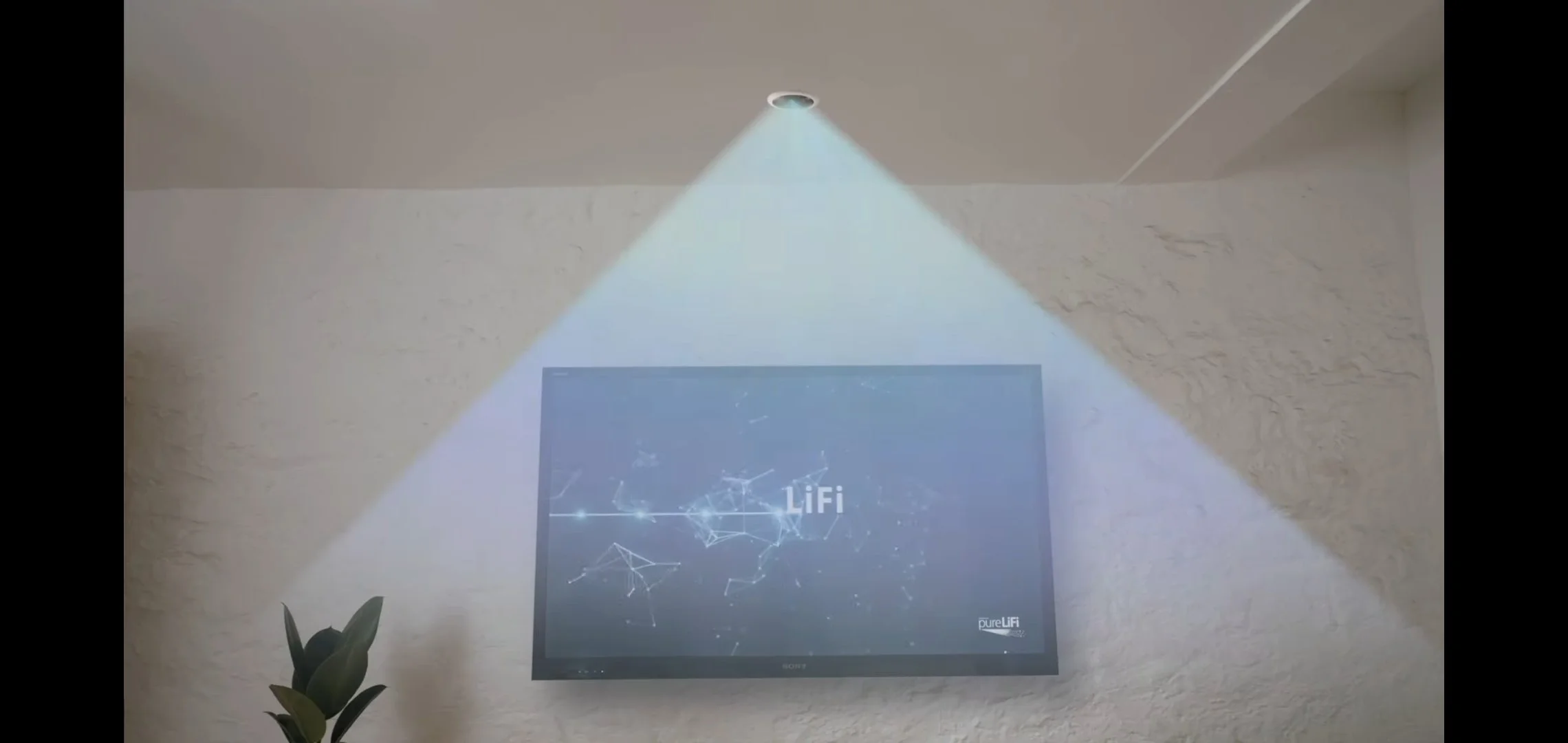
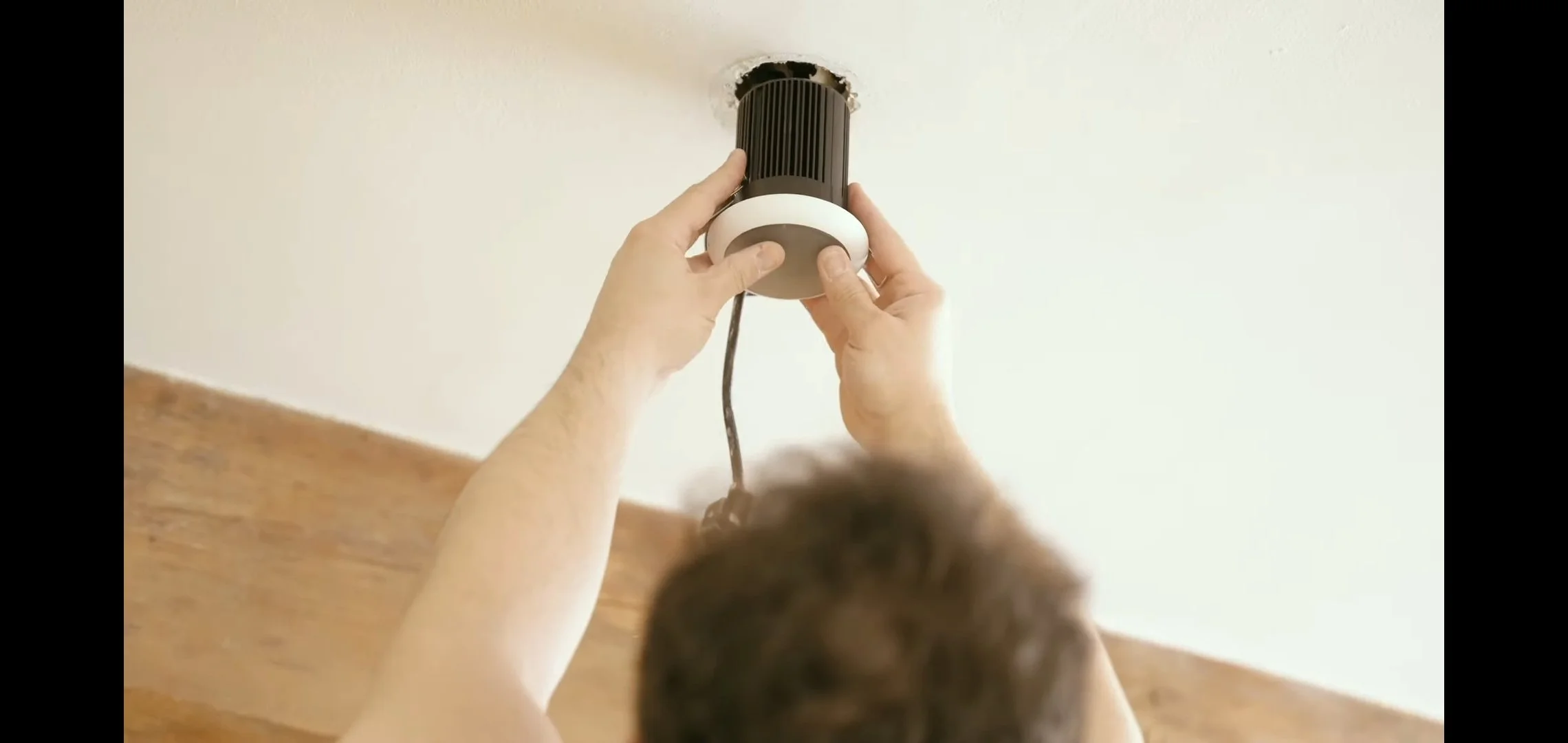
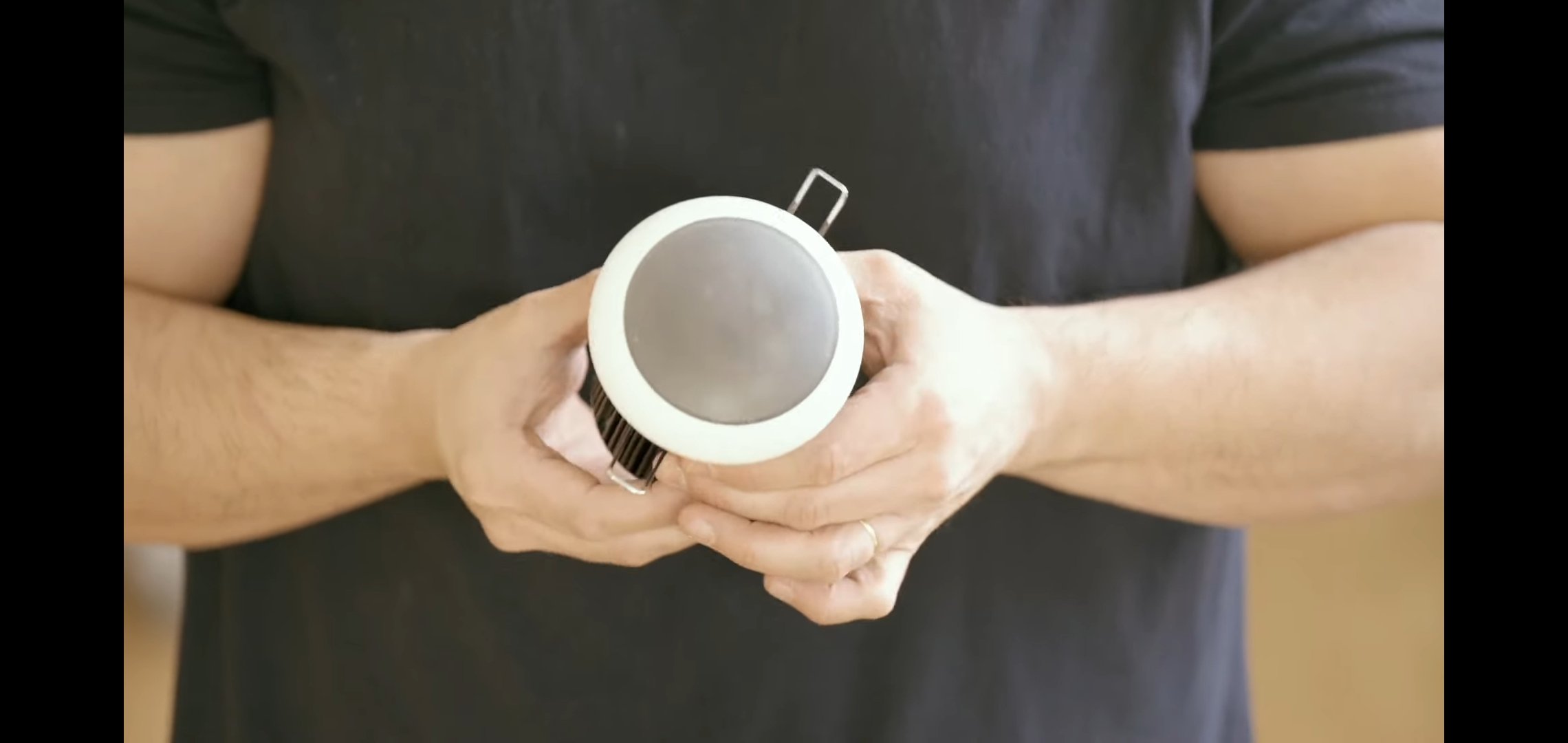
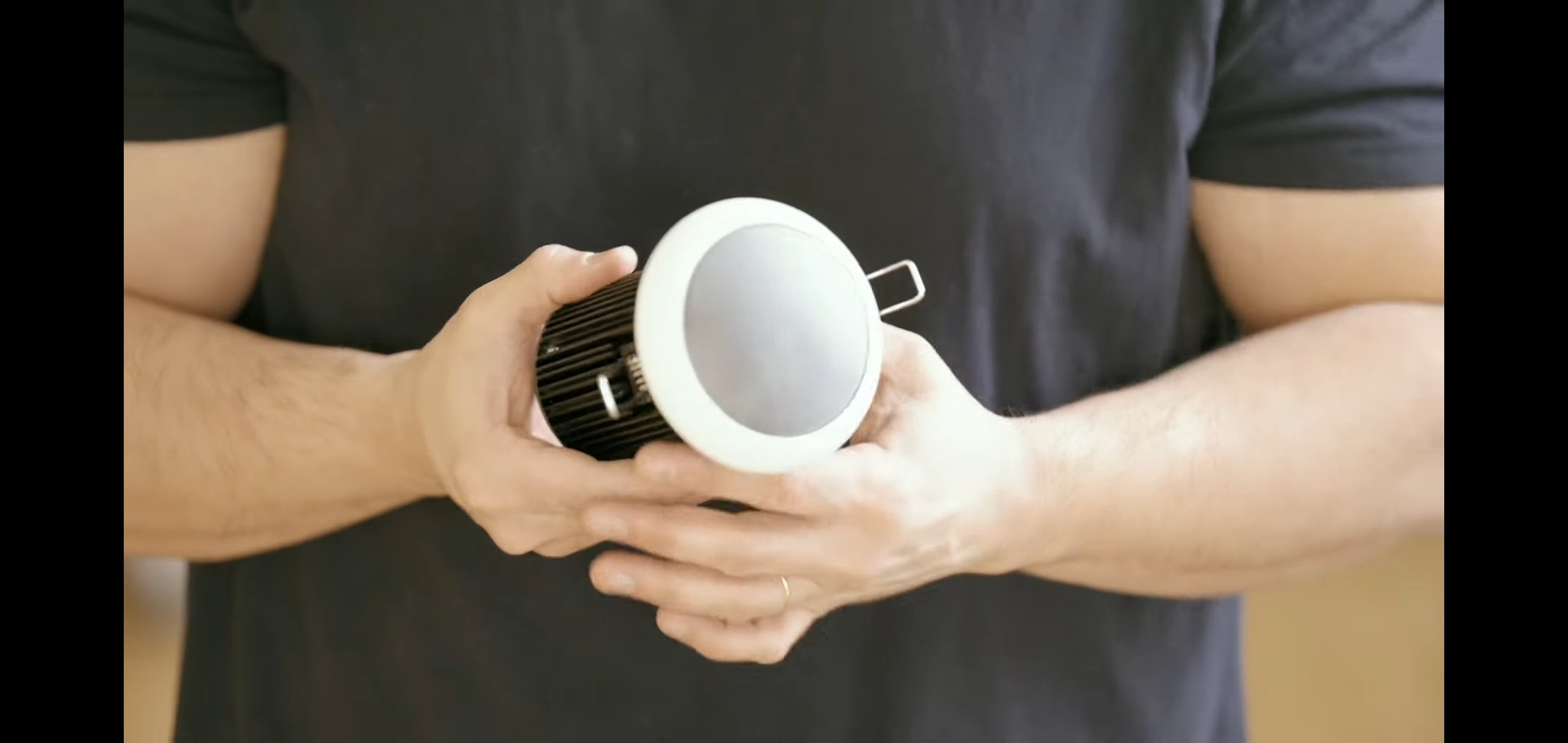
    The LiFi@Home™ family of LiFi connected experiences is made of a consumer-style downlighter, a smartphone, a smart TV and an AR Headset all connected by LiFi. The LiFi@Home system is powered by an easy to install power line communication (PLC) network backhaul that uses existing electrical cabling to connect everything to the internet. Installing the LiFi@Home™ system is as simple as changing a downlighter.


    Adding LiFi technology to a home will not only accommodate the growing demand for connected devices, it will also improve the user experience. LiFi enables more reliable connectivity that significantly improves latency and jitter and does not divide bandwidth. Next-generation experiences such as the metaverse and 8K streaming will be possible for everyone, pureLiFi claimed.


    pureLiFi’s demonstration of consumer-ready LiFi products is enabled by their world-leading light antennas which are compatible with the same WiFi basebands that already exist in billions of connected devices today, allowing for easy integration of LiFi technology.


    At MWC in Barcelona, pureLiFi CEO Alistair Banham made a direct call to the industry to show leadership beyond using WiFi and 5G. LiFi is for leaders who want to differentiate and offer their customers the best experience. We are calling on the industry to look beyond ordinary and unleash innovation with LiFi. The next and best in connectivity solutions is ready for the taking. LiFi is ready for you to design into your products and put you at the forefront of the next big wave of technology innovation.”

    Taking LiFi Mainstream by Nikola Serafimovski

    Nikola Serafimovski, Co-Chairman at Light Communications Alliance and senior member from pureLiFi, was the fourth presenter at the online Li-Fi Conference 2021. He discussed in his presentation about Taking LiFi mainstream.

    Nikola worked with major companies in the area of LiFi technology and commercialisation, leading the creation and cultivation of the LiFi ecosystem, marketing, sales and standardization. His experience with T-Mobile and T-Home in Macedonia focused on mobile network deployment and analysis as well as database app development. Nikola worked for the UK-China Science Bridges project to successfully demonstrate the world’s first practical implementation of the Spatial Modulation MIMO concept. He received a BSc in electrical engineering and computer science and an MSc in communications, systems and electronics, both from Jacobs University Bremen, Germany. Nikola earned his PhD in digital communications and signal processing from the University of Edinburgh.

    Below are some points discussed about the Taking LiFi mainstream:

    purelifi
    Nikola Serafimovski started his presentation by saying the following:

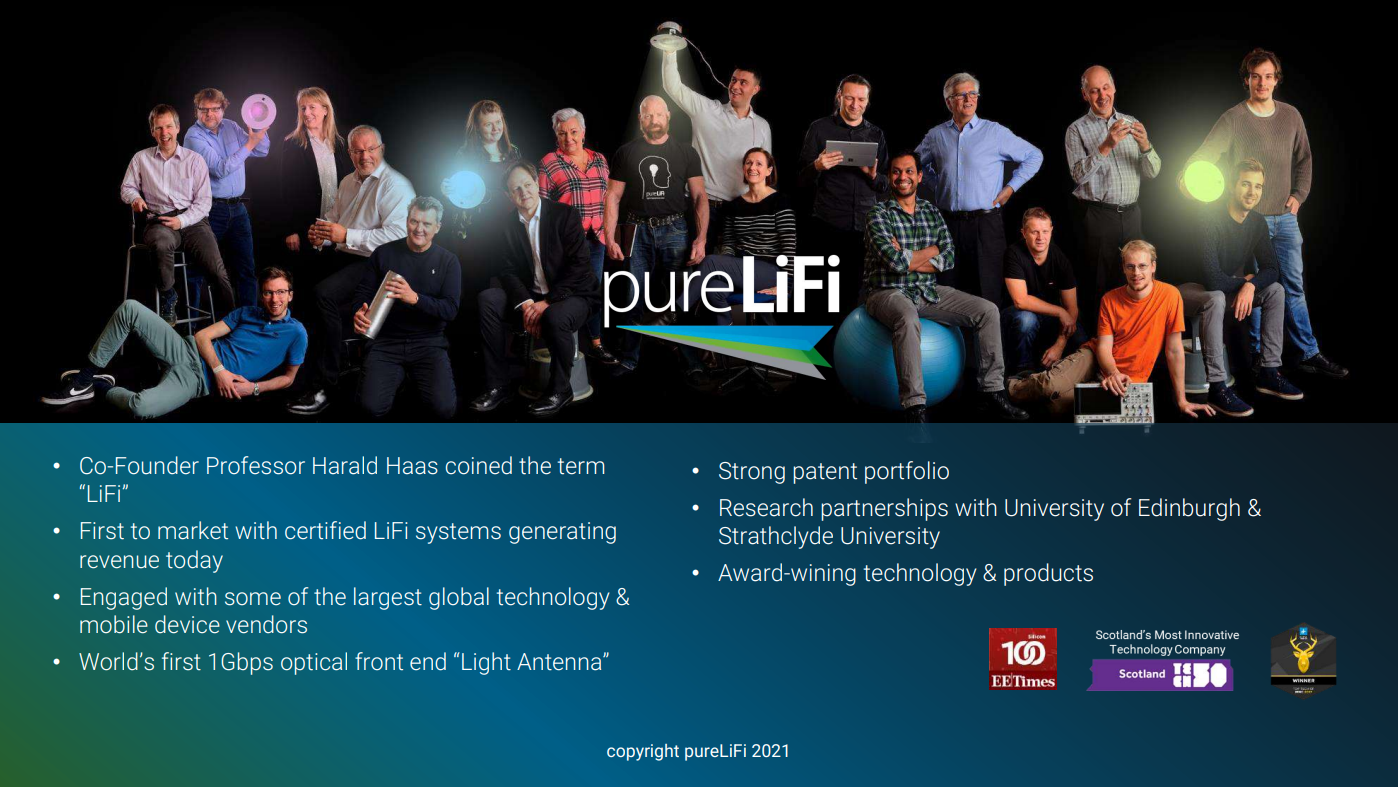
    Thank you very much everybody for your time. We've had a lot of conversations about what is LIFI? And what are some of the ecosystems and the challenge that we have. So, this is really more looking at it from a pureLiFi’s perspective. So, a little bit about us. We were co-founded by Professor Howard Haas, who coined the term LIFI back in 2011. During the TED Talk, we've come out with the world's first with respect to LIFI systems that are generating revenue today, working with some of the largest technology providers and device vendors created the world's first light antenna, and a gigabit light on thin out with a strong patent portfolio and lots of awards and technology recognition products around the globe. We are relatively small, but very tightly knit team, based out of Edinburgh, and we're very, very excited to see change as a consequence of our work.

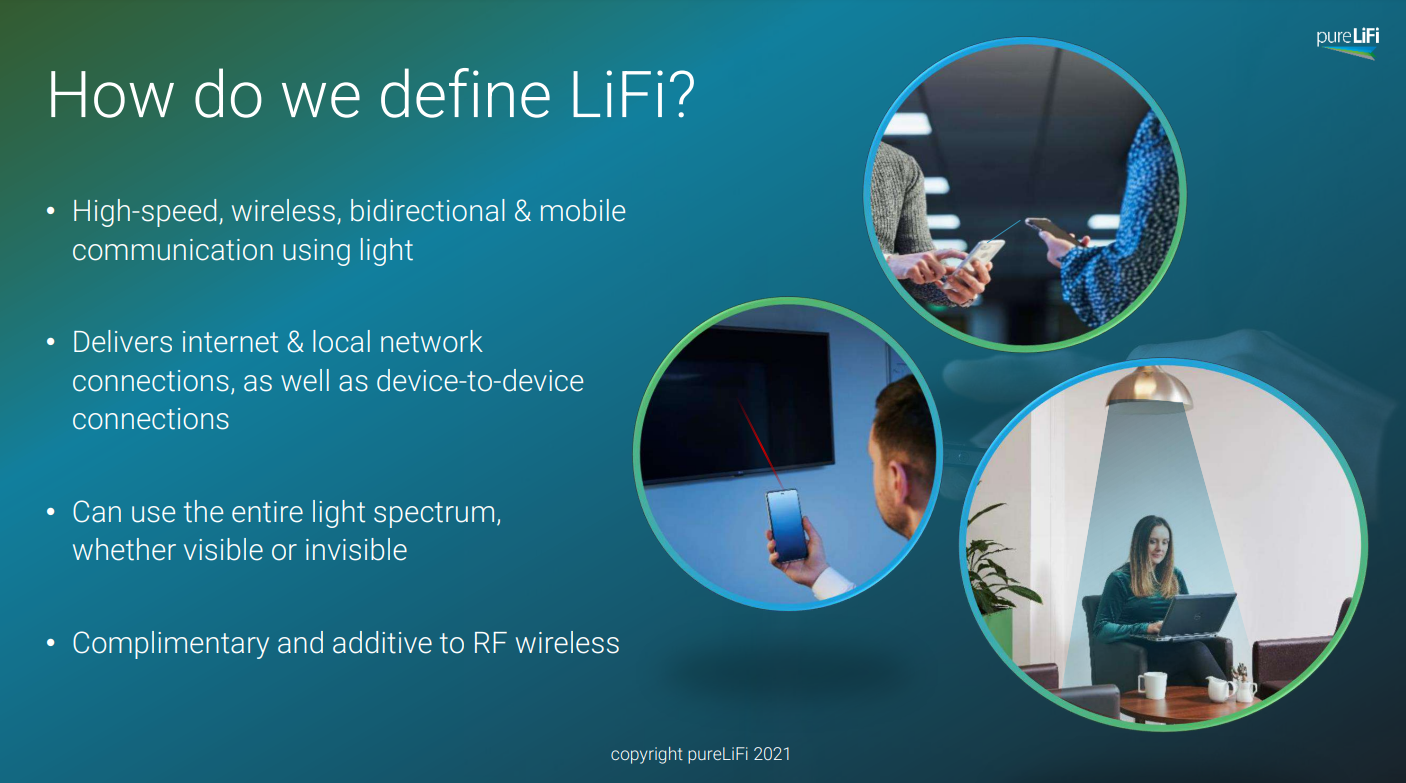
    How do we define LiFi?

    So, what do we mean when we talk about LIFI? This has been defined a number of times, and I guess an important element to add is we use the entire light spectrum visible or invisible or infrared, to deliver this interconnected network experience, but as well as looking at the opportunity of using the devices to connectivity, which is completely complimentary and additive, to what to RF solutions that exist in the market today.”

    We Need More Wireless Tools in our Toolkit
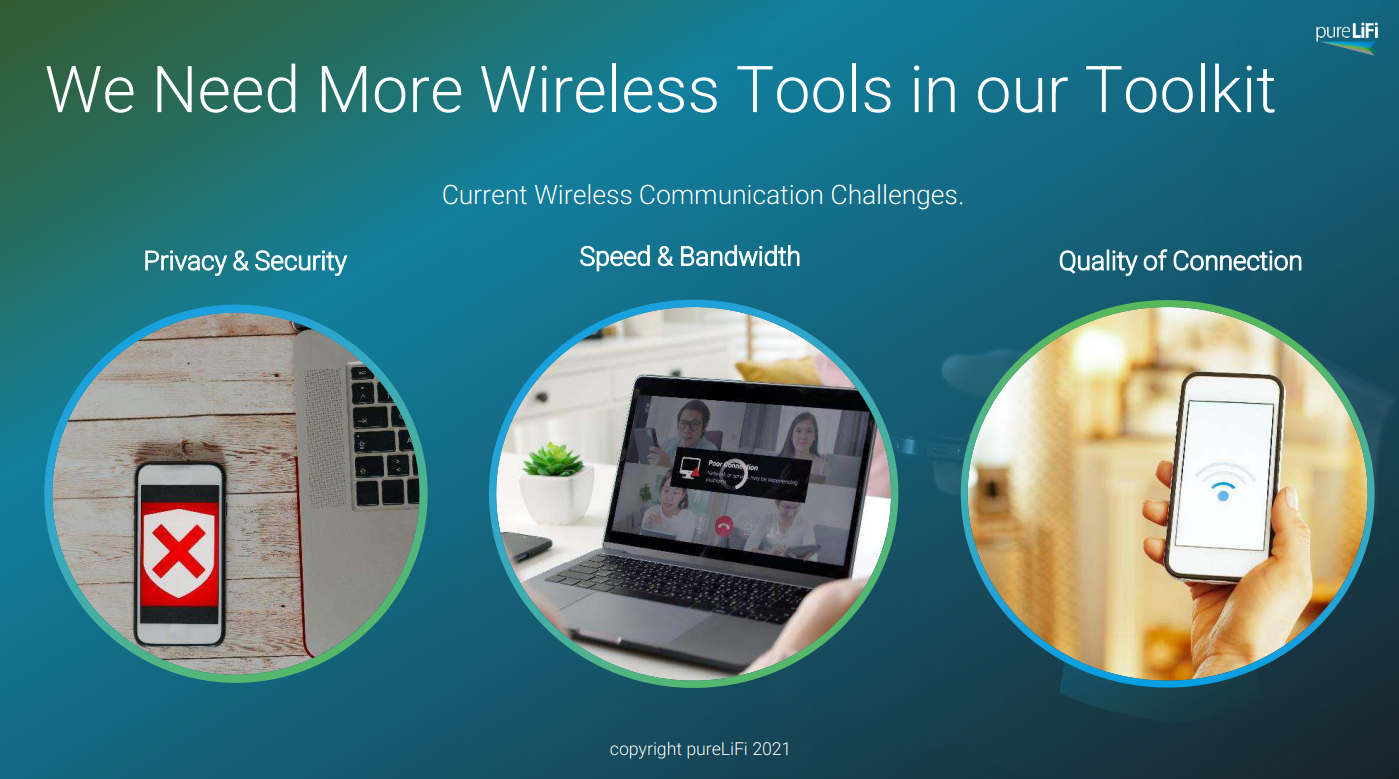
    So, what do we need more wireless for? Right? That's basically what it comes down to? Well, I guess some of the challenges that we're facing today, as we mentioned previously, are privacy and security, security. There are a number of different attack vectors that effectively RF is vulnerable to. There are speed and bandwidth issues, in particular when it comes time for sharing the wireless medium. And especially if you're looking at the quality of service types of elements. And the quality of the connection is very, very important so that we're clear where and how that is going to look out for. So, we've identified kind of pain points that LIFI seems to be solving across a range of industries that boil down to some of these core features of LIFI.”, said Nikola Serafimovski.

    Consumers, industry & defence face the same challenges
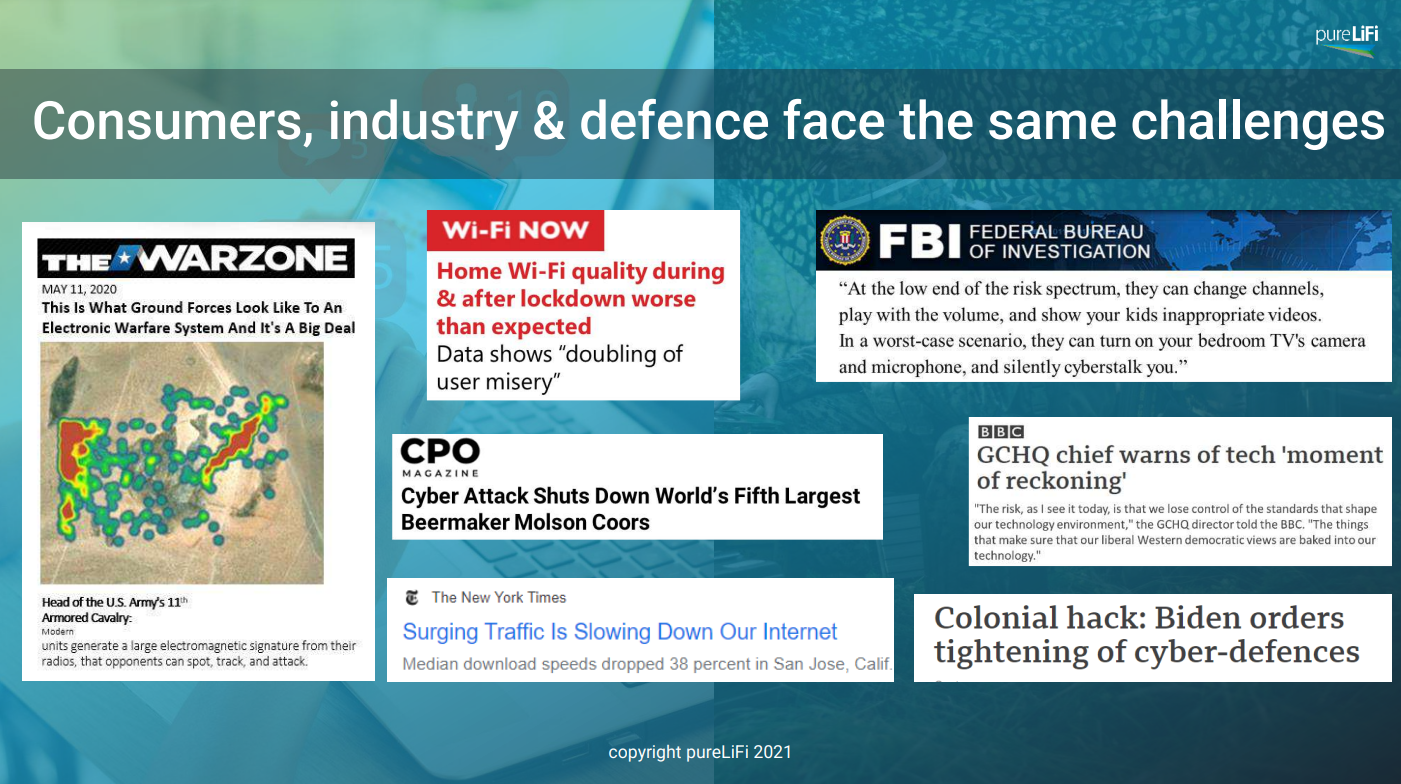
    So, if we look a little bit closer, what we see is that the defence industry, the industrial space, and the consumers have a similar range of problems. So, of course, some of the work that we've done with the US DOD is looking at the electromagnetic footprint and how those devices look like in the space. But what we're seeing is that Wi-Fi is suffering and cyber is suffering. In particular, when it comes down to the home environment and to the industrial enterprise IoT environment. We see there's a much greater threat coming into not just the enterprise space, but also the home space. And so, you have this transition where problems that used to be government only are very quickly becoming problems of the industry. I think probably the cyber attack shut down in the world's fifth-largest beer maker, Molson Coors was an issue. I think some of you probably saw the ransomware that there was a target for the NHS, and so on. So the question is, how do you try and come up with some of the solutions to some of the vulnerabilities with RF and how to improve that information assurance.”

    LiFi helps overcome key challenges
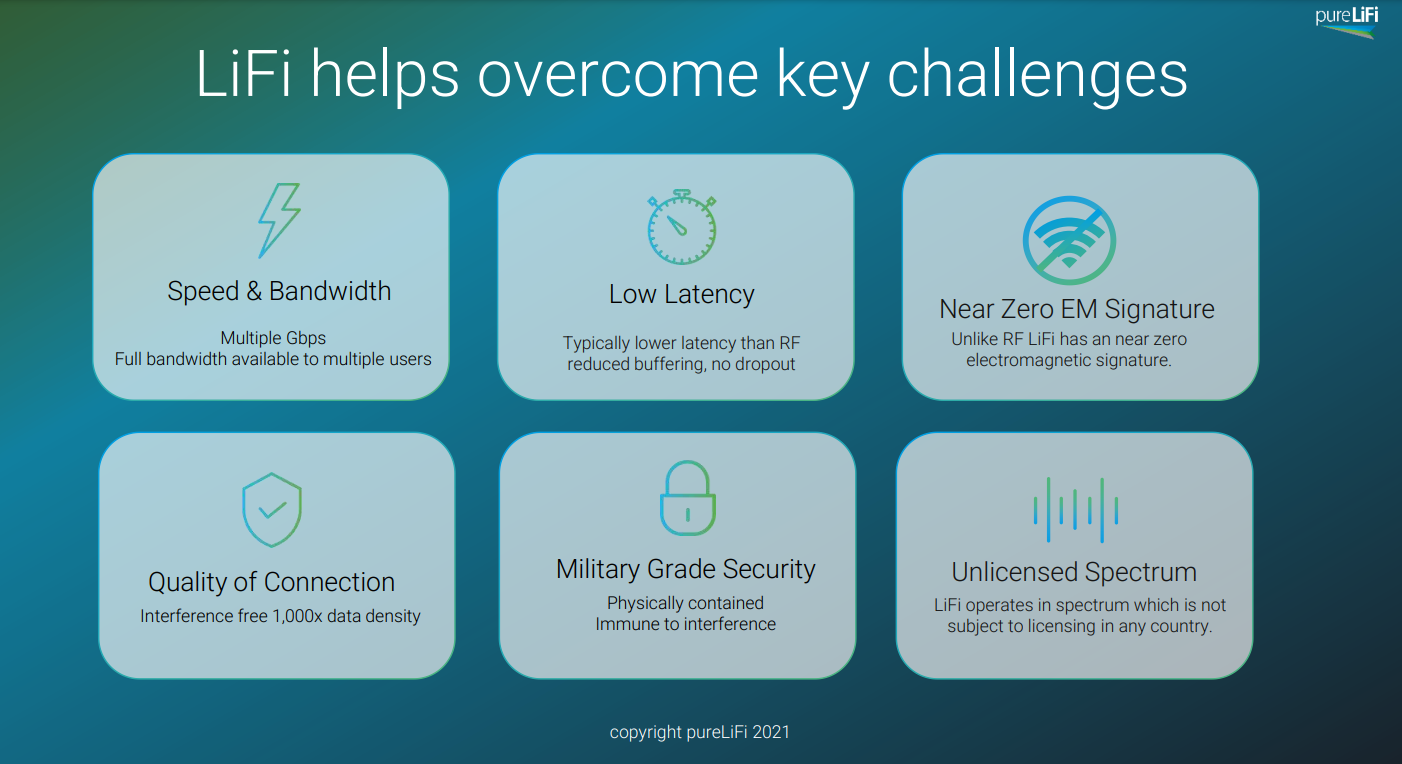
    In our world, we think LIFI helps. So, LIFI can deliver the speed and bandwidth that's required. The low latency, which is, which can be easily much, much lower than their typical RF counterparts, because nobody's fighting for Channel access. It has a near-zero yen footprint, which means you can deploy it in almost any environment. And I'm sure people will be talking about some of the environments where they are using it, the quality of the connection can be much greater because the interference-free communications is there, in terms of the density of the network. So, you can keep adding LIFI access points. And you can keep reusing the full spectrum of the channel. You have very high levels of security, that physically limit your RF signals so that you know exactly where that information is going to and exactly who is listening to that information. And of course, because we're operating in an unlicensed spectrum or a licenced exempt spectrum, the same solution that is developed in China can be applied in Germany, or in Bolivia or in the US with no questions asked. It is simply identical. And that's very, very important when it comes time for understanding the overall consequences of spectrum sharing and licencing in particular on cross borders.”

    LiFi Pathway to Adoption
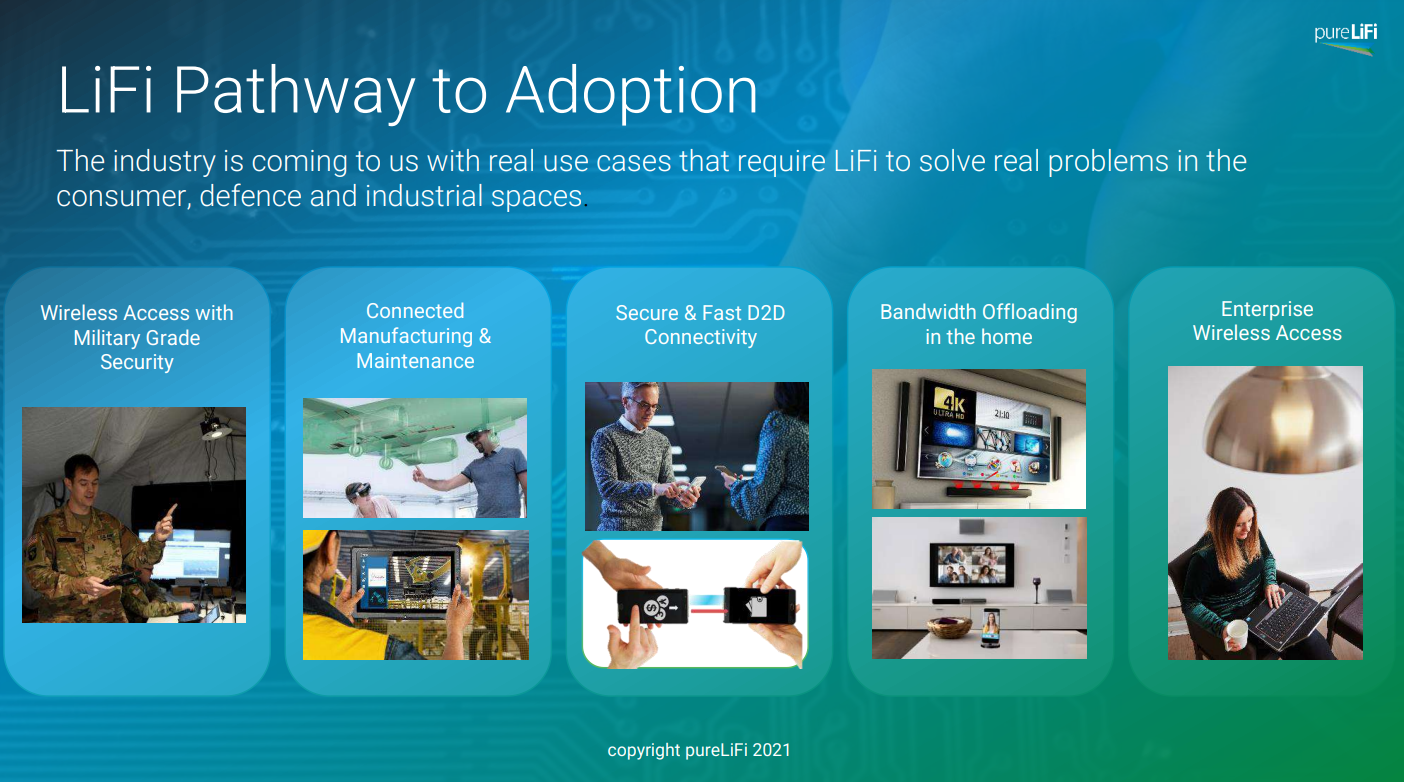
    So, what's the pathway that we see? This is all about talking or trying to understand how does LIFI go mass market some of the ecosystem challenges were very well articulated by Musa, and they're, they're very real. We've tried to look at it from an end customer use case perspective and where we think the time is going to come through with us. So from what we've seen, and what we've experienced currently, wireless access with military-grade security is hugely important in defence space. And we've seen a significant uptake in that space as a core driver. That demand is now driving manufacturers and device integrators to create platforms, which is extending the toolkit that's available to the industry as a whole, connected manufacturing and maintenance are following on the back of that, as they're looking to create more digital environments in RF limited or denied spaces or insecure areas. And they're looking to integrate the next generation of productivity such as AR and VR capabilities, we see an uptick in the requirement for secure reliable, robust wireless communications in those spaces. Dovetailing along with the same feature sets and product requirements coming out of the Defence space. So both of those elements are here today and are moving forward. But we're also seeing, however, is the need for fast and secure device to device connectivity becoming more and more prevalent. And we'll zoom in on that feature, in particular, some of the kind of phone to phone connectivity that we've seen or phone to TV connectivity that we've seen. And lastly, we see that bandwidth offloading into the home will be critical. Why should you be hanging on your precious Wi-Fi system at home if you're trying to stream or cast your screen or marry a screen to the TV, when somebody is trying to download something with the phone in their pocket when you could be using light. And then, of course, that drives to the inevitable broader ecosystem of enabling every device in the home to be LIFI connected in the enterprise as well as the home space”.

    LiFi in the Real World: Defence
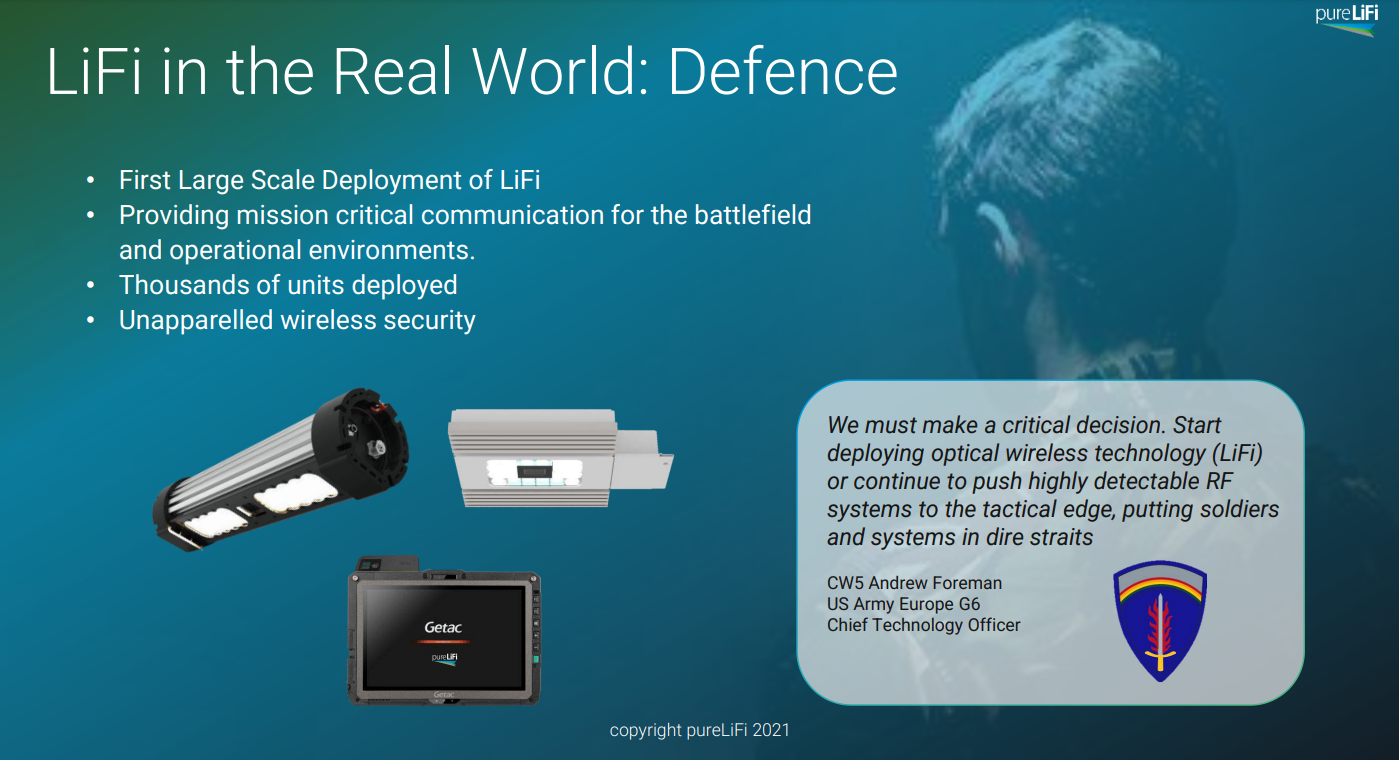
    So, this was mentioned earlier, basically, looking at a specific case study. With the Kitefen product, we've deployed with the US Army, Europe and Africa. It's the first large scale deployment of LIFI of this nature, providing mission-critical communications, with 1000s of units, creating significant wireless security in the space. This is really looking at adding a meaningful element to an actual operational command, not just a proof of concept or a pilot. And this type of requirements and demand is what will drive this technology forward”.


    LiFi in the Real World: Education
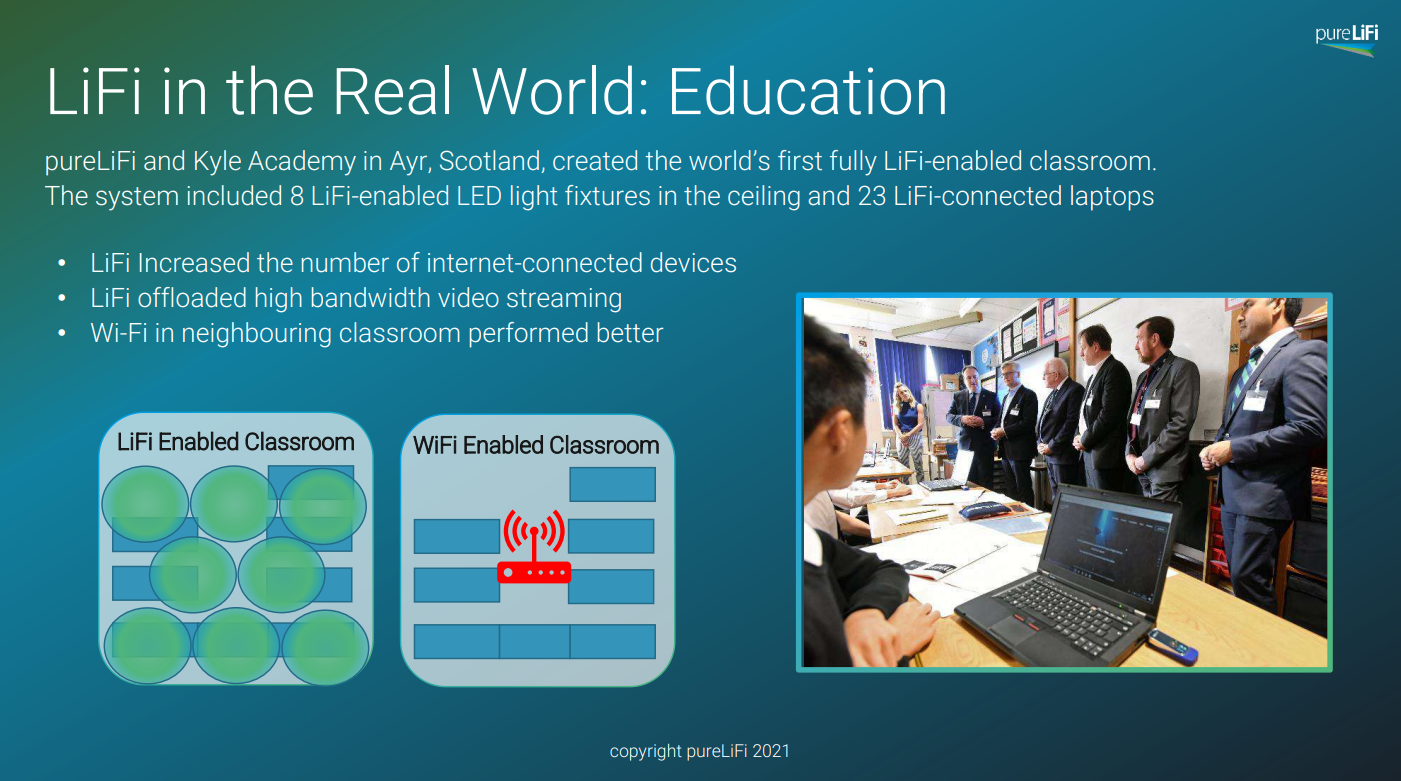
    But that's not the extent of it. We've also seen that transition into a complementary solution where deployment with the Kyle Academy in Scotland created actually a combined benefit. We deployed LIFI in a single classroom while the other classroom was still Wi-Fi enabled. And what we saw was an aggregate improved performance because the load was taking from the congested RF spectrum into the light spectrum. And it created a better learning and a better more connected environment for everybody in the space. And we see demand for these types of hybrid solutions increasing as people want to seamlessly transition without any thought between an RF in space and a light connected space”. 

    LiFi home ecosystem
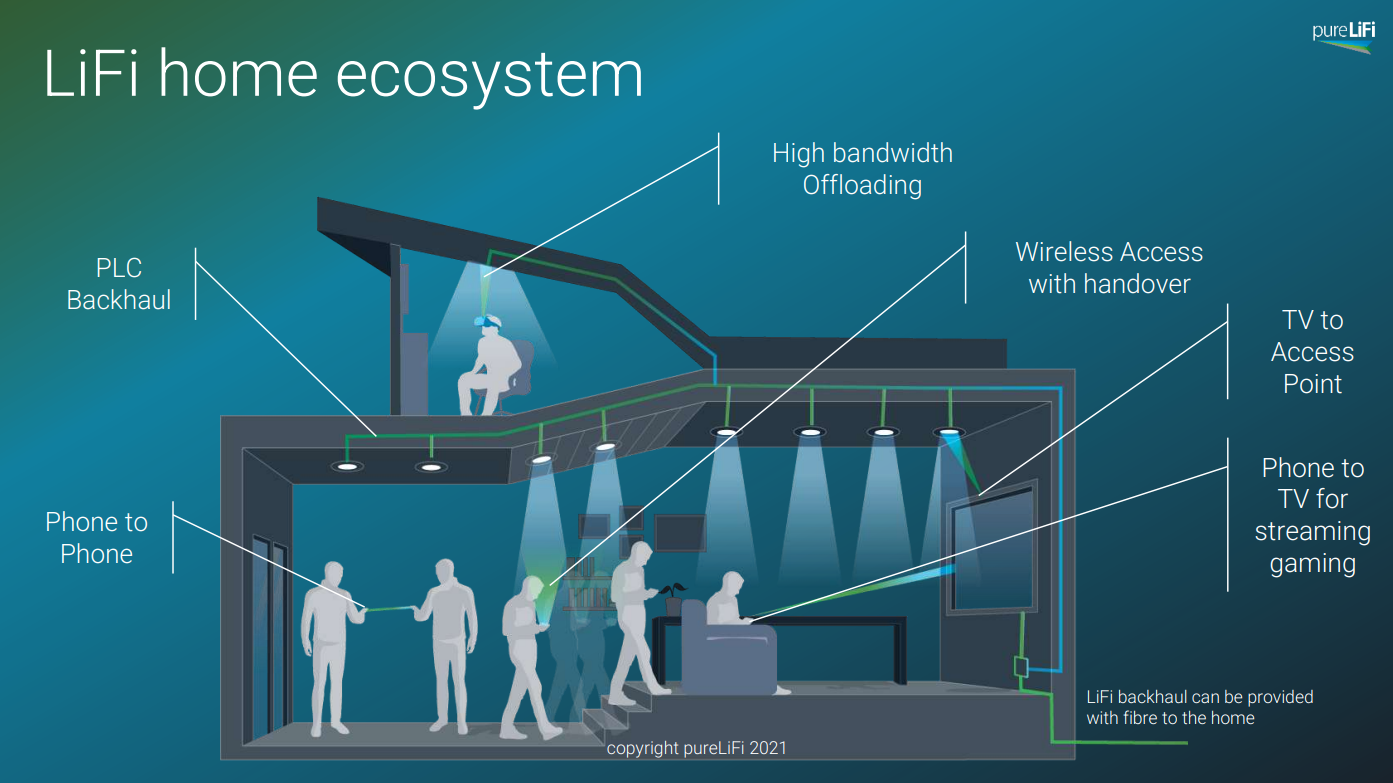
    So, this is where we see the home coming in. You know, powerline communications was very appropriately discussed just now it is a great solution that can take from. It is a great solution that will take whatever fibre or coaxial cable ends up coming into the home from that box and distributed to every single socket that you have available for illumination in the space throughout the house. Instantly, you can get LIFI enabled PLC connected devices that are actually providing a full-blown home coverage use case. But in addition to that, you can have phone to phone communications or phone to TV communications or TV to access point communications. All of these bandwidth-heavy elements can now be connected with LIFI in the home”.

    Taking LiFi Mainstream
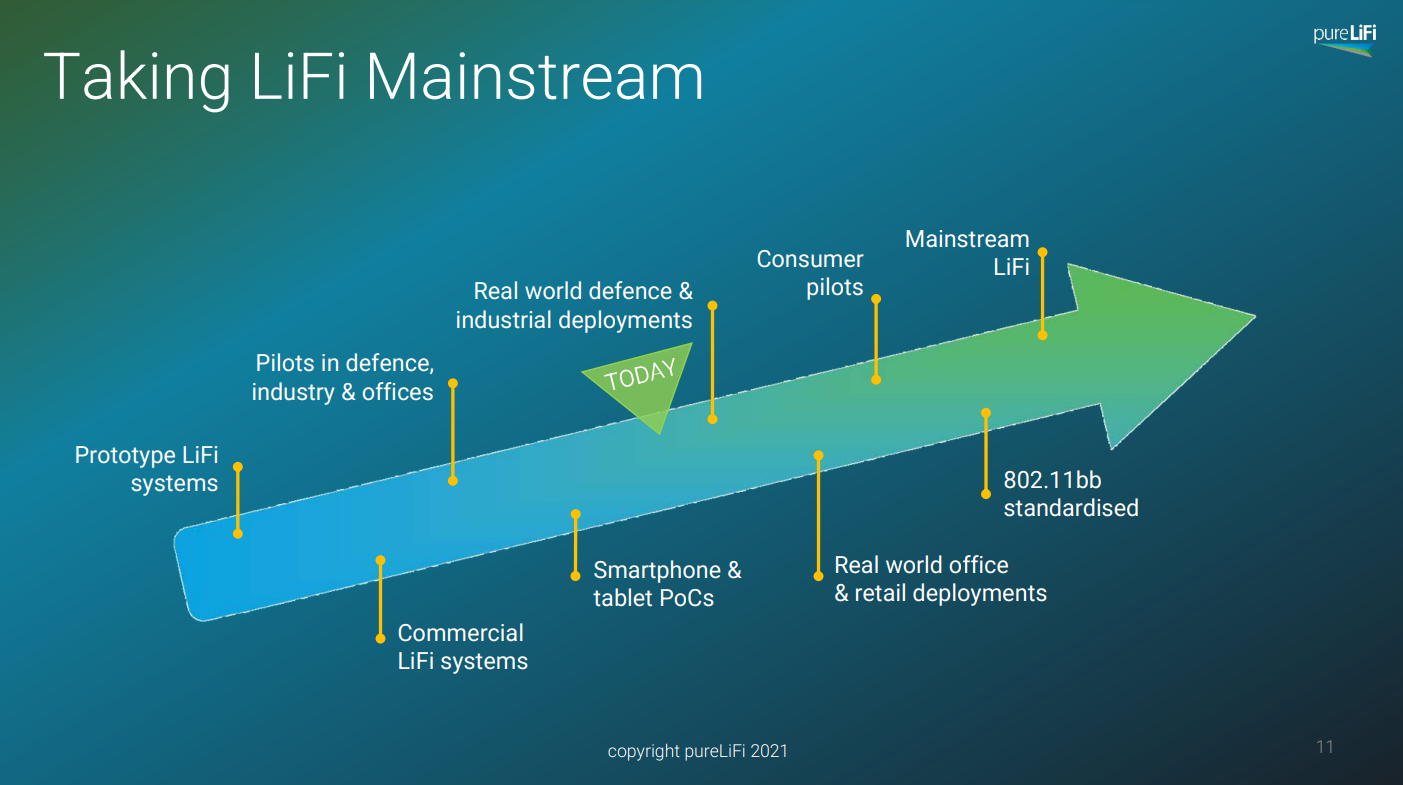
    “So, what have we seen? Well, we've seen way back when starting with prototype LIFI systems, to commercial systems to initial pilots and industry offices and defence to smartphones and proof of concepts being and a tablet proof of concept is being developed. And that's kind of where we are now. We see that movement of the real world defence and industrial applications really taking into the next stage for real-world office and retail deployments. And some of the speakers later will talk to their experiences with deploying LIFI into offices, in the automotive and industrial spaces. This is the pathway that will lead to consumer-grade pilots and when eventually standardisation is done, of course with the IEEE 802.11bb being very important for this stage, we also see mainstream LIFI coming through. And the 802.11bb standard in particular brings in that kind of consumer-grade, chipset availability for Wi-Fi that is found in almost every single device in the world today. And that's what will allow the scale and the transition from specialist use cases into very much mass-market use cases”.
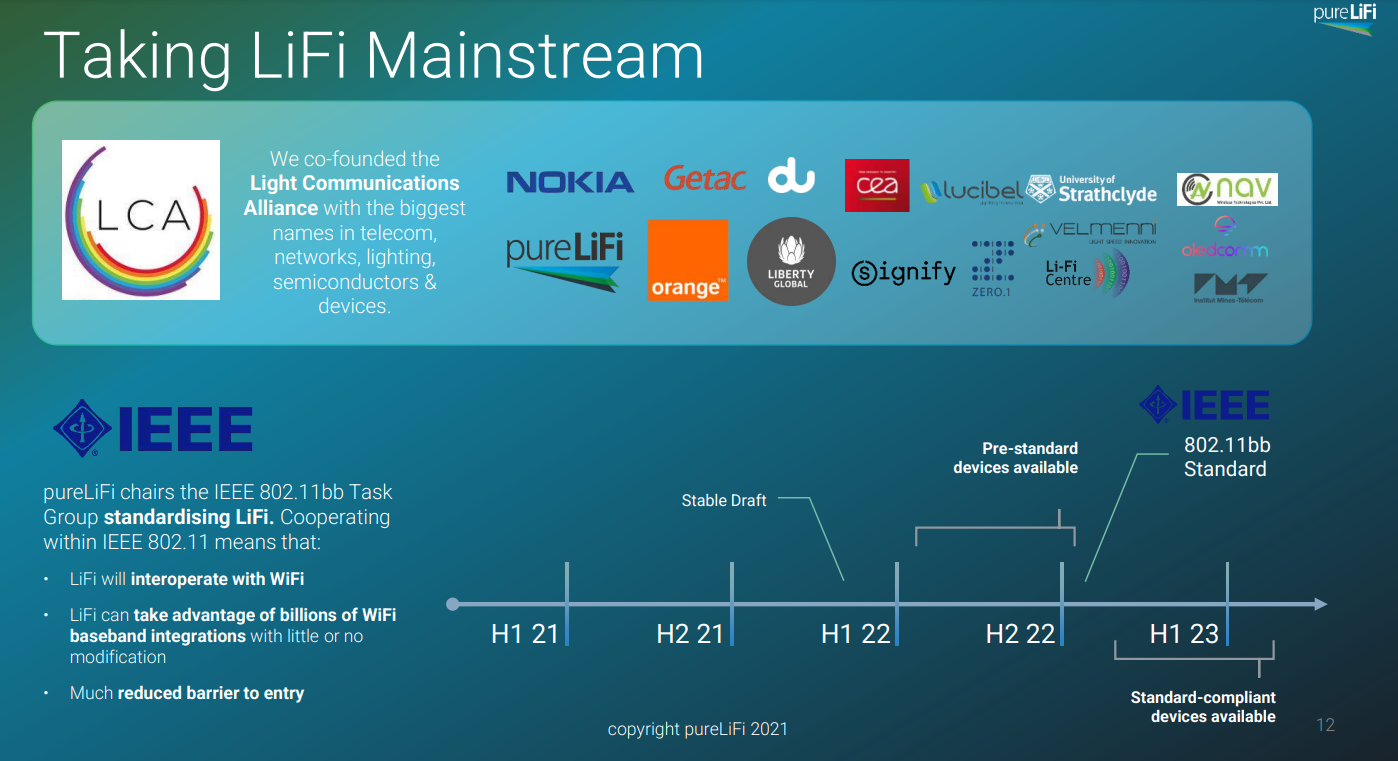
    The Light Communications Alliance, as was discussed earlier, plays a huge role in how this shapes up and we would really, really welcome and encourage everybody to join us on this journey and help us create this ecosystem and make sure that we're addressing the problems that you see. At the same time, though I chair the IEEE 802.11bb Task Group, which is standardising lifeline to scope which means LIFI according to 802.11bb will be natively interoperable with Wi-Fi, there are billions of Wi-Fi baseband chipsets that are available and integration with them can be done with very minimal if any modification to the chip to the chipset. It is a much-reduced barrier to entry for the mass market. at a very high level, this is the kind of standardisation timeline, we're looking at getting a stable draft sometime in the first half of next year, potentially pre-standard devices available in the second half of next year and really standard-compliant devices available sometime in 2023. This is a very high-level graphic, it is not meant to commit the tgbb group to any such timings. And it's very very important to understand that this 802.11bb group is a standards body that is contributions driven. So, while we try to do our best to get it on time and make sure that things happen. At the end of the day, the members decide the pace of change in that environment. But what we're really seeing is that the LCA in combination with tgbb. And the mass market is what creates that kind of fertile ground for mass-market deployability”.


    Made for Mobile™
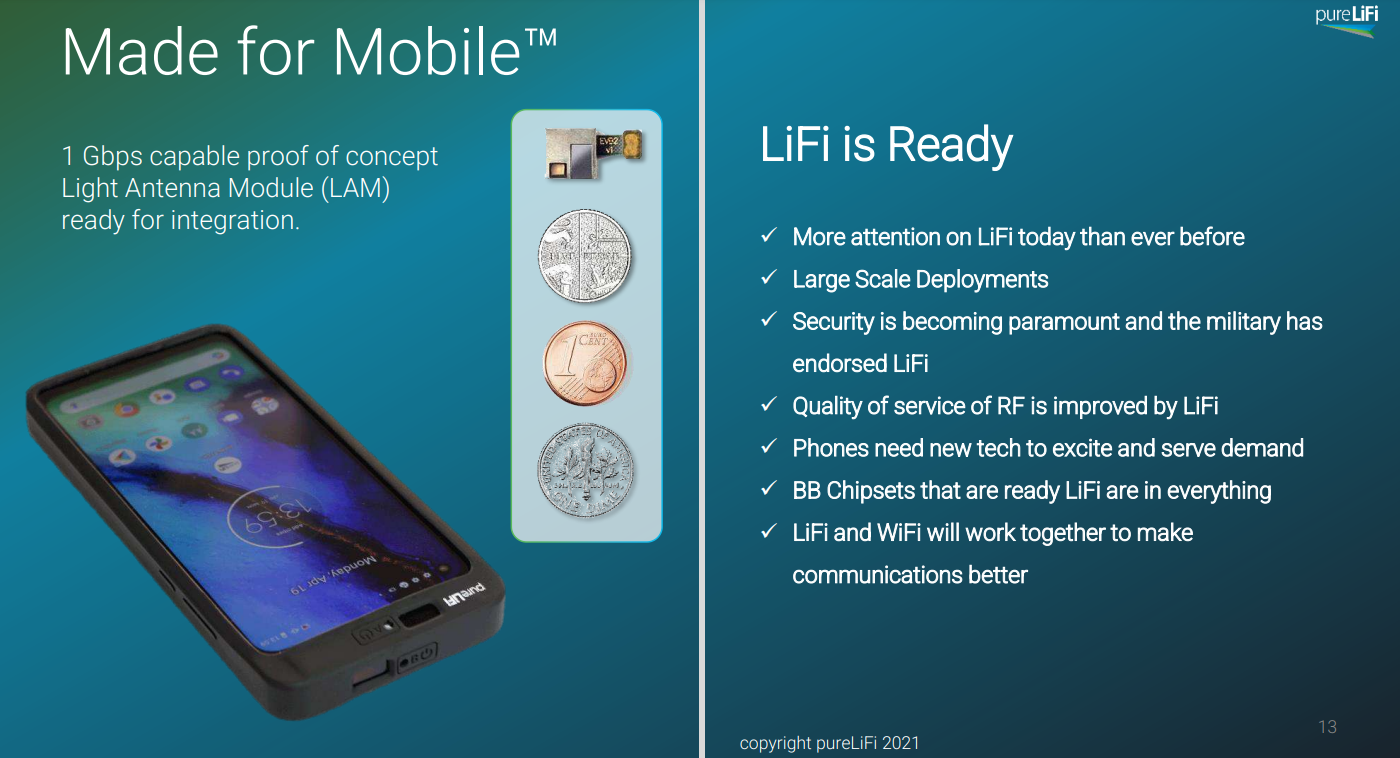

    So to that extent, pureLiFi has created a made for a mobile system, which has a light antenna that is roughly the size of a single euro cent designed specifically for mobile devices communications. LIFI really is ready, it's ready for today. And as Musa has said earlier, it gets more and more advanced on a daily basis. Large scale deployments are there as most of set the technology is sufficient for the use cases that are needed. Security is an important quality of service for phones with new technology that can really excite and serve demand baseband chips as that are ready for LIFI are in everything if you're especially if you take data to that 802.11bb approach. And with that approach, you can make LIFI work together seamlessly”.


    READY FOR THE MAINSTREAM
    The presentation was concluded with the following statements:

    There is no transfer of data allowing for the user to control where information is shared. This makes LIFI particularly useful for sending payments or secure information. It is also possible to screen share between phones taking advantage of LIFI fast low latency connections. LIFI  can enable all-new multiplayer gaming scenarios that enable fast, reliable, low latency gaming just like using your console at home. As you can see here, the use of LIFI is not only fast but provides intentional and secure connections. As LIFI does not use radio frequencies and offers low latency connections, the user experience and the quality of connections can enable new user experiences with just your mobile phone”.

    You can also watch the full video presentation on the following YouTube link from Jakajima YouTube channel.

    Li-Fi Conference 2022

    The next Li-Fi Conference is coming up on the 28th of June 2022 between 10 am and 4.30 pm CET.

    It is interesting to realise that lights that illuminate offices, homes, cars, factories, our streets and more locations also can connect us to data and hence power the growing demand for connectivity and speed.

    At this conference professionals from all over the globe will gather together in order to share applications, ideas, new developments and ways to integrate Li-Fi in services, both for consumers and professionals.

    This conference will be held Live and Online. The venue will be the High Tech Campus 1, The Strip 5656 AE Eindhoven The Netherlands.

    Online tickets can be bought at the following link:

    https://tikcit.com/register/61e002336d7fc4b6745cab83/

    What is LiFi?

    LiFi, also known as "Light Fidelity" is a wireless optical networking technology, which uses light-emitting diodes (LEDs) to transmit data. In 2011, professor Harald Haas made a LiFi demonstration at the TED (Technology, Entertainment, Design) Global Talk on Visible Light Communication (VLC).

    VLC uses light as a medium to deliver high-speed communication like Wi-Fi and complies with the IEEE standard IEEE 802.15.7. The IEEE 802.15.7 is a high-speed, bidirectional, and fully networked wireless communication technology-based standard similar to Wi-Fi's IEEE 802.11.

    How does LiFi work?

    LiFi is a high speed, bidirectional, and fully networked wireless communication of data using light. LiFi constitutes of several light bulbs that form a wireless network.

    When an electrical current goes through to a LED light bulb, a stream of light (photons) emits from the lamp. LED bulbs are semiconductor devices, which means that the brightness of the light flowing through them can change at extremely high speeds. The signal is sent by modulating the light at different rates. The signal can then be received by a detector that interprets the changes in light intensity (the signal) as data. Also when the LED is ON, you transmit a digital 1, and when it is OFF, you transmit a 0.

    LiFi Benefits

    The primary benefits of LiFi are as follows:

    Security: Provides entirely secure access. Where there is no light there is no data.

    Safety: Does not produce electromagnetic radiation and does not interfere with existing electronic systems.

    Localisation: Allows localisation due to the small coverage area of LiFi access point - localisation can be used for very precise asset tracking.

    Data density: Provides ubiquitous high-speed wireless access that offers substantially greater data density (data rate per unit area) than RF through high bandwidth reuse.

    Credit to Oledcomm

    LiFi Applications

    LiFi can be used for so many applications and the list is increasing every year. You can read our updated list of Li-Fi applications at the following link:

    https://www.lifitn.com/blog/2021/2/13/top-30-li-fi-applications-updated-list-including-potential-applications

    Credit to pureLiFi

    In conclusion, if you are also interested to hear more information about the OWNII Coin or enquire about LiFi devices such as the LiFiMax and Trulifi, you can contact us through our chatbot or by sending an email through our contact us form. If you enjoyed this post and would like to hear more updates about LiFi technology, subscribe to our newsletter. Don’t forget to subscribe to our social media accounts. You can also join our Telegram group about LiFi technology on this link:

    https://t.me/joinchat/FMzOmsEKyJFrU6Af

    Li-Fi Conference 2021 - Recap Part 3 - G.hn Backbone And Ecosystem Support For Li-Fi Use Cases. Standardization, Spectrum and Security

    Table of Contents

      Li-Fi Conference 2021 - Recap Part 3 - G.hn Backbone And Ecosystem Support For Li-Fi Use Cases. Standardization, Spectrum and Security

      Li-Fi Conference 2021

      In our last article about our ONLINE Li-Fi Conference 2021 recap series, we discussed the presentation delivered by Musa Unmehopa on “Building The LiFi Ecosystem”. The conference was organised by the Jakajima, the global High Tech Conference organiser, and the Light Communications Alliance.

      Jakajima, Matchmaker for Innovators in the high tech industry, organises many events, ranging from LiFi Technology industry trends, 3D Printing to the Internet of Things, from Unmanned Cargo Aircraft to Health Tech, from 4D Printing to Photonics and from Vertical Farming to Sustainable Materials.

      The online Li-Fi Conference included live presentations from researchers, executives and industry specialists from pureLiFi, Nokia, Signify, Orange, Radiocommunications Agency Netherlands, Velmenni, OLEDCOMM, HomeGrid Forum and Weidmüller Deutschland.

      Livia Rosu from HomeGrid Forum talked about G.hn backbone and ecosystem support for LiFi use cases.

      In this article recap series, we will talk about the presentation on G.hn backbone and ecosystem support for LiFi use cases, standardization, spectrum and security delivered by Livia Rosu. Before this, let’s talk briefly about HomeGrid Forum.

      HomeGrid Forum

      According to their website, HomeGrid Forum (HGF) is an industry alliance formed to support the development and deployment of a unified coaxial, phone line, powerline, and plastic optical fibre home networking technology called G.hn (Gigabit Home Networking). G.hn technology is based on standards developed by the UN’s International Telecommunications Union – Telecom (ITU-T) standards development organization.

      HomeGrid Certification ensures compliance and interoperability (C&I) of silicon and systems through plugfests and rigorous C&I testing. A logo is issued for certified systems’ packaging and documentation of G.hn-based systems. HGF Certification ensures that retail customers and Service Providers have confidence in, and great satisfaction with all HGF G.hn Certified Certified products.

      HomeGrid Forum members comprise an eco-system covering all aspects of the technology from Retailers to Service Providers, Utilities to Smart Grid think tanks, System Developers to Test Houses and Silicon Companies.

      HomeGrid currently has four workgroups: a Clean Tech/Smart Grid/Smart Energy workgroup focused on in-home energy management and utility Distribution Automation and AMI applications for G.hn, a G.hn Contributions workgroup that continuously works to develop advanced enhancements for wired home networking, a Compliance & Interoperability workgroup, and a Marketing workgroup focused on promoting all HomeGrid Certified Products and technologies.

      The purpose of HomeGrid Forum is to:

      • Lead the work within the ITU-T to continuously expand G.hn, through a sustained effort to improve and extend this advanced home networking technology for any in-home wiring (coaxial cable, phone line, powerline and plastic optical fiber).

      • Encourage and evangelize the adoption and widespread deployments of G.hn by Service Providers and through Retail channels.

      • Provide a clear migration path for all legacy wired technologies to G.hn, where coexistence and G.hn’s ability to work over any wire type enables Service Providers to extend the life of their existing network investments while increasing coverage, robustness, and throughput in the home.

      • Maintain a comprehensive compliance and interoperability program to promote an ecosystem of compliant silicon and interoperable products based on the ITU-T G.hn standards.

      G.hn Backbone and Ecosystem Support for LiFi Use Cases, Standardization, Spectrum and Security by Livia Rosu

      Livia Rosu, President at HomeGrid Forum, Senior Strategy and Alliances Manager, Connectivity & Access at MaxLinear and WCA Judge, was the third presenter at the online Li-Fi Conference 2021. She discussed in great detail the G.hn Backbone and Ecosystem Support for LiFi Use Cases.

      The HomeGrid Forum supports the deployment of G.hn, the globally recognized Gigabit home networking technology based on ITU-T standards and designed for bandwidth-intensive and real-time applications. Livia is a Computer Science engineer with 18 years of business development experience in the telecommunications industry, dedicated to semiconductors and the standardization of revolutionary technologies ranging from Smart Cards to Smart Cities.

      Livia joined Marvell Semiconductor, a US-based leading fabless semiconductor company with expertise in microprocessor architecture and digital signal processing, in 2010. At Marvell Livia managed strategic marketing and competitive positioning of G.hn, working closely with system vendors and carriers that require Plug & Play networking capabilities. In 2017 Livia joined MaxLinear, a leading US provider of high-performance radio-frequency and mixed-signal semiconductor solutions for the connected home, wired and wireless infrastructure markets when it acquired Marvell’s G.hn business unit.

      Livia has built a strong knowledge of industry associations having served 8 years as Internet Business Development Officer and Head of External Relations for ETSI, the European Telecommunications Standards Institute in France until 2006, as a strategic signatory of 68 Co-operation Agreements with standards development organizations and alliances among which ITU, IPv6 Forum and IETF. Before HomeGrid Forum Livia also acted as Chair of the PSO Protocol Council of ICANN (Internet Corporation for Assigned Names and Numbers) and Member of the Interim Steering Group (ISG) by the EC-POP (European Commission Panel of Participants in Internet Organisation and Management), for the creation of the “Dot EU” Top Level Domain and Member of the ISOC-AC (Internet Society Advisory Council), in charge of open standards and protocols for the Internet administration.

      Livia received a Master in Business Administration (MBA) from EDHEC Business School in France in 1999. She holds a Master in Computer Science and Internet Security (M.Sc., 1997) and a Bachelor of Science degree with Honours in Automation Engineering and Network Management (B.Sc., 1996) from the Polytechnic University of Romania with a scholarship award from France. Livia is fluent in 6 languages.

      Below are some points discussed about the G.hn Backbone and Ecosystem Support for LiFi Use Cases.

      G.hn - Ethernet over Anywire

      Livia Rosu started her presentation by saying the following:

      Thank you for the invitation and I'm glad to be part of the LiFi community joining forces with Nikola Musa and the other distinguished speakers. Where they are joining today for the objective of enlightening everyone with the standardisation, and with the software and the hardware that are all needed for complementing and accelerating the deployment of what we call LiFi technology. The purpose of my presentation today is to address the challenges from a different angle and that is what the backbone G.hn technology can bring into the picture because Ghn is offering a stable robust backbone and we are using that and offering the ecosystem of that to support the deployment of life I, how this is addressed and both Nikola and Musa have already mentioned the key topics of these two challenges, it is working through standardisation through spectral enabling spectrum beyond what we have until now and security aspects.

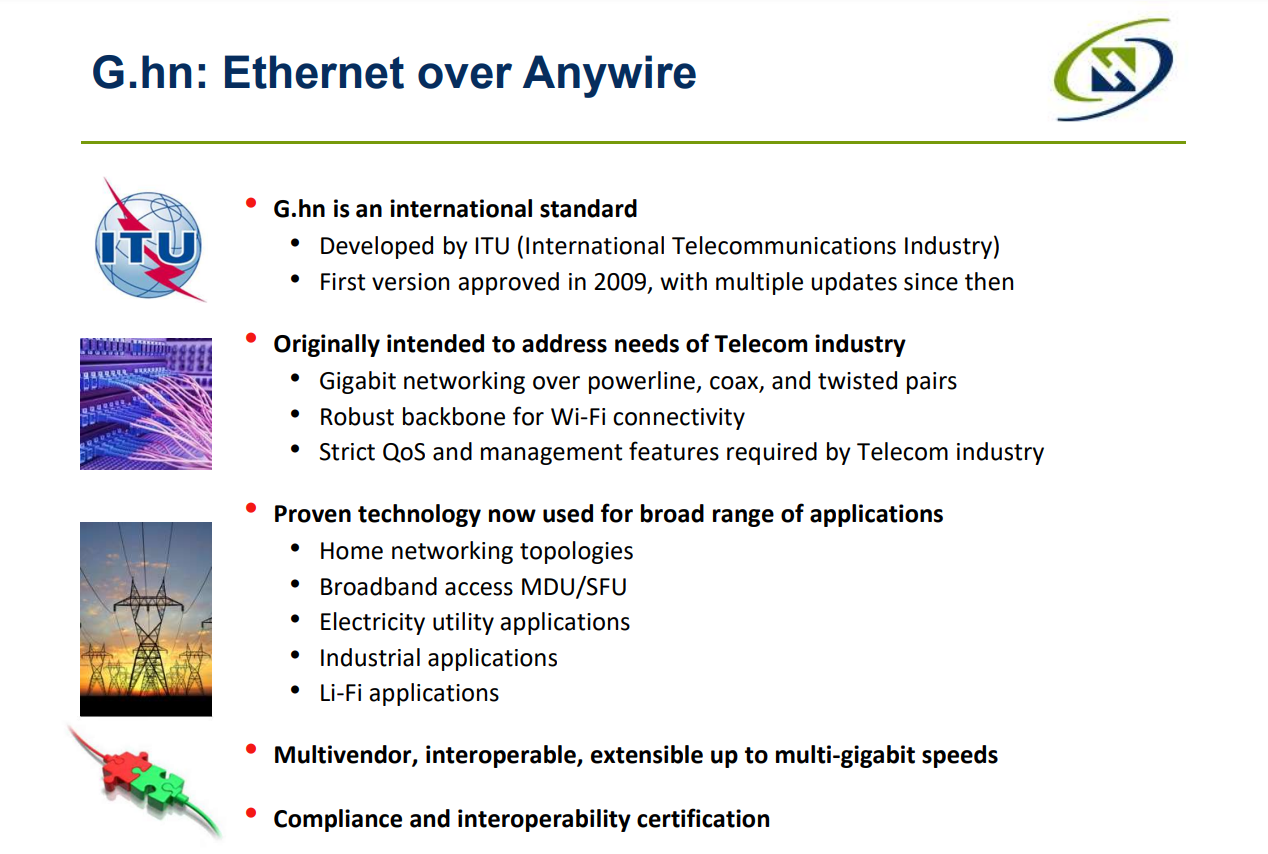
      We call G.hn and Ethernet over any wiring technology. It has started as an international standard with the very first version approved back in 2009 by ITU standardisation Body with multiple updates since then, and building on the standardisation aspects, I keep saying and I have been working for a team before my senior semiconductors and I have been having a guest the one role from the standardisation side and supporting semiconductor companies and manufacturers who are involved in deploying the ecosystem of G.hn for 20 years now, you can tell it’s fast and it has been always around in intended to address the needs of the telecom industry. How is that achieved? Because the telecom industry has always been in the highest need for the gigabit home networking for serving their subscribers base that has been addressed initially for G.hn with the power line medium has been added in a coaxial twisted pair. And this is why nowadays, it is an Ethernet over any wired connectivity. It has been from day one a robust backbone for Wi-Fi connectivity, initially for the food, some political and technical challenges, as everyone tried to see what is best for wired connectivity or Wi-Fi connectivity. And already one decade back, the players have achieved to agree and come to a resolution that and I like to say that a lot. And that really is no single technology that addresses all topologies because they are all different. So we're seeing the presentation of today and also by other distinguished speakers that different topologies require different implementations of hardware or software. And precisely when it comes to Wired versus WiFi, we needed to understand that this can be combined and so that G.hn can provide a robust backbone for Wi-Fi connectivity and that’s seamless and that's transparent for the end-users. And we will see how we take that to the next level. Now to complement with we'd like by all means this has been deployed for a strict quality of service and management because again, this is these are top requirements by telecom industry players. And it started as a technology for home networking topologies and has been gradually extended to address a very broad range of applications successfully to broadband access and we'll explain what that means for the multi-dwelling units and single-family units for electricity utility applications, for industrial applications, a wide range of industrial applications and last but not least, and the main objective of being here today its LiFi applications”.

      Whenever we have been supporting the ecosystem, it has been through allowing multi-vendors to participate and that is because you cannot have this one to one relationship in order to have a market deployable, so you need to allow a variety of vendors both on the technology side but means technology providers and also on the manufacturer side on the system integrator side. So that everyone can have a free selection of its own partner In this deployment, and how this can be achieved always through having interoperable systems. So, they are extensible always. G.hn comes with a multi-gigabit connectivity. But in order for the ecosystem to be highly connected, we needed to make sure they are all in their interoperable and this is chip for compliance interoperability certification that we can go more into detail next time”.

      Standardization

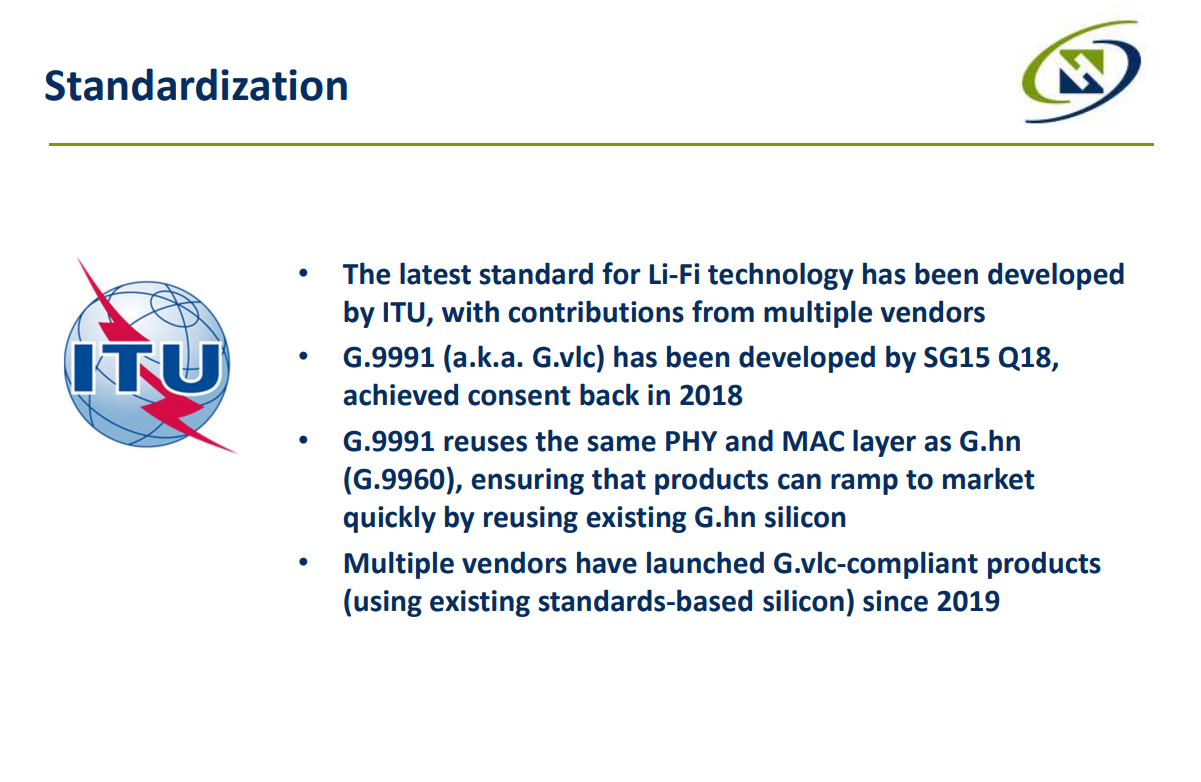
      It all started so, just very briefly, because Musa has addressed that already with the very first implementation so that you have that historically, how the G.9991 started in 2018 and CIF constant started already back in 2018. And now, now, the COVID like time is running. And it looks like it was yesterday. So, we had several implementations of that and ever since 2019, several vendors have already as you have seen in the content of the conference, launched compliant products, we did, we did have a chance.”

      G.hn Standard Evolution at ITU-T

      This is how the standard evolution looks like at the IP level and this is critical, so to grasp so that we can see the evolution of technology always is to have a future. So that it can be successfully deployed. So we are currently deploying everything on two gigabits per second and that target applications that started with the market segments that we have mentioned and the ITU vision going forward as we continue to deploy is addressing G.hn for the 10-gigabit full-duplex capabilities that are coming for the roadmap.”, said Livia Rosu.

      ITU G9960/G.9991 deployment

      Looking at the ecosystem and such, HomeGrid Forum has been created as an alliance to support the certification as we said to help ITU-T based standardisation ecosystem to advance very rapidly for certification. So, that comes with the highest performance we knew G.hn is a great technology for the wired backbone in terms of numbers here you have a very quick snapshot of what can provide so it started with a power line with the fire rate of 1.5 and the MAC rate of one one gigabit power line to note that is the most you know able to catch noise interference medium. So, if everything works on powerline, well then you can make sure on twisted pairs and actual pairs are going to work even beyond that highest speeds. So on boats, you do have a MAC of 1.7 gigabits and of course, that's because the fight it's two gigabits, it has the highest security Yes, 128. And topology flexibility will go in in detail Santos being the only standard solution. But again, I keep reinforcing the fact that this can only be deployed by and accelerated successfully for interoperability and certification.”

      HomeGrid Forum Mission Statement

      And this is how HomeGrid Forum came to enter into force to achieve that. So, the main objective here and this is the mission statement that the players have been embracing is to provide interoperability for consumers that are needing to deploy any type of device that needs robust connectivity.”

      HomeGrid Forum Promoter Members

      So, if we have a look at the promoter numbers, how this all started. So we have a number of service providers that have been very keen to look into visa accelerating requirements of G.hn based connectivity because it all started as a home networking as we said, so they needed to serve their subscribers based with the highest connectivity inside the homes to have the multi-room, multi-screen connectivity to have any type of devices inside the home connected on the highest speeds. And they have been promoting and sustaining the deployment of this technology”.

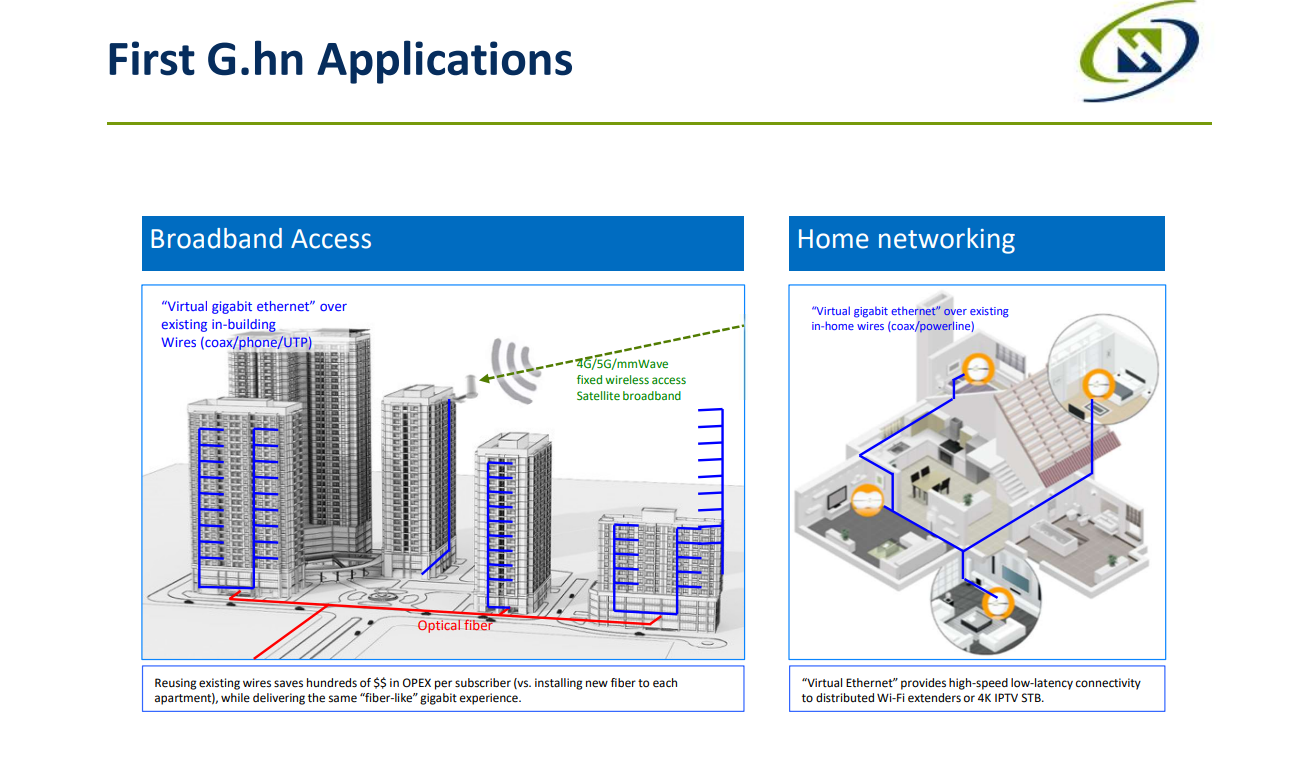
      First G.hn Applications

      The first G.hn applications were forthcoming in combination with a home networking so, we need once we have the connectivity inside the home like from the gateway into the box we needed to extend for the robustness of the wired connectivity again and we say it's always can be at the choice of the service provider it can be powerline phone line or any wire then that's the ubiquity and the beauty of this technology because whatever you have in a home already installed. In most of the homes, you have them all but when you're looking at the building itself, in especially multi-dwelling units, which are very tall buildings, when the service provider can actually select what is best for the infrastructure based. So, it can be for the last mile what we call, it can be the falling in cost for actually supporting longer distances and we're talking about 300 metres, 500 metres. So, beyond the 1000 feet in this case that can extend the connectivity in the multi-million units and the way you capture the topologies actually, you have the service provider providing the highest bandwidth to that particular building and it can be either on the fixed wireless access to the roof of the MTU within antenna or it can be fibre to the building getting fibre all the way to the building itself but then G.hn has been used in the multi-dwelling unit to actually extend the connectivity either from the roof down, either from the basement of the building going up to reach any floor in the building reusing what's already there”.


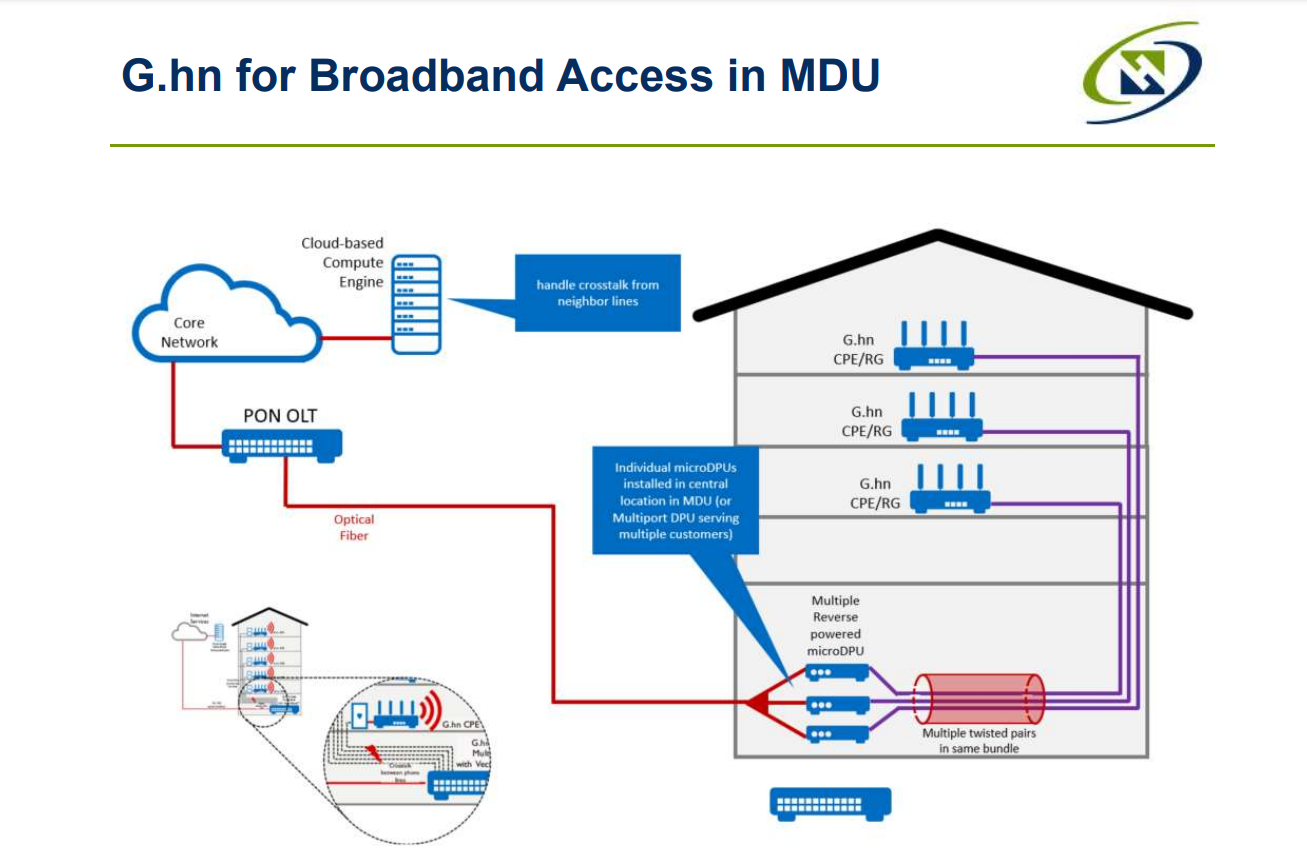
      G.hn for Broadband Access in MDU

      For extending the coverage, we added Wi-Fi in different devices. One Wi-Fi and phone line or Wi-Fi and the connection lines and then when the fibre stops anywhere it doesn't matter whether that's the basement of the building and even outside on the last mile can be at the curve as we call it, what is important here to understand is that the fibre stop somewhere. We call it the economical point by some reason because it is highly very expensive to have it all the way to any user or because it is historically prohibitive because it's just the high you know, multi-unit historically, preserved looking very nice so it’s difficult to take the permission of the owners to drill exist additional holes into the walls or when Never better said you actually extend what already have and avoiding any modifications in the structure of the building but you reuse what's already installed so that existing infrastructure”. 

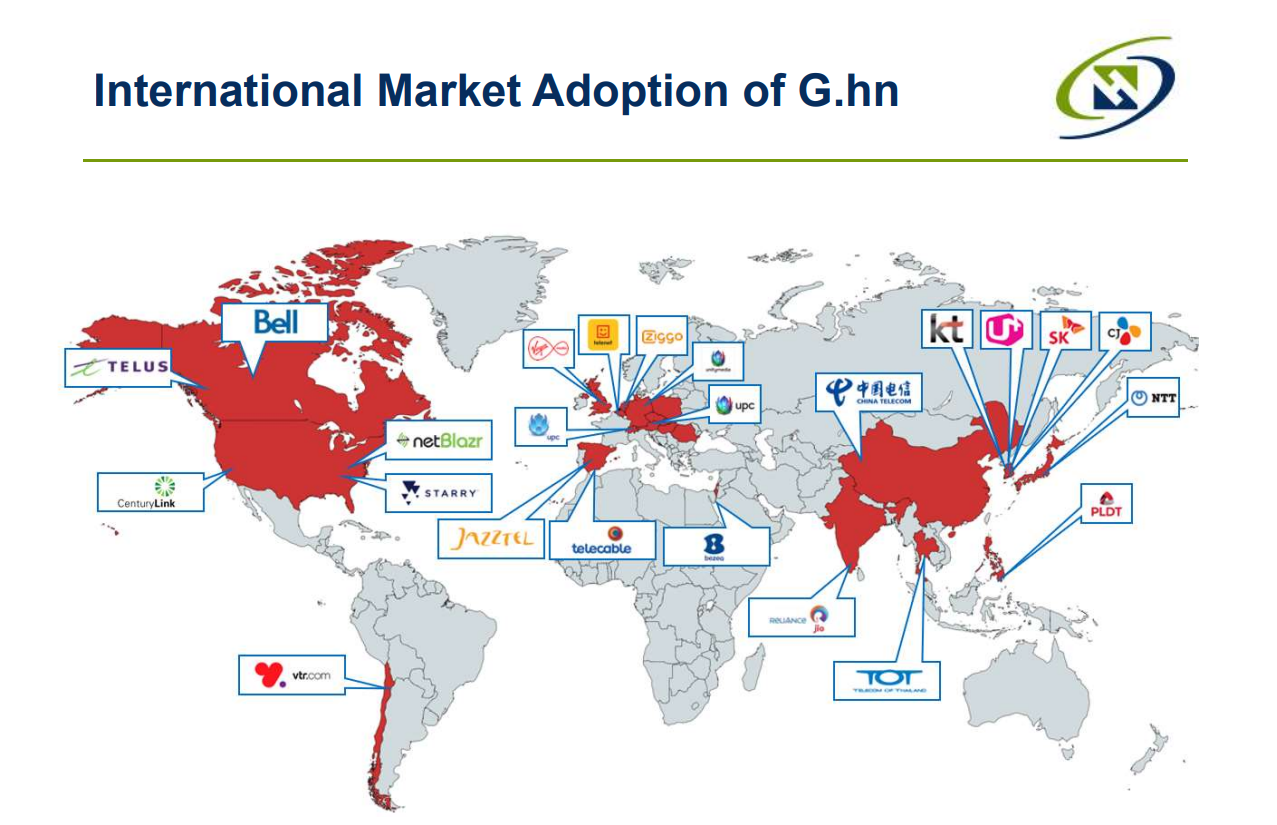
      International Market Adoption of G.hn

      “So, you can see so many different flavours of the change and technology that has been deployed since back 2008. And best just a very quick snapshot to highlight the international market adoption of G.hn by service providers in different countries globally. And again, someone powerline who works in combination with the Wi-Fi connectivity”.

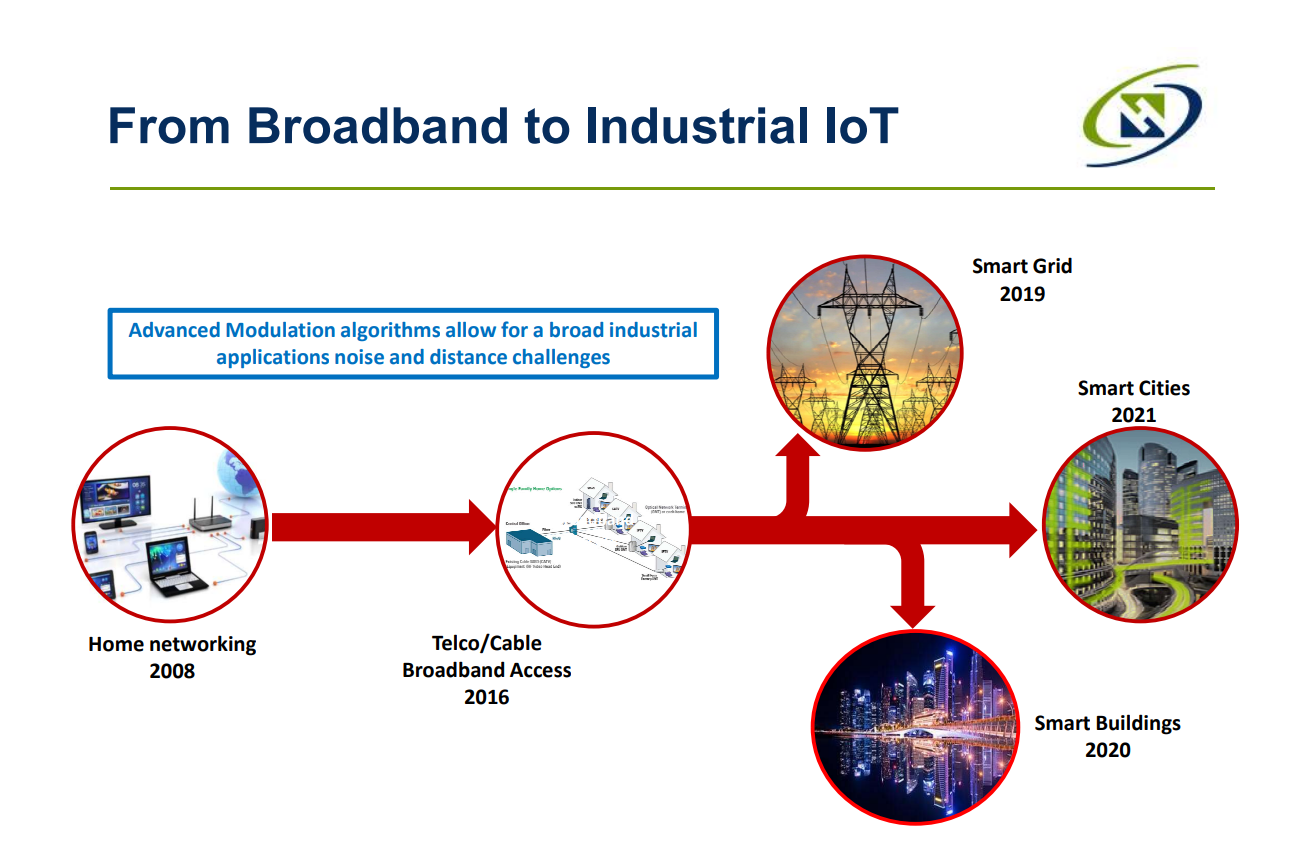
      From Broadband to Industrial IoT

      “Looking at the G.hn technology evolution because it has provided some very major advancements. So, it started as we said, home networking broadband access and what's important here, and it actually gets us to how we can support LiFi both went into the smart grid, the smart cities and capturing different needs.”

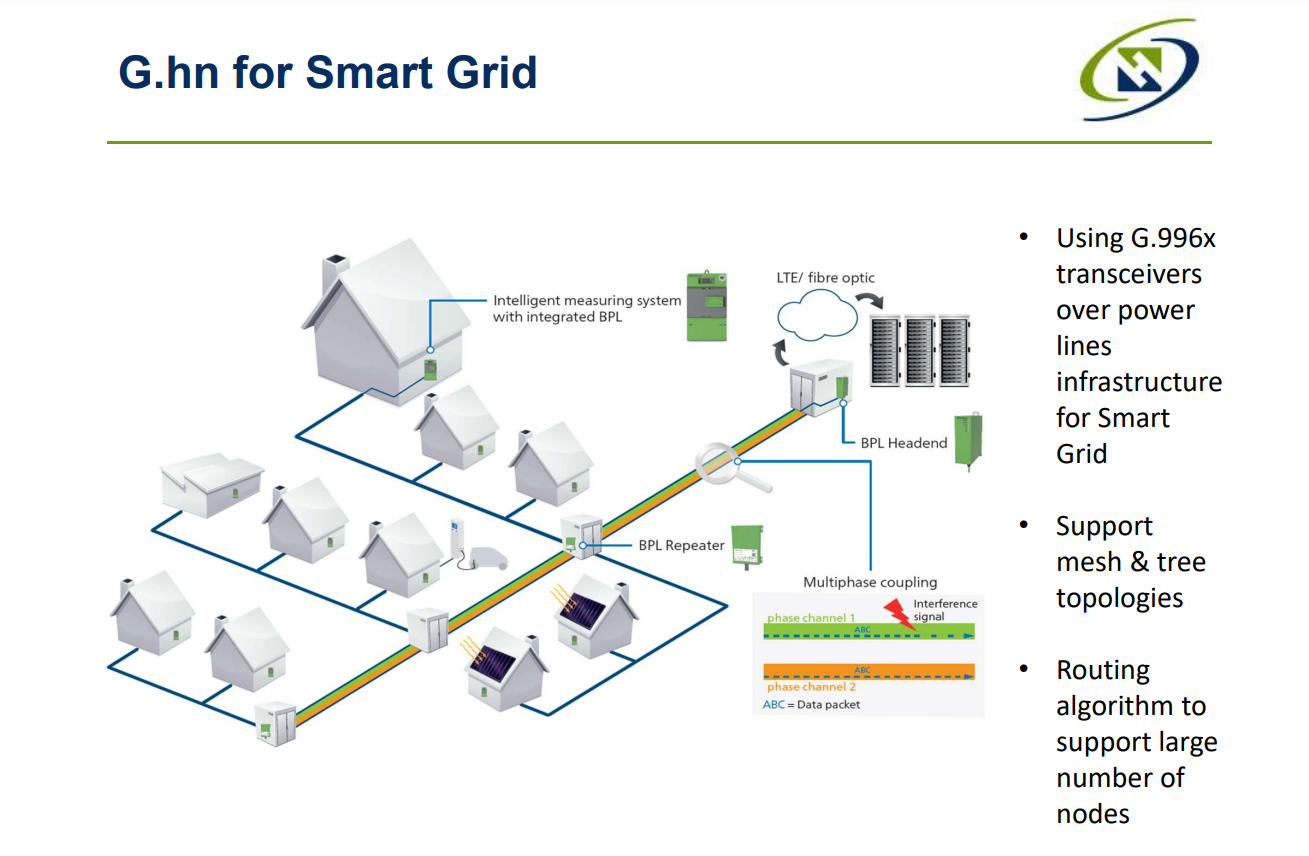
      G.hn for Smart Grid


      The incorporation of G.hn in what we call smart metres, so supporting missions with apologies and complying with the mandate from the European Commission having the ability of reading the power consumption in the smart metre by ourselves as users not on a monthly basis but on a daily basis and work out what is the best timing for us to have the cheapest consumption. So that's one for G.hn”.


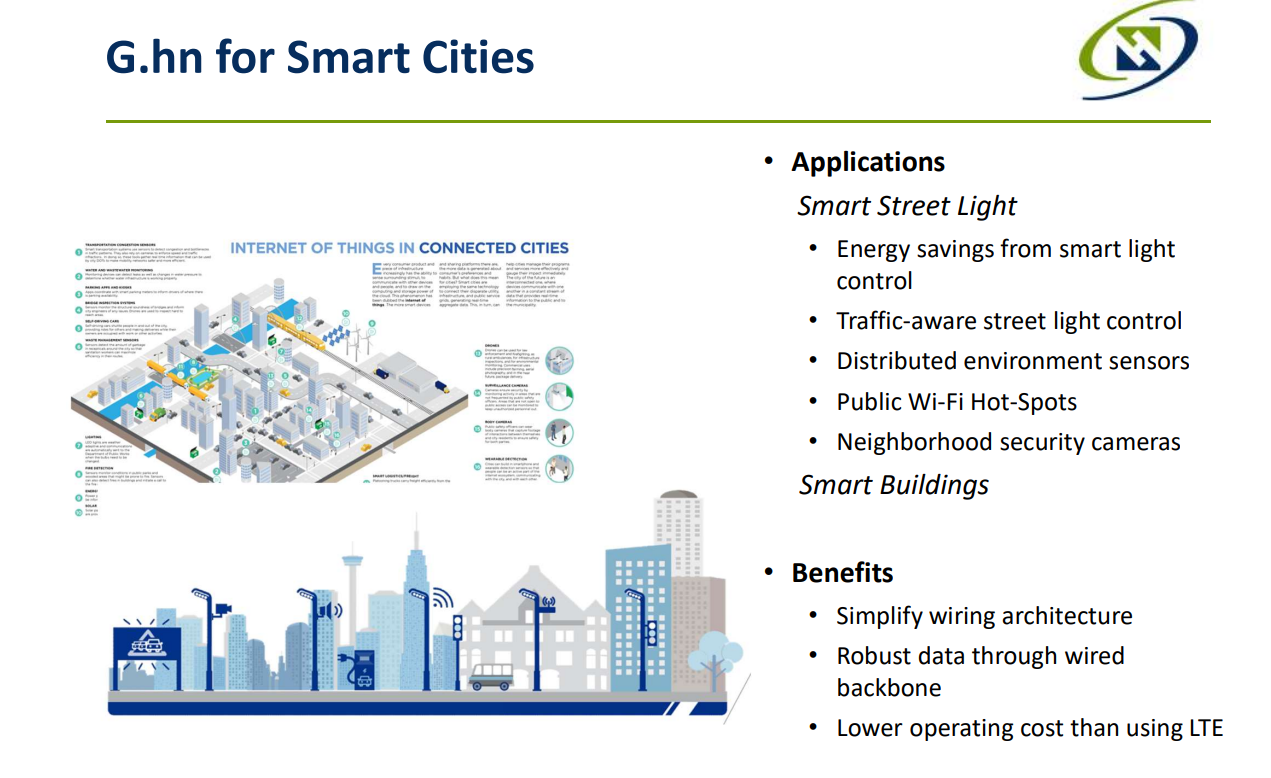
      G.hn for Smart Cities

      In the smart cities as such, here we can be highly creative. So it has the smart street lighting for the energy saving. So not just having connectivity inside our homes but on the streets. So the traffic works like control distributed environment sensors. And as basic as having public Wi-Fi hotspots. So it was very much going into bad directions again, why because it was a simplified the architecture of the wiring and we can use what's already there and lower operating costs”.

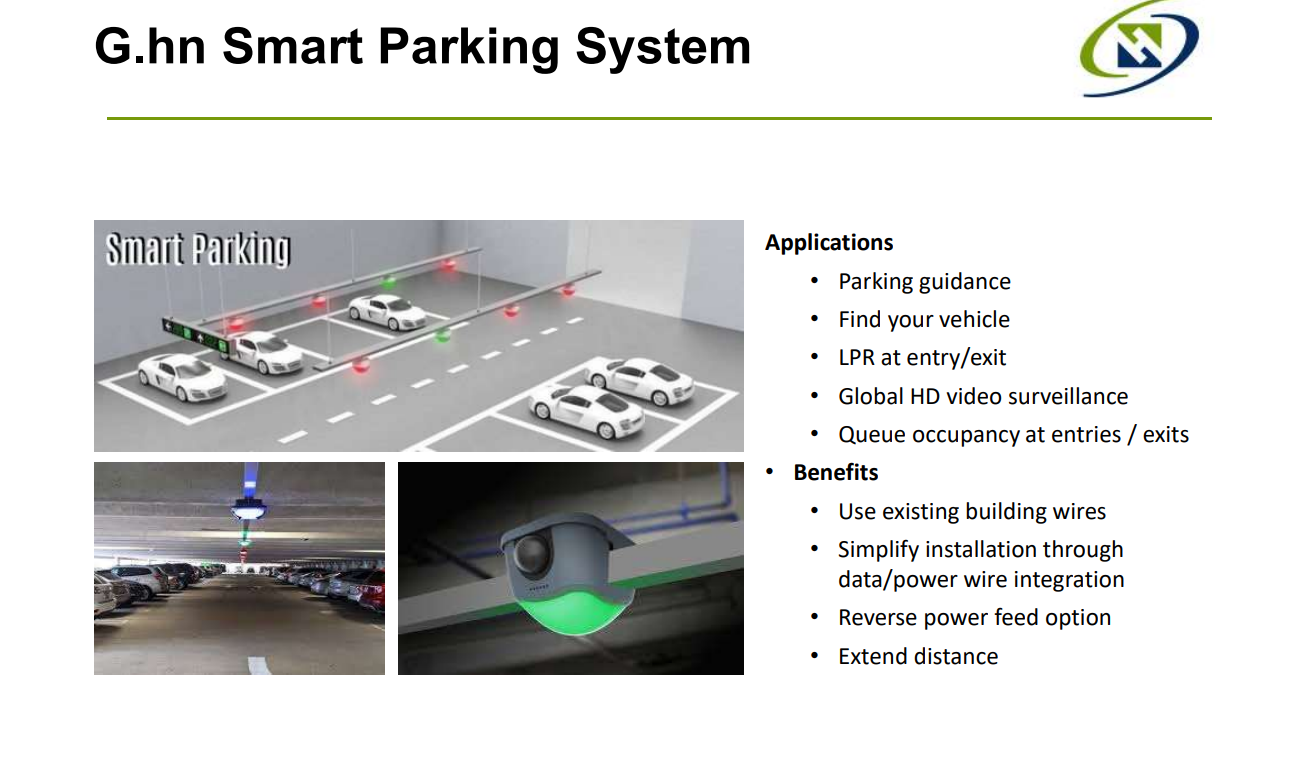
      G.hn Smart Parking System

      It went beyond that to actually provide the smart parking system because the lights were already in place, the connectivity was already in place. So, that was highly robust. We all need to park somewhere when we go and visit an office or a shopping mall. So, the parking guidance it's only important if it's a huge parking system to find the car rapidly to make sure the car is protected. So, the global high definition video surveillance, having the snapshot of that apology again is key to know whether a location is occupied or not by another car. So, all that that comes into the visualisation of the networking spot was a great means to understand why G.hn can be used for that. But that actually led us to the next level and it was the security aspect. Because then all this can be highly protected for the video surveillance and captured intrusion.”


      Advanced Powerline Noise Mitigation

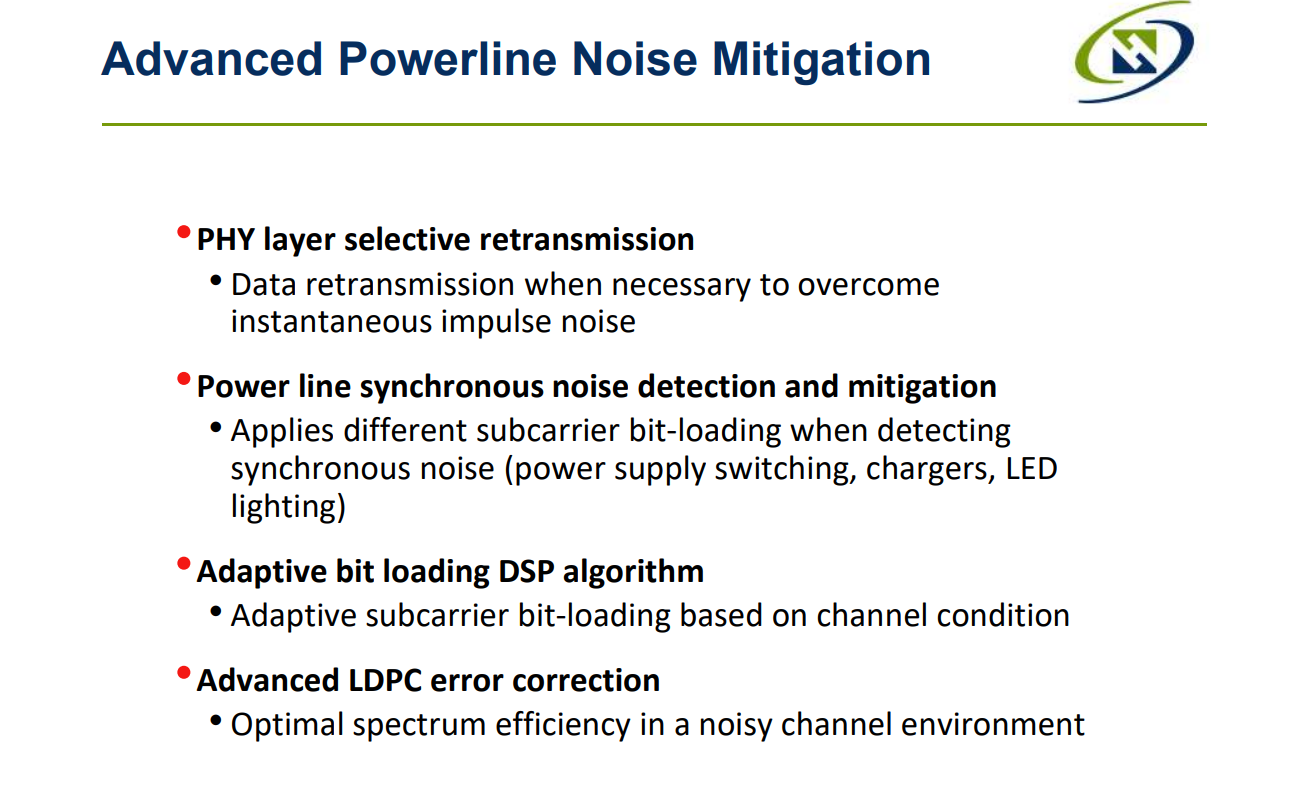
      And I get closer to the why security is important. When it comes to the deployments, again, talking about the three media but then I keep always focusing on the powerline noise mitigation because powerline has always been the most ubiquitous medium, right. So whenever you plug a device, and this is how G.hn came to bring to life IoT devices, you plug the device that gets power supply, but also connectivity at the same time. Of course, the power line, it's the most the noisiest media. So, we introduced an algorithm for the noise mitigation. And that was highly perceived by the players because when we had that apply to different subcarriers, the buildings of that detecting all these noises and the power supply switches and the charges and the LED lighting, here we go. So, that we could have the adaptive bid loading based on the channel condition. And last but not least, to optimise the spectrum efficiency in such a noisy channel environment”.


      Intelligent Software for Industrial IoT

      “We went beyond that and built this for the industrial IoT. So, IoT, it's all very nice and very appealing we have been using and applying so many different technologies for the IoT, wired and wireless. And this is the future. It's something that we all need to embrace and, like and take advantage of it. But what actually makes it even more interesting is the industrial flavour of it. Because beyond having a very nice experience with connectivity are some critical applications, which really need low latency, not just the highest connectivity, but low latency. And why is that because whether we can be more or less frustrated, whether we have a latency on you know, we're displaying the slide deck or getting an email on having our voice distracted. But then, whether that's the connectivity is actually involving industrial machinery, it's in the factory applications, robots, the Industrial Revolution, even surgeries in the healthcare and that it’s highest precision. So, this was actually looking into different types of topologies, we came up to say, okay, we need more levels of repetition, and then the self-organised network, not just plug and play that the network stability and then having the nodes configured understanding who's the master and the network self-healing, so that in case of any node fails, the network itself knows how to have the topology discovery, and to connect and create and ensure the stability of that industrial process. So, that was key for this application G.hn from the standard itself went to provide up to 250 nodes per network domain”.

      Secured wireless with Li-Fi

      Security is highly important. So I will, I will always want to one of my three minutes on this one, it is for whatever was highly perceived for the Wi-Fi as freedom of movement, and G.hn provided the backbone on the LiFi side, the line of sight is highly important for preventing intruders to get and get the signal. So, you have to look at that from the RF congestion point of view, which is getting worse. And then, improving the user experience in those dense environments. So, the light spread through the light waves provides all those advantages. At the same time, the security is highly improved because you have the boundaries of the wall in any meeting room that prevents the communication from being captured by intruders”.

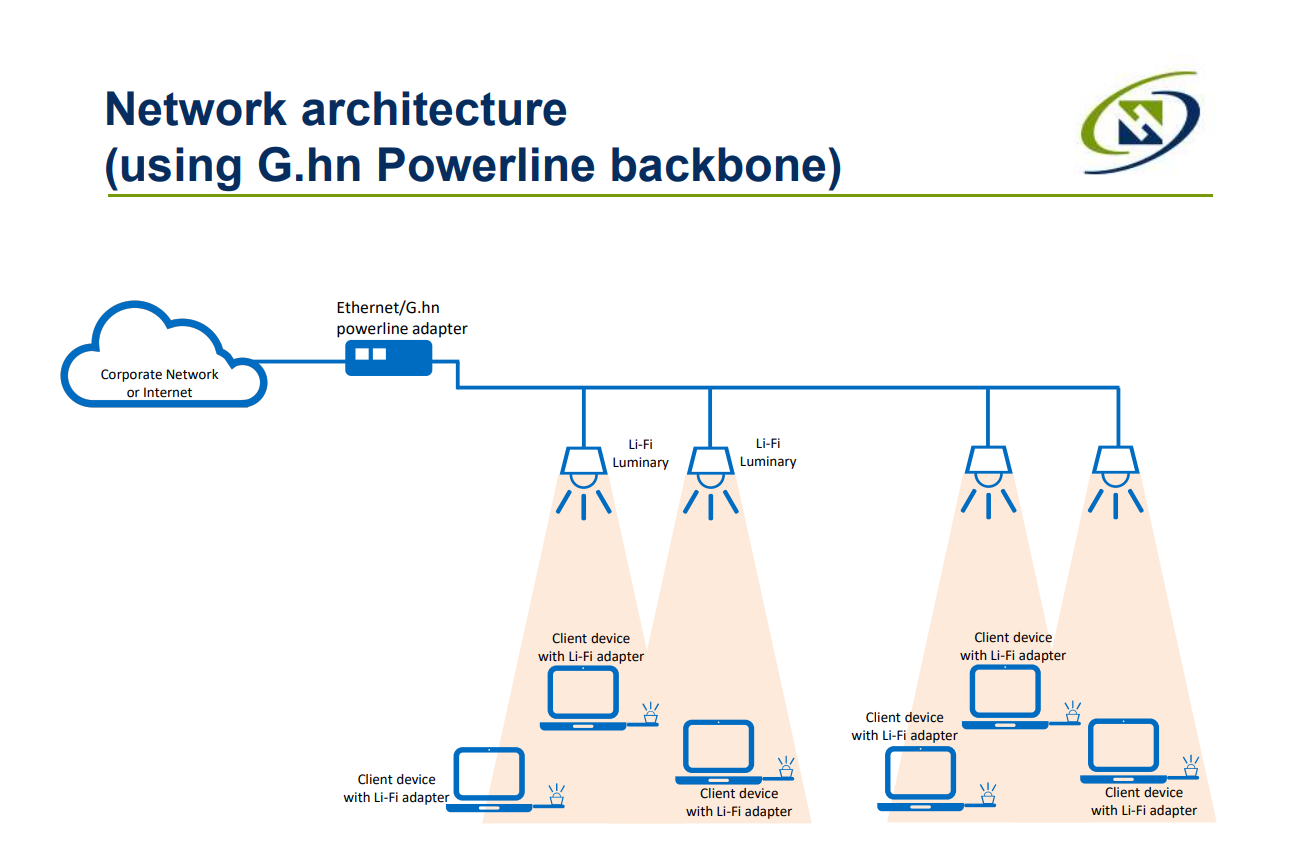
      Network architecture (using G.hn Powerline backbone)

      This is the network architecture with something for you to have as a reference. So, you move around with your laptop with your devices and instead of getting from one access point to another on the Wi-Fi you can use the LiFi luminaries, and again, you'll have plenty of speakers today that can go into details on how that works and the client device on that patient. The roaming itself”. 


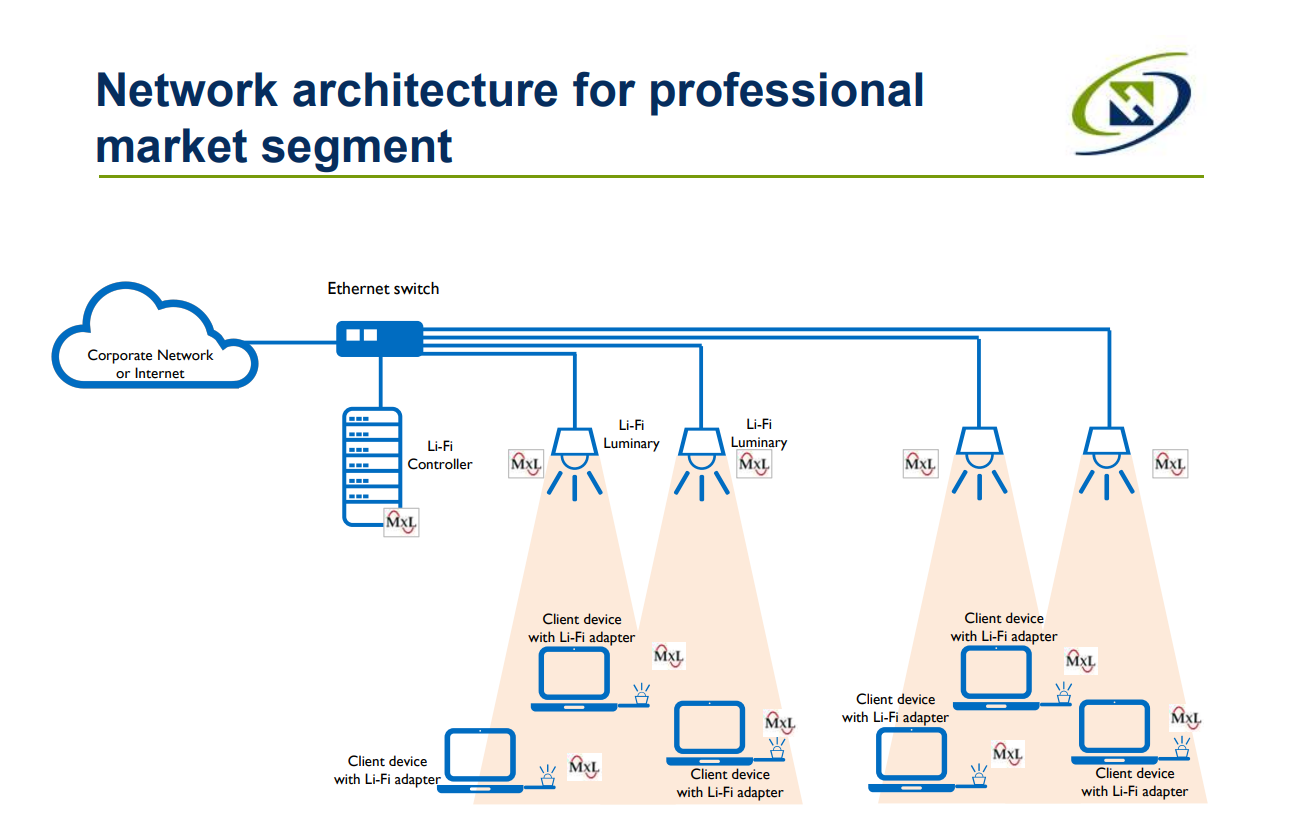
      Network architecture for professional market segment

      In case it's a professional market segment, multi-dwelling units or bigger rooms, then you have another NetSuite and different LiFi controllers that can create and handle that communication from one device to another

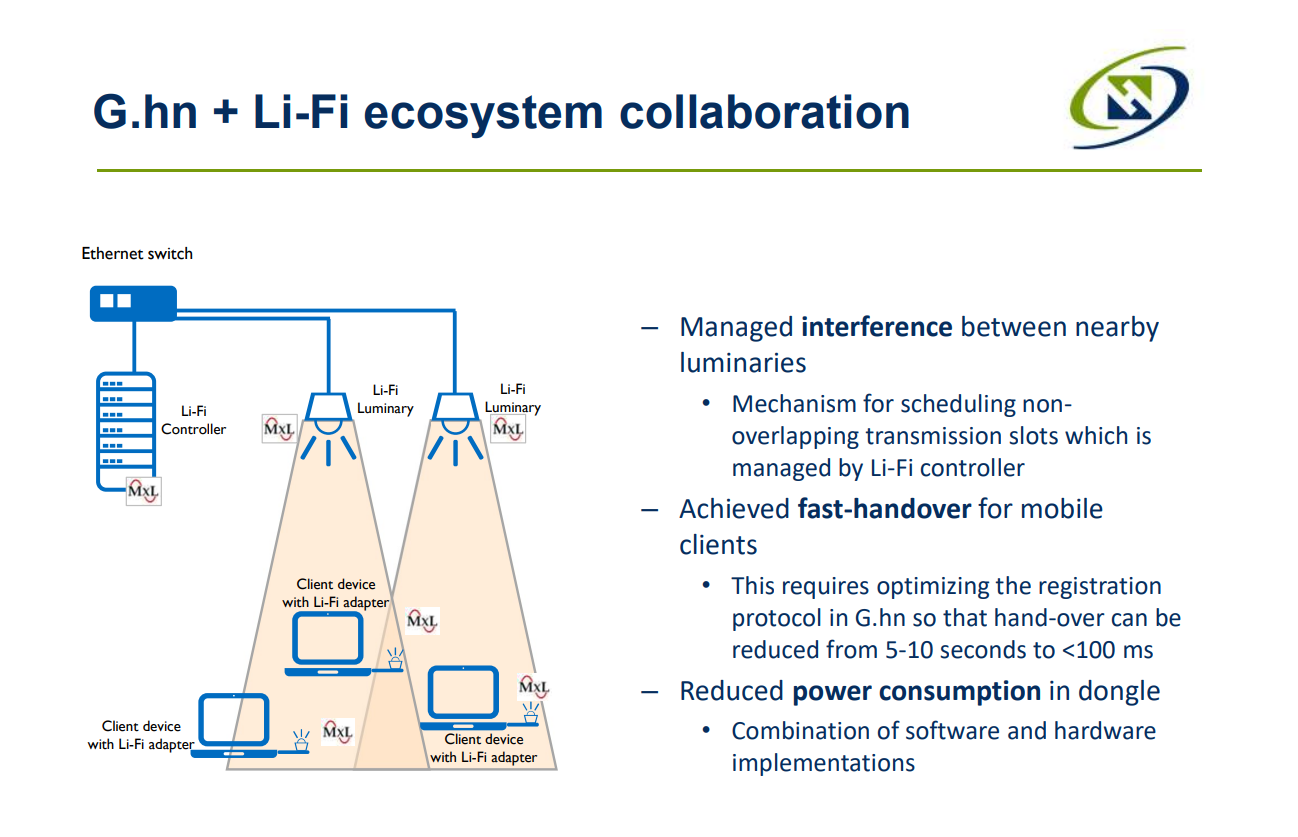
      G.hn + Li-Fi ecosystem collaboration

      The first handover between the mobile clients was one of the key questions that was asked today. So, that's the industry itself and the finalisation phase but are focusing on that together with the power consumption, which are all key requirements from all the different players that need to collaborate for the ecosystem itself”.

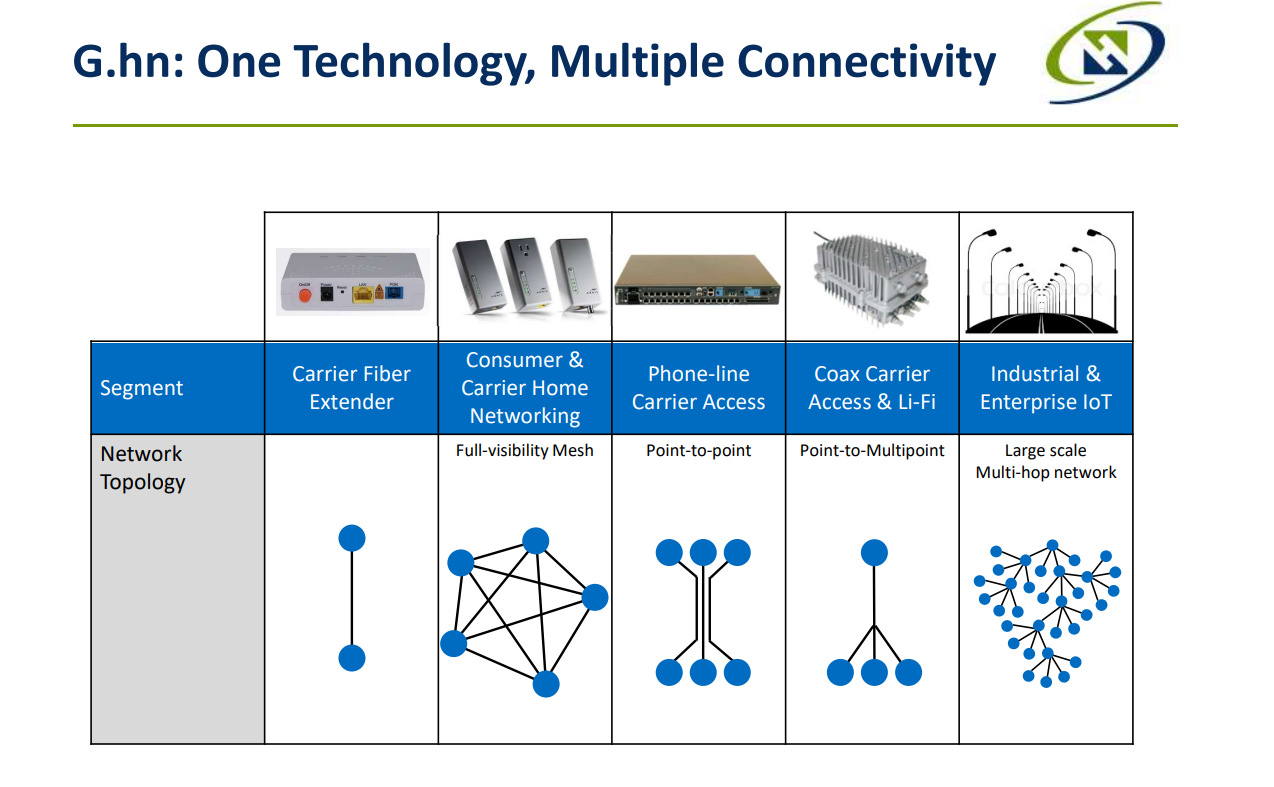
      The multiple connectivities here is for you as a reference. So, any topology can be addressed with the G.hn as a backbone, and then you build on top of that with a different software”.

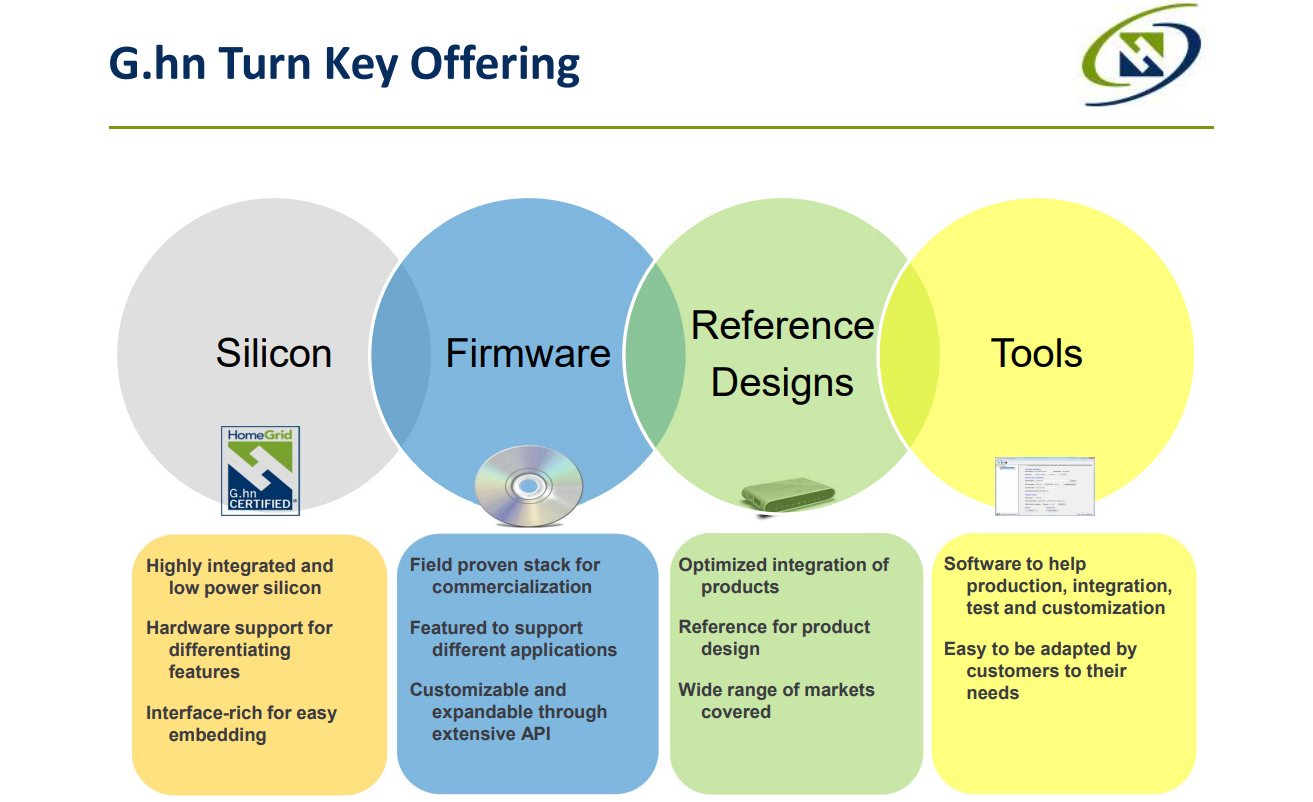
      Keep in mind that HomeGrid Forum foreign players, from the silicon vendors, from the manufacturers, from the system integrators and service providers, can provide you with a total means the silicon, the filmer, the reference designs, and the software tools, the configuration to adapt that to the needs of the topologies”.

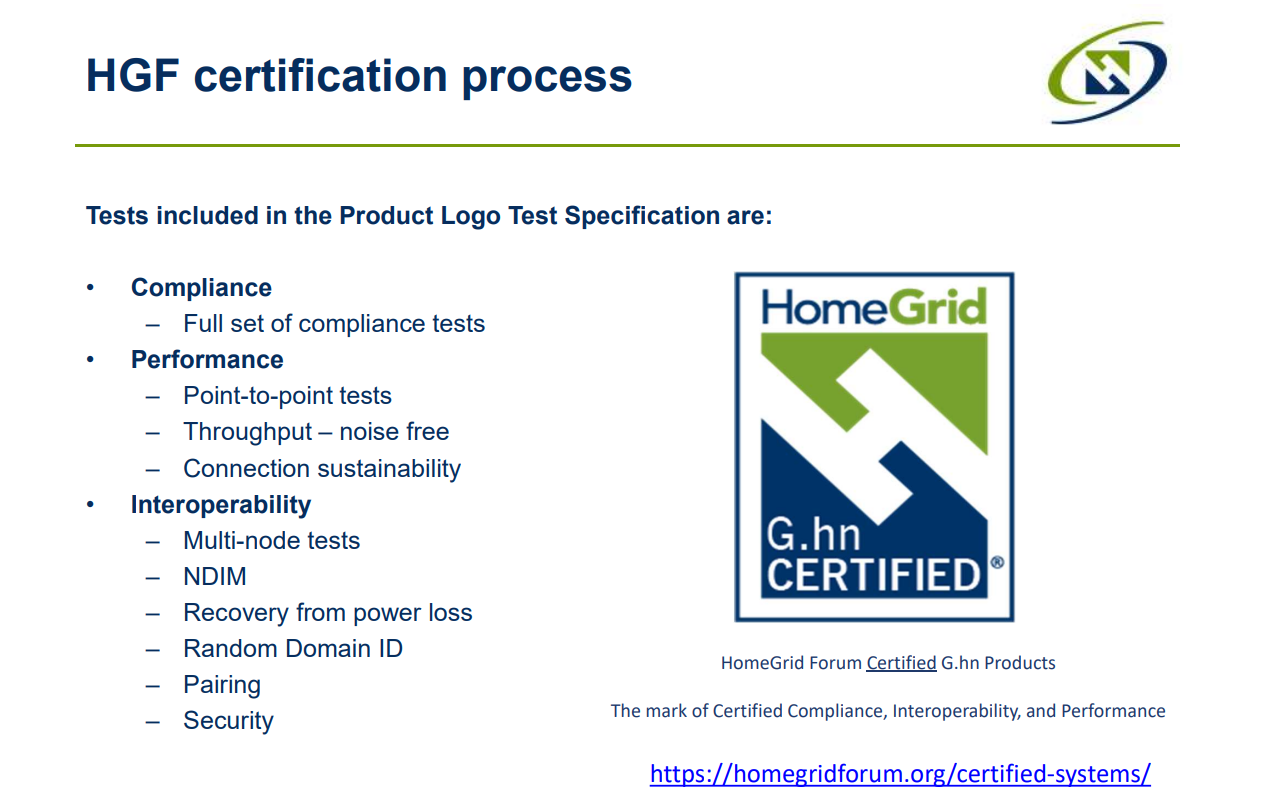
      The certification of the HomeGrid Forum addresses all these different markets. So, available for the market players to certify well devices to ensure compliance with the G.hn technology so that you can mix devices from different manufacturers in the same network”.

      HGF certification process

      Livia Rosu concluded her presentation with the following statements:

      And this is the logo that you have to look for these certifications to make sure the interoperability is ensured. This was a very fast overview of the challenges and how the standardisation is here to help. As Nikola and Musa have already highlighted, there is no single technology that does it all. But what's important to capture is to have all the layers built in deployments on top of standardised technology is the only way to accelerate deployments and capture all the requirements”.

      You can also watch the full video presentation on the following YouTube link from Jakajima YouTube channel.

      Li-Fi Conference 2022

      The next Li-Fi Conference is coming up on the 28th of June 2022 between 10 am and 4.30 pm CET.

      It is interesting to realise that lights that illuminate offices, homes, cars, factories, our streets and more locations also can connect us to data and hence power the growing demand for connectivity and speed.

      At this conference professionals from all over the globe will gather together in order to share applications, ideas, new developments and ways to integrate Li-Fi in services, both for consumers and professionals.

      This conference will be held Live and Online. The venue will be the High Tech Campus 1, The Strip 5656 AE Eindhoven The Netherlands.

      Online tickets can be bought at the following link:

      https://tikcit.com/register/61e002336d7fc4b6745cab83/

      What is LiFi?

      LiFi, also known as "Light Fidelity" is a wireless optical networking technology, which uses light-emitting diodes (LEDs) to transmit data. In 2011, professor Harald Haas made a LiFi demonstration at the TED (Technology, Entertainment, Design) Global Talk on Visible Light Communication (VLC).

      VLC uses light as a medium to deliver high-speed communication like Wi-Fi and complies with the IEEE standard IEEE 802.15.7. The IEEE 802.15.7 is a high-speed, bidirectional, and fully networked wireless communication technology-based standard similar to Wi-Fi's IEEE 802.11.

      How does LiFi work?

      LiFi is a high speed, bidirectional, and fully networked wireless communication of data using light. LiFi constitutes of several light bulbs that form a wireless network.

      When an electrical current goes through to a LED light bulb, a stream of light (photons) emits from the lamp. LED bulbs are semiconductor devices, which means that the brightness of the light flowing through them can change at extremely high speeds. The signal is sent by modulating the light at different rates. The signal can then be received by a detector that interprets the changes in light intensity (the signal) as data. Also when the LED is ON, you transmit a digital 1, and when it is OFF, you transmit a 0.

      LiFi Benefits

      The primary benefits of LiFi are as follows:

      Security: Provides entirely secure access. Where there is no light there is no data.

      Safety: Does not produce electromagnetic radiation and does not interfere with existing electronic systems.

      Localisation: Allows localisation due to the small coverage area of LiFi access point - localisation can be used for very precise asset tracking.

      Data density: Provides ubiquitous high-speed wireless access that offers substantially greater data density (data rate per unit area) than RF through high bandwidth reuse.

      Credit to Oledcomm

      LiFi Applications

      LiFi can be used for so many applications and the list is increasing every year. You can read our updated list of Li-Fi applications at the following link:

      https://www.lifitn.com/blog/2021/2/13/top-30-li-fi-applications-updated-list-including-potential-applications

      Credit to pureLiFi

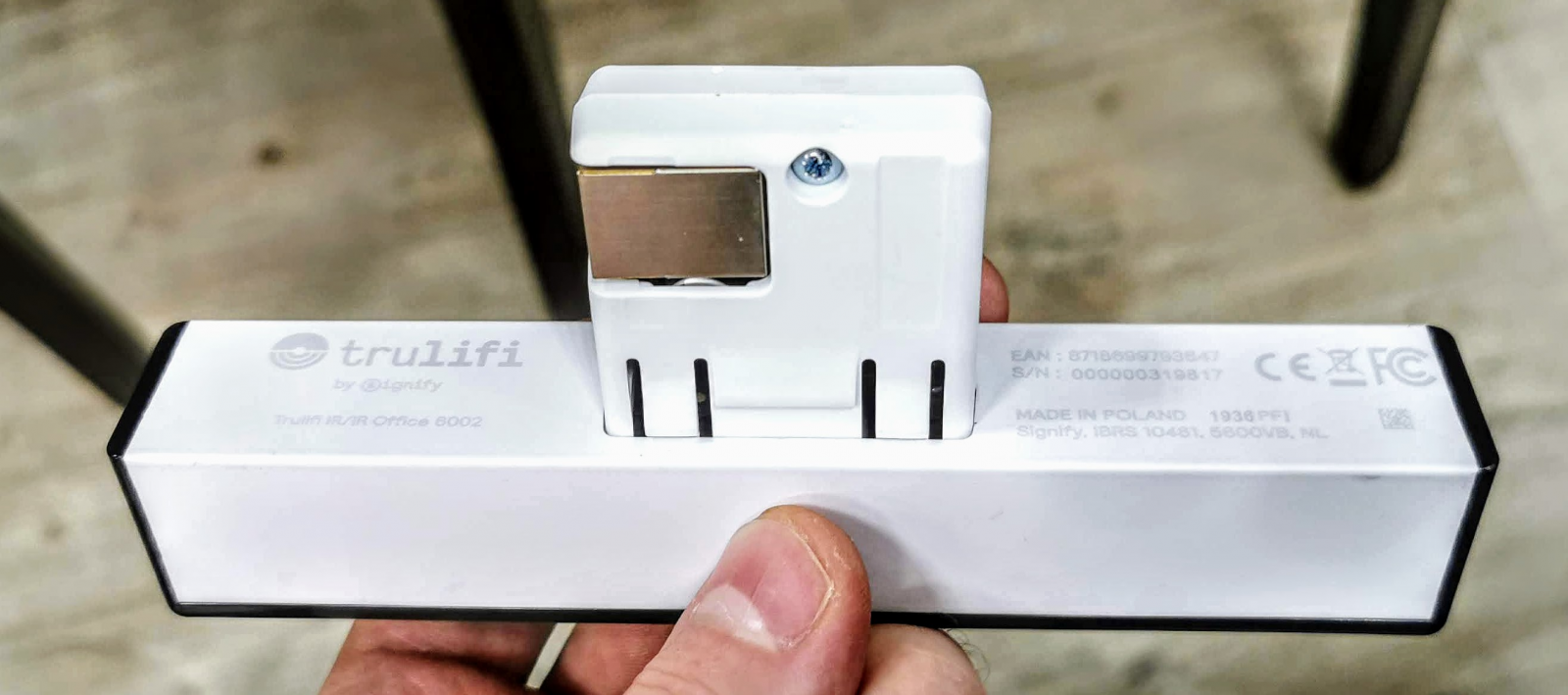
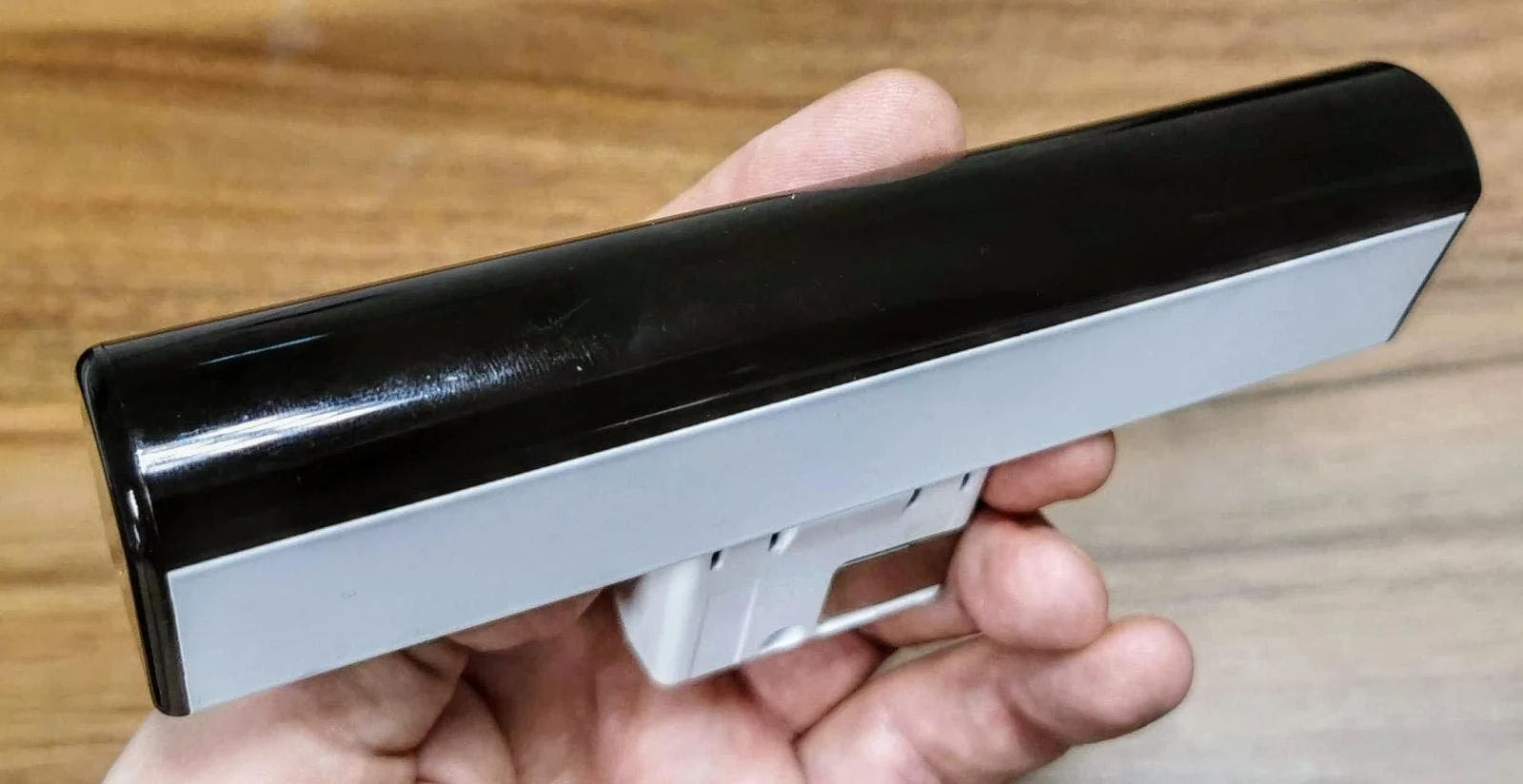
      In conclusion, if you are also interested to hear more information about the OWNII Coin or enquire about LiFi devices such as the LiFiMax and Trulifi, you can contact us through our chatbot or by sending an email through our contact us form. If you enjoyed this post and would like to hear more updates about LiFi technology, subscribe to our newsletter. Don’t forget to subscribe to our social media accounts. You can also join our Telegram group about LiFi technology on this link:

      https://t.me/joinchat/FMzOmsEKyJFrU6Af

      Li-Fi Conference 2021 - Recap Part 2 - Building the LiFi Ecosystem

      Table of Contents

        Li-Fi Conference 2021 - Recap Part 2 - Building the LiFi Ecosystem

        Li-Fi Conference 2021

        In our previous article series about the ONLINE Li-Fi Conference 2021, we discussed The Light Communications Alliance (LCA) and its purpose. The conference was organised by the Jakajima, the global High Tech Conference organiser, and the Light Communications Alliance.

        Jakajima, Matchmaker for Innovators in the high tech industry, organises many events, ranging from LiFi Technology industry trends, 3D Printing to the Internet of Things, from Unmanned Cargo Aircraft to Health Tech, from 4D Printing to Photonics and from Vertical Farming to Sustainable Materials.

        The online Li-Fi Conference included live presentations from researchers, executives and industry specialists from pureLiFi, Nokia, Signify, Orange, Radiocommunications Agency Netherlands, Velmenni, OLEDCOMM, HomeGrid Forum and Weidmüller Deutschland.

        In the first part of the conference, Nikola Serafimovski, Co-Chairman of Light Communications Alliance and Musa Unmehopa, Head of Ecosystems and Strategic Alliances for LiFi at Signify shared their views on LiFi and the LiFi ecosystem.

        In this article recap series, we will talk about the presentation on building the LiFi ecosystem delivered by Musa Unmehopa. Before this, we will talk briefly about Signify.

        Signify

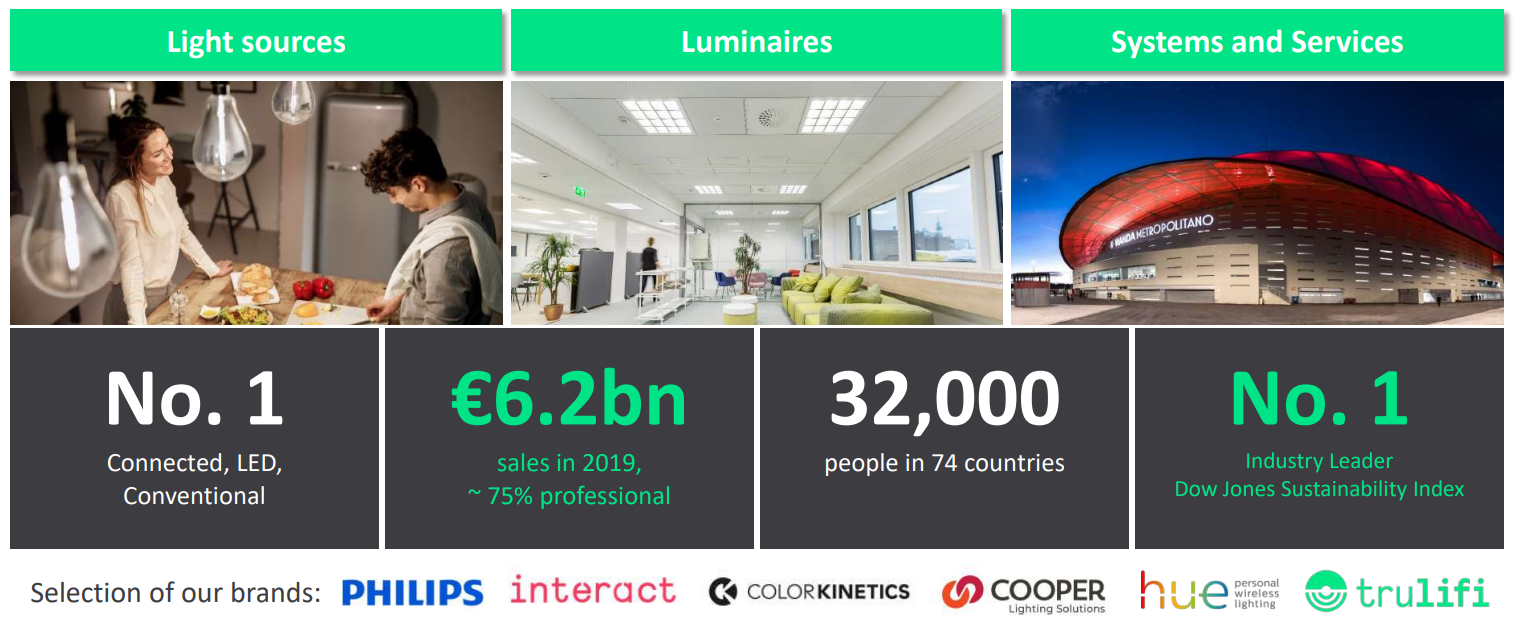
        Signify is the new brand name of Philips Lighting. The name change occurred in March 2018 to represent the transformation from an analogue lighting company into digital lighting and Internet of Things (IoT) company. Signify is the world leader in lighting for professionals, consumers and lighting for the Internet of Things. The company provides lighting solutions for professional segments such as automotive, healthcare, horticulture, office, outdoor, phototherapy, petrol stations, solar, purification, schools, fashion, cinema, and more. These lighting solutions include indoor and outdoor luminaires, lamps, electronics, lighting controls, lighting control software, IoT systems and platforms.

        Signify has also other brands under its belt such as Philips, Interact, Modular Lighting Instruments, Luceplan, Color Kinetics, ILTI Luce and Philips Hue.

        Standardization is the cornerstone for LiFi interoperability, which is an essential condition for lowering barriers to adoption, encouraging competition and innovation, and building consumer confidence,” said Musa Unmehopa, Head of Ecosystems and Strategic Alliances at Signify. “We join HomeGrid Forum to grow the LiFi ecosystem in which we collectively create and build a global market where we can all compete effectively and serve consumers.

        Dr Leonard Dauphinee, Vice President and CTO of Broadband Products at MaxLinear added: “Signify’s Trulifi product series is embedding MaxLinear’s G.hn chipsets to modulate the light waves to transmit data and to provide backhaul over existing wires, such as powerline. By leveraging their lighting infrastructure, Signify customers get the best of both worlds: a great lighting experience and a high-speed wireless G.hn-encoded LiFi connection with a reliable G.hn wired backbone.

        Building The LiFi Ecosystem by Musa Unmehopa

        Musa Unmehopa, Head of Ecosystems and Strategic Alliances for LiFi at Signify, was the second presenter at the online Li-Fi Conference 2021. He presented in great detail the importance of building a healthy LiFi ecosystem.

        Mr Musa is the Head of Ecosystems and Strategic Alliances for LiFi, at Signify. Prior to joining Philips Lighting in 2013, he worked for Bell Labs, Lucent Technologies, and Alcatel-Lucent. Musa has held senior leadership roles in various standards bodies, trade organizations and industry consortia, including chairman of the Technical Plenary of the Open Mobile Alliance, vice-chairman of the Board of the Zigbee Alliance, and Secretary-General of the Zhaga Consortium. He also served on the boards of The Connected Lighting Alliance, the Emerge Alliance, and the Parlay Group, and is an advisor to several technology start-ups. Author of two technology books, Musa has been an invited keynote speaker and panellist at various industry events. His publications include numerous papers in technical journals and conferences. He holds two patents. Musa received a BSc. and MSc. degree in computer science from Twente University and MBA degrees from TIAS Business School and University of Bradford School of Management.

        Below are some points discussed about the LiFi ecosystem

        Signify is the world leader in lighting

        Musa Unmehopa started his presentation by saying the following:

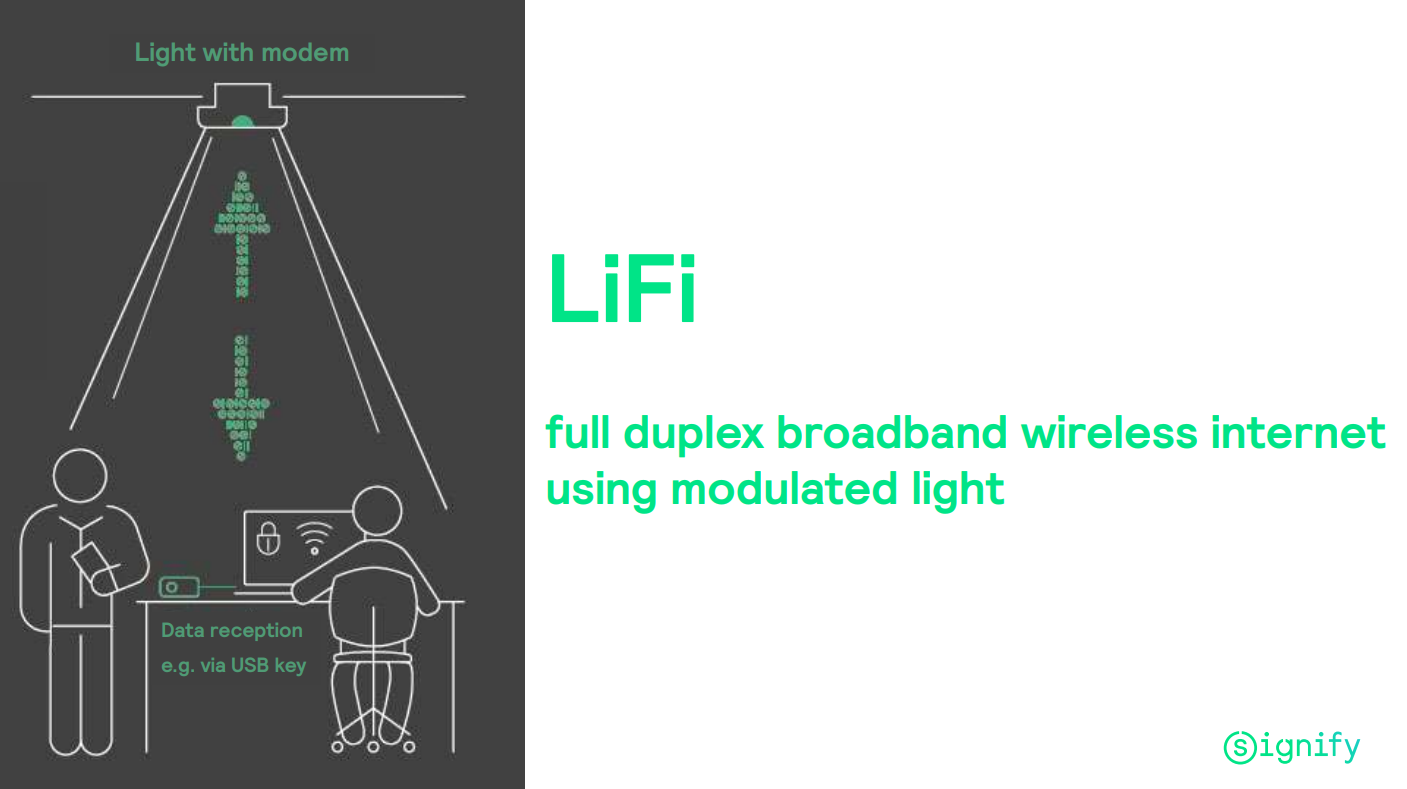
        Well, good day everybody, it's great to be with you and all and have the opportunity to share my view on the LiFi ecosystem. And I'll be talking about ecosystems. And throughout my talk, I'll explain what exactly I mean by that. Before I dive in, just a quick word on my background. Thank you, Peter, for the kind introduction, I work for Signify, which is the number one lighting company in the world, we've been around for decades or even a century. You may have known us as Philips Lighting in the past. We've been the number one in the lighting industry. you can only maintain that over so many years if you have a strong focus on innovation, which is one of our focal points. And that's also why we got engaged with LiFi. Because we strongly believe that this is going to take the lightning industry to new heights, and it's going to be very beneficial to consumers and markets across multiple segments. Now a quick definition and Nicola already shared the taxonomy that the LCA is advocating, with LiFi. What I mean is full-duplex broadband wireless internet using modulated lights. So keep that in mind as we talk about and go through some of the talking points.”.

        The Future Potential of LiFi is here today

        Musa Unmehopa then stated the following:

        And the main point that I would like to leave you with at the end of my talk, is that there's a lot of future potentials here with LiFi, this, there's a strong body of research and academia, who have been pushing the envelope, and growing the capability of the technology over a long period of time, and continue to do so. And this is really important, very exciting. However, if your aim is to bring commercial products to market, there's no need to wait and the time is now we are ready. And what we need to do to take the next step and convince the world that LiFi is fantastic, is really to grow the ecosystem. And I understand ecosystem is a bit of a loaded term. So I'll talk more about what exactly I mean by that. And also, you know how we want to solicit your help and how you can contribute in building that ecosystem.”

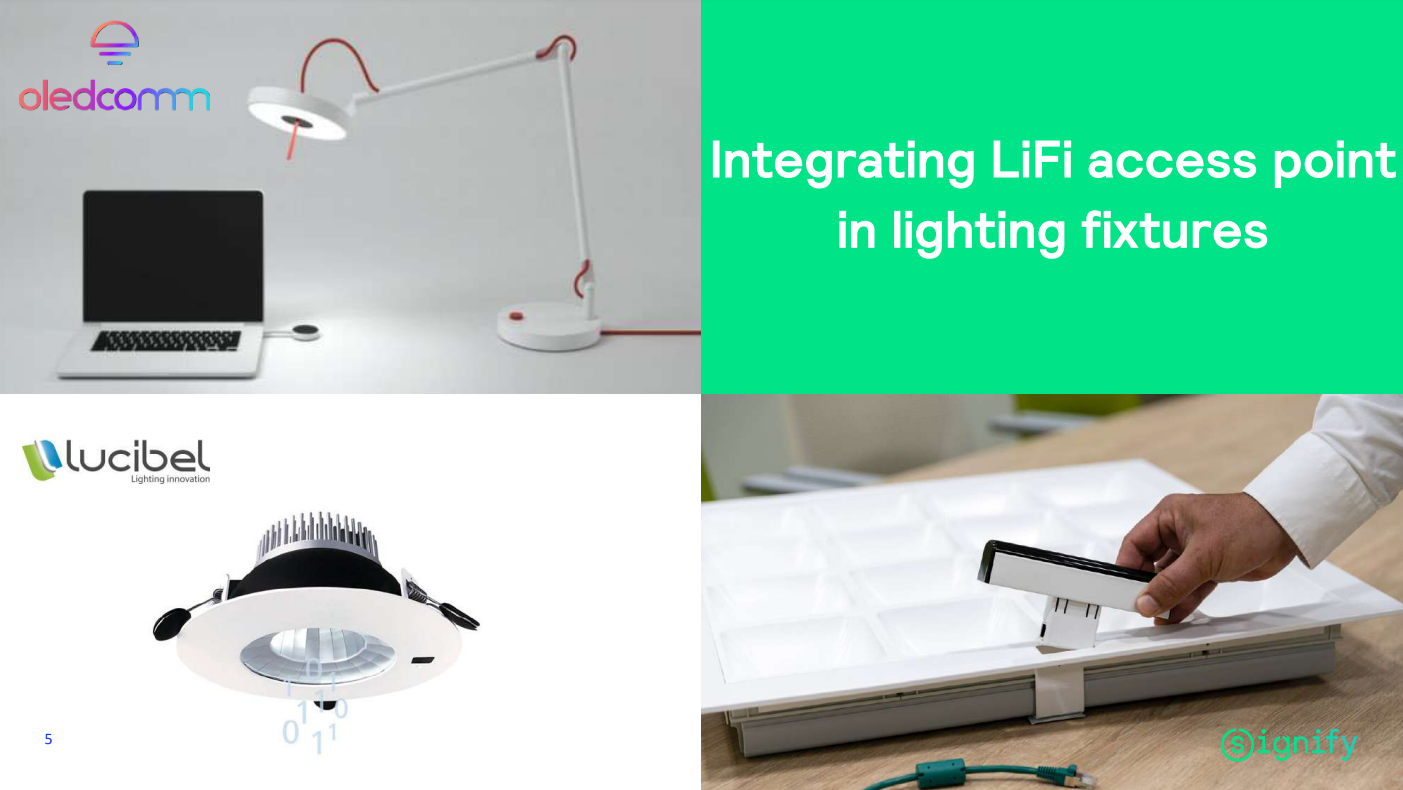
        Integrating LiFi access point in lighting fixtures

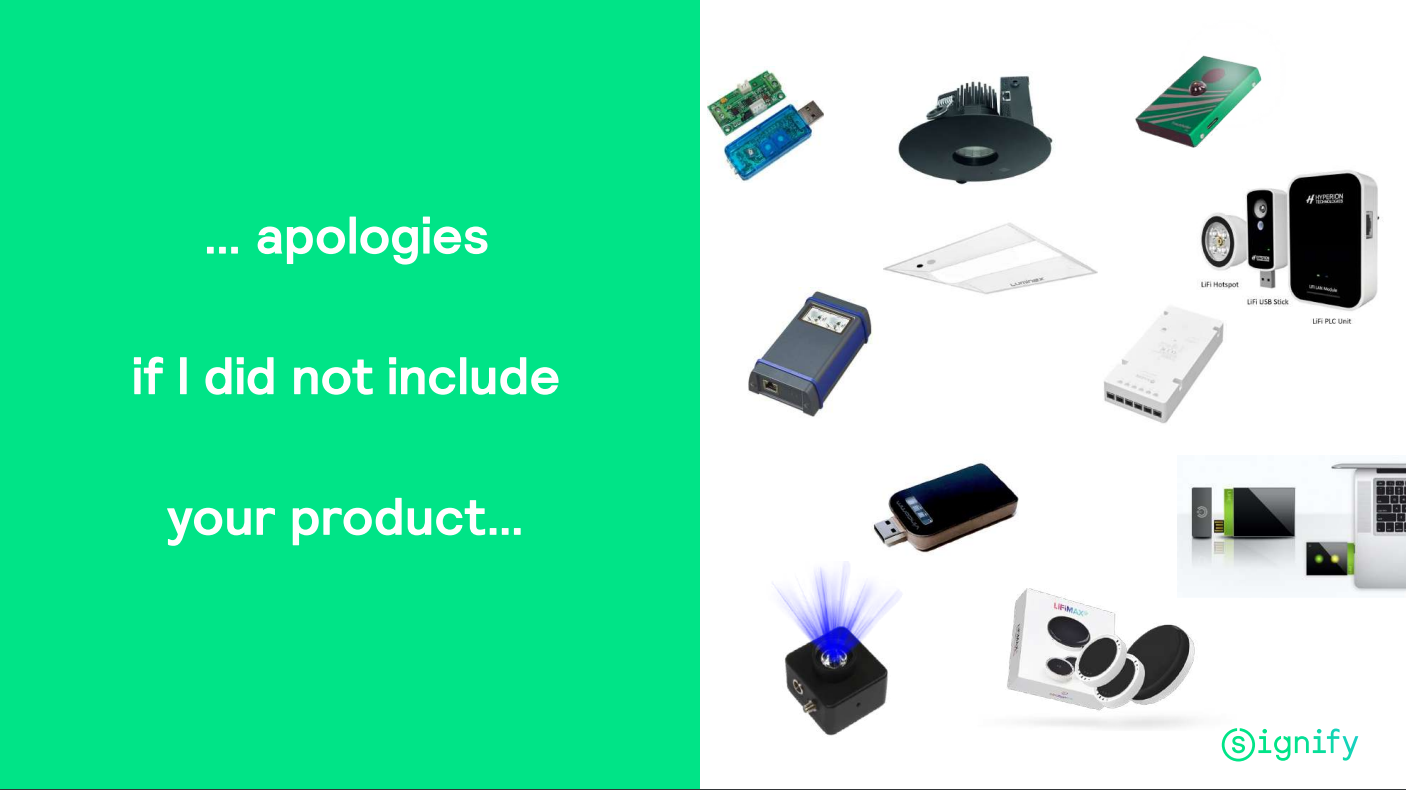
        So just showing you a few examples of why we believe that the industry is forming around LiFi. Now what we're seeing is a number of lighting companies already starting to integrate LiFi access points in lighting fixtures. We have our colleagues from OLEDCOMM who integrated life in a desk lamp. We have our colleagues from Lucibel who have integrated LiFi into in a downlights and my own company Signify integrating LiFi into office troffers. There's many ways to do this, you can integrate it into the light source or into the fixture, or use some modular approach with connector slots, many ways to go about what we see several examples of the lightning infrastructure being extended with this communication capability for LiFi.”, said Musa Unmehopa.

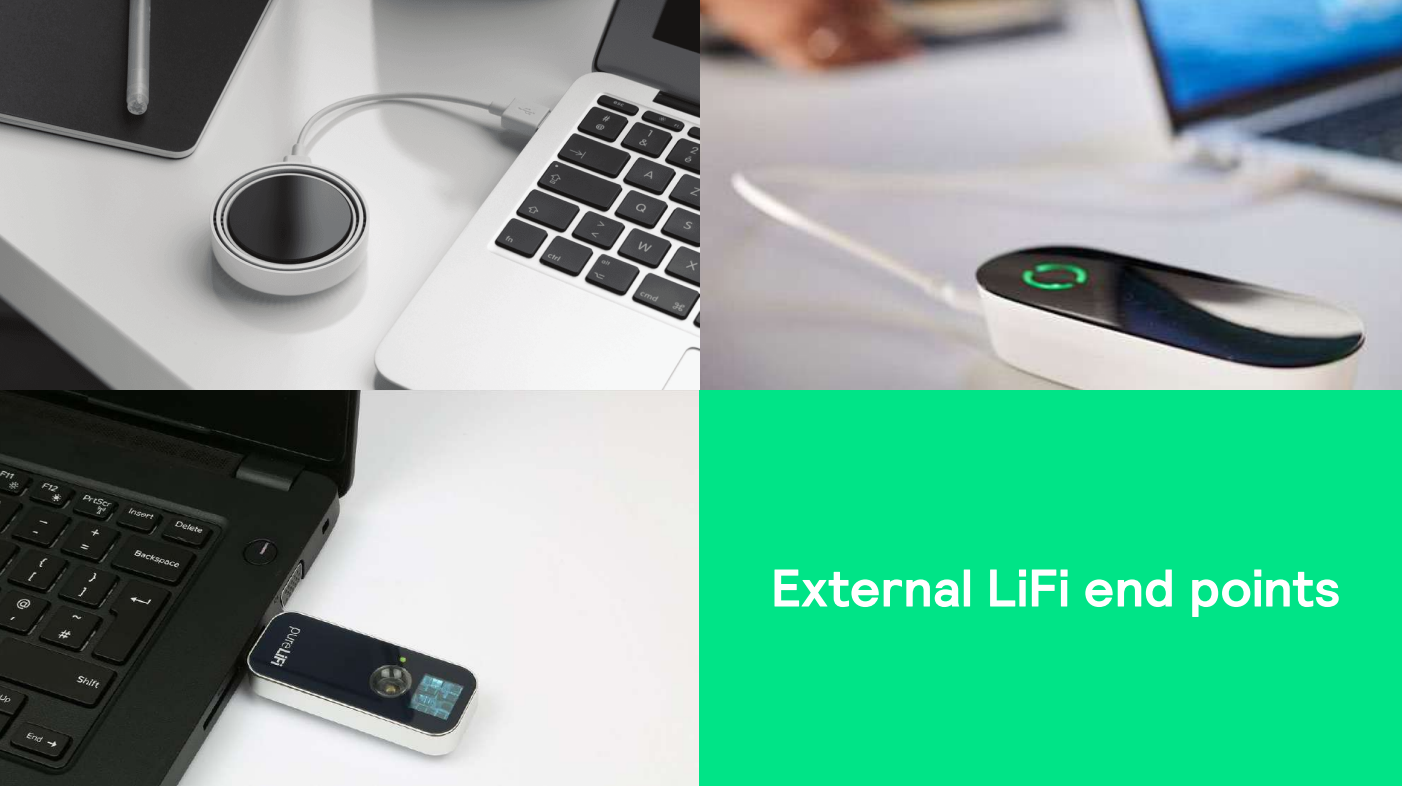
        External LiFi end points

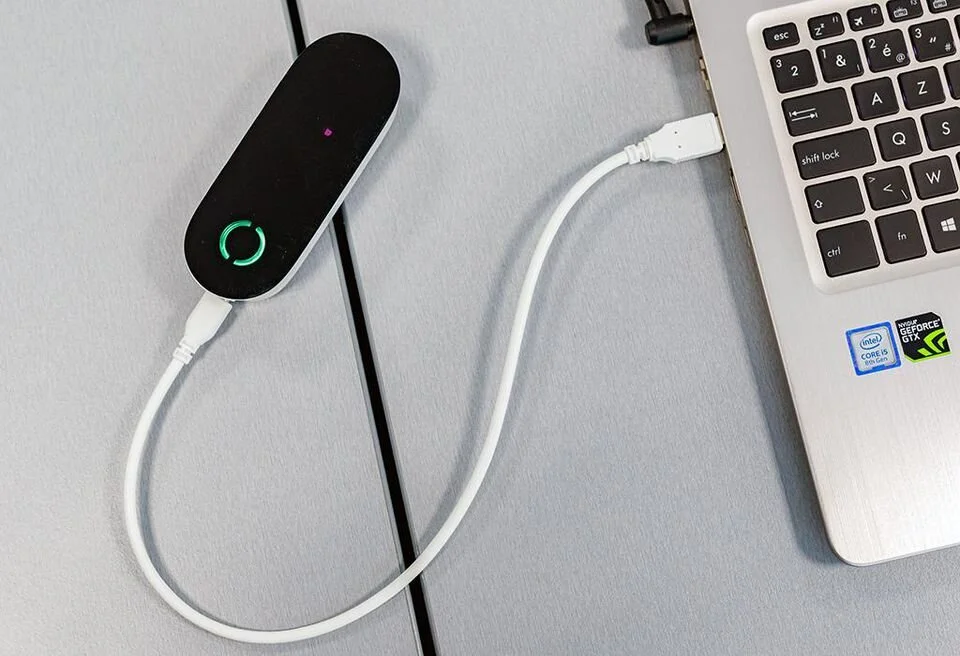
        We also see endpoints being introduced into the market. And so it's very common practice with new communication technologies. They start out as external devices that you connect to your communication equipment like a laptop or a tablet or a phone. So, we see many modalities of LiFi dongles being available on the markets. But the industry is progressing, as we learn more and make advances in miniaturisation and thermal management and power management. We see the components becoming smaller, and becoming more suitable for integration into end-user devices.”

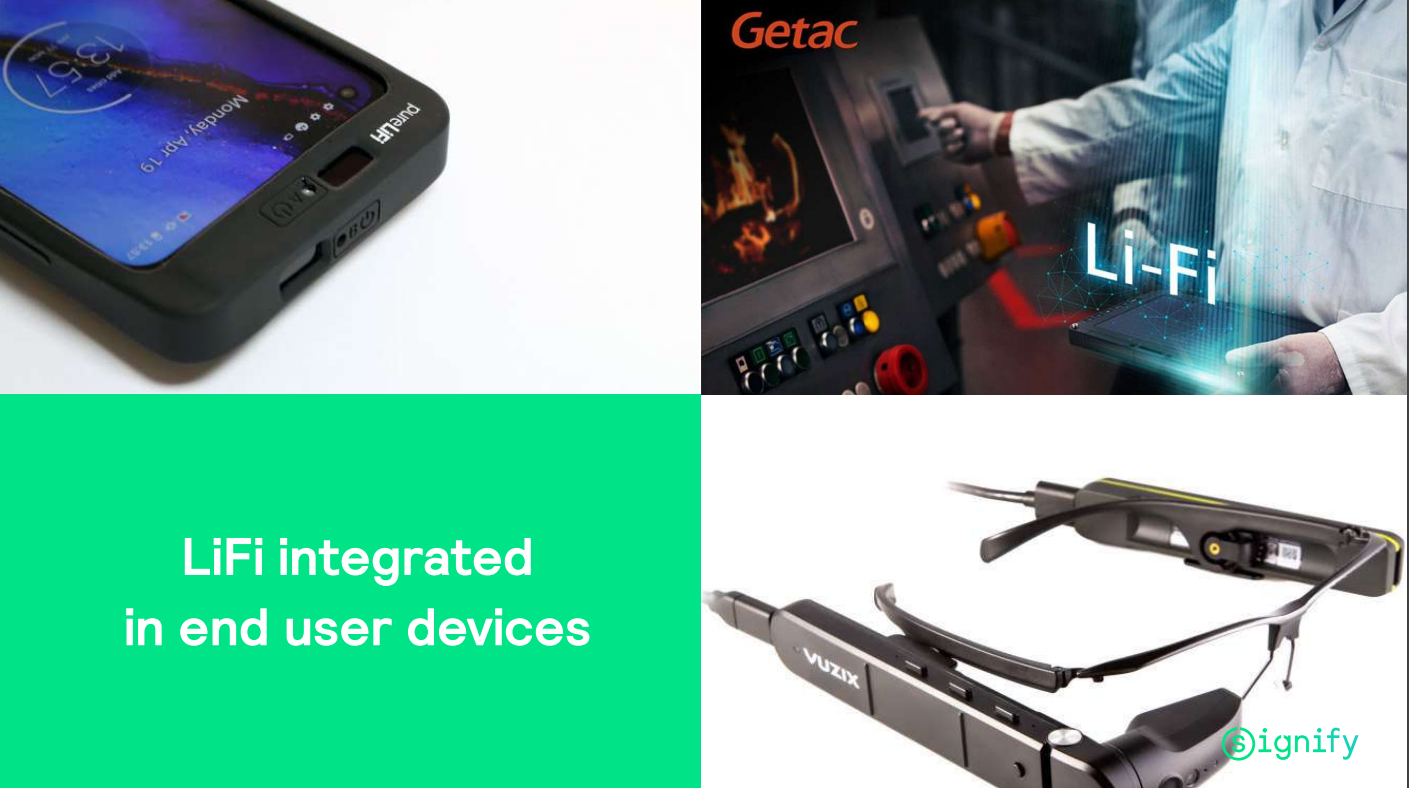
        LiFi integrated in end-user devices

        There are various routes that you can follow. On the top left, we see an example of the integration of an optical antenna in the protective case of a mobile phone. On the top right, we see the integration of life into ruggedized devices such as tablets, and then in the right bottom, we see the integration of LiFi into AR and VR headsets and making use of the low latency properties of LiFi communication”.

        LiFi is maturing

        But it's not only the products that are evolving, also the market and the business processes are maturing. And evidence of that is really the announcements that we've seen recently in the industry of uptake and deployment. Commercial deployments of LiFi. In the last couple of months, we've seen announcements of LiFi deployment in operational and tactical environments and deployments in the Military. On ground forces, but also in air forces, and we see the integration of LiFi communication in the interior cabins of aircraft, with the recent announcements of Airbus and McLaren and Signify. And not only is this a testament to the maturity of the technology but like I indicated also to the maturity of the business processes because these are very stringent environments, very serious industries. They place a lot of requirements on the supply chain, on the quality controlling your manufacturing processes, etc… So it's a clear sign of the industry maturing. And there are many, many more”.

        An ecosystem for lifi products

        I apologise if I did not include your favourite product or your favourite company, shoot me an email, and I'll include it in the next iteration of my slide deck. But the point that I'd like to make here is that an industry is forming around LiFi. There are manufacturers and providers of different types of complementary products that together built, start building this ecosystem. So the point that I'm making, and I'm going to use an analogy here, bear with me, please, I believe, and I would position that all the basic elements of the industry are in place, we have a ball, we have some water, we have a fish. And so what does it take today to elevate to the next level. In my view, we don't need a better fish, the fish is good enough, if you will bear with my analogy”.

        All the piece parts are in place. Rather, what we need right now in order to build this is to grow the ecosystem. So we want a thriving, bustling environment where everybody can succeed, where multiple species can coexist and be successful together. That's really the analogy that I want to put forward to you. So again, it's not about making better communication or becoming faster or using more capable LCDs, or lasers, or what have you. All that stuff is there in sufficient quantities at sufficient quality and sufficient performance levels. And what we need now really, is to build the ecosystem. So if I depart the oceanic analogy a little bit and bring it back to business terms, what I mean by ecosystem is a conglomerate of economic actors that mutually rely on each other, both to survive, as well as to thrive. And the purpose here really is to collectively create and build a global market within which we can all compete effectively and serve our consumers. We're looking to utilise this ecosystem to connect and to share, to grow and transform together. And if done right, we strongly believe that the ecosystem can act as an amplifier to individual success and serve as a catalyst to collective success, so that we can all grow. And it's also a great tool to ensure global coverage in our global world, while at the same time half local concentration. So, an ecosystem is that is the key concept here”.


        Light Communications Alliance

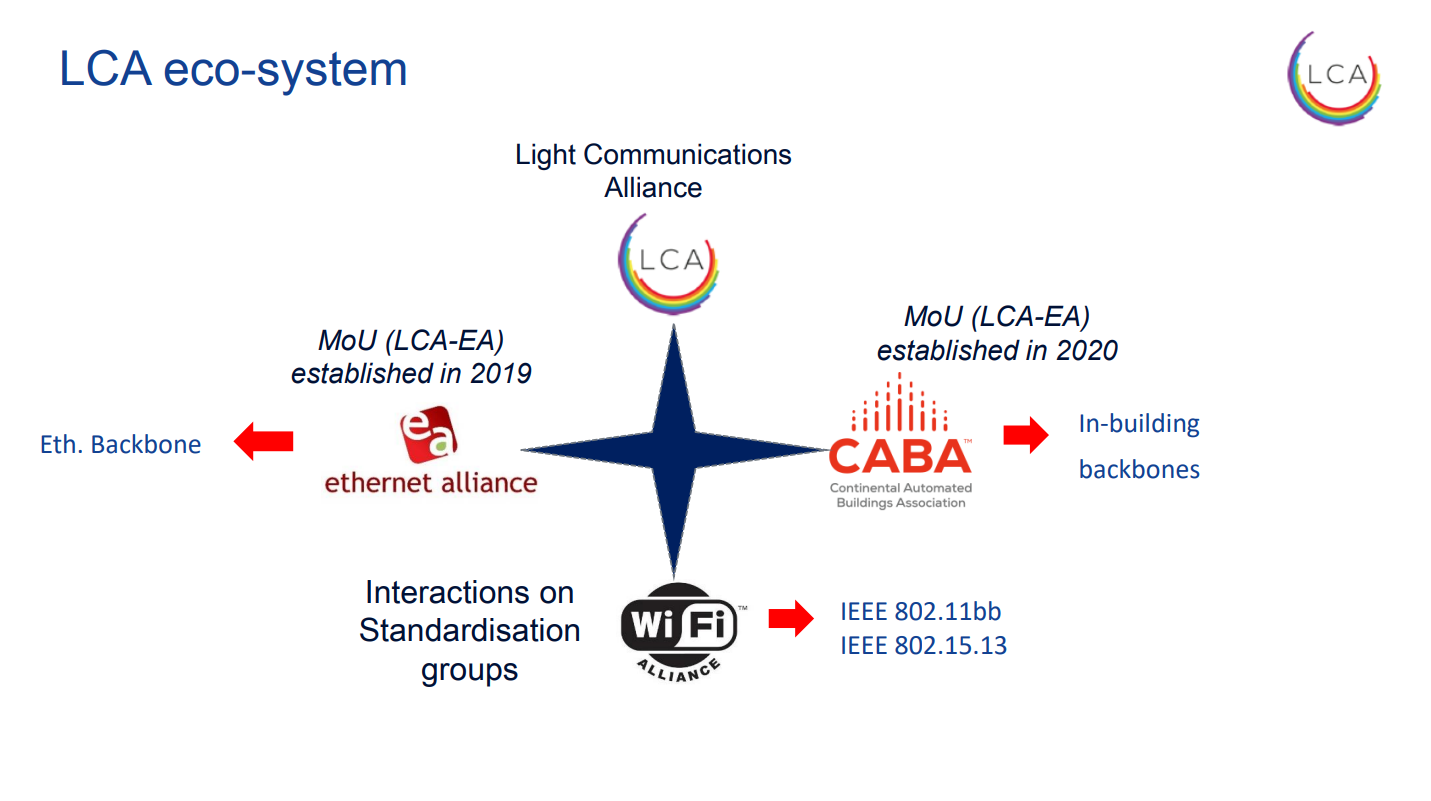
        Now, how do you build such an ecosystem? There are various ways of doing that. One of which is by building strong industry alliances. And right before the start of my presentation, Nicola gave a fantastic introduction of the light communications Alliance, which is really the first industry Alliance or consortium that brings together like-minded companies, large and small, as well as academia and Institutes, to drive forward our common message, which is to educate the world about the benefits and the use cases of light communication. And many companies have already joined. These include the typical telecommunication companies, and service providers, but also lighting companies are very dedicated LiFi companies and many more. And really, this is my call out to all of you, please consider joining, we would welcome you with open arms. We want to build an inclusive ecosystem. So we welcome you aboard. And welcome your contribution as we drive forward to realise our collective mission”. 

        Standardization ITU-T SG15/Q18

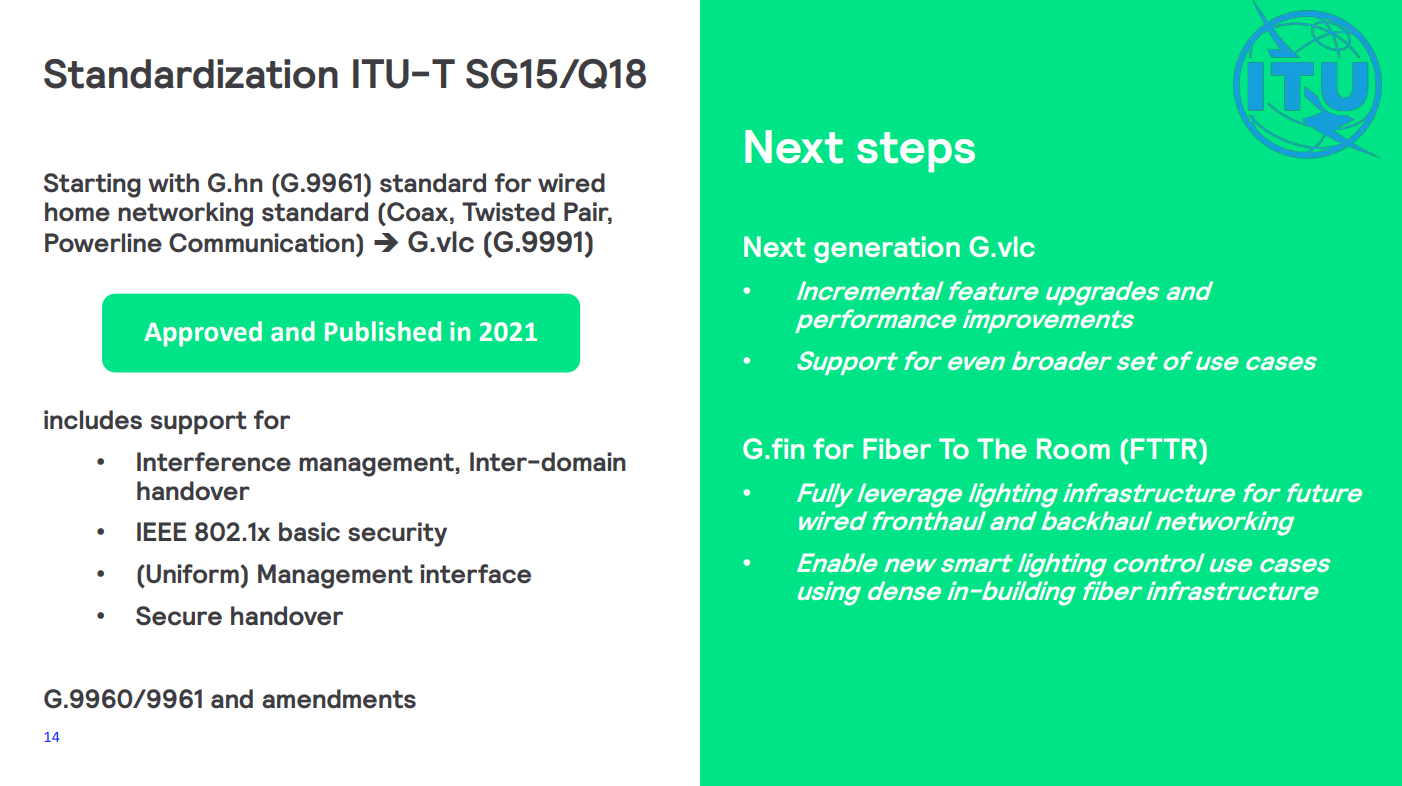
        Now, industry alliances are one mechanism to build an ecosystem.  There is more, for example, a standardisation. And I want to highlight two initiatives here, starting with ITU they started out with, standards for Wired home networking, and extended that to become suitable for light communication and wireless as well. This is a mature technology it's already available, it's approved and published and silicon is can be obtained on the open market. And what the light communications industry has done is to take this assisting technology and add to it features and support for light communication such as interference management and inter-domain handover. Some security mechanisms that are common across multiple networking technologies, as well as the ability to perform secure handovers. While the technology is available today, there are still activities ongoing to extend it and improve it even further. So the next generation of G.vlc is currently being considered. And we're looking to extend the technology with incremental feature upgrades and performance improvements. And to really expand the set of use cases that can be addressed. But we also look further into the future initiatives like G. fin for fibre to the room.  As a lighting industry, our interest really is to make sure that the existing lighting infrastructure can be leveraged for future networking technology that makes use of fibre while at the same time also enabling new and more innovative Smart Lighting Control use cases that make use of such new infrastructure”.

        Standardization IEEE 802.11

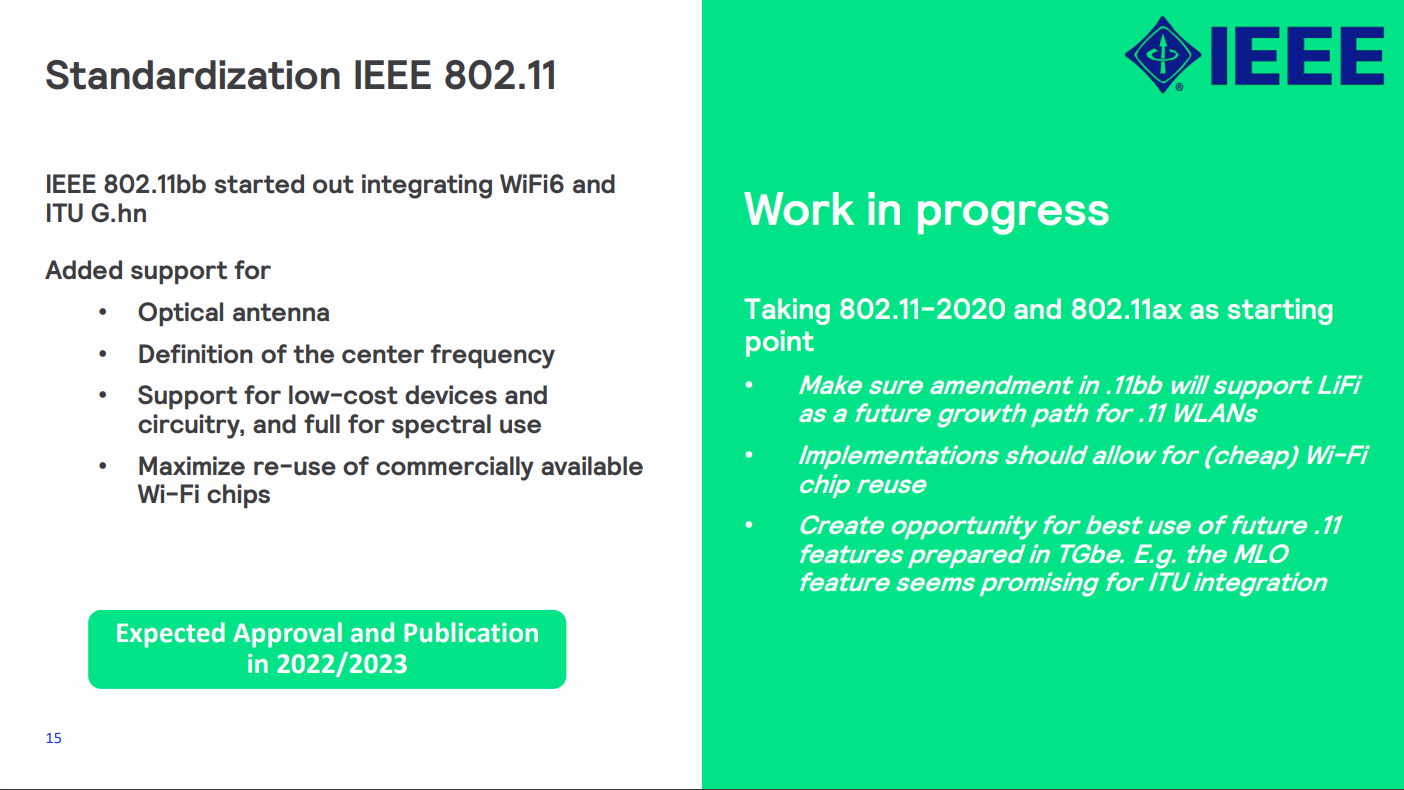
        “There are more extensive initiatives and the one I'd like to highlight next is IEEE 802.11. This really started out with the motivation to integrate Wi-Fi 6 and some of the advances in ITU by adding support for optical antennas definition of the centre frequency, but also thinking ahead towards implementation and adding support for low-cost circuitry and make sure that the full spectrum can be used to benefit to make sure, make use of the benefits of LED. And quite important here is to maximise also the reuse of commercially available Wi-Fi chips. This is work in progress, the publication and approval is expected in a year from now more or less in the 2020 to 2023 timeframe. It is work in progress so you can join and contribute. What we've really done is to take the 2020 amendment of 802.11 and the A x standard starting points and make sure that the activity really supports LiFi as a future growth path for .11 wireless local area networks and allow implementations to make use of the cheap available Wi-Fi chipsets. We're also looking even though it's a work in progress, we are keeping an eye to the future. In .11 BE or Wi-Fi 7, some interesting features are currently being defined, which we believe are very well suited for light communication as well. And a multi-link operation is one good example of that” said Musa Unmehopa.

        A strong interoperability certification program is needed


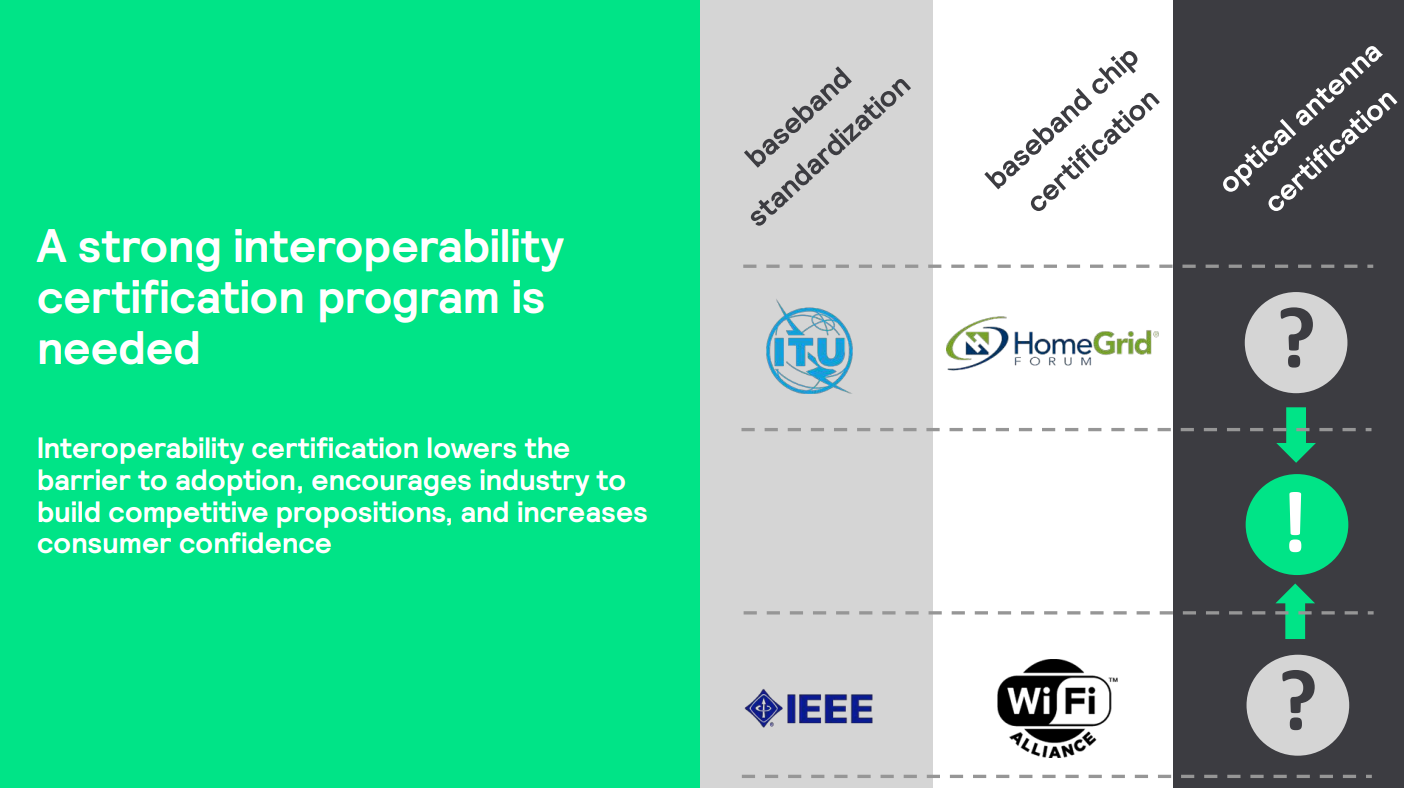
        But standardisation alone is not enough. It allows you to build a compliant implementation. But what consumers really want is to have interoperable implementations such that they can buy their components and products and equipment from their favourite manufacturer and not be reliant on a single supplier. So, interoperability certification programmes are a necessity here. Fortunately, the industry has already made some progress here. And the previous two slides I indicated that baseband standardisation is already underway and certification programmes for those baseband technologies are also already in place. So, the HomeGrid Forum is looking after the certification of G.hn from ITU. And the Wi-Fi Alliance is looking after a baseband certification from 802.11 in IEEE and that's going to help us tremendously but more is needed because the focus of those existing certification programmes is on the basement committee.  On the protocol engines, they are not yet targeting the optical aspects of a LiFi system. So, that needs to be extended and within Signify, we're developing ideas on how to do that.  You are very much welcome for your contribution in this space as well. So for each of these technologies, we will need optical antenna certification. Preferably, of course, the optical antenna is independent or agnostic of the basement technology used. But that's how at least, we view how this should be developed”.


        We are building the ecosystem

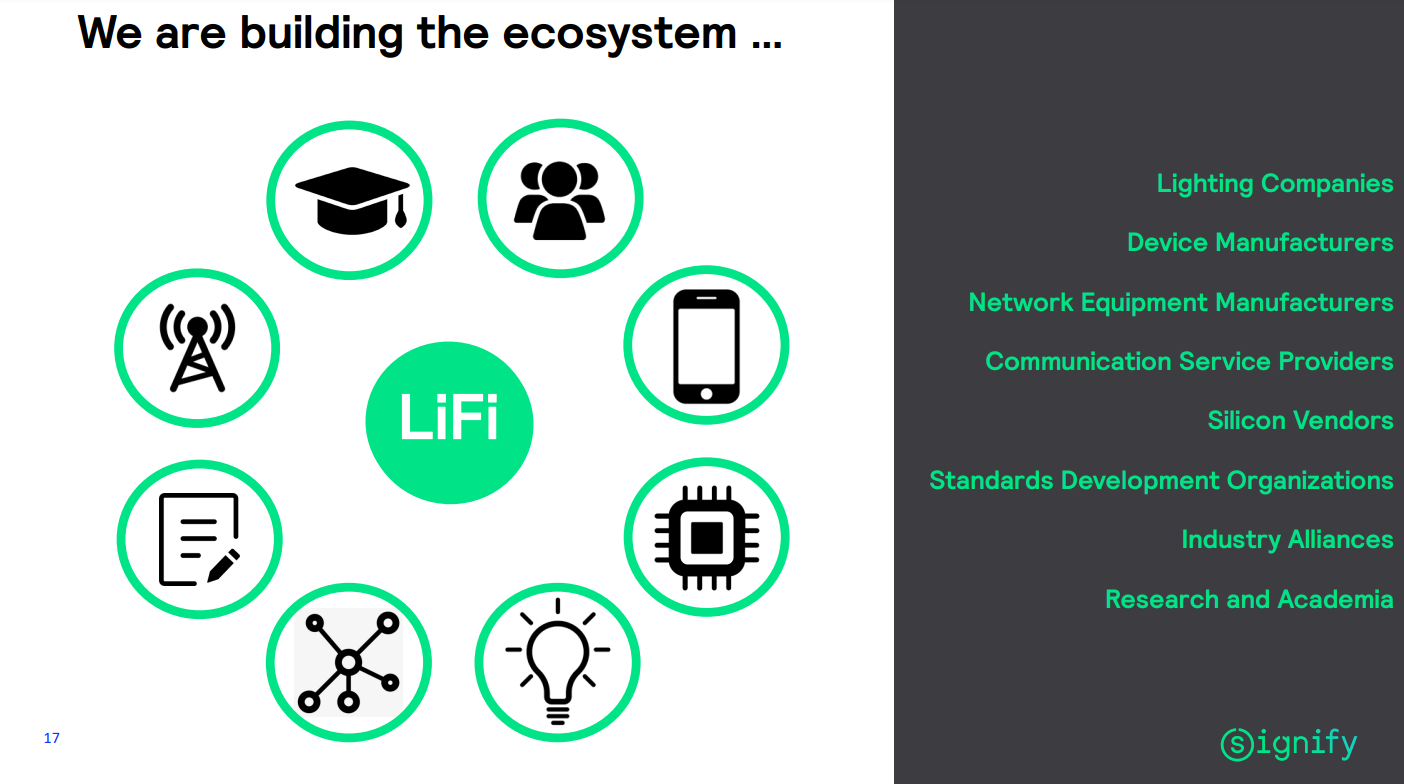
        So what I've hoped to clarify in the past few slides is that the start of an ecosystem is already forming. And there are lighting companies and device manufacturers, network equipment manufacturers, chip providers, standards, organisations, industry alliances, etc... So that's already very good and very strong. And we're extending this further because that ecosystem really needs to support all the features and requirements that need to be in place. Think, for example, about test houses and certification authorities. Think about regulators and policymakers. Think about installers and building managers where the systems need to be deployed. And the ecosystem needs to consist and include all of these players. Using the liaison programme of the Light Communications Alliance, we are reaching out to these communities, but we could use more help. So if you are active in any of these communities, or know of organisations that can contribute to the mission of building the LiFi ecosystem, please reach out and we're happy to talk to you”.

        Call to Action: Be part of the LiFi future today

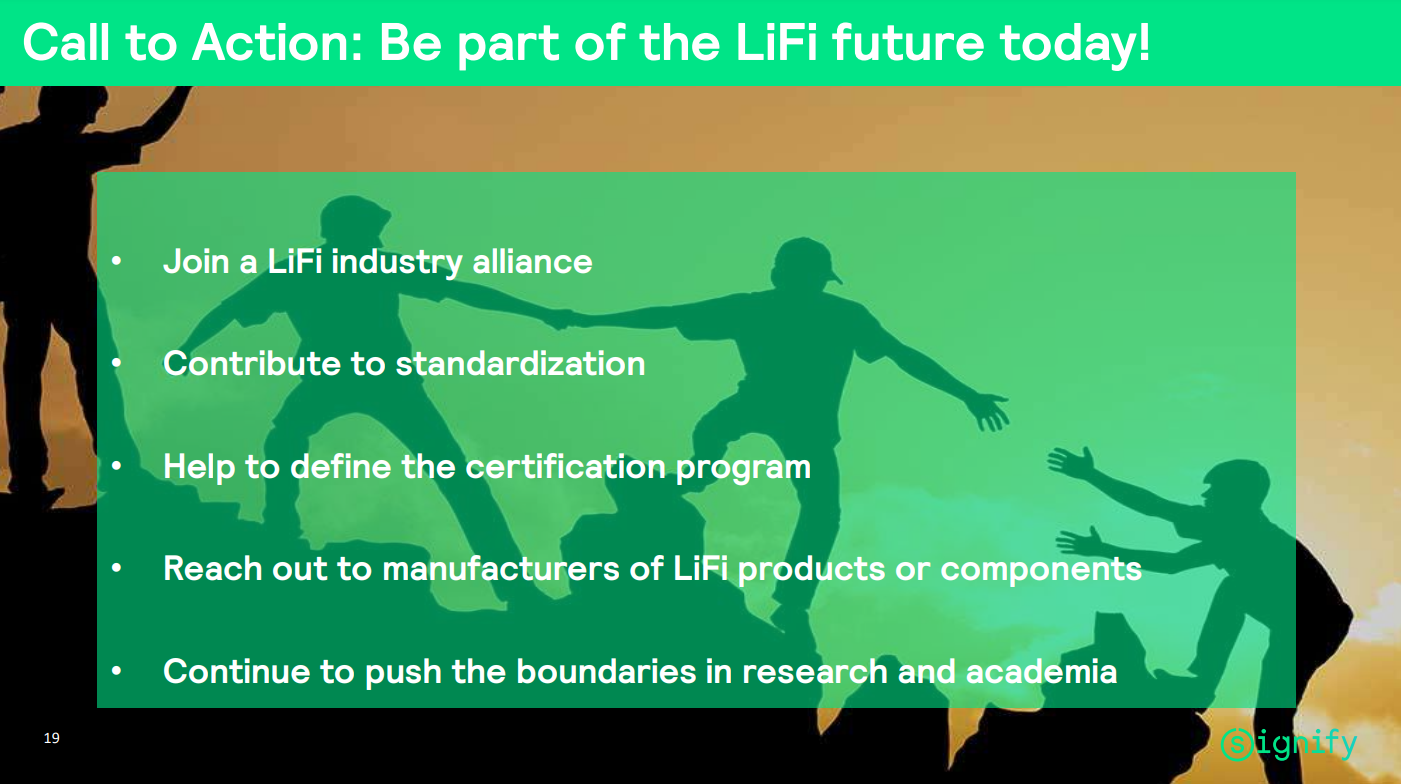
        So nearing the end of my presentation, I want to leave you with a call to action. Please be part of the LiFi future today help us build this ecosystem, the ecosystem is already starting. And you can contribute and help us extend that even further. And there are several ways you can do that. You can do that by joining an industry Alliance like the Light Communications Alliance. You can do that by Crunchie, contributing to standardisation, be it ITU or IEEE or both. You can do that by helping to define the certification programme for the optical aspects. You can do it by reaching out to manufacturers of either components or products in order to realise your own commercial deployments. And of course, please continue to push the boundaries and research and academia to drive that technology even further. So with that, and I'm back then, earlier I showed you as a sign of the maturity of the processes and businesses with LiFi. I showed you some aviation examples. So here I'm using an aviation analogy. We are under runway, LiFi is taking up. This is your time to jump on board. And with that, I conclude my presentation and hand it back to you. Thank you very much”, Musa Unmehopa concluded.


        You can also watch the full video presentation on the following YouTube link from Jakajima YouTube channel.

        Li-Fi Conference 2022

        The next Li-Fi Conference is coming up on the 28th of June 2022 between 10 am and 4.30 pm CET.

        It is interesting to realise that lights that illuminate offices, homes, cars, factories, our streets and more locations also can connect us to data and hence power the growing demand for connectivity and speed.

        At this conference professionals from all over the globe will gather together in order to share applications, ideas, new developments and ways to integrate Li-Fi in services, both for consumers and professionals.

        This conference will be held Live and Online. The venue will be the High Tech Campus 1, The Strip 5656 AE Eindhoven The Netherlands.

        Online tickets can be bought at the following link:

        https://tikcit.com/register/61e002336d7fc4b6745cab83/

        What is LiFi?

        LiFi, also known as "Light Fidelity" is a wireless optical networking technology, which uses light-emitting diodes (LEDs) to transmit data. In 2011, professor Harald Haas made a LiFi demonstration at the TED (Technology, Entertainment, Design) Global Talk on Visible Light Communication (VLC).

        VLC uses light as a medium to deliver high-speed communication like Wi-Fi and complies with the IEEE standard IEEE 802.15.7. The IEEE 802.15.7 is a high-speed, bidirectional, and fully networked wireless communication technology-based standard similar to Wi-Fi's IEEE 802.11.

        How does LiFi work?

        LiFi is a high speed, bidirectional, and fully networked wireless communication of data using light. LiFi constitutes of several light bulbs that form a wireless network.

        When an electrical current goes through to a LED light bulb, a stream of light (photons) emits from the lamp. LED bulbs are semiconductor devices, which means that the brightness of the light flowing through them can change at extremely high speeds. The signal is sent by modulating the light at different rates. The signal can then be received by a detector that interprets the changes in light intensity (the signal) as data. Also when the LED is ON, you transmit a digital 1, and when it is OFF, you transmit a 0.

        LiFi Benefits

        The primary benefits of LiFi are as follows:

        Security: Provides entirely secure access. Where there is no light there is no data.

        Safety: Does not produce electromagnetic radiation and does not interfere with existing electronic systems.

        Localisation: Allows localisation due to the small coverage area of LiFi access point - localisation can be used for very precise asset tracking.

        Data density: Provides ubiquitous high-speed wireless access that offers substantially greater data density (data rate per unit area) than RF through high bandwidth reuse.

        Credit to Oledcomm

        LiFi Applications

        LiFi can be used for so many applications and the list is increasing every year. You can read our updated list of Li-Fi applications at the following link:

        https://www.lifitn.com/blog/2021/2/13/top-30-li-fi-applications-updated-list-including-potential-applications

        Credit to pureLiFi

        In conclusion, if you are also interested to hear more information about the OWNII Coin or enquire about LiFi devices such as the LiFiMax and Trulifi, you can contact us through our chatbot or by sending an email through our contact us form. If you enjoyed this post and would like to hear more updates about LiFi technology, subscribe to our newsletter. Don’t forget to subscribe to our social media accounts. You can also join our Telegram group about LiFi technology on this link:

        https://t.me/joinchat/FMzOmsEKyJFrU6Af

        Li-Fi Conference 2021 - Recap Part 1 - Introduction To The Light Communication Alliance (LCA)

        Table of Contents

          Li-Fi Conference 2021 - Recap Part 1 - Introduction To The Light Communication Alliance (LCA)

          Li-Fi Conference 2021

          Today, we are going to discuss the ONLINE Li-Fi Conference held last year on the 24th of June 2021. This was organised by the Jakajima, the global High Tech Conference organiser, and the Light Communications Alliance.

          Jakajima, Matchmaker for Innovators in the high tech industry, organises many events, ranging from LiFi Technology industry trends, 3D Printing to the Internet of Things, from Unmanned Cargo Aircraft to Health Tech, from 4D Printing to Photonics and from Vertical Farming to Sustainable Materials.

          As technology develops itself from atoms to bits and from bits to atoms, traditional boundaries between value chains disappear which leads to new business opportunities. According to their website, the combination of business, technology, creativity, enthusiasm and humour is their leitmotif.

          Jakajima offers services such as Jakajima events/conferences, Conference as a Service, Workshops, Market Intelligence, Tikcit registration platform and Moderator/Chairman services.

          The online Li-Fi Conference included live presentations from researchers, executives and industry specialists from pureLiFi, Nokia, Signify, Orange, Radiocommunications Agency Netherlands, Velmenni, OLEDCOMM, HomeGrid Forum and Weidmüller Deutschland.

          In the first part of the conference, Nikola Serafimovski, Co-Chairman of Light Communications Alliance and Musa Unmehopa, Head of Ecosystems and Strategic Alliances for LiFi at Signify shared their views on LiFi and the LiFi ecosystem.

          Livia Rosu from HomeGrid Forum talked about G.hn backbone and ecosystem support for LiFi use cases, while Nikola Serafimovski from pureLiFi spoke about taking LiFi mainstream.

          Daniel Behnke from Weidmüller Deutschland shared LiFi use cases and demonstration scenarios for Smart Manufacturing while Benjamin Azoulay from OLEDCOMM talked about LiFi for educational applications.

          Furthermore, Deepak Solanki from Velmenni R&D addressed the light communication role in the 5G infrastructure planning and presented a case study on real-time deployment in a 5G test-bed while Micheline Perrufel and Sylvain Leroux from Orange talked about LiFi at the heart of future intelligent communications networks.

          Maximilian Riegel from Nokia showed where common Wi-Fi interworking models for the integration with 5G core and services fall short in fully leveraging LiFi capabilities and what steps have to be taken in development and standardisation to overcome the shortcomings in the current approaches.

          Lastly, René Vroom from Radiocommunications Agency Netherlands presented the regulator’s perspective on LiFiToday’s RF spectrum is crowded with users”, he says. “LiFi might become a new comfort in telecom to ease the pressure on the spectrum, and become a new complementary mechanism in high capacity internet access. Global standardisation and economy of scale shall help LiFi to integrate in existing broadband ecosystem”.

          We will not be able to go through all the sections of the Li-Fi Conference in one article. However in this article, we will talk about the section on the Light Communication Alliance.

          Light Communication Alliance

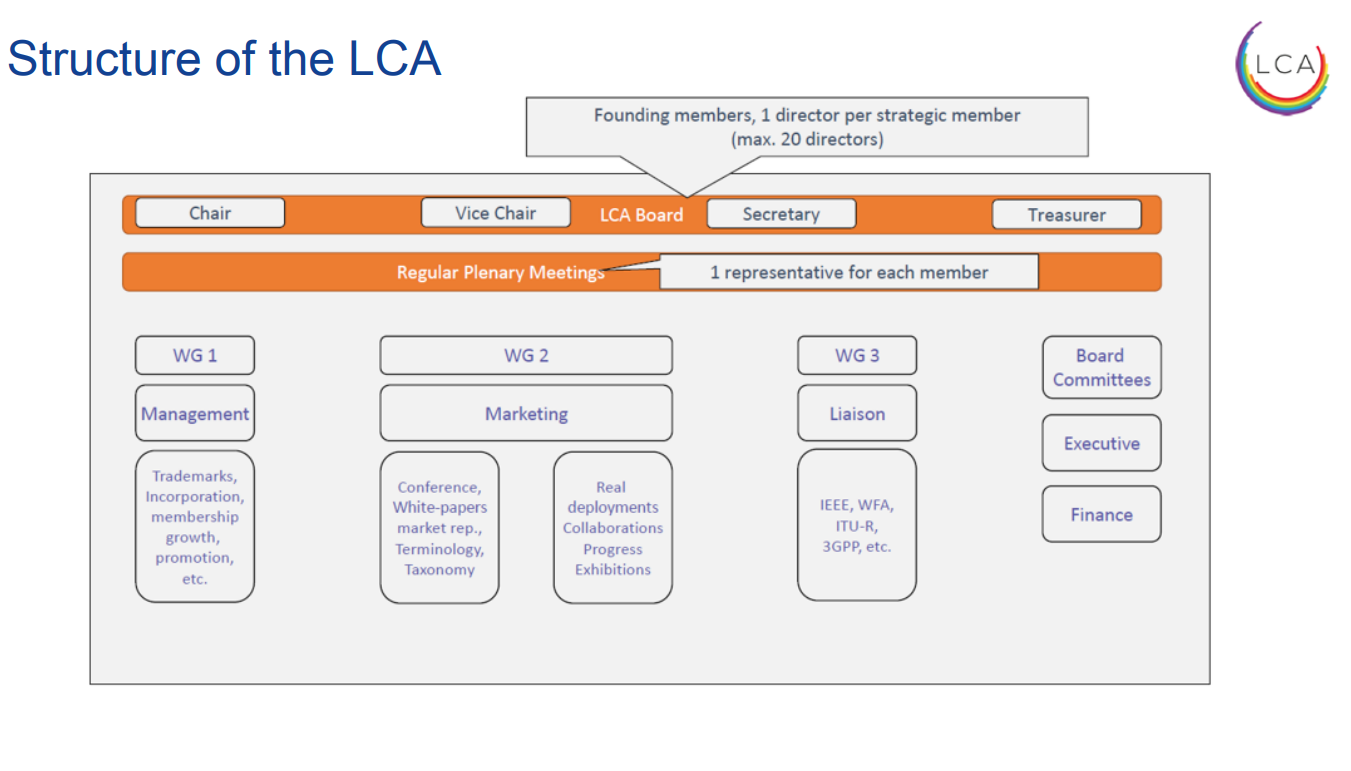
          The Light Communication Alliance (LCA) is the authority on light communication. The LCA states that they are the most extensive light communications alliance in the world, a recognised leader. They are building demand for light communication through collaboration. As an alliance, they leverage partnerships between industry leaders to validate use cases and build functioning ecosystems. With the aim of ultimately inspiring global investment in light communication.

          The LCA is an open, non-profit association of members who aim to promote Light Communications technology with a consistent, focused and concise approach. The LCA highlights the benefits, use cases and timelines for Light Communications adoption. The organisation aligns innovative leaders across the industries that light and communications touches, defining standards for education, communication, and interoperability.

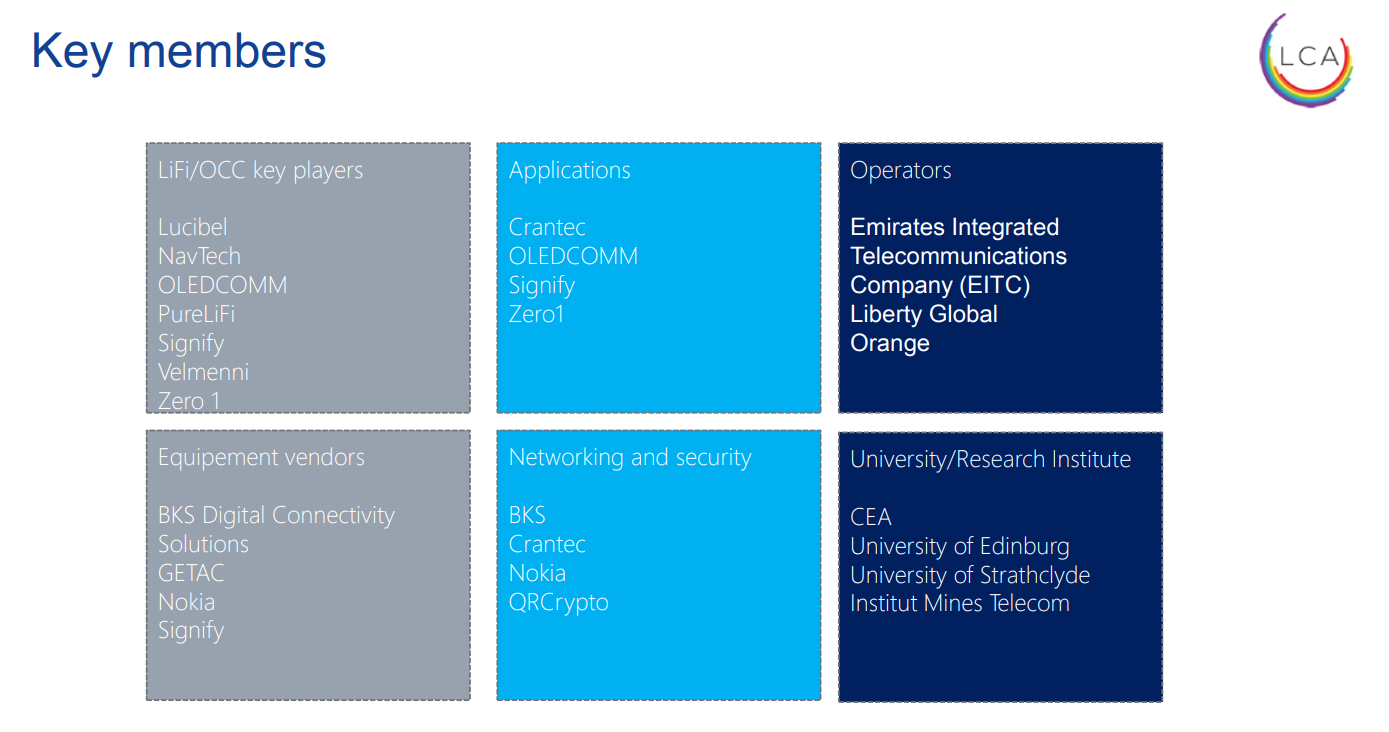
          The founding members of the LCA are Nokia, Emirates Integrated Telecommunications Company (du), Liberty Global, Lucibel,  pureLiFi, LiFi Research & Development Centre, Velmenni, Zero.1, CEA Leti, and Institut Mines-Télécom.

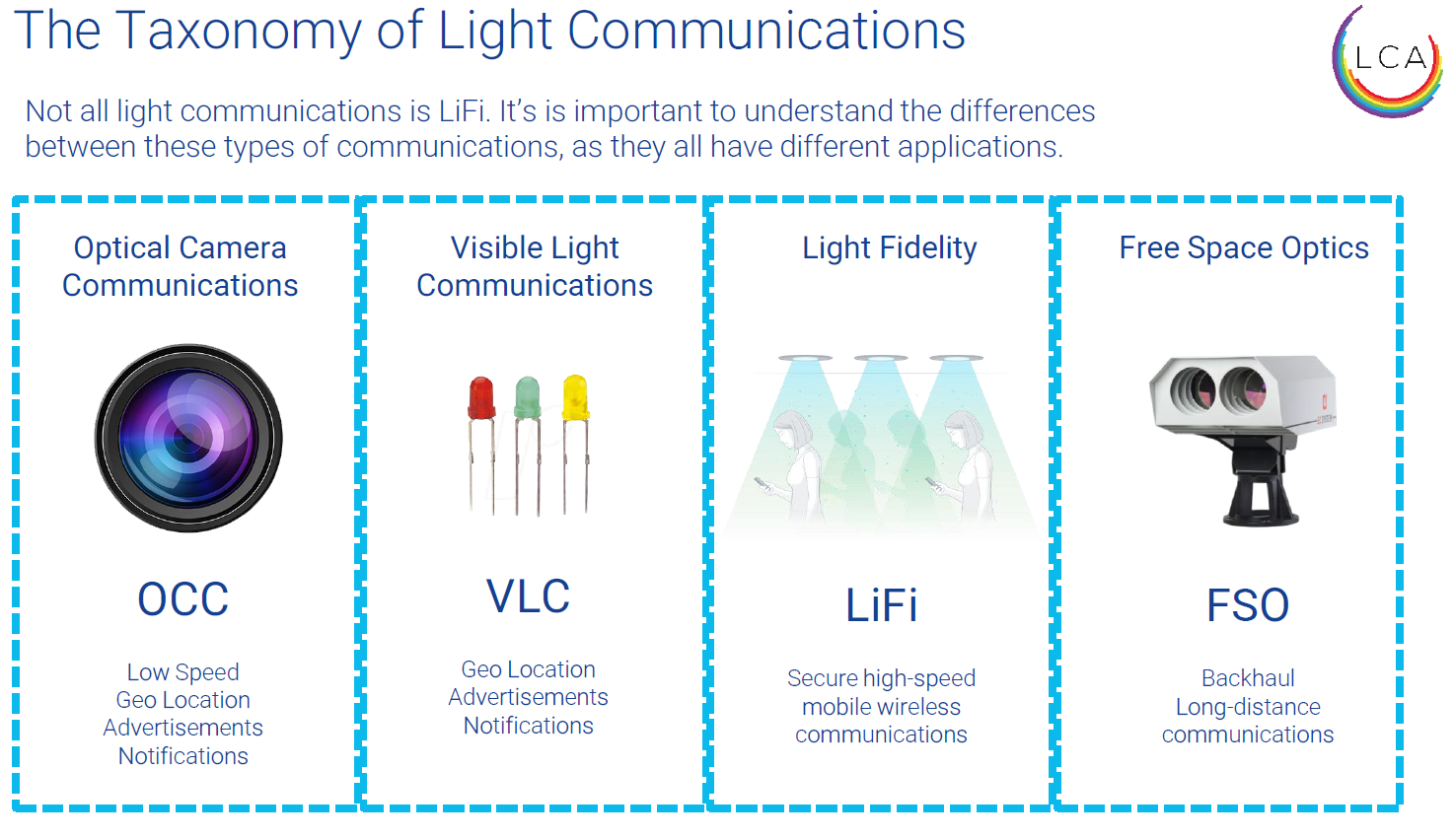
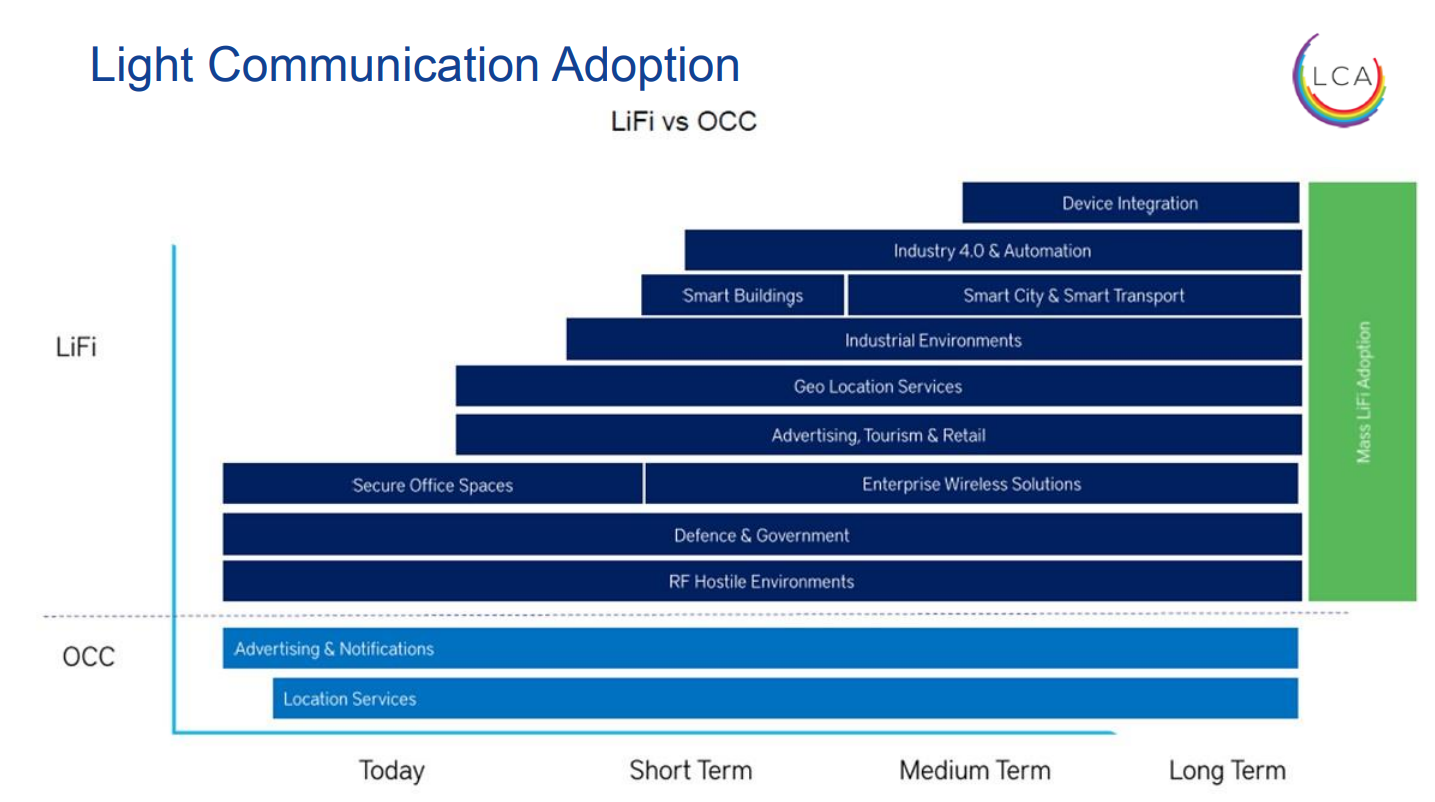
          Light Communication technologies include Light Fidelity (LiFi) and Optical Camera Communications (OCC) both of which have been attracting increased attention over recent years within several industries, such as smart cities and homes, industry 4.0 and manufacturing environments, as well as retail and tourism.

          Global Market Insights predicts that the LiFi market will be worth $75 billion by 2025, creating broad, far-reaching opportunities for the related industries to benefit from Visible Light Communications.

          Founding Members of the LCA

          Nokia

          Nokia creates the technology to connect the world. They develop and deliver the industry’s only end-to-end portfolio of network equipment, software, services and licensing that is available globally. Their customers include communications service providers whose combined networks support 6.1 billion subscriptions, as well as enterprises in the private sector and public sector that use their network portfolio to increase productivity and enrich lives.

          Through their research teams, including the world-renowned Nokia Bell Labs, they are leading the world to adopt end-to-end 5G networks that are faster, more secure and capable of revolutionizing lives, economies and societies. Nokia adheres to the highest ethical business standards as they create technology with social purpose, quality and integrity.

          nokia.com

          pureLiFi

          pureLiFi is a Light Communications company that was founded by Prof. Harald Haas and Dr Mostafa Afgani in 2012 as a spin out of the University of Edinburgh. pureLiFi offers both LiFi systems and Gigabit LiFi light antennas to OEM’s for integration. The company formed in response to the exponential growth in global demand for wireless bandwidth. pureLiFi has grown its international customer base with more than 130 deployments of LiFi in over 24 countries. The firm has also secured international partnerships with organisations such as Cisco, Wipro and O2 Telefonica.

          pureLIFi.com

          Zero.1

          Zero.1 is a Hardware and Software provider specialising in Optical Camera Communication founded in 2016. Through its unique driver, any LED can become compatible, a simple app downloadable on the IOS and Android Store will allow cameras of mobiles devices to receive OCC signal, Zero.1 provides Cloud and services associated such as but not limited to, Indoor positioning system, localisation based services, geolocalised information’s, crowd management and data analytics etc.

          zero1.zone

          du

          Emirates Integrated Telecommunications Company (du) is a vibrant and multiple award-winning telecommunications service provider in the United Arab Emirates serving 9 million individual customers with its mobile, fixed-line, broadband internet, and Home services over its 4G LTE network. du also caters to over 100,000 UAE businesses with its vast range of ICT and managed services.

          du.ae/personal

          Velmenni

          Velmenni has been working on LiFi Technology for the past 5 years. It has achieved multiple research and development milestones within Optical Wireless Communication including the development of the Optical Wireless Mesh Network. Today, Velmenni’s main focus is on the optimisation of speed, efficiency and seamless connectivity within the LiFi domain. Having held successful runs of LiFi technology in multiple locations, we’re presently conducting pilot projects to utilise bidirectional Light Communication in diverse industrial conditions. The goal remains to integrate LiFi and Wi-Fi to create impeccable, efficient and productive networks.

          velmenni.com

          Lucibel

          LUCIBEL is an innovative French group that designs and manufactures in France new generation LED lighting products and solutions. LUCIBEL is also a pioneer in the development and marketing of LiFi, a light internet access solution co-developed with its pureLiFi partner in Scotland.

          lucibel.io

          LiFi Research & Development Centre (LiFi R&D Centre)

          The LiFi R&D Centre translates internationally leading fundamental research to high technology readiness levels and conducts research in collaboration with, and on behalf of the industry. It aims to accelerate society’s adoption of LiFi and emerging wireless technology through engagement with major industrial partners, to fully harness the commercial and innovative potential of LiFi, and to help establish a major new LiFi industry. The LiFi R&D Centre includes 40 researchers including three academics.

          lifi-centre.com

          IMT

          Institut Mines-Télécom is a public institution dedicated to higher education and research for innovation in the fields of engineering and digital technology. Always tuned in to the economic world, it combines high academic and scientific legitimacy with close business relations and a unique positioning in 3 major transformations of the 21st century: Digital Affairs, Energy and Ecology, and Industry. Its training and research for innovation are conducted in the Mines and Télécom Graduate Schools under the supervision of the Minister for Industry and Electronic Communications, in two subsidiaries and in institutions that are associate partners or under contract. Institut Mines-Télécom is a founding member of the Industry of the Future Alliance. It has two Carnot labels for the quality of its research partnerships. Every year, around one hundred startup companies leave its incubators.

          imt.fr

          About Liberty Global

          Liberty Global (NASDAQ: LBTYA, LBTYB and LBTYK) is the world’s largest international TV and broadband company, with operations in 10 European countries under the consumer brands Virgin Media, Unitymedia, Telenet and UPC. They invest in the infrastructure and digital platforms that empower our customers to make the most of the video, internet and communications revolution. Their substantial scale and commitment to innovation enable us to develop market-leading products delivered through next-generation networks that connect 21 million customers subscribing to 45 million TV, broadband internet and telephony services. We also serve 6 million mobile subscribers and offer Wi-Fi service through 12 million access points across our footprint.

          In addition, Liberty Global owns 50% of VodafoneZiggo, a joint venture in the Netherlands with 4 million customers subscribing to 10 million fixed-line and 5 million mobile services, as well as significant investments in ITV, All3Media, ITI Neovision, Casa Systems, LionsGate, the Formula E racing series and several regional sports networks.

          libertyglobal.com

          CEA Leti

          Leti, a technology research institute at CEA Tech, pioneers micro and nanotechnologies, tailoring differentiating applicative solutions that ensure competitiveness in a wide range of markets. Leti developed a high-speed bi-directional LiFi solution successfully transferred to Luciom, where each LED lamp can connect up to 15 users to the Internet. Leti is also conducting cutting-edge research on LED sources combined with advanced wireless communication processing targeting very high throughput LiFi systems.

          leti-cea.com/cea-tech/leti/english

          Introduction To The Light Communication Alliance by Nikola Serafimovski

          Nikola Serafimovski, Co-Chairman of Light Communications Alliance and long time senior management member at pureLiFi, was the first presenter at the online Li-Fi Conference. He discussed in detail the history and purpose of the LCA.

          Below are some points discussed about the LCA

          LCA in a nutshell

          Nikola Serafimovski said: “So this is the light communication, the LCA. Our motivation is really to create a single vision of what light communication can do for the users, for the people and for the industry that we're looking to work with. To deliver this message requires a far-reaching and coherent aqueous ecosystem working together in a consistent pace. The way to achieve this is education. As a lot of you will know, despite decades of work in light communications, there is still a lot of misunderstanding about what the technology is, how it works, and a lot of misconceptions. The only way to get across that is with consistent clear communications on what we do and how we do it. So that LCA was formed in June 2019, with initial kind of white papers about what role like communications could play, published already in 2018”.

          The Taxonomy of Light Communications

          Nikola Serafimovski then stated the following:

          On the back of decade's worth of work by a whole range of our member organisations, we're really covering three different aspects, which is LiFi, high speed bi directional wireless communications, sorry, this is the taxonomy. The first case is basically in the same way that RF is not the same for WiFi. And for 5g. And for so on, we have a clear understanding of what 5g is and what WiFi is, and what Bluetooth is, we need to have the same thing with light communications. So we've created effectively a taxonomy which has four distinct sections. The first one is optical camera communications. So this is when you use the relatively speaking low data rate, low speed communications from an LED light for information to be picked up by a smartphone camera that is very, very useful for unidirectional, very location based, sensitive or location based information access. And you can drive a lot of information based services from that including advertising, and notifications, and so on. The next is visible light communication, which has frequently been synonymous with LiFi, Light Fidelity. But there are differences. And again, this confusion is where we're trying to create a bit of a distinction. LiFi, as I started saying earlier, is secure high speed mobile wireless communications delivered using light trying to emulate a WiFi user experience except using the light medium. And then, free space optics has been around for decades. It's really point to point bi directional high speed long distance backhaul communications used for typically connecting backhaul sites or key elements. So if you want to think of the RF alternatives or not alternatives of the RF counterparts, OCC would be something similar to an RFID beacon. LiFi would be similar to WiFi, or 5g and FSO would be similar to microwave or millimetre wave links, long range point to point. So that's the that's a very important message of what the different technologies are and how they play in the overall like communication space”.

          Key Members and LCA Eco System

          So if we look at the ecosystem that's required to do this, and I've zoomed in on the WiFi ecosystem here, effectively, you need the entire the entire industry to come together to do a meaningful deployment in the space that includes chipset providers, infrastructure providers, device integrators, test houses, research organisations, telecom operators, and customers and everybody else in the middle. With LiFi and light communications, it's exactly the same thing. We need all of those providers plus now we're bringing in the lighting industry as well as bespoke Li fi vendors that have emerged over the last few years. So where are we today? Well, as I mentioned, we have a number of live fine OCC players. We have a number of application specific developers. We have a number of operators that have joined us such as equipment vendors, network and security solutions and research in universities. This is the current set of participating organisations and we are very, very keen to enhance and complement this ecosystem with more members”, said Nikola Serafimovski.

          We have also established a range of liaisons working through the Ethernet Alliance to complement the memorandum of understanding and make sure that the Ethernet Alliance and all the people that are involved in that space are aware of what role LiFi can play in the future of buildings. This also ties in with the Continental automated buildings Association, which is again an industry Alliance developing concepts and architectures around in building backbone as well as connectivity and sensors for what the future of automated buildings will be. And, of course, the WiFi Alliance through the standardisation efforts in IEEE 802 dot 11. There's also the home grid forum, which isn't here, but I'm sure I know the discussions are on the way. There's also the GSMA, which discussions are on the way which is the body that's working on 5g. And so we're looking at making raising awareness of light communications through a number of these industrial associations and making sure that everybody understands what role LiFi, and in particular, like communications in general, will play”.

          Structure of the LCA

          What's the structure of it? effectively, we have the LCA board, which is for founding members and strategic members. We have a chair vice chair to vice chairs secretary and treasurer, which is the executive committee and then all of the strategic and founding members have one board seat each. Then we have three working groups. One is the concern with the management trademarks and Corporation growth, promotional activities, etc… Working Group two is a lot about the marketing sections, which is conference white papers, events like this real deployments, exhibitions when they eventually come around, and really generating a consistent view of the market. Working group three is around liaisons and centred with standardisation bodies, such as IEEE, the ITT IQ are three GPP, Wi Fi Alliance and more. And in this kind of organisation, each of these working groups has its own task list, let's say where member organisations can participate in one or any number of those ongoing activities”, said Nikola Serafimovski.

          Added Values of LC Technologies

          So why are we looking at LiFi in communication technologies? Well, the first thing is that we have the ability to add new access points and create stable connections for the users. You can automatically decide whether the WiFi AP or the LiFi is the best scenario. And I'm sure you'll hear a lot of use cases on the reliability and robustness that LiFi can offer in this context. We can guarantee data on communications. So resilience and security are very important. The wireless communications when using RF can frequently be disrupted, interfered, whether that's jammed or it's detected, or it's ease dropped or intercepted. Any number of elements are weak points for RF in particular and sensitive environments, where LiFi doesn't have that, as a consequence, it can significantly improve the security between any two points. As you have a very finite section that you're concerned about, you can complimentary deployed alongside 5g or WiFi to address critical KPIs. You can deploy light communications in parallel to any other RF solution would no knock on effects, whether it's from a regulatory perspective or whether it's from a device perspective, we are just outside of that core area. And you can get users to seamlessly transition between these different wireless technologies to make sure that you have the best user experience whether that's very low latency end to end solutions are very secure implementations. And you can also use light communications to create very simple, very precise indoor localisation and navigation systems with the potential to improve energy efficiency and energy savings as we move forward. At the end of the day, lighting does consume a large percentage of the overall global electricity, and why not be being able to combine both of those systems in the future”.

          Use Cases

          So if we look at some of the use cases, and again, these are very non exhaustive, we'll start from clockwise from the top. You have hospitals which are very complimentary high speed data rate and EMI sensitive environments, you have industry 4.0 and they are partners on the call that will talk in a lot more detail about the improvements of security and safety and reliability. You have the FY two acts effectively using vehicles to connecting vehicles using lights to avoid some of this kind of RF concerns that might be there and complement some of that reliability and robustness which is required”.

          You have smart cities, which is looking at a lot of this, in particular energy efficiency benefits that can be raised with that you have applications in the home for some of the areas that are concerned about in particular, like electromagnetic smog. And while much of the world may not necessarily see that as a concern, there are definitely areas and organisations that are concerned by it. By it in particular, I know that in France, you know French elementary schools don't allow WiFi to be used, but perhaps LiFi could be used because of concerns around RF. But there's a range of other advantages for the home such as non interference and reliability again, eventually using it in the smart buildings and the Smart Lighting to make sure that everything and everyone is connected through light”.

          Light Communication Adoption Tentative

          So some of the adoption curves that we've seen at a very high level, you know, today, optical camera communications is readily deployed and there are dozens, hundreds of different deployments using this technology to provide location based services, whether that's for retail for advertising for pathfinding, or a number of other use cases that are complimentary. LiFi at the same time has also found a lot its home in the defense and government and RF hostile environments with large deployments happening over the last few few years, such as secure office spaces. And as we progress into the short and medium term, we see an increased uptake of LiFi in particular for industrial environments, advertising and tourism, smart buildings, industry 4.0 enterprise grade wireless solutions, and eventually leading to what we all hope is the mass market adoption where every single smartphone is LiFi enabled, and everybody's using LiFi on a daily basis”.

          Nikola Serafimovski concluded his presentation with the following:

          So with that, you know, we've had a lot of movement moving forward in particular Gtech announcing the world's first integrated LiFi enabled tablet. There have been multiple test beds, with aircraft industry announcing brand new integration of LiFi with Airbus and Signify into hotspots into planes. We've had a lot of VTV announcements as well. So there's a huge uptake in field trials, deployments and real use cases across hospitals, industry, 4.0, aerospace logistical centres and more. The LCA has gained seven additional members after a rocky start in 2020, with COVID hitting us immediately after the kickoff. But we've managed to increase the visibility of the ecosystem. We've expanded our relationship with your organisations and we're open to new members. And we really, really hope that all of you can find time and find the willingness to join us and help us as we move forward in bringing LiFi to the mass market”.

          You can also watch the video presentation on the following YouTube link from Jakajima YouTube channel.

          Li-Fi Conference 2022

          The next Li-Fi Conference is coming up on the 28th of June 2022 between 10 am and 4.30 pm CET.

          It is interesting to realise that lights that illuminate offices, homes, cars, factories, our streets and more locations also can connect us to data and hence power the growing demand for connectivity and speed.

          At this conference professionals from all over the globe will gather together in order to share applications, ideas, new developments and ways to integrate Li-Fi into services, both for consumers and professionals.

          This conference will be held Live and Online. The venue will be the High Tech Campus 1, The Strip 5656 AE Eindhoven The Netherlands.

          Online tickets can be bought at the following link:

          https://tikcit.com/register/61e002336d7fc4b6745cab83/

          What is LiFi?

          LiFi, also known as "Light Fidelity" is a wireless optical networking technology, which uses light-emitting diodes (LEDs) to transmit data. In 2011, professor Harald Haas made a LiFi demonstration at the TED (Technology, Entertainment, Design) Global Talk on Visible Light Communication (VLC).

          VLC uses light as a medium to deliver high-speed communication like Wi-Fi and complies with the IEEE standard IEEE 802.15.7. The IEEE 802.15.7 is a high-speed, bidirectional, and fully networked wireless communication technology-based standard similar to Wi-Fi's IEEE 802.11.

          How does LiFi work?

          LiFi is a high speed, bidirectional, and fully networked wireless communication of data using light. LiFi constitutes of several light bulbs that form a wireless network.

          When an electrical current goes through to a LED light bulb, a stream of light (photons) emits from the lamp. LED bulbs are semiconductor devices, which means that the brightness of the light flowing through them can change at extremely high speeds. The signal is sent by modulating the light at different rates. The signal can then be received by a detector that interprets the changes in light intensity (the signal) as data. Also when the LED is ON, you transmit a digital 1, and when it is OFF, you transmit a 0.

          LiFi Benefits

          The primary benefits of LiFi are as follows:

          Security: Provides entirely secure access. Where there is no light there is no data.

          Safety: Does not produce electromagnetic radiation and does not interfere with existing electronic systems.

          Localisation: Allows localisation due to the small coverage area of LiFi access point - localisation can be used for very precise asset tracking.

          Data density: Provides ubiquitous high-speed wireless access that offers substantially greater data density (data rate per unit area) than RF through high bandwidth reuse.

          Credit to Oledcomm

          LiFi Applications

          LiFi can be used for so many applications and the list is increasing every year. You can read our updated list of Li-Fi applications at the following link:

          https://www.lifitn.com/blog/2021/2/13/top-30-li-fi-applications-updated-list-including-potential-applications

          Credit to pureLiFi

          In conclusion, if you are also interested to hear more information about the OWNII Coin or enquire about LiFi devices such as the LiFiMax and Trulifi, you can contact us through our chatbot or by sending an email through our contact us form. If you enjoyed this post and would like to hear more updates about LiFi technology, subscribe to our newsletter. Don’t forget to subscribe to our social media accounts. You can also join our Telegram group about LiFi technology on this link:

          https://t.me/joinchat/FMzOmsEKyJFrU6Af
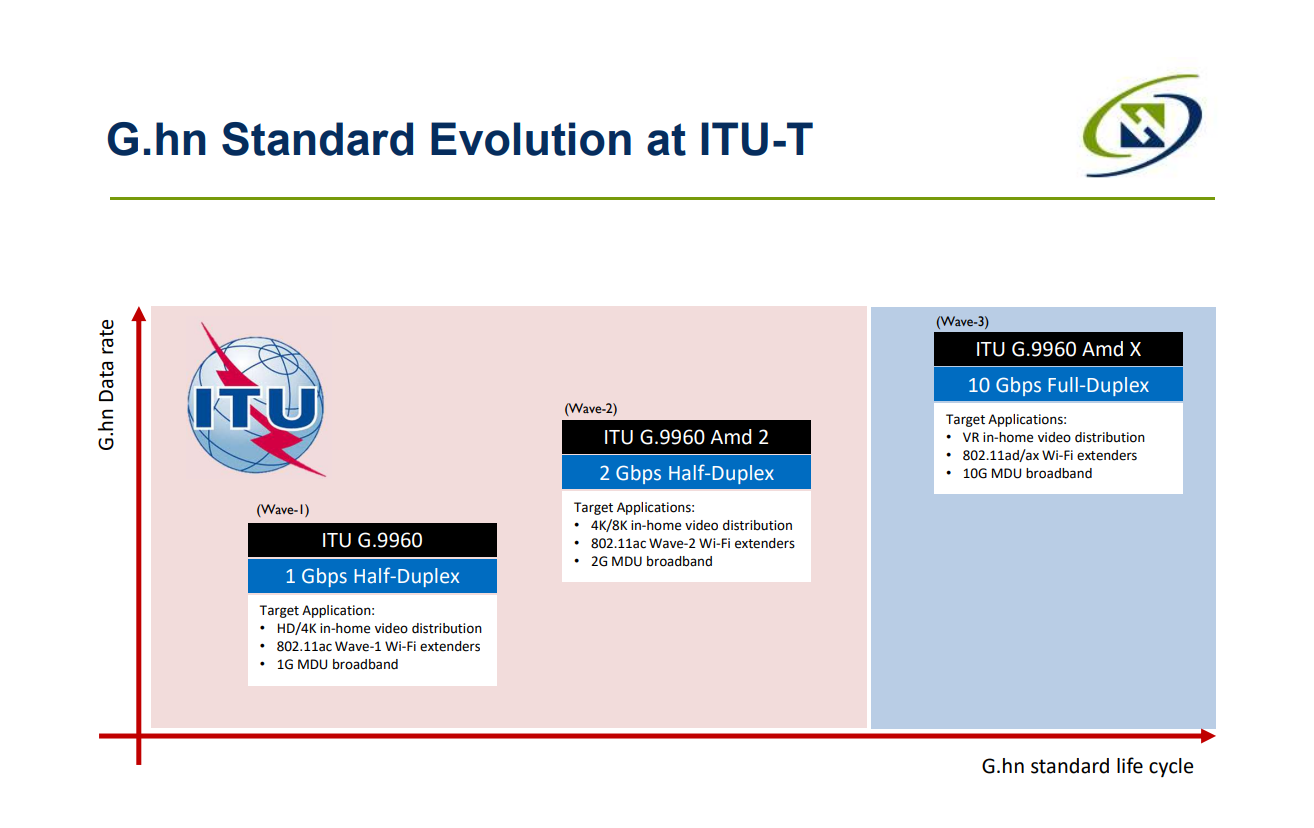

          L’école Communale D’Aubange Trials LiFi Technology In Their Classrooms

          Table of Contents

            L’école Communale D’Aubange Trials LiFi Technology In Their Classrooms

            Trulifi 6002 transceiver - Photo Credit to mobilegeeks

            L’école Communale D’Aubange

            Students from the L’école Communale D’Aubange were able to test LiFi technology in their classrooms.

            Several Walloon and Brussels schools already have it. Close to a light source, it can transmit information. For LiFi to work, you have to install infrared access points on the ceiling connected to the LED bulbs and LiFi receivers (LiFi USB Dongles) on each tablet. Cédric Gelpi of LiFi solutions ASBL states the following: "It's faster, more stable and more secure, but it also consumes less energy than WiFi".

            Convinced students

            The students have to get to grips with the technology but in the end, it doesn't change their habits so much with WiFi, but they seem convinced:We can work in another way and it's better for our health ", " With WIFI, waves are not good for our body. LiFi is by light and therefore it is better for us ", adds another student. In any case, the mayor of Aubange François Kinard also seems won over: " We would like to develop the technology on a larger scale in the territory after this first test". In administration buildings, schools or even through public lighting, there are many possibilities for installing LiFi technology. Four schools are already using the system, installed by the non-profit organization LIFI solution in Wallonia.

            Trulifi 6002 transceiver - Photo Credit to mobilegeeks

            Article source: https://www.rtbf.be/article/une-ecole-daubange-teste-la-technologie-lifi-une-connexion-numerique-grace-a-la-lumiere-10968775

            LIFI SOLUTIONS ASBL

            LiFi Solutions ASBL offers a comprehensive approach that includes support for the purchase and installation of LiFi equipment in schools or any other establishment and the supply of connected tablets. LiFi Solutions ASBL have a partnership with Signify to bring LiFi kits in classrooms.

            According to their website, LiFi Solutions ASBL states that they have installed LiFi equipment in Classrooms in Wanze, Flobecq, Uccle and Aubange.

            Wanze 

            We were the first in Belgium to believe in this new technology which protects our students and our teachers from the potentially harmful waves of WIFI.

            In 2019, we installed our first pilot school in LIFI (Bas-Oha) and are in the process of thinking about the complete deployment of a class in order to put the students in the right conditions to test all the advantages of this technology” explains Christophe Lacroix , Mayor of Wanze 

            Brussels

             “Our school offers specialized mixed secondary education. As Director, I attach particular importance to the quality of our infrastructures, in terms of functionality, safety, ergonomics and environment. When the company Aromatik Studio from Nivelles offered to test Signify's LIFI solution in one of our classrooms in Uccle, without any form of commitment, we didn't hesitate for a second! A stable and secure Internet connection is essential in class, since some students are already using connected interactive tablets. This technology would also allow us to avoid having to subject our students to potentially harmful waves, as could be the case with WIFI,” explains C Watterman, General Manager of Groupe La Cime.

            Flobecq


            We are particularly grateful and proud to be able to test the use of this new technology that is Li-Fi from Signify in our establishment. Today's digital development is an integral part of learning tools, but the harmlessness of its devices is often questioned. In this context, Li-Fi, which is a non-invasive technology, has the notable quality of not producing any electromagnetic waves potentially harmful to children's health,” explains Damien Rubay, School Director at Flobecq.

            The online learning tools available today offer students and teachers access to many educational modules all over the world; these are essential to achieve our objective: to help our students to master and use the various tools correctly and safely (tablets, laptops) and to support them within the framework of the “digital school” project. It is very important for the schools in our municipality to have innovative, powerful, stable connection solutions adapted to the needs of the schools,” explains Philippe Mettens, Mayor of Flobecq. 

            What is LiFi?

            LiFi, also known as "Light Fidelity" is a wireless optical networking technology, which uses light-emitting diodes (LEDs) to transmit data. In 2011, professor Harald Haas made a LiFi demonstration at the TED (Technology, Entertainment, Design) Global Talk on Visible Light Communication (VLC).

            VLC uses light as a medium to deliver high-speed communication like Wi-Fi and complies with the IEEE standard IEEE 802.15.7. The IEEE 802.15.7 is a high-speed, bidirectional, and fully networked wireless communication technology-based standard similar to Wi-Fi's IEEE 802.11.

            How does LiFi work?

            LiFi is a high speed, bidirectional, and fully networked wireless communication of data using light. LiFi constitutes of several light bulbs that form a wireless network.

            When an electrical current goes through to a LED light bulb, a stream of light (photons) emits from the lamp. LED bulbs are semiconductor devices, which means that the brightness of the light flowing through them can change at extremely high speeds. The signal is sent by modulating the light at different rates. The signal can then be received by a detector that interprets the changes in light intensity (the signal) as data. Also when the LED is ON, you transmit a digital 1, and when it is OFF, you transmit a 0.

            LiFi Benefits

            The primary benefits of LiFi are as follows:

            Security: Provides entirely secure access. Where there is no light there is no data.

            Safety: Does not produce electromagnetic radiation and does not interfere with existing electronic systems.

            Localisation: Allows localisation due to the small coverage area of LiFi access point - localisation can be used for very precise asset tracking.

            Data density: Provides ubiquitous high-speed wireless access that offers substantially greater data density (data rate per unit area) than RF through high bandwidth reuse.

            Credit to Oledcomm

            LiFi Applications

            LiFi can be used for so many applications and the list is increasing every year. You can read our updated list of Li-Fi applications at the following link:

            https://www.lifitn.com/blog/2021/2/13/top-30-li-fi-applications-updated-list-including-potential-applications

            Credit to pureLiFi

            In conclusion, if you are also interested to hear more information about the OWNII Coin or enquire about LiFi devices such as the LiFiMax and Trulifi, you can contact us through our chatbot or by sending an email through our contact us form. If you enjoyed this post and would like to hear more updates about LiFi technology, subscribe to our newsletter. Don’t forget to subscribe to our social media accounts. You can also join our Telegram group about LiFi technology on this link:

            https://t.me/joinchat/FMzOmsEKyJFrU6Af
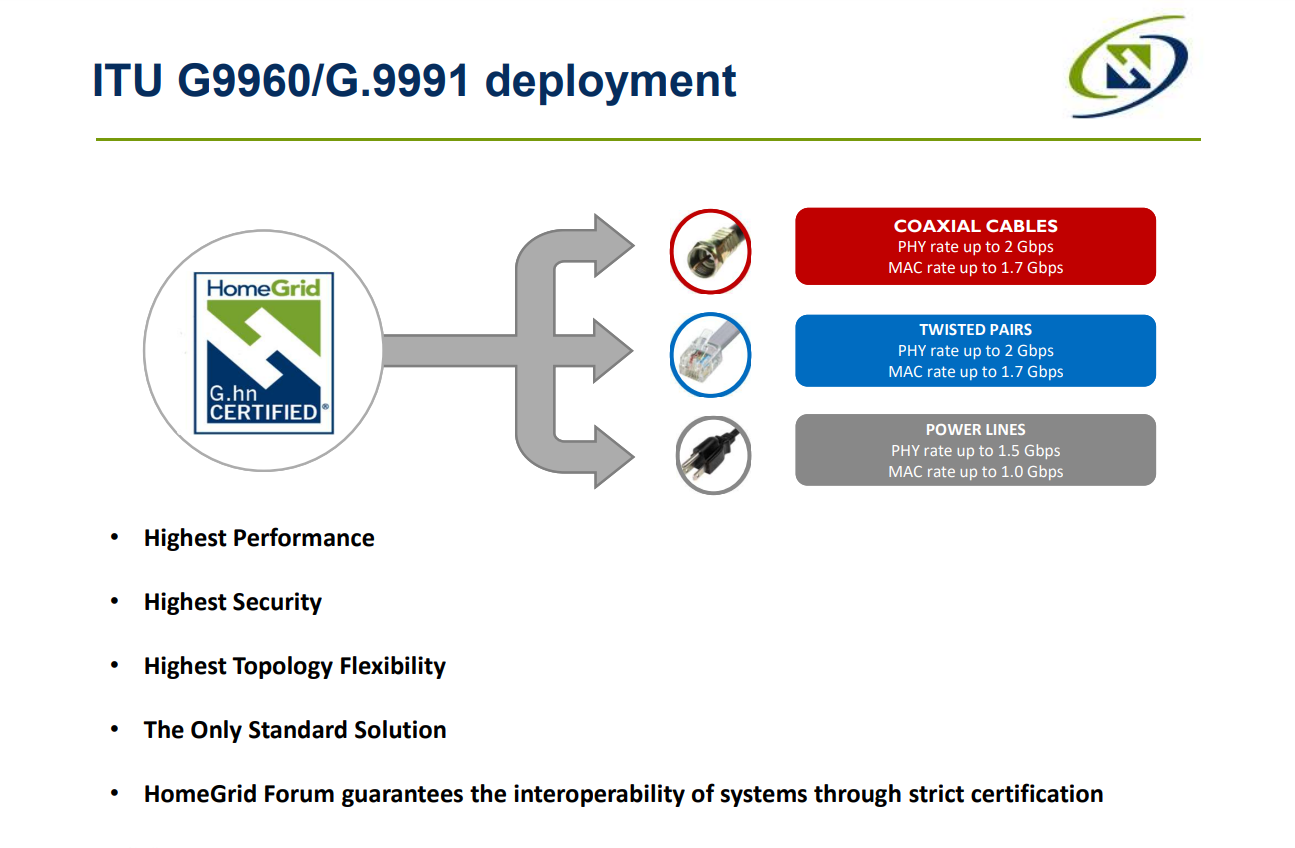

            Certification of The First G.hn Embedded Module for Industrial IoT By HomeGrid Forum With Teleconnect

            Table of Contents

              Certification of The First G.hn Embedded Module for Industrial IoT By HomeGrid Forum With Teleconnect

              Certification of The GHN.SOM.PLC Module

              HomeGrid Forum recently announced on its website that they have certified its first G.hn solution for Industrial Internet of Things (IIoT) applications as G.hn technology continues to bridge the gap between telecom-optimized systems and the demand for fast connectivity in industrial settings.

              The certification of the GHN.SOM.PLC module, a powerful small form factor and retrofit solution from member company Teleconnect, ensures the high performance of IIoT and connected devices through MIMO-enabled powerline communications.

              Machine-to-machine communication and process automation require more than ever stable, robust and fast connectivity to operate and work efficiently, with no downtime.
              The uptake in productivity, efficiency and safety need to strongly rely on agile control, self-healing capabilities and real-time synchronization of industrial devices, placing G.hn as core to manufacturers’ digital transformation,
              ” said HomeGrid Forum President Livia Rosu. “This certification marks an exciting new milestone for G.hn IIoT use cases, including autonomous mobile robots, smart sensors, AR/VR, smart lifting, smart parking systems control, smart buildings entry-door access control, safety control and factory automation. G.hn technology modules are now  embedded into smart manufacturing infrastructure networks to provide the resilience needed by highly performant industrial plants.”

              G.hn works seamlessly through existing wiring to provide low latency connectivity that is suitable for handling two-way, high bandwidth and real-time traffic, including environmental sensors and video surveillance. HomeGrid Forum has recently set up a new Task Force, co-chaired by Alexandre Schäfer, Head of Sales, and Philipp Rietzsch, Head of R&D, at Teleconnect, to drive G.hn innovation and deployments for IIoT applications.

              Schäfer stated that “G.hn has significantly boosted industrial networks with adaptive data rates of up to 1.8 Gbps over different media, from powerline to telephone wiring and coax cables. It has also proven to be the most reliable backbone for visible light communications, such as LiFi. Now, the certification of GHN.SOM.PLC means that the industry can be confident in the module’s interoperability to other G.hn chipsets and devices.

              HomeGrid Forum G.hn testing ensures that commercially available solutions comply with ITU-T G.hn standards and the interoperability and performance requirements set out in the HomeGrid Forum Certification Test Plans.

              Rietzsch further emphasized that “The certification is a significant milestone as there is now a verified G.hn solution for industrial environments that offers best-in-class connectivity and robustness. With the newly formed Industrial IoT Task Force, this certification is just the start of new G.hn solutions portfolio that opens exciting opportunities for industrial settings. Our mission is to help create a sustainable competitive advantage with most machines connected to improve efficiency and reduce cost.”

              HomeGrid Forum

              According to their website, HomeGrid Forum (HGF) is an industry alliance formed to support the development and deployment of a unified coaxial, phone line, powerline, and plastic optical fibre home networking technology called G.hn (Gigabit Home Networking). G.hn technology is based on standards developed by the UN’s International Telecommunications Union – Telecom (ITU-T) standards development organization.

              HomeGrid Certification ensures compliance and interoperability (C&I) of silicon and systems through plugfests and rigorous C&I testing. A logo is issued for certified systems’ packaging and documentation of G.hn-based systems. HGF Certification ensures that retail customers and Service Providers have confidence in, and great satisfaction with all HGF G.hn Certified Certified products.

              HomeGrid Forum members comprise an eco-system covering all aspects of the technology from Retailers to Service Providers, Utilities to Smart Grid think tanks, System Developers to Test Houses and Silicon Companies.

              HomeGrid currently has four workgroups: a Clean Tech/Smart Grid/Smart Energy workgroup focused on in-home energy management and utility Distribution Automation and AMI applications for G.hn, a G.hn Contributions workgroup that continuously works to develop advanced enhancements for wired home networking, a Compliance & Interoperability workgroup, and a Marketing workgroup focused on promoting all HomeGrid Certified Products and technologies.

              The purpose of HomeGrid Forum is to:

              • Lead the work within the ITU-T to continuously expand G.hn, through a sustained effort to improve and extend this advanced home networking technology for any in-home wiring (coaxial cable, phone line, powerline and plastic optical fiber).

              • Encourage and evangelize the adoption and widespread deployments of G.hn by Service Providers and through Retail channels.

              • Provide a clear migration path for all legacy wired technologies to G.hn, where coexistence and G.hn’s ability to work over any wire type enables Service Providers to extend the life of their existing network investments while increasing coverage, robustness, and throughput in the home.

              • Maintain a comprehensive compliance and interoperability program to promote an ecosystem of compliant silicon and interoperable products based on the ITU-T G.hn standards.


              Article source: https://homegridforum.org/2021/12/06/a-new-leadership-team-for-homegrid-forum-as-it-announces-five-task-forces-to-drive-g-hn-innovation-and-deployments/

              What is LiFi?

              LiFi, also known as "Light Fidelity" is a wireless optical networking technology, which uses light-emitting diodes (LEDs) to transmit data. In 2011, professor Harald Haas made a LiFi demonstration at the TED (Technology, Entertainment, Design) Global Talk on Visible Light Communication (VLC).

              VLC uses light as a medium to deliver high-speed communication like Wi-Fi and complies with the IEEE standard IEEE 802.15.7. The IEEE 802.15.7 is a high-speed, bidirectional, and fully networked wireless communication technology-based standard similar to Wi-Fi's IEEE 802.11.

              How does LiFi work?

              LiFi is a high speed, bidirectional, and fully networked wireless communication of data using light. LiFi constitutes of several light bulbs that form a wireless network.

              When an electrical current goes through to a LED light bulb, a stream of light (photons) emits from the lamp. LED bulbs are semiconductor devices, which means that the brightness of the light flowing through them can change at extremely high speeds. The signal is sent by modulating the light at different rates. The signal can then be received by a detector that interprets the changes in light intensity (the signal) as data. Also when the LED is ON, you transmit a digital 1, and when it is OFF, you transmit a 0.

              LiFi Benefits

              The primary benefits of LiFi are as follows:

              Security: Provides entirely secure access. Where there is no light there is no data.

              Safety: Does not produce electromagnetic radiation and does not interfere with existing electronic systems.

              Localisation: Allows localisation due to the small coverage area of LiFi access point - localisation can be used for very precise asset tracking.

              Data density: Provides ubiquitous high-speed wireless access that offers substantially greater data density (data rate per unit area) than RF through high bandwidth reuse.

              Credit to Oledcomm

              LiFi Applications

              LiFi can be used for so many applications and the list is increasing every year. You can read our updated list of Li-Fi applications at the following link:

              https://www.lifitn.com/blog/2021/2/13/top-30-li-fi-applications-updated-list-including-potential-applications

              Credit to pureLiFi

              In conclusion, if you are also interested to hear more information about the OWNII Coin or enquire about LiFi devices such as the LiFiMax and Trulifi, you can contact us through our chatbot or by sending an email through our contact us form. If you enjoyed this post and would like to hear more updates about LiFi technology, subscribe to our newsletter. Don’t forget to subscribe to our social media accounts. You can also join our Telegram group about LiFi technology on this link:

              https://t.me/joinchat/FMzOmsEKyJFrU6Af
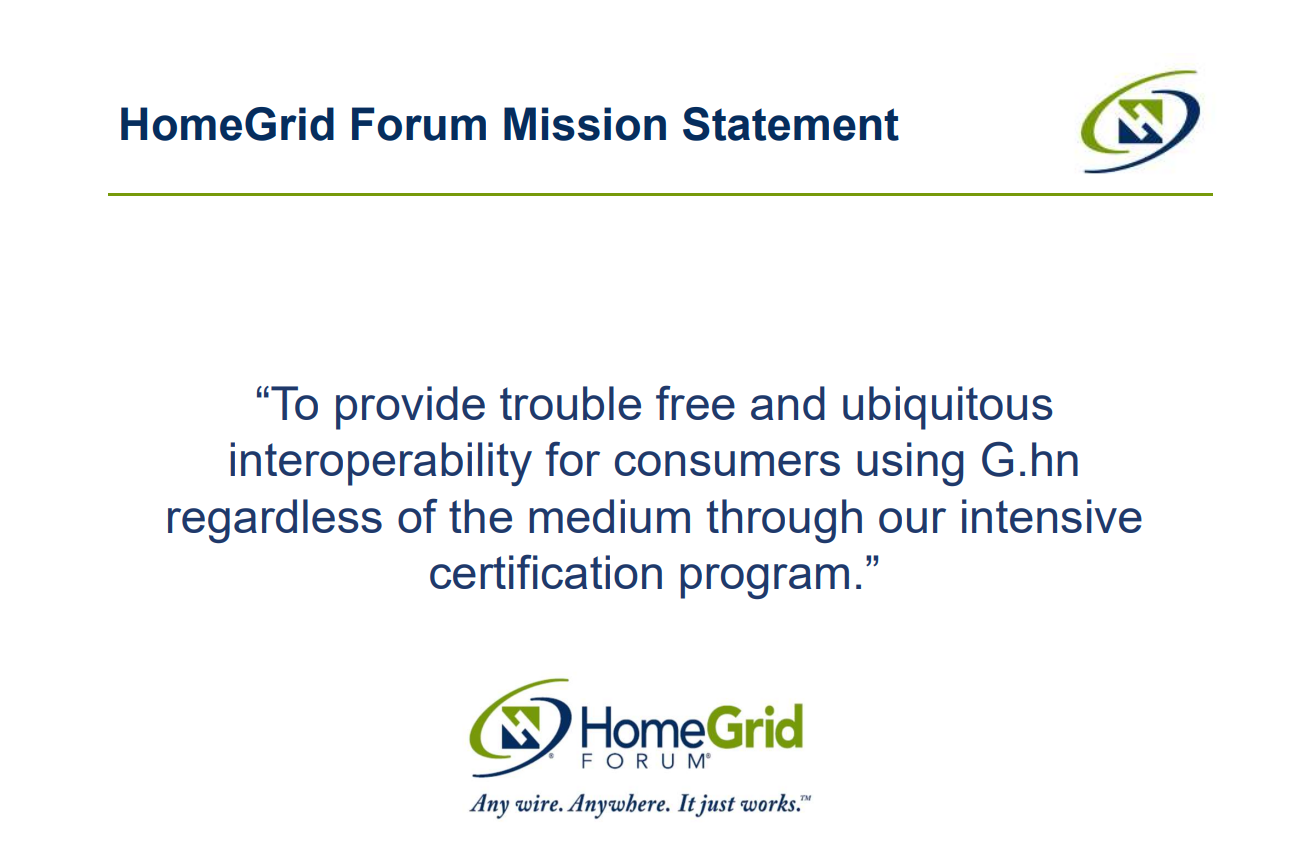

              Fraunhofer HHI Will Present Their All Optical Fibre LiFi System At The Optical Networking and Communication Conference (OFC) 2022

              Fraunhofer HHI Will Present Their All Optical Fibre LiFi System At The Optical Networking and Communication Conference (OFC) 2022

              Fraunhofer HHI

              Last week, Fraunhoferr HHI released a press statement that they will present their All-Optical-Fibre LiFi System at the Optical Networking and Communication Conference (OFC) 2022. Their All-Optical LiFi System comprises of an Ethernet-coupled central unit, with the modem and the selection combiner, one step-index POF each for up to eight optical front ends, the optical wireless link and a set of USB-LiFi dongles.

              They stated the following in their statement:

              “Optical wireless communication, also called LiFi, is an interesting alternative for mobile communication via light. LiFi is considered as a promising technology for mobile indoor connectivity where the unlicensed optical spectrum is used. Light is better confined within a room compared to radio and safer against unauthorized access as well as jamming. It is well suited for the use in challenging environments like industrial or medical applications, due to the robustness regarding electromagnetic interferences and the absence of radio radiation.

              Since the connection of the LiFi access points can also be a target of interference, Fraunhofer HHI developed an all-optical LiFi system using polymer optical fiber (POF) for networking multiple access points (APs) rather than copper wiring. The use of multiple APs improves coverage and adds spatial diversity to overcome possible blockages of the line-of-sight. Moreover, a new selection combiner is introduced, enabling the deployment of larger numbers of distributed APs with negligible performance loss. The new combiner supports up to eight LiFi access points, allowing for a coverage up to 50 m². In this area, mobile Internet access is possible via the light at Gbit/s data rates for multiple users. The modular approach allows higher flexibility for covering specialty applications, like manufacturing halls and operation theaters, with reliable high-speed wireless connectivity."

              Fraunhofer HHI has more than 20 years of experience on indoor LiFi systems and provides compact LiFi modules for immediate industrial prototyping and field tests”.


              The Fraunhofer , Heinrich Hertz Institute, HHI, also known as Fraunhofer HHI or Fraunhofer Heinrich Hertz Institute, is an organisation of the Fraunhofer Society based in Berlin. The institute engages in applied research and development in the fields of physics, electrical engineering and computer sciences.

              The Fraunhofer Heinrich Hertz Institute develops mobile and stationary broadband communication networks and multimedia systems. Focal points of independent and contract research conducted by Fraunhofer HHI are photonic components and systems, fiber optic sensor systems, and image signal processing and transmission. Future applications for broadband networks are developed as well. Research in this area focuses on 3D displays, UHD panorama video production, human-machine interaction through gesture control, optical satellite communication and data transmission technologies such as visible light communications.

              The Optical Networking and Communication Conference (OFC)

              The Optical Networking and Communication Conference and Exposition (OFC) is the largest international event for latest advances in telecom and data center optics. The conference includes technical sessions, short courses, workshops, and panel discussions that focus on the newest research and developments as well as the latest applications.

              For over 40 years, OFC has drawn attendees from all corners of the globe to meet and greet, teach and learn, make connections and move business forward.

              OFC attracts the biggest names in the field, offers key networking and partnering opportunities, and provides insights and inspiration on the major trends and technology advances affecting the industry. From technical presentations to the latest market trends and predictions, OFC is a one-stop-shop.

              The OFC 2022 will end on Thursday 10th March 2022

              What is LiFi?

              Li-Fi, also known as "Light Fidelity" is a wireless optical networking technology, which uses light-emitting diodes (LEDs) to transmit data. In 2011, professor Harald Haas made a LiFi demonstration at the TED (Technology, Entertainment, Design) Global Talk on Visible Light Communication (VLC).

              VLC uses light as a medium to deliver high-speed communication like Wi-Fi and complies with the IEEE standard IEEE 802.15.7. The IEEE 802.15.7 is a high-speed, bidirectional, and fully networked wireless communication technology-based standard similar to Wi-Fi's IEEE 802.11.

              How does LiFi work?

              LiFi is a high speed, bidirectional, and fully networked wireless communication of data using light. LiFi constitutes of several light bulbs that form a wireless network.

              When an electrical current goes through to a LED light bulb, a stream of light (photons) emits from the lamp. LED bulbs are semiconductor devices, which means that the brightness of the light flowing through them can change at extremely high speeds. The signal is sent by modulating the light at different rates. The signal can then be received by a detector that interprets the changes in light intensity (the signal) as data. Also when the LED is ON, you transmit a digital 1, and when it is OFF, you transmit a 0.

              LiFi Benefits

              The primary benefits of LiFi are as follows:

              Security: Provides entirely secure access. Where there is no light there is no data.

              Safety: Does not produce electromagnetic radiation and does not interfere with existing electronic systems.

              Localisation: Allows localisation due to the small coverage area of LiFi access point - localisation can be used for very precise asset tracking.

              Data density: Provides ubiquitous high-speed wireless access that offers substantially greater data density (data rate per unit area) than RF through high bandwidth reuse.

              Credit to Signify

              LiFi Applications

              LiFi can be used for so many applications and the list is increasing every year. You can read our updated list of LiFi applications at the following link:

              https://www.lifitn.com/blog/2021/2/13/top-30-li-fi-applications-updated-list-including-potential-applications

              Credit to pureLiFi

              In conclusion, if you are also interested to hear more information about the OWNII Coin, investing in it, or enquire about Li-Fi devices such as the LiFiMax and Trulifi, you can contact us through our chatbot or by sending an email through our contact us form. If you enjoyed this post and would like to hear more updates about Li-Fi technology, subscribe to our newsletter. Don’t forget to subscribe to our social media accounts. You can also join our Telegram group about Li-Fi technology on this link:

              https://t.me/joinchat/FMzOmsEKyJFrU6Af
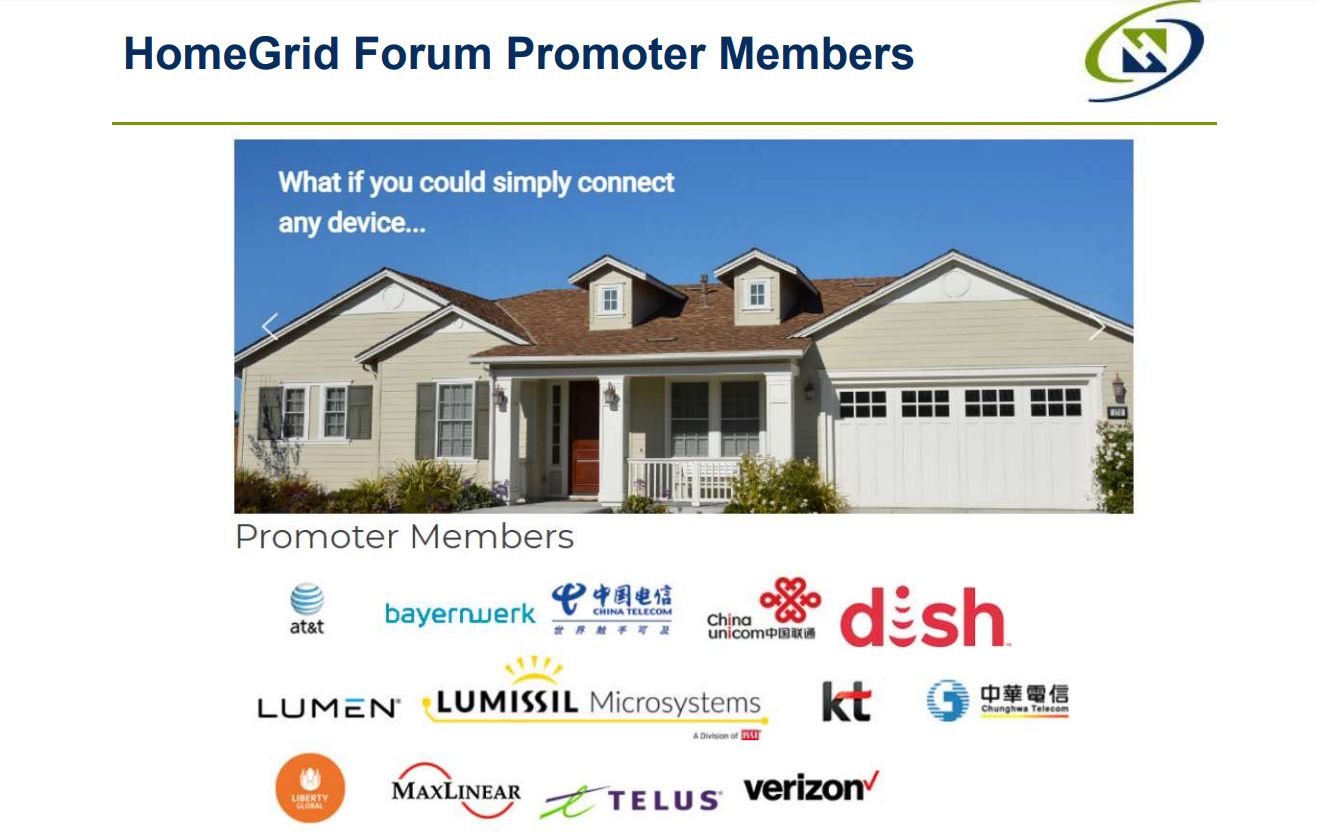

              pureLiFi Demonstrated Their Next LiFi System For The Home At Mobile World Congress (MWC) in Barcelona

              pureLiFi Demonstrated Their Next LiFi System For The Home At Mobile World Congress (MWC) in Barcelona

              Photo credit: pureLiFi

              pureLiFi

              pureLiFi develops technology for communication networks that integrates data and lighting utility infrastructures. It offers a LiFi enabled device that converts the beam of lights into an electrical signal. The signal is then converted back into data. The company was founded in 2012 and is headquartered in Edinburgh.
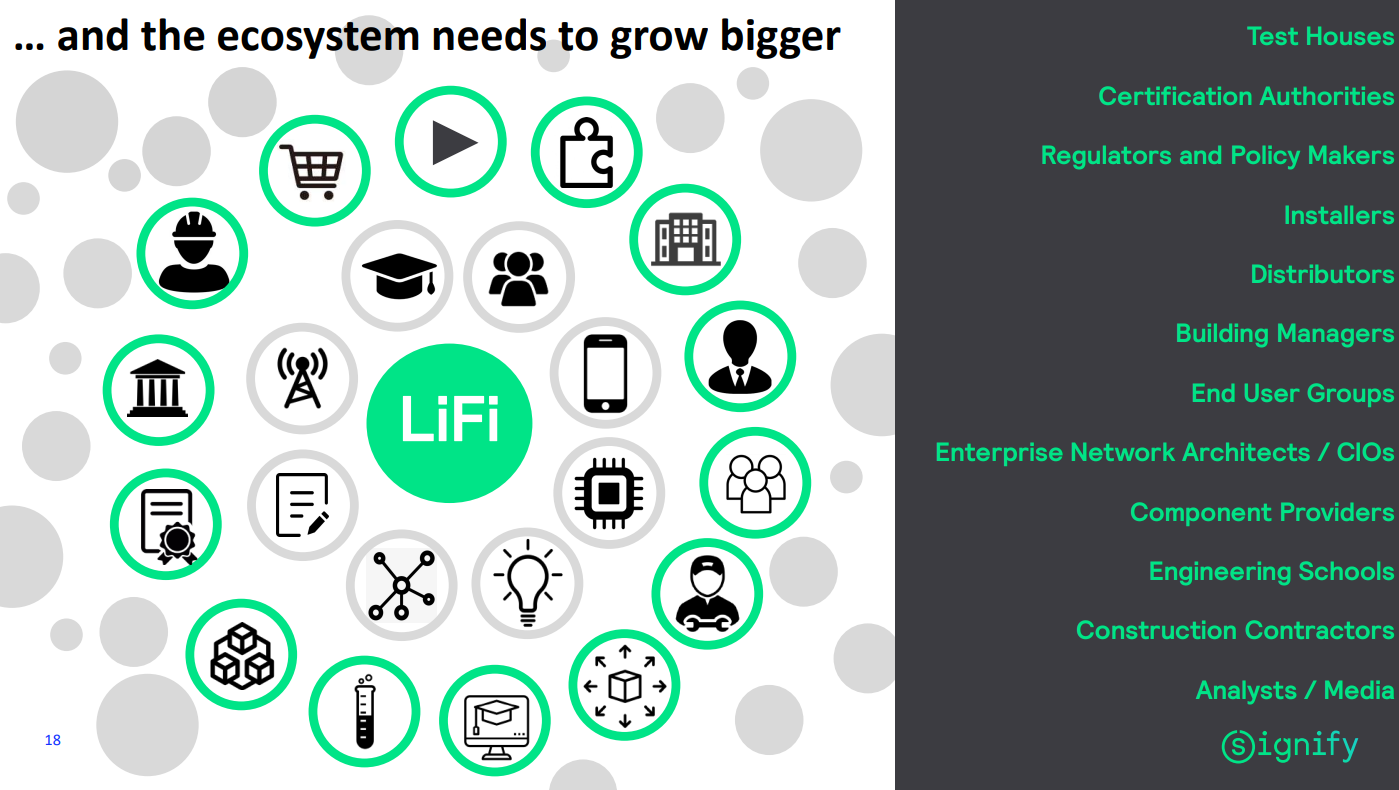
              pureLiFi demonstrated the next LiFi system for the home at Mobile World Congress (MWC) in Barcelona. pureLiFi stated that this is the world’s first LiFi ecosystem for the consumer market, named LiFi@Home™.

              pureLiFi CEO, Alistair Banham stated the following:

              The door is open for LiFi to fill the gap. LiFi is the key to unlocking the next generation of connected experiences in an ecosystem where WiFi and 5G alone are not enough. What we’ve demonstrated here for the first time is how simple it is to bring LiFi into consumer environments. We’ve done all the hard work to make LiFi easy to integrate and simple to get started.”   

              The LiFi@Home™ family of LiFi connected experiences is made of a consumer-style downlighter, a smartphone, a smart TV and an AR Headset all connected by LiFi. The LiFi@Home system is powered by an easy to install power line communication (PLC) network backhaul that uses existing electrical cabling to connect everything to the internet. Installing the LiFi@Home™ system is as simple as changing a downlighter.


              Adding LiFi technology to a home will not only accommodate the growing demand for connected devices, it will also improve the user experience. LiFi enables more reliable connectivity that significantly improves latency and jitter and does not divide bandwidth. Next-generation experiences such as the metaverse and 8K streaming will be possible for everyone, pureLiFi claimed.


              pureLiFi’s demonstration of consumer-ready LiFi products is enabled by their world-leading light antennas which are compatible with the same WiFi basebands that already exist in billions of connected devices today, allowing for easy integration of LiFi technology.


              At MWC in Barcelona, pureLiFi CEO Alistair Banham made a direct call to the industry to show leadership beyond using WiFi and 5G. LiFi is for leaders who want to differentiate and offer their customers the best experience. We are calling on the industry to look beyond ordinary and unleash innovation with LiFi. The next and best in connectivity solutions is ready for the taking. LiFi is ready for you to design into your products and put you at the forefront of the next big wave of technology innovation.”


              This latest advancement comes after multiple successful large-scale deployments of LiFi with the US Army to provide more reliable and secure mission-critical communications. With the addition of LiFi@Home™ to pureLiFi’s offering, LiFi continues on the classic journey of taking proven technology from the defence sector into the hands of everyone. pureLiFi will be demonstrating LiFi@Home™ throughout the week at MWC in Barcelona and sharing their vision to connect everything and everyone with LiFi.

              Credit to pureLiFi

              MWC Barcelona 2022

              MWC Barcelona (formerly Mobile World Congress) is the largest mobile event in the world as well as the meeting place for the leaders of the mobile and related industries. The event is held in Barcelona, Catalonia, Spain at the Fira de Barcelona Gran Via, usually in February or early March. It is attended primarily by device manufacturers, network equipment providers, representatives of wireless carriers, and the press, among others. Its annual attendance is generally around 100,000 people, while mobile phone manufacturers often use the conference to unveil upcoming devices.

              GSMA has extended the MWC brand to two other trade shows in Shanghai, China (MWC Shanghai) and Los Angeles, United States (MWC Los Angeles, formerly MWC Americas), but the brand remains most synonymous with Barcelona event.

              MWC Barcelona attracts some of the most influential decision-makers in the world. It’s where 2,400 leading companies and trailblazers share the latest topics relevant to the future. And the best place for networking opportunities with mobile and tech industry influencers.

              MWC also remains a truly international exhibition attracting decision-makers in the mobile ecosystem. Currently, registered attendees come from 2,000 different companies, 183 countries, and 50% are Director level or above.

              MWC Barcelona 2022 is happening February 28th through March 3rd

              Article source: https://purelifi.com/purelifi-pushes-connectivity-in-the-home-to-new-limits-with-lifihome/

              What is LiFi?

              Li-Fi, also known as "Light Fidelity" is a wireless optical networking technology, which uses light-emitting diodes (LEDs) to transmit data. In 2011, professor Harald Haas made a LiFi demonstration at the TED (Technology, Entertainment, Design) Global Talk on Visible Light Communication (VLC).

              VLC uses light as a medium to deliver high-speed communication like Wi-Fi and complies with the IEEE standard IEEE 802.15.7. The IEEE 802.15.7 is a high-speed, bidirectional, and fully networked wireless communication technology-based standard similar to Wi-Fi's IEEE 802.11.

              How does LiFi work?

              LiFi is a high speed, bidirectional, and fully networked wireless communication of data using light. LiFi constitutes of several light bulbs that form a wireless network.

              When an electrical current goes through to a LED light bulb, a stream of light (photons) emits from the lamp. LED bulbs are semiconductor devices, which means that the brightness of the light flowing through them can change at extremely high speeds. The signal is sent by modulating the light at different rates. The signal can then be received by a detector that interprets the changes in light intensity (the signal) as data. Also when the LED is ON, you transmit a digital 1, and when it is OFF, you transmit a 0.

              LiFi Benefits

              The primary benefits of LiFi are as follows:

              Security: Provides entirely secure access. Where there is no light there is no data.

              Safety: Does not produce electromagnetic radiation and does not interfere with existing electronic systems.

              Localisation: Allows localisation due to the small coverage area of LiFi access point - localisation can be used for very precise asset tracking.

              Data density: Provides ubiquitous high-speed wireless access that offers substantially greater data density (data rate per unit area) than RF through high bandwidth reuse.

              Credit to Signify

              LiFi Applications

              LiFi can be used for so many applications and the list is increasing every year. You can read our updated list of LiFi applications at the following link:

              https://www.lifitn.com/blog/2021/2/13/top-30-li-fi-applications-updated-list-including-potential-applications

              Credit to pureLiFi

              In conclusion, if you are also interested to hear more information about the OWNII Coin, investing in it, or enquire about Li-Fi devices such as the LiFiMax and Trulifi, you can contact us through our chatbot or by sending an email through our contact us form. If you enjoyed this post and would like to hear more updates about Li-Fi technology, subscribe to our newsletter. Don’t forget to subscribe to our social media accounts. You can also join our Telegram group about Li-Fi technology on this link:

              https://t.me/joinchat/FMzOmsEKyJFrU6Af