OWNii Coin (LiFi Cryptocurrency) Launch Update 2022 And US Security Exchange Commissions (SEC) Registration Progress

Table of Contents

    OWNii Coin (LiFi Cryptocurrency) Launch Update 2022 And US Security Exchange Commissions (SEC) Registration Progress

    In 2018, we wrote an article about a LiFi cryptocurrency called “OWNii Coin”. Global Greenology, a privately owned global manufacturing and design company specialising in environmentally friendly, energy-efficient building solutions, developed a cryptocurrency for LiFi implementation.

    Around November 2021, we published another article updating on the progress of the OWNii coin launching. After recently speaking to one of the co-founders of the OWNii coin a few days ago, we decided to write another article about the progress of the launch. Have fun reading the following updated information about OWNii coin.

    OWNii Coin


    OWNii stands for Optical Wireless Network Internet Infrastructure.  OWNii Coin is developed to oversee, develop, and design the physical infrastructure necessary to implement LiFi in the United States and developing nations abroad and was sold privately but the private sale has now been closed

    OWNii creates wireless communication that is faster, addresses issues with internet security, and allows localisation due to the small coverage area of Li-Fi access points used for precise asset tracking. Furthermore, providing ubiquitous high-speed wireless access that offers substantially greater data density (data rate per unit area) than RF through high bandwidth reuse.

    Global Greenology Enterprise Inc./San Victus Private Limited are the key proponents and developers of such strategic initiatives (“each a “Founder” and collectively the “Founders”). They are in collaboration to spearhead strategic plans for building smart green communities and townships in the USA, Malaysia and other Countries leveraging on Light Fidelity (LiFi) technology-based Optical Wireless Network Internet Infrastructure (OWNii) systems; for developing waste-to-energy (WTE) conversion projects based on plastic, tire and other waste recycling technologies; and manufacturing clean green energy (CGE) generators using state of the art technology.


    Launch Update and SEC Registration


    A website specifically for the OWNii coin (ownii.net) was developed however the site is still currently going through many changes at the back end and front end.  This means the information on the ownii.net site is outdated.

    Initially, the launch of the coin was scheduled for the end of 2021 but the Founders find it necessary to register the OWNii coin on the SEC register for transparency and accountability purposes. By December 2021, preparation for SEC registration was initiated by one of the founders of the OWNii Coin. After another conversation with the CEO of Global greenology, we were informed that the SEC registration paperwork for the OWNii coin has been completed and filled during the first of January 2022. This means that the public launching of the OWNii coin is very close.

    LiFi Tech News will keep you updated on the progress of the OWNii Coin Launching .



    Tokenization of Assets


    The token sale is a process of generating and selling a new cryptocurrency. By building a Smart Contract on the blockchain, it is possible to raise and sell coins as cryptocurrency. The process typically involves lawyers, qualified clients, a final private or public sale. In this process, cryptographically generated tokens are sold as digital assets representative of a product or service. Tokens can be designated for redemption for virtually anything, for example, free t-shirts on an apparel site or merchandise from a company.


    It should be understood that ICOs these days are governed by regulatory bodies such as the U.S. Securities and Exchange Commission (“SEC”) in the United States. Many entrepreneurs circumvent this regulation by conducting their sales outside of the country and conform to the legal structures and requirements thereof. However, there is not much difference between a penny stock and a token as both of them are based on speculation.


    Further, token sales should not be considered as a funding vehicle. While many companies treat them as such — and crow over multi-million-dollar raises that explode in minutes — what they are doing is floating a crypto-currency on the open market, and would increasingly be coming under scrutiny, especially if these are without substance. On the other hand, token sales, ff structured properly, these crypto-currencies can increase its value, thus allowing companies access to additional funds for the project to which such sales initiatives can be based on. However, such events involving the general public would be required to be regulated under the prevailing rules and regulations of the place of such offerings, with the protection of the interests of the general public at large. More often than not, most tokens so offered have no or unspecified basis of intrinsic values, or which purposes of such issuance are based on or associated with systemic risks typical of short-lived or one-off projects of unsustainable long term endeavors. 

     

    OWNii Coin creation


    The OWNii Coin token is created under the Trexchain Blockchain Network. The OWNii Coin token is not available or offered under an ICO, but is through a PPO that is organized and contracted for sale by the PPO Manager in the jurisdiction of Bahamas.

    The single most important distinguishing discerning differentiation of the OWNii Coin token vis-à-vis other crypto-currencies in the market is that it is an asset-backed initiative, with a clear basis of intrinsic value, that would through the passage of time and successful implementation be expected to increase in valuation. Coupled with a pre-set and designed finite number of tokens available, the combination of scarcity and potential increase in valuation would render the tokens an attractive asset class to be held.

    Under the organisation and management of the PPO Manager, the OWNii Coin token is marketed and presented by contracted parties that specialized in the undertakings of private placement of offerings, and in specific selected and targeted countries such as Bahamas, United States, Malaysia, etc.

    As part of the PPO process, the PPO Manager has directed for the prospective targeted interested parties to undergo registration and the verification and confirmation process of risk management and compliance checks under the guidelines of Know-Your Customer (“KYC”) disclosures and profiling, Anti-Money Laundering (“AML”), Counter-Terrorist-Financing (“CTF”) and observations under Personal Data Protection (“PDP”) measures.

    The PPO Manager organize the OWNii Coin tokens to be placed out privately to targeted parties under a set of terms and conditions that are in consultation with OWNii Global, and documented under a PPM.


    Main OWNii Coins features


    The OWNii Coins are crypto-currency tokens that have the following main features :

    1)    They are fungible tokens. This means that they can be exchanged, and each token is not unique.

    2)    The value of each token currently expressed in US dollar fiat currency equivalent shall be captured by the internal Smart Contract per transaction, and upon the successful verification and confirmation by the DANP, shall therefore adjust the value of the OWNii Coin token.

    3)    There are no life-span limitations or expiry of use attached to any token;

    4)    They can be readily traded or exchanged under the P2P Crypto-currency Exchange Platform, and on crypto-currency exchanges (at a later date upon the completion of the PPO)

    5)    They are eligible for Specific Measures outlined by the Founders.


    Capital Gains and Realization

    Account Holders or owners of the OWNii Coin token can seek toward P2P Crypto-currency Exchange Platform or crypto-currency exchanges to trade, exchange or transfer for profits, realization of capital gains, etc.

    Apart from these usual avenues available for any crypto-currencies, the OWNii Coin token owners have other Specific Measures designed to offer different unique avenues to enable the same. These Specific Measures are designed to work in tandem with the intrinsic values of the underlying assets associated with the OWNii Coin token, and attain the distinction of value preservation. The details of the Specific Measures are found under the PPM, and are outlined as follows:


    Redemption of OWNii Coin token for fiat currency or cryptocurrencies

    Redemption of the OWNii Coin tokens under specified terms and conditions offer Account Holders and owners a means to dispose or transfer the tokens for profit or at cost, with the latter specifically stated to be at the Offering Price.

    Such redemption measures have specific periodic timeframes and may be augmented on a standalone basis or in conjunction with Coin Burning. In no case the redemption values of any OWNii Coin token will be at below the Offering Price as part of the intrinsic value preservation. 

    Redemption of OWNii Coin token for products and services

    Redemption of the OWNii Coin tokens for specific products and services is possible as follows:

    1)     Lighting and IoT devices and products such as LED light bulbs, Li-Fi routers and many more.

    2)     Wearable apparels such as clothing, wristbands, hoodies, with or without IoT embedded chips or devices for different specific applications.

    3)     Healthcare related products with IoT embedded technologies for individual heath checks monitoring as well as part of a larger integrated healthcare system.

    4)     Services that can range from fiscal energy audits, residential & commercial Li-Fi installations, Li-Fi consultancy, etc..


    Private Placement Offering (“PPO”)


    PPOs and ICOs are used by startup companies to negate the rigorous process of raising capital through venture capitalists or banks. In both an ICO and PPO campaign, a percentage of the cryptocurrency is sold to early backers of the project in exchange for redeemable products and services or other crypto-currencies.

    Early clients participating in these types of offerings are usually motivated to purchase the crypto coins with the hope that the project becomes successful once it launches. This would lead to a higher value for the crypto-coin when compared to the rate at which it was purchased before the start of the project.

    One example of a profitable crypto-currency offering project that benefited early clients is the Ethereum Platform and its coin tokens known as Ethers. In 2014, the Ethereum Platform project was announced and its ICO raised around $18 million in Bitcoins or $0.40 per Ether. The Ethereum Platform project was introduced in 2015 and since then the value of one Ether went up as high to $1,098 with a market valuation of over $10 billion.

    The OWNii Coin token is offered through a PPO, with the following main features extracted from the PPM:                          

    1) The total number of OWNii Coins is 2 billion.

    2) The total number of OWNii Coins under the PPO is 500 million. This represents 25%. The Founders are having the remaining 75%, which have been earmarked for private placements to potential strategic investors involved in the OWNii System and OWNii Ecosystem roll out for up to 35% over the initial period of the Road Map under the Strategic Initiatives and Strategic Plans.

     

    Use of Proceeds


    At this PPO, the private sale price per token of OWNii Coin was $0.25 fiat currency or its equivalent in cryptocurrencies (“Offering Price”). The targeted amount to be raised shall be US$125 million in fiat currency and/or crypto-currencies. The use of proceeds is targeted as follows :


    Capitalization


    The equity and/or debt investments into each of the underlying project companies involved in the OWNii Ecosystem and CGE Technologies initiatives in the USA, Malaysia and other countries to create ownership, control and oversight. This is about 30% of the proceeds.


    Working Capital & Reserves


    The operational business and development expenditures of the various operating entities. This is about 20% of the proceeds.


    Investments into Short Term Investment Programs 


    These would include investments into asset classes such as high-yield investment programs, securities, commodities and resources. Proceeds from such investment asset classes would be applied to the development and expansion of the applications of the Li-Fi and CGE technologies to generate new businesses and projects globally under the OWNii Ecosystem initiative. This is about 30% of the proceeds.


    Research & Development Expenditures


    These would include investments into manpower, expertise, equipment and facilities to continue to conduct independent or joint research collaborations with key technology partners to improve on current level and applications of technologies.

    This would also include the mergers and acquisitions of technologies, patents, licencing, distribution rights, etc. of new technologies that are compliments to the core of the Strategic Initiatives. This is about 10% of the proceeds.

    Upgrading the Trexchain Blockchain Network dedicated to support the OWNii Coin token, the OWNii System and the OWNii Ecosystem

    The upgrading activities would include the development of the capabilities and functionalities such as the establishment of crypto-currency exchange where transaction fees can be targeted as a new income stream, security infrastructure, capacity & storage infrastructure, risk management & compliance measures, trust wallet partnerships, two-factor authentication (“2FA”) features  and the enterprise dedicated blockchain applications to a range of suitable products and services leveraging on Li-Fi, AI and IoT aspects. This is about 10% of the proceeds.
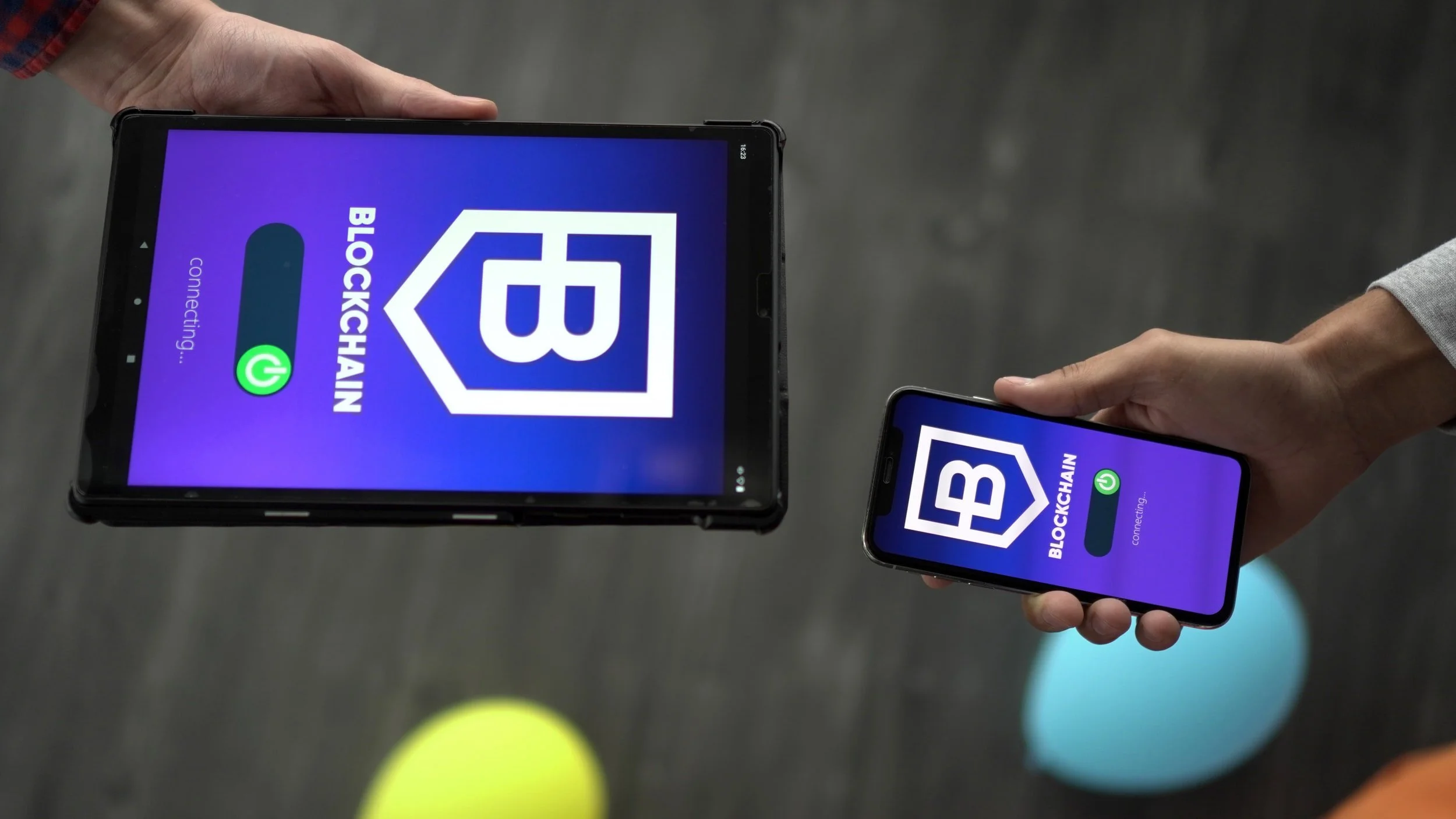
     

    What is Blockchain?

    A blockchain is a database that is distributed across a large network. It makes use of a digital ledger that contains transactions and this is shared in the network. Cryptography is used to protect the ledger and users without the need for a central authority. It maintains a continuously growing list of records (blocks), each containing timestamps and a link to the previous one. So a blockchain, you can think about in three different ways. And these are kind of three responsibilities that the blockchain assumes. And it does all three of these things at the same time. So these three different aspects are that it's a network, it's a database, and it's a computer. So it's a network in the sense that it's a public network that anyone can access. You just need an internet connection, you connect connect to a blockchain. It's a database, because it stores information on it. And it's also shared across a network. And it's also a computer because it has computational resources.

    One of the many advantages of blockchains is the ability to independently verify transactions in an anonymous manner. The blockchain can also process transactions at a much lower cost than banks and credit card companies.


    The main advantages of blockchain-based solutions are:


    1. Independent Exchange


    Two users can create transactions without the oversight or intermediation of a third party. This reduces counterparty risk.

    2. Secure Users


    Users are in control of all their information and transactions. Over a distributed database, transactions are encrypted by private and public keys.


    3. Low risk of failure


    Decentralized networks or distributed database help bolster the security of blockchains. This is because there is no central point of failure, thus making it durable against malicious attacks.


    4. Immutability and Transparency


    Any change to a record on a public blockchain can be viewed by all users. There is no central authority to validate or record transactions in a blockchain which leads to more transparent system with security. This promotes transparency in the system. Meanwhile, all records are immutable which means that they cannot be modified or deleted.


    What is a Cryptocurrency?


    Cryptocurrency is a digital asset that uses cryptography to encrypt transactions as well as to control the creation of additional currency units. Since 2009, crypto-currency development has grown exponentially and now offers a wide range of utilities for users. Bitcoin was one of the first crypto-currencies to pioneer this technology and has been growing at a phenomenal rate. With the launch of Bitcoin, other crypto-currencies also began to emerge such as Litecoin, Ethereum, Solana, Cardano, Dogecoin and many more.

    Cryptocurrencies have gained popularity because they work in a decentralized environment and allow faster transactions using a peer-to-peer network. Cryptocurrencies function outside the ambit of governing bodies such as banks and governments. This allows users to transact with one another directly without having to rely on a third-party. When compared to traditional fiat currencies, crypto-currencies protect the anonymity of the users and the transactions are secure. This is because these transactions are facilitated through the use of public and private keys along with minimal processing fees. Experts believe that the value of crypto-currencies will increase with time as more exchanges occur. Additionally, by harnessing the blockchain technology, crypto-currencies can securely store user data and transaction details over a distributed ledger technology network. Since it is very difficult to hack or modify a digital ledger, especially decentralized and distributed, it becomes a secure storage for crypto currencies.


    The Growth of Distributed Ledger Technology


    A distributed ledger refers to a system that replicates, shares and synchronizes data across a network. A distributed ledger draws its legitimacy from speedily applying changes made by a user to all copies present in the ledger.

    The integrity of a distributed ledger is increased when other applications are used to protect them (e.g. Smart Contracts). Since Smart Contracts use computer language to define the terms to record contracts, the computer systems can process them instantaneously. It is economically viable to form these contracts, as there are low contracting, enforcement, and compliance costs.

    Now, the distributed ledger technology (“DLT”) is still at a nascent stage and the blockchain technology represents one of the very first implementations that make use of it. The predictions regarding its development are positive. Many experts are pointing out that the blockchain technology will revolutionize the way individuals are using emerging technologies. Large banks and governmental institutions are working to implement blockchain technology applications to provide more secure and trustworthy services to their customers.

     As the blockchain technology hits mainstream, there are numerous crypto-currencies that appear each year, all of them competing for the same market.


    OWNii Coin is not going to be just another digital currency, as its own philosophy is to create a market share around its core initial users, with the intrinsic value backed by assets and established underlying business models initiated by the Founders.
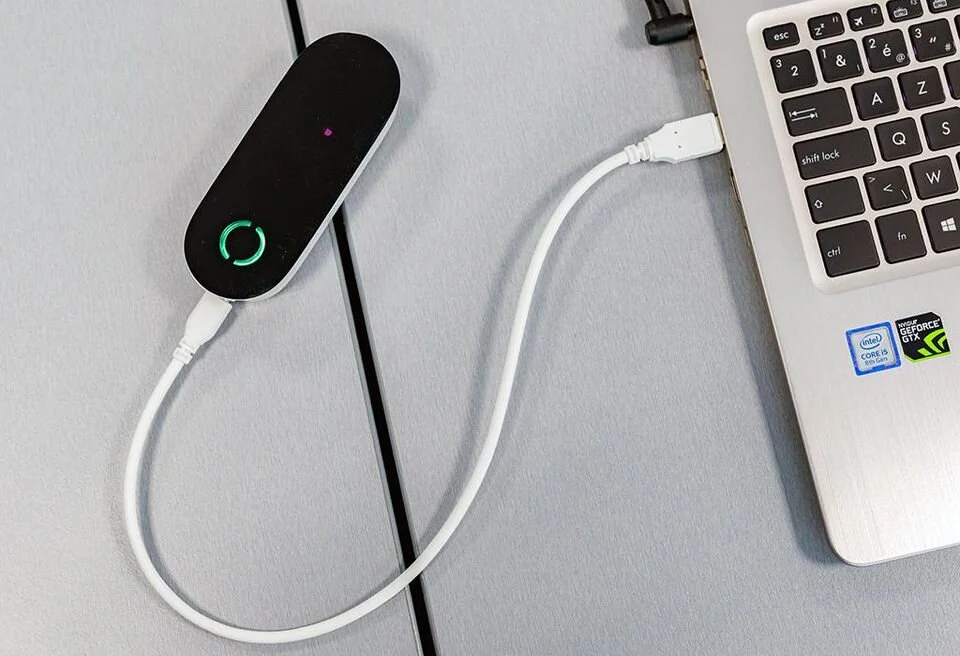
     

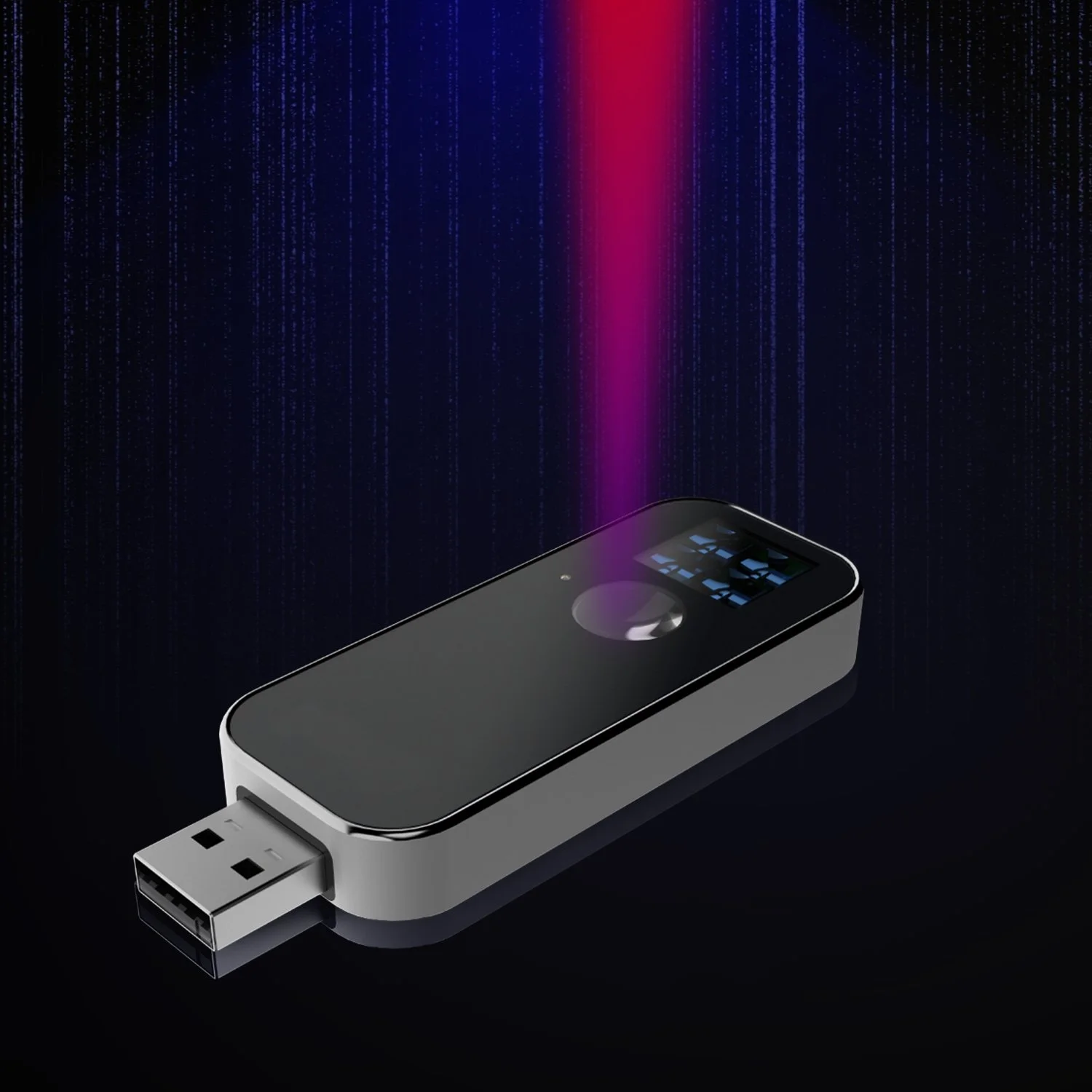
    Credit to Signify - Trulifi dongle

    What is Li Fi?

    Li-Fi, also known as "Light Fidelity" is a wireless optical networking technology, which uses light-emitting diodes (LEDs) to transmit data. In 2011, professor Harald Haas made a LiFi demonstration at the TED (Technology, Entertainment, Design) Global Talk on Visible Light Communication (VLC).

    VLC uses light as a medium to deliver high-speed communication like Wi-Fi and complies with the IEEE standard IEEE 802.15.7. The IEEE 802.15.7 is a high-speed, bidirectional, and fully networked wireless communication technology-based standard similar to Wi-Fi's IEEE 802.11.

    How does Li Fi work?

    Li-Fi is a high speed, bidirectional, and fully networked wireless communication of data using light. Li-Fi constitutes of several light bulbs that form a wireless network.

    When an electrical current goes through to a LED light bulb, a stream of light (photons) emits from the lamp. LED bulbs are semiconductor devices, which means that the brightness of the light flowing through them can change at extremely high speeds. The signal is sent by modulating the light at different rates. The signal can then be received by a detector that interprets the changes in light intensity (the signal) as data. Also when the LED is ON, you transmit a digital 1, and when it is OFF, you transmit a 0.

    LiFi Benefits

    The primary benefits of LiFi are as follows:

    Security: Provides entirely secure access. Where there is no light there is no data.

    Safety: Does not produce electromagnetic radiation and does not interfere with existing electronic systems.

    Localisation: Allows localisation due to the small coverage area of LiFi access point - localisation can be used for very precise asset tracking.

    Data density: Provides ubiquitous high-speed wireless access that offers substantially greater data density (data rate per unit area) than RF through high bandwidth reuse.
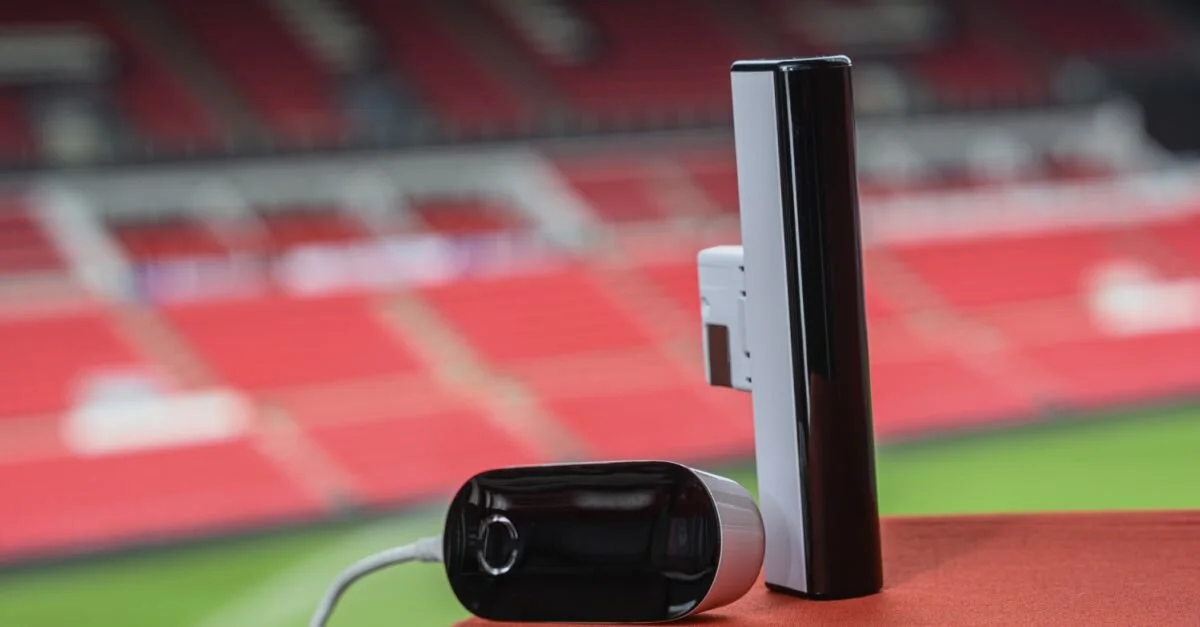
    Credit to Signify

    LiFi Applications

    LiFi can be used for so many applications and the list is increasing every year. You can read our updated list of LiFi applications at the following link:
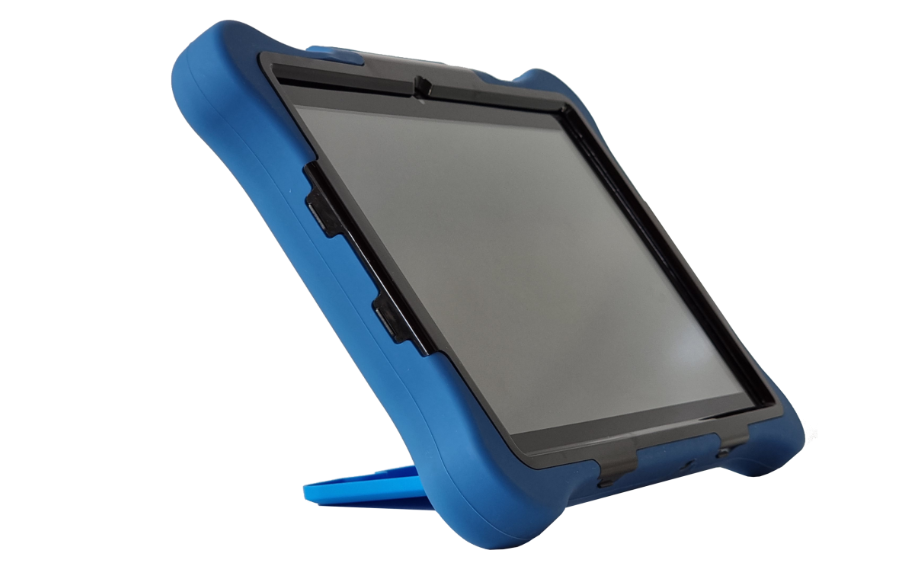
    https://www.lifitn.com/blog/2021/2/13/top-30-li-fi-applications-updated-list-including-potential-applications

    Credit to Oledcomm

    In conclusion, if you are also interested to hear more information about the OWNII Coin or enquire about LiFi devices such as the LiFiMax and Trulifi, you can contact us through our chatbot or by sending an email through our contact us form. If you enjoyed this post and would like to hear more updates about LiFi technology, subscribe to our newsletter. Don’t forget to subscribe to our social media accounts. You can also join our Telegram group about LiFi technology on this link:

    https://t.me/joinchat/FMzOmsEKyJFrU6Af

    Kyocera SLD Laser Announced The Demonstration Of The World's Fastest LiFi System That Delivers Data Rate Of 90 Gbps At The CES 2022

    Table of Contents

      Kyocera SLD Laser Announced The Demonstration Of The World's Fastest LiFi System That Delivers Data Rate Of 90 Gbps At The CES 2022

      Kyocera SLD Laser

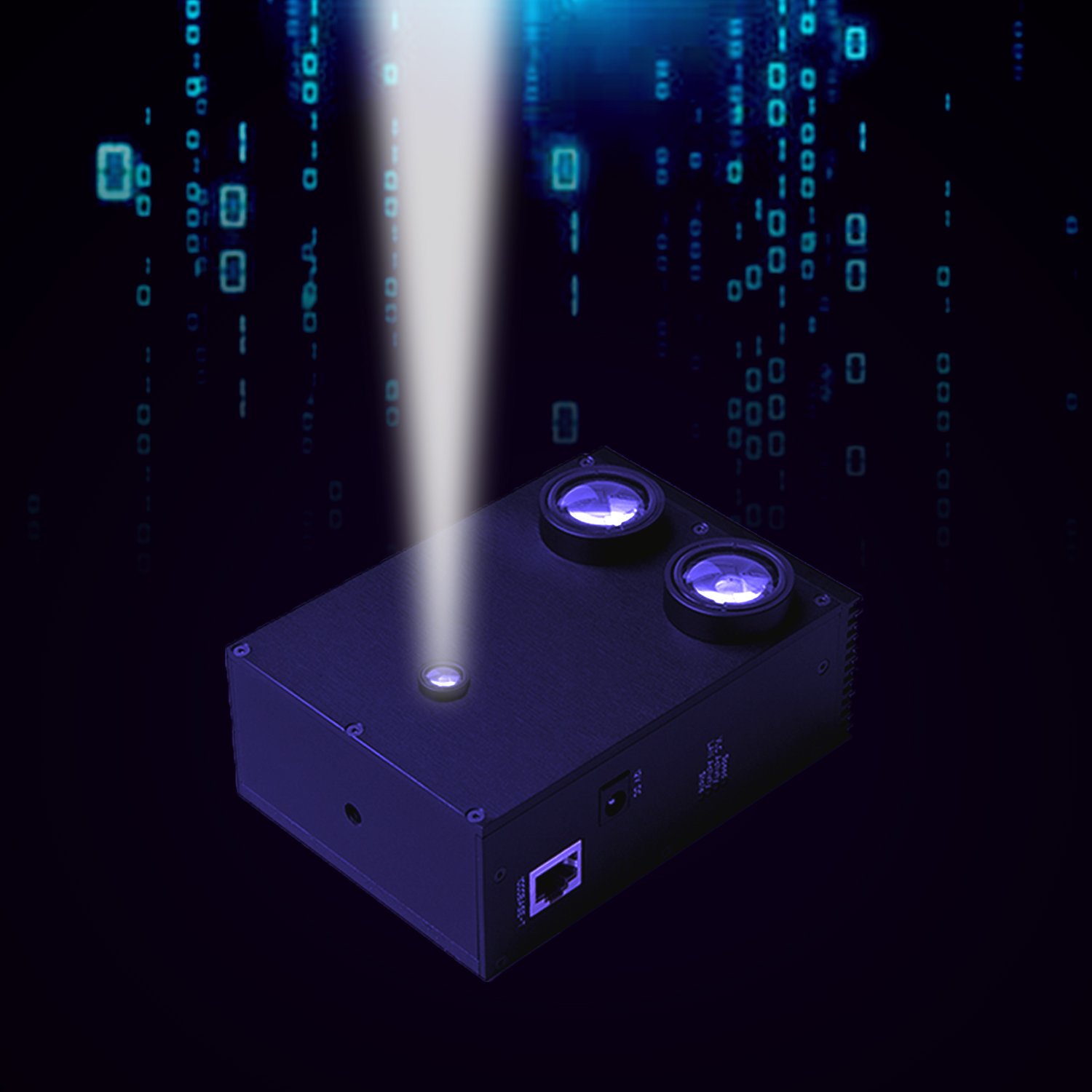
      KYOCERA SLD Laser, Inc. (KSLD), a world leader in commercialisation of laser light sources, has made the announcement of demonstrating LiFi data rate of 90 Gbps from their LiFi system at the CES 2022. The company is demonstrating its DataLight innovation for automotive and consumer applications at the Consumer Electronics Show, Las Vegas, January 5 - 7, 2022.

      James Raring, CEO of Kyocera SLD Laser, stated that: “We are thrilled to announce KSLD's achievement of world record LiFi data rate of 90 Gbps and our demonstration of this DataLight innovation at CES 2022 in our exhibition booth. To pioneer the future of lighting and wireless connectivity, our ultra-high speed LiFi technology is eye-safe, impervious to ambient lighting, secure, efficient, and RF-free. KSLD is commercialising LiFi solutions for customers in mobility applications, automotive, and undersea, as well as RF-sensitive environments such as airplane cabins, smart factories, healthcare, secure government facilities, and smart cities.”

      KSLD's DataLight LiFi innovation uses dual-emission visible and infrared LaserLight sources. These sources enable customers to commercialise potent intelligent illumination systems including functionality of spatially dynamic lighting, night vision illumination, accurate sensing and 3D LIDAR, as well as optical power transmission. DataLight engines can be configured for customer specific applications and have exciting potential to be performance optimised using artificial intelligence and machine learning.

      KYOCERA SLD Laser is pioneering the future of light. As stated on their website, new ideas are being harnessed to realise tomorrow’s product innovations.

      The next generation in lighting has arrived, shining brighter and farther than ever before. In the last decade, LED enabled a new generation of lighting that changed everything. Now, LaserLight outshines the limits of LED to deliver safe, high luminance white light from an incredibly small point source. LaserLight doesn’t just offer superior technology, it’s enabling entirely new opportunities.

      KYOCERA SLD are commercialising revolutionary semi-polar GaN LaserLight for the next generation of display, automotive, and specialty applications. LaserLight sources are used directly in single color and R-G-B applications, or integrated into laser pumped phosphor architectures.

      As an independent spin-off from Soraa Inc, SLD Laser was founded in 2013 by several leading global pioneers in solid state lighting, including Dr. Shuji Nakamura, a 2014 Nobel Laureate in Physics for his groundbreaking work with LEDs, Dr. Steve Denbaars, Dr. James Raring, and Dr. Paul Rudy. Our laser technology incorporates a robust intellectual property portfolio of over 500 patents. SLD Laser was acquired by KYOCERA Corporation and has commenced operations as a Kyocera group company under the name KYOCERA SLD Laser, Inc.

      Article source: https://www.kyocera-sldlaser.com/news/kyocera-sld-laser-achieves-world-record-lifi-communications-data-rate-100-times-faster-than-5g

      CES 2022

      As stated from their website, CES® is the most influential tech event in the world and the proving ground for breakthrough technologies and global innovators. This is where the world's biggest brands do business and meet new partners, and the sharpest innovators hit the stage. Owned and produced by the Consumer Technology Association (CTA)®, CES features every aspect of the tech sector.

      CES showcases companies including manufacturers, developers and suppliers of consumer technology hardware, content, technology delivery systems and more. It also includes a conference program where the world's business leaders and pioneering thinkers address the industry's most relevant issues.

      CES® 2022 will be held in Las Vegas from the 5th January 2022 providing a global audience access to major brands and startups, as well as the world’s most-influential leaders. Over 1900 companies have committed to exhibiting in Las Vegas and many more are being added each week.

      What is LiFi?

      LiFi, also known as "Light Fidelity" is a wireless optical networking technology, which uses light-emitting diodes (LEDs) to transmit data. In 2011, professor Harald Haas made a LiFi demonstration at the TED (Technology, Entertainment, Design) Global Talk on Visible Light Communication (VLC).

      VLC uses light as a medium to deliver high-speed communication like Wi-Fi and complies with the IEEE standard IEEE 802.15.7. The IEEE 802.15.7 is a high-speed, bidirectional, and fully networked wireless communication technology-based standard similar to Wi-Fi's IEEE 802.11.

      How does LiFi work?

      LiFi is a high speed, bidirectional, and fully networked wireless communication of data using light. LiFi constitutes of several light bulbs that form a wireless network.

      When an electrical current goes through to a LED light bulb, a stream of light (photons) emits from the lamp. LED bulbs are semiconductor devices, which means that the brightness of the light flowing through them can change at extremely high speeds. The signal is sent by modulating the light at different rates. The signal can then be received by a detector that interprets the changes in light intensity (the signal) as data. Also when the LED is ON, you transmit a digital 1, and when it is OFF, you transmit a 0.

      LiFi Benefits

      The primary benefits of LiFi are as follows:

      Security: Provides entirely secure access. Where there is no light there is no data.

      Safety: Does not produce electromagnetic radiation and does not interfere with existing electronic systems.

      Localisation: Allows localisation due to the small coverage area of LiFi access point - localisation can be used for very precise asset tracking.

      Data density: Provides ubiquitous high-speed wireless access that offers substantially greater data density (data rate per unit area) than RF through high bandwidth reuse.

      Credit to Oledcomm

      LiFi Applications

      LiFi can be used for so many applications and the list is increasing every year. You can read our updated list of Li-Fi applications at the following link:

      https://www.lifitn.com/blog/2021/2/13/top-30-li-fi-applications-updated-list-including-potential-applications

      Credit to pureLiFi

      In conclusion, if you are also interested to hear more information about the OWNII Coin or enquire about LiFi devices such as the LiFiMax and Trulifi, you can contact us through our chatbot or by sending an email through our contact us form. If you enjoyed this post and would like to hear more updates about LiFi technology, subscribe to our newsletter. Don’t forget to subscribe to our social media accounts. You can also join our Telegram group about LiFi technology on this link:

      https://t.me/joinchat/FMzOmsEKyJFrU6Af


      Oledcomm Unveils The LIFIMAXTab, The World First LiFi Android Tablet

      Table of Contents

        Oledcomm Unveils The LIFIMAXTab, The World First LIFiI Android Tablet

        Credit to Oledcomm

        Oledcomm

        Oledcomm designs and develops LiFi network interface devices that enable high-speed wireless data communication. It also serves LiFi equipment in the telecom, datacom, personal electronics, and industrial markets. The company’s product portfolio includes hubs, routers, switches, adapters, drivers, power supplies, and more.

        Oledcomm was founded in 2012 and is based in Paris, France. Oledcomm's adventure began in 2005 in the research laboratories of the University of Versailles-Saint-Quentin with the first work on communication by visible light.

        Following years of research & development and a passion for innovation, Oledcomm became the pioneer of LiFi (Light Fidelity) solutions and innovation on a global scale.

        Based in the Paris region, Oledcomm employs around 20 people and designs complete solutions for LiFi operation, including microcontrollers, LiFi photoreceivers and software platforms.

        Today, after more than 28 patents, 15 years of R&D, over 500 trusted clients and several awards, Oledcomm is pursuing a strong mission: to transform the 14 billion points of light in the world into a powerful communication network.

        LIFIMAXTab

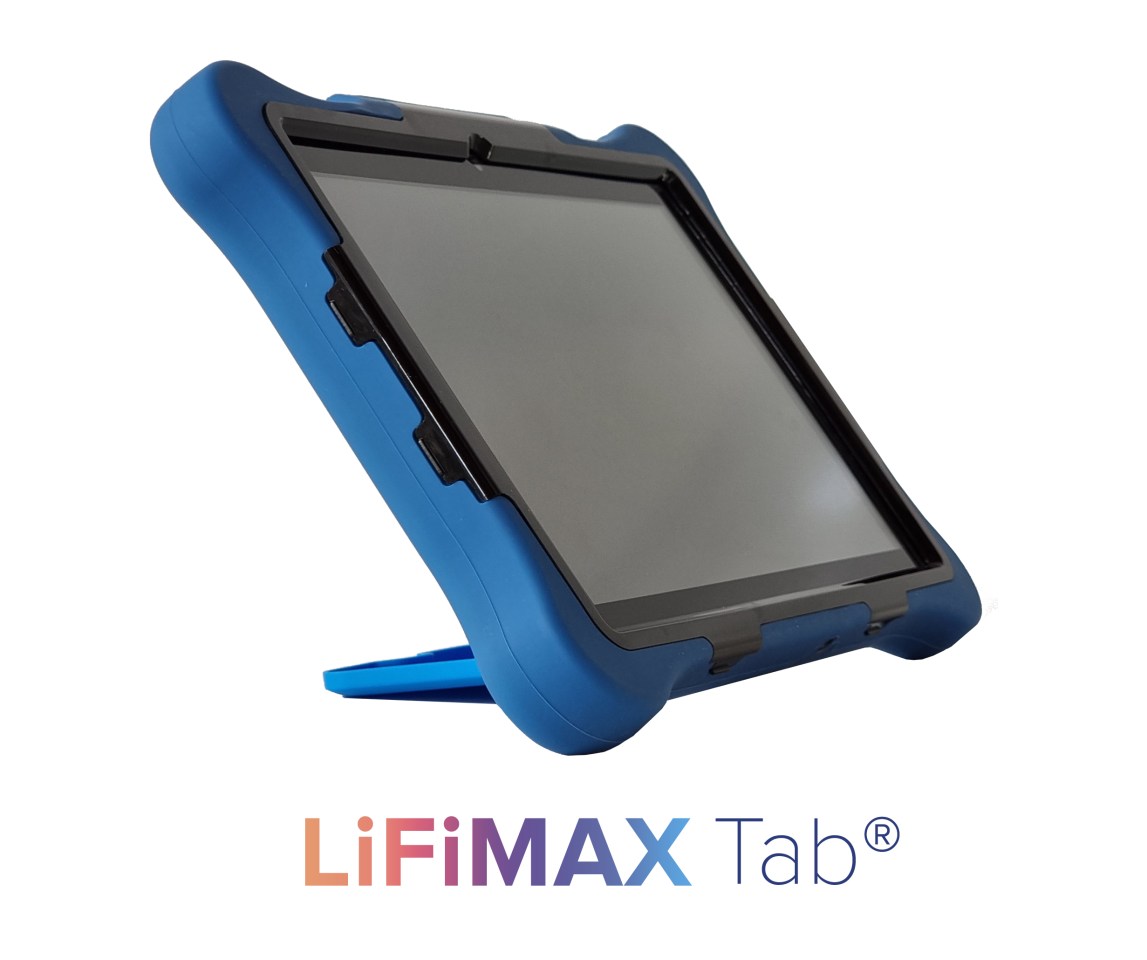
        The LiFiMAX Tab will be unveiled at the CES 2022. Oledcomm, the leader in high-speed Internet by invisible light, achieves 3Gbps in point-to-point connections and introduces LiFiMAXTab®, the first Android tablet with built-in LiFi.

        The tablet has a 10.1 "screen of 1920 x 1200 pixels with an 8-core MediaTek SoC (up to 2 GHz) with 4 GB of memory and 64 GB of storage. Two sensors of 2 and 5 MP are present, with an 8000 mAh battery, Wi-Fi 5. Nothing very exceptional… like the version of Android which is already showing a certain age: only 10.0, while 12 is available in the final version.

        This tablet therefore does not need a dongle to use LiFi, and it can reach up to 150 Mbs for downlink and uplink rates. The LiFiMAXTab will be available for sale from February 2022, at a starting price of around 400 euros (£340).

        Benjamin Azoulay, President of Oledcomm explains: “As every year since 2018, Oledcomm further emphasizes its leadership in LiFi by offering the first Android tablet with built-in LiFi, thus making LiFi available to all mobile devices. The tablet allows all family members to connect to the Internet, providing a reliable, stable connection without RF frequencies and a signal that cannot be intercepted outside the room".

        CES 2022

        As stated from their website, CES® is the most influential tech event in the world and the proving ground for breakthrough technologies and global innovators. This is where the world's biggest brands do business and meet new partners, and the sharpest innovators hit the stage. Owned and produced by the Consumer Technology Association (CTA)®, CES features every aspect of the tech sector.

        CES showcases companies including manufacturers, developers and suppliers of consumer technology hardware, content, technology delivery systems and more. It also includes a conference program where the world's business leaders and pioneering thinkers address the industry's most relevant issues.

        CES® 2022 will be held in Las Vegas from the 5th January 2022 providing a global audience access to major brands and startups, as well as the world’s most-influential leaders. Over 1900 companies have committed to exhibiting in Las Vegas and many more are being added each week.

        What is LiFi?

        LiFi, also known as "Light Fidelity" is a wireless optical networking technology, which uses light-emitting diodes (LEDs) to transmit data. In 2011, professor Harald Haas made a LiFi demonstration at the TED (Technology, Entertainment, Design) Global Talk on Visible Light Communication (VLC).

        VLC uses light as a medium to deliver high-speed communication like Wi-Fi and complies with the IEEE standard IEEE 802.15.7. The IEEE 802.15.7 is a high-speed, bidirectional, and fully networked wireless communication technology-based standard similar to Wi-Fi's IEEE 802.11.

        How does LiFi work?

        LiFi is a high speed, bidirectional, and fully networked wireless communication of data using light. LiFi constitutes of several light bulbs that form a wireless network.

        When an electrical current goes through to a LED light bulb, a stream of light (photons) emits from the lamp. LED bulbs are semiconductor devices, which means that the brightness of the light flowing through them can change at extremely high speeds. The signal is sent by modulating the light at different rates. The signal can then be received by a detector that interprets the changes in light intensity (the signal) as data. Also when the LED is ON, you transmit a digital 1, and when it is OFF, you transmit a 0.

        LiFi Benefits

        The primary benefits of LiFi are as follows:

        Security: Provides entirely secure access. Where there is no light there is no data.

        Safety: Does not produce electromagnetic radiation and does not interfere with existing electronic systems.

        Localisation: Allows localisation due to the small coverage area of LiFi access point - localisation can be used for very precise asset tracking.

        Data density: Provides ubiquitous high-speed wireless access that offers substantially greater data density (data rate per unit area) than RF through high bandwidth reuse.

        Credit to Oledcomm

        LiFi Applications

        LiFi can be used for so many applications and the list is increasing every year. You can read our updated list of Li-Fi applications at the following link:

        https://www.lifitn.com/blog/2021/2/13/top-30-li-fi-applications-updated-list-including-potential-applications

        Credit to pureLiFi

        In conclusion, if you are also interested to hear more information about the OWNII Coin or enquire about LiFi devices such as the LiFiMax and Trulifi, you can contact us through our chatbot or by sending an email through our contact us form. If you enjoyed this post and would like to hear more updates about LiFi technology, subscribe to our newsletter. Don’t forget to subscribe to our social media accounts. You can also join our Telegram group about LiFi technology on this link:

        https://t.me/joinchat/FMzOmsEKyJFrU6Af


        LiFi Rewind 2021 - A Look Back of LiFi News And Events That Occurred In 2021

        Table of Contents

          LiFi Rewind 2021 - A Look Back of LiFi News And Events That Occurred In 2021

          LiFi Rewind 2021

          HAPPY NEW YEAR,

          As a yearly tradition, we look back at news and events in relation to LiFi technology that occurred in the year 2021. 2021 was once again a year of great developments, achievements and advancements of LiFi technology. The following timeline displays the main events that took place in regards to LiFi.

          Testing of Li-Fi Technology at Malaga’s María Zambrano station by Adif
          — January 2021
          Akrund and Navanagar villages in Aravalli district of Gujara have becomed India’s first smart villages with LiFi-based Internet connectivity.
          — February 2021
          Light Rider Demonstrate LiFi to South Lakes Seahawk Cyber Club
          — February 2021
          Signify And World Forum The Hague Announced The World First LiFi Installation In A Congress Centre
          — February 2021
          World’s First Gigabit LiFi-connected Workbench by Pamungkas Sumasta
          — March 2021
          pureLiFi Announces The World First Large Scale LiFi Deployment and Deal With The US ARMY Europe and Africa
          — April 2021
          Airbus Corporate Jet Announces Partnership With Latécoère Interconnection Systems On Delivering ACJ Smart LiFi Monitors
          — May 2021
          pureLiFi Demonstrates Their New LiFi Enabled Phone At The OFC Conference
          — June 2021
          Signify and KIXS used Trulifi to create a Fast Field Data Link across runways and taxiways at Airbase Volkel, The Netherlands.
          — June 2021
          Oledcomm Presented Their New Gigabit Optical Front End (OFE) Chip At The MWC (Mobile World Congress) Barcelona 2021
          — July 2021
          Signify Joins HomeGrid Forum For The Expansion Of G.hn Technology Deployment With LiFi Technology
          — July 2021
          University Researchers Released A New Paper On Unexplored Semiconducting Materials for LiFi And Other Next-Generation Data Communications
          — August 2021
          Ahmedabad-based Nav Wireless Technologies Pvt Install LiFi Technology at The Students’ Educational and Cultural Movement of Ladakh (SECMOL)
          — September 2021
          Lucibel Announces The 3rd Generation of Their LiFi Products, The “Lucipanel”
          — September 2021
          Rolland-Plaisance Media Library Tests Li Fi Technology Products From Lucibel, Ellipz And Signify
          — October 2021
          Orange, The First French Operator, Engaging In LiFi Technology At Their New Store In The Kirchberg Shopping Centre
          — October 2021
          PureLiFi Tells LEDs Magazine That “Laser Light Will Better Serve LiFi”
          — October 2021
          Huneed And Latécoère Demonstrated LiFi Technology For Ships At The Seoul ADEX 2021
          — October 2021
          OWNii Coin (LiFi Cryptocurrency) Launch Update 2021
          — November 2021
          A Research Team From The IMDEA Networks Institute Introduces The PassiveLiFi, A Battery-Free System That Uses LiFi To Transmit RF Backscatter
          — November 2021
          Airbus Announced The Launching Of “The ACJ Smart LiFi Monitor” Developed In Partnership With Latécoère.
          — November 2021
          pureLiFi Named On EE Times Silicon 100 List For The Second Year In A Row
          — November 2021
          HomeGrid Forum Forms A New Leadership Team Including Five Task Forces to drive G.hn innovation and deployments
          — December 2021
          pureLiFi Announced Another Big Deal To Supply The US Army With Additional Kitefin LiFi Systems
          — December 2021
          Celebration of LiFi Excellence of Professor Harald Haas For His Research And Scientific Leadership
          — December 2021


          KYOCERA SLD Laser Announces World’s First Laser Light Engines for Dynamic Illumination, Sensing and LiFi Communications for Automotive and Consumer Applications
          — December 2021
          Researchers at MIT Have 3D printed The World’s Longest Rechargeable Battery As A Fibre 140m Long As Part Of A LiFi System
          — December 2021


          What is LiFi?


          LiFi, also known as "Light Fidelity" is a wireless optical networking technology, which uses light-emitting diodes (LEDs) to transmit data. In 2011, professor Harald Haas made a LiFi demonstration at the TED (Technology, Entertainment, Design) Global Talk on Visible Light Communication (VLC).

          VLC uses light as a medium to deliver high-speed communication like Wi-Fi and complies with the IEEE standard IEEE 802.15.7. The IEEE 802.15.7 is a high-speed, bidirectional, and fully networked wireless communication technology-based standard similar to Wi-Fi's IEEE 802.11.

          How does LiFi work?

          LiFi is a high speed, bidirectional, and fully networked wireless communication of data using light. LiFi constitutes of several light bulbs that form a wireless network.

          When an electrical current goes through to a LED light bulb, a stream of light (photons) emits from the lamp. LED bulbs are semiconductor devices, which means that the brightness of the light flowing through them can change at extremely high speeds. The signal is sent by modulating the light at different rates. The signal can then be received by a detector that interprets the changes in light intensity (the signal) as data. Also when the LED is ON, you transmit a digital 1, and when it is OFF, you transmit a 0.

          LiFi Benefits

          The primary benefits of LiFi are as follows:

          Security: Provides entirely secure access. Where there is no light there is no data.

          Safety: Does not produce electromagnetic radiation and does not interfere with existing electronic systems.

          Localisation: Allows localisation due to the small coverage area of LiFi access point - localisation can be used for very precise asset tracking.

          Data density: Provides ubiquitous high-speed wireless access that offers substantially greater data density (data rate per unit area) than RF through high bandwidth reuse.

          Credit to Oledcomm

          LiFi Applications

          LiFi can be used for so many applications and the list is increasing every year. You can read our updated list of Li-Fi applications at the following link:

          https://www.lifitn.com/blog/2021/2/13/top-30-li-fi-applications-updated-list-including-potential-applications

          Credit to pureLiFi

          In conclusion, if you are also interested to hear more information about the OWNII Coin or enquire about LiFi devices such as the LiFiMax and Trulifi, you can contact us through our chatbot or by sending an email through our contact us form. If you enjoyed this post and would like to hear more updates about LiFi technology, subscribe to our newsletter. Don’t forget to subscribe to our social media accounts. You can also join our Telegram group about LiFi technology on this link:

          https://t.me/joinchat/FMzOmsEKyJFrU6Af

          Researchers at MIT Have 3D Printed The World’s Longest Rechargeable Battery As A Fibre 140m Long As Part Of A LiFi System

          Table of Contents

            Researchers at MIT Have 3D printed The World’s Longest Rechargeable Battery As A Fibre 140m Long As Part Of A LiFi System

            Credit to pureLiFi

            MIT Research Team

            Massachusetts Institute of Technology (MIT) is a private land-grant research university in Cambridge, Massachusetts. Established in 1861, MIT has since played a key role in the development of modern technology and science and has been ranked among the top academic institutions in the world.

            Founded in response to the increasing industrialization of the United States, MIT adopted a European polytechnic university model and stressed laboratory instruction in applied science and engineering. The institute has an urban campus that extends more than a mile (1.6 km) alongside the Charles River, and encompasses a number of major off-campus facilities such as the MIT Lincoln Laboratory, the Bates Center, and the Haystack Observatory, as well as affiliated laboratories such as the Broad and Whitehead Institutes.

            Researchers at MIT in the US recently developed a rechargeable lithium-ion battery in the form of a fibre that could be woven into fabrics.

            As a proof of concept the team produced the world’s longest fibre battery at 140 meters long with a process that could produce a battery as long as 1 km. The 140m fibre has an energy storage capacity of 123 mAh to charge smartwatches or phones and is only a few hundred microns in diameter, making it suitable for weaving into materials for wearable systems.

            The fibre battery is made with the use of new electrolyte gels and a standard fibre-drawing system that starts with a larger cylinder containing all the components and then heats it to just below its melting point. The material is drawn through a narrow opening to compress all the parts to a fraction of their original diameter, while maintaining all the original arrangement of parts.

            This embeds the lithium and other materials inside the fibre, with a protective outside coating, thus directly making this version stable and waterproof. “There’s no obvious upper limit to the length. We could definitely do a kilometre-scale length,” says researcher Tural Khudiyev, who is now an assistant professor at National University of Singapore.

            “This is the first 3D printing of a fibre battery device,” said Khudiyev. “After printing, you do not need to add anything else, because everything is already inside the fibre, all the metals, all the active materials. It’s just a one-step printing. That’s a first.”

            “When we embed the active materials inside the fibrer, that means sensitive battery components already have a good sealing and all the active materials are very well-integrated, so they don’t change their position,” he said. The aspect ratio is up to a million, making it practical to use standard weaving equipment to create fabrics that incorporate the batteries as well as electronic systems.

            A demonstration device uses the fibre battery to power an LED and receiver in a LiFi light-based communication system. The team has also embedded multiple LEDs into the fibre.


            Article source: https://www.eenewseurope.com/news/worlds-longest-fibre-battery-powers-lifi-system

            What is LiFi?

            LiFi, also known as "Light Fidelity" is a wireless optical networking technology, which uses light-emitting diodes (LEDs) to transmit data. In 2011, professor Harald Haas made a LiFi demonstration at the TED (Technology, Entertainment, Design) Global Talk on Visible Light Communication (VLC).

            VLC uses light as a medium to deliver high-speed communication like Wi-Fi and complies with the IEEE standard IEEE 802.15.7. The IEEE 802.15.7 is a high-speed, bidirectional, and fully networked wireless communication technology-based standard similar to Wi-Fi's IEEE 802.11.

            How does LiFi work?

            LiFi is a high speed, bidirectional, and fully networked wireless communication of data using light. LiFi constitutes of several light bulbs that form a wireless network.

            When an electrical current goes through to a LED light bulb, a stream of light (photons) emits from the lamp. LED bulbs are semiconductor devices, which means that the brightness of the light flowing through them can change at extremely high speeds. The signal is sent by modulating the light at different rates. The signal can then be received by a detector that interprets the changes in light intensity (the signal) as data. Also when the LED is ON, you transmit a digital 1, and when it is OFF, you transmit a 0.

            LiFi Benefits

            The primary benefits of LiFi are as follows:

            Security: Provides entirely secure access. Where there is no light there is no data.

            Safety: Does not produce electromagnetic radiation and does not interfere with existing electronic systems.

            Localisation: Allows localisation due to the small coverage area of LiFi access point - localisation can be used for very precise asset tracking.

            Data density: Provides ubiquitous high-speed wireless access that offers substantially greater data density (data rate per unit area) than RF through high bandwidth reuse.

            Credit to Oledcomm

            LiFi Applications

            LiFi can be used for so many applications and the list is increasing every year. You can read our updated list of Li-Fi applications at the following link:

            https://www.lifitn.com/blog/2021/2/13/top-30-li-fi-applications-updated-list-including-potential-applications

            Credit to pureLiFi

            In conclusion, if you are also interested to hear more information about the OWNII Coin or enquire about LiFi devices such as the LiFiMax and Trulifi, you can contact us through our chatbot or by sending an email through our contact us form. If you enjoyed this post and would like to hear more updates about LiFi technology, subscribe to our newsletter. Don’t forget to subscribe to our social media accounts. You can also join our Telegram group about LiFi technology on this link:

            https://t.me/joinchat/FMzOmsEKyJFrU6Af


            KYOCERA SLD Laser Announces World’s First Laser Light Engines for Dynamic Illumination, Sensing and LiFi Communications for Automotive and Consumer Applications

            Table of Contents

              KYOCERA SLD Laser Announces World’s First Laser Light Engines for Dynamic Illumination, Sensing and LiFi Communications for Automotive and Consumer Applications

              KYOCERA

              KYOCERA SLD Laser, Inc. (KSLD), a world leader in commercialisation of laser light sources, has made the announcement of introducing the world’s first LaserLightTM engines that deliver dynamic white and infrared (IR) night vision illumination along with sensing and LiFi communication functionality for automotive and consumer applications. The company will demonstrate its award winning products, new LaserLight engines, and recent innovations in optical power transfer and lighting disinfection at the Consumer Electronics Show January 5 – 8, 2022.

              Following the successful launching of the white LaserLight into automotive headlights in 2019, the company is now introducing LaserLight engines that feature dual white/IR emission to fuse multiple critical functionalities including dynamic white lighting and infrared night vision illumination that can be combined with sensing and LiFi communications. The high brightness collimated white light provides 1 km beam distance while independently delivering IR illumination for night vision cameras to enable maximum machine vision visibility and safety. White/IR dual emission sources are critical for all mobility applications including automotive, avionics, drones, railway, and marine. In the consumer and professional product space, the dual emission sources will find application in portable lighting products, night vision illuminators, and rangefinders for recreation and outdoor, search & rescue, and security applications. Until now, dual emission white/IR sources have not been possible because LEDs and legacy lamp-based light sources are unable to deliver high brightness white and IR emission from the same point source, and they are incapable of being modulated at the high speeds required for accurate sensing and fast data rates.

              The illumination pattern of KSLD’s LaserLight engines can be electronically adjusted on-demand for efficient and high precision dynamic beam shaping. In sensing and imaging, the fast temporal response of KSLD’s LaserLight enables high-resolution ranging at distances over 250 meters for automotive ADAS systems as well as consumer rangefinding applications. Beyond single-point depth sensing, the LaserLight engines can be combined with imaging sensors to facilitate full 3D LiDAR systems. To support the future of wireless connectivity, the LaserLight engines deliver high-speed, secure, efficient, RF-free LiFi communication with data rates exceeding 1 gigabit per second for mobility applications including car-to-x exterior, vehicle interiors, airplane cabins, as well as future smart cities, healthcare, secure facilities, and smart factories. By providing both white and IR from the same source and combining dynamic lighting, accurate sensing, and high speed communication, KSLD’s LaserLight engines enable customers to commercialize potent intelligent illumination systems. These LaserLight engines can be configured for customer specific applications and have exciting potential to be performance optimized using artificial intelligence and machine learning.

              Beyond lighting, sensing, and communication, KSLD will demonstrate the world’s first optical power transmission over fiber using its innovative, high efficiency GaN laser and photocell semiconductor chip technology at CES 2022. This innovation in the field of power transfer has the potential to replace heavy and sensitive metal wire harnesses in mobility applications with a lightweight, noise-free optical solution, increasing the efficiency and extending the range of electric vehicles and airplanes, while making them more secure and safe. This power-over-light solution can be configured to include optical data communications to deliver data and power to sensors in a distributed system such as a vehicle.

              Using the same GaN laser technology, KSLD will be demonstrating the world’s first LaserLight optical disinfection module, which delivers dual white and violet light emission to provide ambient white lighting while neutralizing bacterial growth for applications in ride sharing vehicles, airliners and healthcare facilities. The LaserLight optical disinfection modules are configurable to deliver light through optical fiber in remote lighting applications where optical disinfection is needed, such as in refrigerators, spas, pools, and fountains.

              KSLD will demononstrate its existing LaserLight white light products which were first adopted in car headlights on the road in 2019, delivering high brightness, high visibility, eye-safe illumination by generating precise beam patterns with minimum glare from miniature modules that save critical space in the car and provide unmatched styling and design freedom. For the automotive aftermarket, KSLD will display LaserLight sources deployed in off-road applications including in podium finisher vehicles since 2018 at the BFGoodrich SCORE Baja 1000, the world’s most prestigious off-road motorsport race. KSLD’s fiber light sources will be on display delivering white emissive fiber illumination with up to 10,000 cd/m2 for ultra-bright lighting for vehicle exterior grills, logos, and interiors. These sources deliver 10 times the brightness of LED solutions, producing brilliant and efficient illumination from thin, low cost plug-and-play fiber optics and a modular light source.

              KYOCERA SLD Laser will host meetings in person at CES 2022 in West Hall Exhibition Booth 3423 and virtually by appointment. You can contact Kristen Hanna at KHanna@SLDlaser.com for scheduling apointment.

              KYOCERA SLD Laser is pioneering the future of light. As stated on their website, new ideas are being harnessed to realise tomorrow’s product innovations.

              The next generation in lighting has arrived, shining brighter and farther than ever before. In the last decade, LED enabled a new generation of lighting that changed everything. Now, LaserLight outshines the limits of LED to deliver safe, high luminance white light from an incredibly small point source. LaserLight doesn’t just offer superior technology, it’s enabling entirely new opportunities.

              KYOCERA SLD are commercialising revolutionary semi-polar GaN LaserLight for the next generation of display, automotive, and specialty applications. LaserLight sources are used directly in single color and R-G-B applications, or integrated into laser pumped phosphor architectures.

              As an independent spin-off from Soraa Inc, SLD Laser was founded in 2013 by several leading global pioneers in solid state lighting, including Dr. Shuji Nakamura, a 2014 Nobel Laureate in Physics for his groundbreaking work with LEDs, Dr. Steve Denbaars, Dr. James Raring, and Dr. Paul Rudy. Our laser technology incorporates a robust intellectual property portfolio of over 500 patents. SLD Laser was acquired by KYOCERA Corporation and has commenced operations as a Kyocera group company under the name KYOCERA SLD Laser, Inc.

              Article source: https://www.kyocera-sldlaser.com/news/kyocera-sld-laser-introduces-worlds-first-laser-light-engines-for-dynamic-illumination-sensing-and-lifi-communications-for-automotive-and-consumer-applications

              What is LiFi?

              LiFi, also known as "Light Fidelity" is a wireless optical networking technology, which uses light-emitting diodes (LEDs) to transmit data. In 2011, professor Harald Haas made a LiFi demonstration at the TED (Technology, Entertainment, Design) Global Talk on Visible Light Communication (VLC).

              VLC uses light as a medium to deliver high-speed communication like Wi-Fi and complies with the IEEE standard IEEE 802.15.7. The IEEE 802.15.7 is a high-speed, bidirectional, and fully networked wireless communication technology-based standard similar to Wi-Fi's IEEE 802.11.

              How does LiFi work?

              LiFi is a high speed, bidirectional, and fully networked wireless communication of data using light. LiFi constitutes of several light bulbs that form a wireless network.

              When an electrical current goes through to a LED light bulb, a stream of light (photons) emits from the lamp. LED bulbs are semiconductor devices, which means that the brightness of the light flowing through them can change at extremely high speeds. The signal is sent by modulating the light at different rates. The signal can then be received by a detector that interprets the changes in light intensity (the signal) as data. Also when the LED is ON, you transmit a digital 1, and when it is OFF, you transmit a 0.

              LiFi Benefits

              The primary benefits of LiFi are as follows:

              Security: Provides entirely secure access. Where there is no light there is no data.

              Safety: Does not produce electromagnetic radiation and does not interfere with existing electronic systems.

              Localisation: Allows localisation due to the small coverage area of LiFi access point - localisation can be used for very precise asset tracking.

              Data density: Provides ubiquitous high-speed wireless access that offers substantially greater data density (data rate per unit area) than RF through high bandwidth reuse.

              Credit to Oledcomm

              LiFi Applications

              LiFi can be used for so many applications and the list is increasing every year. You can read our updated list of Li-Fi applications at the following link:

              https://www.lifitn.com/blog/2021/2/13/top-30-li-fi-applications-updated-list-including-potential-applications

              Credit to pureLiFi

              In conclusion, if you are also interested to hear more information about the OWNII Coin or enquire about LiFi devices such as the LiFiMax and Trulifi, you can contact us through our chatbot or by sending an email through our contact us form. If you enjoyed this post and would like to hear more updates about LiFi technology, subscribe to our newsletter. Don’t forget to subscribe to our social media accounts. You can also join our Telegram group about LiFi technology on this link:

              https://t.me/joinchat/FMzOmsEKyJFrU6Af

              Celebration of LiFi Excellence of Professor Harald Haas For His Research And Scientific Leadership

              Table of Contents

                Celebration of LiFi Excellence of Professor Harald Haas For His Research And Scientific Leadership

                Credit to pureLiFi

                pureLiFi

                pureLiFi develops technology for communication networks that integrates data and lighting utility infrastructures. It offers Li-Fi enabled devices that convert the beam of lights into an electrical signal. The signal is then converted back into data. The company was founded in 2012 and is headquartered in Edinburgh.

                The “Father of LiFi”, co-founder and Chief Scientific Officer of pureLiFi has been celebrated for his research and scientific leadership in the field of optical wireless communications by two separate prominent organisations as 2021 comes to end.

                As part of the annual LpS Digital Conference and Live Stream event on the 2nd of December 2021, Professor Harald Haas was presented with the Scientific Lecture Award for his lecture named “LiFi, The Catalyst for New LED Applications” where he highlighted the need for higher bandwidth to match the continuously growing communication data volume and gave an overview of ongoing experimental research.

                A few weeks previous, Professor Haas was also listed by Clarivate Analytics as one of the ‘highly cited’ researchers in LiFi technology research. The list recognises pioneers in their fields over the last decade, demonstrated by the production of multiple highly-cited papers that rank in the top 1% by citations. Clarivate Analytics states that of the world’s scientists and social scientists, Clarivate Analytics, Highly Cited Researchers are truly one in 1,000.

                pureLiFi CEO Alistair Banham stated that “We would like to extend a well-deserved congratulations to Harald for this significant recognition which is a testament to the high standard of research and demonstrable scientific leadership. This further cements our leadership position in the field of LiFi and will support the high level of innovation required to revolutionise the way everyone connects through Light

                Professor Harald Haas is also Director of the LiFi Research and Development Centre, and Professor of Engineering at the University of Strathclyde. Haas set up and co-founded pureLiFi with Dr Mostafa Afgani in 2012 who are now global leaders in the development of LiFi systems and components which help solve challenges faced by traditional wireless communications technologies such as WiFi, 4G and 5G which use radio frequencies for communications and are subject to congestion, interference, and security vulnerabilities. LiFi uses light rather than radio frequencies resulting in wireless communications that is faster, more reliable, significantly more secure, and can provide up to 2600 more bandwidth than WiFi and cellular combined.

                Credit to pureLiFi

                As stated many times by Sarah Scace, Director of Marketing & Communications, pureLiFi are recognised rising stars in the global technology scene and named one of the “EE Times Silicon 100 start-ups to watch” two years running. Having now secured multiple million-dollar deals with the US Army Europe, pureLiFi have officially made their mark on wireless communications marketplace.

                With growing demand for bandwidth hungry technologies, such as augmented and virtual reality, next generation manufacturing and the metaverse, new wireless communications technologies are needed to enable new use cases and technology breakthroughs.

                pureLiFi is now offering high-speed components ready for integration into consumer electronics such as mobile phones, laptops and tablets, with a view of taking LiFi mainstream and offering unprecedented bandwidth, ultra-fast speeds and military grade security to the consumer.

                Credit to pureLiFi

                Credit to pureLiFi

                Article source: https://www.einnews.com/pr_news/558376003/professor-harald-haas-of-purelifi-is-recognised-for-lifi-excellence-as-year-closes

                What is LiFi?

                LiFi, also known as "Light Fidelity" is a wireless optical networking technology, which uses light-emitting diodes (LEDs) to transmit data. In 2011, professor Harald Haas made a LiFi demonstration at the TED (Technology, Entertainment, Design) Global Talk on Visible Light Communication (VLC).

                VLC uses light as a medium to deliver high-speed communication like Wi-Fi and complies with the IEEE standard IEEE 802.15.7. The IEEE 802.15.7 is a high-speed, bidirectional, and fully networked wireless communication technology-based standard similar to Wi-Fi's IEEE 802.11.

                How does LiFi work?

                LiFi is a high speed, bidirectional, and fully networked wireless communication of data using light. LiFi constitutes of several light bulbs that form a wireless network.

                When an electrical current goes through to a LED light bulb, a stream of light (photons) emits from the lamp. LED bulbs are semiconductor devices, which means that the brightness of the light flowing through them can change at extremely high speeds. The signal is sent by modulating the light at different rates. The signal can then be received by a detector that interprets the changes in light intensity (the signal) as data. Also when the LED is ON, you transmit a digital 1, and when it is OFF, you transmit a 0.

                LiFi Benefits

                The primary benefits of LiFi are as follows:

                Security: Provides entirely secure access. Where there is no light there is no data.

                Safety: Does not produce electromagnetic radiation and does not interfere with existing electronic systems.

                Localisation: Allows localisation due to the small coverage area of LiFi access point - localisation can be used for very precise asset tracking.

                Data density: Provides ubiquitous high-speed wireless access that offers substantially greater data density (data rate per unit area) than RF through high bandwidth reuse.

                Credit to Oledcomm

                LiFi Applications

                LiFi can be used for so many applications and the list is increasing every year. You can read our updated list of Li-Fi applications at the following link:

                https://www.lifitn.com/blog/2021/2/13/top-30-li-fi-applications-updated-list-including-potential-applications

                Credit to pureLiFi

                In conclusion, if you are also interested to hear more information about the OWNII Coin or enquire about LiFi devices such as the LiFiMax and Trulifi, you can contact us through our chatbot or by sending an email through our contact us form. If you enjoyed this post and would like to hear more updates about LiFi technology, subscribe to our newsletter. Don’t forget to subscribe to our social media accounts. You can also join our Telegram group about LiFi technology on this link:

                https://t.me/joinchat/FMzOmsEKyJFrU6Af


                pureLiFi Announced Another Big Deal To Supply The US Army With Additional Kitefin LiFi Systems

                Table of Contents

                  pureLiFi Announced Another Big Deal To Supply The US Army With Additional Kitefin LiFi Systems

                  Credit to pureLiFi

                  pureLiFi

                  pureLiFi just made the announcement of securing another big multi-million-dollar deal to supply the US Army with thousands of additional Kitefin™ LiFi Defence systems.

                  pureLiFi develops technology for communication networks that integrates data and lighting utility infrastructures. It offers Li-Fi enabled devices that convert the beam of lights into an electrical signal. The signal is then converted back into data. The company was founded in 2012 and is headquartered in Edinburgh.

                  Technologies such as WiFi, 4G and 5G use radio frequencies to transmit data, which produce large areas of radio frequency emissions that are easy to detect, intercept, and can cause overcrowding resulting in slow speeds and unreliable communications due to increased RF congestion. LiFi uses light rather than radio frequencies resulting in wireless communications that is more reliable, significantly more secure, and simpler to deploy.

                  The US Army Europe is expanding their use of this cutting-edge technology as LiFi has proven to be reliable for the most critical communications. LiFi not only enhances the US Army’s wireless connectivity toolset, but has demonstrated in action, that LiFi solves real problems faced by defence and national security.

                  CW5 Andrew Foreman, USAREUR-AF Chief Technology Officer stated the following comment:

                  LiFi technologies answer all three of the serious issues associated with the RF portion of the spectrum. First, due to the low probability of detection, jamming, and intrusion, FSO and LiFi offer an extremely survivable form of communications when in direct conflict with a near-peer adversary.”

                  Credit to pureLiFi

                  Alistair Banham, CEO of pureLiFi stated that: “The Kitefin™ system is now officially disrupting the ecosystem of wireless defence technologies. Kitefin provides the latest advancement s protecting mission critical communications and has the potential to save missions and lives.

                  We won’t stop here; the train has now left the station and LiFi is on its way to even broader deployments and new markets. We will put LiFi in the hands of millions of users

                  Credit to pureLiFi

                  As stated many times by Sarah Scace, Director of Marketing & Communications, pureLiFi are recognised rising stars in the global technology scene and named one of the “EE Times Silicon 100 start-ups to watch” two years running. Having now secured multiple million-dollar deals with the US Army Europe, pureLiFi have officially made their mark on wireless communications marketplace.

                  With growing demand for bandwidth hungry technologies, such as augmented and virtual reality, next generation manufacturing and the metaverse, new wireless communications technologies are needed to enable new use cases and technology breakthroughs.

                  pureLiFi is now offering high-speed components ready for integration into consumer electronics such as mobile phones, laptops and tablets, with a view of taking LiFi mainstream and offering unprecedented bandwidth, ultra-fast speeds and military grade security to the consumer.

                  In our previous article in April 2021, Alistair Banham, CEO of pureLiFi, stated the following statement about the adoption of LiFi technology:

                  This largest real-world deployment of LiFi with the US Army Europe and Africa is a testament to the benefits that LiFi can offer and the technology’s usability. If one of the most significant and advanced Defense organisations in the world can rely on LiFi for the most critical of communications, LiFi can offer unprecedented benefits to the consumer. LiFi, like so many technologies before it, is on a classic journey of adoption in Defense to wide-spread acceptance in the consumer market and eventually LiFi in everyone’s home

                  Since offering our gigabit components to the market we have developed some very innovative proof of concept integrations with some of the world’s largest consumer electronic and mobile phone brands. We are closer than ever to seeing consumers having LiFi in their homes and their pockets.

                  This first major deployment with the US ARMY Europe and Africa is just the beginning.

                  Credit to pureLiFi

                  Credit to pureLiFi

                  What is LiFi?

                  LiFi, also known as "Light Fidelity" is a wireless optical networking technology, which uses light-emitting diodes (LEDs) to transmit data. In 2011, professor Harald Haas made a LiFi demonstration at the TED (Technology, Entertainment, Design) Global Talk on Visible Light Communication (VLC).

                  VLC uses light as a medium to deliver high-speed communication like Wi-Fi and complies with the IEEE standard IEEE 802.15.7. The IEEE 802.15.7 is a high-speed, bidirectional, and fully networked wireless communication technology-based standard similar to Wi-Fi's IEEE 802.11.

                  How does LiFi work?

                  LiFi is a high speed, bidirectional, and fully networked wireless communication of data using light. LiFi constitutes of several light bulbs that form a wireless network.

                  When an electrical current goes through to a LED light bulb, a stream of light (photons) emits from the lamp. LED bulbs are semiconductor devices, which means that the brightness of the light flowing through them can change at extremely high speeds. The signal is sent by modulating the light at different rates. The signal can then be received by a detector that interprets the changes in light intensity (the signal) as data. Also when the LED is ON, you transmit a digital 1, and when it is OFF, you transmit a 0.

                  LiFi Benefits

                  The primary benefits of LiFi are as follows:

                  Security: Provides entirely secure access. Where there is no light there is no data.

                  Safety: Does not produce electromagnetic radiation and does not interfere with existing electronic systems.

                  Localisation: Allows localisation due to the small coverage area of LiFi access point - localisation can be used for very precise asset tracking.

                  Data density: Provides ubiquitous high-speed wireless access that offers substantially greater data density (data rate per unit area) than RF through high bandwidth reuse.

                  Credit to Oledcomm

                  LiFi Applications

                  LiFi can be used for so many applications and the list is increasing every year. You can read our updated list of Li-Fi applications at the following link:

                  https://www.lifitn.com/blog/2021/2/13/top-30-li-fi-applications-updated-list-including-potential-applications

                  Credit to pureLiFi

                  In conclusion, if you are also interested to hear more information about the OWNII Coin or enquire about LiFi devices such as the LiFiMax and Trulifi, you can contact us through our chatbot or by sending an email through our contact us form. If you enjoyed this post and would like to hear more updates about LiFi technology, subscribe to our newsletter. Don’t forget to subscribe to our social media accounts. You can also join our Telegram group about LiFi technology on this link:

                  https://t.me/joinchat/FMzOmsEKyJFrU6Af