Airbus Announced The Launching Of “The ACJ Smart LiFi Monitor” Developed In Partnership With Latécoère.

Table of Contents

    Airbus Announced The Launching Of “The ACJ Smart LiFi Monitor” Developed In Partnership With Latécoère.

    Dubai Air Show 2021

    The Dubai Air Show is a biennial air show held in Dubai, United Arab Emirates under the patronage of Sheikh Mohammed bin Rashid Al Maktoum, Vice President and Prime Minister of the UAE and Ruler of Dubai, in cooperation with Dubai Civil Aviation Authority, Dubai Airports, Dubai World Central and the UAE Armed Forces. The 2021 Dubai Airshow began on 14 November 2021 and is expected to last for 5 days until 18 November 2021.

    The event to be held in a live format will be the most important and critical point of convergence in 2021 where the future of the global aerospace industry will be showcased and analysed.

    The record-breaking Dubai Airshow is one of the largest and most successful air shows in the world connecting experts from commercial and business aviation, defence and military, emerging aerospace technology, start-ups, aircraft interiors, air traffic management, maintenance, repair and overhaul (MRO), space and air cargo to facilitate successful global trade.

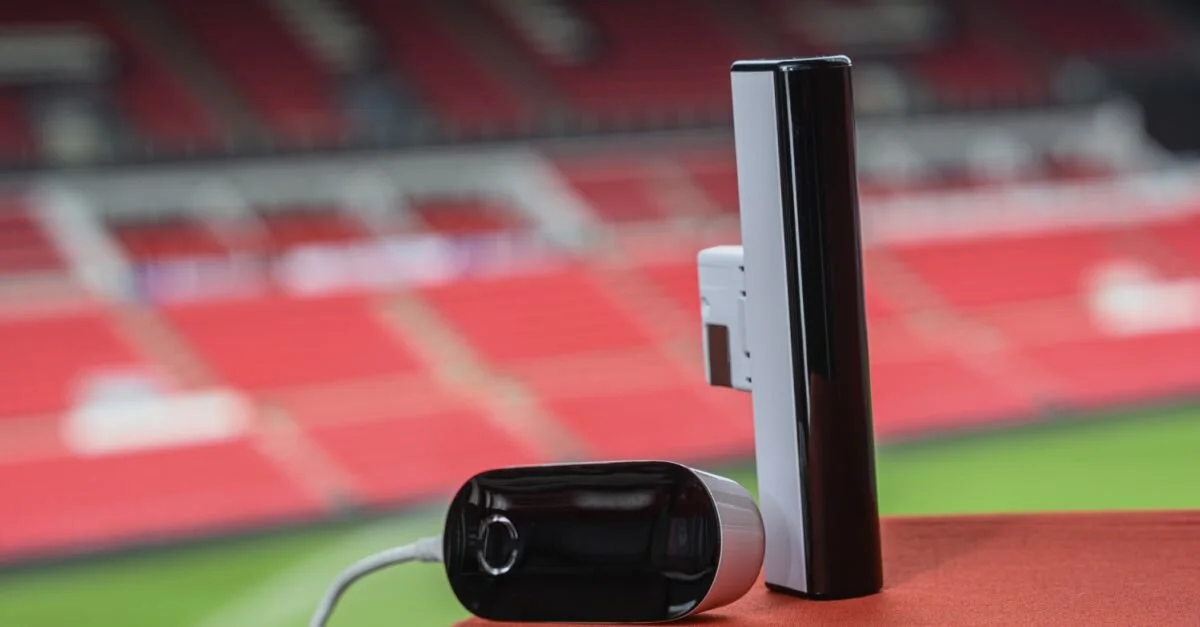
    The ACJ Smart LiFi Monitor

    At the Dubai Air Show 2021, Airbus announced the launching of “The ACJ Smart LiFi Monitor” developed with Latécoère.

    Photo credit to Runawaygirlnetwork

    Airbus Corporate Jets (ACJ) and Alpha Star Aviation signed a letter of understanding at the Dubai Airshow for a new and unique in-flight entertainment (IFE) technology - "The ACJ Smart LiFi Monitor", in the presence of Abdulnaser Al Kheraif and Ibrahim Al Yaheyan, respectively CEO and VP-Tech of Alpha Star Aviation, and Benoit Defforge, president of ACJ.

    Developed in partnership with Latécoère, this new technology was designed as an easy “plug and play” solution.

    In May 2021, Airbus stated that the ACJ Smart LiFi Monitor “provides a unique entertainment experience and was designed to be an easy plug and play solution”. It is a multi-technology smart 4K monitor offering Wi-Fi , Bluetooth and LiFi connectivity . It will include analog audio output, USB-C ports as well as HDMI connections. Features include audio video on demand (AVOD), streaming, mirroring, a web browser, live TV, and its own built-in video conferencing.

    You can read our previous article on the partnership between Airbus Corporate Jet and Latécoère Interconnection Systems On Delivering ACJ Smart LiFi Monitors on the link below:

    https://www.lifitn.com/blog/2021/5/19/airbus-corporate-jet-announces-partnership-with-latcore-interconnection-systems-on-delivering-acj-smart-lifi-monitors
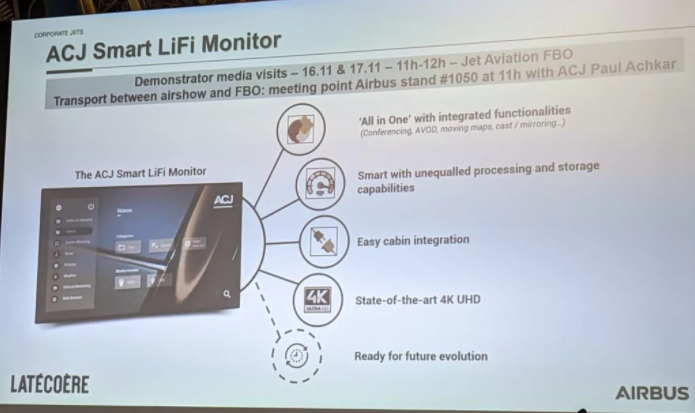
    Photo credit to Paxex

    With this agreement, Alpha Star Aviation, the private aviation service provider headquartered in Riyadh, Saudi Arabia, became the launch customer of “The ACJ Smart LiFi Monitor”. The client selected 12 monitors for three of its Airbus business jets in order to offer the best passenger experience in its category, perfectly in line with its objective of being a benchmark in private aviation.

     More than 200 Airbus corporate jets are in service on every continent, including Antarctica, highlighting their versatility in challenging environments.

    ACJ offers the most modern and comprehensive corporate jet family in the world, giving customers the greatest choice of unique, customisation and spacious cabins, allowing them to select the comfort they want in the size they need – offering them a unique flying experience.

    Photo credit to L.BORREL

    Article source: https://www.airbus.com/en/newsroom/press-releases/2021-11-airbus-announces-launch-customer-for-its-new-in-flight

    What is LiFi?

    LiFi, also known as "Light Fidelity" is a wireless optical networking technology, which uses light-emitting diodes (LEDs) to transmit data. In 2011, professor Harald Haas made a LiFi demonstration at the TED (Technology, Entertainment, Design) Global Talk on Visible Light Communication (VLC).

    VLC uses light as a medium to deliver high-speed communication like Wi-Fi and complies with the IEEE standard IEEE 802.15.7. The IEEE 802.15.7 is a high-speed, bidirectional, and fully networked wireless communication technology-based standard similar to Wi-Fi's IEEE 802.11.

    How does LiFi work?

    LiFi is a high speed, bidirectional, and fully networked wireless communication of data using light. LiFi constitutes of several light bulbs that form a wireless network.

    When an electrical current goes through to a LED light bulb, a stream of light (photons) emits from the lamp. LED bulbs are semiconductor devices, which means that the brightness of the light flowing through them can change at extremely high speeds. The signal is sent by modulating the light at different rates. The signal can then be received by a detector that interprets the changes in light intensity (the signal) as data. Also when the LED is ON, you transmit a digital 1, and when it is OFF, you transmit a 0.

    LiFi Benefits

    The primary benefits of LiFi are as follows:

    Security: Provides entirely secure access. Where there is no light there is no data.

    Safety: Does not produce electromagnetic radiation and does not interfere with existing electronic systems.

    Localisation: Allows localisation due to the small coverage area of LiFi access point - localisation can be used for very precise asset tracking.

    Data density: Provides ubiquitous high-speed wireless access that offers substantially greater data density (data rate per unit area) than RF through high bandwidth reuse.
    Credit to Signify

    LiFi Applications

    LiFi can be used for so many applications and the list is increasing every year. You can read our updated list of Li-Fi applications at the following link:

    https://www.lifitn.com/blog/2021/2/13/top-30-li-fi-applications-updated-list-including-potential-applications

    Credit to pureLiFi

    In conclusion, if you are also interested to hear more information about the OWNII Coin or enquire about LiFi devices such as the LiFiMax and Trulifi, you can contact us through our chatbot or by sending an email through our contact us form. If you enjoyed this post and would like to hear more updates about LiFi technology, subscribe to our newsletter. Don’t forget to subscribe to our social media accounts. You can also join our Telegram group about LiFi technology on this link:

    https://t.me/joinchat/FMzOmsEKyJFrU6Af


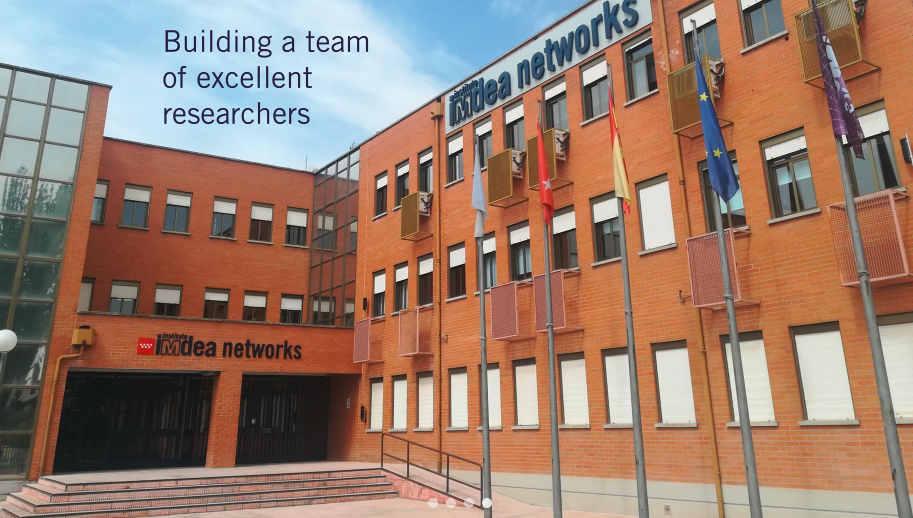
    A Research Team From The IMDEA Networks Institute Introduces The PassiveLiFi, A Battery-Free System That Uses LiFi To Transmit RF Backscatter

    Table of Contents

      A Research Team From The IMDEA Networks Institute Introduces The PassiveLiFi, A Battery-Free System That Uses LiFi To Transmit RF Backscatter

      Muhammad Sarmad Mir, PhD Student at IMDEA Networks and one of the authors of the scientific paper “PassiveLiFi: Rethinking LiFi for Low-Power and Long Range RF Backscatter” - Photo credit to IMDEA Networks

      A research team, led by Domenico Giustiniano, Research Associate Professor at IMDEA Networks Institute, Madrid, has introduced. PassiveLiFi, a battery-free system that uses LiFi to transmit RF backscatter at a meagre power budget. In their recently published paper, they demonstrated that LiFi and RF backscatter are complementary and have unexplored interactions.

      The research team addresses many challenges on the system design in the LiFi transmitter, the tag and the RF receiver. They designed the first LiFi transmitter that implements a chirp spread spectrum (CSS) using the visible light spectrum. They also use a small bank of solar cells for communication and harvesting and reconfigure them based on the amount of harvested energy and desired data rate. They further alleviate the low responsiveness of solar cells with a new low-power receiver design in the tag. Experimental results with an RF carrier of 17 dBm show that they can generate RF backscatter with a range of 80.3 meters/𝜇W consumed in the tag, which is almost double with respect to prior work.

      You can read their paper on the following link:

      https://dspace.networks.imdea.org/handle/20.500.12761/1541

      Our work opens the door to long-range, battery-free Internet of Things applications retrofitting lighting infrastructure for communication, something that was not previously possible to achieve. It’s the result of three years of research; when we started, LiFi technology and RF backscattering were considered independent technologies, and we have shown that LiFi can solve the limitations of RF backscatter, and that Li Fi can be applied to a new field, battery-free communication” says Dr. Giustiniano. The IMDEA Networks team (formed by Domenico Giustiniano, Borja Genovés Guzmán, and Muhammad Sarmad Mir) has enjoyed the collaboration of Dr. Ambuj Varshney (Uppsala University, and soon to be Assistant Professor at the National University of Singapore).

      “Solar cells have been widely used to harvest energy. In this work, we go a step further and demonstrate that they can be used efficiently and simultaneously as both a source of power harvesting and as a communications receiver. Our solution solves the trade-off between the captured energy required by the IoT device and the desired data rate, allowing our system to operate without using batteries,” says Borja Genovés Guzmán, Post-Doc Researcher at IMDEA Networks and one of the co-authors of the scientific paper.

      IMDEA Networks Institute


      IMDEA Networks Institute was legally constituted under Spanish law at the end of 2006 as a public, not-for-profit Foundation. It is governed by a Board of Trustees, consisting of representatives from the various stakeholders in the Institute.

      The full, registered name of the Institute is Fundación IMDEA Networks. The Institute is registered in the Register of Foundations of the Autonomous Region of Madrid (Registro de Fundaciones de la Comunidad de Madrid), personal sheet number 476.

      Photo credit to IMDEA Networks Institute

      IMDEA* Networks Institute is a research organisation on data networks whose multinational team is engaged in cutting-edge fundamental science and technology. As an English-speaking institute located in Madrid, Spain, IMDEA Networks offers a unique opportunity for pioneering scientists to develop their research vision. IMDEA Networks has established itself internationally at the forefront in the development of future network principles and technologies. Their team of highly-reputed researchers is designing and creating today the networks of tomorrow.

      According to their site, some keywords that define them are as followed: 

      5G, Big Data, blockchain and distributed ledgers, cloud computing, content-delivery networks, data analytics, energy-efficient networks, fog and edge computing, indoor positioning, Industry 4.0, Internet of Things (IoT), machine learning, millimeter-wave communication, mobile computing, network economics, network measurements, network security, networked systems, network protocols and algorithms, network virtualization (software defined networks – SDN  and network function virtualization – NFV), privacy, social networks, underwater networks, vehicular networks, wireless networks and more

      Their mission is to create value by leading research in protocol, algorithm and systems developments that enable the Digital Knowledge Society. they do this by conducting research and developing innovative and useful scientific and technical advances in the above areas, while actively promoting their successful transfer to market. The Institute strives to provide optimal working conditions and the most attractive and best-equipped environment in which researchers can focus on this process of innovation and scientific advance.

      IMDEA Networks focuses on an area that has a profound impact on people’s lives. Over the last decades, the Internet, smartphones, Wi-Fi and social networks transformed society and the economy. Indeed, the widespread access to networks has dramatically changed the way manufacturers produce and supply their goods, how public administrations operate, how professionals work and in general how individuals and society are shaped. The Internet socio-economic phenomenon continues to transform our lives at an amazing pace, and will continue to do so in the future with the deployment of new communication technologies and paradigms.

      What is Li Fi?

      LiFi, also known as "Light Fidelity" is a wireless optical networking technology, which uses light-emitting diodes (LEDs) to transmit data. In 2011, professor Harald Haas made a LiFi demonstration at the TED (Technology, Entertainment, Design) Global Talk on Visible Light Communication (VLC).

      VLC uses light as a medium to deliver high-speed communication like Wi-Fi and complies with the IEEE standard IEEE 802.15.7. The IEEE 802.15.7 is a high-speed, bidirectional, and fully networked wireless communication technology-based standard similar to Wi-Fi's IEEE 802.11.

      How does LiFi work?

      LiFi is a high speed, bidirectional, and fully networked wireless communication of data using light. LiFi constitutes of several light bulbs that form a wireless network.

      When an electrical current goes through to a LED light bulb, a stream of light (photons) emits from the lamp. LED bulbs are semiconductor devices, which means that the brightness of the light flowing through them can change at extremely high speeds. The signal is sent by modulating the light at different rates. The signal can then be received by a detector that interprets the changes in light intensity (the signal) as data. Also when the LED is ON, you transmit a digital 1, and when it is OFF, you transmit a 0.

      LiFi Benefits

      The primary benefits of LiFi are as follows:

      Security: Provides entirely secure access. Where there is no light there is no data.

      Safety: Does not produce electromagnetic radiation and does not interfere with existing electronic systems.

      Localisation: Allows localisation due to the small coverage area of LiFi access point - localisation can be used for very precise asset tracking.

      Data density: Provides ubiquitous high-speed wireless access that offers substantially greater data density (data rate per unit area) than RF through high bandwidth reuse.

      Credit to Signify

      LiFi Applications

      LiFi can be used for so many applications and the list is increasing every year. You can read our updated list of LiFi applications at the following link:

      https://www.lifitn.com/blog/2021/2/13/top-30-li-fi-applications-updated-list-including-potential-applications

      Credit to pureLiFi

      In conclusion, if you are also interested to hear more information about the OWNII Coin or enquire about LiFi devices such as the LiFiMax and Trulifi, you can contact us through our chatbot or by sending an email through our contact us form. If you enjoyed this post and would like to hear more updates about LiFi technology, subscribe to our newsletter. Don’t forget to subscribe to our social media accounts. You can also join our Telegram group about LiFi technology on this link:

      https://t.me/joinchat/FMzOmsEKyJFrU6Af

      Huneed And Latécoère Demonstrates Li Fi Technology For Ships At The Seoul ADEX 2021

      Huneed And Latécoère Demonstrated Li Fi Technology For Ships At The Seoul ADEX 2021

      ADEX 2021 was recently held for few days.  In that exhibition, Huneed Technologies and French Groupe Latécoère demonstrated Li Fi systems uses for ships.

      Huneed Technologies


      Founded in 1968, Huneed Technologies is a Korean developer and manufacturer of airborne systems, and defense communication systems.  As a key provider of harnesses and panels for airborne systems as well as key tactical communication equipment and control systems for the ROK military along with an array of other solutions and services, Huneed has quickly established itself as a proven commodity and an industry asset in a fierce market.


      Built on initiative, innovation, and grit, Huneed has worked relentlessly to achieve excellence in the way we do business from top to bottom.  To this end, Huneed has built a reputation as a trusted partner. We know the importance of partnership and are dedicated to industry cooperation and mutual growth to create business opportunities and success through alliance.  Huneed boasts a host of global and local Industry partners including Airbus Defense & Space, Airbus Helicopters, Safran, Korea Aerospace Industries, Northrop Grumman, and ROK armed forces.

      A spokesperson for Huneed stated to Naval News that “Li-Fi technology uses light instead of radio waves. This gives it a multitude of advantages over other communications technology,”.

      “Li-Fi is around 10 times as fast as traditional communications systems. Moreover, radio waves from traditional communications systems, such as WiFi, can be intercepted quite easily. Because Li-Fi uses light to transmit information, it is impossible to intercept.” 

      Huneed Technologies and Groupe Latécoère, on the one hand, and SK Telecom, on the other, are competing against one another to be selected as the supplier for communications systems on Republic of Korea Navy vessels. “Our system is much cheaper than the LTE alternative being offered by SK Telecom,” the spokesperson said.

      Despite these advantages, the system still has its shortcomings. To begin with, if an object blocks the light from reaching the receiver, communication can be disrupted. Moreover, Li-Fi has limited range due to the system based on light.

      “We’ve worked to attenuate these weaknesses,” the spokesperson continued. “Our latest system can emit light across a wide area so that communication will not be easily disrupted by objects. Moreover, we plan on increasing the system’s range to almost two kilometres within the next two years. This means that Li-Fi will even allow communication between ships, in addition to communication between different parts of a single ship.”

       Article source: https://www.navalnews.com/naval-news/2021/10/adex-2021-huneed-and-latecoere-showcase-li-fi-system-for-ships/

      What is Li Fi?

      Li-Fi, also known as "Light Fidelity" is a wireless optical networking technology, which uses light-emitting diodes (LEDs) to transmit data. In 2011, professor Harald Haas made a Li-Fi demonstration at the TED (Technology, Entertainment, Design) Global Talk on Visible Light Communication (VLC).

      VLC uses light as a medium to deliver high-speed communication like Wi-Fi and complies with the IEEE standard IEEE 802.15.7. The IEEE 802.15.7 is a high-speed, bidirectional, and fully networked wireless communication technology-based standard similar to Wi-Fi's IEEE 802.11.

      How does Li Fi work?

      Li-Fi is a high speed, bidirectional, and fully networked wireless communication of data using light. Li-Fi constitutes of several light bulbs that form a wireless network.

      When an electrical current goes through to a LED light bulb, a stream of light (photons) emits from the lamp. LED bulbs are semiconductor devices, which means that the brightness of the light flowing through them can change at extremely high speeds. The signal is sent by modulating the light at different rates. The signal can then be received by a detector that interprets the changes in light intensity (the signal) as data. Also when the LED is ON, you transmit a digital 1, and when it is OFF, you transmit a 0.

      Li Fi Benefits

      The primary benefits of Li-Fi are as follows:

      Security: Provides entirely secure access. Where there is no light there is no data.

      Safety: Does not produce electromagnetic radiation and does not interfere with existing electronic systems.

      Localisation: Allows localisation due to the small coverage area of Li-Fi access point - localisation can be used for very precise asset tracking.

      Data density: Provides ubiquitous high-speed wireless access that offers substantially greater data density (data rate per unit area) than RF through high bandwidth reuse.

      Credit to Signify

      Li Fi Applications

      Li-Fi can be used for so many applications and the list is increasing every year. You can read our updated list of Li-Fi applications at the following link:

      https://www.lifitn.com/blog/2021/2/13/top-30-li-fi-applications-updated-list-including-potential-applications

      Credit to pureLiFi

      In conclusion, if you are also interested to hear more information about the OWNII Coin, investing in it, or enquire about Li-Fi devices such as the LiFiMax and Trulifi, you can contact us through our chatbot or by sending an email through our contact us form. If you enjoyed this post and would like to hear more updates about Li-Fi technology, subscribe to our newsletter. Don’t forget to subscribe to our social media accounts. You can also join our Telegram group about Li-Fi technology on this link:

      https://t.me/joinchat/FMzOmsEKyJFrU6Af


      PureLiFi Tells LEDs Magazine That “Laser Light Will Better Serve LiFi”

      PureLiFi Tells LEDs Magazine That “Laser Light Will Better Serve LiFi”

      Photo credit: pureLiFi

      Photo credit: pureLiFi

      pureLiFi

      This week, pureLiFi recently informed LEDs Magazine that “laser light will better serve LiFi,” and is currently working on a laser-based “Light Antenna Module” for embedding into consumer devices such as smartphones, tablets, laptops, desktop computers, etc…

      pureLiFi develops technology for communication networks that integrates data and lighting utility infrastructures. It offers a LiFi enabled device that converts the beam of lights into an electrical signal. The signal is then converted back into data. The company was founded in 2012 and is headquartered in Edinburgh.

      The move to laser chips could well become the industry’s “shooting star” moment, replacing the propellers of LEDs according to a recent article from LEDs Magazine.

      New technologies such as laser light…will better serve LiFi component and system companies to ensure that breakthrough innovations in the lighting devices industry are readily linked to LiFi so that lighting and LiFi become inseparable from the start,” a pureLiFi spokesperson told LEDs Magazine after their recent article in which they pointed out that co-founder Haas had surfaced as an advisor to laser stalwart Kyocera SLD, which is helping to develop a laser LiFi system for the aviation industry. Haas is also pureLiFi’s chief scientific officer.

      pureLiFi Global.jpg

      LEDs Magazine further asked pureLiFi whether the company itself was embracing a switch to lasers.

      The spokesperson further said that the Light Antenna Module, released in 2021, uses an infrared laser chip. The module is intended to be small enough to reside inside smartphones and is available to device makers. PureLiFi is also positioning its laser components for use inside the access points that send and receive data to and from those devices, the spokesperson told LEDs Magazine.

      Professor Haas remains a committed co-founder and chief scientific officer of pureLiFi and we are supportive of the work he’s doing to advance and improve the LiFi ecosystem,” she said. The “ecosystem” improvements include a migration toward laser technology.

      The pureLiFi spokesperson pointed out that Haas is actively engaged in leading the LiFi Research and Development Centre (LRDC), an academic/industry group based at the University of Strathclyde in Glasgow. That group has published research showing laser LiFi’s faster speeds.

      Two years ago, Haas told LEDs Magazine that, compared to LEDs, lasers “can go an order of magnitude faster.” At the time, pureLiFi LED systems were operating experimentally at about 1 Gbit/s (slower in the real world), but Haas enthused that, with lasers, “I see a clear path to 100 Gbit/s in the next year or two, and we are looking at 1 Tbit/s in the next five years.

      unsplash-image-r4qdM8iD5WY.jpg

      Terabit Bidirectional Multi-user Optical Wireless System (TOWS) for 6G LiFi

      Professor Haas has also been part of a five-year, multi-university project called the Terabit Bidirectional Multi User Optical Wireless System for 6G (TOWS), which with £8 million in UK government funding hopes to hit 1 Tbit/s by 2024. Leeds University is currently leading TOWS along with the University of Cambridge.  The vision of this ambitious project is to develop and experimentally demonstrate multiuser Terabit/s optical wireless systems that offer capacities at least two orders of magnitude higher than the current planned 5G optical and radio wireless systems, with a roadmap to wireless systems that can offer up to four orders of magnitude higher capacity.

      There are four features of the proposed system which make possible such unprecedented capacities to enable this disruptive advance.

      Firstly, unlike visible light communications (VLC), the infrared spectrum will be exploited, and this will provide a solution to the light dimming problem associated with VLC, eliminating uplink VLC glare and thus supporting bidirectional communications.

      Secondly, to make possible much greater transmission capacities and multi-user, multi-cell operation, a new type of LED-like steerable laser diode array will be introduced, which does not suffer from the speckle impairments of conventional laser diodes while ensuring ultrahigh-speed performance.

      Thirdly, with the added capacity, native OW multi-user systems will be developed to share the resources, these being adaptively directional to allow full coverage with the reduced user and inter-cell interference and finally incorporate RF systems to allow seamless transition and facilitate overall network control, in essence, to introduce software-defined radio to optical wireless. This means that OW multi-user systems can readily be designed to allow very high aggregate capacities as beams can be controlled in a compact manner.

      Fourthly, the project will help in developing advanced inter-cell coding and handover for our optical multi-user systems and because of this, it will also allow seamless handover with radio systems when required such as for resilience.


      pureLiFi is also a founding member of the Light Communications Alliance, where the spokesperson noted the company works with several other companies to advance LiFi. Those companies span the LiFi ecosystem, including mobile network operators and device makers, as well as companies that could be considered pureLiFi competitors like Signify and the French LiFi company Oledcomm.


      Professor Haas is also part of a team from different institutions examining a technique called RIS that could lessen the need for LiFi to have a direct line of sight and thus expand the technology’s physical distance reach.

      RIS emerged recently as a revolutionary concept that transfers the physical propagation environment into a fully controllable and customizable space in a low-cost, low-power fashion,” states the paper’s authors, led by Hanaa Abumarshoud, a research fellow in electronic and electrical engineering at the Glasgow’s University of Strathclyde. 

      A 2020 article from IEEE Spectrum stated that replacing radio waves with laser light could boost the speed and reach of communications far beyond that promised by 5G. This could enable autonomous cars to talk to each other, enable drones to send high-resolution photos to the ground, and move large volumes of data around smart factories and smart homes.  

      There's loads of data that are being accumulated and are being moved around,” says Paul Rudy, chief marketing officer at SLD. “You need to transmit data and you need to do it at [long] range with as fast a data rate as possible.” 

      Rudy hopes to focus on applications that are data-heavy and require stable connections over a broad range of distances. Those need data rates of many gigabits per second over ranges of perhaps hundreds of meters. Lasers can achieve that at lower power and with less difficulty than RF equipment, Rudy says. As for cars, “You already have headlights in the vehicle,” he says. “Being able to broadcast data from those existing illumination sources can save lots of energy and also save the overall system cost.”

      At CES 2020, the company demonstrated data rates of 20 Gb/s with its laser LiFi. The 5G wireless communication that is currently being rolled out should make possible rates of at least 1 Gb/s and could eventually reach 10 Gb/s. 

      Article source: https://www.ledsmagazine.com/smart-lighting-iot/article/14212189/purelifi-working-laser-chips-into-its-technology

      What is LiFi?

      Li-Fi, also known as "Light Fidelity" is a wireless optical networking technology, which uses light-emitting diodes (LEDs) to transmit data. In 2011, professor Harald Haas made a LiFi demonstration at the TED (Technology, Entertainment, Design) Global Talk on Visible Light Communication (VLC).

      VLC uses light as a medium to deliver high-speed communication like Wi-Fi and complies with the IEEE standard IEEE 802.15.7. The IEEE 802.15.7 is a high-speed, bidirectional, and fully networked wireless communication technology-based standard similar to Wi-Fi's IEEE 802.11.

      How does LiFi work?

      LiFi is a high speed, bidirectional, and fully networked wireless communication of data using light. LiFi constitutes of several light bulbs that form a wireless network.

      When an electrical current goes through to a LED light bulb, a stream of light (photons) emits from the lamp. LED bulbs are semiconductor devices, which means that the brightness of the light flowing through them can change at extremely high speeds. The signal is sent by modulating the light at different rates. The signal can then be received by a detector that interprets the changes in light intensity (the signal) as data. Also when the LED is ON, you transmit a digital 1, and when it is OFF, you transmit a 0.

      LiFi Benefits

      The primary benefits of LiFi are as follows:

      Security: Provides entirely secure access. Where there is no light there is no data.

      Safety: Does not produce electromagnetic radiation and does not interfere with existing electronic systems.

      Localisation: Allows localisation due to the small coverage area of LiFi access point - localisation can be used for very precise asset tracking.

      Data density: Provides ubiquitous high-speed wireless access that offers substantially greater data density (data rate per unit area) than RF through high bandwidth reuse.

      Credit to Signify

      LiFi Applications

      LiFi can be used for so many applications and the list is increasing every year. You can read our updated list of LiFi applications at the following link:

      https://www.lifitn.com/blog/2021/2/13/top-30-li-fi-applications-updated-list-including-potential-applications

      Credit to pureLiFi

      In conclusion, if you are also interested to hear more information about the OWNII Coin, investing in it, or enquire about Li-Fi devices such as the LiFiMax and Trulifi, you can contact us through our chatbot or by sending an email through our contact us form. If you enjoyed this post and would like to hear more updates about Li-Fi technology, subscribe to our newsletter. Don’t forget to subscribe to our social media accounts. You can also join our Telegram group about Li-Fi technology on this link:

      https://t.me/joinchat/FMzOmsEKyJFrU6Af


      Orange, The First French Operator, Engaging In Li Fi Technology At Their New Store In The Kirchberg Shopping Centre

      Orange, The First French Operator, Engaging In LiFi Technology At Their New Store In The Kirchberg Shopping Centre

      Photo credit: Orange

      Photo credit: Orange

      Orange

      Orange is the first operator to engage in LiFi technology in its new store at the Kirchberg shopping centre. The Kirchberg District Centre is a mixed-use building complex in northeastern Kirchberg, Luxembourg City, Luxembourg containing both an office complex and shopping mall, with their principal tenants respectively being the European Commission's statistical office, Eurostat, and an Auchan hypermarket.

      Orange is a French multinational telecommunications corporation. It has 266 million customers worldwide and employs 89,000 people in France, and 59,000 elsewhere. It is the 11th largest mobile network operator in the world and the 3rd largest in Europe after Vodafone, Telefónica. In 2015, the group had a revenue of €40 billion. The company's head office is located in the 15th arrondissement of Paris. The current CEO is Stéphane Richard.

      Orange has been the company's main brand for mobile, landline, internet and Internet Protocol television (IPTV) services since 2006. It originated in 1994 when Hutchison Whampoa acquired a controlling stake in Microtel Communications during the early 1990s and rebranded it as "Orange". It became a subsidiary of Mannesmann in 1999 and was acquired by France Télécom in 2000. The company was rebranded as Orange on 1 July 2013.

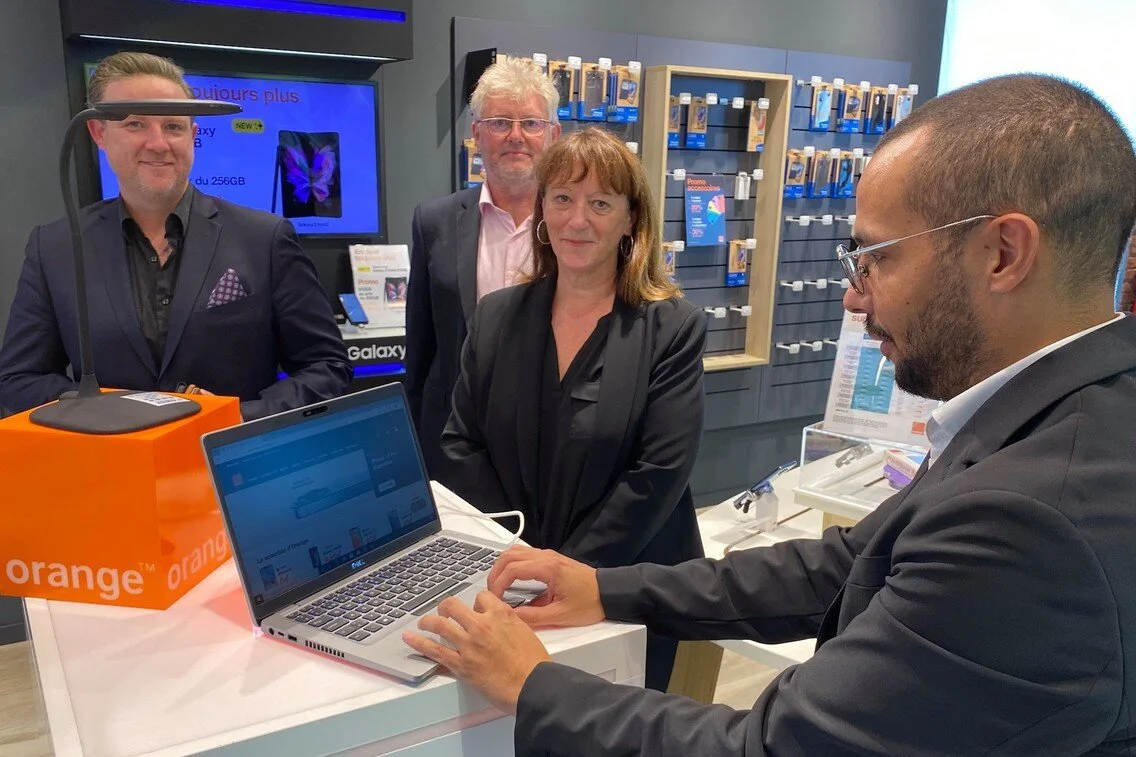
      Orange is showing two connectivity technologies by light, in the presence of its experts, Micheline Perrufel (in the center) and Jean-François Bourgeais (behind her), and Zero.1 CEO Marc Fleschen. (Photo: Modern House)

      Orange is showing two connectivity technologies by light, in the presence of its experts, Micheline Perrufel (in the center) and Jean-François Bourgeais (behind her), and Zero.1 CEO Marc Fleschen. (Photo: Modern House)

      A laptop is sitting on a white column, under a circle of pink and white neon lights. Orange wants to promote the technology of connection by light and wants it to be seen. In reality, the little black boxes that “do the job” are located under the ceiling and are almost invisible to the customer entering the new shop in the Kirchberg shopping centre, on the first floor, opposite Auchan.

      "This technology has many advantages over wifi", explains the director of innovation, marketing and technologies of Orange Labs, Micheline Perrufel, who came especially from Rennes for the opening of this store, Monday evening, and the conference organised by the government on the future of technology, from Tuesday to Thursday at Luxexpo. “It offers high-speed connectivity in both directions, downstream like wifi, but also upstream. The signal is more secure because it is more restricted. Latency is also improved. The technology is secure, otherwise, our 28 cybersecurity centres around the world wouldn't want it.

      After Air France decided to equip 14 A320s planes with Li Fi technology to offer connectivity to its passengers, the operator will begin to market this technology "as complementary to everything else” says Perrufel.

      unsplash-image-JyRTi3LoQnc.jpg

      Mainly small boxes between the fibre optic inlet of a house and the exterior wall and other small boxes above the lamps which will serve as relays. Orange Luxembourg's sales director, Mustapha Rahem, stated: “the laptop is connected at speeds that gamers and other flawless connection addicts will love”.

      Zero1

      ZERO1 is a technology company. With a team of passionate LiFi and OCC (Optical Camera Communication) experts, they create, design and deploy personalized, modular or 100% integrated solutions. ZERO1 is currently present in Europe and Dubai and will soon be active in the United States and Singapore. ZERO1 is the only company in the world that has developed functioning hardware (HALO TM) and software solutions (FOCCAL TM and OCCDATAWARE) to provide OCC solutions with live applications available on all major smartphones - NO DONGLE. Our solutions are deployed in real situations. Looking at the market for location-based services, the challenge for the coming years is to provide ultra-precise location information services in indoor environments. Applications for one-way technology include "Ultra-precise geo-mapping" to confirm whether a user is under a specific light at a given time, visualization of pedestrian traffic resulting in applications for Airports, Museums, Hospitals, railways Stations, Shopping Centers. This provides customers with directions to their area of interest using their smartphones. Contrary to competing technology solutions, any smartphone, as long as it has a camera, can decrypt the signal, allowing mass adoption from the final users. ZERO1 has developed its own hardware and software which makes it fully independent from any other providers. The hardware is produced in France. ZERO1 owns 9 patents and is the creator of OCC, which has become the international standard. OCC is IEEE certified.

      Orange also demonstrated another technology, in collaboration with the Luxembourg start-up Zero.1: Optical Camera Communication. The device presented in the shop allows, only in a descending mode unlike the other, to diffuse information by a lamp. The user can put his smartphone under the lamp, explains Jean-François Bourgeais, Orange business analyst, and he has access to the information that we want to give him. The canteen of a French school uses it so that parents can know the menu offered to their children. Others have installed it in museums. Instead of the traditional devices that we rent at reception, visitors can discover the history of a work or a collection by passing their smartphone, in exactly the same way, under a kind of lamp. Unlike the "beacons", which would send a message to the smartphone of someone who passes by a store, promising him 10 or 20% reduction if he buys a product within a quarter of an hour, the user must want to access the information to have it.


      These technologies are less intrusive and less harmful than others,” says Marc Fleschen, CEO of Zero.1. "But like many technologies, it will take the support of users for them to become widespread!"

      Orange assures us, while the store was not yet open, on this Monday afternoon: moving to the heart of a business district is a good opportunity to praise the merits of this technology, which can also be easily deployed for office real estate. “Hearing about it is good but to be able to see it working is better”, assures Mr Rahem.


       Article source: https://paperjam.lu/article/orange-premier-a-s-engager-wif

      What is Li Fi?

      Li-Fi, also known as "Light Fidelity" is a wireless optical networking technology, which uses light-emitting diodes (LEDs) to transmit data. In 2011, professor Harald Haas made a Li-Fi demonstration at the TED (Technology, Entertainment, Design) Global Talk on Visible Light Communication (VLC).

      VLC uses light as a medium to deliver high-speed communication like Wi-Fi and complies with the IEEE standard IEEE 802.15.7. The IEEE 802.15.7 is a high-speed, bidirectional, and fully networked wireless communication technology-based standard similar to Wi-Fi's IEEE 802.11.

      How does Li Fi work?

      Li-Fi is a high speed, bidirectional, and fully networked wireless communication of data using light. Li-Fi constitutes of several light bulbs that form a wireless network.

      When an electrical current goes through to a LED light bulb, a stream of light (photons) emits from the lamp. LED bulbs are semiconductor devices, which means that the brightness of the light flowing through them can change at extremely high speeds. The signal is sent by modulating the light at different rates. The signal can then be received by a detector that interprets the changes in light intensity (the signal) as data. Also when the LED is ON, you transmit a digital 1, and when it is OFF, you transmit a 0.

      Li Fi Benefits

      The primary benefits of Li-Fi are as follows:

      Security: Provides entirely secure access. Where there is no light there is no data.

      Safety: Does not produce electromagnetic radiation and does not interfere with existing electronic systems.

      Localisation: Allows localisation due to the small coverage area of Li-Fi access point - localisation can be used for very precise asset tracking.

      Data density: Provides ubiquitous high-speed wireless access that offers substantially greater data density (data rate per unit area) than RF through high bandwidth reuse.

      Credit to Signify

      Li Fi Applications

      Li-Fi can be used for so many applications and the list is increasing every year. You can read our updated list of Li-Fi applications at the following link:

      https://www.lifitn.com/blog/2021/2/13/top-30-li-fi-applications-updated-list-including-potential-applications

      Credit to pureLiFi

      In conclusion, if you are also interested to hear more information about the OWNII Coin, investing in it, or enquire about Li-Fi devices such as the LiFiMax and Trulifi, you can contact us through our chatbot or by sending an email through our contact us form. If you enjoyed this post and would like to hear more updates about Li-Fi technology, subscribe to our newsletter. Don’t forget to subscribe to our social media accounts. You can also join our Telegram group about Li-Fi technology on this link:

      https://t.me/joinchat/FMzOmsEKyJFrU6Af

      Rolland-Plaisance Media Library Tests Li Fi Technology Products From Lucibel, Ellipz And Signify

      Rolland-Plaisance Media Library Tests Li Fi Technology Products From Lucibel, Ellipz And Signify

      dark background 4.PNG

      Rolland-Plaisance Media Library

      The Rolland-Plaisance Media Library, in Évreux, is currently testing Li Fi technology from three Li Fi companies, Lucibel, Ellipz and Signify. This allows visitors to surf the Internet at a high-speed connection via Li Fi technology.

      Évreux is still at the forefront of innovation!"A very proud Guy Lefrand welcomed the representatives of companies in the field of "Li-Fi" to the Rolland-Plaisance media library in the capital of Eure.

      But it is to its vice-president in charge of the development of digital uses at the Évreux Portes de Normandie (EPN) agglomeration, Arnaud Mabire (more knowledgeable on the subject), that he left the task of presenting this presented technology as “of the future” and “promising”.

      Arnaud Mabire, Vice-president of the Evreux Portes de Normandie agglomeration, stated: “Radio solutions have one drawback, that of going through the body. If we want to increase the flow, we have to increase the waves. Li-Fi does not pass through the body.“

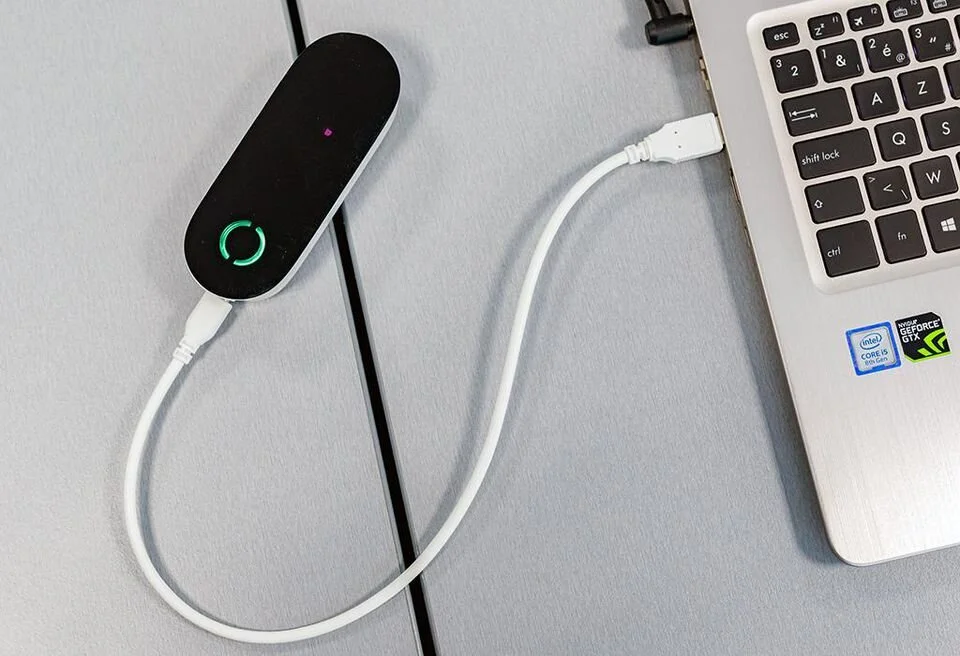
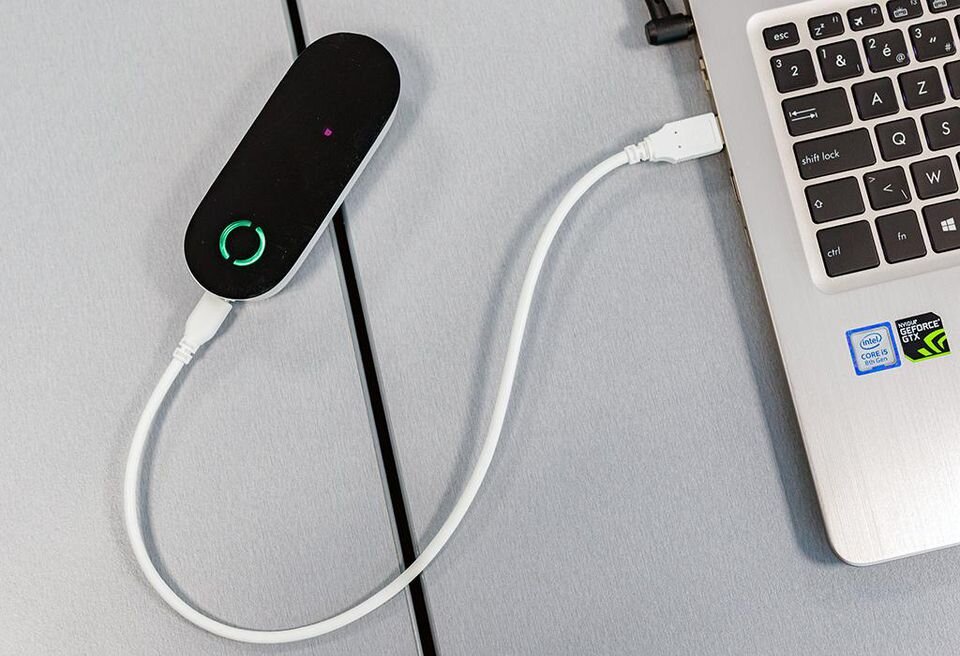
      Trulifi dongle - Credit to Signify

      Trulifi dongle - Credit to Signify

      The Rolland-Plaisance Media Library permits visitors to test the technology for three months, until November 2021. Three companies (Lucibel, Ellipz and Signify) present their solutions there. "This showroom allows residents, students, businesses, etc. to be shown that the technology exists and that it can be tested," says Arnaud Mabire.

      A first step in the world of Li-Fi, which is predicted to have a bright future. “There are real expectations from this technology,” says EPN's vice president. We believe in. It remains to define the standard and to miniaturize the photoreceptors in order to integrate them into smartphones, tablets or computers, in short, to offer this technology to as many people as possible. It should be tomorrow.

      "Devices will be equipped from 2022, but the market should take a lot of amplitude in 2023", announces Eric Deblonde. "The explosion should take place within 4-5 years," predicts Arnaud Mabire. According to specialists and manufacturers, it will be much earlier.

      Ellipz Li Fi Lamp - Credit to Ellipz

      Ellipz Li Fi Lamp - Credit to Ellipz

       Article source: https://actu.fr/normandie/evreux_27229/testee-a-evreux-la-technologie-li-fi-permet-de-surfer-sur-internet-grace-a-la-lumiere_45317654.html

      What is Li Fi?

      Li-Fi, also known as "Light Fidelity" is a wireless optical networking technology, which uses light-emitting diodes (LEDs) to transmit data. In 2011, professor Harald Haas made a Li-Fi demonstration at the TED (Technology, Entertainment, Design) Global Talk on Visible Light Communication (VLC).

      VLC uses light as a medium to deliver high-speed communication like Wi-Fi and complies with the IEEE standard IEEE 802.15.7. The IEEE 802.15.7 is a high-speed, bidirectional, and fully networked wireless communication technology-based standard similar to Wi-Fi's IEEE 802.11.

      How does Li Fi work?

      Li-Fi is a high speed, bidirectional, and fully networked wireless communication of data using light. Li-Fi constitutes of several light bulbs that form a wireless network.

      When an electrical current goes through to a LED light bulb, a stream of light (photons) emits from the lamp. LED bulbs are semiconductor devices, which means that the brightness of the light flowing through them can change at extremely high speeds. The signal is sent by modulating the light at different rates. The signal can then be received by a detector that interprets the changes in light intensity (the signal) as data. Also when the LED is ON, you transmit a digital 1, and when it is OFF, you transmit a 0.

      Li Fi Benefits

      The primary benefits of Li-Fi are as follows:

      Security: Provides entirely secure access. Where there is no light there is no data.

      Safety: Does not produce electromagnetic radiation and does not interfere with existing electronic systems.

      Localisation: Allows localisation due to the small coverage area of Li-Fi access point - localisation can be used for very precise asset tracking.

      Data density: Provides ubiquitous high-speed wireless access that offers substantially greater data density (data rate per unit area) than RF through high bandwidth reuse.

      Credit to Signify

      Li Fi Applications

      Li-Fi can be used for so many applications and the list is increasing every year. You can read our updated list of Li-Fi applications at the following link:

      https://www.lifitn.com/blog/2021/2/13/top-30-li-fi-applications-updated-list-including-potential-applications

      Credit to pureLiFi

      In conclusion, if you are also interested to hear more information about the OWNII Coin, investing in it, or enquire about Li-Fi devices such as the LiFiMax and Trulifi, you can contact us through our chatbot or by sending an email through our contact us form. If you enjoyed this post and would like to hear more updates about Li-Fi technology, subscribe to our newsletter. Don’t forget to subscribe to our social media accounts. You can also join our Telegram group about Li-Fi technology on this link:

      https://t.me/joinchat/FMzOmsEKyJFrU6Af


      Lucibel Announces The 3rd Generation of Their Li Fi Products, The “Lucipanel”

      Lucibel Announces The 3rd Generation of Their Li Fi Products, The “Lucipanel”

      LiFi-Cle-USB-500x500px-1.jpg

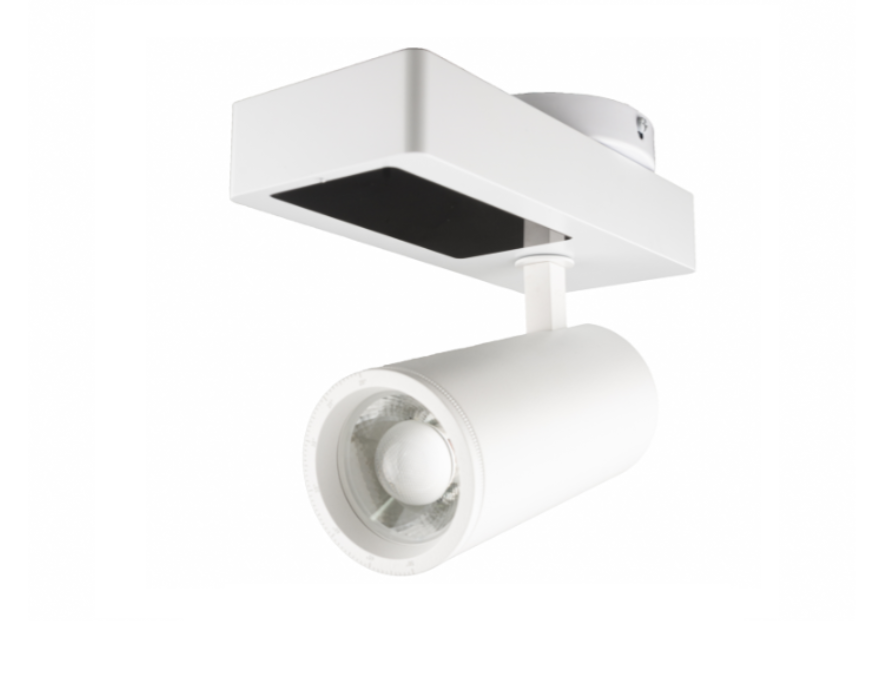
      A few days ago, Lucibel made the announcement of the upcoming unveiling of their 3rd generation Li Fi product, the “Lucipanel LIFI”.

      Lucibel

      After the release of their 1st generation of Li Fi products in September 2016, the first industrialized LiFi luminaire in the world, followed the release of their 2nd generation of Li Fi products in October 2018, Lucibel is now bringing their third generation, with improved performance and a very sleek design, to the Li Fi market.  

      Lucibel is an innovative French group that designs and manufactures new-generation lighting products and solutions in France based on LED technology. LED technology is cost efficient, sustainable, and smart. It is transforming the world and is now part of the digital era. Not only are Lucibel lighting solutions compatible with remote management systems. Light can now interact with its surroundings and be controlled and measured in real time. But it also allows for a new medium for data transmission, interactions, and well-being thanks to the development by Lucibel of innovative and smart solutions.

      The drafting of a Li Fi standard, which began in July 2018 under the guidance of the international organization IEEE (Institute of Electrical and Electronics Engineers) Standards Association, should end in May 2022 with the publication of a global LiFi standard (802.11bb).

      The eagerly awaited outcome of this process is creating a strong stir around this emerging technology. The growing interest in LiFi technology on the part of many players (designers and integrators of Li Fi solutions, manufacturers of smartphones and computers, telecom operators, end customers, etc.) makes it possible to anticipate a rapid acceleration in Li Fi penetration from the start. next year.

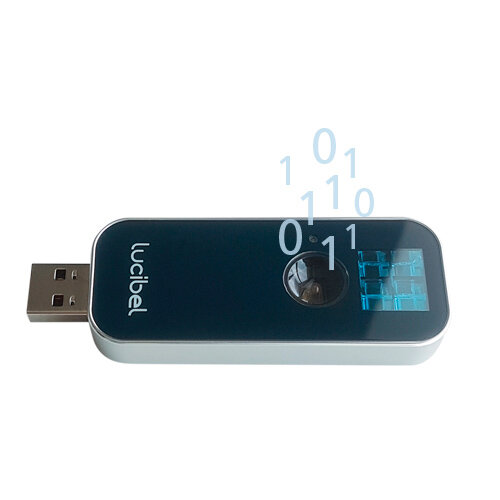
      Indeed, the publication of a Li Fi standard will allow the native integration of the technology into the hardware (smartphones, PCs, tablets) which will include light emission and reception cells and will be able to interact directly with the Li Fi infrastructure. integrated into the ceiling. The user will thus be able to do without the Li Fi key which is still necessary today to establish the connection between the luminaire and the terminal.

      The positioning of the Li Fi technology in the hardware market, expected in 2nd half of 2022, will enable a strong acceleration in the demand for deployments Li Fi infrastructure (lighting networks and Li Fi access points in buildings ceilings) which constitute the strategic development axis of Lucibel on this technology.


      A pioneer in LiFi and with a significant customer base, Lucibel will benefit from this expected strong acceleration.

      The first two generations of Lucibel LiFi have been marketed to more than 100 different customers (army, banks, companies in the defence sector, R&D centres, head offices, constrained industrial environments, hospitals, nurseries, etc…).

      These first users have confirmed their interest in this solution, which allows a secure wireless Internet connection, without radiofrequency waves and offering excellent quality of service.

      While the first two LiFi generations were mainly deployed on pilot projects (experimental phases), this third generation, which is compatible with the global standard currently being drafted, will allow a much wider deployment thanks to improved performance. and at a significantly lower marketing price.

      LUCIPANEL LIFI, a powerful solution and a very discreet integration of LiFi technology in the luminaire. Convinced that a LiFi luminaire must be both beautiful and efficient, the Lucibel group designed this third generation with the desire that the LiFi functionality is as discreet as possible in the luminaire so that it can be deployed as widely as possible in workspaces, in perfect harmony with other luminaires already installed.


      The main technical characteristics of the LUCIPANEL LIFI are as follows:

      -A flow, up and down, of 100 Mbps, which is 2 times more than the 2nd generation of Lucibel LiFi products.

      -The LiFi functionality is dissociated from the light and works even if the latter is off, thus ensuring continuity of service and optimized electricity consumption.

      -The connectivity coverage area of ​​the LUCIPANEL LiFi is approximately 10 m² per luminaire.

      -A simultaneous connection is possible for up to 16 users per access point.

      -Lucipanel LiFi: a sleek design and discreet integration of LiFi technology

      - LUCIPANEL LIFI: LiFi accessible for less than 100 € per m2 connected

      To achieve this performance, Lucibel chose bi-directional infrared light which by nature needs a black coloured exit window. By an ingenious and patented process, this black window is replaced by a luminous surface that blends harmoniously with the light diffused by the LED panel. The integration of LiFi functionality into the luminaire is therefore almost imperceptible to the naked eye.

      The technological leaps made over the past three years, combined with sharply rising volume forecasts, have made it possible to significantly reduce marketing prices.

      The LUCIPANEL LIFI thus makes it possible to offer a lighting and connection solution in LiFi for a price of fewer than 100 € per metre square.

      This third-generation will be delivered by Lucibel to its customers from October 15, 2021.  The LUCIPANEL LIFI will be presented in preview on the Lucibel group's stand at the Architect @ work Paris trade fair on September 23 and 24.

      Frédéric Granotier, Chairman and founder of the Lucibel group, stated that: “With the launch of this third generation, Lucibel confirms its leadership in LiFi technology and remains ahead of its competitors. With good complementarity and technological compatibility with 5G, LiFi, soon to be standardized, offers very attractive prospects for growth and value creation."

      What is Li Fi?

      Li-Fi, also known as "Light Fidelity" is a wireless optical networking technology, which uses light-emitting diodes (LEDs) to transmit data. In 2011, professor Harald Haas made a Li-Fi demonstration at the TED (Technology, Entertainment, Design) Global Talk on Visible Light Communication (VLC).

      VLC uses light as a medium to deliver high-speed communication like Wi-Fi and complies with the IEEE standard IEEE 802.15.7. The IEEE 802.15.7 is a high-speed, bidirectional, and fully networked wireless communication technology-based standard similar to Wi-Fi's IEEE 802.11.

      How does Li Fi work?

      Li-Fi is a high speed, bidirectional, and fully networked wireless communication of data using light. Li-Fi constitutes of several light bulbs that form a wireless network.

      When an electrical current goes through to a LED light bulb, a stream of light (photons) emits from the lamp. LED bulbs are semiconductor devices, which means that the brightness of the light flowing through them can change at extremely high speeds. The signal is sent by modulating the light at different rates. The signal can then be received by a detector that interprets the changes in light intensity (the signal) as data. Also when the LED is ON, you transmit a digital 1, and when it is OFF, you transmit a 0.

      Li Fi Benefits

      The primary benefits of Li-Fi are as follows:

      Security: Provides entirely secure access. Where there is no light there is no data.

      Safety: Does not produce electromagnetic radiation and does not interfere with existing electronic systems.

      Localisation: Allows localisation due to the small coverage area of Li-Fi access point - localisation can be used for very precise asset tracking.

      Data density: Provides ubiquitous high-speed wireless access that offers substantially greater data density (data rate per unit area) than RF through high bandwidth reuse.

      Credit to Signify

      Li Fi Applications

      Li-Fi can be used for so many applications and the list is increasing every year. You can read our updated list of Li-Fi applications at the following link:

      https://www.lifitn.com/blog/2021/2/13/top-30-li-fi-applications-updated-list-including-potential-applications

      Credit to pureLiFi

      In conclusion, if you are also interested to hear more information about the OWNII Coin, investing in it, or enquire about Li-Fi devices such as the LiFiMax and Trulifi, you can contact us through our chatbot or by sending an email through our contact us form. If you enjoyed this post and would like to hear more updates about Li-Fi technology, subscribe to our newsletter. Don’t forget to subscribe to our social media accounts. You can also join our Telegram group about Li-Fi technology on this link:

      https://t.me/joinchat/FMzOmsEKyJFrU6Af


      Ahmedabad-based Nav Wireless Technologies Pvt Install Li Fi Technology at The Students' Educational and Cultural Movement of Ladakh (SECMOL)

      Ahmedabad-based Nav Wireless Technologies Pvt Install Li Fi Technology at The Students' Educational and Cultural Movement of Ladakh (SECMOL)

      nav.PNG

      Nav Wireless Technologies and Students' Educational and Cultural Movement of Ladakh

      Ahmedabad-based Nav Wireless Technologies (NavTech) Pvt Ltd has announced the installation of LiFi technology at India's highest altitude educational organisation, the Students' Educational and Cultural Movement of Ladakh (SECMOL).  This is done to helping the local education fraternity, the company said in a statement here.

      SECMOL was founded in 1988 by a group of Ladakhi college students who felt that the education system needed great change. For many years, SECMOL worked on reforming the government school system. At the same time, SECMOL Campus grew into an eco-village where students, staff and volunteers live, work, and learn together. It’s not a conventional school, but a place to pursue practical, environmental, social, and traditional knowledge, values, and skills. The Campus is solar powered and solar heated; students learn ancient Ladakhi songs, dance, and history alongside modern academic knowledge; and the students mainly manage, run, and maintain the campus.

      Ladakh is a high desert region in the Indian Himalayas, with a culture and history drawing from Tibet, India, Kashmir, and Central Asia.  SECMOL strives to equip young Ladakhis and others growing up in Ladakh, especially those from rural or disadvantaged backgrounds, with the knowledge, skills, perspective, and confidence to choose and build a sustainable future. 

      Li Fi means transmitting data with a light beam spectrum through open space in outdoor and indoor environments.

      Li Fi systems provide ultra-fast data connections and are especially useful in urban areas where radio spectra are congested and also very useful in rural areas wherein Fiber Optic Cables or networks are not reachable.

      With this Li Fi setup, it said the faculties and students would get faster and safer internet connections over the existing electric power lines for various educational purposes.

      According to their website, Nav Wireless Technologies Pvt Ltd is a global leading solutions and services provider of wireless and information communications systems with its own R&D facilities, manufacturing base, and sales and service teams. The company offers a comprehensive suite of products and services including Optical Wireless Communication Systems, Wireless Electricity Transmission systems, Electronic Tattoo for Healthcare Monitoring systems, Wireless enhancement products, and subsystems and wireless transmission systems to its global customers.

      NavTech is a technology company focused on Research, Design and Development in the field of Optical Wireless Communications, Electronic Materials, Renewable Energy – Nanoscale to develop high-efficiency photovoltaic devices. NavTech's R&D initiative brings advanced wireless technologies to improving lives with projects that strengthen economic and social development.

      NavTech product portfolio includes Optical Wireless Communication, Smart LED Lights, Advanced Wireless Transmission Systems, Wireless Broadband and Wireless Access Equipment. NavTech's services range includes consultation, product & network design, optimisation and commissioning.

      Nav Wireless Technologies is the only registered company in the LiFi sector in Asia. Expounding on the motive behind the project, CTO of Nav Wireless Technologies Hardik Soni stated that "We had approached the institute authorities for this project, and they were highly impressed with such an innovative idea to provide faster, safer, and cheaper internet.  Under the leadership of SECMOL founder and president Sonam Wangchuk, the company will team up for covering the entire Ladakh and connect the unconnected areas using LiFi technology”.

      "I am happy to see the set up for permanent internet connectivity using the innovative LiFi technology at our campus. This Li-Fi technology can bring revolutionary changes in the education sector,” Wangchuk said.

      He said it would enable the students to stream educational videos and download resources with flawless connectivity.

      "Faculties will also benefit from conducting online lectures and improving their skills. As this technology is environment-friendly, it goes with our vision to make a pollution-free and green world," he said.

      What is Li Fi?

      Li Fi, also known as "Light Fidelity" is a wireless optical networking technology, which uses light-emitting diodes (LEDs) to transmit data. In 2011, professor Harald Haas made a Li Fi demonstration at the TED (Technology, Entertainment, Design) Global Talk on Visible Light Communication (VLC).

      VLC uses light as a medium to deliver high-speed communication like Wi-Fi and complies with the IEEE standard IEEE 802.15.7. The IEEE 802.15.7 is a high-speed, bidirectional, and fully networked wireless communication technology-based standard similar to Wi-Fi's IEEE 802.11.

      How does Li Fi work?

      Li Fi is a high speed, bidirectional, and fully networked wireless communication of data using light. Li-Fi constitutes of several light bulbs that form a wireless network.

      When an electrical current goes through to a LED light bulb, a stream of light (photons) emits from the lamp. LED bulbs are semiconductor devices, which means that the brightness of the light flowing through them can change at extremely high speeds. The signal is sent by modulating the light at different rates. The signal can then be received by a detector that interprets the changes in light intensity (the signal) as data. Also when the LED is ON, you transmit a digital 1, and when it is OFF, you transmit a 0.

      Li Fi Benefits

      The primary benefits of Li Fi are as follows:

      Security: Provides entirely secure access. Where there is no light there is no data.

      Safety: Does not produce electromagnetic radiation and does not interfere with existing electronic systems.

      Localisation: Allows localisation due to the small coverage area of Li Fi access point - localisation can be used for very precise asset tracking.

      Data density: Provides ubiquitous high-speed wireless access that offers substantially greater data density (data rate per unit area) than RF through high bandwidth reuse.

      Credit to Signify

      Credit to Signify

      Li Fi Applications

      Li-Fi can be used for so many applications and the list is increasing every year. You can read our updated list of Li-Fi applications at the following link:

      https://www.lifitn.com/blog/2021/2/13/top-30-li-fi-applications-updated-list-including-potential-applications

      Credit to pureLiFi

      In conclusion, if you are also interested to hear more information about the OWNII Coin, investing in it, or enquire about Li-Fi devices such as the LiFiMax and Trulifi, you can contact us through our chatbot or by sending an email through our contact us form. If you enjoyed this post and would like to hear more updates about Li-Fi technology, subscribe to our newsletter. Don’t forget to subscribe to our social media accounts. You can also join our Telegram group about Li-Fi technology on this link:

      https://t.me/joinchat/FMzOmsEKyJFrU6Af